Chinese Organic Fertilizer: Court lifts enjoining order preventing payment

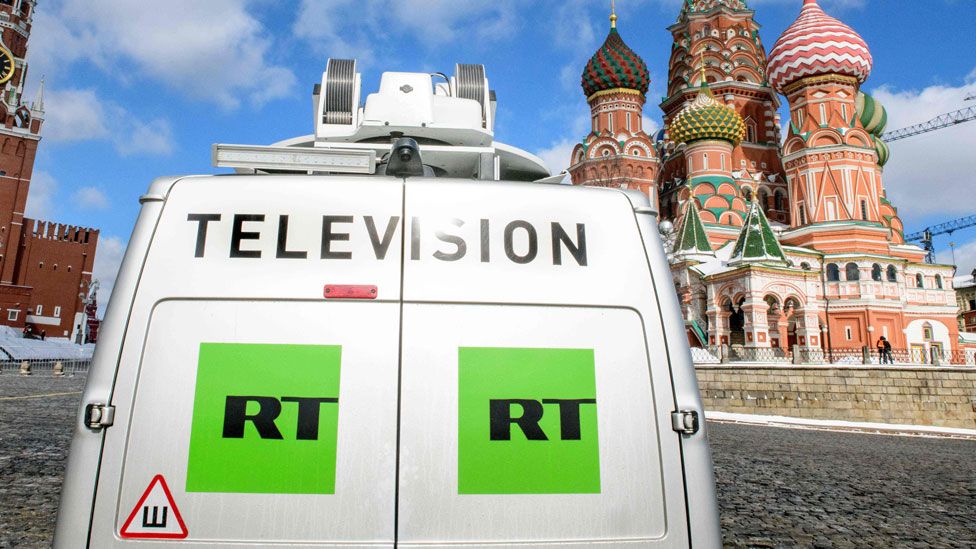
The Colombo Commercial High Court on Monday (3) lifted the enjoining order issued against Qingdao Seawin Biotech Group Co., Ltd, its local agent and People’s Bank.

Sri Lanka’s Fertilizer companies informed the court that they have reached a settlement with regard to the controversial Chinese Organic Fertilizer shipment.

The motions were filed by Colombo Commercial Fertilizer and Ceylon Fertilizer Corporation.

The terms that the plaintiff companies and the defendants, namely Qingdao Seawin Biotech Group Co., Ltd, its local agent, and People’s Bank, have agreed to for the settlement are as follows.

1. People’s Bank would release 75% of the consignment value to Qingdao Seawin Biotech Group Co., Ltd in terms of the Letter of Credit.

2. Qingdao Seawin Biotech Group Co., Ltd will obtain and provide certification for the raw material ingredients, and arrange fresh samples of a new consignment of organic fertilizer to be tested.

In terms of the contract, the samples should be free of pathogens and to ship the consignment only after the tested samples have been found to be in compliance with the Plant Protection Act, No. 35 of 1999, and after an Import Permit is obtained for the bulk shipment.

3. The amount released by People’s Bank will be set off after Qingdao Seawin Biotech Group Co., Ltd has shipped the second consignment.

The plaintiffs say that they agreed to withdraw the action against the defendants, subject to the aforementioned terms.

Both parties have agreed to issue a statement noting that the first shipment was returned due to the absence of an Import Permit.

Attorney-at-Law G.G. Arulpragasam, appearing for the third defendant in the action, the local agent for the Chinese Company, said that his client will retain the right to file legal action to seek payment for damages caused by the false and malicious allegations mentioned in the complaint against Qingdao Seawin Biotech Group Co., Ltd.

The complainants stressed that if such action is made, submissions will be made as well.

Deputy Solicitor General Susantha Balapatabendi, appeared for the complainants while Counsel Kushan De Alwis appeared for People’s Bank and Counsel Nihal Fernando appeared for Qingdao Seawin Biotech Group Co., Ltd.

Posted in Uncategorized

Wang Yi On Possible ‘Damage Control’ Mission? By Sulochana Ramiah Mohan

China’s State Councillor and Foreign Minister Wang Yi visiting Sri Lanka next week will be symbolic, as the diplomatic row between Sri Lanka over the fertiliser issue and India (over China making inroads in the north of Sri Lanka) escalates.

Yi would be the first high-profile visitor to Sri Lanka in 2022, scheduled between 8-9 January,in the wake of the prolonging fertiliser dispute between China and Sri Lanka. The Chinese Embassy in Colombo said Yi will pay an official visit to Sri Lanka to launch the celebration of the 65th Anniversary of China-Sri Lanka diplomatic relations but it has a lot more to be resolved as China has stepped up to slap further sanctions on Sri Lanka over the fertiliser dispute and if it’s not in their favour.

Last week, the Chinese gave over 100 motorcycles to the Sri Lankan Police. They’ve also offered US$ 1.5 billion under a Yuan currency swap. They also gave Rs. 19.6 million to Samagi Jana Balawegaya’s medical equipment donation programme. These are to reassert its strength in the country, which is crumbling due to a difficult geopolitical scuffle they are facing. China has intensified their stronghold in Sri Lanka making sure that the Island will not turn its back on them.

Colombo will be the last stop of Yi’s first foreign visit in the New Year.He would arrive to resolve a slew of issues and offer a massive package of engagements. It would be another new beginning for Sino-Lanka relationship amidst worries of geopolitical constraints India would face while China strengthen its ties here.

From 4 to 7 January 2022, Yi is expected to tour the African region, including Eritrea, Kenya, and the Comoros, before moving onto the Maldives and Sri Lanka. These are China’s vital nodes in their maritime silk route agenda.

About Wang Yi

Yi is a native of Beijing. He served as the Director of the Ministry of Foreign Affairs’ Department of Asian Affairs for nineyears. He graduated from the Department of Asian and African Languages of Beijing and his knowledge of African and Asian affairs areunrivalled. He is a key strategist in guiding the Chinese Embassy in Colombo on their diplomatic moves. He has visited Colombo four times before, and his trip to the city became symbolic with the launch of the Belt and Road Initiative (BRI), in which he plays a larger role connecting the string of pearls.

China Making Inroads in the North?

Chinese Envoy Qi Zhenhong recent visit to the Northern Province was symbolic by all means. China usually deals with the Government and through government entities. They don’t directly mingle with communities and never have with the Tamils of Sri Lankato start with.

Their strategic decision to embrace the Tamils in the North was not realistic. They entered when the region is having a major dispute with Tamil Nadu fishermen. The Northern Tamil fishermen have actually briefed the Chinese on their plight. China provided them with fishing nets and dry rations that cost millions of rupees, indicating that they are providing the nets because Indian fishermen had destroyed the local fishermen’s nets.

The Chinese envoy approached Minister of Fisheries Douglas Devananda through government contacts, and this is how their presence in the northern territory came to be. Devananda’s understanding of geopolitics may be limited, but it has heightened tensions in India. China took advantage of the situation, according to geopolitical experts, by exploiting the local fishermen’s grievances that Devandanda’s EPDP members went after.

“The fishermen issue is a long standing unresolved issue and we are having discussions with the Indian Government over it. I have been to New Delhi to discuss the issue and we have agreed on many issues and also focused on the difficulties in executing those matters,” TNA MP M.A. Sumanthiran said during a zoom meeting with Tamil Nadu-based media outlet Puthidyathalamurai.

He said the TNA wants to resolve issues, but that’s between India and Sri Lanka. the MP said people of the North and East know the connections between India and Sri Lanka and the northern people know that the Chinese visit was purely part of their geopolitical interests and to annoy the Indians.

Also throughout the Chinese visit, TNA Leader R. Samapanthan said the TNA has no objection with diplomats visiting the North andEast as the Tamil people’s political solution lies with India, whilereminding that China never gave its opinion on Sri Lanka’s national problem. He recalled that China voted against Tamil aspirations at the UNHRC session and did not take any interest in resolving the Tamil issue politically and that their wanting to embrace Tamils now is purely a geopolitical move.

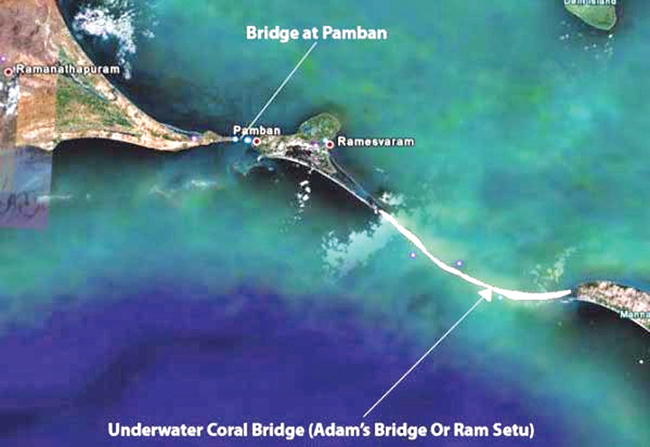
The Chinese envoy and his team not only visited Jaffna and Point Pedro but also Mannar. From Mannar they hopped onto a Navy boat to Ram Sethu (Adam’s bridge) and had a short voyage to the third dune on the sea between India and Talaimannar. There are 16 dunes out of which eight belongs to Sri Lanka and the other eight belonging to India. The Chinese also used drones to take photos and videos of the area.

The Chinese envoy and his group were reported to have visited Kachchativu, alleged some Tamil Nadu Media, but the Sri Lanka Navy and Minister Devananda told Ceylon Today that this was not the case. However, the diplomatic spat between India and China is still on going and it’s centred in Sri Lanka.

Fertiliser Quagmire

Wang’s visit to Sri Lanka also coincides with an unresolved dispute over the contaminated Chinese fertiliser shipment that Sri Lanka has rejected. It was local academics/scientists, who are not politically inclined,who gave the report on the samples sent by Qingdao Seawin Biotech. The Department of Agriculture refused to allow the shipment to enter the country as it is processed garbage from China. Because of the dispute, China eventually banned the State-run People’s Bank from doing business with the country. The Government has not shown any interest in getting this matter sorted and safeguarding the State bank’s reputation. However, China is worried about their international reputation and soon sued Sri Lanka and claimed USD 8 millionin compensation. The Court will hear the case on 6 January 2022.

Rather than remove the contaminated fertiliser, the Chinese went to the local Court and filed a complaint through their local agentChelina Capital.

Qingdao Seawin refused to accept responsibility and instead blacklisted People’s Bank with the backing of the Chinese Embassy and powerful politicians. For nearly two months, the issue has remained unresolved. The Chinese have not adjusted to the situation, despite the Government wanting both parties to reach an amicable agreement.

Local newspapers quoted that the shipment from China was deemed an illegalimportation in the absence of a valuable Protection of Phytosanitary Certificate (PPC) from the Chinese company. This was revealed by a top official of the Ministry of Agriculture. As a result, the National Plant Protection Organisation (NPPO), who lacks the legal authority to inspect the fertiliser, issued a non-compliance notice to its Chinese counterpart after sample testing. But China is adamant to accept the fault. They have been forcing Sri Lanka to consider the fertiliser or pay compensation so that their international image is not tarnished over a minor fertiliser issue.

During his visit in January 2020, Yi called Sri Lanka a strategic partner for China and assured that China will continue to support Sri Lanka’s interests. He also said China would always respect Sri Lanka’s sovereignty and pledged that no ‘interference’ in the country’s internal affairs would be tolerated. During his meeting with President Gotabaya Rajapaksa and his brother, Prime Minister Mahinda Rajapaksa, Yi said that China’s policy toward Sri Lanka had always been consistent and that it would continue to be Sri Lanka’s ‘reliable friend’. All of this, however, is now a distant memory, asChina has checkmated Sri Lanka over the dispute.

Treading Carefully

Despite the fact that it is not widely publicised, the current crisis between China and Sri Lanka is deep but subtle, and Wang’s visit would resolve all outstanding issues, it is expected.

Nonetheless, Sri Lanka views China as a reliable and long-term development partner. Wang announced a new USD 1 billion concessionary long-term loan, as well as China’s agreement to a phased-out debt repayment schedule starting in 2020. China offered a 10 billion Yuan (1.5bn USD) swap beginning of 2021.

These were offers to show that China would stand by Sri Lanka and not allow “outside influences” to ‘interfere’ in its internal matters. It means, China would protect Sri Lanka from others who do politics with Sri Lanka whereas China’s interest is only economical.

Aside from the economic interest, China has demonstrated beyond a shadow of a doubt that it wants Sri Lanka to be protected from its enemies. These countries are keeping a close eye on China’s activities in Sri Lanka and the Indo-Pacific region, where the Chinese are constructing artificial islands similar to the one they built in Sri Lanka – the Port City.

A Report on the Findings and Recommendations from the Meetings of the Advisory Council was released by China. At the Meeting of the Advisory Council of The Belt and Road Forum for International Cooperation 2021, Yi spoke highly of the fruitful achievements in Belt and Road cooperation over the past eight years.

Wang took stock of international developments and China’s foreign relations during 2021, including great endeavours made on nine fronts, and put forth six priorities of Chinese Diplomacy in 2022.

India dispatched Foreign Secretary Harsh Vardhan Shringla and Army Chief General MM Narvane to strengthen India’s ties with Sri Lanka. According to Indian Media, India has focused its entire attention on Sri Lanka’s North and East. While Sri Lanka has welcomed both India and China, it will need to tread carefully in the coming years to avoid upsetting either party andturning the island into a battleground, rather than a place where they can benefit from their common interests.
(ameisulo@gmail.com)

‘There is no money left’: Covid crisis leaves Sri Lanka on brink of bankruptcy

Sri Lanka is facing a deepening financial and humanitarian crisis with fears it could go bankrupt in 2022 as inflation rises to record levels, food prices rocket and its coffers run dry.

The meltdown faced by the government, led by the strongman president Gotabaya Rajapaksa, is in part caused by the immediate impact of the Covid crisis and the loss of tourism but is compounded by high government spending and tax cuts eroding state revenues, vast debt repayments to China and foreign exchange reserves at their lowest levels in a decade. Inflation has meanwhile been spurred by the government printing money to pay off domestic loans and foreign bonds.

The World Bank estimates 500,000 people have fallen below the poverty line since the beginning of the pandemic, the equivalent of five years’ progress in fighting poverty.

Inflation hit a record high of 11.1% in November and escalating prices have left those who were previously well off struggling to feed their families, while basic goods are now unaffordable for many. After Rajapaksa declared Sri Lanka to be in an economic emergency, the military was given power to ensure essential items, including rice and sugar, were sold at set government prices – but it has done little to ease people’s woes.

Anurudda Paranagama, a chauffeur in the capital, Colombo, took on a second job to pay for rising food costs and cover the loan on his car but it was not enough. “It is very difficult for me to repay the loan. When I have to pay electricity and water bills and spend on food, there is no money left,” he said, adding that his family now eats two meals a day instead of three.

He described how his village grocer was opening 1kg packets of milk powder and dividing it into packs of 100g because his customers could not afford the whole packet. “We now buy 100g of beans when we used to buy 1kg for the week,” said Paranagama.

The loss of jobs and vital foreign revenue from tourism, which usually contributes more than 10% of GDP, has been substantial, with more than 200,000 people losing their livelihoods in the travel and tourism sectors, according to the World Travel and Tourism Council.

The situation has got so bad that long queues have formed at the passport office as one in four Sri Lankans, mostly the young and educated, say they want to leave the country. For older citizens, it is reminiscent of the early 1970s when import controls and low production at home caused severe shortages of basic commodities and caused long queues for bread, milk and rice.

The former central bank deputy governor WA Wijewardena warned the struggles of ordinary people would exacerbate the financial crisis, which would in turn make life harder for them. “When the economic crisis deepens beyond redemption, it is inevitable that the country will have a financial crisis too,” he said. “Both will reduce food security by lowering production and failing to import due to foreign exchange scarcities. At that point, it will be a humanitarian crisis.”

One of the most pressing problems for Sri Lanka is its huge foreign debt burden, in particular to China. It owes China more than $5bn in debt and last year took an additional $1bn loan from Beijing to help with its acute financial crisis, which is being paid in instalments.

In the next 12 months, in the government and private sector, Sri Lanka will be required to repay an estimated $7.3bn in domestic and foreign loans, including a $500m international sovereign bond repayment in January. However, as of November, available foreign currency reserves were just $1.6bn.

In an usual approach, government minister Ramesh Pathirana said they hoped to settle their past oil debts with Iran by paying them with tea, sending them $5m worth of tea every month in order to save “ much needed currency”.

The opposition MP and economist Harsha de Silva recently told parliament that foreign currency reserves would be -$437m by January next year, while the total foreign debt to service would be $4.8bn from February to October 2022. “The nation will be totally bankrupt,” he said.

Central Bank Governor Ajith Nivard Cabraal made public assurances that Sri Lanka could pay off its debts “seamlessly” but Wijewardena said the country was at substantial risk of defaulting on its repayments, which would have catastrophic economic consequences.

Meanwhile, Rajapaksa’s sudden decision in May to ban all fertiliser and pesticides and force farmers to go organic without warning has brought a formerly prosperous agricultural community to its knees as many farmers, who had become used to using – and often overusing – fertiliser and pesticides, were suddenly left without ways to produce healthy crops or combat weeds and insects. Many fearing a loss decided not to cultivate crops at all, adding to the food shortages in Sri Lanka.

The government made a dramatic U-turn in late October and farmers are now struggling to cover the high costs of imported fertiliser without help.

“The costs of cultivating paddy [wheat] have gone up astronomically … The government has no money for fertiliser subsidies. Many of us farmers are reluctant to invest money because we don’t know if we will make any profit,” said one farmer, Ranjit Hulugalle.

In an attempt temporarily to ease the problems and stave off difficult and most likely unpopular policies, the government has resorted to temporary relief measures, such as credit lines to import foods, medicines and fuel from its neighbouring ally India, as well as currency swaps from India, China and Bangladesh and loans to purchase petroleum from Oman. However, these loans provide only short-term relief and have to be paid back quickly at high interest rates, adding to Sri Lanka’s debt load.

Anushka Shanuka, a personal trainer, was among those who used to have a comfortable life but now is struggling to get by. “We can’t live the way we used to before the pandemic,” he said, saying the prices of vegetables had gone up by more than 50%.

“The government promised to help us but nothing came, so we are just managing the best we can. I don’t know how much longer we can go on like this.”

Source:UK Guardian

PM’s Office responds to reports on prime minister resigning

The Prime Minister’s Office today rejected the media reports that Prime Minister Mahinda Rajapaksa is to resign from his position.

“There is absolutely no truth to the reports published on mainstream media and social media, over the past couple of days and today (03), claiming that Prime Minister Mahinda Rajapaksa will resign from his position,” the PM’s Media Secretary said.

Issuing a statement, Rohan Weliwita further said that they strongly reject such false reports indended to mislead the people of the country.

Posted in Uncategorized

Sri Lanka to receive $ 1 billion loan from India to alleviate food and medicine shortages

India has reportedly agreed to provide a $ 1 billion loan to Sri Lanka, as a solution to the dollar shortage, for the import of essential food items and medicines.

According to government sources, the loan will be given not as cash but as a loan facility for goods imported from India, Sinhala daily Lankadeepa reported.

It is learned that in addition India has agreed to provide US $ 500 million loan for fuel purchases and US $ 400 million as an exchange loan.

The loan facility will be provided as a result of a discussion held by the Minister of Finance Basil Rajapaksa with the Indian authorities during his recent visit to India.

Meanwhile, government sources said that a loan of US $ 1.500 billion was received from China recently and that a loan of US $ 500 million is to be received from Qatar on a one-year repayment basis.

Posted in Uncategorized

Sri Lanka shipping agents seek dollarized payments amid forex trouble

Sri Lanka’s shipping agents have asked for dollarized freight charges, a report said as foreign exchange shortages intensified amid low interest rates and liquidity injections.

“The current US dollar shortage in the banking system has made it difficult to convert any rupee collections of freight to US dollars in order to make the remittances to principals,” Sri Lanka’s The Sunday Times newspaper quoted the Ceylon Association of Shipping Agents representing lines as saying.

“Hence shipping lines are forced to request exporters to pay freight in US dollars.”

Exporters have been told by shipping lines to pay freight in dollars and they in turn have raised the matter with Sri Lanka’s Export Development Board.

CASA had warned that delays in paying principles could reduce freight allocations for Colombo compared to other countries where payment are made faster, and this may make it difficult for exporters to meet customer deadlines, the newspaper said.

“The average value of export freight per month is US$ 100 million and it is vital for shipping agents to retain foreign funds held in Principals’ accounts to meet on going disbursements as well as remit funds to Principals in accordance with the Agency Agreements between Principals and Shipping Agents,” the CASA was quoted as saying.

Sri Lanka has printed around 1.6 trillion rupees from January 2020 to November 2021 and lost 5.6 billion US dollars in balance of payments deficits up to October 2021.

About 350 billion has been absorbed in a reserve money expansion and inflation.

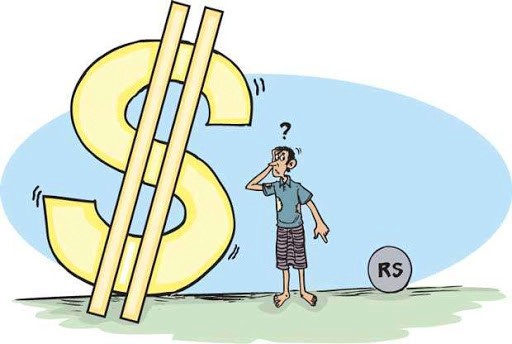
Holders of rupees now find it difficult to convert to dollars at the 200 to the US dollar soft-peg as its credibility has been lost due to two years of money printing to maintain low interest rates.

Parallel exchange rate are now around 250 to the US dollar.

Under severe monetary instability involuntary market dollarization takes place.

Analysts have suggested that dollarization be encouraged to get over the barrier of converting dollars to rupee and back again, especially for the government.

Related

Sri Lanka should prepare to float, and promote parallel dollarization: Bellwether

Allowing dollarized settlement of contracts avoid ‘jumping the hoop’ between Sri Lanka’s and US monetary bases, at a time when the peg has lost credibility, EN’s economic columnist Bellwether has said.

Parallel Dollarization

However parallel dollarization in the form of taxes being paid in US dollars, utility and energy bills being paid in US dollars would also allow both the government and importers to get US dollars without disturbing domestic reserve money.

The central bank has ordered banks to sell 25 percent of their dollars to it, which analysts had warned tends to create more rupees and further undermine the peg, which is on its weak side.

Key points

*One part of the surrender rule, allowing exporters to buy SLDBs is correct. That will directly transfer dollars to the government without having to go through the rupee credit system. However since some SLDBs were earlier repaid in rupees, their attractiveness is now less than before.

*In the same way the exporters should be allowed to pay taxes in dollars. The government can give the same two rupee extra (a discount) for paying taxes in dollars now given to expat workers.

*Exporters and hotels can also pay electricity bills in dollars. This will keep the power flowing to their factories and hotels. They can also pay dollars for fuel. This will keep fuel flowing to their factories and trucks.

*Exporters and hotels should also be allowed to pay their suppliers in dollars. That way the problem that is there with some inputs to the export industry will disappear.

*This includes tea exporters. Plantations have to buy some chemicals and other inputs for which suppliers can no longer get dollars. Some export manufacturing firms also get inputs from local importers including specialist chemicals where the agencies are held by locals.

*In fact SLDB bond auctions should be held weekly like Treasury bill auctions.

*Governor Nivard Cabraal’s suggestion of allowing car imports for dollars and taxes to be paid in dollars is absolutely correct.

Sri Lanka food prices hit record highs as shortages bite -AFP

Sri Lanka’s food prices rose by a record 22.1 per cent in December, official figures showed Saturday (Jan 1), as the country struggles to finance urgent imports to tackle an acute shortage of essentials.

The census and statistics department said food inflation hit an all-time high last month on a year-on-year basis since the Colombo Consumer Price Index (CCPI) was launched in 2013.

The price increases in December compared to a figure of 17.5 per cent in November, the previous record, the department said.

It added that overall inflation was also at a record 12.01 per cent in December, the highest since the CCPI index was launched.

President Gotabaya Rajapaksa in his New Year message expressed hope of reviving the cash-strapped economy but did not announce measures to address the crippling foreign exchange crisis.

“I am confident that the new year will provide an opportunity to further the steps taken by the government to pursue and overcome challenges and strengthen the people-centric economy,” he said.

International rating agencies have downgraded Sri Lanka and raised concerns about its ability to service its debt of US$26 billion.

The latest inflation figures were released a day after the government increased the price of milk powder by 12.5 per cent following a similar rise in fuel prices last month.

The island’s tourism-dependent economy has been hammered by the pandemic and the government was forced to impose a broad import ban to shore up foreign exchange reserves.

Supermarkets have for months been rationing milk powder, sugar, lentils and other essentials as commercial banks ran out of dollars to pay for imports.

A top agricultural official warned last month of an impending famine and asked the government to implement an orderly food rationing scheme to avoid such a scenario. He was fired within hours of making the appeal.

Food shortages have been worsened by the government’s ban on agrochemical imports, which was lifted in November after widespread crop failures and intense farmer protests.

Sri Lanka had foreign reserves of just US$1.58 billion at the end of November, down from US$7.5 billion when Rajapaksa took office in 2019.

This week the government drew down a US$1.5 billion Chinese loan and claimed reserves had nearly doubled to US$3.1 billion by the end of 2021.

The central bank has appealed for foreign currency – even loose change that people may have after returning from overseas trips.

Posted in Uncategorized

Sri Lanka’s Finance Minister Basil Rajapaksa to visit India to attend the ‘Vibrant Gujarat’ summit

Sri Lanka’s Finance Minister Basil Rajapaksa would lead a delegation to the ‘Vibrant Gujarat’ summit to be held from January 10 to 12, The Hindu reported quoting official sources.

He is likely to hold talks with Prime Minister Narendra Modi during this visit, his second to India in about a month.

The report said the Minister would travel to India a day after Chinese Foreign Minister Wang Yi concludes his two-day visit to the island nation, signaling Colombo’s intensive engagement with both New Delhi and Beijing at a time when it faces one of its worst economic meltdowns in history.

Mr. Basil Rajapaksa was in New Delhi from November 30 to December 2. Despite officials indicating that he was scheduled to call on Mr. Modi, the meeting did not take place, reportedly due to scheduling issues – something that Sri Lankan media highlighted prominently in their coverage of the high-profile visit.

He, however, held talks with External Affairs Minister S. Jaishankar and Finance Minister Nirmala Sitharaman. They drew up a “four pillar” initiative, as part of which India agreed to extend emergency Lines of Credit for import of food, medicines and fuel, and a currency swap to help the island nation tide over its relentless dollar crisis.

Sri Lanka’s external reserves stood at $3.1 billion at year-end, the Central Bank of Sri Lanka said on Wednesday — an increase from the $1.6 billion reported last month — although some have challenged the claim, asking if the bank was including the $1.5 billion currency swap cleared by China earlier this year.

Colombo-based think tank Pathfinder Foundation has warned of a “a very real possibility of a sovereign debt default” next year, citing the $ 1 billion due in debt-service payment in January 2022, and a total $ 7 billion to be served through the next year.

American credit rating agency Fitch on December 17 downgraded Sri Lanka to ‘CC’ rating, the lowest before default.

Mahinda Rajapaksa’s request
A month since Mr. Basil’s last visit seeking assistance from New Delhi, Colombo awaits news. In fact, New Delhi is yet to move on Prime Minister Mahinda Rajapaksa’s request for a debt freeze, made personally to Mr. Modi almost two years ago, as well as President Gotabaya Rajapaksa’s request for a “special” $1.1 billion currency swap made in May 2020.

Going by diplomatic signals, the operative part of the recent bilateral initiative of the “four pillars” appears centered on bilateral energy pacts, especially the “early modernization” of the Second World War-era oil tanks in the eastern Trincomalee district, a long-stalled project coveted by India for decades.

Sri Lanka’s Energy Minister recently told The Hindu that the agreement to jointly develop the Trincomalee oil tank farm with India would be inked in a month’s time, and that a special purpose vehicle had been set up for the purpose.

It is unclear if Mr. Basil Rajapaksa’s likely meeting with Mr. Modi will be held in Gujarat on the sidelines of the summit, or if he would fly to New Delhi for talks. Colombo-based sources indicated that the meeting with Mr. Modi would be firmed up based on developments in the next week. “We are looking at an ambitious timeline,” an official remarked, requesting not to be named given the sensitivity of bilateral negotiations. “Both sides are keen to take discussions forward swiftly,” the official added.

Sri Lanka had been identified as one of the “partner countries” for the ‘Vibrant Gujarat’ summit, where participants would explore investment and networking opportunities, and strategic partnerships, an official statement said.

Ready to take any tough decisions that need to be taken – President

President Gotabaya Rajapaksa says that the government has assured through actions that Sri Lanka’s ancient Buddhist heritage sites are safeguarded and that it will continue to provide patronage to protect the country’s values, traditions and customs.

He made these observations while addressing the Maha Sangha during a ceremony held on Sunday to bestow him with the honorary title of “Sri Lankadheeshwara Padma Vibhushana” by the Kotte Sri Kalyani Samagri Dharma Maha Sangha Sabha.

“Before I became the President, we all knew how the condition of our Buddhist sites like Kuragala, Muhudu Maha Vihara and Deeghawapi was, how the monks who lived there were treated and the fate of the lands belonging to those temples. We all can be happy about the current state of those temples.”

“During my tenure, we have assured with action that our ancient Buddhist heritage sites are safeguarded,” he said.

The President said they were able to successfully control the pandemic that engulfed the world for two years. “However, even if some people insulted me because of the economic and social hardships the pandemic has caused to the people of this country, I have the strength to endure such insults with equanimity.”

“Also, those who insult me have not been able to do an iota of the service I have performed to the country in my lifetime,” he stressed.

He pointed out that the ‘Kroda Wagga’ in Dhammapada says that there is no person in this world who has received either only insults or only praise.

President Rajapaksa pledged to protect and nurture the Buddhist philosophy in this country. “We must always protect the Sinhala culture and heritage that has a history of thousands of years. Therefore, the government will continue to provide patronage to protect our values, traditions and customs.”

He said he will always uphold the right of all Sri Lankans to live in peace and harmony by preserving their religious identities and to live with dignity in association with the main culture of this country that persisted throughout the history.

“I am ready to embark on a new journey by overcoming the obstacles we have encountered so far, and to fulfill the aspirations of the people who elected me as President of this country.”

“I responsibly declare before this Most Venerable Sangha community that I am ready to take any tough or bold decisions that need to be taken in this regard,” he emphasized.

Long distance train services on hold indefinitely?

The Sri Lanka Railway Station Masters’ Union (SLRSMU) has alleged that the Railways Department is continuing to postpone the resumption of long-distance train services that were suspended due to the Covid-19 pandemic situation, thus causing great inconvenience to passengers.

Speaking to The Morning yesterday (2), SLRSMU General Secretary Kasun Chamara charged that the Railways Department has not yet taken action to resume long distance train services which had been cancelled for a prolonged period due to the Covid-19 pandemic.

“Due to the pandemic situation in the country, long distance train services have not been operational for more than a year. As the Railways Department was covering up the matter under the guise of Covid-19, we had to even engage in a trade union action demanding the resumption of long distance train services,” he said.

Chamara said that despite the Railways Department’s announcement that long distance train services would be resumed from 1 January 2022 in the face of the SLRSMU’s trade union action, it was postponed to 2 January and the Railways Department has failed to resume the said service on that day as well. He claimed that the resumption of long distance train services has once again been postponed till 9 January.

“It has become a joke for the Railways Department to provide transport facilities to the passengers. Even though the Department has announced that they would be resumed on 9 January, we cannot believe what the authorities are claiming,” stated Chamara.

Claiming that the Railways Department had stated it was unable to operate long distance train services due to a shortage of engine driving assistants, he said that it is the responsibility of the Railways Department to address the issues, if any.

“The Railways Department from time to time announces the start dates of long distance train services. After hearing such, the people come to the railway stations to make seat reservations. At that time, it is us who have to answer the passengers,” Chamara further charged.

When contacted by The Morning to inquire about the plans to resume long distance train services, Railways General Manager Dammika Jayasundara said that there was a shortage of railway guards and engine driving assistants which has resulted in the delay in resumption of the said services. However, he said that immediate steps will be taken to recruit the railway guards and engine driver assistants under contract basis, after which the long distance services will be resumed.