If reserves increased, why not issue dollars? – MP Dr Harsha de Silva

Samagi Jana Balawegaya MP Dr Harsha de Silva questioned as to why the Government cannot issue dollars to release the containers with essential items which are halted at the Port.

Speaking on the current economic crisis in the country, MP Dr de Silva said that the public is currently suffering due to the shortage of essential items and medicines, and since the Central Bank of Sri Lanka (CBSL) announced that the country’s reserves have grown to 3.2 billion US $, why it is not possible to import goods now.

” Why are they hiding the country’s dollars? To whom are they going to issue dollars? The market price of the bonds that were to be matured in January has dropped so much that the return on investment is 800% now.,” the MP stated.

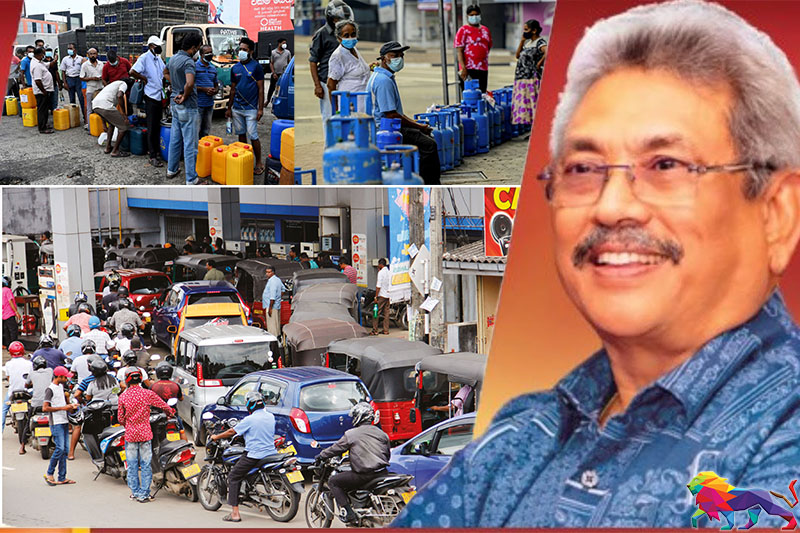
Mentioning that people are suffering due to shortages in medicine, gas and fertilizer, the MP pointed out that even Importers have stated that they will not import goods again, in addition to shipping companies demanding payment in dollars.

Sri Lanka reports 24 Covid-19 deaths on Sunday, toll exceeds 15,000

Sri Lanka Sunday reported 24 deaths due to COVID-19 after the figures were confirmed by the Director General of Health Services on Saturday, January 01.

Among the deaths reported today, 20 are of males and 04 of females. While 13 deaths are of elderly people in the 60 years and above age group, 11 people in the 30-59 years age group have also succumbed to the disease.

According to the data reported by the Government Information Department, the total deaths due to Covid-19 since the pandemic began last year has now risen to 15,019.

Mahinda hasn’t indicated that he will step down as Prime Minister – Muruththetuwe Ananda Thera

If Mahinda Rajapaksa was to step down from the post of Premiership, he would notify me about his decision, Vice Chancellor of the University of Colombo and Chief Incumbent of Abayaramaya in Narahenpita Ven. Muruththetuwe Ananda Thera said.

Refuting rumours that Mahinda Rajapaksa will vacate the Premiership, he reiterated that if there were any such moves in the offing, he would advise the Prime Minister to immediately reevaluate his decision.

Ven. Ananda Thera made these remarks at a media briefing held at the Abayaramaya in Narahenpita on Wednesday (29).

“If the Prime Minister is going to leave, he will inform us about his decision. There could be a conspiracy to oust him. There are issues within the government but the country cannot be governed properly due to certain individuals around President Gotabaya Rajapaksa,” he said, adding that one such individual was recently asked to resign.

Pointing out that the public is disgruntled due to the wrong advice given to the President regarding the government’s organic fertiliser drive, he said that all problems can be resolved if the government focused on appointing the right people instead of directing all its attention on the dollar crisis.

Posted in Uncategorized

Restaurant Owners’ Association Decide To Suspend Selling Milk To Customers Due To Massive Price Hikes

The All Ceylon Restaurant Owners’ Association says that it has decided to suspend the supply of milk tea to customers from restaurants.

Commenting on this, President of the Association Asela Sampath said that this decision was taken as it was not possible to further increase the price of milk tea further with the increase in the price of milk powder.

He also stated that the government is waiting to allow the milk powder companies to do what they want.

Asela Sampath said that about 3,000 restaurants have been closed due to the economic situation in the country.

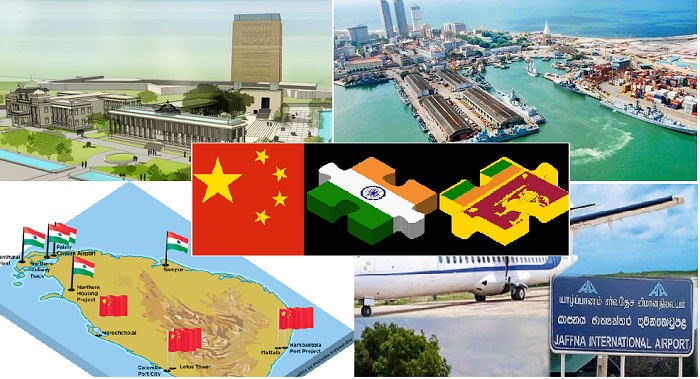
Jaffna is too far from Beijing By M.S.M Ayub

The war between the Armed forces and the Liberation Tigers of Tamil Eelam (LTTE) played a decisive role for over three decades in shaping the current Sri Lankan Tamil psyche. The roles played by Beijing and New Delhi in respect of that war has ruled that the former cannot replace the latter in the hearts of Tamils

China has not shown any interest in political, economic or social activities in the northern and eastern regions of the island in the past while its political and economic arch rival in the region, India has been playing a major role in those activities there

The visit by Chinese Ambassador Qi Zhenhong to Nallur Kandaswamy Temple on December 16 and that of Prime Minister Mahinda Rajapaksa to Tirumala Venkateswara Temple in Tirupati, in Southern Indian State of Andra Pradesh on December 24 did not weigh equally on the scale, despite both temples being Hindu and very famous among people of others faiths as well.

One visit was of mere faith relevance while the other being seemingly public diplomacy. One was in the interest of one’s self salvation while the other in the interest of his country’s business.

However, it would be easy for one to perceive at least somewhat the nature of the diplomacy involved in the Ambassador’s visit, by looking at two photographs that had been taken during the visit to North and gone viral due to their symbolical significance – the picture of the Ambassador and his delegation entering the Nallur Temple attired in pure Tamil traditional costumes (veshtis) and bare-chested and the one where a drone operated by a Chinese official was seen in the background of the Chinese delegation in Point Pedro, the northern most tip of Sri Lanka.

China has not shown any interest in political, economic or social activities in the northern and eastern regions of the island in the past while its political and economic arch rival in the region, India has been playing a major role in those activities there. Interestingly, China had to withdraw recently from the only major economic project it had shown interest in, in northern Sri Lanka – three hybrid renewable energy projects in three islands off the northern coast of the country, apparently due to opposition on the part of India and the local Tamil leaders.

However, the Ambassador’s visit to the Jaffna Peninsula this month was an indication that China has not abandoned its interests in the Tamil dominated north despite its unsuccessful bid to secure those projects. The public diplomacy segment of the visit underscores it further. He, during the tour had visited the Jaffna public library, a major cultural centre in the north and had donated several laptops to it. Also, he had expressed his country’s keenness in developing fisheries industry in the region, a sector that has been hit hard by the long drawn civil war that ended twelve years ago and by the highhanded activities of Indian poachers. Fisheries Minister Douglas Devananda while talking to media in Kilinochchi recently had told that China was in competition with India to win a project for the development of fisheries harbour and surrounding areas in Point Pedro.

China might be feeling that this kind of diplomacy is sine qua non in order to bolster its future interests in the Tamil dominated region, in the light of the mass protests that swept Gwadar, the Chinese-dominated Pakistani port city which is at the core of the China-Pakistan Economic Corridor (CPEC), in the past several months. The CPSC is considered the crown jewel of China’s Belt and Road Initiative (BRI). One can even argue that the northern Sri Lanka is more susceptible to such anti-China protests given the political, cultural and psychological proximity between the Tamil people and India. Already Tamil leaders have expressed their aversion to China’s newfound love towards their compatriots. Almost all articles on the Ambassador’s visit in Tamil media had negative views.

Some analysts had been of the view that some of the items on the Ambassador’s itinerary for the tour was ill-planned and even provocative of India and it amounts to challenging a person while being in another man’s garden. In fact, the purpose of the Ambassador’s boat ride up to a point very close to the maritime border of India is something incomprehensible. He had even questioned the distance to India across the Palk Strait. Sri Lanka’s former Permanent Representative to United Nations in Geneva Dr. Dayan Jayatilleka had criticized the Sri Lankan government for allowing the Chinese envoy to resort to such a trip, disregarding India’s sensitivities.
Winning hearts and minds of Tamil people in Sri Lanka seems to be a gigantic task for Chinese.

China has a long way to go in that direction, given certain historical, cultural, political and even psychological realities involving Sri Lankan Tamil people. India is the second homeland to many Tamils in Sri Lanka owing to the geographical and linguistic proximity between the northern Sri Lanka and the southernmost State of India. The Mahathma Gandhi statues in many Tamil dominated areas in Sri Lanka attest to it. The Tamil Nadu media, especially the electronic media, more importantly the television channels owned by the Tamil Nadu politicians make a tremendous psychological and political impact on Sri Lankan Tamils. During the Sino-Indian war in 1960s and the three wars between India and Pakistan Sri Lankan Tamils and Tamil media clearly sided with India.

The war between the Armed forces and the Liberation Tigers of Tamil Eelam (LTTE) played a decisive role for over three decades in shaping the current Sri Lankan Tamil psyche. The roles played by Beijing and New Delhi in respect of that war has ruled that the former cannot replace the latter in the hearts of Tamils. Despite India having supported the government’s war efforts in a subtle manner, it always stood for the rights of Tamils in the island. And what the Tamils have achieved for the past seven decades in their search for a political solution to the national question was only the provincial council system of 1987, a result of much arm-twisting by India against the Sri Lankan government. Tamil leaders, still bank on India’s diplomacy in their quest for greater devolution of power, in spite of India’s stance towards her southern neighbour having mellowed and changed following the end of the Cold War in 1990s.

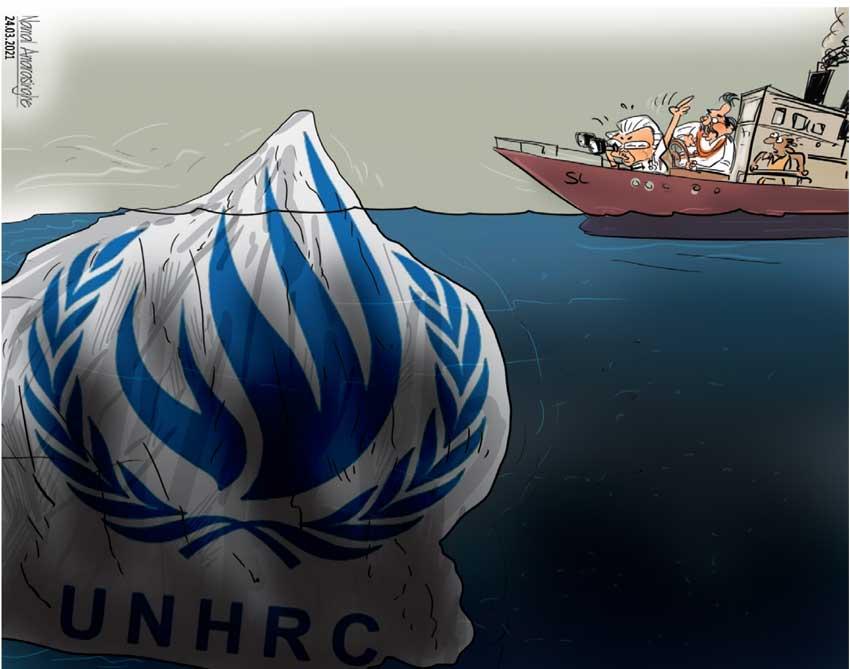
Although the livelihood practically topped the priority list of Tamils after the end of the war, Tamil leaders and media have replaced it with the political solution and human rights. Again Beijing and New Delhi took diametrically opposite sides when the Sri Lankan government was accused of human rights violations during the war at the UN Human Rights Council in Geneva.

Tamil leaders have been campaigning for an investigation against the Sri Lankan leaders by the International Criminal Court (ICC). However, it is no secret for them that it is an unachievable target in the light of the process having to go through the UN Security Council where China has the veto power. All in all, Jaffna is too far from Beijing.

Posted in Uncategorized

Around 120,000 Sri Lankans left SL in 2021

Around 120,000 Sri Lankans left Sri Lanka in 2021 seeking foreign employment, the State Ministry of Foreign Employment Promotion and Market Diversification said yesterday.

The State Ministry said 30,000 have gone to Qatar, 27,000 to Saudi Arabia, 20,000 to UAE, 1,400 to South Korea, 1,100 to Singapore,1,600 to Cyprus and 800 to Japan despite the COVID-19 pandemic.

Posted in Uncategorized

Sri Lankan delegation due in January to cement trade ties with Pakistan: envoy

Consul General of Sri Lanka Jagath Abeywarna has said that Sri Lankan Trade Minister will be bringing a delegation comprising representatives of around 40 to 50 companies to Karachi and Islamabad on January 23, 2022 to explore more avenues of cooperation and collaboration with the business community of Pakistan.

“The Sri Lankan delegation will explore possibility of enhancing trade and investment ties with Pakistani counterparts, besides exploring tourism opportunities available in Pakistan. Most of the Sri Lankan tourists, who have been regularly visiting India and Nepal, were not much aware of the historical Buddhist sites in Pakistan,” he added while exchanging views at a meeting during his visit to the Karachi Chamber of Commerce & Industry (KCCI).

Sri Lankan CG sought KCCI’s cooperation in arranging business-to-business (B2B) meetings during the visit of Sri Lankan delegation. “It is going to be a main activity as we haven’t received such a big delegation to Pakistan since long.”

He also advised KCCI to arrange a similar delegation to Sri Lanka as exchange of trade delegations was the only way to improve trade and investment ties.

He was of the view that there was a lot of potential to two-way trade and investment ties between the two friendly countries. “As Pakistan has very strong pharmaceutical and textiles industries, these can be exported to Sri Lanka as we import almost all types of pharmaceutical products and fabrics.”

He said that Pakistan and Sri Lanka were friendly nations who have been supporting each other in difficult situations. During civil war in Sri Lanka, Pakistan was one of the main countries which provided assistance to Sri Lanka.

Referring to President KCCI’s remarks, Sri Lankan CG assured that they will look into the possibility of inviting maximum number of Sri Lankan companies to participate in My Karachi Exhibition which was scheduled at Karachi Expo Centre from Feb 11 to Feb 13, 2022.

President KCCI Muhammad Idrees, in his remarks, assured that the Karachi Chamber would warmly welcome and fully facilitate Sri Lankan delegation during their forthcoming visit to Karachi by organizing B2B meetings.

He pointed out that Pakistan and Sri Lanka have been enjoying very cordial relations since many years. “Pakistan was the 2nd largest trading partner of Sri Lanka in South Asia and we hope to become the largest.”

He noted that during 2020, goods exported by Pakistan to Sri Lanka totalled $324.7 million while goods imported by Pakistan from Sri Lanka were recorded at $78.9 million. “The real trade potential was much higher than what the current statistics reveal and we are determined to unlock this potential through combined efforts and close coordination with Sri Lankan side.”

He urged businessmen and investors to capitalize on the opportunities in the agriculture, textile, tourism, real estate, energy and IT sectors which were attractive investment sectors in both countries. “Moreover, Sri Lanka has good skills to cut, polish and shape gemstones into world class jewellery. Jewellers in Pakistan can avail this opportunity by entering into joint ventures which would enable them to make world class jewellery.

He also stressed the need to boost air and maritime linkages between both countries so that cooperation in business and industry could be strengthened. Pakistani products including pharmaceuticals, rice, fruits & vegetables, cement and garments have huge potential in Sri Lankan market while Sri Lankan tea, wall tiles, floor tiles etc. have great scope in Pakistan.

He also invited Sri Lankan business community to participate in My Karachi Exhibition which was scheduled from 11th to 13th February 2022. This mega event provides an excellent opportunity to businessmen for B2B meetings and it provides one window facility for promotion of trade. It also provides local and foreign exhibitors a platform to display their products and services at more than 300 stalls in all 6 halls of Karachi Expo Centre.

Vice President KCCI Qazi Zahid Hussain, Chairman of KCCI’s Diplomatic Missions & Embassies Liaison Subcommittee Ziaul Arfeen, Former President KCCI Majyd Aziz, Former VP Shamsul Islam Khan and KCCI Managing Committee Members also attended the meeting.

Copyright Business Recorder, 2021

Posted in Uncategorized

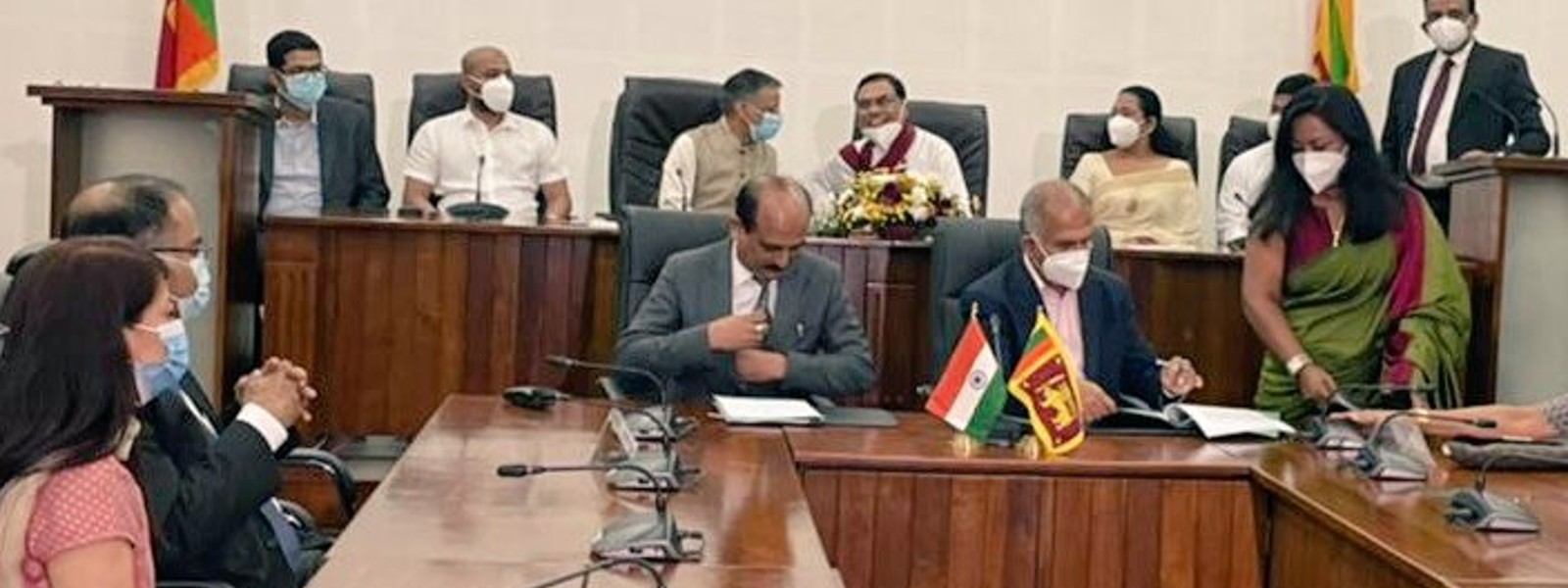
SL, India strike deal over 99 oil tanks in Trinco

Energy Minister Udaya Gammanpila yesterday described the regaining of the broader control of Trinco Oil Tank Farm by the State-owned Ceylon Petroleum Corporation (CPC) as a “historical victory” following the successful conclusion of the renegotiations with India.

He told the media that as per new agreement, 24 of 99 tanks will be directly given to the CPC by the Sri Lankan Government. “By doing so, 24 tanks will be released from the commitment to develop jointly with India. 14 tanks which are presently being used by the Lanka IOC Plc (LIOC) will be leased to it for 50 years. The balance 61 tanks will be managed by Trinco Petroleum Terminal Ltd. on a lease given by the Sri Lankan Government,” Minister Gammanpila said.

The CPC and the LIOC will hold respectively 51% and 49% of shares of this company which will be a CPC subsidiary company. “Not only the CPC holds majority shares but will appoint four members of the seven-member board including the Chairman. This company will be subject to the supervision of the Auditor General. The officers can be summoned before the COPE in Parliament. Parliamentarians can pose oral questions to the Minister in respect of the company as well,” Gammanpila added.

“As a result of this agreement, 85 out of 99 tanks will be under the control of the CPC, 24 directly and 61 through the subsidiary. The LIOC will manage only 14 tanks. Therefore, regaining the control of Trinco Oil Tank Farm by Sri Lanka is a historical victory,” an elated Energy Minister said following the successful conclusion of negotiations with the Indian Government. Ministry Secretary K.D.R. Olga, CPC Chairman Sumith Wijesinghe, Managing Director Buddhika Madiyahewa and Ministry Advisor Lalith Vidanagamage were present with the Minister.

Gammanpila said the final agreement will be tabled at the Cabinet of Ministers meeting on Monday for approval.

The publicly listed LIOC is yet to make a formal disclosure to the Colombo Stock Exchange on the negotiations or the outcome.

The fate and future of 99 tanks had been contentious. India and Sri Lanka agreed to develop and operate the tank farm jointly in July 1987. The agreement was to develop jointly. However, in February 2003, the entire tank farm consisting of 99 tanks was given to India for a period of 35 years. There was an unsuccessful attempt to take a part of the tank farm as a sublease from Lanka IOC through the MoU entered into in 2017.

In December 2016, the Cabinet of Ministers decided to repair 10 tanks of the farm for its storage purposes. Accordingly, five officers of the CPC entered the premises with prior notice on 29 December 2016 to examine the conditions of the tanks. They were detained by the LIOC claiming unlawful entry. India later conveyed its displeasure over the incident through its diplomatic channels.

“This dark period will end soon. I will enter the Tank Farm premises along with the officers who were subject to harassment, in the near future to hoist our national flag there,” Minister Gammanpila said. “Sri Lankans have been receiving only pessimistic news in the recent past. Hence, we will be happy to deliver this joyful message to patriotic people of Sri Lanka,” he added, signalling a major breakthrough.

Investor sentiments over a favourable deal saw LIOC share price had soared in recent weeks. Yesterday it closed the year at Rs. 73.20 as against Rs. 28.10 in end-November reflecting a gain of Rs. 45.10 or 160%. In comparison to September quarter closing price of Rs. 20.60, yesterday›s level was higher by 255% or Rs. 52.60. In November LIOC›s previous 52-week highest price was Rs. 31.30 and the current highest is Rs. 81.30 achieved last week.

Industry analysts the resolution to the impasse on the 99 tanks will strengthen Sri Lanka’s position to negotiate assistance to source oil from India amidst the severe foreign exchange crisis. Sri Lanka spent $ 385 million on fuel imports in October (up by 72% year on year) and $ 3 billion in the first 10 months of 2021 up by 40% year on year.

Posted in Uncategorized

2022: State of siege and Tamil consensus By Dr. Dayan Jeyatilleka

The implicit argument is that insofar as the Gotabaya administration is reneging on the 13th amendment and is apparently on the cusp of scrapping it, it is reneging on the Indo-Lanka Accord, and the Tamil parties which supported the Accord due to their trust in India, have no recourse but to turn to India to intercede to save it, ensuring the full implementation of the 13th amendment, without which the Tamil people will be left with zero-provincial autonomy and political space.

At the time of writing, a fundamentally important process of discussion and drafting is underway, shaping a united Tamil political stand on a matter that has ‘intermestic’ (Kissinger) implications. ‘Intermestic’ denotes matters ‘at the interface’ of the domestic and the international.

Whatever is contained in the document due for release around New Year 2022, the adoption of a common or consensual political stand on the part of the Tamil political parties would be of cardinal significance since a unified Tamil political platform has not been seen for decades, after Thimpu in 1985.

Much effort has gone into the drafting, negotiations and the convergence, and it would not be fair to single out this or that personality for the progress of the effort, one personality stands out. Tamil politics being notoriously fissiparous, not even India could have brought the Tamil parties together. The convergence around a common Tamil stand and its manifestation in a draft document would not have been possible without President Gotabaya Rajapaksa. No previous President was able to achieve this.

The entire effort has taken place solely because of the political behaviour of President GR, in what he has not done as well as what he seems about to do. He is the first Sri Lankan President who didn’t have a political dialogue or even a single substantive political meeting with the elected Tamil representatives. He is the first Sri Lankan President to have publicly signalled including in conversation with the Indian government at a high-level, that he views the 13th amendment critically and may delete what he considers negative about it. He is the first Sri Lankan President whose Ministers have publicly opined without subsequent contradiction, that the Indo-Sri Lanka Accord (ISLA) of 1987 is null and void.

President Gotabaya Rajapaksa is the sole Sri Lankan President committed to a new Constitution, the draft of which is due to be submitted to the Cabinet in January, which in all probability decreases if not ‘disappears’ the powers devolved to the Provincial Councils as per the Indo-Sri Lanka Accord and its outcome, the 13th amendment.

Tamil politics being notoriously fissiparous, not even India could have brought the Tamil parties together. The convergence around a common Tamil stand and its manifestation in a draft document would not have been possible without President Gotabaya Rajapaksa. No previous President was able to achieve this

Tamil text

In that concrete context, the Tamil convergence is a defensive one. While the bottom-line, literally and metaphorically, of the document is a strong call for the full implementation of the 13th amendment, the document is on the theme of the Indo-Sri Lanka Accord and the aspirations of the Tamils.

The body of the draft text reiterates the Tamil commitment to federalism as the political solution to the Sri Lankan ethnic question—an entirely legitimate long-term aspiration which will take at least another generation of Sinhalese before it becomes a serious political proposition, and therefore should not divert the analysis or the ensuing discussion. The text rightly regards the 13th amendment as the child of the Indo-Lanka Accord.

Most important of all is the addressee of the document. The draft text is in effect a petition or appeal to the Government of India, the architect and co-signatory of the Accord from which the 13th amendment issues and of which it is the outcome.

The implicit argument is that insofar as the Gotabaya administration is reneging on the 13th amendment and is apparently on the cusp of scrapping it, it is reneging on the Indo-Lanka Accord, and the Tamil parties which supported the Accord due to their trust in India, have no recourse but to turn to India to intercede to save it, ensuring the full implementation of the 13th amendment, without which the Tamil people will be left with zero-provincial autonomy and political space.

President Gotabaya’s project and deducible from his discourse and trajectory seems to be to push the Tamils back to 1980 or to put the clock back to before the shuttle diplomacy of 1983-’84 of Gopalaswamy Parthasarathy.

Will the Modi administration allow a unilateral roll-back on its watch? Whatever the circumstances of the Accord, it is a bilateral agreement and its hub is indeed the devolution of power as a settlement of the Tamil question.

Is President GR willing to bet that after the Chinese ambassador’s assertive visit on a Sri Lankan Navy gun-boat, to the islands bordering India, Delhi will disregard the Tamil request—especially with an election coming up in Tamil Nadu?

GR does have China in his corner in general terms, but is he willing to wager that China will go the distance—and in literal terms, can go the distance—on this particular issue?

Does he need this problem to come between him and India when he needs the maximum economic and diplomatic (Geneva March 2022) help he can get from the neighbour?

Gotabaya is the first Sri Lankan President who didn’t have a political dialogue or even a single substantive political meeting with the elected Tamil representatives. He is the first Sri Lankan President to have publicly signalled, including in conversation with the Indian government at a high-level, that he views the 13th amendment critically and may delete what he considers negative about it. He is the first Sri Lankan President whose Ministers have publicly opined without subsequent contradiction, that the Indo-Sri Lanka Accord (ISLA) of 1987 is null and void

The military card

Gotabaya Rajapaksa pledged to create national unity, one country, without the intermediate stage of provincial semi-autonomy, and boy, has he fulfilled that election pledge. From Hambantota to Ampara to Iranamadu, the peasants of all ethno-linguistic and religious groups are protesting against the presidential policy on fertiliser-weedicide-pesticide and its clear, obvious, heart-rending failure in the fields. The President was always for out-of-the box solutions, and that’s certainly one way of uniting the people across all barriers.

Of course, this gives the democratic parties, especially those of a progressive orientation, a chance of engaging in some unifying activity of their own. Instead of being trapped in the box of devolution vs anti-devolution, those on both sides of that argument can surely transcend it, and build bridges of unity, north, south, west and east, where the President has already created similarity of experience, i.e., a shared experience of despair due to the failing crops. All-island unity can be built not only from above, but more imperatively and surely, from below. There can be no unity without solidarity.

The Sunday newspaper, that is the newspapers of the last Sunday for this year 2021, ran three stories all of which have as a reference point, the defence dimension or a military marker, which, taken together, may constitute a clear pointer of the direction in which we are headed and the outcomes in the year that is about to be born, 2022.

One was the interview of Ven. Galagodaatte Gnanasaara thero, hand-picked by President Gotabaya Rajapaksa as the chairperson of the One Country, One Law Presidential Task Force. As a tweet from the newspaper’s editorial offices read: “Ven. Gnanasara thero insists to hand over the regime to the military. Virakesari Sunday edition 26/12/201. Interview with Yasiharan.” On further inquiry it turns out that Ven. Gnanasaara had opined in a full-page interview (a thumbnail photo of which accompanied the tweet) that in the context of the economic crisis, authority should be transferred to the military for a limited period so as to overcome it and until it is overcome.

So that’s Exhibit A. Meanwhile Ven. Gnanasaara and his Task Force are holding public sittings in the Central Province, entertaining public representations. Given his views on One Country, his tour is perhaps quite useful in giving the hardcore Sinhala racist base a platform to vent as well as an opportunity to rally that hardcore in service of whatever nation-building project that the good Thero and his appointing authority have in mind.

Ex-President Trump is being investigated about his role in inciting the uprising by a loose Far-Right, neo-confederate and proto-fascist movement on 6 January 2021 on Capitol Hill. What if the US Constitution didn’t have the guardrails it does and the US military lacked the deep civilian ethos that it possesses (at least in relation to its own country)? What if the efforts of Mike Flynn had been successful, and supported by the formation that rioted on 6 January?

Exhibit B is a news item from the Daily FT’s sister paper, which I shall reproduce below, and in its entirety, without comment.

“President holds gala ceremony for 1,090 military officers.

A 1,090 strong military contingent from the tri-forces were the stars on Wednesday night at a gala ceremony at the President’s House.

There were drinks and dinner hosted for them by President Gotabaya Rajapaksa, the Commander-in-Chief and Defence Minister. The guests included one-time Navy Commander Wasantha Karanagoda–now Governor of the North Western Province, Rtd. Air Chief Marshal Jayalath Weerakody, Rtd. Air Force Marshal Roshan Goonetilleke and one time Navy Commanders Daya Sandagiri and Thisara Samarasinghe.

There was no formal ceremony associated with the event where military bands from the three armed forces took turns in playing background music. One participant surmised that the event concerned those who were recruited to the Navy and to other related services after 1971. They had all been associated with Colonel Rajapaksa at different times. There were a few absentees too apart from their ‘absent friends’–those who had died in action or were not in the country over the years.” (https://www.sundaytimes.lk/211226/columns/going-to-the-imf-waiting-for-basil-waiting-for-godot-466813.html)

No military-civilian/civilian-military junta can run the economy. What it can do is to crush what it thinks are the impediments to the harsh economic measures needed to solve the crisis. The farmers will “be seized by the throat by the military and forced into organic cultivation” (as President GR said he could get done but didn’t wish to), with the fertiliser being produced by the military or under military aegis

Totalitarian tentacles

Exhibit C is perhaps the saddest and most telling of all.

“The Registrar General’s Department has issued a circular making a Security Clearance Report mandatory in the event of a marriage between a Sri Lankan citizen and a foreigner. The department said the circular has been issued following the instructions received from the Defence Ministry as a measure to ensure national security…” (Security clearance required when a Sri Lankan wishes to marry a foreigner – Top Story | Daily Mirror)

It is one thing to say that those occupying certain high posts with security implications, e.g., the upper ranks of the armed forces, intelligence services, and the foreign service, should obtain security clearance when marrying a foreigner. It is quite another to extend it to the whole populace. This is an intrusion into the most private aspect of the private life of a person; that of his/her emotional life, life choices and decisions about partnership.

Sri Lanka and earlier, Ceylon, was always an open society though not quite a liberated one and indeed rather conservative in many ways, areas and social strata. However, there was a fundamental respect for personal decisions such as marriage, leaving approval and disapproval to parents, relatives, etc., which was the only barrier that romance and indeed love had to overcome. As my parents’ wedding photo album shows, my grandparents didn’t attend. But the state never got in the way, and no one had to obtain prior security clearance.

The new regulation is totalitarian in nature, in that it strives for greater control over the private lives of citizens. Going by this regulation the defence authorities get to decide on whether or not to give clearance to a marriage between a Sri Lankan domiciled in Sri Lanka and a man or woman of Sri Lankan origin who is classifiable as a foreigner because he or she is a second-generation member of the Sri Lankan diaspora.

This new regulation will further damage the image of Sri Lanka as an island of freedom and romance. As an island-nation, Ceylon/Sri Lanka has a history of romance and marriage between foreigners and Sri Lankans, just as Ceylonese studying or travelling overseas have often fallen in love with and married those they have met while abroad. That’s who we were and who we are. No defence bureaucracy or President has a right to change that.

If the Bar Association and other civil rights associations are worth their salt, they would petition the Supreme Court against this regulation which is the thin-end of the wedge of totalitarianism.

The new regulation making a Security Clearance Report mandatory in the event of a marriage between a Sri Lankan citizen and a foreigner will further damage the image of Sri Lanka as an island of freedom and romance. As an island-nation, Ceylon/Sri Lanka has a history of romance and marriage between foreigners and Sri Lankans, just as Ceylonese studying or travelling overseas have often fallen in love with and married those they have met while abroad. That’s who we were and who we are. No defence bureaucracy or President has a right to change that

‘Self-coup’ from above

I have a book in my library titled Story of a Death Foretold, authored by Oscar Guardiola-Rivera. It is about the coup against President Salvador Allende. It’s not published by a leftwing publishing house but by Bloomsbury. The good news is that whatever story is being written in Sri Lanka, it is not that of a coup against an elected President such as Gotabaya Rajapaksa. The bad news is that a story does not have to be one of a coup against an elected President for it to be a story of a death foretold.

Democracy can be killed in more ways than one. While one method is a coup (‘golpe’ in Spanish) against a President, another is a coup by a President (a ‘self-coup’ or ‘auto-golpe’ as they put it in Latin America). Uruguay pioneered the model in which President Juan Bordaberry declared a State of Siege and created a military-civilian junta as it was called. Iconic film-maker Costa-Gavras recreated the moment in the movie ‘State of Siege’ with Yves Montand (which I caught as it opened in London in 1973.) An early Latin American prototype was the State of National Security as the Brazilian military junta called its model.

It can happen here too, and can succeed politico-militarily but not socioeconomically. No military-civilian/civilian-military junta can run the economy. What it can do is to crush what it thinks are the impediments to the harsh economic measures needed to solve the crisis. The farmers will “be seized by the throat by the military and forced into organic cultivation” (as President GR said he could get done but didn’t wish to), with the fertiliser being produced by the military or under military aegis.

The same measures that are being pushed at every panel discussion which is driven by the big corporates or free market fundamentalist think-tanks, will be implemented at gunpoint. A corporate-military-Rajapaksa oligarchic bloc will wield power. As the renowned Uruguayan editor and writer Eduardo Galeano wrote with bitter incandescence in The Cemetery of Words, referring to Milton Friedman’s Chicago Boys who took over the Chilean economy after Pinochet’s coup, “in the global South, Adam Smith needs Mussolini”.

It won’t prove sustainable though. Sanctions and the pullback of tourists will cripple the Sri Lankan economy; China won’t be able to pick up the slack though expenditure will be held down to mere subsistence at gunpoint; and the embittered farmers and other working people will sustain and propel a low-intensity guerrilla movement. Though this may help the military by creating a ‘security threat’, it won’t help foreign investment (and Chinese factories may become targets).

The new regulation is totalitarian in nature, in that it strives for greater control over the private lives of citizens. Going by this regulation the defence authorities get to decide on whether or not to give clearance to a marriage between a Sri Lankan domiciled in Sri Lanka and a man or woman of Sri Lankan origin who is classifiable as a foreigner because he or she is a second-generation member of the Sri Lankan diaspora.

Democratic deterrence

Can the ‘self-coup’ scenario be stopped? Only by determined deterrence. It was the USSR’s Maxim Litvinov who insisted, during the diplomatic mobilisation against fascism, that “peace is indivisible”. In the 21st century, so too is democracy. If the democratic world powers do not unambiguously signal the dominant elements of an administration on a strategically-placed island, that the cost of an ongoing shift from democracy, however flawed, to outright autocracy will be unacceptably high and transcend the limits of the backstop provided by the world’s autocratic powers, then global autocracy and authoritarianism would have succeeded in the oldest democracy in Asia.

There is also the geostrategic dimension. If this negative, qualitatively retrogressive event takes place at a nodal point in the Indian Ocean which is a gateway to the Pacific, the Indian Ocean will prove to contain, or to be, the weakest link of the Indo-Pacific.

The Quad, AUKUS and the Summit for Democracy will be shown up as “paper tigers”, while “the East Wind is prevailing over the West Wind” (Mao, 1957).

Chinese company pushing for economic sanctions on Sri Lanka

A Chinese company has intensified its fight against Sri Lanka over disputed fertilizer stocks and has even proposed tough economic and trade sanctions to be imposed, the Daily Mirror reported.

The Government of Sri Lanka (GoSL) has already decided to pay US$ 6.7 million to Seawin Biotech Group Co., Ltd for the fertilizer which was rejected by Sri Lanka after local tests had identified harmful bacteria.

Not withstanding the decision by Sri Lanka to pay the Chinese company after much delay, the Daily Mirror learns that Seawin Biotech is continuing its war on Sri Lanka over the damage the whole issue has caused to the reputation of the company.

Top officials at Seawin Biotech have approached the Shandong Provincial Government to exert pressure on the Chinese Government to impose sanctions on Sri Lanka.

Messages communicated between top officials at Seawin Biotech and a local contact based in Sri Lanka, seen by the Daily Mirror, show the extent to which the Chinese company is going to take action against Sri Lanka.

One top official, who is part of the top management of the company, notes in the communication with the local contact that Chinese companies have been told not to trust Sri Lanka.

The official said that Chinese companies have been advised to obtain advanced payments before dispatching any products to Sri Lanka.

“We will also complain to more international institutions,” the official at Seawin Biotech said.

Another official said that China has been urged to impose restrictions on the import of tea from Sri Lanka.

The official also alleged that some local officials had demanded a commission for selecting Seawin Biotech to import the fertilizer.

The GoSL had suspended the importation of organic fertilizer from Qingdao Seawin Biotech Group Co., Ltd. in September over quality issues, leading to a diplomatic spat between Sri Lanka and China.

The People’s Bank of Sri Lanka was also ordered by court not to pay the Chinese company for the substandard fertilizer.

Later in October the Economic and Commercial Office of the Chinese Embassy in Colombo blacklisted the People’s Bank for failing to make the payment according to the Letter of Credit (LOC) and contracts between the two parties.

The issue has already been discussed at the highest levels of the Governments between both countries and is expected to be further discussed during a visit to Sri Lanka by Chinese Foreign Minister Wang Yi likely to take place in January.

According to the bidding documents and the contract, the product quality must be tested and confirmed by the third-party testing institute designated by the Sri Lanka Standards Institute (SLSI) before the product is shipped.

SLSI has appointed a German testing institute called Schutter Group for third-party testing.

Schutter audited the Seawin production line and took samples from the production line and warehouse respectively.

Schutter test reports confirmed that Seawin products had been sterilized at 600 for more than 20 minutes, and the products did not contain Salmonella and Coliform (Coliform includes Erwinia.

Subsequently, SLSI also tested the samples and the conclusion reached by Schutter was confirmed.

However, the National Plant Quarantine Service (NPQS) claimed that Erwinia was found in the product.

Seawin Biotech then sent the same batch of samples to China Customs Testing Center and the internationally renowned Swiss third party testing institute SGS for retesting.

China NPQ also investigated Seawin products according to the IPPC agreement and replied to NPQS by email. They all confirmed that the products do not contain Erwinia.

“NPQS not only doesn’t recognise the conclusions of its own pre designated testing institute according to the contract agreement, but also openly rejected the testing conclusions of the other three professional authorities,” a document sent to Daily Mirror by Seawin Biotech said.

Seawin also shared with Daily Mirror the test reports of NPQS and the other foreign institutions.

Daily Mirror attempted to obtain a comment from Agriculture Minister Mahindananda Aluthgamage but he is overseas and could not be reached. (Courtesy Daily Mirror)