Sri Lanka remittances down to 12 year low in Nov 2021 amid credibility loss of peg

Sri Lanka’s foreign remittances fell to 271.4 million US dollars in November 2021 as credibility of the soft-dollar peg was lost to liquidity injections and record volumes shifted to the unofficial cross border settlement market.

Foreign remittances hit 266.3 million US dollars in April 2009, when the rupee was floated after the pegs credibility was declined amid sterilized interventions of mostly bond buyer exits though monetary policy was tight.

Sri Lanka’s official remittances which fell amid global and domestic lockdowns to 375 million US dollars in April 2020, rapidly recovered.

Several workers in the Middle East told EconomyNext at the time that they were having more savings with reduced domestic shopping, entertainment and travelling due restricted movements which had increased the saving available to be remitted home.

However remittances started to fall from around February as Sri Lanka domestic economy and credit recovered and the central bank printed money to keep rates down and restricted convertibility, triggering parallel markets.

Sri Lanka’s forex reserves have declined steadily after rates were cut and liquidity was injected to enforce the lower call money rates.

In November forex reserves hit 1.6 billion US dollars.

The remittances which were 446 million US dollars in August started to fall as a 200 to the US dollar peg was strictly enforced and banks were barred from buying dollar from remittance houses above the rate and the family members of expatriate workers.

Analysts had warned that any domestic economic recovery will hit the peg given the policy rates and easy liquidity injections.

The kerb rate has hit around 240 to the US dollars.

The central bank is giving a 210 to the US dollar parallel exchange rate to expatriate workers and exporter and resident foreign salary earners have been asked to force convert dollars.

In December remittances usually go up as expat workers try to send more dollars home.

Sri Lanka has been trying to shore up reserves with foreign borrowings, amid a steady drain of reserves lost to liquidity injections to obstinately target calm money rates.

Sri Lanka has also borrowed reserves from Bangladesh, which has a somewhat better monetary policy framework and stronger reserves.

However the Bangladesh Taka also came under pressure as the economy recovered and the central bank lowered its policy rate from 5.25 percent to 4.75 percent in July.

Foreign reserves which hit 47 billion US dollars in August 2021, from 42 billion dollars in December 2020 has come under pressure as Bangladesh Bank defended the Taka.

Foreign reserves by over 2 billion US dollars to 44 billion US dollars in November as the central bank sold dollars.

However the Bangladesh central bank does not obsessively target the call money rate unlike in Sri Lanka triggering liquidity shortages in over-trading banks.

The average call money rate topped 4 percent in late November, from around 1.7 percent at the beginning of the year as the Taka was defended.

The kerb market for Taka has also moved up to around 90 to the US dollar from the official rate of around 85, driving remittances to the unofficial market.

The central bank of Bangladesh has kept the Taka below 85 to the dollar over 12 years giving stability to the country, though officially it targets M2.

Indo-Lanka Accord, 13th Amendment and the Tamil March of Folly By D.B.S.Jeyaraj

Much concern is now being shown by political parties representing the minority (numerical) ethnicities of Sri Lanka over the 13th Amendment to the Constitution. As is well known it is the 13th Constitutional Amendment which ushered in a certain quantum of devolution to the country through the setting up of Provincial Councils. 13 A itself was due to the historic India-Sri Lanka agreement signed by Indian Prime Minister Rajiv Gandhi and Sri Lankan President Junius Richard Jayewardene on July 29th 1987.

Several political parties of the Sri Lankan Tamils, Muslims and Hill Country Tamils met in Colombo on December 12th and engaged in discussions aimed at demanding full implementation of the 13th amendment. A news report filed by “The Hindu”s Colombo correspondent Meera Srinivasan provided pertinent details of the the Colombo meeting. Here are a few excerpts –

“India has repeatedly asked the Sri Lankan leadership to ensure the full implementation of the 13th Amendment. While Colombo has in turn given many assurances to “go beyond” the legislation, to ensure meaningful devolution, “that has not happened so far,” said senior Tamil politician and Tamil National Alliance Leader R. Sampanthan. “We have gathered today from different political parties to discuss the situation. We exchanged our views on the subject, and will be taking this discussion forward,” he told a press conference, following the MPs’ meet at a Colombo hotel on Sunday.”

“There is now talk of a new Constitution, but simultaneously we see the government’s efforts such as ‘One Country One Law’,” the 88-year-old Trincomalee parliamentarian said, of an ongoing initiative of the government that critics fear might further impair even the limited legislative powers of the Provincial Councils”.

“Sri Lanka’s nine Provincial Councils are defunct for about two years, after their terms lapsed in 2018 and 2019. “Meanwhile, the Centre through various presidential task forces is trying to snatch our powers. If that has to be stopped, we must emphasise our rights highlighting what is guaranteed in our Constitution,” said Rauf Hakeem, Sri Lanka Muslim Congress Leader and legislator.”

“The parliamentarians will finalise a “comprehensive document” by December 21, said Mano Ganesan, Leader of the Tamil Progressive Alliance that represents Malaiyaha Tamils.“We are challenging this government and asking them to fully implement what is already in our Constitution. Nothing has changed in this country 12 years after the war ended. Our message is not only to the Sri Lankan leadership, but also to India, the international community and UN bodies,” he said. As a signatory to the Accord of 1987, “India has an obligation,” Mr. Ganesan added. The final document coming out of the discussion would also be sent to Prime Minister Narendranew Constitution Modi, according to the organisers.”

It is indeed commendable that the Tamil and Muslim parties are displaying interest in preserving the 13th amendment and seeking full implementation of its provisions. Recent happenings like the appointment of the “One Country,one Law”Presidential Task Force headed by controversial Buddhist monk Gnanasara Thero and the moves underway to promulgate a new Constitution have increased apprehensions among the Tamil and Muslim parties. There is fear that the substance and unit of d would be eliminated or drastically eroded.Hence the envisaged appeal to India to safeguard the Provincial councils and ensure full implementation of powers provided by the Constitution.Better late than never!

Seeking India’s Help

The potential danger to the 13th Constitutional Amendment and the Provincial council scheme under the Rajapaksa regime was anticipated by this writer even before the 2020 August Parliamentary elections took place. “TNA Must Seek India’s Help To Protect 13th Amendment” was the heading of an article written by me that was published in the “Daily Mirror” of July 25th 2020. In that article I appealed to the Tamil National Alliance – the premier political configuration of the Sri Lankan Tamils- to take steps with New Delhi’s help to safeguard 13 A.Here are some relevant excerpts –

“The TNA does not seem to have realised that the Rajapaksa rationale for a new Constitution and the Constitutional reform aspirations of the party are incompatible at the present juncture. The Rajapaksa regime wants to reduce or do away with the powers of the Provincial council while the TNA like Oliver Twist wants “More”, as it is of the firm opinion that the powers of devolution available is inadequate both in quantity and quality. The TNA manifesto illustrates this clearly. “

The TNA’s election manifesto for the 2020 parliamentary polls stated “the Thirteenth Amendment to the Constitution of Sri Lanka is flawed in that, power is concentrated at the centre and its agent, the Governor.” The TNA manifesto went on to say “It is through a constitutional arrangement on the model of federalism within a united Sri Lanka that the legitimate aspirations of the Sri Lankan Tamils and other Tamil speaking inhabitants of the northern and eastern parts of the island could be met. In fact, such an arrangement has become indispensable for their survival.”

“The TNA or for that matter the Tamil people are well within their rights to demand greater devolution or federalism. They are even entitled to exercise their inalienable right of self-determination and espouse secession or seek a separate state. The problem is how do you achieve it when the overwhelming majority in the country are against it? The harsh reality that the Tamil people have experienced since independence from the British is that, the Sinhala people were not for federalism or even maximum devolution. In such a situation, a pragmatic course to follow would have been adherence to Prussian Statesman Prince Otto Von Bismarck’s saying “Politics is the art of the possible, the attainable — the art of the next best”.

“Far Worse”not
“Next Best”
“This did not happen with the Sri Lankan Tamil political leaders. Instead they opted for secession which resulted subsequently in an armed struggle. Sri Lanka was embroiled in a three decade long civil war that left the Tamils a battered and shattered people. Instead of opting pragmatically for the “next best”, the Tamils chose to pursue what could be termed with the wisdom of hindsight, as a “far worse” one.

In a political environment where the objective conditions for gaining federalism or devolution did not exist, how was it possible to create a conducive climate for secession? Likewise, in a situation where the ruling regime wants to abolish or minimize the little devolution that is available, would it be possible to engage in meaningful negotiations aimed at maximizing devolution through Constitutional reform?

“This does not mean that the Tamil people have to meekly accept the diktat of the Rajapaksa govt. and cave in subserviently. Injustice and oppression has to be resisted and fought against through legitimate avenues. The search for greater devolution must not be abandoned totally. At the same time, one must be realistic. “

“Instead of day-dreaming about getting quasi-federalism through discussions with the Rajapaksa regime, the TNA needs to safeguard and consolidate what has been gained so far. In short, the TNA and the Tamil people have to work with what has been attained and strive further for the attainable, instead of neglecting what is available on ground and yearning for the desirable that is unattainable.”

“The need of the hour is to preserve and protect what has been gained. The govt. plans to abolish or emasculate the 13th amendment and provincial councils, must be foiled. What is necessary at this point of time, is to safeguard the 13A and provincial council scheme.”

This writer is somewhat glad that the Tamil and Muslim parties have adopted a position seeking to protect and preserve the 13 A brought about by the Indo-Lanka accord.It may be appropriate at this juncture to briefly examine the situation that prevailed in 1987 when the Indo-Lanka Accord was enacted and the events that led to it. I have in the past written extensively on these matters and would therefore rely on some of my earlier writings in this regard.

Benign Intervention

Indian involvement in the affairs of its neighbours has been described as “benign intervention” by Indian academics and analysts. Benign intervention also served India’s interests in the region. Such is the nature of international relations. All countries have their own interests at heart and smaller entities identifying common interests with larger entities and harmonising accordingly have greater chances of bettering the prospects for themselves. In the case of Sri Lanka the twin tenets of basic Indian policy was preserving the unity and territorial integrity of Sri Lanka on the one hand and ensuring the rights of the minorities particularly the Sri Lankan Tamils on the other.

The 1983 July anti-Tamil pogrom saw more than 100,000 Tamils fleeing to Tamil Nadu as refugees. Several ex-Tamil United Liberation Front (TULF) MPs including Opposition Leader Appapillai Amirthalingam took up residence in Tamil Nadu. With more than 100,000 refugees on its soil providing a ‘locus standi’, New Delhi offered its good offices to mediate and bring about a negotiated political settlement. There was an imperative need for India to intervene at that stage.

There were three basic reasons for Indian intervention in Sri Lanka then. Firstly, the Jayewardene Government was spurning “non-alignment” and taking Sri Lanka into a pro-Western orbit. Under prevailing conditions of the day New Delhi feared a Washington-Tel Aviv-Islamabad axis. India needed to bring Sri Lanka to “heel” and keep out undesirable elements out of the region.

Secondly, there was the domestic imperative. There was much concern in Tamil Nadu for the plight of Tamils in Sri Lanka. Tamil Nadu was once home to a flourishing separatist movement. India was concerned about the fallout from Sri Lanka on Tamil Nadu if the conflict escalated here.

The third was the unacknowledged personality factor. It is a fact that basic policy is formulated by the bureaucracy in India and the political executive is guided by it. However individual leaders by force of their personality may effect a change in the style of implementation but cannot effectively change the substance of policy.

“Cow and Calf”

What happened here was that the then Indian Prime Minister Indira Gandhi was not very fond of President Jayewardene or Prime Minister Premadasa. When Indira Gandhi and son Sanjay Gandhi lost the elections in the 1977 March Indian elections, the UNP leaders began saying the “cow and calf” will lose here too alluding to Sirima and Anura. JR cosied up to Indira’s bete noir Morarji Desai. On the other hand Indira enjoyed close rapport with TULF leaders, particularly Amirthalingam. The TULF had loyally stood by her in defeat. This personality factor also played a significant part in the politics of that time.

This confluence of factors deemed it necessary that India:
1. Undertake a “benign” intervention in Sri Lanka to help resolve the ethnic conflict within a united Sri Lanka but in a manner acceptable to Tamils;
2. Force Colombo accept New Delhi’s hegemony over the region and appreciate Indian security concerns;
3. Teach the Jayewardene regime a lesson while rewarding the TULF.
The fundamental difference in New Delhi policy towards Pakistan in 1971 and Sri Lanka in 1987 was that in the case of the former it suited Indian interests to fracture Pakistan and create Bangladesh while in the case of the latter, Indian interests were better served by preventing dismemberment of Sri Lanka and unifying the island.

Two-track Policy

The July 1983 anti-Tamil pogrom created an opportunity for India to step in and offer its “good offices” to bring about ethnic reconciliation. So Gopalaswamy Parthasarathy became India’s official emissary tasked with evolving political rapprochement. But India followed a two-track policy. Tamil militant groups were trained and armed and housed on Indian soil. They were allowed to run political cum propaganda offices in Tamil Nadu publicly.

India’s objectives were clear. New Delhi wanted to use the Tamil militants as a cutting edge to de-stabilise the Jayewardene regime and also exert pressure on Colombo to deliver a political settlement. Once a viable solution was arrived at, the Tamil armed struggle was expected to end. Tamil Eelam was never ever on the cards.But the Tamils were not to be abandoned entirely. India would underwrite a political solution and maintain a physical armed presence in north east Sri Lanka to protect the Tamils and help to implement the political solution.

Meanwhile Indira Gandhi was assassinated and her son Rajiv Gandhi succeeded her. Rajiv’s ascendancy saw the veteran Gopalaswamy Parthasarathy being ousted as India’s special envoy to Sri Lanka on the Tamil issue. Foreign Secretary Romesh Bhandari functioned as emissary. Despite these changes the basic continuity in policy remained.

There were many twists and turns but India’s strategy worked to a great extent. After the military operation in Vadamaratchy in May 1987 it appeared that Colombo was on the verge of wiping out the Liberation Tigers of Tamil Eelam (LTTE). At that stage India demonstrated very clearly to Colombo that it would not be allowed to crush Tamil militancy. India violated Sri Lankan air space and dropped food parcels over the Jaffna peninsula on 4 June 1987.
To his credit Jayawardena read the writing on the wall correctly. He caved into Indian pressure and bowed. The Indo-Lanka Accord was signed on 29 July 1987. That treaty gave India a right to be involved in the affairs of Sri Lanka.

Multi-ethnic, Multi-religious

The Indo-Lanka Accord was not perfect. It did not rectify all problems concerning Tamils. But it provided a good and great beginning. The Indo-Lanka Accord recognised Sri Lanka as a multi-ethnic, multi-religious nation. Thus both the mono-ethnic claims of Sinhala supremacists and the two nation theory of Tamil separatists were negated.
It recognised the Northern and Eastern Provinces as historic areas of habitation of the Tamil and Muslim people where they lived with other ethnicities. Thus the Tamils and Muslim right of historic habitation was recognised but there were no exclusive rights. The north-eastern region belonged to all ethnicities.

Moreover the opportunity to create a single Tamil linguistic province was made available at that time. Both provinces were temporarily merged with the proviso that a referendum should be held in the Eastern province to either approve or reject the merger.

A scheme providing devolution of powers on a provincial basis was brought in. Provincial Councils with powers allocated on provincial, concurrent and reserved basis were set up. Tamil was elevated to Official Language status. All those convicted of “terrorist” offences were given official pardon. All militants who took to arms were given a general amnesty.

13 A Supreme Court Ruling

The 13th Constitutional Amendment was drafted in Colombo. An Indian Constitutional lawyer was consulted in an advisory capacity. Given the opposition mounted by the SLFP and JVP then it was feared that any Constitutional amendment requiring an island-wide referendum would not be ratified if the Supreme Court decreed so.Thus the powers and composition of the envisaged Provincial Councils through the 13th Amendment were somewhat restricted. The Supreme Court allowed it without a referendum because of this. Even then the nine-Judge bench was divided five to four.

New Delhi however extracted a promise in writing from JR on 7 November 1987 that he would devolve more powers to the PCs within a specific timeframe. But events took a different turn and this promise was never adhered to by JR or successive regimes. The LTTE started fighting the Indian Army. This transformed the situation.

Primarily, India was acting in its own interest. There was no “identity” of interests between India and the Tamils but there was certainly a “convergence” of interests between both. But this congruence had its limits.

Using the armed struggle for separatism as a pressuring device or bargaining tool was acceptable. But prolonging the struggle for a separate state in defiance of New Delhi was unacceptable. India was all for autonomy within a united Sri Lanka but opposed to Tamil Eelam.

Pragmatically, the best option was for the Sri Lankan Tamils to hitch their “vandil”(wagon) to the Indian star and accept the settlement provided through Indian efforts. The Tamils had a large support base in Tamil Nadu among fellow Tamils which could have been utilised to pressure New Delhi.If the Tamils were politically astute they could have accepted the accord as a starting point and then gradually enhanced devolution to the point of quasi-federalism. In this exercise, India would have been on the side of the Tamils.

North East “Special Status”

In practice, north-east Sri Lanka would have enjoyed a “special” status. The N-E would be part of a “de-Jure” Sri Lanka but virtually a “de-facto” extension of India. A delicate tightrope walking act was required of Sri Lankan Tamil leaders. If they maintained correct relations with New Delhi and Colombo they could have elicited the best of both worlds for their people. If Sinhala hardliners ruled the roost in Colombo and adopted a confrontation course with India, a Turkish-Cyprus type of de-facto partition may have ensued.

But these things did not happen thanks to the colossal political stupidity and self-centred arrogance of the LTTE. Not only did it target the Sri Lankan armed forces but also took on the Indian soldiers. New Delhi had no choice other than to fight the Tigers. The IPKF-LTTE war altered the flow of events. War has a cruel logic and powerful momentum that changes things utterly. And then the Tigers assassinated Rajiv Gandhi in Tamil Nadu. The rest is history. Those who forget the lessons of history are condemned to remember them again bitterly.(ENDS)
D.B.S.Jeyraj can be reached at dbsjeyaraj@yahoo.com

Posted in Uncategorized

Stern action against estate employers for not paying daily wage

The Department of Labor says that it would take stern action against estate employers who do not pay estate employees their daily wage of Rs. 1,000.

The Commissioner General of Labor, Prabhath Chandrakeerthi, said that the matter will be further investigated by the Department.

Meanwhile, a protest was also held in Lindula recently alleging that the plantation companies had failed to pay the daily wage of the estate employees.

Chandrakeerthi added that the Estate Employers’ Association had also agreed to the Government’s decision and there was no justifiable reason for not paying it.

Setbacks are part of the journey, a leader must successfully face them, says President

“Discipline of the highest degree is one of the most important aspects in a military officer’s life. Optimism, self-belief, and confidence in yourself and those in your teams will be at the heart of your success,” said President Gotabaya Rajapaksa.

The President made these remarks while participating at the 96th Commissioning Parade of the Sri Lanka Military Academy, Diyatalawa held on Sunday (19).

“The attention you pay to simple tasks builds discipline, it fosters attention to detail, and it provides a sense of accomplishment, no matter how small, as you start your day. There will be many situations in your life where no matter how capable or skilled you are as an individual, you will not be able to succeed without the support of others,” the President further said.

“Someday, one of you may even become the Commander of the Army and be responsible for the entire organization and all the people in it. As you start on this journey, you must understand that the soldiers under your command are ordinary people, and not supermen. It is your responsibility to ensure that you get outstanding results from such normal people,” President Rajapaksa added.

The President pointed out that setbacks are part of the journey and the leader should be able to face them successfully and make bold decisions.

President Rajapaksa, upon arrival, paid floral tribute to the fallen heroes at the Monument of Peace and observed the Commissioning Parade.

A total of 316 officer cadets from Intake 5 passed out on Sunday (19).

The group includes 73 students who entered the Sri Lanka Military Academy (SLMA) to pursue Bachelor’s Degree in Military Studies, 150 graduates from General Sir John Kotelawala Defence University, 61 volunteer cadet officers, 15 volunteer female cadet officers, six trained cadet officers from Zambia, Maldives and Rwanda and five Sri Lankan cadets trained in India, Pakistan, Bangladesh and Nepal.

President’s Award for the First in Order of Merit for Volunteer Lady Officer Cadet Intake 17 was awarded to H.A.T. Prabhashwari by President Rajapaksa while President’s Award for the First in Order of Merit for Volunteer Officer Cadet Intake 60 and the Sword of Honour for the Best All- Round Officer Cadet was awarded to A.M.D.T.N. Perera.

Meanwhile, the President’s Award for the First in Order of Merit for Regular Officer Cadet Intake 89B was awarded to R.T.L.A. Silva, the Sword of Honour for the Best All-Round Officer Cadet of Regular Officer Cadet Intake 89B to H.E.A. Ranjula and the President’s Award for the First in Order of Merit for Regular Officer Cadet Intake 90 and the Sword of Honour for the Best All-Round Officer Cadet of Regular Officer to T.R.C.D. Pathinayake.

The President’s Award for the First in Order of Merit and the Sword of Honour for the Best All-Round Officer Cadet for the Regular Officer Cadet Intake 89 was awarded to D.M.M. Rukshan while the Staff of Honour for Best Foreign Cadet Officer was awarded to A. Adam of Maldives.

The President planted a sapling to mark his participation and appeared in several group photos.

Principal Advisor to the President Lalith Weeratunga, Defence Secretary General Kamal Gunaratne, Chief of Defence Staff and Commander of the Army General Shavendra Silva and other senior Army officers were also present.

Posted in Uncategorized

SriLankan Airlines told to pay for jet fuel in dollars — or else

The Energy Ministry has officially informed SriLankan Airlines that it will not supply jet fuel if the payment is not made in dollars.

Energy Ministry Secretary K. D. R. Olga said the ministry officially conveyed its decision last week and told the national carrier to make the dollar payments to the Ceylon Petroleum Corporation (CPC) through the state bank network.

“If we are to supply jet fuel, we need dollars. We have been telling the airline about this for some time. But last week we informed it officially. The airline earns dollars. Therefore, if we are to clear shipments, we informed the company that it has to send dollars to the state bank system,” she said. The secretary said the airline and several state institutions such as the Ceylon Electricity Board (CEB) continued to buy fuel on credit and as a result the CPC’s financial burden was increasing.

Earlier in the week, a ship carrying 40,000 metric tonnes of jet fuel arrived in the country and the stock is sufficient to meet the demand only up to January 20, a top official of the Ceylon Petroleum Storage Terminal Limited (CPSTL) said.

Meanwhile, CPSTL sources said that since the country would run out of crude oil for refining, the Sapugaskanda refinery would once again be closed down from January 3. The plant remained closed from November 15 to December 7, for the first time in its history, due to non-availability of crude stocks.

When asked about this, Ms. Olga said a crude oil shipment was due after January 25 and until such time, they might have to close down the refinery.

“Petrol and diesel can be bought at short notice. However, to buy crude oil, the supplier has to secure the ship 90 days ahead and book the cargo. Moreover, due to the economic crisis in the country, the supplier demands the full payment upfront. The problem has arisen because a successful bid was not submitted in response to our recent tenders,” she said.

She said the Sapugaskanda plant had been designed to refine the Murban crude oil and therefore, there was a need to identity other types of crude oil which could be refined at Sapugaskanda and call for tenders. If this process succeeded it would be possible to operate the refinery continuously, she said.

Posted in Uncategorized

China cultivates North Sri Lankan Tamil fishermen – newsin.asia

In a series of strategic moves aimed at getting the support of the Tamil-speaking fishermen of Sri Lanka’s Northern Province, China has set up a sea cucumber hatchery and a foodstuff factory, and gifted fishermen with fishing gear worth LKR 6 million, and food parcels and facial masks (of a total value of 20 million LKR) to 2,500 fisher families in Jaffna and Mannar.

The Chinese embassy tweeted that during his visit to the Northern Province (from December 15-17), Ambassador Qi Zhenhong took officials and reporters on a study tour of the “New Silk Road” Foodstuff factory at Mannar on Friday. The factory employs 100 plus local workers, 85% of whom are females from nearby villages. Every month it produces 300k fish cans and provides incomes to thousands of fisher families in the area, the tweet said.

On Thursday, Ambassador Qi and Sri Lankan Fisheries Minister Douglas Devananda, accompanied by dozens of media personnel, visited the Guilan Sea Cucumber Hatchery & Farm in Jaffna. The company has created thousands of jobs for local fishermen, brought millions of US Dollars income and transferred technology to Sri Lanka, the tweet added.

The Tamil daily Virakesari reported that while in Mannar, the Chinese Ambassador went into the sea with the help of the Sri Lankan navy to see the Rama Sethu or the series of shoals between Sri Lanka and India which, it is believed, were the little islands created by Hanuman to help Lord Rama’s army crossover from India to Sri Lanka in the epic Hindu Ramayana.

Clearly, China is making calculated inroads into the North Lankan Tamil fishing community, which faces many economic problems, including those created by the regular influx of bottom trawlers from Tamil Nadu in India. The bottom trawlers not only poach in Sri Lankan waters but also wipe out the other resources on the seafloor. Repeated appeals by the North Lankan fishermen to the Sri Lankan and Indian governments to stop the Indian fishermen from poaching and bottom trawling have failed.

The Indians keep promising to restrain their fishermen from crossing the International Maritime Boundary Line (IMBL) and bottom trawling in Sri Lankan waters, but have been unable to deliver because fishermen are a powerful political constituency in Tamil Nadu. Previously, the Sri Lankan navy used to shoot, and sometimes even kill the intruders, but this is no longer done on appeal by India to treat innocent intruders in search of fish “humanely”. The intruders are arrested and their boats impounded, but still, they would keep coming.

The governments of India and Sri Lanka have set up a Joint Working Group to meet periodically and discuss the fishing issue, but these meetings have not been productive. Efforts by the Tamil Nadu and Indian governments to divert these fishermen to deep ocean fishing have failed.

Political Angle

The North Lankan fishermen’s appeals to Lankan Tamil politicians and successive Lankan governments to take up the matter with India strongly, have fallen on deaf ears. While Colombo has not been sufficiently interested in the issue, which affects only the minority Tamils, Lankan Tamil politicians do not want to antagonize or alienate their counterparts in Tamil Nadu because the latter support the larger Lankan Tamil demand for provincial autonomy. Some recent incidents of Lankan Tamil fishermen attacking the Indian intruders have not got political support as such attacks would spoil fraternal ties with Tamil Nadu.

Economic Impact

Be that as it may, North Sri Lankan Tamil fishermen have suffered great economic losses and desperately need the help of Colombo, Chennai and New Delhi to alleviate their condition. The Jaffna-based Lankan economist Dr. Muttukrishna Sarvananthan, writing in 2019 in Daily News notes that the areas around the Gulf of Mannar, Palk Bay, and Palk Strait are home to large stocks of marine resources, mainly because of the wider continental shelf here, the mean depth of which is just three metres and runs up to the Indian waters. According to Scholtens, the average depth of this area is nine metres. The muddy bottoms of the Gulf of Mannar, Palk Bay, and Palk Strait areas provide rich grounds for high-value shrimp species. The shallow seabed of these areas is also known to possess large stocks of a number of unique, sedentary, demersal fish.

After the end of the war in 2009, Jaffna district experienced a 34% drop in fish catch between 2012 (32,400 metric tons) and 2013 (21,380 metric tons); The fish catch in Mannar declined by 17 % between 2012 (13,450) and 2013 (11,110) and by another 12% between 2014 (22,130) and 2015 (19,390). This could be attributed to increase in poaching by Indian trawlers, Sarvananthan says.

He points out that bottom trawling has also been “mass killing” the under-grown fish (called ‘by-catch’) as trawlers shovel the bottom of the seabed indiscriminately. The trawlers also irreparably damage or destroy fishing nets used by fisherpersons in Sri Lanka, thereby causing the latter to avoid fishing on the days that Indian trawlers are expected to poach in Sri Lankan waters, consequently incurring a livelihood opportunity cost.

In addition to the direct monetary losses incurred by the fishing communities in the Northern Province, there are indirect losses incurred by the entire supply chain of the fisheries sub-sector. Quoting Oscar Amarasinghe, Sarvananthan says that over a three-year period (2006–2008), five estimates of loss ranged from US$ 16 million (lowest) to US$ 56 million (highest) per annum. The average of these five different estimates is US$ 41 million or LKR 5,293 million per annum.

Going further, Sarvananthan says that the annual direct monetary loss to each member of the fishing households in the Northern Province is LKR 28,848. The indirect losses in terms of value addition (processing, canning, drying, etc.), wholesale and retail mark-ups, and losses in seafood exports due to poaching by Indian trawlers are estimated to be 50% of the direct losses. Hence, the indirect losses amount to US$ 20.5 million or LKR 2,646.5 million.

Suggested Solution

To prevent China’s entry into the Northern fisheries sector to the detriment of Indian interests, and to enable both Indian and Sri Lankan fishermen to fish in the narrow sea, India could consider a proposal made by a former Principal Scientist at the Madras Research Centre of the Central Marine Fisheries Research Institute of India, Dr. Mohamad Kasim.

According to Dr.Sarvananthan, Dr. Kasim envisaged the construction and deployment of artificial reefs for the restoration of the coastal ecosystems; improvement of biodiversity; and increasing the biological resources. The artificial reefs should complement the natural coral reefs as they doing in the coasts of Kerala, Tamil Nadu, Palk Bay, Pulicat, and various other places in India.

According to Dr.Sarvananthan, the biodiversity of the bottom living bio-foulers could be greatly increased by increasing the sea bottom substratum. He quotes Dr. Shinya Otake, a Marine Biologist at Fukui Prefectural University in Japan, to say that some of the artificial reefs built in Japanese waters support a biomass of fish that is 20 times greater than similarly sized natural reefs.

“A study undertaken at the Occidental College in Los Angeles confirmed the foregoing claim by revealing that the weight of fish supported by each square metre of sea floor by oil and gas rigs off the Californian coast was 27 times more than that supported by each square metre of sea floor by the natural rocky reefs,” he adds.

These steps would improve the livelihood of coastal fishing communities of both Tamil Nadu and North Sri Lanka as there would be enough fish for the fishermen of both areas.

Posted in Uncategorized

To IMF or not to IMF? By Skandha Gunasekara

Economic experts have called for the immediate activation of the proposed economic assistance package from India, insisting that an International Monetary Fund (IMF) bailout is the only viable next step, despite the Government continuing to remain divided on its policy on seeking IMF assistance.

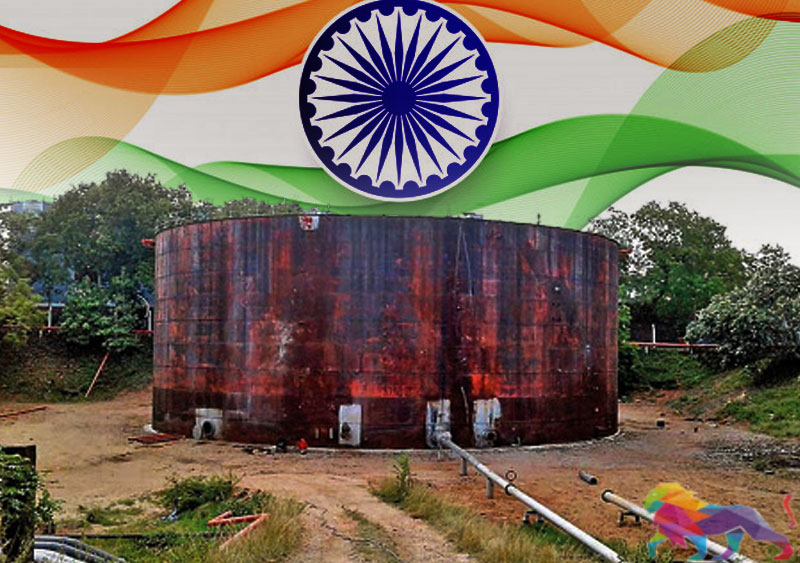
Portraying the economy as a drowning individual, Senior Economist and Former Central Bank of Sri Lanka (CBSL) Deputy Governor Dr. W.A. Wijewardena said that India’s economic support, which comes at the potential cost of sharing the Trincomalee Oil Tank Farms, was vital for the country’s survival.

He explained the present economic situation through an analogy: “The water is up to our nose and we are about to drown, so somebody has to save us from drowning. It is too late to go to the IMF, because we will have drowned by the time their assistance arrives in about six months. That is why an immediate rescue package from India is necessary, since we know how we can survive the upcoming three weeks.

“According to reports, India has come to an agreement with Finance Minister Basil Rajapaksa to give us a line of credit to cover the import of medicines, food, and fuel, but that is combined with the modernisation of the unused oil tank farms in Trincomalee. It comes as a package. So this credit line must be used immediately, but it means that these products must be imported from India and not any other country,” Wijewardena noted.

Dispelling IMF myths

He asserted that seeking the help of the IMF was the only available avenue for Sri Lanka as time had run out, stressing that: “The next step is for someone to pull us out of the water. For this, the only option is the IMF.”

He then dispelled allegations and misconceptions arising from certain quarters of the Government, which claimed that obtaining financial assistance from the IMF would result in Sri Lanka submitting to “conditions” of the fund. He pointed out that it would be the Sri Lankan Government itself which would propose the steps that would be taken to revamp and stabilise the economy.

He explained that: “The Sri Lankan people, including Parliamentarians, must first be educated on the current economic conditions and how IMF loans operate, before introducing any reform programme in Sri Lanka. Otherwise, it will be a failure. We see some MPs making bold statements saying that they don’t want to go to the IMF and accede to IMF conditions; I think they have to be educated. It is not the IMF which imposes conditions: it is we who suggest to the IMF the conditions that we will implement ourselves.

“For instance, when you go to the bank to borrow money, the bank doesn’t impose conditions. You go to the bank with the project report saying that you are doing this kind of reform and improvement, and if it’s acceptable to the bank, then they will finance it. Similarly, with the IMF, the Ministry of Finance and the CBSL Governor have to submit a joint letter of intent to the IMF suggesting that we would be introducing the following reform programmes in the country, if we were to receive the IMF loan,” he said.

The former Deputy Governor then noted that there was international experience and precedence to show that a country trying to fix the exchange rate artificially without sufficient foreign reserves would experience failure.

He said: “Regarding the exchange rate, we will have to see how long the Central Bank will be able to hold on to the fixed rate. International experience has shown whenever a Central Bank has tried to keep it fixed at that level, the Central Bank has failed. It happened with Myanmar and Thailand, and it is happening now with Lebanon and Turkey. Without sufficient foreign exchange reserves in hand, you cannot fix the dollar rate at the rate you want to fix it.”

Potential IMF conditions and their impact

Economist and University of Colombo Lecturer Umesh Moramudali elaborated on possible “conditions” that Sri Lanka may have to implement as a means of procuring the IMF loan.

Moramudali pointed out that floating the rupee was likely a requirement.

He noted: “One condition is that they would ask the recipient country to devalue the currency, which is to have a floating exchange rate system where the market determines the exchange rate. Currently the Government is holding the exchange rate at an artificial rate; this has also contributed to the dollar shortage. This is one condition the IMF is very likely to ask for – to let it float without defending it – which means the exchange rate is going to go up. The idea behind this is that they want the economy to stabilise on its own.

“How this helps, in their view, is when you allow the exchange rate to float, it drives up the exchange costs, resulting in increased import costs. When prices of imported items go up, people are compelled to adjust and bring down their demand. On the other hand, when the exchange rate increases, that also encourages people to engage in more export-oriented activities, because if you earn in dollars, a higher exchange rate means higher earnings. Essentially, through this condition more people will get into exports and bring in foreign currency while imports are reduced, curbing foreign exchange outflows,” Moramudali explained.

Fiscal policy changes would also be needed to demonstrate that Sri Lanka could increase revenue through the introduction of taxes, and possibly even revert back to the tax system introduced by the former Yahapalanaya Government.

“That will certainly be one condition, and this must happen regardless, because we have a very low tax revenue which would mean we would have to borrow continuously. One concern in this regard is that we don’t know what will happen with the VAT. This is because we decreased the rate from 15% to 8% and we increased the threshold, which means fewer businesses are liable to pay VAT. This contributed significantly to a shortfall of Government revenue, without bringing about a price reduction, meaning the objective of the VAT reduction wasn’t achieved,” Moramudali opined.

Reduction of expenditure would also be needed in tandem with an increase in revenue, which could further see subsidised services such as water, electricity, and fuel undergoing a price hike in order to reduce costs for those state-owned institutions.

“There is an IMF policy that state-owned enterprises shouldn’t be making losses, so they don’t advocate for subsidised water or electricity, which our Government provides. The consumer pays lower for a unit of electricity than its actual cost, and the remainder is borne by the Ceylon Electricity Board (CEB) at a loss. This is something the IMF would say to abolish because such subsidies are enjoyed by both the rich and the poor consumer. Instead, there should be targeted subsidies, since these losses are borne by the state and then subsequently passed down to the consumer one way or the other. Water and fuel subsidising also falls in this category,” Moramudali explained.

A key factor in Sri Lanka’s current economic disaster is the bunching up of massive foreign debt over the coming years. According to Moramudali, addressing this issue would significantly help Sri Lanka out of the current financial quagmire.

He said: “There’s a possibility that we may have to go for debt restructuring. Sri Lanka has not done debt restructuring before, so we don’t know what type of restructuring that might happen. For now it appears to be the best way out of this current crisis. The IMF will give us a short-term loan to stabilise the balance of payment issues, but since this won’t be enough to sort out the crisis, we’ll have to restructure the debt.”

While explaining the possible methods of debt restructuring, Moramudali noted that Sri Lanka and its citizens would inevitably face a tough economic period before things could recover.

He noted that debt restructuring could happen in different ways. One option is for the Government to restructure the sovereign bonds and inform the creditors that they would be paying the accumulated interest at the end of the two years. The other option would be for the Government to decide to pay the interest instead of the capital initially, and then pay the capital in four or five years.

He explained: “The idea is to postpone repaying the loans through an agreement with the creditors. Creditors in this instance will mostly be the sovereign bonds, because I don’t think it’s possible to restructure the World Bank or Asian Development Bank debts.”

IMF: Solutions for present economic crisis

University of Colombo Department of Economics Professor Chandana Aluthge spoke of the advantages of going to the IMF.

“Going to the IMF will boost the country’s credibility since we will receive IMF backing, and this will increase the confidence level of potential investors and those who have given loans to Sri Lanka. The second advantage is that IMF Loans are soft loans where the interest rates are nearly 0% with grace periods to commence the repayment, while the loan itself is long-term. However, all this depends on how the Government behaves during the loan agreement,” he said.

Aluthge also agreed that going to the IMF was the best option for Sri Lanka, since it would not be possible to obtain credit from the open market given the situation in the country. He further noted that around $ 5 billion would be needed as a loan considering the upcoming debt repayments.

“Since Sri Lanka had a weak foreign policy in the last few years, we do not have friendly countries that would bail us out. Therefore, the IMF is the best option. Deciding how much to borrow from the IMF depends on the immediate loan repayment. We have to repay about $ 2 billion next year, so I think it would be best to increase reserves up to $ 5 billion if possible as a good starting point,” he shared.

Speaking of how Sri Lanka needed to move forward in terms of bringing foreign exchange, Professor Aluthge said the economy should be revamped and the export sector expanded as the current traditional exports were either not sufficient or were being outmatched through market competition.

“In the near future and in the mid-term, Sri Lanka needs to overhaul the economy to attract more foreign exchange to the country. Our priority should be exports. We are still relying on tea, rubber, garments, and labour exports despite many issues; we’re sending labour to other countries but it is not easy to send money back to Sri Lanka. Therefore, user-friendly systems need to be implemented. In the garment industry, there are other countries supplying large portions of the world trade. Sri Lanka is still only supplying about 2% of the global demand for garments, but it is still one of the largest foreign exchange earners in the country. We will have to implement new strategies,” he warned.

He charged that the notion that Sri Lanka could be self-sufficient was a mistake and that history proved this, pointing out that even the largest of countries depend on exports to thrive.

“We also need to drop the idea of self-sufficiency, since it is not realistic. Sri Lanka is a very tiny country with a very small market, so self-sufficiency will not work. We saw this happen in the past in the 1970s. Even if you take China, which is a very large country, their economy depends very much on exports. If you look at smaller countries like Bangladesh, Singapore, and Korea, their world trade contribution to their gross domestic product (GDP) is very high. That is how they have developed their countries. They have a steady flow of foreign exchange that strengthens their economies,” he ventured.

Prof. Aluthge recommended that Sri Lanka move into high-tech industries for exports.

“We need to move into areas where export income is steady. Therefore, we have to identify those types of goods and services. New markets that have great potential are high-tech industries. We have no future otherwise. We’ll have to attract investors and the Government should support local investors who would like to take the risk. The Export Development Board should look for new markets and help investors,” he elaborated.

Government rejects possible IMF assistance

Despite various expert recommendations positing that the IMF was the lifeline the Sri Lankan economy needed to grab onto, the Finance Ministry remained adamant that it had no expectation of seeking IMF assistance.

“We have not spoken about procuring any loans from the IMF. Some are saying that $ 6 billion is needed by January. The IMF has never given $ 6 billion throughout its history. We haven’t spoken to the IMF, and nor do we have any intentions of going to the IMF for any loan,” Treasury Secretary S.R. Attygalle said, adding that the recent IMF visit was routine and no loan discussions had taken place.

“The IMF did not arrive on this occasion to discuss a loan. They will now give their report following their visit and issue a communique. That is all. We are not proposing anything,” he asserted.

He then said that the Indian credit line to import food, medicines, fuel and other essential items would be available by January.

“The Indian loan will come through. There are things that need to be arranged both here and in India for the credit line to be implemented. But it will most likely come through by January,” Attygalle said.

Posted in Uncategorized

Fitch downgrades Sri Lanka sovereign rating to CC

Fitch has downgraded Sri Lanka to ‘CC’ from ‘CCC’ saying there was an increased probability of default as liquidity injections made to sterilize interventions and enforce a 6.0 percent policy rate continue to drain reserves and create forex shortages.

“The downgrade reflects our view of an increased probability of a default event in coming months in light of Sri Lanka’s worsening external liquidity position, underscored by a drop in foreign-exchange reserves set against high external debt payments and limited financing inflows,” the rating agency said.

“The severity of financial stress is illustrated by elevated government-bond yields and downward pressure on the currency.”

In addition to repaying debt, the central bank is also spending reserves for current imports and printing money to sterilize the interventions, adding more rupee reserves to the banking system to enforce a 6.0 percent policy rate, preventing the monetary base from contracting, short term rates rising, and reducing credit.

Related Sri Lanka overnight injections top Rs400bn amid sterilized interventions

Below ‘CCC’ Fitch does not use notches (+ or – notations) and downgrades by entire levels.

“We believe it will be difficult for the government to meet its external debt obligations in 2022 and 2023 in the absence of new external financing sources.

“Obligations include two international sovereign bonds of USD500 million due in January 2022 and USD1 billion due in July 2022.”

Fitch Downgrades Sri Lanka’s Long-Term Foreign-Currency IDR to ‘CC’

Fri 17 Dec, 2021 – 11:31 AM ET

Fitch Ratings – Hong Kong – 17 Dec 2021: Fitch Ratings has downgraded Sri Lanka’s Long-Term Foreign-Currency Issuer Default Rating (IDR) to ‘CC’, from ‘CCC’. Fitch typically does not assign Outlooks or apply modifiers for sovereigns with a rating of ‘CCC’ or below.

A full list of rating actions is at the end of this rating action commentary.

Key Rating Drivers

The downgrade reflects our view of an increased probability of a default event in coming months in light of Sri Lanka’s worsening external liquidity position, underscored by a drop in foreign-exchange reserves set against high external debt payments and limited financing inflows. The severity of financial stress is illustrated by elevated government-bond yields and downward pressure on the currency.

We have affirmed the Long-Term Local-Currency IDR at ‘CCC’, as authorities have continued access to domestic financing, despite high and still-rising government debt and an elevated debt service burden.

Sri Lanka’s foreign-exchange reserves have declined much faster than we expected at our last review, owing to a combination of a higher import bill and foreign-currency intervention by the Central Bank of Sri Lanka.

Foreign exchange reserves have declined by about USD2 billion since August, falling to USD1.6 billion at end-November, equivalent to less than one month of current external payments (CXP).

This represents a drop in foreign-currency reserves of about USD 4 billion since end-2020.

We believe it will be difficult for the government to meet its external debt obligations in 2022 and 2023 in the absence of new external financing sources. Obligations include two international sovereign bonds of USD500 million due in January 2022 and USD1 billion due in July 2022.

The government also faces foreign-currency debt service payments, including principal and interest, of USD6.9 billion in 2022, equivalent to nearly 430% of official gross international reserves as of November 2021.

Cumulative foreign-currency debt service, including interest and principal, amounts to about USD26 billion from 2022 through to 2026.

The timing and availability of external resources is unclear and may not be readily available for debt service. The central bank published a six-month roadmap in October that outlined plans to raise additional external borrowings through a number of channels, including bilateral and multilateral sources, syndicated loans and through the monetisation of under-utilised assets in 1Q22.

A drawdown on the existing currency swap facility with the People’s Bank of China (PBOC) could boost reserves by up to CNY10 billion (USD1.5 billion equivalent). However, even with resources from the swap facility, foreign exchange reserves are likely to remain under pressure, in our view.

Additional sources of financing could come from an economic support package from India, which contains a swap facility under the South Asian Association for Regional Cooperation currency framework of USD400 million, a swap facility with the Qatar Central Bank, remittances securitisation and a revolving credit facility with the Bank of China Limited (A/Stable).

However, even if all these sources are secured, we believe it will be challenging for the government to maintain sufficient external liquidity to allow for uninterrupted debt servicing in 2022.

Press reports suggest the government may be contemplating IMF financing; an IMF programme would unlock multilateral financing, but we believe the Fund could well suggest restructuring to bring about debt sustainability.

Sri Lanka’s external finances are further challenged by a persistent current account deficit, resulting in downward pressure on the exchange rate. We estimate that the deficit widened to about 5.7% of GDP in 2021 and expect it to remain at about 4.0% in 2022, before falling to 2.1% by 2023.

A plunge in remittances, a weak tourism recovery and rising imports have contributed to the wider current account deficit. Travel and tourism, an important economic driver, has been hit hard by the COVID-19 pandemic and the outlook for a recovery remains uncertain given the emergence of new highly transmissible virus variants.

The Sri Lankan rupee/US dollar spot exchange rate depreciated by 7%-8% since end-2020, and the central bank intervened to support the currency, exacerbating the decline in reserves.

Wide fiscal deficits continue to worsen the outlook for debt sustainability. The 2021 fiscal deficit target of 8.9% of GDP was missed by a wide margin, and we expect the government deficit to widen to about 11.5% of GDP in 2022.

We believe 2022 revenue targets are optimistic, especially in light of our expectation of weak economic activity. We forecast general government debt to reach about 110% of GDP by 2022, and to keep rising under our baseline, absent major fiscal consolidation.

We also believe it is unlikely that Sri Lanka will meet its 2025 government debt reduction target of about 89% of GDP or narrow the fiscal deficit to 4.8% of GDP. Rising interest payments are a major driver of the widening deficit and the interest/revenue ratio of at about 95.0% is well above the peer median of 11.3%.

Sri Lanka’s economic performance is likely to weaken in 2022, as the challenging external position and exchange-rate pressure will have knock-on effects on economic activity. Foreign currency shortages in 2021 hampered food and fuel imports, and continued external liquidity stress could worsen supply shortages, hurting economic activity.

We expect growth to slow to 2.0% in 2022, from an estimated 3.6% in 2021, before recovering to 4.3% in 2023 partly due to base effects and a gradual easing of domestic pressures, although downside risks to our forecasts remain. Sri Lanka’s economy was expanding at a modest pace prior to the pandemic, which led real GDP to contract by 3.6% in 2020.

ESG – Governance: Sri Lanka has an ESG Relevance Score of ‘5’ for Political Stability and Rights. This reflects the high weight that the World Bank Governance Indicators (WBGI) have in our proprietary Sovereign Rating Model. Sri Lanka has a medium WBGI ranking at the 47th percentile, reflecting a recent record of peaceful political transitions and a moderate level of rights for participation in the political process. As Sri Lanka has a percentile rank below 50 for the governance indicator, this has a negative impact on the credit profile.

ESG – Governance: Sri Lanka has an ESG Relevance Score of ‘5[+]’ for the Rule of Law, Institutional and Regulatory Quality and Control of Corruption. This reflects the high weight that the WBGI has in our proprietary Sovereign Rating Model. Sri Lanka has a medium WBGI ranking at the 53rd percentile, reflecting moderate institutional capacity, established rule of law and a moderate level of corruption. As Sri Lanka has a percentile rank above 50 for the respective governance indicators, this has a positive impact on the credit profile.

Sri Lanka has an ESG Relevance Score of ‘5’ for Creditor Rights, as willingness to service and repay debt is relevant to the rating and is a rating driver for Sri Lanka, as for all sovereigns. Given the increasing possibility of default reflected in the CC rating, this has a negative impact on the credit profile.

RATING SENSITIVITIES

Factors that could, individually or collectively, lead to negative rating action/downgrade:

– Failure to service bonded debt obligations within grace periods stipulated in relevant documentation, or unilateral declaration of a debt moratorium

– Launch of a formal debt renegotiation process by authorities or the start of a process that Fitch deems to constitute a default or default-like event
Factors that could, individually or collectively, lead to positive rating action/upgrade:

-External Finances: Improved external liquidity, supported by higher non-debt inflows or lower external sovereign refinancing risk from an enhanced liability profile that allows for smooth servicing of liabilities

– Public Finances: Implementation of a credible medium-term fiscal consolidation strategy that supports a sustained decline in the general government debt/GDP ratio, increasing financing options and reducing the probability of default

– Structural: Improved policy coherence and credibility, leading to more sustainable public and external finances and a reduction in the risk of debt distress

Sovereign Rating Model (SRM) and Qualitative Overlay (QO)

In accordance with its rating criteria, Fitch’s has not utilised the SRM or QO to explain the ratings in this instance. Ratings of ‘CCC+’ and below are instead guided by the rating definitions.
Fitch’s SRM is the agency’s proprietary multiple regression rating model that employs 18 variables based on three-year centred averages, including one year of forecasts, to produce a score equivalent to a Long-Term Foreign-Currency IDR. Fitch’s QO is a forward-looking qualitative framework designed to allow for adjustment to the SRM output to assign the final rating, reflecting factors within our criteria that are not fully quantifiable and/or not fully reflected in the SRM.
Best/Worst Case Rating Scenario

Why is Sri Lanka being downgraded by rating agencies?

The opposition claims Sri Lanka has been downgraded once again by international rating agencies since the government has ignored the advice of economic experts.

Speaking to NewsRadio, Parliamentarian Harsh de Silva said the government has not provided any alternative as Sri Lanka is heading towards a debt default.

MP de Silva said the government initially ignored the expert advice to obtain vaccine doses and promoted a syrup instead which resulted in the death of many Sri Lankans.

He said the country’s farming industry suffered after the government took an arbitrary decision to ban the use of chemical fertiliser.

He said during both occasions, the government ignored the advice of experts.

MP Harsh de Silva said the government has claimed that it has a home-grown solution for the economic troubles as well.

The MP said Sri Lanka’s economy will endure the same fate as the coronavirus crisis and the farming issue.

He said he personally believes it is too late and the government is likely to default on its debt either in January, March or July.

MP de Silva said the Governor of the Central Bank, Ajith Nivard Cabral as a Minister if July claimed Sri Lanka’s foreign reserves will increase to US$ 7 billion by December.

He said however now Sri Lanka does not even have US$ 1 billion in reserves.

Parliamentarian Harsh de Silva noted that rating agencies have now issued red warnings since they have observed that the government will struggle to honour its debt repayments while running the economy.

Basil to post of PM upon returning from America!

It is rumoured that Finance Minister Basil Rajapaksa will take up the post of Prime Minister upon his return from America.

When inquired from two prominent government members regarding this, they denied it.

However, there have been recent media reports that the current Prime Minister Mahinda Rajapaksa will step down in 2022.

Basil Rajapaksa who was the head of the Presidential Task Force on Poverty Alleviation, was sworn in as a Member of Parliament and was appointed as the Minister of Finance upon returning to Sri Lanka from the US last May.

It is reported however, that many members of the Rajapaksa family, including the President, are upset with Basil for his attempts to protect P.B. Jayasundera.

Posted in Uncategorized