National Issues Haunt GoSL at UNGA 2021

Sri Lanka’s long-standing problem of seeking justice for the Tamils, and Catholics after the Easter Sunday attacks, has reached the United Nations Headquarters doorstep in New York and even Geneva, amidst the coronavirus scare. The Government in its lacklustre campaign to resolve domestic affairs, has failed to grapple with those issues, despite calls to resolve national issues such as reconciliation, repealing of the Prevention of Terrorism Act (PTA) and exposing the mastermind behind the Easter Sunday attacks.

President Gotabaya Rajapaksa addressed the 76th United Nations General Assembly (UNGA) in New York amidst black flag carrying Sri Lankan Diaspora protesting outside the UN building. Some were also protesting opposite the Permanent Mission of Sri Lanka to the United Nations and this is the first time that the Sinhalese protested. There were no other protest held in New York and that brought the attention to the ‘crisis’ Sri Lanka is currently facing.

Easter Attacks need a closure

The Government was prepared for this, however. The speech by the President said it all. The fine-tuned speech by the President was well presented, and the core issues he spoke about were areas that are highly sensitive and need serious concentration in implementation. The President also highlighted some of the burning issues and how those could be solved.

Protests were held every time a Sri Lankan leader delivered a speech at such international fora in the past, but this is the first time Catholics and their clergy, from both Sinhala and Tamil communities, gathered in New York over the Easter attacks and its victims. In June 2020, the report of the three-member committee, headed by Justice Malalgoda, on the investigation into the cause and background of Easter Sunday attacks was handed over to former President Maithripala Sirisena.

Later, in February 2021, President Gotabaya Rajapaksa appointed a six-member ministerial committee headed by Minister Chamal Rajapaksa to study the report of the Presidential Commission of Inquiry that looked into the Easter Sunday attacks and the report presented to Parliament by the Sectoral Oversight Committee on National Security. The President’s Easter Sunday message of 2021 said that he will leave no room for the culprits as well as groups that are responsible for the dastardly attacks.

However, there are some suspects arrested, mostly from the Eastern Province, but still, the mastermind behind the bombings are out there, claim many of the activists, including politicians and Malcolm Cardinal Ranjith. It’s unclear whether the Government knows the mastermind, despite the Cardinal’s constant demands to arrest the main culprits. This message has gone worldwide, and the expatriates in Italy also staged a protest last week when Prime Minister Mahinda Rajapaksa attended an interfaith forum organised by an NGO.

The report on the Easter Sunday attacks is ready, but some of the chapters that are national security secrets are not divulged to the public. The masses are after the government to get to the bottom of it, and the Catholics, the largest religious community in the world, will not rest until there is a closure on the subject. The next closure, the Tamils demand is, about the last phase of the war, as well as the release of the Tamil detainees under the PTA. The Government has undertaken to do this but differently without complying with the UNHRC recommendations.

The recommendations are in fact watered down considerably compared to the previous recommendations, but the Government has given their piece of mind on how the national reconciliation will be done, how the missing persons matter will be addressed, and how the death certificates will be issued, despite the fact that these are vehemently opposed by the Tamils of the North and the East.

Who are the Tamil Diaspora the President is referring to?

In this background, President Rajapaksa invited the Tamil Diaspora to come for discussions with the Government. At a meeting last Sunday in New York, with the UN Secretary-General Antonio Guterres, before he delivered his speech at the UNGA, President Rajapaksa said, Sri Lanka issues should be resolved through “an internal mechanism” of the country. The Tamil Diaspora would be invited for discussions in this regard, he said, according to a Media release from his office. It is unclear whom he is referring to as the Tamil Diaspora, because most of the Tamils are connected to many Tamil Diaspora organisations across the world, which is a common scenario.

These organisations are run by Tamil intellectuals and politically connected to the countries where the Tamils live. They assist the Tamils in times of trouble and harmony. The Government knows that such Tamil organisations are powerful and have control over the voting patterns of Canada, the UK, France, and Australia, etc. and they are highly backed by international human rights organisations, and are well briefed on Sri Lanka.

But these organisations are banned, in fact, by the incumbent Government, which is why it has raised the eyebrows of some of those organisations as to who the President of Sri Lanka is referring to and calling for talks. This hot topic is going viral across social Media currently.

However, MP Shantha Bandara has told a local Media that the President has referred to those who fled after the 1983 ethnic riots, who were intellectuals the country lost. He said they were genuine Tamils who served the Sinhalese but, due to the riots, they had to flee. He had said, “There are those Tamil Diaspora whose members are not LTTE sympathisers. However, the Government has to be clear about what they want and whom they want to engage with, as the President has now assured the Secretary General of the UN, because these matters are getting recorded and could be pulled up when it matters”.

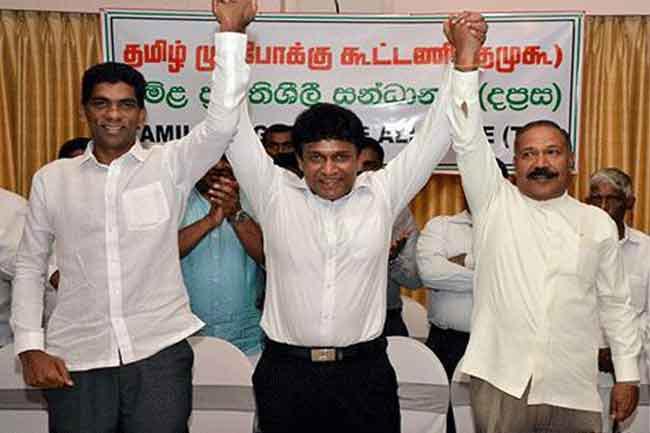
Some of the Tamil Diaspora that are highly influential organisations, including Tamil advocacy groups such as the British Tamil Forum, the Canadian Tamil Congress, the Australian Tamil Congress, the Global Tamil Forum, the National Council of Canadian Tamils, the Tamil Youth Organisation, and the World Tamil Coordinating Committee, were proscribed in March 2021 by the Government.

Some of the leading Tamil Diaspora groups took to emailing Ceylon Today to express their views on what exactly it means when Sri Lanka’s President invites them for talks. These Tamil Diaspora groups also have their own mandates, different from each other and recognise each other ‘differently’. But all of them are influential and can support Sri Lanka if their conditions are met, but on the other hand, it can be strongly contested by the Government of Sri Lanka and considered ‘failed talks’ as in the past.

EROS Democratic Progressive Alliance

The UK-based Leader of the EROS Democratic Progressive Alliance, Nesan Shankar Raji, who has campaigned for the incumbent Government and whose party is registered in Sri Lanka, said: “While we welcome President Rajapaksa’s move, a majority of Tamil Diaspora groups will view this announcement with caution for a number of reasons, including his failure to resolve the Tamil national question.” He also said that Sri Lanka is bankrupt and in desperate need of Foreign Direct Investment.

Any idea or expectation of the Tamil Diaspora investing in Sri Lanka, especially when the country is under severe scrutiny by the West, including the UN, over alleged human rights abuses in the run-up to and in the aftermath of the 2009 terrorist war, is simply not encouraging… The Tamil Diaspora would rather keep their investments safe in less volatile environments. “What the President needs to do is invite all Tamil political parties and stakeholders together for talks, including those organisations which have been banned by the Sri Lankan Government, i.e. TGTE, British Canadian and Australian Tamils Forum etc.” Sending his views by email, Shankar Raji said a concrete and transparent road map must be drawn up for a devolved administration in the North and East with consideration given to re-merge the Northern and Eastern Provinces as one entity as defined under the Indo-Lanka Accord.

“Only when the President first addresses the above will the Tamil Diaspora be interested in coming forward for dialogue.” He also emphasised the background of UN Secretary-General Antonio Guterres. The President also ought to know that Guterres has Timorese blood running through his veins. The former PM of Portugal and UN High Commissioner for Refugees was instrumental in helping East Timor secure independence from Indonesia and has links with relatives who were part of the armed revolutionary group FALINTIL and its current leadership, including former President of Timor-Leste Vicente Guterres.

More recently, Tamil political prisoners in Anuradhapura Prison were abused and intimidated at gunpoint by the former Minister of Prisons, Lohan Ratwatte. Again, the President has to take drastic action but this gun-toting MP is still holding another minor Ministerial portfolio. Such are the shenanigans of the current administration in power in protecting such criminals with impunity, he noted.

The GTF

In the meantime, Global Tamil Forum (GTF) spokesman, Suren Surendran, said conflicts could be resolved either through military battles or by negotiation. The GTF, from its inception, has proactively propagated a negotiated political solution as the best resolution to the conflict in Sri Lanka. Therefore, President Rajapaksa’s announcement, from New York, wanting to engage the Tamil Diaspora has to be welcomed.

“I am not sure which Tamil Diaspora organisation the President has in mind as his Ministry of Defence gazetted all recognised Tamil Diaspora organisations and over 200 Diaspora members, including myself, as terrorists only six months ago, in March 2021.” If the banning was to please his Sinhala nationalist vote base, then he has got a problem on his hand when he returns home from the US to explain to his constituency, why he now wants to talk to the same banned organisations.

What has changed in the past six months? Besides, and most importantly, R. Sampanthan, who is the leader of the largest Tamil party in Parliament, with members elected by the Tamil people of Sri Lanka, has been requesting to meet the President for many months now. The President for one reason or the other has been postponing this meeting request but now has chosen to announce that he wants to meet the Tamil Diaspora, who obviously live abroad.

That in itself raises eyebrows about his intentions. Even if we give him the benefit of doubt, isn’t this the same President who firmly believes that conflicts and issues should be resolved within Sri Lanka and through domestic means, but now wants to deal with an external international force, the Tamil Diaspora.

Another matter of contention, isn’t it? Going by past experience, there has never been a trustworthy Sinhala leader who has sincerely committed to resolving the Tamil political issues. From the time of independence, almost every leader has used Tamil political aspirations for their own benefits to gain or remain in power. This resulted in the Tamil youth taking arms to fight for our legitimate rights.

Similarly, even the last Yahapalanaya Government did exactly the same. Both the President and the Prime Minister blamed each other and ran the full term without any resolutions to their problems. Mahinda Rajapaksa, Chandrika Kumaratunga and every previous leader never had the political will to resolve the issues. Why would the President be any different? Especially going by his campaign rhetoric, his speeches, and even most of the actions he has taken during his tenure, to date, don’t give us any confidence at all.

Even if he is half sincere or serious about resolving the issues concerning Tamil people, he should immediately return to engaging the TNA for talks. As for the domestic mechanisms that the President wants to talk to us about, in transitional justice, there are judicial and non-judicial processes and mechanisms. “We will be very happy to engage and discuss the latter, but as for the former, for judicial mechanisms, in the United Nations Human Rights Council (UNHRC) Resolutions 30/1 and 46/1, which describe what exactly needs to happen,” Surendran added.

The BTC

Chair of the British Tamil Conservatives (BTC), Dr. Arujuna Sivananthan, in his email said “The Tamil Diaspora engages with all members of the Sri Lankan Diaspora who subscribe to liberal values and are committed to justice, accountability and reconciliation and that there is already close engagement with those committed to accountability and reconciliation and like-minded people. “The organisations and individuals that enjoy the protection of their respective governments or have the capability to seek legal recourse were not banned. The BTC or its members were not banned, nor were Tamils for Labour. No US organisation or individual was banned. Also, Australian individuals were not banned either.

Some of those banned are dead. Also, many of the addresses are plain wrong”. He also noted if the President of Sri Lanka is genuinely committed to reconciliation, first he must engage in meaningful talks with the Tamil people’s elected representatives who have a democratic mandate to do so. The Diaspora is diverse with a heterogeneity of views, and no one organisation or individual can claim to represent it. However, they coalesce around common issues. Over the question of using the LTTE Tiger flag used during the protest, Dr. Sivananthan pointed out that in the UK, the ‘Tamil National Flag’ is not illegal. This flag has a roaring tiger with a red background.

Only the LTTE flag is banned. “The difference is akin to the IRA’s flag and that of the Republic of Ireland. We will bring to bear every resource and strive with each sinew and fibre in our body to end the national issues and for the Tamils to enjoy their inalienable right to selfdetermination,” he added.

(amiesulo@gmail.com)

Rajapaksa’s dysfunctional regime in Sri Lanka and its impact on South Asia – ORF

Basic human rights and liberal democracy are dismissed by the autocratic leadership in Sri Lanka. Such circumstances suppress the public from exercising their democratic rights on a daily basis. The predominantly active political class of Sinhalese Buddhists, who campaigned for and elected a Rajapaksa regime and once supported autocratic sentiments now seem to be questioning the regime’s behaviour. During the Presidential election in 2019, which came in the immediate aftermath of the Easter Sunday attacks, national security was the top concern. However, at present, individual security is threatened more than ever before, owing to an economic crisis overshadowed by a pandemic. To survive within Sri Lanka’s autocratic family rule is to remain in greater fealty to the ultra-nationalistic ethos projected in no uncertain terms by the Gotabaya Rajapaksa regime. Under this repressive environment, there will be a no freedom of choice due to a deep fear that has crept into every household in the country.

Shortage of essential food items at the height of the pandemic with the highest number of deaths recorded on the island happening simultaneously, the public is battling a two-way crisis. President Gotabaya Rajapaksa declared emergency regulations by enforcing directives, and appointing former Major General MDSP Niwunhella to take over as Sri Lanka’s Commissioner of Essential Services amidst an economic emergency. It is another military appointment which pushes the quasi democracy towards a complete autocracy, expanding the regime’s militarisation programme. This was a concern also raised by the UNHRC. With the present dysfunctionality, hopefully, Sri Lanka will not see another youth insurrection from its majoritarian Sinhalese Buddhists as seen in the past in 1971 and 1989, triggered by economic failure and political injustice where thousands of innocent lives were lost. The economic emergency allows authorities to control and seize stocks of staple foods; naturally, the current food shortage reminds the Sri Lankan public of the 1970s regime of Prime Minister Sirimavo Bandaranaike ending in 1977.

The predominantly active political class of Sinhalese Buddhists, who campaigned for and elected a Rajapaksa regime and once supported autocratic sentiments now seem to be questioning the regime’s behaviour.

There is a steep devaluation of currency due to a foreign exchange crisis. The Sri Lankan rupee crossed a historical high at Rs.231 to the US dollar, while 127 billion rupees were injected. The Sri Lankan rupee has fallen 7.5 percent against the US dollar this year and its month-on-month inflation rose to 6 percent in August, with significant borrowing where 80 percent of the revenue is for debt servicing, especially with continued borrowings from China. It has also reached out to many other nations including Bangladesh, which will provide US $200 million currency swap to assist the fast-depleting foreign reserves in Sri Lanka. Assessing the economic crisis, former Deputy Governor of the Central Bank, WA Wijewardena, says the economic situation has ‘graduated from a crisis to a total catastrophe now’, a free fall of the economy. The Central Bank acts as an advisory institution under such circumstances. Therefore, a new governor of the Central Bank was appointed, former State Minister Ajith Nivard Cabraal, a close confidant of Prime Minister Mahinda Rajapaksa to help limit the situation.

Dysfunctionality and the China tilt

A few weeks before the economic emergency, President Gotabaya Rajapaksa made a surprising cabinet reshuffle of a few key ministries, including Health and Foreign Affairs. The Health Ministry was in a disastrous state with multiple interventions aimed at health professionals by the regime. Health Minister Pavithra Wanniarachchi was shuffled to bring in Keheliya Rambukwella, a vociferous defender of the regime.

Foreign Affairs Ministry was the other crucial ministry that was reset. During the time of the former Foreign Minister, Dinesh Gunawardena, Sri Lankan foreign policy lost its balance and neutral posture tilting toward China. There is no positive sign even with the experienced new foreign Minister GL Peiris to change this direction and recalibrate its China bandwagoning foreign policy. The China tilt policy was reiterated at the recent 48th UNHRC session where Sri Lanka defended China’s human rights accusations, commenting ‘external forces should not seek to interfere in Xinjiang and Hong Kong, which are integral parts of the People’s Republic of China (PRC)’.

Weeks before, the strong bilateral economic cooperation was cemented at the diplomatic meeting between a high-profile delegation of the Parliament of the PRC and Sri Lanka, which took place in August 2021. The meeting was led by Basil Rajapaksa, the new Rajapaksa brother who joined the government taking over the position of the Finance Minister; this meeting also included many other strong political weights from within the government such as the new Foreign Affairs Minister.

The China tilt policy was reiterated at the recent 48th UNHRC session where Sri Lanka defended China’s human rights accusations, commenting ‘external forces should not seek to interfere in Xinjiang and Hong Kong, which are integral parts of the People’s Republic of China (PRC)’.

The Chairman of the National People’s Congress (NPC) Standing Committee Li Zhanshu said that the “Chinese government will do its utmost to help overcome the economic challenge as well as the COVID challenge in Sri Lanka”. Foreign Minister G.L Peiris requested Chinese assistance at the international arena by saying, “China has always stood by Sri Lanka as a close friend in the international arena and that he looks forward to the continued support in the future as well.”. The Foreign Minister’s request to protect the regime at the international forum will be taken up as a priority by the Chinese leadership.

The defence of Chinese human rights violations in a global forum is another ancillary ingredient apart from China’s ‘debt trap’ and vaccine dependency towards realising the Chinese ‘strategic trap’. While the Chinese embassy projects kudos by saying, “Well done! Sri Lanka the fastest vaccination speed in the world for the past week”, China also works on the economic recovery and enlarging the Chinese debt and ‘strategic trap’ in Sri Lanka. Deborah Brautigam, a Professor at the School of Advanced International Studies at Johns Hopkins University and Meg Rithmire, an Associate Professor at Harvard Business School assess that ‘After the construction of the port in Hambantota, for example, Chinese firms and banks learned that strongmen fall and that they’d better have strategies for dealing with political risk’. Perhaps, China’s risk assessment and learning have improved over time but it is not short of the ‘strategic trap’ in Sri Lanka.

Dysfunctional states and extremist threat

The dysfunctionality and frustrations lent by the country’s mismanagement has left a fertile ground for multiple security threats to mushroom, including extremist terror. This threat is beyond borders. A month after the New Zealand Christ Church attack, Sri Lanka’s largest extremist terror attack took place. At that time, Sri Lanka’s State Minister of Defence was quick to call the Easter Sunday attack a retaliation for the Christ Church attack. Sri Lankan Easter Sunday attack is unearthing multiple new evidence. Cardinal Malcolm Ranjith, revealed at a recent press conference that a ‘Sri Lankan military intelligence officer, through a local agent and an unspecified person in Indonesia, had forced the terrorist group ISIS to claim responsibility for the Easter Sunday attacks’. These are serious findings, opening new dimensions about the attacks.

With the US exit from Afghanistan and the re-Talibanisation of the country, the regional security balance is under threat. It poses a stage for the return of extremist terrorism.

Ahamed Aathill Mohamed Samsudeen, the Sri Lankan who committed the heinous act of stabbing innocent civilians in New Zealand in September 2021, perhaps, had an indirect connection to terror cells in his own home town Kattankudy in the Eastern Province of Sri Lanka where Mohammed Zahran, the mastermind of the Easter attack preached an increasingly extremist version of Islam. In order to subvert such a movement from taking root, the current regime in Sri Lanka set the draconian Prevention of Terrorism Act, which allows arrests and surveillance in place. It employed strong bans including a ban on madrassas, ban on burqa, and forced cremations for a limited time. The consequences of these acts will predictably be the spread of islamophobia and the grooming of more extremists rather than the reverse of it.

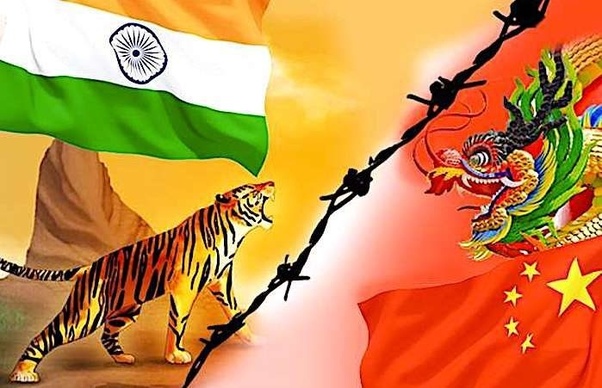
With the US exit from Afghanistan and the re-Talibanisation of the country, the regional security balance is under threat. It poses a stage for the return of extremist terrorism. The absence of US counterterror operations will not be filled by China or Russia. For China, with its close Taliban/Pakistan relations, it will be a test on Chinese leadership for maintaining balance. India faces serious security threats from all directions—from its western borders from Pakistan, northern from China, eastern from Bangladesh and the South from Sri Lanka and Maldives. According to Shivshankar Menon, former Indian National security Advisor, “Afghanistan is not a threat to us. It has to come through Pakistan”. The dysfunctional nature of many other South Asian states presents a gap in robust counterterrorism mechanisms with a multijurisdictional approach and the absence of security architecture. This gap could make way for South Asia to become a hub for the extremist terrorist threats. In the case of Sri Lanka, the absence of social security for minorities is the root cause that should be addressed. If counterterrorism mechanisms are used for arbitrary detention as explained by UN Human Rights High Commissioner Michele Bachelet from her recent update on Sri Lanka and how the strict surveillance continues to be used, it will invite dangerous security concerns to the society and the region. With the absence of a holistic mechanism, Sri Lankan prisons will become breeding grounds for extremist terrorists.

The knee jerk decisions from the important cabinet reshuffle and appointment of a new governor of the central bank to increasing military appointments and arbitrary detention are definitely not moves in the right direction. The Rajapaksa’s repressive policies overshadow everything else, including the new appointments for course correction. The crass act of the regime’s own minister of prison was a clear evidence of moral values and dysfunctionality within the government. While liberal democracy is suppressed by Rajapaksa regime, the present dysfunctionality in Sri Lanka’s political-economic environment and its pro-Chinese foreign policy will have severe security impact on the entire South Asian region.

Posted in Uncategorized

Tamil Diaspora Organization’s Declaration of Common Principles of Tamils – EINPresswire.com

Six Tamil Diaspora organizations jointly issued Declaration of Common Principles of Tamils:

1) An internationally conducted and monitored Referendum that allows people living in the north-eastern region of the island of Sri Lanka (Northern and Eastern province) prior to 1948 and their descendants to find a democratic, peaceful, permanent, and political solution that meets Tamils’ aspirations.

2) An interim International Protection Mechanism in the north-eastern region of the island.

3) The Repeal of the Sixth Amendment to the Sri Lankan Constitution

4) The referral of the situation in Sri Lanka to the International Criminal Court with respect to genocide, crimes against humanity and war crimes, and legal action against Sri Lanka before the International Court of Justice under the Convention on the Prevention and Punishment of the Crime of Genocide and the Convention against Torture.

Seetharam Sivam, President, United States Tamil Action Group(USTAG)

Meena Ilancheyan, President Tamil Americans United PAC

Viswanathan Rudrakumaran, Prime Minister Trans National Government of Tamil Eelam (TGTE)

Rajendra Nadaraja, President Ilankai Thamil Sangam

Ravi Subramaniam, President World Tamil Organization (WTO)

Shanthini Jeyarajah, President North Carolinians for Peace

BELOW, PLEASE FIND THE FULL DECLARATION:

DECLARATION OF COMMON PRINCIPLES OF TAMILS

We, the undersigned representatives of Tamil Diaspora organizations from the Island of Ceylon, now known as Sri Lanka,

Affirming that sovereignty lies with the individual.

Reaffirming that the will of the people shall be the foundation of democracy.

Recognizing that direct democracy is more authentic than representative democracy with respect to the resolution of national conflicts, as demonstrated by the international community in the Referendum clause of the Good Friday Agreement, the Referendum clause in the Serbia-Montenegro Agreement, the Referendum clause in the Bougainville Agreement, the Referendum clause in the Machakos Protocol (South Sudan), Kosovo’s referendum, Scotland’s referendum, etc.

Recalling that there were separate Sinhala kingdoms and a Tamil kingdom in the island of Ceylon before the arrival of colonial powers in the 15th century.

Recalling that the colonial powers — the Portuguese, the Dutch and the British — administered the Sinhala kingdoms and the Tamil kingdom separately during the initial period of 300 years of their rule.

Recalling the amalgamation of the Sinhala kingdoms and the Tamil kingdom by the British for the purpose of administrative convenience on the recommendation of the Colebrooke Commission in 1833.

Recalling that the Ilankai Tamil Arasu Kadchi (ITAK – Federal Party) was formed in December 1949, and in April 1951 the ITAK articulated its claim that the Tamil People in Ceylon were a Nation distinct from that of the Sinhalese and demanded a federal arrangement in the North and the East, where the Tamil-Speaking Peoples are a predominant majority.

Noting that when independence was granted to Ceylon in 1948 through the Soulbury Constitution that the British included section 29(2), which was perceived as “unalterable” since it “entrenched religious and racial matters” by the Judicial Committee of the Privy Council in 1964. but was unilaterally abolished by the Sri Lankan Government in 1971.

Recalling the citizenship act of 1948 which disenfranchised more than 700,000 Upcountry Tamils who constituted eleven percent of the population.

Cognizant of the subsequent expulsion of Upcountry Tamils pursuant to the 1964 Sirimavo-Shastri Pact between India and Sri Lanka was comparable to the expulsion of Asians by Idi Amin from Uganda.

Recalling the speech made by Mr. S.J.V. Chelvanayagam in Sri Lanka’s Parliament on December 5, 1976, “We have completely abandoned the Federal concept; We have decided to separate. If we don’t separate, we can never win back our lost rights. We will try in every way to set up a separate state. This is certain. As the voice of my people, I tell this to Sri Lanka and the world from this house. We know this is not an easy task. We know it is a difficult path. But either we must get out of the rule of the Singhalese or perish. This is our ideal”.

Noting that the Vaddukoddai Resolution was adopted on 14 May 1976 by the Tamil United Liberation Front seeking to work for the creation of an independent State of Tamil Eelam, which received an overwhelming mandate at the subsequent 1977 Parliamentary Elections.

Emphasizing that the Tamil People did not grant their consent to the enactment of the 1972 (Republican Constitution) and 1978 Constitutions of Sri Lanka that were enacted on the basis of the unitary character of the State without the participation of and with opposition from the elected Tamil representatives of the major Tamil political parties.

Bearing in mind that the Eelam Tamils in the island of Sri Lanka, who have a distinct language and distinct culture and who have a historic relationship to the North-Eastern part of the island of Sri Lanka, a relationship which is recognized in various pacts including the 1987 Indo-Lanka Accord constitute Tamils a “People” under international law, thus entitled to realize their inherent right to self-determination.

Recognizing that given the aforesaid reality and emphasizing that any political solution to the Tamil National Question should recognize the Tamils as a distinct Nation.

Being aware that between 1956 and 2008, Tamils have been subject to 157 racial massacres on the island of Sri Lanka, including the 1958, 1977 and 1983 racial pogroms.

Taking note of the occupation of the de facto state of Tamil Eelam which is the result of destruction due to the genocidal war.

Mindful that the war between the state of Sri Lanka and the Liberation Tigers of Tamil Eelam ended in May 2009 with unspeakable mass atrocities committed against the Tamil people.

Noting that, according to the 2011 Report of the Panel of Experts established by the then United Nations Secretary General Ban Ki-Moon, there is credible evidence that crimes against humanity and war crimes were committed during and after the war.

Noting that the UN Secretary General’s Panel of Experts on Sri Lanka also stated that “[a] number of credible sources have estimated that there could have been as many as 40,000 civilian deaths.”

Noting that according to the 2012 UN internal review report headed by Charles Petrie, there are credible reports that “over 70,000 civilians are unaccounted for” during the final stages of the war.

Mindful of the Report of the late Reverend Dr Rayappu Joseph, Bishop of Mannar, which said that during the final stages of the war 146,679 Tamils remain unaccounted for based on the Sri Lankan government’s own figures of number of residents in the area at the early stage of hostilities and the number who emerged to government internment camps at the end of the conflict.

Bearing in mind the transitional justice process initiated by the United Nations Human Rights Council in 2015.

Affirming that the institutions of Sri Lanka are permeated with entrenched and pervasive racism and that Tamils do not have space for justice in the island of Sri Lanka.

Emphasizing that the transitional justice process should be victim-centred and that victims should be allowed to contribute significantly in the formulation of the transitional justice mechanism for accountability, as well as be allowed to fashion the model for a future political arrangement to ensure the nonrecurrence of mass atrocities, an important component of transitional justice.

Observing the United Nations Report of the Panel of Experts statement that “on- going exclusionary policies, which are particularly deleterious as political, social and economic exclusion based on ethnicity, perceived or real, have been at the heart of the conflict.”

Mindful of the observation by Michelle Bachelet, the United Nations High Commissioner for Human Rights, in her Report issued on 9th February 2021, of the “resurfacing of a dangerous, exclusionary and majoritarian discourse.”

Noting the elements of the crime of genocide in the United Nations Report of the Panel of Experts and in the 2015 Office of the High Commissioner’s Investigation on Sri Lanka (OISL) Report.

Noting the Resolution passed by the Northern Provincial Council in Sri Lanka in 2015, calling for the UN to investigate the genocide of Tamils by the State of Sri Lanka.

Noting the Resolution passed by the Legislative Assembly of Tamil Nadu in India on March 27, 2013 calling for a United Nations Security Council-backed Referendum and for an impartial, international and independent probe for the alleged war crimes and genocide in Sri Lanka.

Bearing in mind the Resolution passed in the Canadian Parliament unanimously on June 19, 2019 “calling upon the United Nations to establish an international independent investigation into allegations of genocide against Tamils committed in Sri Lanka.”

Recognizing the recent awareness campaign by the Pothuvil to Polikandy (P2P) rally conducted by vast sections of Tamil civil society, noting the participation of Muslims and their joint demands, and cognizant of the P2P declaration calling for international accountability measures, genocide recognition, and a political solution inclusive of a Referendum to determine the political wishes of the population.

Cognizant of the fact that the victims of mass atrocities are entitled to remedial justice.

Taking note of the Report of the International Truth and Justice Project in February 2017detailing Sri Lankan security force-run “rape camps” during and after the war, where Tamil women are held as “sex slaves,” some of whom became pregnant and had children from these abuses.

Taking note of the March 2021 Report of The Oakland Institute entitled, “Endless War: The Destroyed Land, Life, and Identity of the Tamils in Sri Lanka”.

Taking note of the observation in the above-mentioned Report that “12 years after the brutal end of the civil war, the island nation is increasingly an ethnocratic state – intensifying the colonization and Sinhalisation of Tamil Lands”; “Military occupation of the traditional Tamil land is extreme – with a ratio of one soldier for every six civilians in the Northern Province & one soldier for two civilians in the Mullaithivu District.”

Observing the State of Sri Lanka’s aggressive efforts to destroy the distinct characteristics of the Tamil nation and the land grabbing in areas of Tamils’ historic habitation.

Affirming that the Muslims in the NorthEastern part of Sri Lanka constitute a distinct community.

Conscious of the common denominators, particularly of Tamil language and literature, among Tamils and the Muslims.

Taking note of the Sri Lankan Government’s actions in violation of the religious practice of the Muslims, the stigmatization of Muslims as carriers of COVID-19 and the increased persecution of Muslims by Buddhist fundamentalists aided and abetted by the Sri Lankan Security Forces.

Recognizing that the Sixth Amendment to the Constitution of Sri Lanka, in effect since August 1983 and which criminalizes peaceful advocacy of an independent state, is a violation of fundamental human rights, namely Freedom of Association and Freedom of Speech guaranteed in Article 17 and 19 of the Universal Declaration of Human Rights.

Bearing in mind that the Sixth Amendment to the Sri Lankan Constitution was passed directly on the heels of the 1983 anti-Tamil pogrom and impedes the political space in the island of Sri Lanka for Tamils to articulate their political aspirations and will.

Emphasizing that the Northern Provincial Council unanimously adopted on September 11, 2018 the Referendum Resolution that called the member countries of the UN to conduct a UN-monitored referendum in the North-East region of the Island towards finding a permanent political solution to the National Question.

WHEREFORE, the Parties to this Declaration call for:

1) An internationally conducted and monitored Referendum that allows people living in the north-eastern region of the island of Sri Lanka (Northern and Eastern province) prior to 1948 and their descendants to find a democratic, peaceful, permanent, and political solution that meets Tamils’ aspirations.

2) An interim International Protection Mechanism in the north-eastern region of the island.

3) The Repeal of the Sixth Amendment to the Sri Lankan Constitution

4) The referral of the situation in Sri Lanka to the International Criminal Court with respect to genocide, crimes against humanity and war crimes, and legal action against Sri Lanka before the International Court of Justice under the Convention on the Prevention and Punishment of the Crime of Genocide and the Convention against Torture.

Seetharam Sivam, President, United States Tamil Action Group(USTAG)

Meena Ilancheyan, President Tamil Americans United PAC

Viswanathan Rudrakumaran, Prime Minister Trans National Government of Tamil Eelam (TGTE)

Rajendra Nadaraja, President Ilankai Thamil Sangam

Ravi Subramaniam, President World Tamil Organization (WTO)

Shanthini Jeyarajah, President North Carolinians for Peace
Tamil Diaspora Organizations
TDO

There’ll be a “new normal” when Sri Lanka re-opens on October 1 after lockdown

The Special Committee on COVID-19 Control decided on Friday to chalk out a set of regulations that will define the “new normal” when the country-wide lockdown is lifted at 4 am on October 1.

These regulations will ensure safeguards against the COVID-19 virus even as the economy is opened to set the wheels of industry and commerce moving again after a gap of a year and a half.

The plan will be prepared by 3 relevant authorities covering three areas. Under the guidance of the Health Ministry and health specialists committees, the Ministry of Public Administration will issue recommendations on how to maintain services in the public sector. The Ministry of Transport will issue recommendations with regard to public transport and the Ministry of Labor will issue recommendations on how to maintain services in the private sector.

Dire Economic Situation

The chairman of the meeting, Finance Minister Basil Rajapaksa said that economic growth rate, which was 12.3% in the second quarter of 2021 fell to 1% in the third quarter due to the island-wide lockdown.

He explained the need to work towards a 3% rate of growth in the 4th quarter. That would help maintain the country’s overall annual economic growth rate at 5% this year.

The opening of schools was also discussed at length and the relevant recommendations of health specialists committee were forwarded to the Ministry of Education. Basil Rajapaksa instructed concerned officials to refer the recommendations directly to the Governors and the Provincial Directors of Health.

International organizations, including UNICEF, as well as paediatricians in the country, have pointed out that it is not necessary to wait until the vaccination program ends to open schools. Specialists pointed out that schools and pre-schools should be reopened as soon as possible to ensure the uninterrupted education of children, and that proper health recommendations should be followed in this regard.

It was also decided to get the direct assistance of local government bodies and Regional Development Committees in cleaning and disinfection schools.

The importance of Ayurvedic post-COVID-19 treatment centers was emphasized. The establishment of new Ayurvedic post-COVID-19 treatment centers in tourist zones aimed at promoting the tourism was discussed. There is a huge international demand for Lankan indigenous medicines in the face of the COVID-19 pandemic. Attention was also drawn to the formulation of a plan to remove existing barriers to exporting medicinal products.

State Minister Sisira Jayakody stated that the Ministry of Indigenous Medicine has made all arrangements to provide indigenous immune-strengthening medicines to all families in the country free of charge. He further said that LKR 6,000 million has been allocated for this purpose.

Minister Prasanna Ranatunga pointed out that there was no truth in the rumors that there was a delay in the PCR tests on locals and foreign tourists entering the country at the Colombo airport. A newly established test center will start functioning from Saturday. Foreign tourists will be directed to hotels of their choice without any detention after being subjected to the PCR test and Sri Lankans will be sent to their homes.

PCR test results will be issued in approximately 02-03 hours. If the result confirms that a person is infected with COVID, the relevant Public Health Inspector will issue guidelines.

Vaccination of children with congenital diseases, who are between the ages of 12 and 19, commenced on Friday at the Lady Ridgeway Hospital for Children, Colombo, and also the Anuradhapura and Kurunegala General Hospitals, said Specialist Dr. Prasanna Gunasena.

He pointed out that there is a renewed interest in vaccination among the public which is a positive development. Young people in the age group of 20-29 years have also volunteered for vaccination.

Posted in Uncategorized

Sri Lanka reports 82 Covid-19 deaths on Friday, toll rises to 12,530

Sri Lanka Friday reported 82 deaths due to COVID-19 after the figures were confirmed by the Director General of Health Services on Thursday, September 23.

Among the deaths reported today, 51 are of males and 31 of females. The majority of deaths – 61- are of elderly people in the 60 years and above age group.

According to the data reported by the Government Information Department, the total deaths due to Covid-19 since the pandemic began last year has now risen to 12,530.

Posted in Uncategorized

Sri Lanka to soon reopen schools with 200 students or fewer for grades 1 to 5

Sri Lankan students of grades 1 to 5 in schools with a student population of 200 or fewer may soon be able to go back to school, according to Education Ministry Secretary Kapila Perera.

Sri Lanka has 5,131 schools of fewer than 200 students, said Perera. Of the total 10,155 schools in the island, he said, 3,884 only have grades 1 to 5.

“Governors of all provinces have conveyed to the education minister that all of these schools can be reopened,” he told reporters on Friday (24).

“Starting today, inspection will take place physically to ascertain whether students can be safely accommodated in the school premises,” he said.

In 2021, schools in Sri Lanka were initially closed from March 12 to April 20. Authorities were forced to shut down schools again on April 27 with the emergence of the Delta-variant led third wave of the epidemic. Schools have remained shut since.

Additional Secretary L M D Dharmasena a paediatrician has been named for every local area on the request of the education ministry secretary. The paediatrician will oversee matters of public health concerning students in his or her respective area.

“We ask academic staff to revamp the school sick rooms, and bring students back to school under health protocols,” said Dharmasena.

However, school teachers and principals in Sri Lanka have been on strike since July 12 demanding a solution to longstanding salary anomalies and other issues pertaining to online education.

Though several rounds of discussions have taken place, it is unclear when teachers can be expected to return to school, even if schools reopen in the near future.

Education Minister Dinesh Gunawardena declared school teachers’ and principals’ services as a “closed service” on August 31.

Both teachers’ and principals’ services are under the public service. But declaring them a closed service will allow the government to treat teachers and principals separately from the rest of the public service when resolving their demands of salary anomalies, wages, transfers, and other benefits.

“The implementation of the national decision to close down the teachers’ service will be implemented in the next few months,” Gunawardena said at the time, adding that the cabinet had decided to issue a gazette before November 20 declaring the services a closed service.

Meanwhile, on Friday, Sri Lanka started vaccinating children over 12 years of age with congenital health isues in Colombo, Kurunegala and Anuradhapura districts.

Posted in Uncategorized

Clear essential foods held in ports, PM tells Customs

Prime Minister Mahinda Rajapaksa has instructed Sri Lanka Customs to immediately clear all essential food items currently in the port, the Prime Minister’s Media Division stated.

This directive was issued during the Cost of Living (CoL) Committee meeting held today (24).

Accordingly, the Controller General of Imports and Exports and the Director-General of Customs have been informed on the same.

The Premier advised to release and distribute the essentials to the general public through the importers of essential goods and Sathosa outlets.

Posted in Uncategorized

Sri Lanka’s Hambantota Port signs MOU with China’s bus manufacturer

Sri Lanka’s Hambantota International Port (HIP) has entered into a memorandum of understanding with bus manufacturer Xiamen King Long United Automotive Industry Co., Ltd. in China’s Fujian Province, HIP said in a statement here on Thursday.

The MOU was signed at the King Long Motor Group offices in Fujian last week and was attended by representatives from the Hambantota International Ports Group (HIPG) and Ambassador of Sri Lanka to China Palitha Kohona.

Ambassador Kohona said “Sri Lanka welcomes Chinese high-end manufacturing facilities setting up in Sri Lanka and commends King Long for choosing the Hambantota International Port Group’s Industrial Park to expand its regional footprint.”

HIPG CEO Johnson Liu said “We believe there is a great synergy to be achieved between China and Sri Lanka trade. The Hambantota Industrial Park is being promoted globally and it is our goal to have a vibrant international investor community operating within the zone.”

King Long Motor Group Vice President Zhang Bin said “With the Hambantota Port being so strategically located, we would be able to reach newer markets in South East Asia.”

Go back Gota: Protest against Sri Lankan President, war criminal Gotabaya Rajapaksa outside UN

Huge crowds, including women and children, gathered outside United Nations in New York, to protest against Sri Lankan President Gotabaya Rajapaksa speaking at the UN General Assembly. This Protest was organized by Transnational Government of Tamil Eelam (TGTE).

In a press statement issued by TGTE, “It is reported that Gotabaya avoided using the main entrance and used the back door to enter the building. Due to this protest there was large number of police stationed in the protest area.

Several victims of Gotabaya were also present in the rally, giving interview to the international press.

Rally Highlighted Sri Lankan President Gothabaya’s Leadership Role in Committing Genocide, War Crimes and Crimes Against Humanity against Tamil people. Gothabaya was the Defense Secretary when According to UN Tens of Thousands of Tamils were Killed and Tamil Women were Raped by the Sri Lankan Security forces.

Transnational Government of Tamil Eelam (TGTE) also sent information to the UN member States about Gotabaya’s Leadership Role in Committing Atrocity Crimes.”

Sri Lanka reports 72 Covid-19 deaths on Thursday, toll rises to 12,448

Sri Lanka Thursday reported 72 deaths due to COVID-19 after the figures were confirmed by the Director General of Health Services on Wednesday, September 22.

Among the deaths reported today, 42 are of males and 30 of females. The majority of deaths – 60- are of elderly people in the 60 years and above age group.

According to the data reported by the Government Information Department, the total deaths due to Covid-19 since the pandemic began last year has now risen to 12,448.

Posted in Uncategorized