Remembering 1956 – Sri Lanka’s first Anti-Tamil pogrom

This week marks 65 years since Sri Lanka’s first anti-Tamil pogroms, when government backed Sinhala mobs murdered more than 150 Tamils across the island – the first of many massacres that were to take place in the decades to come.

Violence first flared as Tamil politicians protested peacefully outside the Sri Lankan parliament in Colombo, condemning the Sri Lankan Freedom Party’s (SLFP) efforts to pass the Sinhala Only Act on June 5, 1956.

As hundreds of Tamils, led by the Federal Party’s SJV Chelvanayakam, staged a satyagraha – peaceful sit-in protest – on Galle Face Green, they were set upon by a Sinhala mob.

“What happened?” recalled Somasundaram Nadesan, a leading Tamil lawyer and member of the Senate of Ceylon, two years later.

“Hooligans, in the very precincts of Parliament House, under the very nose of the Prime Minister of this country, set upon those innocent men seated there, bit their ears and beat them up mercilessly. Not one shot was fired while all this lawlessness to persons were let loose… Why? Orders had been given: ‘Do not shoot, just look on.’

Thereafter… every Tamil man was set upon and robbed. He was beaten up. His fountain pen and wristlet were snatched away. He was thrashed mercilessly, humiliated and sent home. The police were looking on while all this was happening before their very eyes.

Shops were looted… but the police did nothing… specific instructions had been given to the police that they should not shoot, should not arrest, should not deal with the lawlessness and disorder that was let loose… rowdies and hooligans were given a free hand to assault, humiliate and rob any innocent Tamil walking the roads on that day.

That was the attitude taken up by a Cabinet composed of Sinhalese Ministers…These (hooligans) were instigated by some members of Parliament… they were heading the gang of hooligans. The Prime Minister made a remarkably wonderful speech on that occasion. He came, he smiled and he told the crowd, “Don’t do that. Rain is coming down. They will be cooled in no time.” That was the type of appeal he made. If Sinhalese men were being thrashed by Tamils and their ears bitten, I wonder whether the Prime Minister would have adopted the same attitude.”

“Some Tamil Satyagrahis were thrown into Beira Lake, near the Parliament House,” wrote Satchi Ponnambalam, another leading Tamil lawyer and judge, in The National Question and the Tamil Liberation Struggle.

“From that moment, every Tamil seen on the roads of Colombo was attacked. Tamil office employees going home from work in public transport were caught and manhandled. Tamils lead to stay indoors for personal safety, for days on end. Sinhalese hooligans took charge of the situation and went on a rampage of arson and looting of Tamil shops and homes. The rioting and violence were instigated by the government and actively supported by the Sinhalese organisations and Bhikkhus to frighten the Tamils into accepting the “Sinhala only” act.”

“The satyahgrahis were beaten and pelted with stones; at least one Tamil was thrown into the nearby Biera Lake, and another had an ear “bitten and torn off”,” wrote Neil DeVotta in Blowback: Linguistic Nationalism, Institutional Decay, and Ethnic Conflict in Sri Lanka.

“Some Tamils were hospitalized, and among those wounded were members of parliament. The police, in the main, stood by as passive observers, having been given explicit orders not to intervene unless they themselves were attacked.”

Amongst those that led the attack on the peaceful Tamil protestors was then a junior Sri Lankan minister K. M. P. Rajaratne, added DeVotta. Following a career in Sri Lankan politics he died in 2011, having never been held accountable for the attack.

The attack on the Tamils on Galle Face Green and subsequent violence in Colombo which saw further attacks and looting on Tamils throughout the city, sparked a wave of state-backed Sinhala mob attacks across the island.

“While the Sinhala-only bill continued to be debated over the next few days, the riots spread to many parts of the country, and the parliamentary debate was interrupted on a number of occasions when Tamil members read out telegrams from various outposts in the Eastern Province, where Tamils were being assaulted and murdered,” DeVotta continues.

A demonstration in Batticaloa, attended by 10,000 Tamils was fired upon by the Sri Lankan police. At least two Tamils were killed in the shooting, with then Sri Lankan president S. W. R. D. Bandaranaike subsequently banning another large Federal Party march planned in the city.

Violence also flared in Trincomalee, but “the worst violence occurred in Gal Oya, an area of heavily Tamil Eastern Province which had been colonized by Sinhalese settlers,” wrote James Manor in The Expedient Utopian: Bandaranaike and Ceylon. Tamils in the region were murdered by Sinhala mobs on the night of 11 June, 1956.

“Sinhalese toughs – inspired as always by fantastic rumours – seized government cars, bulldozers and high explosives and for a few days terrorized the Tamil minority in the colony. Scores of Tamils, certainly well over on hundred, were massacred and hundreds more were driven into hiding.”

“The press and the government both severely understated the death toll and the extent of the campaign of terror.”

“The worst violence ensued in Gal Oya, a Sinhalese colonization settlement in the Eastern Province, where transplanted Sinhalese hoodlums took possession of government vehicles and explosives and terrorized and killed dozens of Tamils,” added DeVotta. “The government underreported the violence in Gal Oya, which perhaps helped prevent further violence. However, word soon got out regarding what had actually transpired in Gal Oya and caused the thunderstricken Tamils to seriously question what their future was going to be in a Sinhala-only Ceylon”

“In Batticaloa and the Gal Oya valley there was such violence that between 20 and 200 persons were killed, depending on which side was doing the tallying,” wrote former US Ambassador to Sri Lanka, William Howard Wriggins in Ceylon: Dilemmas Of A New Nation.

Stanley Jeyaraja Tambiah, a celebrated Tamil anthropologist, was a twenty-seven-year-old social scientist in Gal Oya when the violence took place and recorded events he had pieced together in a memorandum.

“Violence broke out on a scale hitherto unknown,” he wrote in Buddhism Betrayed?: Religion, Politics, and Violence in Sri Lanka. He went on to note that it “set the precedent for even more destructive violence two years later.”

Two years later in 1958, Sinhala mobs once more began to attack, rape and murder Tamils across the island, in what was to become another in a series of deadly anti-Tamil pogroms.

Posted in Uncategorized

Sri Lanka’s lobby to disrupt war crimes evidence collection

Several media reports from Sri Lanka have expressed happiness on the fund shortage in setting up a separate secretariat by United Nations Human Rights Council to probe the war crimes under the Resolution passed against Sri Lanka at Geneva.

The UN Human Rights Council on March 23 adopted a resolution promoting reconciliation, accountability and human rights in Sri Lanka. The Resolution also mandates UNHRC to collect, consolidate and preserve evidence for future prosecutions and make recommendations to the international community on steps they can make to deliver on justice and accountability, for which the budget of $2.8 million has allocated. But, now, the Sri Lankan medias’ claim that the UNHRC’s evidence collection plan has facing fund shortage.

“Sri Lanka too can be happy about a negative response from donors at the world body to the United Nations Human Rights Council’s (UNHRC’s) move to set up a separate secretariat to enforce matters relating to the Resolution it passed on Sri Lanka in March this year. The inability to raise sufficient funds is a major setback to UNHRC plans to implement the Resolution.

The moment UN Human Rights Commission chief Michelle Bachelet had sought to set up a 13-member Secretariat with a budget cost of US$ 2,856,300 for the current year to give effect to the implementation of the Secretariat on Sri Lanka as required in the UN Resolution, Sri Lanka launched a major campaign in New York to lobby against the fund,” said in a report published on Daily News.

The news report furthers claimed that the campaign spearheaded by Sri Lankan Foreign Minister Dinesh Gunawardena, Sri Lankan delegates urged the UN members not to provide funds for unilateral plans of the UNHRC to implement a Resolution from which Sri Lanka had already withdrawn.

“We have learnt that the UN Headquarters has cut down by more than 50 per cent of the amount the Council sought,” Foreign Minister Dinesh Gunawardena told The Sunday Times. The Sri Lankan minister further says that the only option for the UNHRC is to seek the balance from the Western Co-Sponsors.

Islandwide travel restriction extended till June 21

The ongoing islandwide travel restriction has been extended til June 21 at 4 am, under the instructions of President Gotabaya Rajapaksa, Army Commander General Shavendra Silva said.

Silva told Daily Mirror that following a discussion with the COVID-19 task force, President Gotabaya Rajapaksa decided to extend the ongoing travel restriction, but under certain conditions.

Under the new conditions, all factories including apparel factories, major construction projects, essential services, economic centers, who will be notified what are the days they can open per week, those involved in agricultural projects, organic fertilizer manufacturers and weekly fairs (sathi pola) will be allowed to operate.

Multiple dimensions of India-Sri Lanka relations: An exclusive interview with Col R Hariharan

Col R Hariharan is a retired officer of an intelligent corps in the Indian Army, an expert on South Asia and terrorism. He served as the head of intelligence of the Indian Peace Keeping Force in Sri Lanka 1987-90. He is associated with the Chennai Centre for China Studies.

You served as the head of intelligence and as the first and last Colonel General Staff (Intelligence) at the Headquarters of the Indian Peace Keeping Force in Sri Lanka. I think you’re one witness to what was right and wrong during the Indo-Sri Lanka accord. Almost 34 years have passed since then. There is a comment that the Indo-Sri Lankan accord has been unsuccessful in controlling Sri Lanka. What are your thoughts on this?

Indo-Sri Lanka Accord was not to “control” Sri Lanka, as you call it. The Accord document indicates its objectives were three-fold: 1. To ensure Sri Lanka does not offer any space to powers inimical to India. 2. To reassure Sri Lanka that India stood for a unified Sri Lanka and as a corollary does not support independent Eelam. 3. To ensure Sri Lanka recognises the legitimate rights of minority Tamils recognising their distinct language, culture and traditional areas of habitation and enjoy equal rights on par with the majority community. To ensure this, Sri Lanka introduced the 13th amendment to the Constitution creating provincial council system with a level of autonomy for Tamils of the Northeast.

A section of Eelam Tamils continues to blame India, including Eelam supporters in Tamil Nadu. Their basic argument is that Indian policymakers failed to understand the Sinhala ruling bloc and did not realise that Tamils are loyal friends for the long-term strategic interest of India. What is your comment on this?

A section of the people of Sri Lanka, let alone Eelam Tamils, will always blame India, because it is a big country dominating Sri Lanka in many ways: culturally, religiously, historically, politically, commercially etc. India’s relations with Sri Lanka are not nurtured on the ethnic binary of Sinhala vs Tamil. I have not understood your point on Tamils being “loyal” friends of India. On the other hand, it is Tamil Tigers who fought and killed Indian troops and Ex PM Rajiv Gandhi – the man who signed the Accord. Sri Lanka army or Sinhala JVP militants had never fought with India.

A question still arises why India rejected the idea of a separate state for Tamils in Sri Lanka. You know that the entire Tamil political establishments of those days, including the moderate TULF, held the same position and expected India would do the same as it did in Bangladesh. But after the Indo- Sri Lankan accord, they all realised that India would never support it except Prabhakaran. Some observations often emerge in the Tamil political debate about why India refuses it. They argue that if such a state formed for Tamils, it may revive the dream of secession in Tamil Nadu. The other argument is that if such an independent state formed for Tamils, India cannot manage two countries at very close distances. As a veteran of Sri Lankan issues, what is your opinion on these arguments?

TULF leaders had apparently misread India and misled the people. India had always fought against secessionist forces operating in India. In Bangladesh, the people as a whole rose up against Pakistan army dictatorship to create an independent nation. Indian army operation was in support of the peoples struggle for independence. You cannot imagine that India would automatically support creation of independent Eelam carved out of Sri Lanka, just because TULF politically rallies Tamils in support of it.

Any secessionist movement in Tamil Nadu will not enjoy public support because the state, as a part of India, has advanced to become one of the top states of the county. Why should it breakaway and what purpose will it serve?

“India cannot manage two countries at very close distances,” is a laughable statement. You seem to have forgotten India is a regional big power dominating Indian Ocean. India IS managing at the same time Pakistan, Nepal, Bangladesh, Bhutan, Burma and China which share a land border with India.

Tamil politicians and intellectuals who are staunch supporters of Tamil nationalism are still investing in Tamil Nadu (TN). Some believe that if a party like Nam Thamilar comes to power in TN, it will help change India’s foreign policy favouring Eelam Tamils. Can TN change New Delhi’s foreign policy towards Sri Lanka? Can you share your knowledge of Indian foreign policymaking concerning domestic influence?

There are lots of “ifs” in your question. It is not only Naam Thamilar, who are Tamil nationalists. I am also investing in my state as a Tamil nationalist, because I feel Tamils must safeguard their distinct language and culture. Of course, I am not paranoid and suspicious of all others, who speak their language. I am absolutely confident Tamils will prevail, against all odds.

India is a democracy and Indian government will always factor Tamil sensitivities in its Sri Lanka policy, because it is politically wise. Remember, MGR (who supported LTTE) was the biggest supporter of Rajiv Gandhi’s Sri Lanka Accord, because he probably felt it was politically wise to avoid conflict.

In the present environment, India’s Sri Lanka policy would depend upon how Sri Lanka manages China, which is making huge inroads in Sri Lanka. I don’t expect any basic change in India’s Sri Lanka policy, provided Sri Lanka adheres to President Rajapaksa’s promise not to take any action that would jeopardise India’s security. I think Rajapaksas are astute and politically savvy to understand India’s concerns. Let’s hope they continue to maintain it.

Tamil politics in Sri Lanka remains a matter of debate. Most Tamils have realised that the problem will not solve without India’s involvement. While asserting that the 13th Amendment is not a political solution for the Tamils, the Tamil National Alliance (TNA) insists that India supports them. Other Tamil nationalist parties also feel that way. How do you see this? How can India help resolve the Tamil issue, and how should the Tamils approach India?

I fear I will not be able to answer this question because I have given up on understanding Eelam Politics. I hope the leaders understand it. India will always support just demands of Tamils. I am not a privy to India’s policy formulation, but going by past history, I can think of a few things. Tamil demands should be constructive, expand upon existing scheme of things, not against the unity of the country and enjoy widespread support, preferably across ethnic barriers. If Tamil polity can do it, I can’t imagine, India refusing its good offices in support. But the initiative for action should come from the people.

An observation remains that the ‘heat of Chinese aggression in South Asia is a serious threat to India’s position as a regional power. U. S Secretary of state Mike Pompeo remarked that ‘We see from bad deals, violations of sovereignty and lawlessness on land and sea in Sri Lanka’. Can we conclude that India has been facing severe setbacks in the geopolitical contest in the island nation? What is your take on Chinese influence on Sri Lanka?

I will not call it a severe setback because foreign policy and diplomacy are dynamic processes that go up and down. China has made huge inroads into India’s strategic areas of influence in South Asia including Sri Lanka. There is no doubt about it. And China will continue to do so.

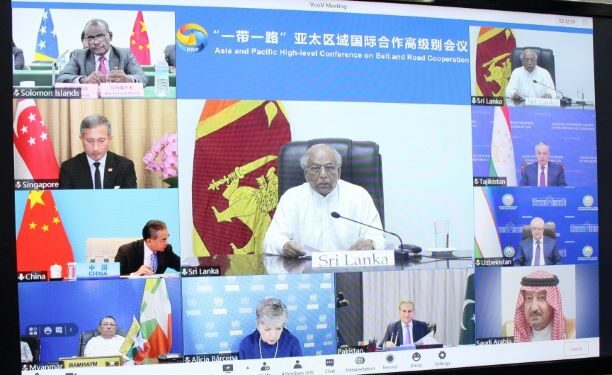
So far it was China’s money power that had enabled it to make rapid strides in the name of aiding development in other countries through the Belt and Road initiative. Now, I expect China to increase its political, diplomatic and military muscle power [to influence other countries]. In a democratic country like Sri Lanka, we are likely to see China as an indispensable political supporter of parties, similar to a position India was sought after. Of course, while China doesn’t enjoy the closeness of cultural identity India enjoys, its money power will compensate it.

I expect, as it happened in the US and even India, China will cultivate the media to soften its image as a harsh one-party country. Sri Lanka will become more beholden to China, if international pressure increases, say at the UN instittuions. I expect China to take advantage of this to improve its image. The next logical political development would be showcasing China’s achievements through strengthening people to people links. Of course, as PLA navy is becoming more and more powerful, we will see more Chinese warships calling on Sri Lanka ports, increasingly coming under Chinese control. Whether Sri Lanka likes it or not, Chinese cyber capabilities to eavesdrop in the regional communication will increase; I expect suitable installations for this to come up in Port City.

India, though globally 4th largest economic power, cannot match China in this race. So, I expect India to try build multi-layered linkages with other world powers, who are equally worried about China’s ever-increasing clout in Indo-Pacific. Overall, we will be handling Cold War of a different kind. And Sri Lanka is likely to be buffeted more and more in the eye of the storm.

According to the strategic community, Free and Open Indo–Pacific (FOIP) and QUAD are significant moves in the Indian Ocean region. Pompeo’ called this a new ‘alliance of democracies.’ China has recently warned Dhaka against joining Quad and said, ‘if Bangladesh did so, it will ‘substantially damage’ bilateral relations between China and Bangladesh and calling the Quad a ‘military alliance aimed against China’s resurgence’. I think that Sri Lanka faces a similar situation. As a military strategist, how do you see these developments influence India’s neighbours?

I have been writing on this theme in quite a few articles, particularly in the recent piece ‘China gets tough with Bangladesh’. They’re in my blog. Please see them. I expect China to tone down its wolf diplomacy as President Xi has asked his people to improve their image. Bangladesh cannot be equated with Sri Lanka in their relations with China, as well as India, because the two strategic environments are different. Quad will not be a military alliance like NATO because national interests of members widely differ in the Indo-Pacific. So, I expect it to be more adaptive, beyond depending only on the use of force. It is too early to see how it will affect Sri Lanka. Let the situation mature.

Source: CSST: Interviewed by A Jathindra

Posted in Uncategorized

European Parliament Alarmed over Sri Lanka’s Rights Situation

The European Parliament today sent a powerful message to Sri Lanka’s government that its growing human rights violations will no longer be tolerated and may jeopardize bilateral and trade relations.

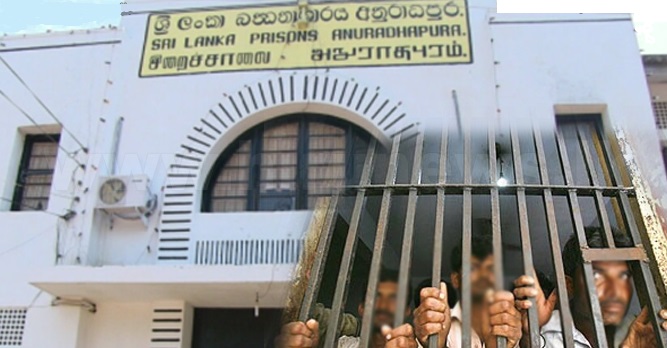
The resolution draws attention to abuses under the notorious Prevention of Terrorism Act (PTA), which has long enabled prolonged arbitrary detention, torture and sexual abuse. The government is using the law to target members of minority communities and civil society, including activists, lawyers, and writers. The resolution specifically mentions Hejaaz Hizbullah, a prominent lawyer, and Ahnaf Jazeem, a poet, who are both arbitrarily detained under the act.

The European Parliament also denounced the Sri Lankan government’s obstruction of efforts to secure accountability for widespread human rights abuses during the country’s decades-long civil war. The resolution notes that several current and former military commanders implicated in serious abuses have been appointed to senior government positions. In March, the United Nations Human Rights Council mandated a new effort to collect and analyze evidence for use in future trials.

The European Parliament resolution provides a grim, but accurate, picture of “Sri Lanka’s alarming path towards the recurrence of grave human rights violations.” Among numerous issues highlighted are discrimination against ethnic and religious minorities, the situation of LGBT people, and a crisis of labor rights in garment factories.

Since 2017, Sri Lanka has benefited from a trading arrangement with the European Union called GSP+ which provides better access to European Union markets in return for progress implementing international human rights treaties. The resolution recalls that “one of the key commitments of Sri Lanka was to fully align its counter-terrorism legislation with international human rights conventions,” and calls upon the European Commission to “use the GSP+ as a leverage to push for advancement on Sri Lanka’s human rights obligations.”

Crucially, the resolution calls on the European Commission to urgently evaluate its funding for a UN project to support Sri Lanka on counter-terrorism. It instead calls for the EU and member states to increase support for Sri Lanka’s civil society.

The Sri Lankan government needs to realize that its international partners are watching with concern, and that friends around the world can act to promote fundamental rights in Sri Lanka.

Posted in Uncategorized

Sri Lanka expects US$400mn swap with India in August: CB Governor

Sri Lanka can draw down on a 400 million US dollar foreign exchange swap with the Reserve Bank of India in August 2021, as part of measures to boost reserves, Central Bank Governor W D Lakshman said.

Sri Lanka originally signed the swap deal available to SAARC countries in 2020 and repaid it in February 2021 after rolling it over once.

“There are a couple of more drawings available,” Governor Lakshman told reporters. “After the completion of the first couple, we have to wait for a certain cooling-off period of six months.

“So this is going to be available in August.”

A swap with the Bangladesh banks which had been approved was also progressing with “rapidity” with requirements being fulfilled.

He said it could come as early as one month. Sri Lanka has to pay a billion US dollar sovereign bond in July 2020. Sri Lanka had 4.4 billion US dollars of reserves in April 2021.

SJB vows to change pro-China Port City policy

The opposition Samagi Jana Balawegaya has vowed to make drastic changes to the Port City project if it comes to power.

SJB Parliamentarian and former State Minister Dr. Harsha de Silva said that an SJB government will look to take the project beyond China.

Dr. Harsha de Silva was responding to a question raised on a Twitter Spaces discussion hosted by Daily Mirror Twitter.

He said in its current form the Port City is likely to be marketed as a project of the Chinese company managing the Port City or a Chinese project and not Sri Lankan project.

“Geo-politics is as important as the law. When we come we hope we will be able to take the project to beyond China,” he said.

Dr. Harsha de Silva said that the project was suspended in 2015 by the then government over concerns related to the deal between China and Sri Lanka and the environment.

He also noted that the SJB has no issue with Chinese investments, but its policy is that Sri Lanka must not be partial to one country.

The former State Minister noted that Sri Lanka must have countries like India and Japan on its side.

He said that Sri Lanka was sending the wrong message by rejecting Indian and Japanese projects and approving Chinese projects.

Posted in Uncategorized

Sri Lanka reports highest single-day Covid-19 death count with 101 deaths, toll exceeds 2000

The COVID-19 death toll in the country surpassed the 2,000 mark with 101 more fatalities being reported, the Epidemiology Unit said.

This is the highest number of deaths recorded in the country in a single day since the outbreak of the pandemic.

Accordingly, the death toll in the country stands at 2,011.

EU Parliament adopts resolution on Sri Lanka

The EU Parliament adopted a resolution on Sri Lanka today calling for the repeal of the Prevention of Terrorism Act (PTA).

EU MPs have also propose to carefully assess whether there is sufficient reason, as a last resort, to initiate a procedure for the temporary withdrawal of Sri Lanka’s GSP+ status.

Parliament adopted three resolutions on the human rights situation at the Spanish/Moroccan border, in Russia, and in Sri Lanka.

The resolution on Sri Lanka was adopted with 628 votes in favour, 15 against and 40 abstentions.

The resolution notes that the EU Parliament expresses its deep concern about Sri Lanka’s alarming slide towards a recurrence of grave human rights violations, as described by the most recent UN report on the country.

Members reiterated their strong opposition to the continued application of the controversial Prevention of Terrorism Act (PTA), which grants the country’s police broad powers to search, arrest and detain civilian suspects. The resolution alleged that the PTA has led to consistent and well-founded allegations of torture, sexual abuse and forced confessions.

The resolution calls on the Sri Lankan authorities to fulfil their pledge to review and repeal the act and replace it with anti-terrorism legislation which follows international best practices.

Sri Lanka regained access to generous EU tariff preferences under the GSP+ on 19 May 2017, on the condition that it replace the PTA and effectively implements 27 international conventions, including on human rights.

EU MPs are therefore calling on the European Commission and the European External Action Service to use the GSP+ as leverage to push for progress on Sri Lanka’s human rights obligations. They also want them to carefully assess whether there is sufficient reason, as a last resort, to initiate a procedure for the temporary withdrawal of Sri Lanka’s GSP+ status.

Chinese Ambassador lists difficulties faced by Chinese investors in Sri Lanka

The Chinese Ambassador to Sri Lanka, Qi Zhenhong, told the Sri Lanka Investment Forum 2021 this week here that while the island nation is well positioned geographically to develop into an international investment hub, it has to remove certain impediments such as policy inconsistency, administrative inefficiency and indulgence in biased anti-Chinese propaganda.

“Sri Lanka’s industry is not strong. Its development of the supply chain and supporting facilities is far from perfect. Second, although the policies to attract foreign investment are in place, the following problems still exist at the stage of implementation: lack of concrete measures, cumbersome administrative procedures, lengthy coordination process among government agencies and inefficiency in decision-making etc. Much remains to be done in terms of investment facilitation. Thirdly, Sri Lanka has a dynamic environment of public opinion. Among the diversified views, unfortunately, there are at times baseless accusations and attacks on Chinese businesses.”

“Only with the guarantee of the right policies, could we expect foreign investment to take root and bear fruit. Therefore, it is important for the Sri Lankan government to ensure the consistency, stability, transparency and effectiveness of its investment policies to the largest extent. As such, China and Sri Lanka need to continue our efforts promptly to carry out the outline of the medium and long-term plan for investment cooperation and development between our two countries signed in 2017. At the same time, negotiations on the China-Sri Lanka FTA should be resumed as soon as possible. If a timely agreement can be reached, it will surely further promote our bilateral trade and investment.”

“Only by creating an easy-to-do-business environment and providing favorable conditions for investors, the host country can obtain an early advantage from the get go, in the increasingly competitive world to attract international investment. As mentioned earlier, we count on the Sri Lankan government’s efforts to further streamline its review and approval processes, promote digitalization in the administration and improve the efficiency of government services provided (for instance, to establish the electronic one-stop-shop for investors), with the view to minimizing the cost of communication and coordination between businesses and authorities.”

“Third, to better cultivate the pro-business atmosphereattacks targeting Chinese businesses in the media while discussing the Colombo Port City and Hambantota Port from time to time. The accusation sometimes even labels the Chinese government for creating “debt trap” and “colonialization” in Sri Lanka. Those groundless accusations have to some extent affected the healthy atmosphere for our extensive cooperation. As a matter of fact, those Chinese companies took on the projects at the request of the Sri Lankan government in an hour of need, rather than “taking advantages” as claimed by some.”

“The Belt and Road Initiative is guided by the principles of extensive consultation, joint contribution and shared benefits, with the view to achieving the win-win outcome, rather than the “zero-sum” game. I believe, in order to properly address the difficulties encountered in bilateral cooperation, both sides should always keep in mind the mutually beneficial nature of our cooperation and our strong partnership as a whole.”

“We should neither overlook the prominent problems arising in key projects because of our friendship, nor can we allow anxiety to cloud our judgement over short-term gains and losses: we need to avoid the mentality of feeling on the losing side when the projects are making progress with promising benefits; or to throw blame around when the projects are moving slow or temporarily hindered.”

However, ending on a note of optimism, the envoy said: “All in all, despite existing challenges, the time has come to invest in Sri Lanka. I sincerely believe, with the strong commitments by the Sri Lankan government to address those challenges, as well as the wisdom of our experienced investors, we are looking at an extremely promising future of our investment cooperation ahead.”