Final decision on PC Election on April 19th

Minister Mahindananda Aluthgamage says a final decision will be reached regarding the electoral system for the Provincial Council Election at the party leaders meeting due to be held under the patronage of Prime Minister Mahinda Rajapaksa on the 19th of April.

The Minister said the Sri Lanka Nidahas Podujana alliance will face the Provincial Council Election in vigour.

He stressed the parties will contest under the alliance and not separately.

Minister Aluthgamage claimed there are two varying opinions regarding the new Provincial Council Act adding that the issue will be resolved at the party leaders meeting.

Posted in Uncategorized

Protest against Basil intensifies; 11 parties to hold separate May Day rally

Amid the growing dissent against Basil Rajapaksa, eleven political parties have decided to hold a separate May Day rally.The decision has been made at a meeting attended by the leaders of 11 political parties on Thursday.

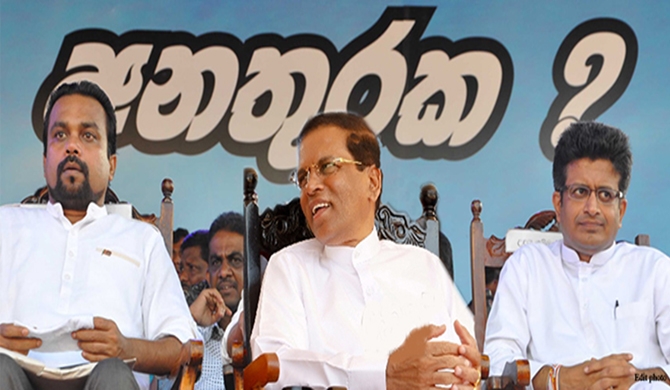
The meeting was attended by Vadudeva Nanayakkara, Wimal Weerawansa, Udaya Gammanpila, Dayasiri Jayasekara, Athuraliye Rathana, Gevindu Kumaratunga, A.L.M.A. Athaullah, D.E.W. Gunasekara, Asana Nawaratna, Prof. Tissa Witharana and Tiran Alles.

Their decision comes amid the move by the Sri Lanka Nidahas Podujana Sandanaya led by the SLPP to hold a May day rally.However, it has not been revealed so far as to why 11 parties have decided to hold a separate rally.

It is reported that a huge conflict has erupted in the SLPP as Prime Minister Mahinda Rajapaks has not been involved in political matters due to this health condition.

SLPP National Organiser Basil Rajapaksa, is reportedly facing severe criticism from other parties in the coalition.

As a result, some of the proposals submitted by Basil Rajapaksa on the Provincial Council electoral system too have been defeated.

Basil proposed to submit three members per electorate and to elect 50 per cent of the members from the vote and the balance to be nominated. His proposal has been rejected by other parties.At the same time, SLFP proposed to elect 70 percent from the voting and 30 per cent to be nominated.

The SLFP proposal has been endorsed by others.A member of the SLPP said if Basil continues his behaviour, he would become a burden to the SLPP.

Low-income families to receive Rs. 5,000 allowance for festive season

Steps have been taken to provide a cash allowance of Rs. 5,000 to Samurdhi recipients and low-income families, says State Minister of Samurdhi, Household Economy, Micro Finance, Self-Employment and Business Development Shehan Semasinghe.

The decision has been taken in view of the upcoming Sinhala and Tamil New Year.

Samurdhi officers have been instructed to take necessary measures to hand over the cash allowance to relevant families prior to the Sinhala and Tamil New Year.

This is jointly initiated by the Presidential Task Force for Economic Revival and Poverty Eradication and the Department of Samurdhi Development.

UPDATE: Reports revealed that the aforementioned allowance for low-income families is expected to be handed over on the 12th and 13th of April through Samurdhi banks.

Mayor of Jaffna released on bail after arrest by Sri Lanka’s Terrorism Investigation Division

The Mayor of Jaffna, Viswalingam Manivannan, who was arrested by Sri Lanka’s Terrorism Investigation Division (TID) at around 2.30am on Friday morning, was released on bail. Manivannan, was issued bail at the Jaffna Magistrates Court, on Friday evening after paying a Rs. 2 Lakh payment. The Magistrates Court has filed the case under the Penal Code and not under the Prevention of Terrorism Act (PTA), despite being arrested and investigated by TID officers.

Former Senior Lecturer in Law at University of Jaffna, Dr Kumaravadivel Guruparan questioned the validity of the reasoning used to carry out Manivannan’s arrest.

Manivannan, who is also an attorney-at-law, was arrested on charges of attempting to resurrect the Liberation Tigers of Tamil Eelam (LTTE) and taken to Vavuniya for ‘further investigation’.

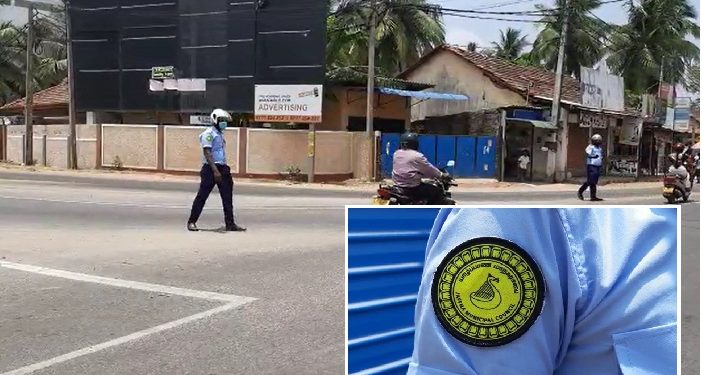
The arrest follows an investigation into the uniforms of a Jaffna Municipal Council task force which was launched this week to enforce penalties against environmental infractions such as littering and spitting. Sri Lankan police alleged that the uniforms worn by the task force were similar to those formerly worn by the LTTE’s police force.

The Jaffna Municipal Commissioner was summoned by police on Wednesday night and interrogated for around 3 hours regarding the uniforms. Police also told the Commissioner to halt the task force’s duties and to hand over its uniforms, which the commissioner carried out the following day. Police said at the time that the uniforms and the remainder of the investigation would be handed over to Colombo.

At around 8pm on Thursday night, Manivannan, along with another council member, Varatharajah Partheepan, were summoned to the Jaffna police station. After a lengthy interrogation, the Mayor was handed over to the TID and arrested. Partheepan continued to be interrogated and was released around 3am.

Earlier on Thursday evening, Manivannan held a press conference to address the allegations, and explained that the uniforms were in fact the same as those worn by a similar task force ran by the Colombo Municipal Council. The Mayor said that the uniforms held no further connotations and that the police were making allegations based on social media conspiracy theories.

“I strongly condemn the arrest of Mayor of Jaffna V Manivannan by the Sri Lankan governmentt, and call for his immediate release,” Canadian MP Gary Anandasangaree said on Twitter. “The continued harassment and arbitrary arrests of members of the Tamil community including elected officials, journalists & human rights defenders must end.”

The Mayor of Toronto, John Tory and Mayor of Brampton, Patrick Brown also joined in calling for the release of the Jaffna Mayor.

“I join Gary in condemning the arrest of the Mayor of Jaffna by the Sri Lankan government. I echo the call for his immediate release. This continuing unjust treatment of Tamils is unacceptable,” said John Tory on Twitter. “I urge others to join in this call and to stand in solidarity with our Tamil community.”

Patrick Brown tweeted, “The arrest of #JaffnaMayor by the Sri Lankan gov seems to be a revenge tactic against the UNHRC for setting up an investigation against them. This is wrong, wrong, wrong. They should release all political prisoners & cooperate with the UN to ensure justice for the #TamilGenocide”.

Tamil National People’s Front (TNPF) leader, Gajendrakumar Ponnambalam, said on Twitter that his party condemns the arrest and echoed calls for Mayor of Jaffna, V Manivannan’s release. “The @TnpfOrg unreservedly condemns the arrest of Manivannan by the TID and calls for his immediate release. The severe racial and political insecurities of this regime have reached such heights that a steady path towards fascism is inevitable,” tweeted Gajendrakumar Ponnambalam.

Manivannan was represented by the ITAK MP and lawyer, M.A Sumanthiran and 25 other supporting lawyers. Manivannan has insisted that he will pursue legal action against the police for his detention.

“If taking steps to uphold the cleanliness of the [district] is a mistake, we will continue to make that mistake. Arresting me is disgusting and it disrespects the independence of the [Jaffna] Municipal Council,” said Manivannan. “They claimed I was attempting to recreate the LTTE with the uniforms. But the police have no authority to intervene in the independent activities of the Municipal Council. I am ready to fight a legal battle against the tyranny of the police, I will not allow tyranny of the police to exist.”

The case has been adjourned until 26th June 2021.

Posted in Uncategorized

RSF condemns alleged assault on journalist, calls for his release

The alleged arrest and assault of Journalist Malika Abeykoon on Wednesday (07) drew international condemnation with media rights group Reporters Without Borders (RSF) calling for his immediate release.

“RSF strongly condemns the arrest of photoreporter Malika Abeykoon while he was covering a protest by health workers yesterday in Colombo. He was assaulted by the police and has been remanded until 12 April. He must be released now!” RSF stated in a tweet on Thursday (08).

Despite numerous attempts from The Morning to contact Police Spokesperson DIG Ajith Rohana for a comment on this matter, he could not be reached.

Abeykoon was allegedly assaulted and arrested while he was reporting on a protest march organized by the United Health Workers Union on Wednesday (07).

According to Duminda Nagamuwa, the convenor of the Frontline Socialist Party, Abeykoon was attacked while he was taken to the police station after being arrested at the protest site. He also added that the journalist was attacked at the police station as well.

“These are signs of the beginning of a journey of an anti-democratic era. If journalists, freelancers, dissidents and political activists are attacked, there will be no democracy left in this country,” Nagamuwa stressed.

Additionally, a protest unfolded yesterday (08) outside the Maradana Police Station against the alleged assault of Abeykoon.

Abeykoon was produced in court yesterday (08) and has been placed in remand custody until his next court appearance which is scheduled to take place on Monday (12).

Posted in Uncategorized

Sri Lanka cautioned on money laundering risks at China-backed Colombo Port City

Sri Lanka has to be vigilant against unintended consequences of ‘nefarious actors’ who may try to mis-use a China-backed Colombo Port City’s easy business rules as a permissive money laundering haven amid concerns of tax leaks, US Ambassador Alaina Teplitz warned.

Sri Lanka has unveiled draft legislation for a Colombo Port City Commission which allows for sweeping tax breaks, tax free salaries and to be an offshore financial centre.

Permissive Haven

Teplitz warned that Colombo Port City’s planned easy business rules may be perceived as bein a haven for money laundering.

“Any legislation relating to port city has to be considered very carefully for its economic impact,” Teplitz told reporters in Colombo in an online discussion. “It also has to be considered very, very, carefully for un-intended consequences.

“And of course among those un-intended consequences could be creating a haven for money launderers and other sorts of nefarious actors to take advantage of what was perceived as a permissive business environment for activities that would actually be illegal.”

The Colombo Port City would not be exempt from Sri Lanka’s anti-money laundering and counter-terrorism financing law which was enacted under Western backed UN initiative.

Sri Lanka’s attempts at creating numbered accounts as part of creating Non-resident foreign currency accounts, after re-opening the economy in 1978 was also resisted by Western nations.

Sri Lanka’s economy was progressively closed with an import control law being enacted in 1969 as money printing pressured the rupee, which worsened after the break-up of the Bretton Woods in 1971, as then Federal Reserve Chief Arthur Burns printed money to target an output gap, forcing dollar to be floated.

Sri Lanka is now also under the worst import controls since the 1970s using the 1969 law, though exchange controls are less draconian.

Citizens are also allowed to hold up to 15,000 US dollars as well as unlimited amounts in dollar accounts outside to protect their savings from monetary expropriation, in a relaxation of legal tender laws.

The Port City denizens would be protected from the policy errors of the Monetary Board of the central bank and the resulting wage-earner impoverishment, brain drain, brawn drain and capital destruction that comes from the inevitable currency collapses, through dollarization.

Dollarization is expected to protect the area from balance of payments crises and exchange controls, which the Monetary Board has imposed on the rest of the island after printing money to keep rates down, allowing the Colombo Port City to be an international financial centre and avoid capital flight.

US-built ‘flexible’ central bank

Sri Lanka started having foreign exchange trouble after a central bank with money printing powers was set up by John Exter, a Federal Reserve official in the style of several Latin American central banks inspired by work of Argentina’s central bank creator Raul Prebisch.

US-built central bank brought with it money printing powers for ‘counter cyclical’ or ‘flexible’ policy which is now called ‘stimulus’.

Before that Sri Lanka had a rule-based non-discretionary self-correcting currency board where currency depreciation was illegal and a 1 to 1 hard peg with the Indian rupee (and Sterling later) was held unbroken from 1885 through two World Wars.

Analysts have pointed out that in many countries that the Latin American unit of the Fed under its then chief Robert Triffin was set up Argentina style central banks, currency collapses and macro-economic instability had brought dictators, nationalist or leftist leaders or sometimes military strongmen.

Latin American countries which experienced chronic forex troubles also pioneered ‘import substitution’ and eventually ended up sovereign default.

Such soft-pegged countries, which were originally, close friends of the US.

But they became chronic repeated or ‘recidivist’ clients of the International Monetary Fund where liberal administrations were turfed out by currency instability and leaders hostile to the US interests came to power.

The IMF does not promote currency stability, unlike the practices of East Asian nations which have remained friendly to the US, including Japan, Thailand, Singapore and Taiwan where there was only one currency crisis in many decades.

Hong Kong which was handed over to China also has a currency board with the US dollar.

From 2015 to 2019, the rupee collapsed from 131 to 182 in two currency crisis with negative growth shocks, during an administration which was friendly to the US in a repeat of the experience in Latin America, the Caribbean and Iran.

Flexible IMF program

A collapse of the rupee from 151 to 182 occurred during an IMF program with a highly discretionary un-anchored policy involving a ‘flexible’ exchange rate (non-rule based external anchor) and ‘flexible’ inflation targeting (non-rule based domestic anchor).

Exter the Fed official who set up Sri Lanka’s depreciating Triffin-Prebisch central bank set up the Philippines central bank, which went bankrupt and was re-capitalized.

Similar ones came into being following Fed missions to Iran and Cuba. Triffin had invited Prebisch to participate in some of the missions. Venezuela’s central bank was reformed through a separate mission.

The Bretton Woods agreement of ‘flexible’ of collapsing soft-pegs was itself passed with the help of votes largely from Latin American bloc with which the Fed had links and were friendly to the US before currency collapses and economic hardships pushed them in to the arms of the Soviet Union and now China.


Today the US backed Triffin-Prebisch central banks are among top IMF clients, going into sovereign default from time to time.

These include Paraguay (11 IMF deals), Dominican Republic (9 IMF deals), Guatemala (15 IMF programs), The Philippines (23 IMF programs, recapitalized), and Ceylon (16 and counting).

Ecuador, which had 19 IMF programs, has dollarized, like the plan for Colombo Port City.

Korea, where Arthur Bloomfield, another Fed official, set up a central bank in 1953 which issued a currency called Hwan at 60 to the US dollar.

The Hwan fell to 1200 by 1961 and General Park, who remained pro-American. Koreas post-War First Republic was turfed out.

The new central bank set up in 1961 with the current Won also depreciated from time to time but was better. Korea had 17 IMF programs and until the central bank was reformed in the early 1980s including one after reforms during the East Asian crisis.

Unlike Iran, Middle Eastern nations with firm pegs set up by British experts, and do not practice ‘flexible’ policy, including GCC nations have also remained friendly to the US and do not go to the IMF.

GCC central bank follows Fed rate changes, allows short term rates to move and do not print money. Million of Sr Lankans have found employment in the region as the rupee collapsed.

The dollarized Colombo Port City, would not only be free from any policy errors of the US-built central bank, but also the un-anchored, discretionary, free for all, ‘flexible exchange rate’, ‘flexible inflation targeting’ monetary programs of violently conflicting unstable dual anchors.

Tax Leaks

Meanwhile Teplitz also warned against the Colombo Port City becoming a source of tax leaks.

The agency running the Port City would have extensive powers to exempt businesses from taxes of up to 40 years, though it is not a tax haven in the traditional sense.

Sri Lanka’s tax revenues have plunged in 2020, she said raising concerns over debt and the fiscal path, credit downgrades and the ability to of the government to provide vital public services to the people, while managing loss making state enterprises.

“I do recognize that the government of Sri Lanka wants to take advantage of the investment that has already been made in creating the Port City foundation,” she said.

“But the legislation really needs to be reflected to address these challenges and to be careful of what it might be to open doors to bad practice and unfair competition for the rest of the country.”

Teplitz said a idea by US Treasury Secretary Janet Yellen to have a global single corporate tax was just a proposal with no immediate impact but Sri Lanka should think about tax concessions on its own interests.


Agreement reached during Wimal-Maithri meeting?

Leaders of eleven parties of the ruling government coalition have agreed to meet Prime Minister Mahinda Rajapaksa and make a decision on the upcoming provincial council election.

The party leaders met at the Sri Lanka Freedom Party (SLFP) headquarters yesterday (08) under the patronage of former President Maithripala Sirisena.

The meeting between the party leaders and the Prime Minister is scheduled to be held on April 19 at 10 a.m.

SLFP General Secretary State Minister Dayasiri Jayasekera, National Freedom Front (NFF) leader Minister Wimal Weerawansa, Vasudeva Nanayakkara, Udaya Gammanpila, DEW Gunesekera, Ven. Athuraliye Rathana Thero and Gevindu Kumaratunga also took part in the discussions yesterday.

These eleven party leaders first came together to oppose the government’s move to hand over the Eastern Container Terminal of the Colombo Port to an Indian company and have met once a month at their respective party headquarters since then.

This is the first time that former President Maithripala Sirisena has joined the discussions. Prior to this, State Minister Dayasiri Jayasekara was the representative of the SLFP at these meetings.

At yesterday’s meeting, the leaders have not discussed the possibility of conducting separate May Day rallies. However, the Wimal Weerawansa faction hopes to reach an agreement with the Prime Minister in this regard as well.

Meanwhile, SLFP General Secretary, State Minister Dayasiri Jayasekara said that neither the SLFP nor any other party of the ruling alliance has a need to splinter the SLPP led government coalition and form a new one.

Jayasekara expressed these views at a media briefing held in Colombo recently.

The SLFP General Secretary stressed that there was no truth to the claims that several parties representing the ruling alliance were engaged in discussions to form a separate alliance.

Minister Jayasekara emphasized that no one wanted to break the current alliance, adding that the representatives of around ten parties met and conducted several rounds of discussions in the recent past on certain issues.

He reiterated that this should not be viewed as an attempt to break the alliance but as a process that would actually help to strengthen the government.

He further said that their objective is to do what is right by the 6.9 million voters and not to cause any inconvenience to the government.

Source:Lanka Leader

Posted in Uncategorized

Challenges in the way of PC polls – By Kelum Bandara

The conduct of elections to the provincial councils is in the interests of the top brass of the government but fresh political hurdles now stand in the way of it.

The government has taken a policy decision to conduct the elections, already delayed over a legal glitch, under a fresh criterion for the elections of members. The Cabinet nod has been given to amend the law for the introduction of this system which is a mix of proportional representation and the First Past the Post method. It proposed 70 percent of members to be elected in respect of each constituency and 30 under proportional representation.

Sri Lanka Podujana Peramuna (SLPP), the main party of the government, is keen to have the elections as early as possible after the enactment of the new piece of legislation that gives effect to the proposed electoral system. At last Monday’s Cabinet meeting, a decision was to be taken to refer the proposal to be drafted into bill for enactment after the passage through Parliament.

However, the Cabinet Ministry who represent the parties that are aligned with the SLPP to form the government raised objections to the content of the proposed bill. They were against the proposal to field three candidates from the same party for each electorate. These Ministers insisted that consensus should be reached among the parties in the government before working out the final draft of the bill. President Gotabaya Rajapaksa has now called for a meeting of the party leaders on April 19 to discuss and iron out differences in this regard.

This represents a major obstacle in the early enactment of the bill to call for elections. The provincial councils lapsed their terms starting from 2017. At the moment, all the provincial councils remain defunct with elections being unable to be conducted because of a legal issue that emanates from the new Act signed under the previous government.

The initiative by the new government to clear the obstacle in terms of enactment fresh legislations is bound to be an exercise taking time. First, the government has to bring about consensus within its own ranks. After the bill is signed into Act, the delimitation process has to be completed. There is already a delimitation report worked out by the previous government dividing the country into 222 electorates in view of the elections to the provincial councils. The new government will obviously have a relook at it. It is true that a section of the government wants elections as early as possible. However, it is a time consuming exercise to sort out issues at hand.

The conduct of elections to the provincial councils is in the interests of the top brass of the government

In addition to such challenges, the public pressure is also building on against the conduct of elections to reconstitute the provincial councils. An influential segment of the political forces that backed this government has come out openly against it. Instead, these ask for scrapping the system, rather. Fourteen leading Buddhist monks recently rote an open letter critical of the move to call for elections at this hour.

They are Ven. Ittepane Dhammalankara Mahanayaka Thera , Ven. Diviyagaha Yasassi Nayaka Thera, Ven. Dodampahala Chandasiri Mahanayaka Thera , Ven. Karagoda Uyangoda Maitrimurti Mahanayaka Thera, Ven. Matale Dhammakusala Anunayaka Thera, Ven. Balangoda Sobhita Nayaka Thera, Ven. Tirikunamale Ananda Mahanayaka Thera Ellawala Medhananda Nayaka Thera, Ven. Prof. Tumbulle Silakkhanda Nayaka Thera , Ven. Omare Kassapa Anunayaka Thera, Ven. Prof. Kandegoda Vimaladhamma Anunayaka Thera, Ven. Akuratiye Nanda Nayaka Thera, Ven. Prof. Medagama Nandavamsa Nayaka Thera and Prof. Agalakada Sirisumana Thera.

“Making preparations to hold Provincial Council elections in haste, similar to the passing of the 20th amendment to the Constitution, seems to be a hint that the promise placed before the people of the country to have a new constitution is only a facade.

The recent UNHCR resolution passed recently in Geneva reveals the shameless attempts of the Western interests to annul the Prevention of Terrorism Act. In this regard it is sad to note that there are sections within the Government, the opposition and the NGO sector that are hand in glove with various groups who are hell-bound to destroy our country.

The short-sighted cabinet decision to hold elections for Provincial Councils before getting the recommendations of the Committee appointed by this same Government in regard to a new Constitution should be considered as a golden opportunity lost to rectify a wrong that is hindering the future path of progress of this country.

If Provincial Council elections are held as announced, the government will be legally bound to implement in full the 13thAmendment. According to the provisions of the 13thAmendment, Provincial Councils are allowed to establish Provincial Police Forces and hold firearms, ammunition and other equipment,” they wrote.

In the past, only India has taken a particular interest in the implementation of the 13th Amendment in Sri Lanka, a constitutional provision incorporated into the Constitution in consequent to the 1987 Indo-Lanka accord. India has repeatedly called for its implementation. Now, the reconstitution of the provincial councils in accordance with the 13th Amendment is a matter that has crept into the UNHRC resolution on Sri Lanka.

As such, the government is under pressure from India and the international community to conduct elections. At the same time, it is under compulsion from its local support base to scrap the system. It is now a matter of reconciling these two contrasts. Management of public opinion or reconciling it with international demands are natural challenges in democratic governance. Previously, the government acceded to the local pressure. That is exactly what happened when it reneged from the commitment by the previous government to develop the East Container Terminal of the Colombo Port. The internal pressure regarding the provincial council system is also something difficult to be ignored.

Jaffna Mayor Vishwalingam Maniwanan Arrested By TID For Setting Up “Separate” Police Unit

Jaffna Mayor Vishwalingam Maniwannan has been arrested by the Police Terrorism Investigation Division last night.

The Jaffna Municipal Council has set up a police force to provide them with uniforms similar to those of the LTTE police in the past.

Prior to his arrest, the mayor said at a press conference that the Jaffna Municipal Police was tasked with overseeing the dumping of rubbish in the city, collecting fines, handling vehicles and investigating corona violators. He also stated that such a force has been established to facilitate this task.

However, the EPDP abstained from participating in the Jaffna Municipal Council session yesterday due to not obtaining the approval of the Jaffna Municipal Council and not informing other parties in this regard.

The Jaffna Police had earlier questioned the Mayor, after which the Police Terrorism Investigation Division interrogated him for six hours.

Following the interrogation, the Police Terrorism Investigation Division took the Jaffna Mayor to the Police Terrorism Investigation Office in Vavuniya and its officers are conducting further investigations into the incident.

Jaffna MC forms police unit, uniforms resemble those used by LTTE police

Following the establishment of a new police unit by the Jaffna Municipal Council, five uniforms belonging to the unit have been taken into custody of the Jaffna Police today (08) due similarities in resemblance with the LTTE police uniform.

According to the Jaffna Mayor Visvalingam Manivannan, the unit was set up to take action against those who pollute the streets of Jaffna. He also added that the unit ensures that people follow relevant health precautions which are currently in force.

Jaffna residents claim that the uniforms of the officers from this unit were used by the de facto LTTE police during the war.

The Jaffna Police has requested the municipal council officers to report to the Jaffna Police Station in order to record statements regarding this matter.