Sri Lanka signs USD 500 Mn loan agreement with China

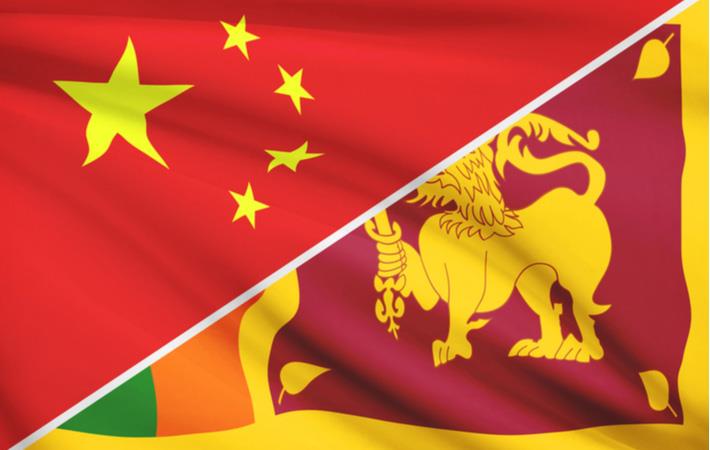
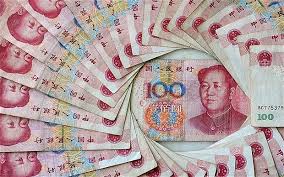
Sri Lanka today signed a USD 500 million loan agreement with the China Development Bank today, Sri Lankan Embassy in China said.

Ambassador Dr. Palitha Kohona, on behalf of the government of Sri Lanka, signed the agreement.

“This loan will infuse vitally required foreign exchange into the Sri Lanka economy. These funds will help with Government efforts to facilitate rapid economic recovery following the setbacks caused by the Covid-19 pandemic,” a statement issued by the Embassy said.

After the signature ceremony, Dr. Kohona stated that the timely assistance from China in providing these funds will help fuel Sri Lanka’s recovery efforts and stimulate growth and that this USD 500 million loan will encourage investor confidence in Sri Lanka and strengthen the currency.

“China, as a loyal friend and reflecting the depth of our friendship, has been generously extending its helping hand to Sri Lanka when difficult challenges confronted us. Two weeks ago, China’s gift of 600,000 Covid-19 vaccines were airfreighted to Sri Lanka adding to our vaccine stock,” the Ambassador said.

He welcomed further cooperation on trade, investment, tourism, education, sports and other areas.

“We expect more Chinese tourists to visit Sri Lanka in the post Covid-19 period with the prospect of travel restrictions being relaxed in the near future”. Dr. Kohona said that we were in discussion with Chinese producers with a view to shooting a tourism-oriented movie in the near future. The Mission was also holding talks to improve access to Sri Lankan exports to the lucrative market while encouraging increased MI flowsto Sri Lanka. All these would assist our economy to recover in the shortest period, Dr. Kohona stated.

This USD 500 million loan was a part of USD 1 billion, out of which USD 500 million was released last year. Previously, the Mission had worked closely with Chinese counterparts to secure these funds.

Posted in Uncategorized

Multiple issues stymie Lankan Provincial Council polls

While there is pressure on Sri Lanka from India and the UN Human Rights Council (UNHRC) to hold the long-delayed Provincial Council (PC) elections, several political factors are preventing the Gotabaya Rajapaksa government from holding the polls in the foreseeable future.

Government ministers have said that the polls could be held at the end of 2021. But that seems more and more unlikely with every passing day.

Firstly, the delimitation of constituencies for holding elections under the First Past the Post System remains a highly contested issue. The Delimitation Commission’s report had been defeated in parliament in 2018 and it is unlikely that another report will have safe passage. The ruling Sri Lanka Podujana Peramuna (SLPP) is itself divided on its recommendations.

Of course, Parliament can resolve to use the existing district-wise Proportional Representation System and hold the polls. But for this, there ought to be a will to hold the elections. The fact is, there is no will.

Centralizing and majoritarian forces led by President Gotabaya Rajapaksa and top Buddhist monks, do not want Provincial Councils as they see them as being antithetical to national unity and a singularity of national purpose. The conduct of the erstwhile Northern Provincial Council under the stewardship of Chief Minister C.V.Wigneswaran did not help build confidence in the devolution of power. The Council was mostly passing resolutions on human rights violations and the need for internal self-determination for the Tamils. Precious little was done to formulate and implement development plans. The Council and its ministers were compulsively antagonistic to Colombo.

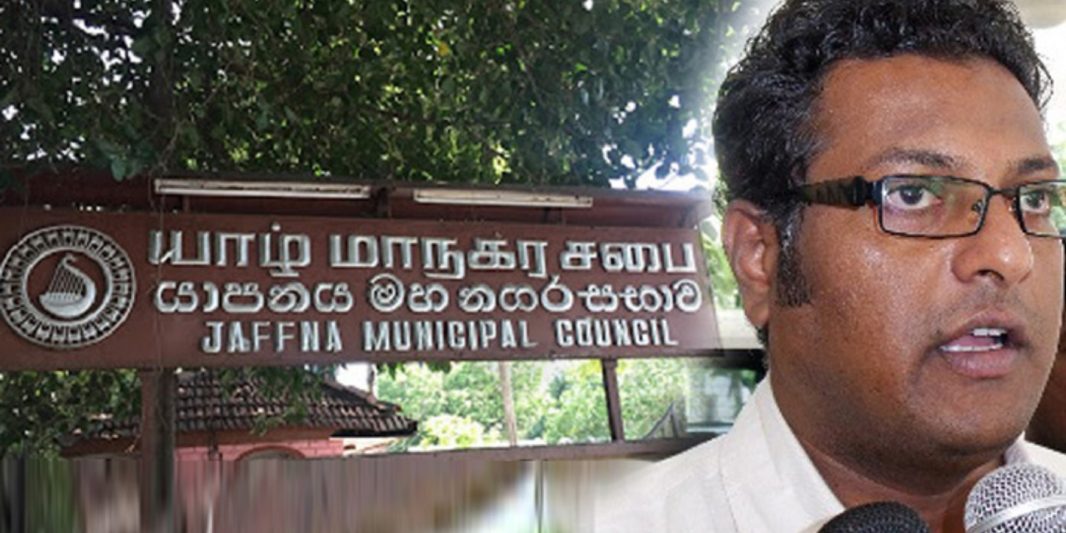
On Thursday, uniforms belonging to the newly-established environment police unit of the Jaffna Municipal Council were seen as being similar to the LTTE police uniform. The police have arrested Jaffna Mayor Mannivannan in this connection. In the Eastern Province, two young Muslims were arrested allegedly for spreading Jihadist ideas through classes for high school students.

Monks’ Missive

In an open letter to the President and the Prime Minister, 14 leading Buddhist monks urged them not to conduct PC elections saying that it would be “treacherous” to do so. They asked the government to give the country a new constitution as promised in the election manifesto. The monks and majoritarian politicians hope that government will use its two-thirds majority in parliament to foist a centralized constitution entirely devoid of devolution to the provinces and with no trace of the India-foisted 13 th.,ConstitutionalAmendment.

The monks said: “Although the country had seen success in ending a war that terrorized the country after the sacrifice of the lives of many patriotic soldiers, we were not able to live in peace for a long time. The people of this country have become the target of other acts of terrorism along with the Easter Sunday attacks in 2019. The real perpetrators of this dastard terrorist attack that had its roots in the Eastern Province with the connivance of international Muslim terrorism are yet a mystery. The threats of bigoted leaders and the unearthing of bombs and weapons recently in the Northern Province is an indication that terrorist activities from among the Tamil population are not fully eradicated.”

“Hence, it is imperative that the country should bring into being a new constitution that firmly establishes the unitary status of Sri Lanka. The efforts of the present government to strengthen the Provincial Council system that has been forcefully and arbitrarily shoved on the people of this country, rather than bringing about a new Constitution that rectifies this situation, have resulted in much condemnation by the public.

‘Making preparations to hold Provincial Council elections in haste, similar to the passing of the 20th amendment to the Constitution, seems to be a hint that the promise placed before the people of the country to have a new constitution is only a facade.”

“The recent UNHCR resolution passed in Geneva reveals the shameless attempts of the Western interests to annul the Prevention of Terrorism Act. In this regard, it is sad to note that there are sections within the Government, the opposition and the NGO sector, that are hand in glove with various groups who are hell-bent on destroying our country.”

“The short-sighted cabinet decision to hold elections for Provincial Councils before getting the recommendations of the Committee appointed by this same Government concerning a new Constitution should be considered as a golden opportunity lost to rectify a wrong that is hindering the future path of progress of this country.”

“If the Provincial Council elections are held as announced, the government will be legally bound to implement in full the 13th Amendment. According to the provisions of the 13th Amendment, Provincial Councils are allowed to establish Provincial Police Forces and hold firearms, ammunition and other equipment. Going by the record, it is not difficult to predict how Chief Ministers will govern the provinces. Such behaviour was evident from the former Chief Minister of the Northern Province C.V. Vigneswaran during his tenure as CM. Injustices were meted out to the Buddhists and Buddhist religious places are purely driven by communal considerations.”

“If two such Chief Ministers were to be elected, the establishment of a Provincial Council system according to the wishes of the people will become just a pipe dream. It appears that the hasty decision taken by the government is for the sole purpose of obstructing and making it impossible to abolish the current Provincial Council system. The present move of the government is to satisfy the requirements or conditions of external elements. We do not want a government that is guided and dictated by foreign governments and agencies,” the monks said in their missive.

In the Lankan contest, the monks’ letter will be enough reason not to hold the elections now or even later. Government can keep on postponing the PC elections citing difficulties in formulating a constitution that is capable of getting a two-thirds majority in parliament and 50% plus in the mandatory referendum. Constitution-making has never been easy in Sri Lanka.

Not Prepared

Postponing the PC elections will be in the interest of both the ruling SLPP, the opposition Samagi Jana Balawegaya (SJP) and the United National Party (UNP). The SLPP’s governance has been lacklustre due to impetuous decisions and lack of internal consultation. Jobs lost during the pandemic have not been retrieved, but prices have soared. Tourism is languishing. There is confusion even in procuring COVID vaccines. If the PC polls are held now, victory cannot be assured.

As far as the opposition SJB is concerned, it is leaderless and rudderless with a weak leader in Sajith Premadasa. The UNP has been reduced to a rump. UNP leader Ranil Wickremesinghe has deliberately chosen to be on the sidelines to watch the developments. UNP insiders say that he sees a window of opportunity for the UNP in the coming days as the SLPP falters and SJB dithers. But others find such hopes to be farfetched.

Source:Newsin

Sri Lanka’s China-backed Port City to bring in US$5bn in land sales

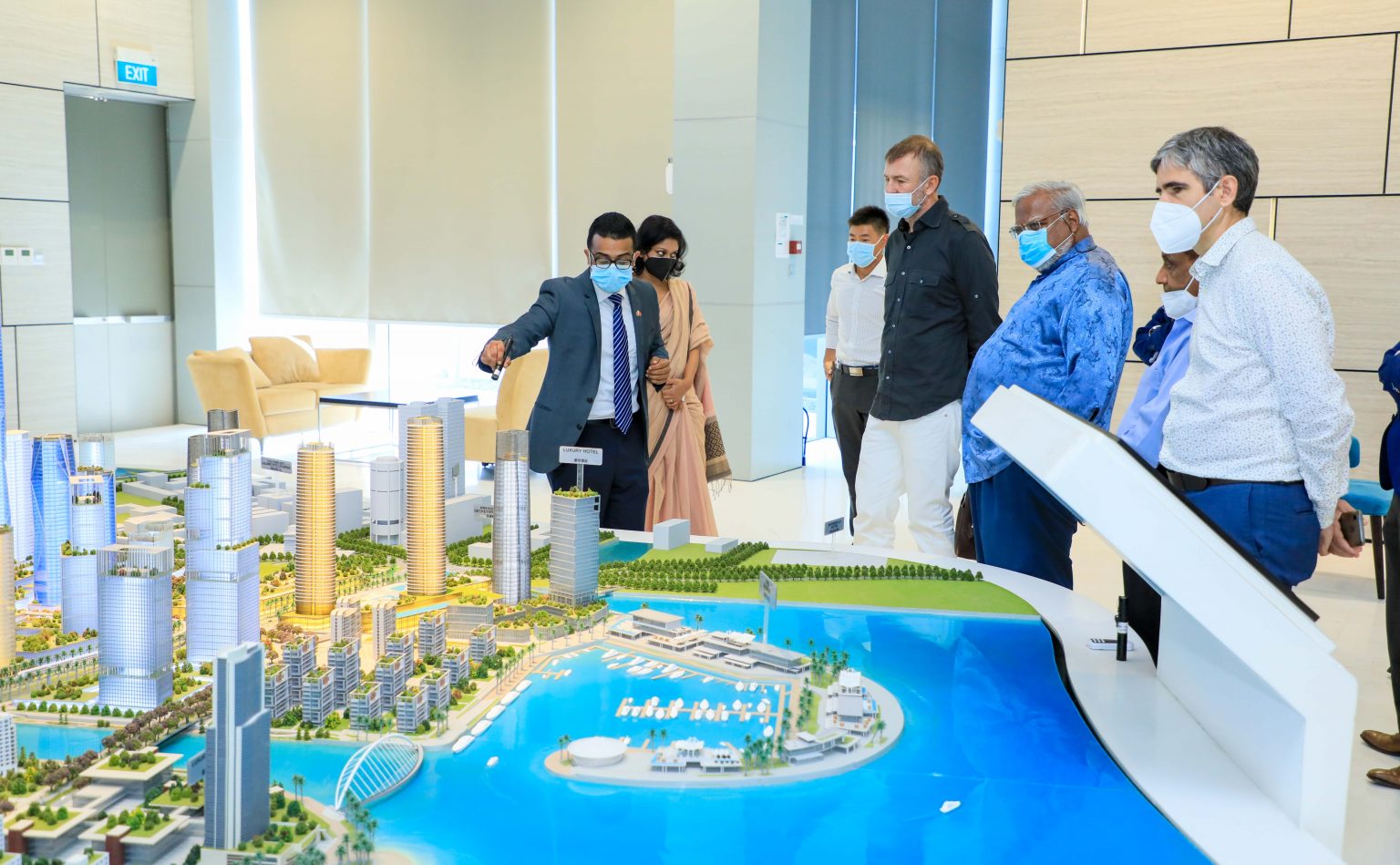
The passage of Colombo Port City Commission new law governing a reclaimed extension to the capital’s central business district will pave the way to sell 20 plots of land bringing about 5 billion US dollars of investment to Sri Lanka, an official said.

Sri Lanka’s Colombo Port City a joint venture with the state and China Harbhour Engineering Corporation has 100 hectares of land ready for construction.

The promoters will first sell commercial plots, which will bring in businesses activities and workers. The activities will drive the demand for residential plots.

In the next five year strategic plan 20 plots adjacent to Colombo’s central business district have been identified as pilot projects, for activities for which Port City will have natural advantages.

“These 20 plots in total are about 60 hectares of land, and at today’s price the investment will be about 5 billion US dollars,” CHEC Port City Assistant Managing Director Thulci Aluwihare told a forum organized by Veemansa Initiative, a Colombo-based think tank.

“And we want kick start and drive the demand. Law was actually the missing piece.”

Sri Lanka has unveiled a Colombo Port City Commission law, giving it extensive powers to approve investment without going to the Board of Investments, give tax breaks and regulate businesses in the most far-reaching ‘one-stop-shop’ designed so far.

It is expected to address several problems in Sri Lanka’s ease of doing business indicators that had kept back foreign direct investments.

On Track

The Port City is now completing the utilities and also creating an environment for some activities to take place.

“As of now close to 100 hectares of land ready for construction,” Aluwihare said. “By June this year we hope to complete all the bridges, roadways, and the boulevard, water and sewage before end of this year.

“Landscaping also before the end of this year and by mid-2022 all utility connections to the boundary of each plot on phase one will be completed.”

In September 2020 an Aqua golf range was opened by the Prime Minister Mahinda Rajapaksa.

“Before the end of this year you will see the first down town duty free,” Aluwihare said.

“The beach and park will be ready for public before the end of this year, as well as some leisure activities we have planned.”

Aluwihare said 40 out of 74 buildable plots of land are allocated for commercial development which will bring investments and business activities while 34 plots are for residential use.

Out of 269 hectares reclaimed, China Harbhour will get 113 hectares, 91 will be common areas vested in the government and the balance 60 odd hectares are land the government can sell and earn revenue.

“In designing the Port City plan it is important to emphasize that there was significant emphasis given to create a vibrant business hub district, because of its extension to the existing CBD (central business district),” he explained.

“So the master plan was devised in a manner that Phase One consists of about 40 plots of the total 74 plots which is very much tilted or geared towards attracting investments for commercial spaces,” Aluwihare said.

“If you look at Phase Two which consist of 34 plots, it is predominantly for residential use.”

Sri Lanka current economic growth would not be sufficient to drive demand, Aluwihare said. Therefore businesses had to be attracted to Phase One to drive activity.

Sri Lanka is primarily seeking foreign investments through dollar inflows, but domestic businesses would also be allowed to buy land to gain a foothold within the Port City.

Secondary Demand

The land sales will initially drive construction activity and later commercial activity as business take up floor space.

“The thinking is the commercial success in the Phase One is quite important for us to drive the successful outcome of the Phase Two”

“And for us to drive the success of the Phase One, the commerce and trade must happen.”

However, Aluwihare said Sri Lanka’s GDP growth is not sufficient for at the moment to complete the Port City.

“The GDP growth what we are expecting now in Sri Lanka is not going to be sufficient for us to see a successful completion of the Port City” Aluwihare said.

“So creating the secondary demand is key. Primary demand is the developers who will come and invest to put up their offices, leisure activities, hotels.

“For primary developers to have confidence that their investments would be successful they need to ensure that there is a secondary demand that will come and occupy these spaces”

Business Location

The Port City will also be protected from the liquidity injections and policy errors of the Monetary Board of Sri Lanka that leads to frequency currency crises and exchange controls by being ‘dollarized’ with multiple currencies.

The law envisages an offshore financial centre as well as other business activities.

“There are certain priority sectors we have identified in the Port City,” Aluwihare said. “With the law it is positioned as multi service.

International trade, logistics operations, hospitality and tourism are natural strengths of Sri Lanka are considered natural strengths of Sri Lanka. The Port has indentified ICT/ BPM, offshore banking, private equity, wealth management and investment banking as priority sectors.

“And as we evolve we can see which sector which would be highly attractive to setup in the city,” Aluwihare said. “And I think the law will also evolve to facilitate those sectors which will show keen interest to set up in the Port City.”

Dollarization will hopefully protect workers against monetary expropriation of their salaries though currency debauchment and inflation by money printing.

Sri Lanka’s rupee has been busted from 470 to 202 so far since a money printing central bank was set up in 1950 under US Federal Reserve advice in the style of Latin American central banks that brought import substitution and eventual sovereign default to several countries in that continent.

Though in Sri Lanka only the Port City is to be dollarized, the entire economy of Ecuador – which has one of several so-called Prebisch-Triffin central banks set up with Federal Reserve help – was entirely dollarized after a severe currency collapse.

Entirely new currencies have also been set up in other Prebisch-Triffin central banks such as Korea.


Sri Lanka reports two COVID-19 deaths Sunday, toll rises to 598

Sri Lanka confirmed two deaths on Sunday due to COVID -19 raising the death toll from the viral disease to 598, according to health authorities.

The Director General of Health Services confirmed the following deaths caused by COVID -19 virus infection and accordingly the total number of deaths due to COVID -19 infection in Sri Lanka is 598 by now.

01. The deceased is a 60 year old male resident in Puttalam. He was diagnosed as infected with Covid 19 virus while undergoing treatments at Puttalam District Hospital and transferred to Maharagama Apeksha Hospital and then to Homagama Base Hospital where he died on April 11. The cause of death is mentioned as blood poisoning, COVID Pneumonia and cancer.

02. The deceased is a 72 year old male resident in Baddegama. He was diagnosed as infected with Covid 19 virus while undergoing treatments at Karapitiya Teaching Hospital and transferred to Pimbura Base Hospital where he died on April 11. The cause of death is mentioned as COVID Pneumonia and COVID Encephalitis.

Was Bail Granted To Jaffna Mayor By The Government Or By Courts?

Before Jaffna Mayor Viswalingam Manivannan was granted bail on Friday night by the Jaffna Magistrate’s Court, Hon’ Minister Douglas Devananda had issued a statement to the media that the President was going to pardon Manivannan. The Hon’ Minister had stated (i) that Manivannan would be released on bail (ii) that he would not be charged under the PTA (iii) that he would be charged under the normal law.

This statement of the Hon’ Minister raises the question whether Courts and the Police in this country are only existing nominally functioning in consonance with the whims and preferences of the President and his Government. The statement of the Hon’ Minister also brings out the fact, that Manivannan had been arrested for political reasons. If the President had consented to pardon Manivannan it would mean that Manivannan had committed some offence. But the Police had not proved in Court that Manivannan had committed any offence. Therefore on what basis did the President consent to “pardon” Manivannan?

Just as the Hon’ Minister said Manivannan was indeed released on bail and he was not charged under the PTA. But I am told that the submissions of the Police and that of Manivannan’s lawyers were heard before the Jaffna Court and thereafter only the Court decided to grant bail.

The fact that Hon’ Minister Devananda had stated even before Manivannan was taken to Courts that the President had consented to pardon and that Manivannan would be granted bail and that the Police would be acting in consonance with what he has stated, brings out the fact as to what extent the Police Department and the Courts had lost their independence. We could take these incidents as amounting to contempt of the Courts and the Police Department.

It is necessary that the President and the Hon’ Minister Devananda do issue a statement in this regard. If ordinary citizens are going to be harassed in accordance with the whims and fancies of those in authority, of what use are the Courts? Are the Police People’s Police or hand-maids of the President? We need an explanation.

*Justice C.V. Wigneswaran – Member of Parliament, Jaffna District

Posted in Uncategorized

EC gives ultimatum to four parties

The National Election Commission has issued an ultimatum to four recognised political parties to submit their audited accounts for the year 2019. An official said these four recognised political parties have not submitted their audited accounts, as per the law, to the Election Commission so far and they have been asked to do so before April 22.

The party representatives have been summoned to the Election Secretariat on April 22 where they will be required to hand in the records of their audited accounts. “If they fail to comply with the law, the Commission will suspend the status of ‘recognition’, so that they will be barred from contesting any future election,” the official said.

The names of the political parties have not been made public so far.

Posted in Uncategorized

Sri Lanka paid US$ 6.5 million to CIA mole to buy influence in the United States

The Sri Lankan Government in 2014 paid US$ 6.5mn through its Central Bank to an American businessman, who was a CIA mole, to buy influence and fix its image in the US, an investigative report in the Wall Street Journal (WSJ) now reveals, following his sentencing for 12 years in prison after pleading guilty to tax evasion, foreign-influence peddling and campaign finance violations.

The businessman, Imaad Zuberi, had been a mole for the US spy network, Central Intelligence Agency (CIA), for more than a decade. A US court held that of the money given to him on behalf of the Sri Lankan taxpayers, US$ 5.6m or 87 percent of it had been spent on himself and his wife.

A key aspect of the case played out in secret court filings and hearings. Mr. Zuberi was a longtime US intelligence source for the US Government. Byron Tau, the WSJ journalist, cites legal documents and people familiar with the businessman’s defence.

The Sunday Times first exclusively exposed in July 2014 that the Government had engaged Mr Zuberi, who purported to be a lobbyist. The payments were so covertly done that neither the Cabinet nor Parliament knew. And they were made through the Central Bank of Sri Lanka (CBSL)–headed at the time by Ajith Nivard Cabraal–to evade oversight from either.

Mr Zuberi’s lawyers have argued that some of the conduct he was charged with was linked to CIA officials who worked with him, Mr Tau reports. “In one instance, according to the documents they prepared, a former CIA handler of Mr. Zuberi sought and got a job on the project involving Sri Lanka that was later the basis for criminal charges against Mr. Zuberi,” the article states.

“After securing a role in the project, the former handler tried to persuade the Sri Lankans to buy a maritime-surveillance system that could keep watch on a swath of the Indian Ocean, according to two people familiar with the effort,” it says. “At the time the US Government was concerned about Chinese submarine forays. The former handler told consultants on the project that he had worked for the State Department, the people said, but a spokesperson for the department said it has no record of his employment there.”

The Justice Department has moved aggressively in recent years to crack down on foreign influence in the US, Mr Tau writes. The CIA, meanwhile, relies on well-connected Americans to serve as conduits for information, occasionally tapping them for information, introductions, assistance in recruiting foreigners and even for tasks such as acting as international couriers or acquiring secrets.

“After his guilty plea but before his sentencing, Mr Zuberi’s legal team compiled a history of their client’s cooperation with the government, according to the legal documents and people familiar with the defence, which was sealed under a law called the Classified Information Procedures Act, or CIPA, designed to protect intelligence sources and methods during trials,” the article reveals. “CIPA can only be invoked when national-security issues are at stake and a judge signs the sealing order.”

Mr. Zuberi’s history of secret help to the CIA on and off for more than a decade is detailed in the documents—depicting a relationship that started with debriefings about his interactions with foreign officials but grew to involve more formal tasks and missions, Mr Tau reports.

“The foreign-influence-peddling charge to which Mr. Zuberi pleaded guilty stemmed from his efforts in 2014 to help Sri Lanka with a campaign to burnish its image in the US,” he says. “After his plea on that count, prosecutors detailed interactions with other countries beyond Sri Lanka as justification for a longer sentence.”

The Sunday Times repeatedly questioned the manner in which billions of rupees were being funnelled into public relations firms and lobby groups, particularly in 2014. At any given time between 2008 and the end of 2014—more than six years—Sri Lanka’s mission in Washington, the Office of the Monitoring Member of Parliament (MMP) for the Ministry of External Affairs or the Central Bank of Sri Lanka (CBSL) had on their payroll numerous lobbyists and public relations companies.

Documents we traced at the time showed that the US$ 6.5mn Mr Zuberi received via the Central Bank went to a personal account and to WR Group, a company he hurriedly set up. We also reported that the Auditor General’s Department queried the CBSL for three consecutive years about the towering sumps paid in fees to foreign lobbyists, consultants and public relations agencies.

The CBSL became the preferred channel for such payments because its accounts do not go before Parliament. The Treasury or any other Ministry would have needed Parliament’s permission to make such large outlays. The Cabinet was circumvented, and, in the case of most payments, the External Affairs Ministry was also bypassed.

Sri Lanka briefs EU on implementation of reconciliation mechanisms

Sri Lanka has briefed the European Union (EU) on progress related to the implementation of reconciliation mechanisms.

Foreign Minister Dinesh Gunawardena met the Colombo-based senior diplomatic representation of the European Union (EU) at the Foreign Ministry, and apprised them on political and economic developments in Sri Lanka.

The Minister updated the envoys of ongoing processes, including the constitutional reform process, the strengthening of democratic institutions, and on progress related to the implementation of reconciliation mechanisms, among other issues, the Foreign Ministry said.

The meeting was interactive and also entailed a discussion on EU-Sri Lanka cooperation, including trade, investment and development cooperation, and plans underway to convene the scheduled Sri Lanka-EU Joint Commission Sub-committees following the convening of the 23rd Meeting of the Sri Lanka-EU Joint Commission in January 2021.

Measures in place for the revival of tourism in Sri Lanka in the COVID -19 /post-COVID -19 context, and the Government of Sri Lanka health protocols related to quarantine were also discussed.

The Ambassador of France Eric Lavertu; the Ambassador Italy Rita Mannella, the Chargé d’Affaires of Romania Ambassador Victor Chiujdea; as well as the Deputy Heads of Mission of Germany, the Netherlands and the EU participated in the meeting.

Sri Lankan currency faces heat following currency swap with China

A significant depreciation on the Sri Lankan rupee has been noticed after entering into a currency swap agreement with China as it cannot be used for the strengthening of the country’s foreign reserves, reported leading Lankan media outlet The Leader.

In the wake of depleting foreign exchange reserves, Sri Lanka rupee is putting pressure on the balance of payments, The Leader reported quoting an eminent economic expert.

The demand for dollars remains high in the open market and there is less demand for Yuan as no country is dealing with such currency, the expert said, adding that the $400 million currency swap with India has helped to maintain the rupee stable for even a small period.

The Lankan rupee has been maintained at Rs.187.86 per dollar on July 31 from Rs.188.02 on July 24, 2020, in six days since signing the currency swap with India, the country’s Central Bank data showed, according to The Leader.

“Since the swap is in Yuan, the government can only use that money to pay import bills. This is useful since China is one of the biggest import destinations with Sri Lanka regularly importing about USD 3.5-4 billion in goods,” another expert told The Lankan.

“But it will not top up reserves and that is what Sri Lanka really needs,” he added.

On March 10, Lankan State Minister of Finance Ajith Nivard Cabraal announced that the People’s Bank of China had approved a 10 billion Yuan currency swap with Sri Lanka.

The Lankan rupee has depreciated to Rs. 203.50 against the US dollar on April 8 from Rs. 198.66 on March 10 in ten days after entering into a Chinese currency swap agreement, Central Bank data showed.

Lankan Opposition lawmaker Dr. Harsha de Silva has said that Sri Lanka’s external problem is linked to medium and long term solvency requiring debt restructuring and is not a short term liquidity problem that can be solved by swaps, according to The Leader.

Posted in Uncategorized

India adds Sri Lanka in air bubble pact, passengers can now fly in 28 countries

An air bubble is a bilateral arrangement with a set of regulations and restrictions in which the carriers of the two countries can operate international flights

The Civil Aviation Ministry today said that India has established individual bilateral air bubble arrangement with Sri Lanka for operation of special international passenger flights between the two countries.

An air bubble is a bilateral arrangement with a set of regulations and restrictions in which the carriers of the two countries can operate international flights.

“India has finalized an air bubble agreement with Sri Lanka, making it the 6th such arrangement in SAARC region and the 28th in total,” the Civil Aviation Ministry said on Twitter.

“All the eligible passengers will be able to travel between the 2 countries in the near future,” it noted.

Scheduled international flights have been suspended in India since March 23, 2020 due to the coronavirus pandemic.

India now has such pacts with 28 countries, including Afghanistan, Bahrain, Canada, France, Germany, Iraq, Japan, the Maldives, Nigeria, Qatar, the UAE, the UK and the USA.

India has already established individual bilateral bubbles with France, Germany and the US that will allow airlines of each country in the pact to operate international flights.