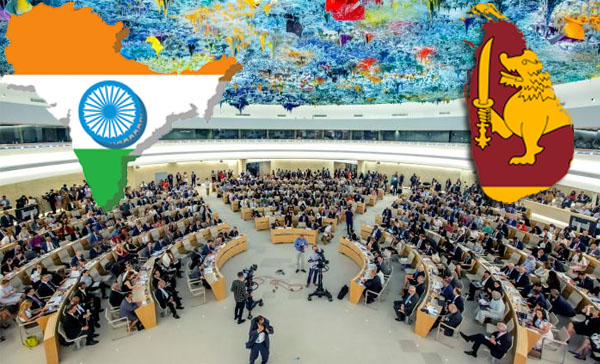
SL responds to Bachelet report: rejects proposal “to advance accountability options at int’l level”

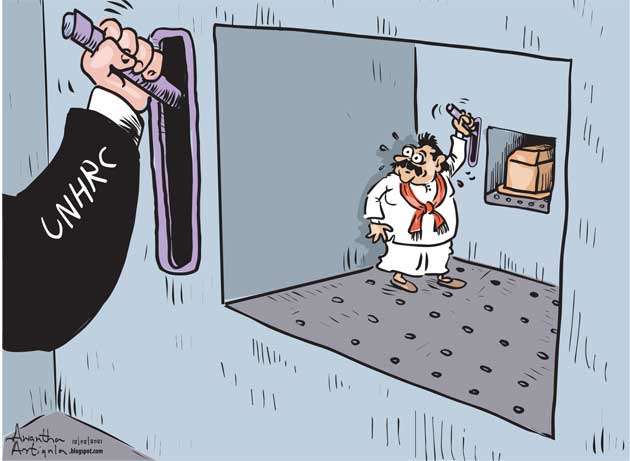
The Government of Sri Lanka (GoSL) responded to the annual report of UN High Commissioner for Human Rights Michelle Bachelet and rejected the proposal to advance accountability options at the international level in relation to Sri Lanka.

On Monday, the Advance Edited Version of the comments made by the Permanent Mission of Sri Lanka in Geneva on the OHCHR report was released.

In its observations, the GoSL said it was unfortunate that the OHCHR has decided to omit the majority of the information provided by the GoSL in writing as well as at the meeting between GoSL officials and the OHCHR ahead of the preparation of the report.

“The Office however appears to have taken a wealth of misinformation to produce a report that puts its credibility and integrity at risk. Moreover, the OHCHR reports have been highly selective, preconceived, politicized and prejudicial in levelling allegations against the GoSL in terms of the six selected ‘trends’, calling them as ‘early warning indicators that require the Human Right Council’s urgent attention,” the report by Sri Lanka said.

It defended the decision taken by Sri Lanka to appoint former military officials to the posts in the government and commented on the crimes committed by the LTTE, the PTA, communal violence in the aftermath of the Easter attacks, covid-19 cremation issue as well as the imprisonment of lawyer Hejaaz Hizbullah.

Sri Lanka further said it regretted that that OHCHR has submitted itself to the preconceived, politicized and prejudicial agenda which certain elements have relentlessly pursued to trigger such disproportionate and unwarranted measures against Sri Lanka, and cautions that any options at the international level would tantamount to an unwarranted interference in the internal affairs of a sovereign State in contravention of the UN Charter.

“The GoSL reminds that calling for targeted sanctions and travel bans against individuals, in the absence of credible findings by a competent court/body on violations committed them, itself constitutes nothing less than a political agenda against a sovereign nation, aimed at destabilizing and a violation of their rights and contravention of the principles of natural justice.

“The 20th amendment to the Constitution has not taken away the institutional checks and balances including the judicial checks that were in existence under the 19th amendment to the Constitution.

“It is maintained that the Government is able, willing and committed to pursuing meaningful mechanisms of accountability and reconciliation, in accordance with its constitutional framework.

“It is regretted that references to investigations targeted sanctions, assets freezes and travel bans against state officials and other actors, based on ‘credibly alleged’ is unfounded, unsubstantiated and totally misconceived.

“It is important to point out that the tone and substance of the report, going far beyond the legitimate scope of OHCHR, seek to establish a dangerous precedent which has grave repercussions for all sovereign States.

“The call for asset freezes, travel bans and the reference to the ICC and the exercise of universal jurisdiction by individual States, without a semblance of evidence in support, particularly in relation to a country like Sri Lanka which has consistently being compliant and engaged with the United Nation and its mechanisms, points to a distinct and eminent danger which the international community as a whole need to take note of.

“As a responsible member of the United Nations, Sri Lanka has remained open and committed to constructively engage with the UN system including the Human Rights Council on national as well as global matters of importance.

“Sri Lanka’s commitment in this regard has been amply demonstrated by, among others, its accession and implementation of all 9 core human rights conventions, the unprecedented number of special procedure mandate holders of the HRC and treaty bodies that it has received (10) particularly in recent years, and the constructive engagement that Sri Lanka has had with UN treaty bodies.

“We look forward to continuing our engagement with the OHCHR, UN Human Rights mechanisms and procedures, and to continue to work in close cooperation with the international community through capacity building and technical assistance in mutually agreed areas, in keeping with domestic priorities and policies.”
Posted in Uncategorized

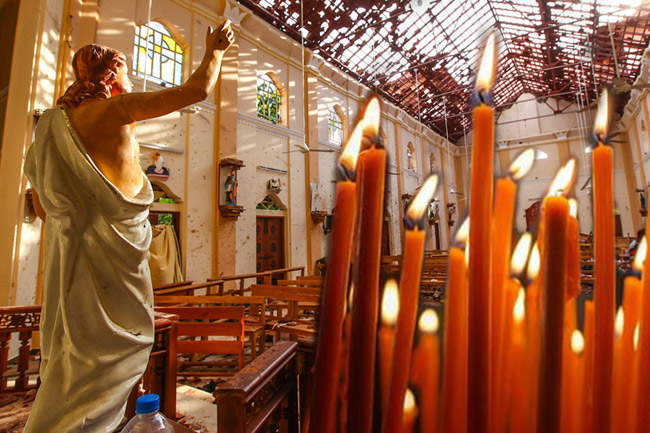
Debate on Easter attacks report in Parliament on March 10

The Committee on Parliamentary Business chaired by Speaker Mahinda Yapa Abeywardena today decided to commence the debate on the Report of the Presidential Commission of Inquiry (PCoI) into the Easter Sunday attacks on March 10.

Secretary General of Parliament Dhammika Dasanayake said the Government will move the Adjournment Debate on the Easter attack report and it will be taken up for debate from 11.00 a.m. to 5.30 p.m.

Parliament Sittings will be held on March 09th and 10th of the coming week as decided at the Committee meeting.

“I Got To Know About Plans To Hold PC Elections In June From Newspapers:” Subject Minister Janaka Tenakoon

Local Government and Provincial Council Minister Janaka Bandara Tennakoon said he got to know about the Provincial Council elections being held in June through newspaper reports.

Addressing a press conference, Tennakoon said he, as the subject minister, was not aware of any such development.

“We are now in March. So how can we conduct the election in June,” Tennakoon asked the journalist.

Before conducting the election, the government will have to pass legislation in Parliament allowing the Elections Commission to conduct the PC election under the old (PR) electoral system.

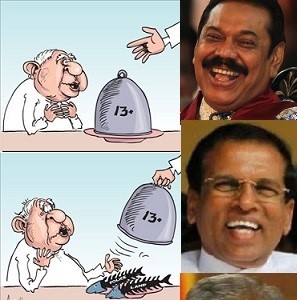
However, several media reports stated that the government was preparing to hold the Provincial Council election in June in the face of pressure exerted by India to fully implement the 13th Amendment to the Constitution. However, an influential group within the government is pushing for the postponement of the Provincial Council election until the adoption of the proposed new Constitution.

Sri Lanka tells UN provisions of PTA will be revisited

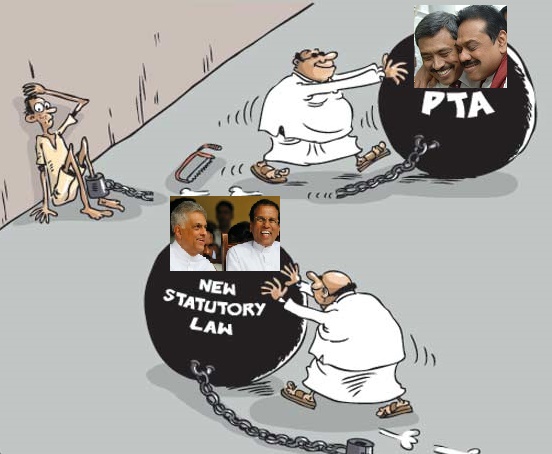
Provisions of the Prevention of Terrorism Act (PTA) are to be revisited, the Government informed the Office of the High Commissioner for Human Rights (OHCHR) in a comprehensive response to a report by OHCHR.

The response by Sri Lanka to the damning report has now been published by the UN Human Rights Council following objections raised by Sri Lanka.

Sri Lanka had written to the UN Human Rights Council demanding that the full response be published online.

Accordingly, in the response published by the UN, the government noted that the Counter Terrorism Bill was not pursued with, and withdrawn, having had due regard to the views expressed by Parliamentarians including the Sectoral Oversight Committee on International Relations of the Parliament, religious leaders, trade unions, student organizations, civil society groups and public organizations that such legislation was unwarranted at this point of time.

The government, however, said it is intent on revisiting the provisions of the PTA having due regard to the progress made in the area of development and reconciliation. In that process the government said it will draw in aid international best practices adopted by other jurisdictions and the recommendations that may be made by the CoI appointed with regard to the Easter Sunday attacks.

“It may also be noted that the Attorney General is also reviewing cases pending before the High Courts with a view to ensure the expeditious disposal of cases involving LTTE cadres in order to bring a meaningful end to the said cases,” the government said in its response.

Overall, Sri Lanka says the report by OHCHR is based on incorrect and/or unsubstantiated and extraneous sources/material, and contravenes the principles of universality, impartiality, objectivity and non-selectivity, as stipulated in the GA resolution 60/251 that created the UN Human Rights Council.

The Government rejected the High Commissioner’s proposal “to advance accountability options at the international level”, including, in particular, her proposal to take steps towards referring Sri Lanka to the International Criminal Court.

Sri Lanka regrets that that OHCHR has submitted itself to the preconceived, politicized and prejudicial agenda which certain elements have relentlessly pursued to trigger such disproportionate and unwarranted measures against Sri Lanka, and cautions that any options at the international level would tantamount to an unwarranted interference in the internal affairs of a sovereign State in contravention of the UN Charter.

The government reminded OHCHR that calling for targeted sanctions and travel bans against individuals, in the absence of credible findings by a competent court/body on violations committed them, itself constitutes nothing less than a political agenda against a sovereign nation, aimed at destabilizing and a violation of their rights and contravention of the principles of natural justice.

Similarly, the government condemned the recommendation in the report to the UN to keep Sri Lanka’s peacekeeping operations under review.

Posted in Uncategorized

Muslims to raise concerns over Iranaithivu burial with global bodies

A leading Muslim organisation in Sri Lanka will this week send an official letter of concern to the global Organization of Islamic Cooperation and the World Muslim Congress, seeking their intervention to urge the Sri Lankan government to allocate a decent land for the burial of Muslim COVID-19 victims.

The Daily Mirror learns that the Sri Lanka Islamic Centre, which is a member of the World Muslim Congress will raise serious concerns with the global bodies and will also send a letter to the World Muslim Congress office in Geneva urging for immediate intervention after the government announced that burials of the COVID-19 dead would take place on the Iranaithivu Island, in the Gulf of Mannar.

Senior Muslim officials said they were disappointed at the government’s decision to allocate the Iranaithivu Isle for the burials and instead urged the government to find a suitable land elsewhere in the country.

The Daily Mirror learns that two lands have been proposed by the Muslim community – the Kupiyawatta burial grounds in Colombo and a five acre land in Mannar, in the north which belongs to a local mosque in the area, where ground water level reports have been carried out by the Geologists from the Department of Geology from the University of Peradeniya.

When questioned, a senior geologist from the Geology Department of the Peradeniya University confirmed that ground water level reports had been carried out on both the lands and the proposed land in Mannar was found to have low water levels.

Senior Muslim officials said the proposed land in Mannar was ready to undertake burials of the COVID19 dead immediately and were concerned why these requests were ignored by the health authorities who were notified.

Meanwhile Minister of Water Supply, Vasudeva Nanayakkara told Daily Mirror that according to his knowledge, he was not aware of any feasibility report carried out on the Iranaithivu Island to bury COVID-19 dead but said he had proposed two more lands, one in the North and another in the East which had low water levels and was suitable to bury the COVID19 dead. He said he had handed over these recommendations to the expert committee for them to decide.

Posted in Uncategorized

India undecided at UNHRC as Foreign Secretary dismisses 13A

India are yet to formally announced their stance on Sri Lanka in relation to the United Nations Human Rights Council.

The Indian Representative who addressed the 46th UNHRC Session last month said that India expects that Sri Lanka would fully implement the 13th Amendment to the Constitution in the country.

Secretary to the Foreign Ministry Admiral Prof. Jayanath Colombage, speaking to ‘The Hindu’ newspaper, said that the 13th Amendment came about with the aim of ending the violence and developing war-affected areas, of Sri Lanka’s only legislative guarantee so far on power devolution to the provinces, including those with a Tamil majority.

The Secretary stated that he wishes that India doest “not really harp on the same thing that prevailed in 1987 because the dynamics have changed.”

Earlier today the Minister Provincial Councils & Local Government Janaka Bandara Thennakoon stated that the rumours about the Provincial elections being held in June are untrue.

Indian Visa Application Centre in Jaffna reopens

The Indian Visa Service (IVS) Application Centre at No.145 Temple Road, Jaffna, shut on 13th March 2020 due to COVID-19, has resumed its operations from yesterday. It will function every Wednesday from 0900 hrs to 1300 hrs.

It will accept all categories of visa applications except tourism, which remains suspended due to COVID-19. Applicants have the option of receiving their serviced passports by courier by paying the prescribed fee at the IVS Application Centre or they can collect the serviced passport only when the IVS Application Centre opens on Wednesdays or from the Consulate directly from 1700 to 1730 hrs. Applicants can submit visa applications directly at the Consulate from 0900-1200 hrs on other days in the case of emergencies. Please visit the “visa” menu at the Consulate’s website “cgijaffna.gov.in” for information on online visa application, documentation required for various categories of visas and other requirements.

Posted in Uncategorized

House Foreign Affairs Committee seeks US push for justice in Sri Lanka

The US House Foreign Affairs Committee has called for a push by the US Government to ensure justice in Sri Lanka.

The House Foreign Affairs Committee tweeted saying freedom of the press is a fundamental principle of any democracy, as is accountability for those who commit atrocities.

The House Foreign Affairs Committee noted that escaping justice for the murder of a journalist deeply undermines both of these principles.

“The US must reassert its leadership role on human rights and support calls for justice in Sri Lanka,” the House Foreign Affairs Committee tweeted.

The House Foreign Affairs Committee tweeted in response to an article by Ahimsa Wickrematunge, daughter of slain journalist Lasantha Wickremetunge.

Ahimsa Wickrematunge wrote in the Washington Post that in 2007, her father, Lasantha Wickrematunge, one of Sri Lanka’s most fiercely independent journalists, exposed an arms deal involving then-Secretary of Defense Gotabaya Rajapaksa embezzling over $10 million in government funds.

“Rajapaksa took him to court, alleging defamation. Shortly thereafter, my father’s printing press at the Sunday Leader, where he was editor in chief, was stormed by a masked gang in the middle of the night. Two of his staff were assaulted, and the press itself was set on fire,” she wrote.

She noted that on January 8, 2009, weeks before her father could testify about the corrupt arms deal, military intelligence officers ambushed him as he drove to work. They murdered him, tearing her family apart, ripping a hole in her soul and petrifying journalists across Sri Lanka.

“I hold Rajapaksa responsible — as I made plain when I moved to sue Rajapaksa in Los Angeles for his role in my father’s murder. His shocking November 2019 election as president of Sri Lanka has brought immeasurable pain to me and my family and damage to the fabric of Sri Lankan civil society,” she said.

Ahimsa Wickrematunge said that today, as the killers of heroes like Anna Politkovskaya, Jamal Khashoggi and her father rub shoulders on the world stage, it seems that killing a journalist is just another rite of passage for emerging autocrats.

Sri Lanka’s plan to bury Muslim Covid-19 victims on islet sparks outcry – Dailymail.co.uk

A plan by Sri Lanka to bury Muslim coronavirus victims on a remote islet was slammed on Wednesday by locals and the minority community.

Colombo banned burials of Covid-19 victims in April, despite expert assurances they would not spread the virus, implementing a policy of forced cremations.

Sri Lanka’s Muslims, who make up 10 percent of its 21 million people, challenged the policy, pointing out that cremations are forbidden under Islamic law.

The policy was revoked last week after a visit from Pakistani Prime Minister Imran Khan, who urged Colombo to respect Muslims’ religious funeral rites.

And on Tuesday, officials proposed burying Muslim virus victims on the remote islet of Iranaitivu, 8.6 miles (13 kilometres) off the country’s northern coast.

That plan sparked protests from locals as well as from Muslim leaders. On Wednesday dozens of Tamil residents, led by Catholic priests, demonstrated in Kilinochchi, the nearest mainland district to Iranaitivu.

They held banners saying the one-square-kilometre (0.4-square-mile) island should not be used as a “graveyard” for the pandemic.

The main Muslim party, the Sri Lanka Muslim Congress (SLMC), said families “want to bury our people in our own burial grounds”.

“This proposal of a remote island is an insult, it is unacceptable,” SLMC leader Rauff Hakeem told AFP.

The islet burials policy has yet to be rolled out.

Ahead of Khan’s visit to Colombo, the 57-member Organisation of Islamic Cooperation in February criticised the cremations policy at the United Nations Human Rights Council in Geneva, citing similar religious concerns.

Sri Lanka’s majority Buddhists, strong backers of the current government, are typically cremated, as are Hindus.

In December, authorities ordered the cremation of at least 19 Muslim Covid-19 victims after their families refused to claim the bodies from a hospital morgue in protest against the policy.

By Wednesday, Sri Lanka had recorded more than 83,000 coronavirus infections, with 483 related deaths.

Lanka takes three crucial decisions to garner Indian and Muslim support in UNHRC

Sri Lanka has urgently taken three major decisions with an eye on getting the support of India and the Muslim states in the UN Human Rights Council (UNHRC) in Geneva where a vote is to be taken later this month on a resolution castigating it for human riots violations and alleged war crimes.

Maritime Security Secretariat

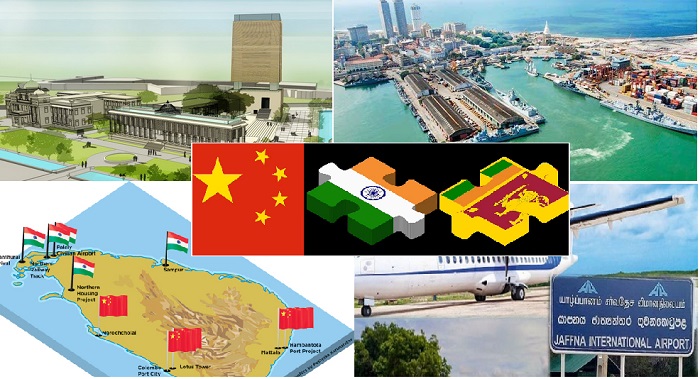
For starters, Sri Lanka established a Secretariat for a Trilateral Maritime Security System which had been proposed by a conference of National Security Advisors at the instance of the Indian National Security Advisor Ajit Doval in November 2020. The Lankan government had been dragging its feet on this issue, as it has good relations with China, the emerging power in the Indian Ocean with growing economic stakes in Sri Lanka.

India’s plan was to draw Sri Lanka and the Maldives into a maritime security structure in the Indian Ocean against China’s increasing intrusions. Sri Lanka, which, as stated earlier, was dragging its feet on setting up the structure, finally decided to set it up because it had become an urgent necessity to get India’s support at the UNHRC, where, at the moment, only ten of the 47 members are decidedly pro-Sri Lanka. At the Council, India had struck an ambiguous note hinting that it might abstain. This caused concern in Sri Lanka making Foreign Secretary Adm.Prof. Jayanath Colombage to appeal for India’s support through interviews to The Hindu and India Today. Hedescribed India as “Mother India” which should not let Sri Lanka down.

India was palpably annoyed when the Lankan government backed out of a written commitment to give a project to build, operate and transfer the East Container Terminal in Colombo port to India and Japan. India was not convinced about Colombo’s plea that port unions and nationalists were against the project going to India. New Delhi suspected the hidden hand of Beijing which runs a terminal in Colombo port.

India’s stand in Geneva (where it upheld the minority Tamils’ rights) seemed to stem from the disappointment on the container terminal issue. Lacking trust in Sri Lanka, India was cool when Sri Lanka said that India and Japan could help develop the West Container Terminal in Colombo port.

West Container Terminal

Realizing the gravity of the situation, the Lankan cabinet made a more concrete offer on the West Container Terminal on March 1. The approved cabinet paper said that the West Container Terminal (WCT) is to be developed as a Public-Private Limited Company in partnership with India’s Adani Ports and Special Economic Zone Limited (APSEZ Consortium) along with its local representative John Keells Holding PLC (APSEZ Consortium), and Sri Lanka Ports Authority (SLPA).

Accordingly, the Build, Operate, and Transfer Plan approved by a Cabinet Appointed Negotiation Committee had been forwarded to the High Commission of India and Embassy of Japan to nominate investors. Subsequently, proposals by the Adani Group and Special Economic Zone Limited (APSEZ Consortium) were approved by the Indian High Commission. However, no investor has been named by the Japanese government yet, the March 1 cabinet paper said.

The Cabinet Appointed Negotiation Committee presented their recommendations based on the discussions held with the two parties and the Cabinet approved the proposal put forward by the Ports Minister. The terminal will be developed on a 35-year Build, Operate, and Transfer basis with the aforementioned stakeholders, the government said. .

However, India’s reaction to this proposal is not known yet. Apparently it wants to wait and watch before moving on the offer.

Burial Issue

Another key decision taken to get over the hump at the UNHRC in Geneva is the belated one to allow the burial of the bodies of COVID-19 victims in Iranaitivu, a set of two tiny islands off the North Western coast of Sri Lanka in the Gulf of Mannar.

But the decision to allow burial, which came after one year of rejection on specious environmental grounds, is not guaranteed to win brownie points among Muslim nations in the UNHRC as it has been rejected by the Muslim Council of Sri Lanka.

In a statement issued on Tuesday, the Council’s Vice President Hilmy Ahamed said: “ The shocking news of government suggesting burial in Iranthivu islands is a bigger blunder than the forced cremation of over 300 Muslims.”

“The Jeniffer Perera committee clearly approved burial in all Muslim burial grounds subject to strict adherence to quarantine rules and placing the body in double body bags. What more is needed when science has proven beyond any doubt that the corona virus cannot contaminate ground water sources?”

“The dead cannot spread the disease while waste water from quarantine centres would certainly do. “

“How come the bright boys chose an inhabited island if they still believe that the virus can contaminate ground water? No wonder We live in a country like no other.”

Iranaitivu is an inhabited island, albeit with a small population of Tamil Catholic fisherfolk. It also has a naval base. The island is short of drinking water sources.

The Muslim Council is contemplating going to the Supreme Court with a petition against the decision, Ahamed added.

Source:newsin.asia