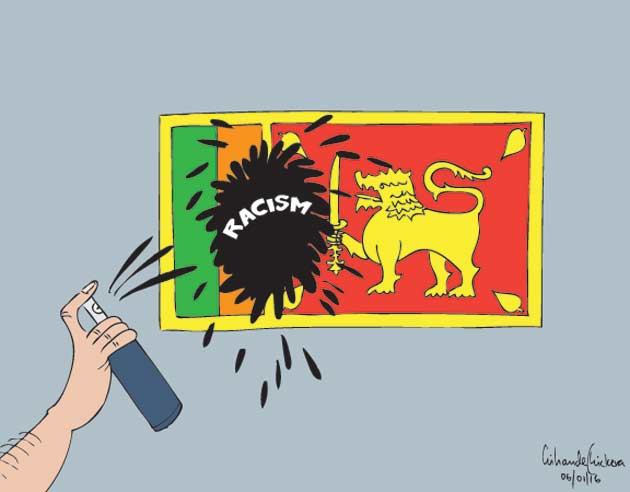
The TNA the largest Tamil Party representing the Tamil People of the North and East of Sri Lanka appeasl to the member States of the UN HUman Roghts Council “on behalf of our people” to ensure the passage of the HRC 46/1 at the UNHRC in Geneva

(Text of a media release issued on March 5th 2021 stating the Response of the Tamil National Alliance to the statement of Hon. Dinesh Gunawardena the Foreign Minister of Sri Lanka to the United Nations Human Rights Council)

Our attention has been drawn to the statement made by Hon. Dinesh Gunawardena at the High-Level Segment on 23rd February 2021, and at the Interactive Dialogue on the OHCHR Report on 24th February 2021 during the ongoing 46th session of the UN Human Rights Council.

Hon Dinesh Gunawardena says that the government of Sri Lanka withdrew from its co-sponsorship of resolutions HRC 30/1 and HRC 40/1, adopted in October 2015 and March 2019 respectively.

The State co-sponsored the above resolutions and another resolution HRC 34/1 in March 2017, at the different times they were adopted by the council.

Once adopted, the passage of the resolution is complete and there can be no question of withdrawal on behalf of the State by a following Government.

The Hon. Foreign Minister has also “rejected” the High Commissioner’s Report.

Again, he seems to have overlooked the fact that it is the council that had mandated that the High Commissioner should present a comprehensive report at the 46th sessions. This report has been welcomed by many member States and others.

The Report does not exceed its mandate but has very correctly pointed out the failures of Sri Lanka viz-a-viz its international obligations and specific undertakings given to the UNHRC. Inquiring into the Human rights situation through due procedures is a legitimate function of the UN and does not amount to violation of Country’s Sovereignty or Territorial Integrity.

The Hon. Minister makes several incredulous assertions. An example of this is, his attempt to connect the co- sponsorship of HRC 30/1 and the Easter Sunday bombings of 2019. He does not however explain what Sri Lanka has done to account for the tens of thousands of civilians who were subjected to enforced disappearances during the armed conflict, and particularly those who surrendered to the armed forces towards the end of the armed conflict in the presence of eye witnesses.

Sri Lanka has not conducted any investigations to ascertain the truth and dispense Justice. Anything done to ascertain the truth has been through the investigations highlighted in the POE Report of March 2011, or the OISL Report of September 2015. No steps have been taken to dispense justice even on the basis of the said investigations.

Sri Lanka also made a specific commitment to enact a new constitution with the consent of all the different Peoples who are citizens of the country, as the best guarantee of non-recurrence. The Parliament was converted into a constitutional assembly by a unanimous resolution by Parliament in March 2016. Important consensus was reached with regard to power sharing arrangements, among other matters. However, the present regime seems determined to travel in the opposite direction. The Hon. minister’s statement does not refer to a commitment to address the core issue – the sharing of powers of governance and is clearly indicative of a reversal to and recurrence of the earlier situation and gross violations.

It is in this background that the core group of countries led by the United Kingdom had presented resolution HRC 46/1 to be adopted at the current sessions. The Tamil National Alliance is the largest Tamil Party that represents the Tamil People of the North and East of Sri Lanka. We appeal to the member States of UNHRC, on behalf of our people, to ensure the passage of the HRC 46/1.

Sri Lanka attempts to obfuscate the issue by referring to the L.T.T.E. For over 30 years since independence, Tamils who made legitimate demands were subjected to state terror, around half the Tamil population left the country. The L.T.T.E appeared only after that and would have never appeared if commitments made to democratic Tamil leaders were observed. In any event the L.T.T.E. is not a factor that needs to be reckoned with.

It must also be pointed out that gross violations of human rights in Sri Lanka occurred also in 1971, 1988/89 when tens of thousands of youth from the Southern parts of the country were subjected to ruthless violence amounting to gross violations of human rights and humanitarian laws but most unfortunately such occurrences were not investigated at all. Necessary actions must be taken to prevent such events.

The main aspirations of the victims are truth, justice, accountability, and reconciliation through the resolution of the main issues and nonrecurrence.

R. Sampanthan, MP
Leader, Tamil National Alliance and
Parliamentary Group Leader of ITAK

Sgd. Mavai S. Senathirajah
Leader, ITAK

Sgd. Selvam Adaikalanathan, MP
Leader, TELO

Sgd. D. Sidharthan, MP
Leader, PLOTE

6th March 2021

UN Human Rights Council 46: UK statement for the Interactive Dialogue with the with the Special Rapporteur on Freedom of Religion and Belief

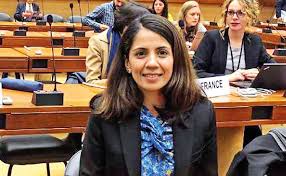
The UK’s International Ambassador for Human Rights, Rita French, delivered this statement during the Interactive Dialogue with the with the Special Rapporteur on Freedom of Religion and Belief.

Thank you, Madam President,

We remain deeply concerned about the scale of abuses and violations of the right to freedom of religion or belief: no one should suffer because of their conscience.

We thank the Special Rapporteur for his work over the past five years, and look forward to engaging with him on his report on combatting anti-Muslim hatred, as well as on Christian persecution and other forms of discrimination.

The United Kingdom is home to many thriving religions and beliefs. We reject all forms of intolerance and hate. Internationally, we are concerned by the societal impacts of the pandemic including rising hate speech, misinformation and conspiracy theories which target minority faith communities in different countries.

We are also concerned about actions of governments such as Sri Lanka, where the government’s mandatory cremation policy for those deceased due to Covid-19 has impacted Muslim and Christian minorities in particular. We hope this practice will soon cease and we are ready to provide technical support and evidence to counter misinformation.

This year, we will continue to assess the pandemic’s impact on human rights.

What steps can we, the international community, take to ensure it does not fuel further global intolerance towards religious and belief minorities?

Thank you.

Published 4 March 2021

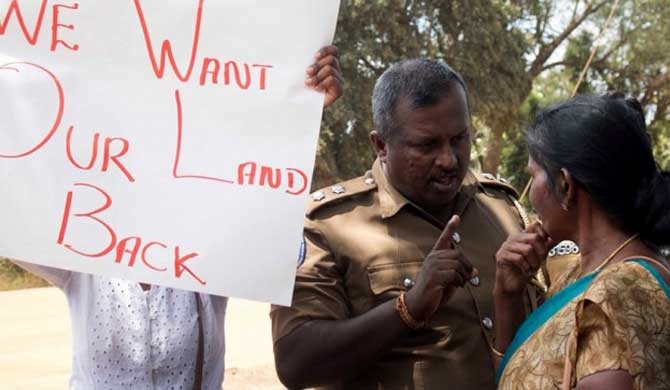
Archaeology: latest ploy for grabbing Tamil lands in north Sri Lanka

War affected Tamils in Mullaitivu are facing an existential threat as fertile lands and rich fishing resources are allegedly being grabbed under the pretext of archaeological excavations by right wing Buddhists.

An elderly Tamil landowner who was clearing his land-in the Thannimurippu District Secretary division-which was abandoned during the war time was stopped from doing so and tilling his ‘own land’ by a team of archaeological department officials led by a Buddhist monk.

Also, two local Tamil journalists covering the ongoing land grabbing and other issues affecting the Tamils were threatened by the forest officials when they went there for newsgathering.

‘No private land’

The forest officials who forcefully stopped the landowner K. Peranantham from clearing his fields were caught on camera by these journalists retaliated immediately attempting to stop them from carrying out their duty, and demanded to see their media identity cards. Pictures also show the media identity card of the one of the journalists being inspected by those officials.

“We were on the road leading to the land filming the incident and the forest officials wanted to check our identity cards-which they are not entitled to” one of the journalists told JDS. The journalists told the forest officials they cannot be stopped from reporting what’s happening in their region.

Locals allege the police and the forest department officials were acting under instructions of the Buddhist monk.

Eyewitness told JDS that the monk accompanied by officials told the land owner in an intimidating way that he cannot enter his land and the 500 acres of land in Kurunthurmalai area is archaeologically historic and a sacred – ‘nobody has got any private land here’ and ‘none could enter the area and do any clearing operation’.

The landowner apart from being banned from entering his land has also been summoned to the local police station.

The fertile land with fruit bearing trees including mango, jackfruit and coconut is close to the Arumugathankulam – a water body in the Thannimurippu DS division-which was also occupied by the Sri Lanka military recently.

Subsequently they stopped local Tamil fishermen engaging in sustainable fishing for generations using hook and bait, while allowing non residents to do so using banned nets, seriously affecting the livelihood of the Tamils.

“If the military can fish in this tank using nets, why can’t we living in the same village do the same?” locals question.

Make-shift Buddhist temple

Recently under the guise of archaeology and Buddhist culture, Tamils worshipping in the Athi Aiyanar temple Kovil in Kurunthurmalai for hundreds of years were stopped from entering the area saying it’s a place of ‘Buddhist importance’ and further exploration is needed.

A local military camp has also been set up along with a make-shift Buddha Vihara at the Kurunthurmalai foothills. Tamil lawmakers too were earlier barred from visiting the place but were allowed subsequently while the journalists travelling with them were stopped.

Sri Lankan state minister for National Heritage Vidura Wickramanayaka recently visited the Kurunthurmalai area to inaugurate the archaeological exploration and prayed at the vihara put up by the army there.

War affected Tamils in the north fear of forced Sinhala colonisation plans taken forward under the guise of archaeological exploration.

Source:JDS

Posted in Uncategorized

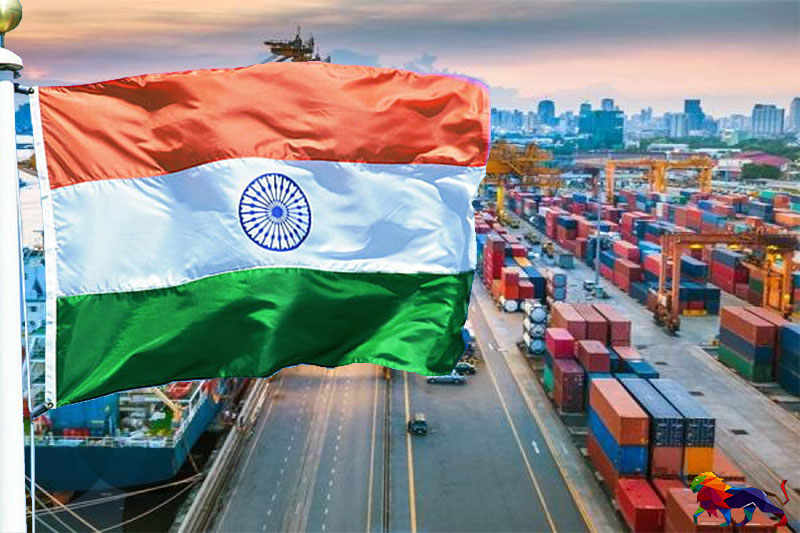
India says Sri Lanka claims on WCT deal factually incorrect

The Sri Lankan Government’s claim that a proposal on the Colombo Port West Container Terminal (WCT) has been approved by the Indian High Commission is ‘factually incorrect’, said the Ministry of External Affairs (MEA) on Friday, the IANS news service reported.

Colombo on Tuesday approved a joint venture with the Adani group to build and operate Colombo Port’s WCT for 35 years. The Sri Lankan Government press release stated that the cabinet-appointed negotiation committee had requested the Indian high commission and Japanese embassy to nominate investors for the WCT project.

“The proposal presented by Adani Ports and Special Economic Zone Limited (APSEZ Consortium) has been approved by the Indian High Commission,” Sri Lanka’s Government Information Department said in an official communique.

During a weekly briefing today, MEA spokesperson Anurag Srivastava said the Sri Lankan Government has engaged directly with investors on this project.

“Our High Commission in Colombo has conveyed to Sri Lanka Government that their media release in so far as the reference to approval of High Commission was concerned, is factually incorrect,” Srivastava said.

“We understand that the Government of Sri Lanka has engaged directly with investors on this project,” he added.

The new joint venture was approved by the Sri Lankan Government weeks after it unilaterally cancelled Indian and Japanese participation in the development of the East Container Terminal at Colombo.

India and Sri Lanka signed a memorandum of understanding for “co-operation on economic projects” in 2019. The development and operation of the container terminal was one of the projects in the MoU and it was a joint venture.

Succumbing to strong opposition from trade unions across the country, Sri Lanka has unilaterally pulled out of the 2019 agreement with India and Japan for developing the strategic East Container Terminal (ECT) at the Colombo Port.

Media denied entry to Iranaitheevu Island

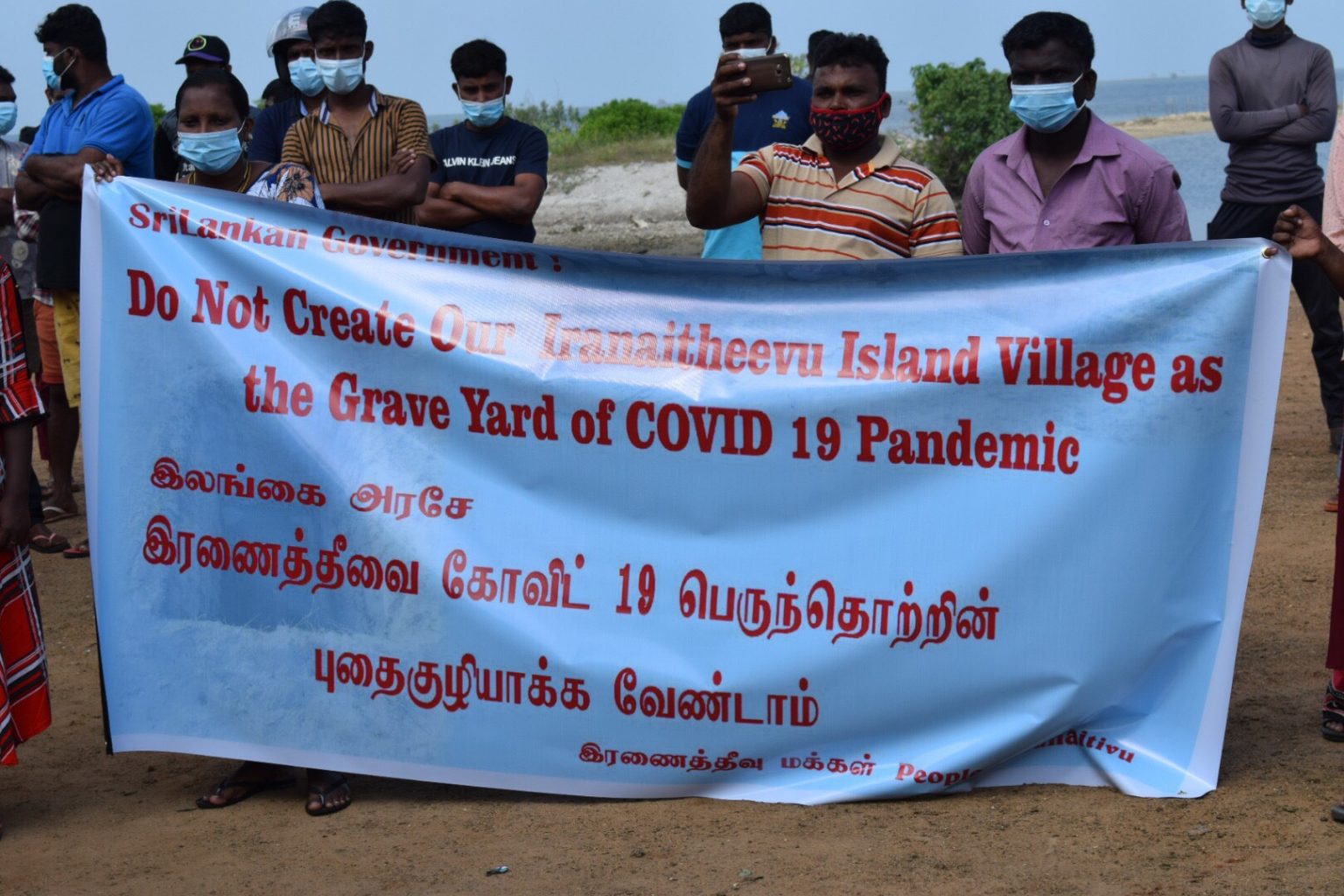
A group of journalists including The Morning reporter who went from Colombo to report on proposed Covid-19 burial related developments in the Iranaitheevu Island have been prevented from entering the Island today (05) morning.

Human rights activist Ruki Fernando who is also at the location said that Navy personnel have blocked him and the journalists at Iranaimathanagar from visiting the Iranaitheevu Island.

A group of locals and a priest had requested the group to visit the Island. Fernando said that no rational reason was given by the authorities as to why they are prevented from entering.

“When contacted, Cabinet Spokesman and Mass Media Minister Keheliya Rambukwella said that he was not aware of the situation and would look into it. The District Secretary of Kilinochchi said that she was at a meeting and will get back to us. I already complained to the Human Rights Commission of Sri Lanka’s office in Jaffna and Colombo,” he told The Morning.

He said that if there is a law or regulation that prevents entry, they will abide by the law. “But we haven’t been given any reason yet,” he said.

Meanwhile, Navy Media Spokesperson Captain Indika De Silva said that only the residents are allowed entry to the Island.

Posted in Uncategorized

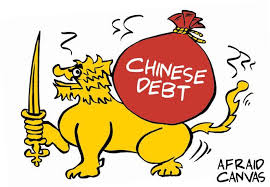
Chinese loan and currency swap arrangement on the way

China will endorse a US $ 500 million loan and a currency swap arrangement of two billion Yuan (around US $ 600 million) within the next couple of weeks, informed sources said.

Sri Lankan ambassador to China Dr. Palitha Kohona held talks with Chinese Vice Foreign Minister Luo Zhaohui on Wednesday and discussed bilateral cooperation covering a wide range of areas. Sri Lanka has sought financial cooperation from China.

Mr. Luo oversees China’s relations in the Asian region. According to a sources, the US $ 500 million is to be approved by the Bank of China within the next two weeks. Besides, the currency swap facility will be approved by People’s Bank of China which is the central bank of that country.

China also asserted once again that it would stand by Sri Lanka at the United Nations Human Rights Council (UNHRC).

Also, Dr, Kohona and the Vice Minister discussed the expedition of the Free Trade Agreement (FTA) between the two countries. The FTA negotiations were launched during the 2010/2015 government led by Mahinda Rajapaksa as the then president.

The previous Yahapalana government also made arrangements to proceed with the talks.

Posted in Uncategorized

Govt.slams Ahimsa for trying to ’’destroy’’ Sri Lanka

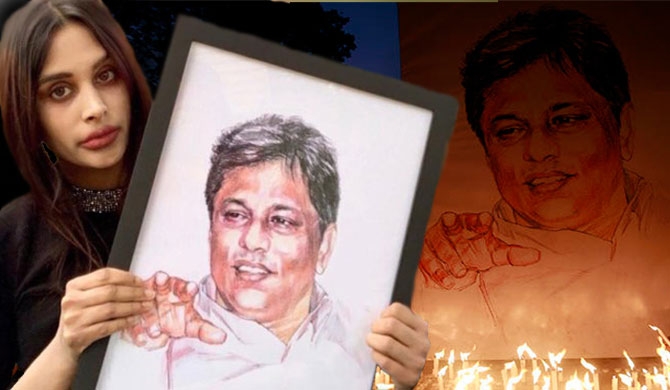
Foreign Secretary Admiral Jayanath Colombage firmly rebuked a widely distributed article by Ahimsa Wickrematunge published yesterday in the Washington Post criticising President Gotabaya Rajapaksa and the present government for denying justice for the murder of her father, founding editor of The Sunday Leader Lasantha Wickrematunge, who was killed in 2009.

While stating that he had not personally read the article, the foreign secretary said that it was an attempt to “destroy Sri Lanka and see its downfall” by rallying the international community to impose travel restrictions and embargoes on Sri Lankan leaders.“not only her, many are there to try and destroy Sri Lanka,” Colombage continued.

Government Spokesman Minister Keheliya Rambukwella lamented that “the public feels that she is tied to a string and is being controlled by certain parties,” including opposition politicians and Diaspora groups. Both Admiral Colombage and Minister Rambukwella praised Wickrematunge’s efforts and rights to seek justice for her father’s killing but said it was unfortunate that she chose to do so during the challenges the country is facing at the United Nations Human Rights Council (UNHRC).

“I encourage her to stay stern and brave,” Rambukwella said,“but I feel sorry for her as all her efforts will be diluted as the timing is not good.” The Minister wished Wickrematunge luck in having the perpetrators of her father’s killing punished someday in a court of law.“i have seen how hard Ahimsa was struggling to bring the perpetrators to book.”

Posted in Uncategorized

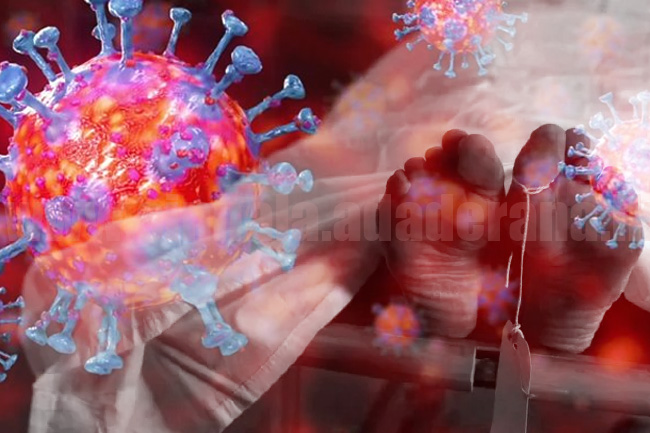
Four more die of COVID-19: Death toll increases to 493

Four new COVID-related deaths have been confirmed by the Director-General of Health Services today (March 05).

The new development has pushed the total lives claimed by the pandemic outbreak to 493.

1. A 39-year-old man from Atala area – He had been transferred to Kandy National Hospital after testing positive for the virus while at Kegalle District Hospital. He passed away today due to severe kidney damages and COVID pneumonia.

2. A 67-year-old man from Colombo 08 area – He was initially under medical care at a private hospital in Colombo and was moved to Homagama Base Hospital after testing positive for the virus. He succumbed to COVID pneumonia, acute diabetes and kidney disease today.

3. An 81-year-old man from Colombo 10 – He was transferred to Homagama Base Hospital after testing positive for the virus at the Colombo National Hospital. He had been suffering from COVID pneumonia, high blood pressure, acute diabetes and heart disease at the time of his death today.

4. An 84-year-old woman from Rajagiriya area – Upon testing positive for novel coronavirus, she was moved from Colombo National Hospital to Mulleriyawa Base Hospital where she died today. The cause of death was recorded as COVID- infection, acute kidney infection, high blood pressure and heart disease.

Posted in Uncategorized

The End of an Era of Extremism in Sri Lanka – Victor Ivan

Professor Sirima Kiribamuna, making a lengthy review of the Mahavamsa, the great chronicle of Sri Lanka has extolled it as “the culmination of the historical thinking of the ancient Sinhalese”.

Contrary to what professor Kiribamuna has said, the Mahavamsa cannot be considered as a book of history written for the purpose of recording the history of the Sinhalese race. It is more an account of the history of the Theravada Buddhism of Sri Lanka. However, the author of the Mahavamsa has recorded the history of Theravada Buddhism as something in which the Sinhala race and Buddhism have been inextricably linked.

On the other hand, Amaradasa Liyanagamage, who can be considered a better and more courageous historian, has pointed out that according to the Mahavamsa, the Lord Buddha by his clairvoyance, had foreseen that, after his Parinirvana, the passing away, the Buddhism (the doctrine) will finally be established and preserved in Sri Lanka.

On the same day, Prince Vijaya, a member of the Sakya clan, the clan to which the Buddha also belonged to, with the blessings of the Buddha set out from Sinhapura of Lata Rata accompanied by seven hundred followers lands on the shores of Thambapanni, a location in the island of Lanka; the Buddha spoke to the God Sakka, the Lord of gods, and entrusted him with the task of carefully protecting prince Vijaya with his followers, the new settlers arriving in Sri Lanka.

The link the author of the Mahavamsa has made between the origin of the Sinhala race and Buddhism with this narrative is not only unauthentic but also will not augur well for the Sinhala race or Buddhism.

In the pre-modern era, the Mahavamsa remained in the form of an Ola script written in the Pali language. So, it can not be considered to have made a great impact on the people of that era.

The Mahavamsa became a book that affected the psychology of Sinhala Buddhists in Ceylon only after it was translated into Sinhala and published as a book during the British rule as a part of their project on the history of the country.

Anagarika Dharmapala

In the pre-modern era, race and religion except caste did not constitute a dividing line. It was only during the modern era that ethnicity and religion became a dividing line between the peoples of Sri Lanka. According to Bryce Ryan, the bitterest conflicts in Sri Lanka which erupted from the end of the nineteenth century until about 1925 had been among different castes and not among ethnic groups.

Anagarika Dharamapala was the theorist who had made use of the alleged connection between the Sinhala race and Buddhism as illustrated in the Mahavamsa, and developed a simple theory of militant racism for Sinhala Buddhists at the beginning of the modern era.

Anagarika Dharmapala was the most recognized figure by the Sinhala Buddhists among the leaders who emerged in the aftermath of Sri Lanka moving into a modern era. As Kumari Jayewardene has rightly put it, he was “the only aristocrat who walked with his head held high in the midst of a crowd of humble Sri Lankans who were cowardly shrinking and crawling on their bellies.”

Dharmapala was the staunch proponent of a policy that treated all non-Sinhala Buddhists living in Sri Lanka as Pariahs or outcasts and maintained that only the Sinhala Buddhists have the right to claim for Sri Lanka.

He blamed not only the Europeans who conquered Sri Lanka but also the minorities living in the country for the decadence of the Sihala nation and Buddhism. He referred to all those who consumed beef (he called beef Gerimas) as Vasalayas or social outcasts. The militant and racist ideas spread by Dharmapala among Sinhala Buddhist people affected the Muslims and Burghers devastatingly while he was alive.

’56 Revolution

The Sinhala-Buddhist militant racism introduced by Anagarika Dharmapala continued to act as a cancer pervading the post-independence Sinhala Buddhist community. There was a growing discontent and unrest among the community of the Buddhist Sangha over not restoring Buddhism, to the level it enjoyed during the reign of ancient Sinhala kings despite a considerable time having lapsed after independence.

In view of the prevailing unrest among the Buddhist priests, Venerable Henpitagedara Gnanaseeha Thero, Gunapala Malalasekera and NQ Dias launched a strategic program to enlighten the Buddhist priests and the Buddhist people of the circumstances and win a Sinhala Buddhist government. The movement of the Buddhist Commission constituted the strongest component of this program.

The change of government in 1956 was arguably the greatest revolution that took place in the sphere of Buddhism since the Buddhist revival movement that emerged during the colonial period. The Buddhist monks acting as the driving force has been the most important feature of the ’56 revolution.

Prime Minister Bandaranaike abolished the prominence accorded to English and made Sinhala the only official language, contrary to the agreement reached between the political parties to grant the status of an official language for both Sinhala and Tamil languages.

At the same time, the UNP too appeared for a Sinhala-only policy discarding its old language policy. Only the two leftist parties (the LSSP and CP ) appeared for the language rights of both Sinhala and Tamil communities.

After Bandaranaike

The Sinhala-only policy of Bandaranaike did not stop at pushing the Tamil people of Sri Lanka into a fierce struggle for their language rights, it also led to removing the Sinhala youth from bilingual education and restricting their medium of instruction only to the Sinhala language. Prime Minister Bandaranaike was eventually assassinated as a result of a conspiracy of Buddhist monks.

But none of these developments led to weaken the Sinhala-Buddhist supremacy but to strengthen it.

The only capacity it possessed was to bulldoze the rights of minority ethnic groups by employing the majority power it had; so it played a destructive role rather than serving as a progressive force.

Before long, the LSSP and the Communist Party, the only leftist political parties that worked among the Sinhalese people that did not endorse or recognize the domination of this movement, formed a coalition with the SLFP and pushed themselves also into a point of repulsive politics in which they opted to hold political protest rallies shouting slogans tinged with communal flavor like “dudlige baday masalawade “(Dudley’s belly is full of masalawade).

Thereafter, the new left that emerged in the form of the JVP also proved to be a political party that worked accepting the Sinhala-Buddhist supremacy, since its inception. Although the UNP formed a coalition government with the Federal Party in 1965, it also collapsed during the latter part of its term as it feared to transcend the boundaries set by the Sinhala Buddhist supremacy.

The next coalition government formed by the SLFP, LSSP and the Communist Party adopted laws that led to oppress the Tamil people while maximizing the supremacy of the Sinhala Buddhist chauvinism. These ruthless laws eventually pushed the Tamil people to launch a fight for a separate state.

Defeating Prabhakaran

Prabhakaran’s Eelam War caused to further strengthen the dominance of Sinhala Buddhist supremacy in the Sinhala society.

As the ideology of Anagarika Dharmapala was no longer adequate to overcome the new challenges, there emerged new ideologies such as those promulgated by Gunadasa Amarasekara, Nalin de Silva and Champika Ranawaka. All of them added to intensify the stupidity of the followers of their philosophy rather than improving their intellect.

The Sinhala-Buddhist supremacy was raised to its maximum carrying it to a greater height by the successful program of anti-Eelam war launched by President Mahinda Rajapaksa to defeat Prabhakaran and his persistent Eelam war. The victory of the internal war had led to conceal the decline and decay of the State. The victory of the war resulted in President Mahinda Rajapaksa being acknowledged as the crown prince of the Sinhala Buddhist people.

Another change that took place in the face of the complete defeat of the Tamil enemy was that the fight against the Muslims became the next major war of the Sinhala Buddhist nation.

The defeat of Mahinda Rajapaksa at the presidential election 2015 was a source of anger and surprise for the Sinhala Buddhist forces which they perceived as an outcome of a conspiracy hatched by the minorities against the majority of the country; as usurpation of the political power which they possessed and was entitled to.

The best way they saw to overcome this situation has been to win the next presidential election only with the support of the Sinhala Buddhist votes. As in 1956, the Buddhist monks undertook the responsibility of organizing the people for that purpose.Gotabhaya Rajapaksa was assigned the onerous task of rescuing the Sinhala Buddhist people.

The Passage to Hell, instead of Heaven

As expected, this force was able to win both the Presidential and Parliamentary elections solely on the strength of Sinhala Buddhist votes. But the victory they have achieved has brought them to the abyss of hell rather than the kingdom of heaven which they hoped for. In any case, it would have been the ultimate logical outcome of this journey.

Every leader commencing from Anagarika Dharmapala up to Gotabaya who had led the country along this path have disrupted the country and carried not only the minorities but also the majority of the Sinhala Buddhists to destruction rather than leading them to liberation.

In the context of this end result, the political movement dominated by extremist Sinhala-Buddhists is now destined to come to a historic end.

The leaders, as well as the actors of this political movement, will lose their recognition soon. Inevitably, all of them will end up in being a source of anger and contempt of the majority Sinhala Buddhists. It is important that we understand that one ugly and gloomy era is coming to an end and it is time to herald a new era that is beautiful and fair.


 

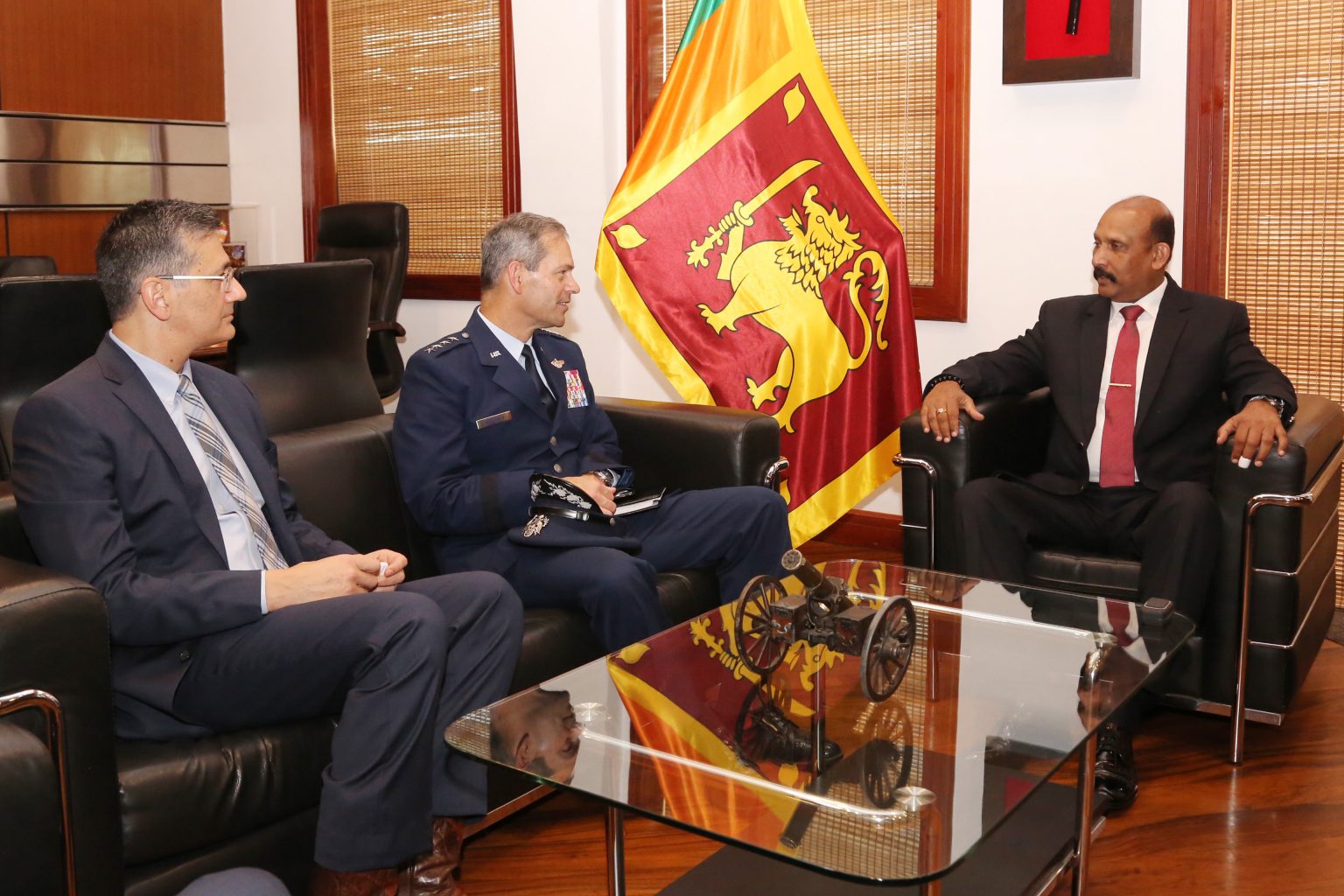
US Pacific Air Forces Commander holds bilateral talks in Sri Lanka

A US delegation led by the Commander of the US Pacific Air Forces, General Kenneth S. Wilsbach had talks in Colombo today.

General Wilsbach paid a courtesy call on Defence Secretary General Kamal Gunaratne (Retd) at the Defence Ministry, today (Mar 4).

The Defence Secretary held a cordial discussion with General Wilsbach on matters of bilateral importance and mutual interest during the meeting.

The meeting was held on the sidelines of events organized to celebrate the 70th Anniversary of Sri Lanka Air Force (SLAF).

Commander of the Sri Lanka Air Force, Air Marshal Sudarshana Pathirana also was present at the meeting.

The visiting General is the Commander of the US Pacific Air Forces; Air Component Commander of the U.S. Indo-Pacific Command; and Executive Director of the Pacific Air Combat Operations Staff, Joint Base Pearl Harbor-Hickam, Hawaii.

Mementos were also exchanged between General Wilsbach and the Sri Lanka Defence Secretary to mark the occasion.