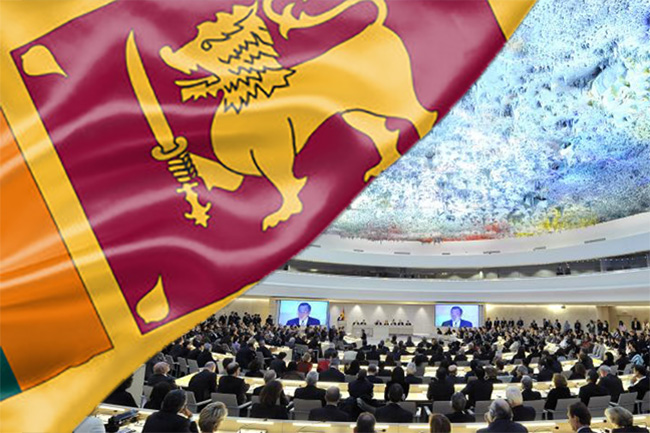
United Nations human rights experts have called on the UN member states to keep the deteriorating human rights situation in Sri Lanka under scrutiny.
In a statement on Friday (05), they have expressed their deep concern about the reversal of important democratic gains achieved since 2015 and roll back on limited progress made on accountability, reconciliation in Sri Lanka since the Government withdrew its support from the resolution Human Rights Council resolution 30/1 in February 2020.
The experts have pointed out that ethnic and religious minorities are being increasingly marginalized in national policies and processes, adding that the “Government’s increasingly majoritarian, nationalist and populist rhetoric is threatening victims and minority communities.”
“I am a Sinhala Buddhist leader and I will never hesitate to state so” – President Gotabaya Rajapaksa addressing the nation on the occasion of Sri Lanka’s 73rd Independence Day.
They have also highlighted the following eight areas in particular that should be in focus when the UN Human Rights Council reviews the implementation of the resolution 30/1 in March 2021.
i) threats to independent institutions and the rule of law
ii) increasing militarization
iii) restrictions on freedoms of peaceful assembly, association and expression
iv) discrimination against vulnerable groups, incitement to hatred and violence against minorities
v) legal safeguards, conditions of detention and prohibition of torture
vi) enforced disappearances
vii) impunity
viii) lack of progress in the transitional justice process.
The statement further said that,
“In the spirit of cooperation, we, the mandate holders who visited Sri Lanka since 2015, find it timely and opportune to recall some key recommendations as the developments over the past year have had profound negative impact on human rights in Sri Lanka and have fundamentally altered the context in which these recommendations could be effectively implemented, issues also raised in the High Commissioner’s report on Sri Lanka”1 the experts said.
Since Sri Lanka issued a standing invitation to the Special Procedures mandate holders in 2015, 10 special procedures mandates conducted country visits. The former Special Rapporteur on truth, justice, reparations, and non-recurrence conducted four additional technical visits.
Through these country visits, special procedures have identified root causes, patterns and complexities relating to a history of conflict, human rights violations and abuses and impunity in Sri Lanka and made more than 400 recommendations to Sri Lanka on a range of human rights issues. All recommendations contained in their country visits’ reports to the Human Rights Council can be searched on the Universal Human Rights Index.
The vast majority of these recommendations made by the special procedures mandates to Sri Lanka are intrinsically linked to the 25 key undertakings/ commitments set out in the Human Rights Council resolution 30/1, which was unanimously adopted by the Council in 2015.
“Therefore, we are of the view that there are eight areas in particular that should be in focus when the UN Human Rights Council reviews the implementation of the resolution 30/1 in March 2021: i) threats to independent institutions and the rule of law; ii) increasing militarization; iii) restrictions on freedoms of peaceful assembly, association and expression; iv) discrimination against vulnerable groups, incitement to hatred and violence against minorities; v) legal safeguards, conditions of detention and prohibition of torture; vi) enforced disappearances; vii) impunity and viii) lack of progress in the transitional justice process.
For each of these areas, the main recommendations made as well as the main concerns in the current context are detailed below.
We call on the Government of Sri Lanka to implement the recommendations made in our country visits’ reports. We call on the Human Rights Council and the international community to keep the human rights situation in Sri Lanka under continuous scrutiny and to explore all possible options for advancing accountability in the country.
In order to do this, options available to the Human Rights Council and Member States include but need not be limited to the possibility to:
Request OHCHR to enhance its monitoring and analysis of the human rights situation in Sri Lanka; Establish an impartial and independent international accountability mechanism which would seek to build upon the work conducted by different UN mechanisms by investigating, compiling, and analysing information collected from an international criminal law perspective; Request the appointment of a Special procedures country mandate; Member States and UN agencies in their engagement with Sri Lanka to specifically demand that Sri Lanka fulfils its human rights obligations, including with respect to the issues identified in this statement and the recommendations made by Special Rapporteurs during their visits conducted since 2015 and with respect to cooperating with Special Procedures in relation to country visits and communications.
Threats to independent institutions and the rule of law
In our reports, we recommended among others that the Government:
Ensure that the Constitution clearly and expressly recognize the fundamental principle of the separation of powers, establish checks and balances and guarantee the independence of the judiciary and the courts;
Review the roles and powers of the Attorney General with a view to reinforcing the independence of that office and reducing conflicts of interest when addressing crimes committed by State officials;
Ensure that the Human Rights Commission (HRCSL) is able to continue to work independently and with sufficient resources to discharge its mandate as well as its functions as the national preventive mechanism.
Main concerns in the current context
The adoption in October 2020 of the 20th amendment to the Constitution represents a roll back to many important Constitutional safeguards and checks and balances which were introduced with the 19th amendment – a constitutional reform which various mandate holders had welcomed and reiterated the importance to preserve.7
The SR on the independence of judges and the SR on truth and justice have recently expressed grave concern at “the adverse impact that the 20th Amendment to the Constitution of Sri Lanka may have on the independence of the judiciary and the separation of powers, as well as on the independence of institutions which are essential to the establishment of guarantees of non-recurrence of past gross violations of human rights and serious violations of international humanitarian law”.
In particular, the Human Rights Commission (HRCSL) is no longer independent of the executive branch of the Government since its members are now directly appointed by the President – this in breach of the international standards for human rights institutions set by the Paris Principles.
Such provisions have effectively placed the HRCSL at risk of losing its A accreditation status with the GANHRI.
The procedure for the appointment and dismissal of the Chief Justice and the judges of the Supreme Court, the president and judges of the Court of Appeal, the members of the Judicial Service Commission and the Attorney-General is not in line with international standards related to the independence of the judiciary and the separation of powers.
Increasing militarization
In our reports, we recommended among others that the Government:
Implement comprehensive security sector reform and demilitarization, in line with the country’s transitional justice commitments under Human Rights Council resolution 30/1; Move to terminate military involvement in commercial activities and reduce military presence in those areas, such as the North and East.
Main concerns in the current context
While we acknowledge the unprecedented challenges the Government of Sri Lanka has faced with the Easter Sunday terrorist attacks in April 2019 as well as more recently during the COVID-19 emergency, we are deeply concerned regarding the national security-centred response from the Government to these crisis as well as the accelerated trend towards militarisation of civilian Government functions which will threaten the integrity of Sri Lanka’s institutions – a key pillar in its democratic structure.
In particular, the new administration has continued to bring non-military agencies under the Ministry of Defense and has appointed a number of retired and active military officials, including persons accused of committing serious human rights violations, to senior civil administrative positions and as part of a series of “Presidential Task Forces”.
In particular, we raised our concern regarding the appointment of General Shavendra Silva, who has allegedly been involved in serious human rights violations, to the position of Commander of the Sri Lankan Army and Acting Chief of Defense Staff in August 2019, as well as head of the National Operation Centre for the Prevention of the COVID-19 outbreak in March 2020.
The military has been increasingly engaging again in activities that are within the purview of civilian authorities including with regard to land issues.
Restrictions on freedoms of peaceful assembly, association and expression
In our reports, we recommended among others that the Government:
Order all security forces to immediately end all forms of surveillance and harassment of and reprisals against human rights defenders, journalists, lawyers, and victims of human rights violations including the relatives of the disappeared persons and those acting on their behalf;
Ensure that existing legislation dealing with the right to freedom of association is in line with international human rights laws and standards, in particular in relation to registration, reporting requirements, the right to privacy and suspension or dissolution of associations, and avoid enacting regressive legislation in the future, including legislation mandating the registration of associations;
Ensure that the rights to freedom of peaceful assembly and of association can be effectively exercised, in law and in practice, fulfilling the indispensable role that they play in the promotion of a fair, free, pluralistic and democratic society where minority and dissenting views are respected;
Refrain from using national security legislation, including the Prevention of Terrorism Act (PTA), to arrest or detain people for peacefully expressing their right to freedom of expression and freedom of assembly and association.16
Main concerns in the current context
We are witnessing a shrinking civic space and increased restrictions of freedoms of peaceful assembly, association and expression in Sri Lanka, as demonstrated lately, inter alia, by a series of cases which we have raised with the Government.
The Special Rapporteur on the rights to peaceful assembly and association, while acknowledging important progress, did warn during his country visit conducted in July 2019 of the impending risks facing civic space.
Surveillance and scrutiny of civil society organizations including victim groups, women’s groups working closely with affected communities and human rights defenders, have persisted, aided by the fact that the NGO Secretariat has been placed under the control of the Defense Ministry since December 2019.
In particular, we received reports of questioning, intimidation, and harassment, including threats to families of the disappeared. Such developments have allegedly led representatives of some civil society and other organizations as well as journalists and writers to lose their employment, leave the country, scale back or close operations, and limit activism or association with victims and survivors.
Memorialization efforts led by victims’ groups have been hampered through harassment, intimidation and obstruction. Similarly, the police has consistently tried to obstruct protests organized by the families of the disappeared with interim orders from Magistrates and has also intimidated the organizers.
During the COVID-19 pandemic, restrictions have been unevenly imposed on the rights to freedom of expression, association and peaceful assembly, resulting in the arrest and detention of social media commentators and others. The government should refrain from using ill-suited counter-terrorism law and practice to manage the health pandemic.
Discrimination against vulnerable groups, incitement to hatred and violence against minorities
In our reports, we recommended among others that the Government:
Take concrete steps to address all of the identified root causes of religious intolerance and tensions – politicization of ethnic and religious identity, religious extremism, hate speech or campaigns and the application of the existing legal framework, impunity and a lack of the rule of law and accountability;
Ensure non-discriminatory application of legislation across communities, including ethnic, religious, LGBTQI+, people living in poverty and the homeless and other groups, undertaking review of such legislation in order to prevent its discriminatory use, and providing guidelines to law enforcement on the application of legislation that might be prone to misuse and repealing outdated legislation that criminalises minor offences such as vagrancy and is used to detain poor women, sex workers, the elderly, and individuals with psychosocial impairments or substance addiction;
Implement the existing legislation on hate speech to address all incidents of hate speech, regardless of the social status, ethnicity, religious background or political affiliations of the perpetrators, while protecting freedom of expression and access to information;
Develop monitoring mechanisms to establish early warning systems and respond to hate speech and incitement to violence in conformity with international human rights standards using existing tools such as the Rabat Plan of Action on the prohibition of advocacy of national, racial or religious hatred that constitutes incitement to discrimination, hostility or violence and the Plan of Action for Religious Leaders and Actors to Prevent Incitement to Violence That Could Lead to Atrocity Crimes.
Main concerns in the current context
In the current environment, ethnic and religious minorities are being increasingly marginalized in national policies and processes.
In particular, the Government’s increasingly majoritarian, nationalist and populist rhetoric is threatening victims and minority communities. Land issues have been increasingly used to reinforce the Sinhala-Buddhist majoritarianism including through the appointment of a Presidential task force for Archaeological Heritage in the Eastern Province which includes Buddhist monks who have been vocal about anti-minority views as well as military personnel.
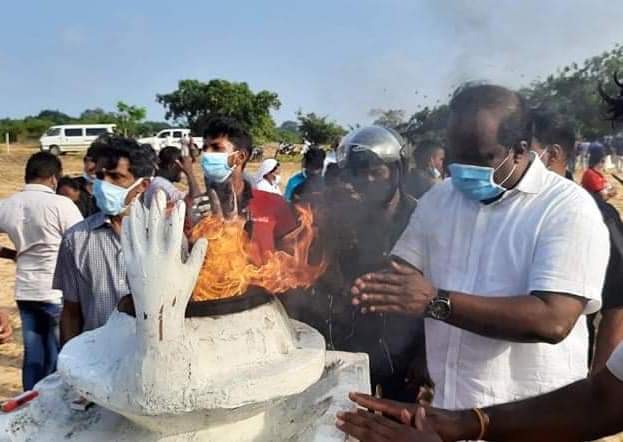
The attempts to hamper commemorating activities have also served to discriminately target minorities, particularly Tamils.
High levels of hate speech, both on and offline seem to have spiked against ethnic, religious and other minorities, particularly Muslims.
In particular, there has been an upsurge during the COVID-19 pandemic in stigma and hate speech against members of the Muslim minority associating them with the disease.
The Government’s failure to actively prevent such extremism, to investigate and hold those involved accountable has led to an increased marginalization and stigmatization of vulnerable minorities. On the contrary, we witnessed a continuous discriminative application of the legislation, particularly the PTA and ICCPR Act and their misuse against civil society.
A series of measures taken in the context of the COVID 19 pandemic clearly showed a lack of religious and cultural sensitivities to the dignity of the dead and the families and discrimination against religious minorities.
We raised concern with regard to the standard guidance on the autopsy practice and the disposal of the deceased remains of those infected with COVID-19 virus provided in a circular by the Ministry of Health which are not compatible with the WHO Guidelines, particularly due to the lack of consideration for the different rites of religious and ethnic communities in Sri Lanka.
The Government’s imposition of forced cremation of deceased both confirmed and suspected of COVID-19 virus infection against the family’s wishes has led to deep anguish and stirred fear, anger and distrust among the Muslim minorities and other communities.
There has been no established medical or scientific evidence in Sri Lanka or other countries that burial of dead bodies leads to increased risk of spreading communicable diseases such as COVID-19. We urged the Government to stop the forced cremation and to provide remedy and ensure accountability for cremations that were carried out by error.
Legal safeguards, conditions of detention and prohibition of torture
In our reports, we recommended among others that the Government:
Repeal the Prevention of Terrorism Act (PTA) and promptly replace it with new counter-terrorism legislation in line with international best practices to ensure safeguards against arbitrary arrest and torture or cruel, inhuman or degrading treatment;
Conduct an urgent nationwide audit to determine the exact numbers of those held under the PTA, how long they have been deprived of liberty, their status and their location and address the human rights violations that may emerge from data documenting long-term indefinite detention without trial;
Provide directives to the security sector to ensure that all officers are informed and given clear and unequivocal instructions that all acts of torture, including rape and other forms of sexual violence, and ill-treatment are prohibited and that those responsible, either directly or as commander or superior, will be investigated, prosecuted and punished;
Ensure that all confessions obtained under duress are deemed inadmissible as evidence in court, that any confessions are made before a judge who needs to ascertain that they were made freely and without coercion;
Ensure minimum standards of conditions of detention in accordance with the Standard Minimum Rules for the Treatment of Prisoners (Mandela Rules) and for the Treatment of Women Prisoners and Non-custodial Measures for Women Offenders (the Bangkok Rules) and ensure that current practices and conditions do not give rise to cruel, inhuman or degrading treatment or punishment, or torture;
Address and implement measures to reduce overcrowding by overhauling the prison system to reduce the number of detainees and increasing prison capacities in more modern prison facilities; reducing pre-trial detention; accelerating the judicial process and reviewing sentencing policies by introducing realistic alternatives to detention; expediting court proceedings by ensuring that there are sufficient prosecutors and judges in the country.
Main concerns in the current context
We have echoed in our reports the concerns raised by the Committee Against Torture during its review of Sri Lanka in November 2016 regarding allegations of the routine use of torture in detention and lack of investigation into these cases, forced confessions, reprisals against victims of torture and ill-treatment and appalling conditions of detention.
Recent incidents such as deaths in prison following riots or breakouts in the context of the COVID-19 pandemic as well as deaths in custody occurred also in police stations, including allegedly as a result of torture show the persistence of those patterns.
While we welcome the placement of the ‘prison reform’ on the government’s public policy agenda, we wish to recall that root causes need to be addressed for a systemic reform of the prison system in Sri Lanka.
We have stressed that one of the enabler of such patterns, the Prevention of Terrorism Act (PTA), continues to be used to arbitrarily arrest and detain and to discriminately target individuals working on specific issues35 . No progress has been made with regard to the review of the PTA.36 In this context, it is crucial that UN Counter-Terrorism entities working with the government address clearly the human rights deficits of the existing counter-terrorism framework in Sri Lanka.
Enforced disappearances
In our reports, we recommended among others that the Government:
Adopt a comprehensive policy to address all the enforced disappearances that took place in the country, regardless of the time of the disappearance and without any type of discrimination;
Support the Office on missing persons and the Office for reparations to ensure they are able to continue to work independently and with sufficient resources to discharge their mandates to deliver concrete benefits for victims and their families;
Make sufficient efforts to determine the fate or whereabouts of persons who have disappeared, punish those responsible and guarantee the right to truth and reparation;
Protect witnesses and relatives of the disappeared who are still seeking truth and justice for their loved ones.
Main concerns in the current context
Despite the scale and magnitude of enforced disappearances in Sri Lanka, the authorities have failed to show sufficient progress in investigating these cases, identify the whereabouts or fate of the victim, and hold perpetrators accountable.
The WG on Enforced or Involuntary Disappearances has welcomed the publication by the OMP, in December 2020, of its lists of disappeared persons and reiterated the importance for the Office to be endowed with the resources and independence to effectively fulfil its functions.
However, recent statements made by the Government including that steps may be taken “to issue death certificates or certificates of absence, while also providing livelihood and other assistance to affected families” have heightened fears amongst families with regards to the process going forward for finding out the fate and whereabouts of their disappeared relatives.
The WG also requested clarifications on the Government’s statement that it would take “appropriate adaptation” with regard to the Office on Missing persons and the Office for Reparations “in line with the Government policy framework”.
However, the appointment in December 2020 as the new Chairperson to the Office on Missing Persons of the Justice Abeyratne raises concerns with regard to the independence of the OMP and risks to further erode the trust of the families of disappeared. He previously served as Chair of the Presidential Commission of Inquiry on alleged political victimisation, which has allegedly obstructed judicial proceedings on disappearance cases.
War widows and women family members of the disappeared who play a key role in the search for truth, justice and accountability, as well as women activists who advocate on their behalf face particular risks. We expressed concern regarding the harassment and the excessive use of force against demonstrators during a peaceful assembly for the International Day of the Victims of Enforced Disappearances held on 30 August 2020, in the districts of Jaffna and Batticaloa.
Impunity
In our reports, we recommended among others that the Government:
Take steps to address the pervasive climate of impunity by improving access to justice, promoting and mainstreaming human rights through its legislation, procedures and other actions, and taking resolute steps towards bringing the perpetrators of past and current human rights violations to justice. Those measures should not be limited to the transitional justice context but should be aimed at the whole justice chain;
Ensure the strict application of the existing legislation to bring to justice perpetrators of hate speech aiming to incite discrimination or violence as well as hate crimes. Urgently address impunity and the lack of accountability and investigate all incidents of violence and prosecute all perpetrators of incitement to violence;
Main concerns in the current context
The underlying issue fuelling the retrogression in human rights protection remains the prevailing impunity in the country.
Serious concerns over repeated patterns of inter-communal violence and of organized attacks against persons belonging to minorities in Sri Lanka, and in particular against Muslims, have been expressed in the past through our letters addressed to the Government in 2014, 2017, 2018 and 2019.
The Government’s failure to investigate and bring to account those responsible as well as the support provided to the Buddhist clergy led to continued harassment and discrimination against Muslims.
Recent examples show clearly the current Government’s unwillingness aimed at ending impunity.
We expressed concern at the establishment of a Presidential Commission of Inquiry to look into ‘alleged political victimization of public servants’ (PCOI), which sought to halt legal proceedings in ongoing disappearance cases as well as the granting of pardon to former Army Sergeant Sunil Ratnayake convicted for the murder of civilians, including children in the “Mirusuvil massacre”.
We have also raised concerns on the general lack of progress and regression in the investigation and prosecution of the serious human rights violations committed during the conflict.
While the Criminal Investigation Department (CID), under the previous administration, had made progress in investigating and prosecuting several cases of human rights violations, enabling some indictments and arrests, the progress has stalled under the current administration.
Accountability efforts have been further obstructed by reported reprisals – including dismissal, travel bans and arrests-, against several members of the CID involved in the investigations of a number of high-profile killings, enforced disappearances and corruption.
Lack of progress in the transitional justice process
In our reports, we recommended among others that the Government:
Implement Human Rights Council resolution 30/1 in particular through the development of a comprehensive transitional justice policy with the four constitutive elements of truth, justice, reparation and guarantees of non-recurrence;
Ensure the full involvement of victims and civil society organizations in the development of the strategy and the design of transitional justice mechanisms.51
Main concerns in the current context
We have raised concerns about regressions in the field of transitional justice including the current government’s withdrawal from co-sponsoring Human Rights Council resolution 40/1 on ‘promoting reconciliation, accountability and human rights in Sri Lanka’. Those concerns have been covered above under the different thematic areas.
More broadly, no progress has been made with regard to the establishment of the truth and reconciliation commission (TRC) nor the special judicial mechanism. The little progress made with regard to emblematic cases has been jeopardised by the mentioned Commission on political victimization as well as the purges in the CID.
With regard to the Office on Missing Persons and the Office for Reparations, no further clarifications have been provided on the Government’s announcement that these two Offices will continue to operate “in line with the Government policy framework”.
The increasing surveillance and harassments against victims and civil society organizations have seriously undermined the victims’ trust.
Against this background, the Government stated its continuous commitment to achieving the goals set by the people of Sri Lanka on accountability and human rights, towards sustainable peace and reconciliation, mainly through SDGs and other institutional reforms including a “domestically designed and executed accountability and reconciliation process in line with the Government’s policy framework”.
While we understand that on 21 January 2021 President Rajapakasa appointed a three-member Commission of Inquiry, we have been alerted to concerns relating to its independence and lack of diversity.
There is little hope that any domestic accountability measures will progress or achieve any degree of credibility. As observed by the former Special Rapporteur on truth and justice, Sri Lanka has a long history of commissions of inquiry “established to deflect international pressure and calls for judicial investigations”.
Commissions have been strongly criticized due to their weak mandates and lack of independence.
These commissions have been strongly criticised for their weak mandates, lack of independence, lack of resources, procedural opacity, poor collaboration from the Government, lack of publicity of some of their reports and the overall lack of implementation of their recommendations.
The cumulative effect of these commissions has been to increase mistrust in the Government’s determination to genuinely redress violations. At this critical juncture, the country cannot afford to simply reproduce an approach characterized by the proliferation of largely unrelated and inconsequential ad hoc initiatives”.