ITJP’s Yasmin Sooka writes to UN: Urges suspension of Lankan peacekeepers

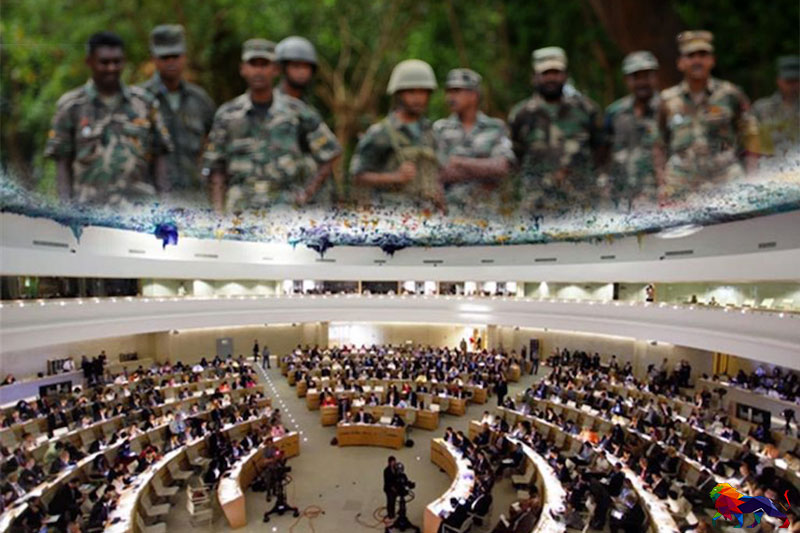
The International Truth and Justice Project (ITJP) has made a request from the United Nations’s (UN) Department of Peace Operations (DPKO) to suspend the deployment of Sri Lankan peacekeepers due to the report by UN High Commissioner for Human Rights (HCHR) Michelle Bachelet, which allegedly raises new doubts about whether Sri Lankan troops can be properly vetted.

“The DPKO has a legal duty to ensure due diligence before deploying troops. The report of the UN HCHR confirms that the UN General Assembly is not in a position now to certify that the Sri Lankan troops have been properly vetted and screened, and therefore must urgently take steps to move the screening process back to the UN Human Rights Council (UNHRC) in Geneva, Switzerland,” said ITJP Executive Director Yasmin Sooka in a statement released yesterday (4).

The ITJP statement further pointed out that Bachelet has stated in her report that the Human Rights Commission of Sri Lanka (HRCSL), which currently vets the troops, has been highly politicised.

Speaking to The Morning yesterday, Military Media Spokesperson Brig. Nilantha Premaratne said that they have not received any official communication regarding this matter yet.

Cabinet Spokesman Keheliya Rambukwella was not available for comment.

In September 2019, the UN suspended Sri Lankan Army peacekeeping deployments following the appointment of Army Commander Lt. Gen. Shavendra Silva. However, the UN later clarified that the suspension would only include a quarter of the troops.

Bachelet released her report on Sri Lanka last month, where she raised concerns over the heightened risk of human rights violations being repeated.

The 46th Session of the UNHRC is to take place from 22 February to 23 March in Geneva, Switzerland.

Posted in Uncategorized

India again asks Sri Lanka to stick to commitments on developing port terminal

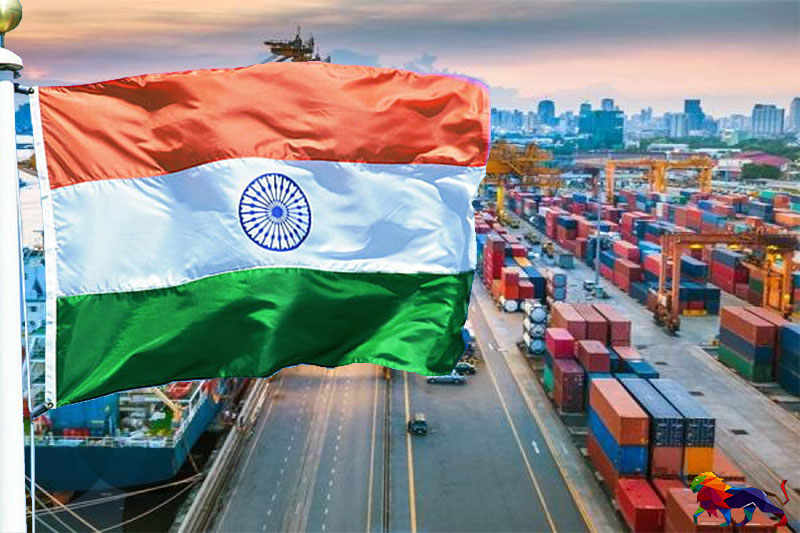
India on Thursday again emphasised the importance of Sri Lanka adhering to international commitments under a trilateral agreement for developing a key port terminal following Colombo’s decision to hand over the facility to a state-run entity.

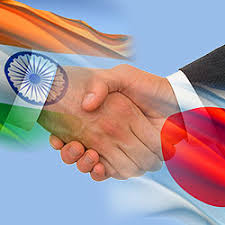
India, Japan and Sri Lanka had signed an agreement in 2019 on jointly developing the East Container Terminal (ECT) of Colombo port. However, the Sri Lankan government gave in to pressure from labour unions, which are opposed to a joint venture with Indian and Japanese investors having a 49% stake in the ECT, and decided on Monday to run the terminal as a fully owned operation of the Sri Lanka Port Authority (SLPA).

India responded to the move by calling on Sri Lanka to abide by the trilateral agreement, while Japan described the Sri Lankan government’s unilateral decision as “regrettable”.

Asked about the issue at a weekly news briefing, external affairs ministry spokesperson Anurag Srivastava said the memorandum of cooperation signed by the three countries in May 2019 envisaged the development and operation of the ECT in a trilateral framework.

“We sincerely believe that the development of infrastructure in Sri Lanka, in areas such as ports and energy, with foreign investment from India and Japan will be a mutually beneficial proposition,” he said.

“Our high commissioner in Colombo is in discussion with the government of Sri Lanka, including on the importance of adhering to international commitments,” he added.

The Indian envoy has held separate meetings with President Gotabaya Rajapaksa, Prime Minister Mahinda Rajapaksa and foreign minister Dinesh Gunawerdene to convey India’s position that Sri Lanka must abide by the agreement. The Japanese envoy too has met the Sri Lankan leadership to discuss the matter.

India’s Adani Group and several Japanese investors were to form a joint venture to hold 49% stake in the ECT, with the majority stake in the hands of SLPA. India has also informed the Sri Lankan leadership that the decision could hit investor confidence.

Sri Lanka reports seven COVID-19 deaths Thursday, toll rises to 339

Sri Lanka confirmed seven deaths on Thursday due to COVID -19 raising the death toll from the viral disease to 339, according to health authorities.

The Director General of Health Services confirmed the following deaths caused by COVID -19 virus infection and accordingly the total number of deaths due to COVID -19 infection in Sri Lanka is 339 by now.

01. The deceased is a 58 year old male from Maggona. He was diagnosed as infected with Covid-19 and transferred from the Colombo South Teaching Hospital to the Infectious Disease Hospital (IDH) where he died on February 03. The leading cause of death was COVID pneumonia and complicated kidney disease.

02. The deceased is an 82 year old male from Weuda. He was diagnosed as infected with Covid-19 and transferred from a private hospital in Kandy to Theldeniya Base Hospital where he died on February 03. The cause of death was said to be COVID-19 pneumonia, heart disease and kidney damage.

03. The deceased is a 70 year old male from Katugastota. He was diagnosed as infected with Covid-19 and transferred from Kandy general Hospital to Theldeniya Base Hospital where he died on February 03. The cause of death was said to be COVID-19 pneumonia, heart disease and kidney disease.

04. The deceased is a 53 year old male from Hettipola. He was receiving treatment at the Homagama Base Hospital and died on February 04. The cause of death is said to be COVID-19 pneumonia.

05. The deceased is a 66 year old male from Biyagama. He was receiving treatment at the Colombo National Hospital and died on February 02. The cause of death is said to be COVID-19 pneumonia and acute lung infection.

06. The deceased is a 78 year old woman from Bodarakanda area of Dickwella. She was diagnosed as infected with Covid-19 virus while receiving treatment at the Matara District Hospital and transferred to the Colombo National Hospital where she died on February 01. The cause of death was heart failure associated with COVID-19, high blood pressure and hyperlipidemia.

07. The deceased is a 62 year old male from Nuwara Eliya. He was diagnosed as infected with Covid-19 and transferred from Nuwara Eliya District Hospital to Homagama Base Hospital where he died on February 04. The cause of death was said to be COVID-19 pneumonia.

Sri Lanka Tamils march to protest deaths, disappearances -Independent.co.uk

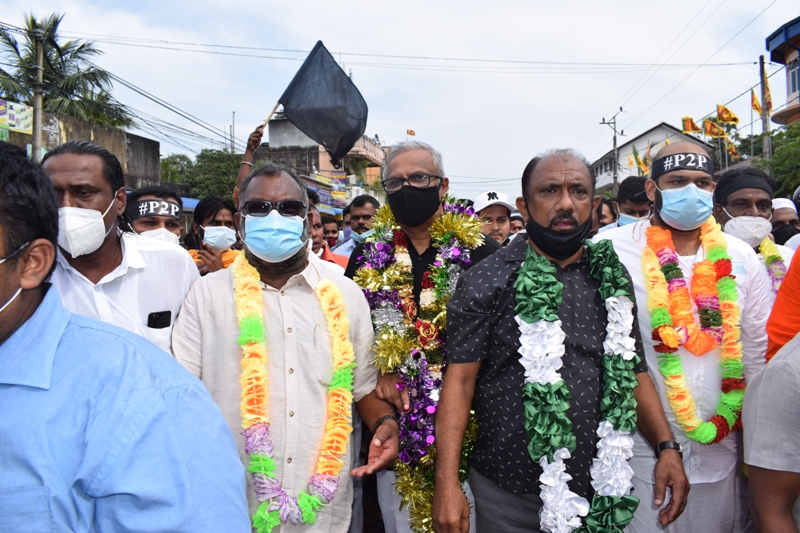
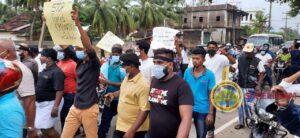
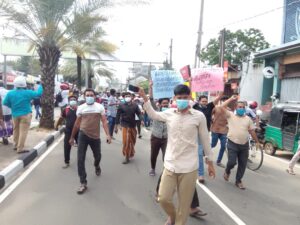
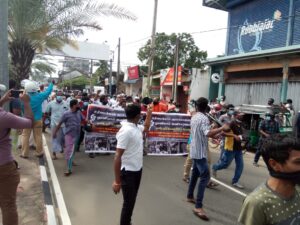
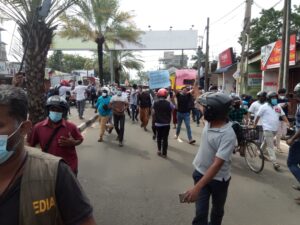
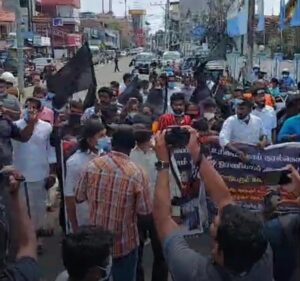
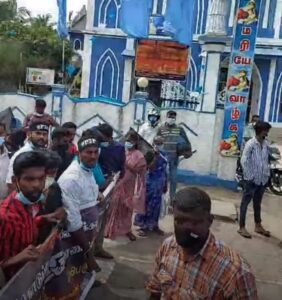
Hundreds of ethnic Tamils began a four-day protest march from eastern to northern Sri Lanka on Wednesday to demand justice for civilians killed and forcibly disappeared during the country s civil war, allegedly at the hands of the government’s military.

Politicians, civil and religious leaders on foot and in cars joined the march, which is also protesting alleged plans by the government to change the demography of the traditional Tamil heartland by settling majority Sinhalese there and taking over private lands.

Sri Lanka marks its 73th anniversary of independence from British colonial rule on Thursday. The approximately 500-kilometer (300-mile) march from the east to the north, which Tamils consider their homelands, is to end Saturday.

Relatives of missing people have also started a fast to mark Independence Day.

The protests come after Sri Lanka rejected a report by U.N. human rights high commissioner Michelle Bachelet who called for “international action to ensure justice for international crimes” allegedly committed during the 26-year civil war.

She said in the report last week that Sri Lanka has “largely closed the possibility of genuine progress being made to end impunity through a domestic transitional justice process.” She said member countries now have the option of referring Sri Lanka to the International Criminal Court and investigate and persecute violations of international law under “accepted principles of extraterritorial or universal jurisdiction.”

In a 2015 resolution, the Sri Lankan government at the time pledged to investigate alleged war abuses through local courts and provide reparations. However, current President Gotabaya Rajapaksa has withdrawn from the resolution.

Rajapaksa played a key role as a top defense official in the government led by his brother, former President Mahinda Rajapaksa, which defeated ethnic Tamil rebels who fought to create an independent state.

Both the government and Tamil Tiger rebel group were accused of serious human rights violations.

Government spokesman Keheliya Rambukwella said the government has rejected the report.

“We are planning our strategy (to respond) and we will make our position clear,” he said.

Initial conservative U.N estimates said about 100,000 people were killed in the civil war. A later U.N. experts’ report said as many as 40,000 ethnic Tamil civilians may have been killed in just the final months of fighting.

Fulfilling expectations of Tamil community is in Sri Lanka’s own interest, says Jaishankar – The Hindu

External Affairs Minister S Jaishankar on Thursday said fulfilling the expectations of the Tamil people for equality, justice and peace within a united Sri Lanka will be in own interest of the island nation.

In response to a question in Rajya Sabha, Mr. Jaishankar said he reiterated India’s support for the reconciliation process in Sri Lanka during his discussions with its top leaders in Colombo last month.

“It is in Sri Lanka’s own interest that the expectations of the Tamil people for equality, justice, peace and dignity within a united Sri Lanka are fulfilled,” he said. “That applies equally to the commitments made by the Sri Lankan government on meaningful devolution, including the 13th Amendment to the Constitution,” the Minister said.

The 13th amendment provides for devolution of power to the Tamil community. India has been pressing Sri Lanka to implement the 13th amendment which was brought in after the Indo-Sri Lankan agreement of 1987.

Mr. Jaishankar held discussions with Sri Lanka’s President Gotabaya Rajapaksa, Prime Minister Mahinda Rajapaksa and Foreign Minister Dinesh Gunawardena during his visit to Colombo from January 5-7.

“During my discussions, I reiterated that India’s support for the reconciliation process in Sri Lanka is longstanding, as indeed for an inclusive political outlook that encourages ethnic harmony,” he said in his written response.

The External Affairs Minister said India has consistently called upon Sri Lanka during bilateral discussions at all levels to fulfill its commitments on addressing the issues related to protecting the interest of Tamils in that country.

“India continues to remain engaged with Sri Lanka at all levels in its efforts to build a future that accommodates the aspirations of all sections of society, including the Sri Lankan Tamil community, for a life of equality, justice, peace and dignity within a united Sri Lanka,” he added.

The issue had figured during a virtual summit between Prime Minister Narendra Modi and his Lankan counterpart Mahinda Rajapaksa in September last.

To a separate question, Minister of State for External Affairs V Muraleedharan said 74 Indian fishermen were arrested and 11 boats were confiscated by the Sri Lankan authorities last year.

“With sustained diplomatic efforts the government has secured the release of all these fishermen. At present, 12 Indian fishermen, arrested along with two boats in January are in Sri Lankan custody,” he said.

The Minister said the fishermen have been provided consular and legal assistance by the Indian High Commission in Colombo and Consulate in Jaffna.

“Efforts are ongoing to secure the release of these fishermen. Presently, 62 boats of Indian fishermen are in Sri Lankan custody,” he said.

Posted in Uncategorized

President Rajapaksa asserts he is a Sinhalese, Buddhist leader

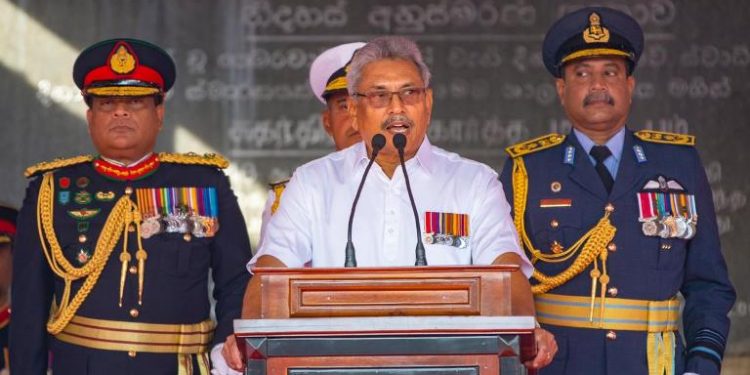
President Gotabaya Rajapaksa today reminded the Nation that he is a Sinhalese, Buddhist leader.

Addressing the Nation during the 73rd Independence Day celebrations held at Independence Square, the President said that he follows the Buddhist teachings when leading the Nation.

He said that he will never hesitate to say that he is a Sinhalese, Buddhist leader.

However, the President further noted that Sri Lanka will continue to ensure equal rights to all communities as enshrined in the Constitution.

He also said that there will not be room in Sri Lanka for extremism.

The President said that steps will be taken to prosecute those responsible for the Easter Sunday attacks.

Speaking further, the President insisted that National assets will not be sold to foreigners.

He also said that the tourism industry, which has been hit by the coronavirus, will be revived in stages.

The President also said that some people remind him that they supported him at the last Presidential election.

He said he believes they supported him in the best interest of the Nation and not for personal gain.

The 73rd Independence Day celebrations took place at Independence Square by following the health guidelines issued to prevent the spread of the coronavirus.

Prime Minister Mahinda Rajapaksa, Opposition Leader Sajith Premadasa and other invitees attended the event.

Full text of the speech made by His Excellency President Gotabaya Rajapaksa on 73rd Independence Day – February 4, 2021

Today marks the 73rd anniversary of our nation gaining independence from colonial rule. On this day we pay our respects to all the leaders from the Sinhala, Tamil, Muslim, Burgher and other sections of the population who made various sacrifices to win our independence.

I also pay my tribute to the brave war heroes who sacrificed their lives and underwent great hardships to preserve our nation’s independence and sovereignty.

We have faced many challenges as a nation in the 73 years since our independence. From time to time, we have had to face religious and ethnic conflicts, racist and terrorist activities, undue external influences, constitutional crises, and many other obstacles. The challenges of establishing national security, achieving true reconciliation amongst various communities of our nation, and building a strong economy that can deliver sustainable economic development and eliminate poverty still lie ahead of us.

At a juncture when our nation’s heritage, its traditions, its national identity and patriotism were under serious threat, more than 6.9 million people elected me as President to provide the leadership needed to reestablish national security and overcome the many challenges facing our country.

I am a Sinhala Buddhist leader and I will never hesitate to state so. I govern this country in accordance with Buddhist teachings. Within the Buddhist philosophic tradition of peaceful coexistence which gives due respect to all religions and ethnicities, every person in this country irrespective of his or her ethnic or religious identification has the right to enjoy the freedom as equals under the nation’s legal framework.

Traitorous elements always band together and seek to marshal domestic and foreign forces against the leadership that upholds indigenous way of life and country’s sovereignty. Such elements mislead the public through false propaganda in a subtle way. I request the people of our nation to always think critically before acting. If people make assessments based on facts and take decisions only after finding out the truth, no one will be able to mislead the public.

The public has given the current Government a mandate to execute the policies articulated in my vision statement “Vistas of Prosperity and Splendour”.

I have sworn as the nation’s leader to always protect our nation’s independence, unitary status, territorial integrity and sovereignty on behalf of our future generations. I will always uphold that pledge.

Sri Lanka is a democratic nation. Every citizen who lives in this country has equal rights. We reject any efforts to divide our citizens based on ethnic or religious reasons. We always strive to protect the fundamental rights and human rights of all our citizens, and always stand for the principle of one nation, one law.

We always respect the rule of law. The public has rejected the undue influence that was exerted on law enforcement agencies and the judiciary by politicians in the past. However, the public also expects fair, unbiased and efficient service from the officials who enforce the law. As such, I have advised the Attorney General’s Department to swiftly act upon matters that have caused great concern to the public, such as the Easter Sunday Attacks and the Central Bank scam.

I have now received the final report of the Presidential Commission appointed to inquire into the Easter Sunday Attacks. I have already given instructions to implement its recommendations. Simultaneously, taking into account the recommendations of the previous Parliament’s Sectoral Oversight Committee on National Security, action will be taken against all parties involved in this tragedy. We will not allow those responsible for designing and enabling this tragedy to escape justice. We will never allow extremism to raise its head again, in this country.

At a time when the entire world is in crisis due to the COVID-19 pandemic, our country has had to face many challenges. For more than a year, the pandemic has posed serious obstacles to carrying out the development activities and for people of our country to lead a normal life.

Several countries have by now successfully developed vaccines for the COVID-19 virus. I have requested the leaders of India, China and Russia to support Sri Lanka to swiftly obtain these vaccines. This matter has also been discussed with the World Health Organization. Accordingly, we have obtained one vaccine and have already started our vaccination programme. This vaccination programme will be carried out without any disruption.

An important lesson learnt by all nations faced with the prevailing global crisis has been the need for a strong domestic production base. This experience has further underscored the appropriateness and timeliness of our policy of strengthening domestic agriculture to ensure food security and self-sufficiency.

The stimulus provided through distribution of free fertilizer, raising the floor price of paddy to 50 rupees, striking off the debts of farmers, reconstructing thousands of irrigation tanks around the country, and the encouragement provided to home gardening and urban farming has revived the agriculture sector. We will act to further increase agricultural productivity through the infusion of new technologies. We are already seeing the benefits of strengthening farmers through managing import taxes to encourage the production of paddy, maize, grains, potatoes and onions; by limiting imports of products such as turmeric which can be grown domestically and by limiting the re-export of spices such as pepper. Domestic production has increased, and export opportunities have expanded.

I have always maintained that in order to strengthen farmers economically we must encourage them to become agricultural entrepreneurs. It is our aim to further develop and strengthen the domestic agriculture sector so that it becomes a significant foreign exchange earner.

We have not forgotten the importance of the industrial and service sectors in economic development. The Government has taken action to encourage these sectors through the provision of tax incentives and by reducing interest rates. A great improvement is already visible in traditional handicrafts such as batik, cane, clay and jewellery through the state ministries that were established for this purpose.

We have paid attention to provide entrepreneurs engaged in small and medium enterprises as well as those who are self-employed avenues in minimizing delays in various approvals they require, in helping them to access financing at single digit interest rates and in obtaining required training.

Providing stimulus to the construction industry has been shown to be a successful means of reviving stalled economies. Initiatives such as the 100,000 kilometer roads programme; the 10,000 bridges programme; the reconstruction of thousands of irrigation tanks around the country under the ‘Irrigation Prosperity’ programme; the programme to construct 14,000 houses under the theme of ‘one village, one house’; the creation of 100,000 housing units for middle income earners, low income earners and urban shanty dwellers; the programme to construct 4,000 houses for estate workers; and the construction of walkways for densely populated areas around the country will provide great benefits to the public at large whilst directly supporting the revival of the economy.

Amidst striving to develop the agriculture, industrial and service sectors to strengthen the national economy, we are also taking steps to minimize obstacles to the promotion of foreign direct investments. While our policy of not selling national economic hubs to foreigners remains unchanged, I trust that the public will critically assess the misinformation and misinterpretations being propagated by those with ulterior political motives to deter foreign investors from investing in Sri Lanka.

I have established a Presidential Deregulation Commission to change the outdated laws and regulations that affect the general public as well as the domestic and foreign companies. This long discussed but unimplemented activity has finally commenced. I believe that implementing the recommendations of this Commission will provide significant impetus to the country’s future economic development.

The 21st Century is considered as the Knowledge Century.

Human resources are extremely important to the development of the nation. The “Vistas of Prosperity and Splendour” policy statement articulates the need for educational reforms to foster a knowledgeable and skilled future generation.

Accordingly, a separate State Ministry has been created to undertake the reforms needed in the education sector. Two task forces have also been created to obtain specialist assistance for these reforms. The recommendations they have provided are already being implemented.

During the course of this year, the number of students gaining admission to universities will increase by 10,000, or 30 percent. Provisions have been made to double the number of students entering the state Technical Colleges from 100,000 to 200,000. Approval has been granted for the creation of a system of city universities catering to every district in order to increase the capacity of universities. We are acting quickly to implement recommendations for educational reforms. As a result, we anticipate that there will be an appreciable qualitative improvement in the education sector within the next few years.

In order to fulfil our economic ambitions in the modern world, we must foster a society familiar with technology.

In order to compete in the future, the agriculture, industrial and service sectors will need to be infused with technology. To support this, we look forward to fostering a culture of technological innovation that will uplift the living standards of the people.

In accordance with the policies contained in the “Vistas of Prosperity and Splendour” vision statement, the Government will encourage innovation through the use of technology in both the public and the private sectors. With this in mind, a range of tax incentives has already been provided to the technology intensive sectors.

In recent weeks, I established a dedicated Ministry of Technology and brought it under my purview. Through this Ministry, due attention will be paid to developing the policies and legal framework required to improve the technology sector, as well as to simplify the functioning of the state sector and markets through the use of information technology as a tool for broader digital governance. Action has already been taken to create five technology parks with all facilities in five identified districts in order to encourage entrepreneurs and start-ups in the technology sector. We will have an opportunity to create a revival in the technology sector through such incentives.

I request the intelligent public to remember that all of this has been achieved in little over a year, whilst facing the ongoing COVID-19 pandemic that has debilitated the entire world.

Our tourism industry earned approximately US$ 4.5 billion annually and provided direct and indirect employment to three million people. These people are now in great difficulty as they are unable to make a living from tourism. We need to find solutions for these people as soon as possible. As such, whilst strictly adhering to health recommendations, we have acted to restart the tourism industry in a phased manner.

I have always loved and respected the environment. In the past, whilst serving as the Secretary to the Ministry of Urban Development, I strove to protect the environment when undertaking such activities as urban beautification, urban development, and the creation of walking paths and urban parks. Today, too, our Government has paid particular attention to preserving the environment for future generations. What the creation of urban forests, designing of green cities, promotion of green businesses, undertaking of nationwide tree planting programmes, reconstruction of irrigation tanks and canals, recultivating of fallow paddy fields, promoting the use of organic fertilizer, and limiting the use of plastics demonstrate is the implementation of this sustainable environmental management policy.

The foundation of our citizen centric economic policy is that the true potential of the economy cannot be unleashed without economic freedom. To achieve the Government’s aims of eliminating poverty, providing equal opportunity for improvement of all citizens, and developing domestic businesses, we require a clean and efficient public service.

The public service is a powerful, nationwide mechanism. This represents an opportunity that many countries in the world do not possess. Therefore, I expect this powerful mechanism to make a significant contribution to the national decision making process. However, I observe that weaknesses currently prevail in decision making at every level. Even on very simple institutional matters, I have observed that officials avoid making decisions and refer them to the Cabinet of Ministers. They expect advice from circulars for every activity.

They avoid taking decisions even within the limits of their authority. If we do not change this situation, it will be extremely difficult for us to take this nation forward.

The legal reforms necessary to protect those in the public service who take correct decisions are currently being formulated. I therefore request all those in positions of authority to ease the limitations and practices that obstruct the general public through the state administration.

I personally participate in the ‘Conversation with the Village’ programme because rural development is one of my Government’s priorities. The public administration system at both the District and Divisional level is extremely important to achieving the citizen centric economic development articulated in my vision statement “Vistas of Prosperity and Splendour”. There is a clear responsibility incumbent on everyone involved in this development process, from the Governors, District Secretaries, Divisional Secretaries and Public Health Officials, to officials such as Grama Niladharis, Samurdhi Officials, Agriculture Research and Production Assistants, Family Health Service Officials and Development Officials at the village level. They have all provided tremendous support in controlling the spread of the COVID-19 virus and in providing other essential services. Similarly, I look forward to the unstinted support of all public servants in successfully overcoming the challenges that confront us in terms of our economic development.

The political leadership has a grave responsibility not only on matters at the national level but also in rural development. We have instituted mechanisms to ensure the active participation of Cabinet and State Ministers, Members of Parliament, and Members of Urban and Municipal Councils in the development activities at District and Divisional levels.

Corruption and waste are significant obstacles to a nation’s development. We are setting an example to eradicate corruption and waste in the public administration. We will not be lenient on anyone who is found guilty of corruption or waste. However, one of the difficulties we face in preventing corruption is the indirect support given willingly or unwillingly by the public to such activities. I request the general public not to encourage corruption either directly or indirectly. If anyone is found to be engaging in corrupt practices, please inform the relevant authorities.

I invite everyone to join in a national effort to mobilize public opinion against corruption and waste. Our future generations too must be educated in this regard. I appreciate the support that is being extended by the media for this initiative.

Various parties claim that they worked to ensure my election as President. That may be true. People from every section of society gathered around me to support my campaign. I believe that the vast majority of these people did so not in search of personal benefits but because they expected me to serve the nation diligently. I am always prepared to fulfil the genuine expectations of the public that supported me with honest intent. However, I will never take decisions that will damage the country and to please those who seek gains for themselves personally or for their businesses.

Throughout history, strong civilizations were built and nations developed by those who worked on targets by looking positively towards the future. At this juncture, our nations’ development requires precisely that kind of vision.

No contribution can be expected from pessimists and those who do nothing but criticize the work of others.

What we require today is the support of citizens with a positive vision, who love their country, who contribute to society, and who do not make unfair criticism but offers practical solutions to the issues we face.

We are committed to achieve the principle of the ‘productive citizen, happy family, disciplined and ethical society, and prosperous nation’. If the majority of citizens in this country provide their due contribution towards this, we can make this principle a reality. I therefore once again request all the citizens of this country to think positively and join with us to build the future for all our children.

I am the leader that you searched for. I will discharge the responsibility you have entrusted to me, with commitment and dedication.

May the blessings of the noble Triple Gem be with you.

Thank you.

Posted in Uncategorized

“I am not sidelined, but decided to function low-key” – Premier Mahinda Rajapaksa

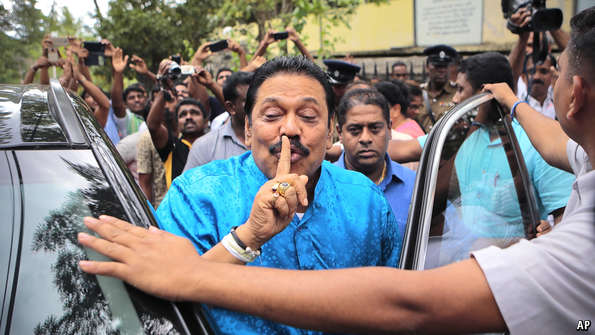
Prime Minister Mahinda Rajapaksa in an interview with the Daily Mirror speaks about future economic plans of the government amidst the pandemic situation and responds to allegations made against the regime, which is has completed one year in office.
Excerpts:

Q How does the Government expect to perform amidst the pandemic situation?

The COVID-19 pandemic is the biggest challenge for us. We are now working with the health authorities to overcome it. We have received vaccines. If we get them in sufficient quantity we could overcome this health crisis earlier than expected.

Q The pandemic posed economic challenges both locally and globally. How are you planning to get the economy on track under the present circumstances?

There is a huge challenge. So far we have effectively dealt with every challenge that we encountered. We will tide over this one too as we have succeeded in the past.

“But we have not defaulted payment of any installment. We will be able to proceed as usual. We have implemented an economic development plan. When it progresses we can address all such challenges without any problem”

Q The Government gave tax concessions upon election to office after the 2019 Presidential Elections. This resulted in a revenue loss to the state coffers. How can you manage financial requirements?

We intended to encourage new business opportunities while boosting the existing ones through such tax reliefs. Entrepreneurs are inclined to invest more and more when they are relieved of tax burden. When such business development takes place, it is a victory for us.

Q But there is a temporary revenue shock to the state. What do you say about it?

I don’t think it is a serious challenge. It is a challenge. But, we are capable of handling it successfully.

Q The Government also needs a lot of foreign exchange for debt servicing. How challenging is it?

That challenge has always existed. But we have not defaulted payment of any installment. We will be able to proceed as usual. We have implemented an economic development plan. When it progresses we can address all such challenges without any problem. Our economy has now started to take off.

“The COVID-19 pandemic is the biggest challenge for us. We are now working with the health authorities to overcome it. We have received vaccines. If we get them in sufficient quantity we could overcome this health crisis earlier than expected”

Q The opposition has launched a campaign citing that the Government has failed in every aspect. How do you respond to this as the Prime Minister?

It is the duty of the opposition. The opposition is politically duty-bound to see that the government becomes a failure. The opposition is proceeding with its duty in politics. Even a newspaper reader tends to read articles which are critical of the Government rather than the ones praising it. We also read such articles to know what we are criticised for. According to my 50-year experience in politics I know it for a fact that people are willing to read anti-government news and articles.

Q But, such criticism snowballs and gets established within the society. What is your experience in this regard?

For that we should counter it. We should not stop only at reading such news and articles. We should act accordingly and appropriately. We should go for a mechanism to blunt such criticism.

Q Does it mean that there is no such mechanism at present?

Some people say there are shortcomings in this case. But some others maintain that what we do is good enough.

“We intended to encourage new business opportunities while boosting the existing ones through such tax reliefs. Entrepreneurs are inclined to invest more and more when they are relieved of tax burden. When such business development takes place, it is a victory for us”

Q The Government faces harsh criticism after it has completed one year in office. What do you feel about it as a lawmaker who counts 50 years in politics?

Going by the past I know people start critically viewing the Government after it puts one year in office. This is natural. But people have not abandoned the Government. I know they have not changed. They just listen to criticism against the Government and remain mute. They are with the Government.

Q What are the Government’s top economic priorities this year?

We have launched a programme with emphasis on the development of agriculture. We are striving for self-sufficiency in this regard. We are going ahead with the extension of the Southern Expressway. We have finalised planning work for the construction of Colombo-Ratnapura Expressway. The Central Expressway will be extended to Dambulla from Kurunegala. We are taking in this direction. We are planning for the extension of the railway line up to Pelmadulla.

Q Is the Government seeking investments under the BOT system (Build, Operate, Transfer) for road developments instead of raising loans?

Investors expect quick returns on money on the ground for road construction through such a system. They have to charge from road users. But, our people are not used to paying exorbitantly for use of the road. Investors are a bit reluctant regarding arrangements for investment in road projects under such a system.

Q Yet, it is challenging to raise loans, isn’t it?

It is challenging. But, we have been successful in implementing projects under loan schemes.

Q When does the Government expect to enact the new Constitution?

The process is now underway. If we complete the work on the new Constitution we would be able to enact it by the end of 2021 or early next year.

Q The present Government comprises a mix of politicians from traditional and non-traditional streams. The President is from the non-traditional stream whereas you and a host of others are traditional politicians. How do you describe this experience in governing?

It is extremely good. When there is a mix there are checks and balances properly done within the Government. There are merits in it. The government can deliver.

Q There is public perception that you, despite being the Prime Minister, have been sidelined. How true is it?

There is nothing like that. I have decided to function low-key, though. We don’t work seeking publicity all the time. There are people who work hard, but without much fanfare. I do a lot of work without much publicity being sought.

“The opposition is politically duty-bound to see that the government becomes a failure. The opposition is proceeding with its duty in politics. Even a newspaper reader tends to read articles which are critical of the Government rather than the ones praising it”

Q You had to grapple with human rights issues in Geneva during the 2010/2015 period. Again, the Government is under scrutiny by the UNHRC in Geneva. How do you get ready for it?

Whenever we form a Government we face this problem from the western world. We need to clarify our positions. We have this challenge every time we are in power. The Foreign Ministry is working out a mechanism to face this situation in Geneva. I am also in the loop.

Q There are Muslim organizations now joining hands with Tamil Diaspora groups this time. These Muslim groups are up in arms against the Government over the burial issue. How do you counter it?

It is a settled issue. The World Health Organization has said that individual countries can take the most appropriate decision in this regard. We should look at the best method to prevent the spread of the virus through dead bodies. What is paramount is public health.

Q Will there be any diplomatic row with India over the issue involving the East Container Terminal?

No, there won’t be any issue. We maintain healthy relations with India in this regard. There are two schools of thought regarding this investment project. Alienation of state assets is not the policy of this Government. Quite a number of Buddhist monks oppose it. They have already come out.

Q People complain about the rising cost of living. What is the Government doing to contain it?

Actually some steps should be taken to cushion the burden. The cost of living committee meets.

Q What do you think of import restriction on items such as turmeric?

It is true that people were inconvenienced when a decision was taken regarding turmeric. However, people started cultivating turmeric as a result. Some people cultivated turmeric sufficient for their household consumption. It boosted local growth. Now supply is getting restored.
The increase of local production is the only solution to bring down the cost of living.

Q Is there a move to reshuffle the Cabinet and increase the number of state ministers?

This is a rumour. But, I am not aware of any such move. There is no discussion on increasing the number of state ministers.

“Going by the past I know people start critically viewing the Government after it puts one year in office. This is natural. But people have not abandoned the Government. I know they have not changed”

Q There is a huge allegation against the Government regarding the damage to forest cover under the pretext of carrying out development projects. What can you say?

Only the opposition should be held responsible for deforestation. When they formed the government, they did it at whims. It is an irony that they talk about it today.

Q What is your response to the opposition’s campaign titled ‘Sir Failed’?

It is a kind of a propaganda tool being employed by them to portray the Government in negative light. That is their political duty to dub the Government as a total failure. When the same allegation is repeated for hundreds of times, it gets established. The opposition is involved in such media stunts as a result. Today, the UNP does not exist virtually.

Q What is your view on the role of the present opposition?

The split in the opposition is not a healthy sign for democracy. A strong opposition keeps a government in check and forces it to deliver.

Q There is a call for former Prime Minister Ranil Wickremesinghe to join Parliament. What is your view?

I don’t think there is anyone other than him to represent the UNP in Parliament. He is the most suitable person to lead the opposition.

Q You say so because he is your old friend. Am I correct?

(Laughs) It isn’t because he is my friend. Politically speaking, he is the suitable person. His presence is disadvantageous to the government, though. I believe a strong opposition is always needed. The present opposition is not effective. At that time, the Joint Opposition was far more effective.

Q The appointment of ex-military officers to key positions is interpreted as heading towards militarisation. How do you see it?

There is no militarisation. A retired military officer is not a military officer. He is a civil person. It is always better for the government to have a team capable of working efficiently. They work hard. I, as a lawyer, may count more on lawyers. The President, as an ex- military officer, knows competent people who were in the military. The President obtains their services. Military officers are also Sri Lankans. They are a disciplined lot.

Q What is the position regarding the elections to the provincial councils?

I believe the elections should be conducted as early as possible. We need the second tier of political representatives. People are used to the system. This is my opinion. There are others in the government, who don’t like it.

Japan regrets Sri Lanka’s scrapping of port terminal deal

The Japanese Government has expressed regret over Sri Lanka’s decision to scrap the East Container Terminal deal with Japan and India.

The Ambassador of Japan to Sri Lanka Akira Sugiyama met with Foreign Minister Dinesh Gunawardena today (03) and discussed a range of matters relevant to the bilateral partnership between Sri Lanka and Japan.

The issue over the East Container Terminal deal is believed to have been raised at the meeting.

The Memorandum of Cooperation among the three Governments of Sri Lanka, Japan and India on the development of the East Container Terminal located in the Colombo South Port was signed in Colombo on 28 May 2019.

Then Ports and Shipping and Southern Development Minister Sagala Ratnayaka who signed the agreement on behalf of Sri Lanka in 2019 insisted that the ECT was not “sold” to India or Japan.

As per the 2018 agreement India and Japan were to have a 49% stake collectively in the Terminal Operations Company that was to be set up with the exclusive and explicit purpose of providing the equipment and systems necessary for the development of the ECT and managing the ECT for long periods.

Under the agreement the stake of 51% of the TOC was to belong to the Government of Sri Lanka under the Sri Lanka Ports Authority (SLPA).

It was recently speculated that Chinese intelligence agencies were behind the opposition by trade unions to the ECT deal.

India reiterates call for full implementation of 13th Amendment

India today reiterated calls for the full implementation of the 13th Amendment to the Constitution.

Deputy High Commissioner Vinod K Jacob today met with Sri Lanka Muslim Congress (SLMC) Leader Rauff Hakeem,

Hakeem evaluated India’s gesture of early supply of Covid vaccines to Sri Lanka. Both sides also discussed matters pertaining to economic, financial and development cooperation opportunities.

The High Commission said that Hakeem shared his assessment about the challenges facing the Muslim community in recent times.

He also briefed about the issues involved in the forthcoming UNHRC session beginning later this month.

Deputy High Commissioner Jacob recalled the conversations between the Indian and Sri Lankan leadership since November 2019.

During the Virtual Bilateral Summit between Prime Minister Narendra Modi and Prime Minister Mahinda Rajapaksa in September 2020, the latter had expressed the confidence that Sri Lanka will work towards realizing the expectations of all ethnic groups.

Deputy High Commissioner reiterated India’s long standing and principled position on meaningful devolution through full implementation of 13th amendment and Provincial Councils.

Posted in Uncategorized

Despite Armed Brutal STF Crackdown in Sri Lanka – Tamil’s Walk For Justice Begins in the East and will End In the North

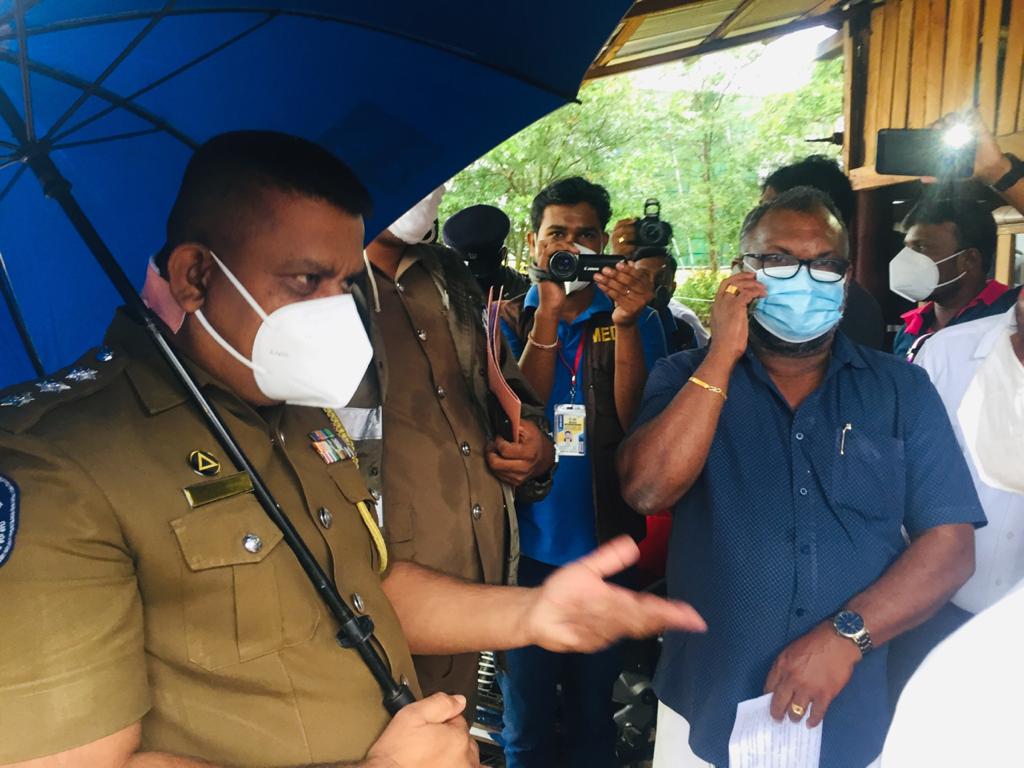
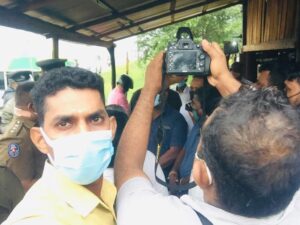
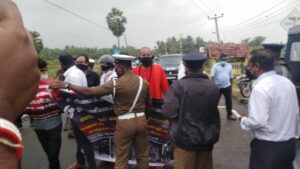
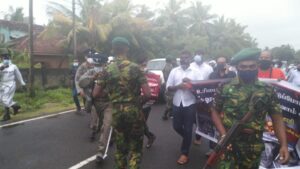
Despite heavily armed brutal Special Task Force (STF) crackdown, Tamil’s Walk for Justice Began in the Eastern town of Pothuvil and end in the Northern town of Polihandi. Hundreds are joining despite road blocks, threats, harassments and intimidation.

Yesterday, in a dramatic turn of events a Catholic Bishop of Trincomalee Bishop Christian Noel Emanuel was served with stay order by the police from participating in the Walk for Justice for Tamils. Several current & former Member’s of Parliament, Tamil journalists and civil society leaders were also served with stay orders to prevent them from covering or participating in this walk.

This walk for justice was organized by North and East Civil Society Organizations to protest abuses against Tamils and to highlight Tamil’s joint appeal to UN High-Commissioner for Human Rights and to UN Human Rights Council member states. This appeal included a request to Refer Sri Lanka to the International Criminal Court (ICC) for War Crimes, Crimes Against Humanity and Genocide committed against the Tamil people by the Sri Lankan State.

This walk began today in Pothuvil in the Eastern province and will end in Polihandy in the Northern province.

The Walk is to highlight the following issues:

1) Continuing land grab in Tamil areas and converting Tamil’s traditional and historical places into Sinhalese areas by establishing Buddhist temples after destroying Hindu temples. As of now around 200 Hindu temples were effected.

2) Muslims who died due to COVID are cremated against the wishes of the families and against Islamic teachings.

3) Tamils in the upcountry have been urging for pay raise of 1,000 rupees, but the Government is not responding to their demands.

4) Since the war ended ten years ago, militarization of Tamil areas is continuing and Tamils historical identity is destroyed with the aim to change demography in favor of Sinhalese, using different government departments, especially archeological department. Also, Government sponsored Sinhalese settlements are continuing.

5) Tamil cattle owners are facing numerous problems, where their gracing areas are being occupied by Sinhalese and their cows killed.

6) PTA has been used to imprison Tamil youths without charge or trial for over 40 years are now being used against Muslims.

7) Tamil political prisoners have been imprisoned for years without trial. The Government have pardoned Sinhalese on a regular basis, but none of the Tamil political prisoners were pardoned.

8) Families of the enforced disappeared have been protesting to find their loved ones, but the Government refuses to give them an answer.

9) Tamils have been denied the Right to Remember their war dead, as demonstrated by denying remembrance events, destruction of cemeteries of the was dead and demolition of memorials.

10) Government is targeting Tamil journalists who cover these abuses and Tamil Civil Society activists who protest these abuses.

11) To Implement Tamil’s Joint Appeal to UN High Commissioner for Human Rights and to UN Human Rights Council Member States, which includes request to Refer Sri Lanka to International Criminal Court (ICC) for War Crimes, Crimes Against Humanity and Genocide committed against Tamil people by the Sri Lankan State.