Debt-hobbled Sri Lanka risks running out of options

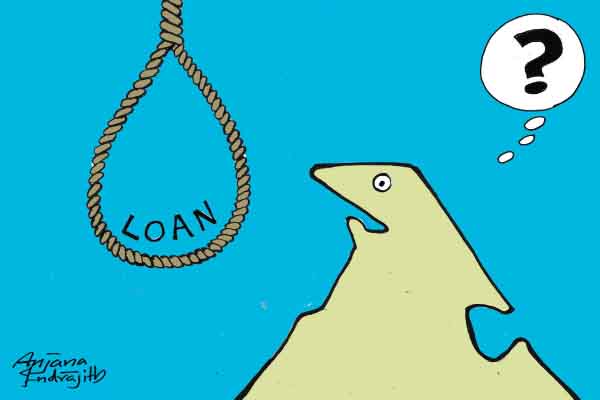
Sri Lanka paid a US$1 billion bond last week, but the alarming state of its finances suggests it may have been just another step towards its first sovereign default.

All the tell-tale crisis signs are there: bonds at nearly half their face value, debt-to-GDP levels above 100per cent, over 80per cent of government revenues being spent on interest payments alone and barely enough reserves to cover a few months of spending.

Chances of the island nation soldiering on alone look slim, especially with COVID-19 keeping the tourism industry on its knees and limiting the remittances expats are sending back from overseas.

Reflecting the gravity of its plight, Colombo’s dollar-denominated government bonds are among the most distressed in the emerging market universe.

Yet last week’s bond payment underscored the strong desire of the government to honour its debt and avoid the ignominy of a first sovereign default.

It has also brought it some breathing room – the next major payment is not until January, when it must find US$500 million.

But that is followed by a more hefty US$1 billion in July and another US$1 billion before the end of 2023. On top of an eyewatering fiscal deficit estimated to be around 11per cent, it could easily run out of rope.

“We always felt this was potentially heading for a default,” Axa Investment Managers’ Sailesh Lad said. “And in the next 12, 18, 24 months, if nothing changes, we think that is probably going to be the case.”

Most investors see an IMF programme as the only route out of trouble, but the likelihood it will require painful spending cuts means the government remains reluctant for now.

Instead, it appears to be favouring a muddle-through approach. It is leaning on foreign exchange swaps with China and India – which are both vying for influence in Sri Lanka – as well banking on an upcoming US$800 million injection of IMF COVID crisis money.

In comments reported by local media last week, State Minister of Money and Capital Markets Ajith Nivard Cabraal said Sri Lanka would make repayments via careful management of its existing reserves, as well as expected inflows.

Cabraal also said that the drop in reserves, which has seen them halve to under US$4 billion in the last 12 months, was temporary. He expects inflows of US$2.65 billion over the next three months, in addition to a US$1.5 billion currency swap with China, as well as the rollover of loans maturing in the rest of 2021.

Analysts are unconvinced, however.

“We see the forecasted rise in reserves as overly optimistic,” said Esther Yong, Asia fixed income research at Julius Baer. “The current measures undertaken are short-term in nature and not a panacea for its weak debt sustainability and external position.”

There’s also uncertainty about what strings might be attached to any swap deals and whether flows will materialise at all.

With its strategic geographic location and one of the deepest ports in the world, Sri Lanka has been an integral part of China’s Belt and Road plan, and Colombo hopes that will convince Beijing to provide more support.

“China can lend enough money for them to muddle through, but … are they willing to throw good money after bad?,” said Carlos de Sousa, a manager of emerging market debt portfolios at Vontobel Asset Management.

“My base case is no, especially because India doesn’t seem willing to play ball.”

An ominous sign for Sri Lanka is that the muddle-through approach is rarely a lasting fix in struggling emerging markets.

Goldman Sachs analysts point out that since 2010, only three of the 13 countries where bond ‘spreads’ spiked to distressed levels for several months managed to avoid a default.

And even if Sri Lanka does change tack and opt for an IMF help, the dire state of its finances mean a restructuring would almost certainly be required.

“Mathematically, it is very hard for it to continue the way it is going,” Mikhail Volodchenko, a colleague of Lad’s at Axa, said. “For now it is plugging the hole and surviving.”

Source: Reuters

Ban on Chemical Fertilizer imports reversed?

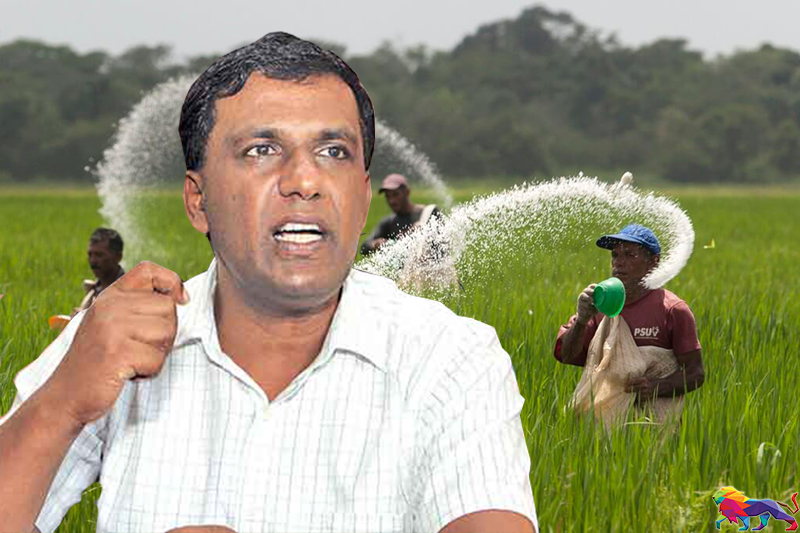
Opposition Lawmaker Dr. Harsha De Silva questioned as to whether Finance Minister Basil Rajapaksa has reversed the decision taken by the President to ban imports of Chemical Fertilizer.

Speaking in Parliament on Tuesday (03) Dr. De Silva said the Imports and Exports Control Department had issued a letter bearing the signature of Finance Minister Basil Rajapaksa to the Chief Executive Officers of all banks noting that a new gazette has been issued lifting the ban chemical fertilizer imports.

MP Dr. Harsha De Silva said according to the letter the gazette permits chemical fertilizer to be imported under a license.

He said imports of Mineral or Chemical Fertilizers that are Nitrogenous, Phosphatic and Potassic which were banned before, can now be imported to the country as per this new document.

Secretary to the Finance Ministry S.R. Attygalle said the government’s decision to suspend the importation of chemical fertilizer will remain unchanged.

He said the Finance Ministry has only granted permission to import Liquid Nitrogen under import control licenses, as it required for the production of Organic Fertilizer.

The Finance Secretary further pointed out that certain Chemical Fertilizer types and Liquid Nitrogen is included among the list of products that come under the H.S. Code or the “Harmonized Commodity Description and Coding System” of Customs.

Thereby, Finance Secretary S.R. Attygalle emphasized that permission will ONLY be granted to import chemicals required to produce organic fertilizer as pet the government’s policy on Organic Fertilizer.

Finance Secretary S.R. Attygalle said tenders have already been called for such imports adding that permission would be granted based on the recommendations pertaining to agriculture and organic fertilizer, issued by the Ministry.

The following images of the said letters and gazette were obtained from the official twitter account of MP Harsha De Silva.

Posted in Uncategorized

CBK’s son Vimukthi into politics?

Samagi Jana Balawegaya (SJB) parliamentarian Kumara Welgama has said that plans are underway to bring to power an educated youth from a well-known political family through a broad political alliance, but refused to confirm if the youth is Vimukthi Kumaratunga, the son of former President Chandrika Bandaranaike Kumaratunga.

He noted that the said alliance would be formed against the present Government and that it is likely to be named “Api Sri Lanka”.

Welgama said this speaking to the media after a meeting held in Nawala with the participation of representatives of several political parties and civil society organisations to discuss the formation of said alliance.

“A very good leader is coming in the future. We are working to bring forward an educated young leader from a well-known family through this alliance that is to be formed,” he added.

When queried by journalists as to whether Vimukthi Kumaratunga, the son of former President Chandrika Bandaranaike Kumaratunga and popular late actor Vijaya Kumaranatunga, is the young leader in question that Welgama is referring to, he said that it would be seen in the future as to whether this is the case.

On an earlier occasion, Welgama claimed that no force could stop members of the Sri Lanka Freedom Party (SLFP), the Sri Lanka Podujana Peramuna (SLPP), and all other anti-Government Leftist forces, who have now become helpless owing to the conduct of the SLPP-SLFP-led Government, from joining the New Lanka Freedom Party (NLFP) led by him. Claiming that the SLFP was currently moving in the wrong direction, Welgama opined that it was his responsibility to protect its members. He added that arrangements have already been made for the establishment of a broad force where all those who are unhappy with the SLFP, the SLPP, and any other political party could join.

Welgama launched a new political movement called the NLFP on 6 March 2020 and the launch of the party was held under the theme “A Clean Bandaranaike Policy”, a reference to the policies of the slain SLFP Founder and Prime Minister S.W.R.D. Bandaranaike.

Attempts to contact Chandrika Bandaranaike Kumaratunga to inquire as to whether there are any plans for her son Vimukthi Kumaratunga to come to politics were unsuccessful.

Posted in Uncategorized

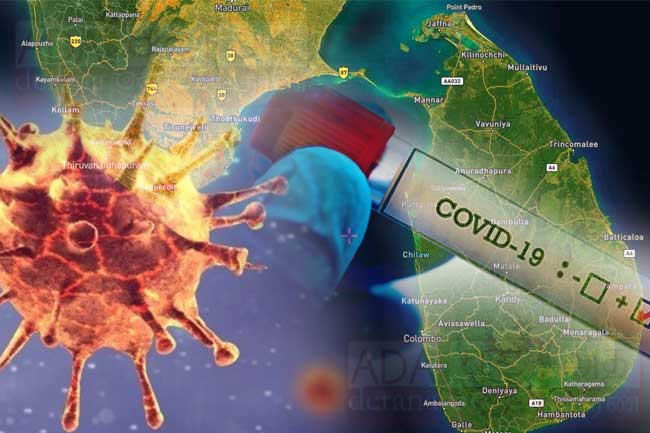
Sri Lanka confirms 74 Covid-19 deaths occurred on Monday, toll rises to 4,645

Sri Lanka Tuesday reported that 74 deaths due to COVID-19 occurred on Monday, August 02, 2021.

The Director General of Health Services has confirmed that 74 deaths occurred on Monday, August 02 due to the COVID-19.

Among the Monday’s deaths, 48 are of males and 26 of females. The majority of the deaths numbering 56 are of elderly people in the 60 years and above age group.

According to the data reported by the Government Information Department, the total deaths due to Covid-19 since the pandemic began has now risen to 4,645 including the deaths confirmed Monday.

Death of girl: Brother responds to wording found in his sister’s room

The brother of the 16-year-old girl who died due to burn injuries while serving as a domestic helper in the house of former minister Rishad Bathiudeen said that his sister did not have the level of education to write something in English letters.

Responding after the police found a note on the wall of the room where she was staying, her brother Thiruprasad said that though his sister had the ability to write something, as far he knew, she did not have the level of education to write something in English letters.

He said that she was educated till Grade 7 at the Puwakpitiya Tamil Maha Vidyalaya in Avissawella.

Police have found a note written on the wall of the room in a way that gives a Tamil meaning in English letters.

Police said the meaning of the word is “the cause of my death”.

Thiruprasad said that he did not know anything about the wording found in English letters in the room where his sister was staying.

Posted in Uncategorized

Speaker accused of disregarding verbal sexual abuse of MP

Speaker Mahinda Yapa Abeywardena was today accused of disregarding an incident where a female Parliamentarian faced verbal sexual abuse inside the House.

Samagi Jana Balavegaya (SJB) Parliamentarian Rohini Wijeratne said that the incident had taken place during the no-confidence vote on Minister Udaya Gammanpila.

She said that opposition MP Thalatha Athukorala had faced verbal sexual abuse during the vote.

Wijeratne said that Athukorala faced abused in Parliament where there are only 12 female MPs.

She noted that Parliament is there to discuss issues faced by the public and not about illicit affairs.

Rohini Wijeratne expressed regret that the Speaker only smiled when the abuse took place.

Speaker Mahinda Yapa Abeywardena said that he will look into the incident.

Posted in Uncategorized

Online registration for 2021 electoral register

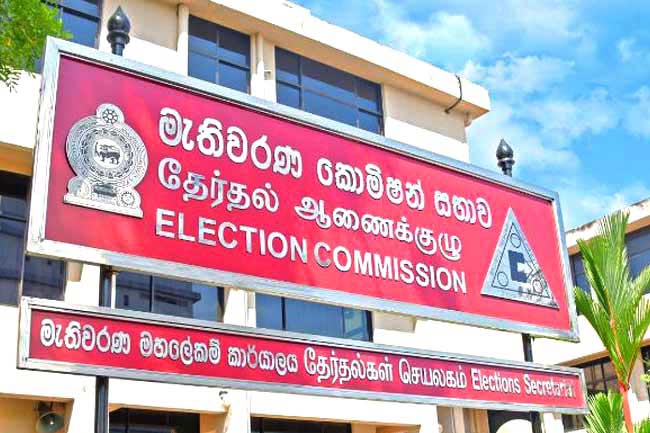
The Election Commission has launched a program for the online application to register in the 2021 Electoral Roll.

Accordingly, information related to the new online registration process can be accessed by visiting the Election Commission website, www.election.gov.lk.

Registration of Sri Lankan citizens who have attained the age of 18 years who are eligible to be included in the 2021 Electoral Register, correction of mistakes or typographical errors in the names in the existing Electoral Register, change of residence, registration of voters unregistered in 2020 will be carried out under this program.

Any queries or issues regarding the process can be forwarded to the email address eservices@election.gov.lk, the Commission said.

Posted in Uncategorized

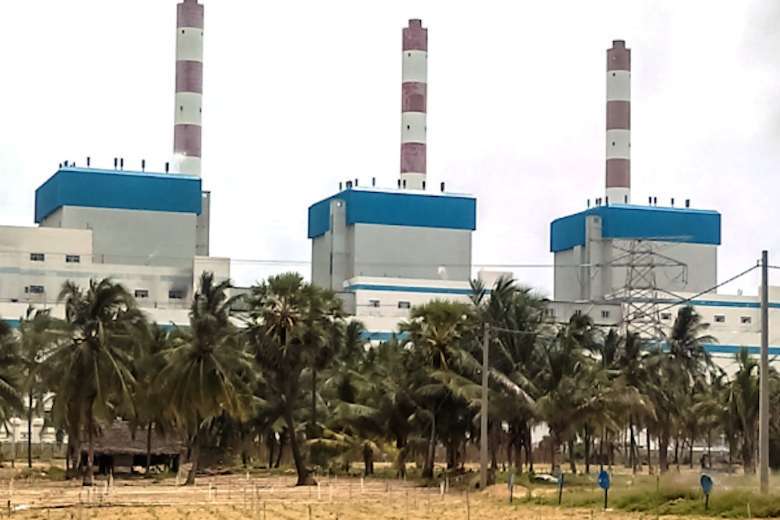
Sri Lankan bishop attacks coal power plant

A Catholic bishop has criticized the largest power station in Sri Lanka for emitting carbon and causing environmental damage.

Bishop Valence Mendis of Chilaw said Lakvijaya Coal Power Plant in Norochcholai is causing health risks to residents.

“The toxic gas emitted from the plant has increased the risk of cancer and lung disease of people in the area,” said Bishop Mendis during his sermon on Aug. 1.

“Responsible people around the world say they have decided to phase out carbon emissions by 2050 because it is so poisonous to human life.”

The Catholic Church and environmentalists have urged the government to shut down the power plant and to generate electricity using alternative sources.

The plant was completed in 2014 by a Chinese company with the financial assistance of the Exim Bank of China.

It has been decided to stop the use of carbon in Sri Lanka in another nine years by 2030
Today, in addition to waste disposal, serious problems have arisen regarding the storage and condition of coal, the basic raw material required for the operation of the plant.

“It has been decided to stop the use of carbon in Sri Lanka in another nine years by 2030,” said Bishop Mendis.

“Global warming is also increasing due to the release of carbon into the universe.”

Farmers and fishermen in the area say they are facing serious health problems caused by the plant.

Bishop Mendis was speaking at St. Anne’s Church in Talawila, close to the power plant, in a service to mark the feast of St. Anne

Sadamali Niroshika, a Sunday school teacher from Chilaw, said that due to improper storage and disposal of coal, the air in villages near the plant contains coal dust and ash.

“People in the area face several serious health problems. A group of children living around the power plant have contracted skin diseases. Many other children living in the surrounding villages have skin problems and many adults suffer from health problems,” said Niroshika.

“The air and water are polluted when coal dust and waste ash are mixed into the environment.”

When the wind blows, the ash scatters like dust
An officer from the Electricity Board claimed that coal dust is everywhere in the surrounding area.

“When the wind blows, the ash scatters like dust. We now cover the entire area with sheets about 45 feet high,” said the officer who asked to remain anonymous.

“The ash is used in the manufacture of bricks and cement.”

Environmentalist Aruna Malcolm said harmful chemicals can cause cancer and lung, skin, kidney and heart diseases.

“Such conditions have already been reported around Norochcholai,” said Malcolm.

“Today, these plants are considered to be one of the major pollutants in the world. It is an outdated technology and has been phased out in many countries.”

Posted in Uncategorized

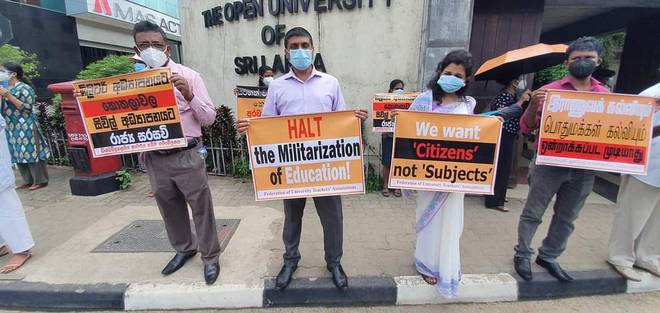
Why are Teachers and Principals protesting?

Teachers and Principals have been protesting for almost 22 days all around the country, in an unprecedented show of force.

But why are they protesting? News 1st gives you an easy reference.

On the 12th of July, Fourteen trade unions representing teachers and principals went on strike despite calls from the government to give up their trade union action and continue with teaching activities.

The Trade Unions representing Teachers and Principals are making the following key demands :

01. Permanent solution to the perennial salary anomaly issue.

02. Immediate withdrawal of the Kotelawala Defence University Bill

03. Allocation of 6% of GDP for education

04. Permanent solutions to service issues faced by Principals and Teachers.

05. System for Extra-Curricular Activities attended by Teachers and Principals

How did the issue begin?

The Sri Lanka Teacher’s Service was established in 1994, with each grade bearing a salary similar to other sectors in the public administrative service.

Trade unions say the B.C. Perera Salaries Commission of 1997 and the Lionel Fernando and Saliya Mathew Salaries Commission of 2006 had recommended considering teaching as a separate service.

They pointed out that teachers had not received salary increments in 1997 when the salaries for other sectors had been hiked.

When the matter was referred to the court in 2008, the court had ordered teaching to be considered a separate service.

Trade unions say that the salary increments offered to teachers and principals are not equal to the salaries earned in other sectors.

They outline that the salary of a Grade-1 teacher should increase by about 29,000 rupees if the increments are to be made in line with other services in the public sector.

Under this government, education minister Professor G.L. Peiris had appointed a special committee and obtained recommendations on this matter. A cabinet-sub committee has also been appointed.

Trade Unions have rejected the appointment of the sub-committee noting that the appointment of sub-committees has been taking place for many years under every successive government, with no solution being granted to their issues.

The Prime Minister on 27th July said that a final decision on declaring the teachers’ service as a separate one within the Public Service, will be announced after Monday’s (02) cabinet meeting.

Sri Lanka’s 213 billion rupee money printing to repay foreign debt: Treasury Secretary explains

Sri Lanka’s 213 billion rupees printing of money on July 26 (1005 million US dollars at 203 rupees) had flowed out of the country in a back-to-back transaction that depleted foreign reserves but did not cause domestic price inflation, Treasury Secretary Sajith Attygalle said.

The billion US dollar sovereign bond (which also had a coupon) was paid with central bank dollar (monetary) reserves.

He said a Treasury bill was issued to the central bank to get rupees.

“We paid 1000 million from reserves. That means the reserves of the central bank,”

“Then I have to take rupees from the central bank to get dollars. This is how it happens,” Attygalle said.

“Yes. The Treasury bill holdings of the central bank went up by that amount. But there is nothing that came out to the (banking) system.”

He said the money printed by the sale of Treasury bills to the central bank did not come into the banking system. If people were worried about (price) inflation it would not happen, Secretary Attygalle said.

The money printed to repay foreign loans does not cause domestic inflation because the money does not come into circulation.

“But that money does not get into circulation,” he said. “What is the problem with printing? Inflation goes up. Inflation goes up when the money comes into use.”

“For me to get dollars from the central bank I have to print money and give in rupees. That is what was done. As a result it (the printed money) did not come to money circulation.”

Inflating reserve money

Classical economists object to money printing (inflation of reserve money above the monetary anchor) as it causes reserve losses and foreign exchange shortages (rationing of dollars in a pegged regime), asset price inflation as well as (commodity) price inflation in an index which leads to rationing of goods, price controls and shortages.

When money is printed to repay foreign debt, there is an immediate loss of forex reserves.

However even if money is printed for domestic expenses such as state salaries (deficit finance), the cash will end up as forex reserve losses when state workers buy food or other imported goods, travel around or save money in bank which are loaned for investment projects which result in steel or other intermediate imports.

Through several rounds of credit including for government capital expenditure through state bank overdrafts, all the printed money will end up as reserve losses or a balance of payments deficit.

“Our economy was and is both small and open. Financing budget deficits through Central Bank credit creation appeared to us as an invitation to disaster,” Singapore’s first Finance Minister who kept a Colonial currency board rejecting Keynesian central banks has said.

“There was no effective way of exchange control in an open trading economy like ours to deal with the inevitable balance of payments troubles.”

“The Keynesian system is a closed one, that is, it takes no account of foreign trade.

This is admissible in theory, but in practice, since all modern states engage in foreign trade, a Keynesian stimulus will lead eventually to balance of payments deficits if government do not exercise restraint in time.”

Instead of the central bank, even if part of the Treasury bills were issued to the public and banks (and banks did not use window money to buy them) domestic credit and consumption would have been reduced and the central bank would not have had to lose a billion US dollars in reserves.

Treasury itself would have been able to buy some dollars in the market from the real money borrowed or taxed from the public or their savings in banks.

The central bank also would be able to recoup some of the losses, if it is able sell down the Treasury bills slow domestic credit and imports which would result in an excess of dollars inflows over outflows in subsequent weeks.

Defending a Treasury Bill yield vs Rupee

However it cannot be done since the central bank is defending a 5.26 percent ceiling Treasury bill yield in bill auctions at which new money is printed and the monetary base and excess liquidity is expanded. When excess liquidity is used, forex shortages are triggered.

Last week about six billion rupees were printed in this fashion after a failed bill auction.

In 1950 and 1951 around the time Sri Lanka’s Latin America style central bank was set up, the US Fed faced the same problem as the economy recovered strongly after the end of World War II.

Mercantilists and the popular financial media called it the ‘Korean War boom’ implying that the US was running budget deficits for defence. However budget deficits themselves cannot create external deficits or domestic inflation, unless they were re-finance with central bank credit.

What outsiders call the Korean War boom was actually caused by Fed purchases of Liberty Bonds (a US Treasury security issued to fund World War II) at a fixed rate at time the budget was in surplus, according to Governors of the Fed.

In 2018 Sri Lanka printed money despite taxes being raised under ‘flexible’ inflation targeting and sent the rupee careening down from 153 to 182 by denying convertibility to the new rupee through a ‘flexible’ exchange rate.

“There is going to be nothing for us to protect in this country unless we are willing to do what is necessary to protect the dollar,” Fed Governor Marriner Eccles who was a former chairman said in comments set out in the Fed minutes of February 6-8, 1951, which are now public.

“Our responsibility is not a minor one; it is a very great one under the conditions that exist, and if we fail, history will record that we were responsible, at least to a very great measure, in bringing about the destruction or defeat of the very system that our defense effort is being made to protect and defend.

“We are not in a war. We do not now have deficit financing.

“You only protect the public credit by maintaining confidence in the Government and in its securities and to the extent the public will buy and hold those securities. The thing we are doing is to make it possible for the public to convert Government securities into money and to expand the money supply of this country by $7 billion in six months.”

Over 2020 Sri Lanka’s central bank bought 650 billion rupees of government securities, by rejecting bids at auctions, some newly issued, others already held by banks and the public from past deficits, injecting rupee reserves to banks Liberty Bonds style of the Fed.

“That was not done for the purpose of carrying out our responsibilities, but for the purpose of trying to hold the interest-rate structure,” Governor Eccles said.

“It was due entirely to our efforts to carry out the demands or requests of the Treasury.”

“I, for one, feel that the issue has to be faced. When you think that we have bought $3-1/2 billions of Goverment securities since last May, during a time when the Government has had a budget surplus, which has been anti-inflationary, it is apparent that we have provided the means for the growth in the money supply, which has been directly related to the increase in cost of living and the price level.”

In Sri Lanka out of the 650 billion rupees printed in 2020 and two reserve ratio cuts, only a part went to fill a need of public currency holdings. The reset flowed out as a 2.3 billion US dollar balance of payments deficit. About 200 billion was left as excess liquidity by the first week of January.

By May a billion US dollar balance of payments deficit had consumed the excess as well as more money printed by defending the 12 – month bill yield.

In addition to rejected bond bids, central bank data showed that in fact 103 billion rupees had been injected via the 5.5 percent window by Friday. Almost a similar amount was however parked in the central bank by better managed banks which can be used for final clearing of transactions every day.

Inflation and Price Controls

In July 2021 the Colombo Consumer Price Index hit 5.7 percent, higher than the 5.5 percent ceiling policy rate at which money is printed and higher than the 5.26 percent de facto policy rate at which large volumes of money is injected by rejecting public bids at higher rates.

Sri Lanka’s National Consumer Price Index had already hit 6.1 percent in the previous month, higher than the 4-6 percent inflation target that the central bank is said to be following despite having a pegged exchange rate regime.

Trade Minister Bandula Gunewardene had said fines for those breaking price controls would be raised 4,000 percent, from 2,500 to 100,000. Argentina style precios cuidados are planned to contain soaring rice prices.

“It seems to me that this is an issue that we ought to be prepared to stand up to, as any soldier would stand up in times of great stress, and face our responsibilities to the American public,” Eccles said.

“We are almost solely responsible for this inflation…the whole question of having rationing and price controls is due to the fact that we have this monetary inflation, and this Committee is the only agency in existence that can curb and stop the growth of money.”

“We can not pass this responsibility; we should tell the Treasury, the President, and the Congress these facts, and do something about it.”

Shortly thereafter in 1951, the Treasury Fed Accord was signed giving independence to the Fed. The Fed maintained independence up to 1969 under Chairman William McChesney Martin.

President Richard Nixon caused his resignation and appointed output gap targeting Arthur Burns to avoid a rate hike. The US dollar collapsed in 1971, the Bretton Woods system disintegrated and the gold standard ended, along with the imposition of ‘Nixon’s Shock’ trade controls.

Analysts have faulted the International Monetary Fund for giving technical advice for Sri Lanka’s central bank to print money and target an output gap, Burns style, despite operating a forex reserve collecting peg.

EN’s economic columnist Bellwether says in 1795, the Bank of England faced a run on is gold reserves (a BOP deficit) when Britain’s usury laws prevented it from raising the discount rate above 5 percent coincidentally around the ceiling 12-month yield that is now defended in Treasuries auctions.