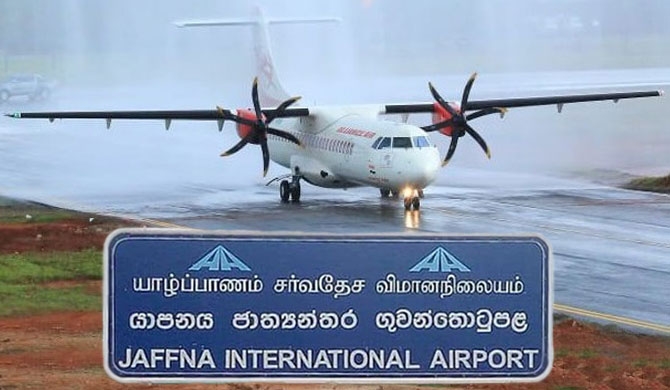
No passenger number limitations for flights carrying fully vaccinated passengers

Permission has been granted to all airlines for the carriage of fully vaccinated passengers without any limitation to the number of passengers allowed per flight.

This decision will not apply to restricted countries, the Chairman of the Civil Aviation Authority of Sri Lanka (CAASL) stated.

Accordingly, flights arriving in Sri Lanka may carry passengers without any limitations to the number, if the passengers have passed 14 days since full vaccination.

The passengers are required to be in possession of their vaccine certificates.

This will also include passengers arriving for hotel or government quarantine and passengers arriving via the Sri Lanka Tourism Bio Bubble.

However, the limitation of 75 passengers per flight will still apply for passengers not arriving through the Sri Lanka Tourism Bio Bubble and passengers who are not vaccinated or only partially vaccinated.

This, too, will apply to unvaccinated or half-vaccinated passengers arriving for hotel and government quarantine.

Posted in Uncategorized

Japan provides Rs.488 million grant aid for Human Resource Development

The Government of Japan has provided a grant aid worth approximately Rs.488 million for the Human Resource Development Scholarship (JDS) project to enhance the capacity building of public sector officials.

The sum of Japanese Yen 271 million (approximately Rs.488 million) grant will be extended to train young executive officers in the public sector at various universities in Japan and develop their skills in order to qualify them as future national leaders in their respective fields.

Under the project, 17 public sector officials will be sent to pursue a 2-year Master or PhD degree from 2022 to 2024. Areas of their degrees cover Public Policy, Public Finance, Economics, Business Management, Environmental Management, Disaster Management and Climate Change.

The Exchange of Notes for this project was signed on 29th July 2021 at the Ministry of Finance between H.E. SUGIYAMA Akira, Ambassador of Japan to Sri Lanka and Mr. S R Attygalle, Secretary, Ministry of Finance.

As a long-standing friend, Japan has placed great emphasis on assistance in human resource development via many capacity building and skills development programs in order to accelerate long-term sustainable economic development.

Since its inception in 2010, the JDS project has supported 171 public sector officials in Sri Lanka. The project will contribute not only to enhancing individual capacities but also to improving the institutional capacity of the public sector in Sri Lanka, which is the foundation for the prosperity and further development of Sri Lanka.

JDS fellows are also expected to solidify foundations to further bilateral relations with Japan by utilizing their human network developed through academic and social activities while in Japan.

US Ambassador keen on conclusion of New Fortress’s energy deal in Sri Lanka

U.S. Ambassador Alaina B. Teplitz, who commented on the proposed investment by the U.S. based New Fortress Energy (New Fortress”) in Sri Lanka’s energy sector, said she would argue for it as a crucial project for Sri Lanka needing capacity improvement and new technology in the related field.

The company announced earlier that it signed a Framework Agreement with the Sri Lankan government to construct a new offshore liquefied natural gas (LNG) receiving, storage and regasification terminal (the “Terminal”). The Terminal will be located off the coast of Colombo to supply gas to the country’s power plants located in the Kerawalapitiya Power Complex.

Making her remarks during a round-table with a team of journalists yesterday, she said it was a private investment, and the company would bring its own money, not a loan, to be put on the ground in Sri Lanka.

The ambassador expressed optimism that it could be completely.

“We absolutely support having a fair, clear, consistent framework. We absolutely support ensuring that business deals are not made around corrupt practices. The importance of the investment is meeting the highest environmental, labour standards. That is something American companies bring to the table as well as innovation and good technology,” she said.

She added that training and education of the workforce were important.

The U.S. ambassador also emphasised the need for Sri Lanka to work out a programme with the International Monetary Fund (IMF) to revive the economy which, she said, is in crisis. She said no other alternate method would provide foundational requirements for the economy to regain health to grow at an accelerated pace. Therefore,she said an arrangement with the IMF would be the best solution.

Posted in Uncategorized

Sri Lanka’s import ban puts hundreds of businesses in jeopardy

COLOMBO — Amid a deepening foreign exchange crisis that forced the Sri Lankan government to impose an indefinite import ban last year to save hard currency, hundreds of businesses are fighting for survival. Smaller ones have shut down, costing many their livelihoods.

Since March last year, the government has banned imports ranging from motor vehicles and air conditioners, to beer, clothing items, cosmetics and even spices such as turmeric — an essential cooking item for most of local households.

Sri Lanka’s economy took a thumping last year after the country was forced to lock down following the spread of COVID-19. Tourism is one of the country’s main foreign exchange earners, but with global and local travel restrictions tourism earnings plunged to just $957 million in 2020, down from $3.6 billion the previous year.

Steve Chi, who ran a successful motorcycle dealership as an authorized seller of Suzuki motorbikes in the west coast city of Negombo, has fallen victim to the import ban and was forced to shut down his business last year. “They imposed the ban in March and by around the sixth month we didn’t have stocks to [stay in] business,” he told Nikkei Asia.

According to Chi, the import ban has caused the secondhand market to skyrocket. Used scooters sell for more than 500,000 Sri Lankan rupees ($2,510), where a brand-new scooter of the same model used to go for 350,000 rupees before the ban. He expressed disappointment over the government’s failure to take care of businesses, their owners, and employees who have fallen victim to the ban.

“COVID has [had] a massive impact, but the import ban is a bigger issue for us,” he said.

The country’s leading automotive association, the Ceylon Motor Traders Association (CMTA), is echoing the sentiments of many other businesses that rely on imports. Yasendra Amerasinghe, the group’s chairman, said the impact on the industry has been “drastic.”

“It has been difficult on all our members … because we can’t plan ahead as we don’t know how much longer it will take for normalcy to be restored,” he said. CMTA members directly and indirectly employ over 32,000 people. Sri Lanka typically imports around 50,000 to 60,000 vehicles a year.

“It has been quite a challenge to continue to operate without resorting to mass-scale layoffs, but already we have small dealerships in rural areas who have been forced to close up for now and are engaged in other businesses to survive,” Amerasinghe said.

The country’s foreign reserves stood at $4 billion at the end of June, down from $5.6 billion at the end of 2020. To boost reserves, Sri Lanka obtained a $1.5 billion currency swap from China early this year, a $250 million swap from Bangladesh and a $400 million swap from India, which will be available in August.

In a statement issued on July 27, Money, Capital Market and Public Enterprises State Minister Ajith Nivard Cabraal said after the repayment of the international sovereign bonds of $1 billion on the day, Sri Lanka’s foreign reserves total around $3 billion now.

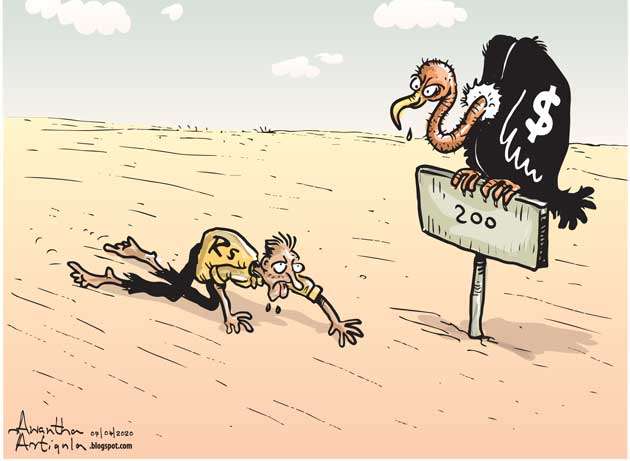
W.A. Wijewardena, a former deputy governor at the central bank, said that reserves in Sri Lanka have fallen to a critically low level, causing forex to disappear from the formal market and sowing the seeds for a lucrative black market. The official exchange rate is 202 rupees to the dollar, while the black market offers up to 236 rupees per dollar. “Normally, in a healthy market, that margin should be about 1 to 2 rupees,” he told Nikkei.

Last week, Moody’s Investors Service placed Sri Lanka’s Caa1 foreign currency long-term issuer and senior unsecured debt ratings under review for a downgrade, while earlier this month Fitch Ratings downgraded Sri Lanka to the CCC category and disclosed that over the next five years, the country has to find $29 billion to service its debts.

After a quarter century-long war ended in 2009, Mahinda Rajapaksa, Sri Lanka’s former president, turned to China to fund various infrastructure projects, especially in Colombo and his hometown, Hambantota. Some projects in Colombo, including Mattala International Airport and the Lotus Tower, were seen as a colossal waste of public money. The tower remains closed to the public despite the completion of construction.

Sri Lanka’s trading partners have sounded the alarm over the import ban. The value of European Union exports to Sri Lanka fell from 1.24 billion euros in 2019 to 904 million euros in 2020, a decline of 27% and the lowest figure in 10 years. Sri Lanka mainly imports machinery, pharmaceuticals, iron and steel products, and vehicles from Europe.

“The EU continues to have serious concerns with the broad import restrictions imposed by Sri Lanka, in various forms, since last year,” a representative from the Delegation of the European Union to Sri Lanka and Maldives told Nikkei, adding, “The EU has repeatedly called upon the Sri Lankan authorities to uphold [their] World Trade Organization commitments and the EU has raised this issue again at the WTO Committee on Trade in Goods earlier in July 2021.”

In April, President Gotabaya Rajapaksa announced the government will ban imports of chemical fertilizers, which cost the country $400 million annually. However, the former chairman of the Sri Lanka Tea Board, Rohan Pethiyagoda, warns that barring fertilizer imports will hurt Sri Lanka’s tea production and exports.

After apparel, tea is among the country’s top exports. Tea grown in Sri Lanka is popularly known as Ceylon Tea. The industry employs over 1 million people, directly and indirectly. Export earnings from tea also contribute 2% to Sri Lanka’s gross domestic product.

Pethiyagoda stressed that changing agricultural policy in an ad hoc manner could make problems affecting the sector even worse. “We can say we are going to use organic fertilizer, but there is no clear definition as to what constitutes an organic fertilizer,” he said.

He expressed concern for the country’s tea exports because the ban extends to other agrichemiccals. He said that the chemicals that are used in Sri Lanka are approved by the World Health Organization and the Food and Agriculture Organization. “When you suddenly change a policy, you have to be very careful about what the impact of the change will be,” he said.

Sri Lanka’s tea exports brought in 230 billion rupees last year. This year, from January to June, shipments amounted to 136 million kilograms worth 127.83 billion rupees, compared with 106 billion rupees during the same period in 2020.

Source:asia.nikkei

Body of teen who died at Rishad’s house to be exhumed on Friday

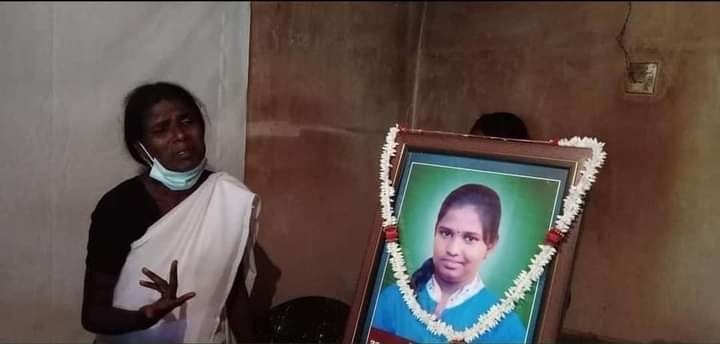
The body of the 16-year-old girl who died while being employed at the residence of former Minister Rishad Bathiudeen, is to be exhumed on Friday.

According to the Police, a special medical team has been appointed to conduct a second post-mortem after the body is exhumed at the Dayagama Cemetery.

The Colombo Magistrates’ Court had this week issued an order to exhume the body to conduct the fresh post-mortem.

The court also ordered the wife of the former Minister, his father-in-law and brother-in-law and a broker to be remanded until 9th August.

The wife and father-in-law of the Parliamentarian and a broker were arrested over the death of the 16-year-old girl at the residence of the former Minister in Colombo. The broker had introduced the child to the family.

Meanwhile, the MP’s brother-in-law was arrested over allegations of sexually abusing a 22-year-old domestic worker at the residence of the MP between 2015-2019.

The girl had claimed she was sexually abused twice by the MP’s brother-in-law.

Posted in Uncategorized

British High Commission calls for bids for projects promoting human rights in SL

In a notice issued by the British High Commission in Colombo today (28), the High Commission has alerted potential civil society implementing partners to an opportunity to bid for grant funding to deliver project activity promoting human rights and democratic values in Sri Lanka.

Accordingly, activities will focus on a set of priority themes. The High Commission has encouraged suppliers to identify target areas within and across these themes, and justify their focus.

The themes are listed below:

Reinforcing media freedom and protecting freedom of expression

Supporting journalistic practice in identified ‘needs’ areas in Sri Lanka (such as digital and physical safety, high-quality and inclusive content, or data-driven and investigative journalism) – e.g. through direct capacity building to journalists, or initiatives to support the spread of journalistic best practice and learning
Initiatives to boost civic literacy and tackle disinformation, especially where potential scalability, cross-cutting themes, or sustainability can be demonstrated

Promoting freedom of religion or belief and tackling inter-communal tensions

Raising understanding and awareness including on triggers of religious and ethno-religious tensions and conflict (inter and intra-communities), through effective research and documentation.
Promoting conflict management through education of and engagement with local and national authorities.

Supporting human rights defenders and strengthening civil society

Supporting civil society engagement through identified ‘needs’ areas in Sri Lanka (such as digital and physical safety, data-gathering and documentation, access to legal or operational support, linkages between CSOs and other key stakeholders i.e. government and media)
Initiatives to boost collaborative and coordinated advocacy, including between and within grassroots, regional and Colombo-based organisations, especially where potential scalability, cross-cutting themes, or sustainability can be demonstrated

In terms of delivery mechanisms, the High Commission has stated that suppliers may want to consider capacity building (direct, or through ‘train the trainer’ models) alongside more creative mechanisms such as support to peer to peer networks or sector initiatives, and creating relevant products/resources (eg: technical ‘tool kits’). It also states that activities will need to take into account Covid-19 risk mitigation and planning.

Posted in Uncategorized

Seven political parties not represented in Parliament summoned before the PSC on Election Law Reforms

Seven political parties that are not represented in Parliament have been summoned before the Parliament Select Committee (PSC) to identify appropriate reforms of the election laws and the electoral system and to recommend necessary amendment, said its Secretary and Deputy Secretary General and Chief of Staff Kushani Rohanadeera.

The committee will meet in Parliament today at 2.00 pm under the chairmanship of Leader of the House, Foreign Minister Dinesh Gunawardena.

Among the parties invited so far, Liberal Party, Akil Ilankai Tamilar Maha Sabai, Social Democratic Party of Tamils, Sinhaladeepa Jathika Peramuna and Samathuvakkadchi Party have confirmed their participation, the Deputy Secretary General said.

The parties that have not yet confirmed their participation are the Mawbima Janatha Party and the United Peace Alliance.

PAFFREL, an election monitoring organization, presented their proposals at the PSC meeting on the 14th.

The Parliamentary Select Committee was appointed by Speaker Mahinda Yapa Abeywardena last April to make recommendations to amend the electoral law and the electoral structure.

The committee met for the first time on May 17.

The other members of the committee are Ministers Nimal Siripala de Silva, Prof. GL Peiris, Pavithradevi Wanniarachchi, PC Ali Sabry, State Minister Jeevan Thondaman, MPs Kabir Hashim, Ranjith Madduma Bandara, Mano Ganesan, M.A. Sumanthiran and Sagara Kariyawasam.

Massacred Tamil political prisoners remembered in defiance of police ban

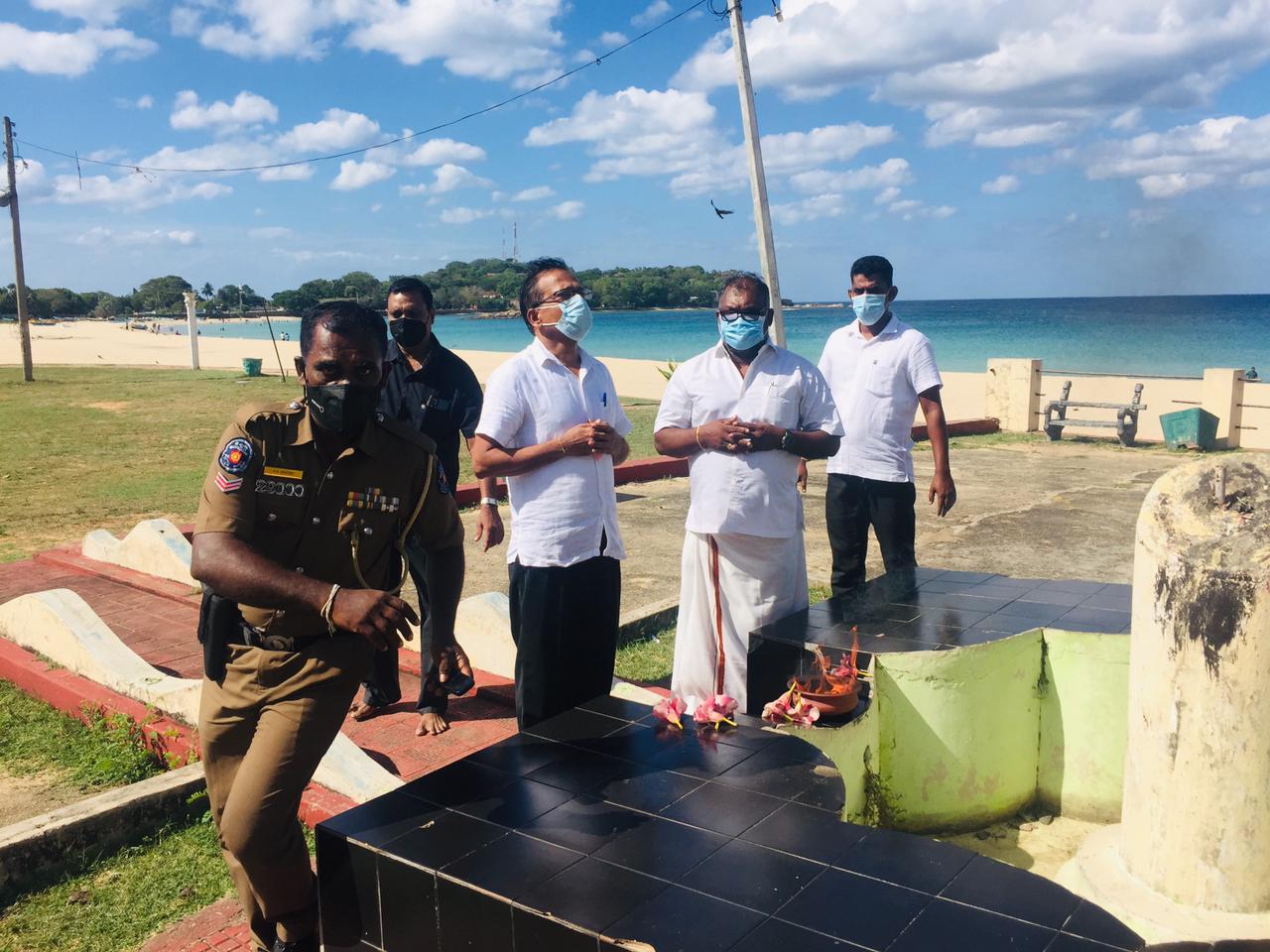
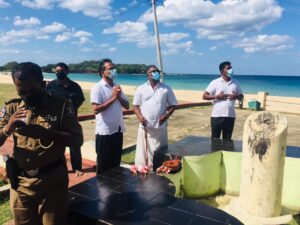
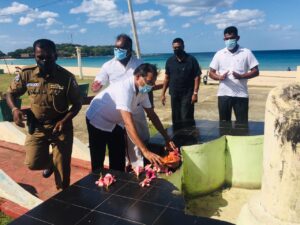
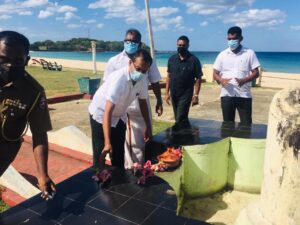
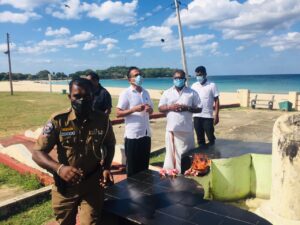
The 53 Tamil political prisoners massacred in Welikada prison 38 years ago were remembered in Trincomalee on Sunday (25-07-2021) despite a police ban.

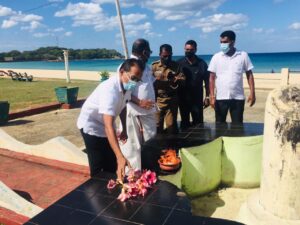
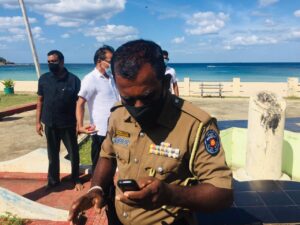
Attendees, including TELO Secretary General and MP for Batticaloa Govindan Karunakaran, defiantly laid flowers for the victims of the massacre, as a Sri Lankan police officer attempted to obstruct the service.

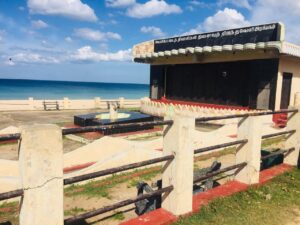
The remembrance event organised by the Tamil Eelam Liberation Organization(TELO), was held at the Welikada Martyrs’ Memorial on Trincomalee beach.

On the 25th July 1983 Sellarasa “Kuttimani” Yogachandiran, leader of the Tamil Eelam Liberation Organisation (TELO) and Ganeshanathan Jeganathan, a political writer, had their eyes gouged out in mockery before being killed by Sinhalese inmates at the high security Welikada prison in Colombo. A total of 37 Tamil prisoners were murdered the same day, and 18 more were killed two days later.

5th August 1983 – The Guardian

“It is the massacres in the Welikade gaol which are attracting the most attention. There is a particular interest in circumstances in which two alleged guerrilla leaders were killed.

The two men, Sellarasa “Kuttimani” Yogachandiran, leader of the Tamil Eelam Liberation Organization (TELO) and a political writer, and Ganeshanathan Jeganathan had been sentenced to death last year for the murder of a policeman.

In speeches from the dock, the two men had announced that they would donate their eyes in the hope that they would be grafted on to Tamils who would see the birth of Eelam, the independent state they were fighting for.

Second hand reports from Batticaloa gaol, where the survivors of the Welikada massacre are now being kept, say that the two men were forced to kneel and their eyes gouged out with iron bars before they were killed.

Along with TELO Secretary General Kuttimani and TELO Founder Thangathurai, the Tamil prisoners who were massacred in Welikada on 25th July 1983 were:

Nadesathasan, Jegan, Alias Sivarasa, Sivan Anpalagan, A. Balasubramaniam, Surash Kumar, Arunthavarajah, Thanapalasingham, Arafat, Anpalagan Sunduran, P. Mahendran, Ramalingam Balachandran, K. Thillainathan, K. Thavarajasingham, S. Subramaniam, Mylvaganam Sinnaiah, G. Mylvaganam, Ch. Sivanantharajah, T. Kandiah, S. Sathiyaseelan, Kathiravelpillai, Easvaranathan, K. Nagarajah, Gunapalan Ganeshalingam, S. Kularajasekaram, K. Krishnakumar, K. Uthaya Kumar, R. Yoganathan, S. Sivakumar, A. Uthayakumar, A. Rajan, G. Amirthalingam, S. Balachandran, V. Chandrakumar, Yogachandran Killi, Sittampalam Chandrakulam and Master Navaratnam Sivapatham.

SL in deep crisis: More focused, stronger action needed BY Prof. Tissa Vitarana

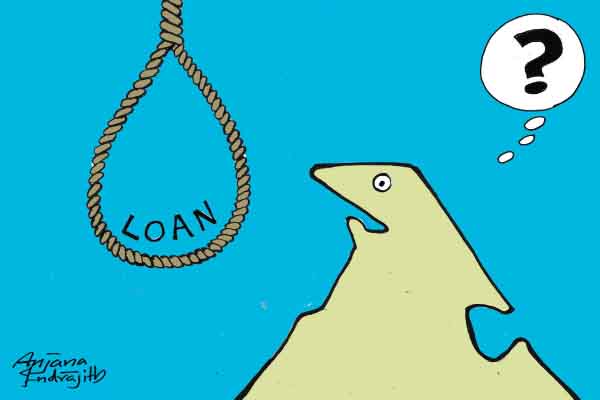
In the context of the deepening global economic crisis, the country’s foreign exchange (forex) crisis is not improving. The slight increase in exports has been undermined by increased imports, especially aggravated by the need to import vaccines to meet the Covid-19 crisis. Also, the decision to restrict the import of luxuries and non-essentials is not being enforced effectively. The result is that with more foreign borrowing, our foreign debt is increasing. The annual repayment of debt has reached $ 4.5 billion, with interest repayment alone amounting to $ 1 billion. Neither the Government nor the people appear to realise the gravity of the forex situation and do not act accordingly. Our import policies need to be tightened. The Government has failed to explain to the people the magnitude of the crisis and the need to tighten the belt at all levels, setting a proper example from the top, so as to conserve our forex. The result is the forex crisis.

But internally too the economic crisis is deepening, accompanied by social, political, and health crises. The hunger crisis is severe with many people having only one meal. The loss of income due to the closure of factories and offices and the loss of self-employment is a major factor. In addition, many have had pay cuts. Another major cause is the rise in the cost of goods, especially essentials like food. This has led to the inability to buy essentials, and increasing poverty and hunger. In fact, studies indicate that 60% of the people have incomes below the poverty line. The level of malnutrition has gone up to 18%. Thus, the correction of the hunger problem should be given the first priority by the Government. I appeal to the new Finance Minister Basil Rajapaksa to ascertain the families faced with poverty and hunger and to supply dry rations to them as the first priority.

The Covid-19 pandemic is liable to expand with the spread of the more virulent B.1.617.2 Delta Indian variant in the country. There has to be a country-wide, people-based campaign to curb this. Covid-19 committees should be established in every village and slum. These should detect Covid-19 cases early and institute cluster control measures, and ensure that every person strictly observes the four health guidelines (preventing crowding, ensuring social distancing, ensuring that masks are worn when out of the home, and the effective washing of hands). Covid-19 committees have to be set up in schools as necessary. It must be ensured that all the vulnerable people in the society who are liable to get severe disease or die (elderly over 60 years and those with serious chronic diseases) are vaccinated.

Imported chemical fertiliser should be continued for this period (seasons) of cultivation so that farmers do not suffer. Organic fertiliser should, meanwhile, be produced adequately and be introduced country-wide thereafter.

Another major problem is the high cost of food and other essentials. The revival and strengthening of co-operatives, producers, and consumers is the only way out. This would prevent profiteering by middlemen. The introduction of the new solidarity concept, which ensures that the ownership of enterprises is given to the employees alone, would result in successful outcomes, e.g. the paddy fields in Kerala, India. The strengthening of the state sector in marketing e.g. the marketing department, the Co-operative Wholesale Establishment, etc., would also help.

Measures like these will help to overcome poverty and hunger, and eliminate malnutrition. I urge the Government to think and act on these lines to improve the conditions of the people and to make the country more productive and the people happier.

(The writer is a virologist, government parliamentarian, the Committee on Public Accounts Chairman, and the Lanka Sama Samaja Party Leader)

Posted in Uncategorized

Sri Lanka settles 1 bn USD bond repayment – Keheliya

The government has settled a debt repayment amounting to 1 Billion US Dollars. This was revealed at the cabinet media briefing held this morning.

“In a pandemic stricken world, where the entire economies have collapsed and communities are suffering, this is a testament to our tactful cashflow management,” co-cabinet spokesperson minister Keheliya Rambukwella said.

He added that the bond was settled without causing an impact on Sri Lanka’s foreign reserves, by managing the country’s cashflows intelligently.

“At one point, foreign reserves had depleted to 1.2 Billion USD. But, we were able to handle a war, manage our cashflows and retain our foreign reserves,” Rambukwella noted.

Meanwhile, State Minister of Money and Capital Market Ajith Nivard Cabraal has told EconomyNext that Sri Lanka’s forex reserve fall after a July sovereign bond payment will be temporary and will be boosted later with other inflows, including investments into under-utilized government properties.

According to State Minister Cabraal, properties such as the General Post Office, the Grand Orient Hotel and Narahenpita Tractor Corporation land had caught the attention of investors.

He added, the projects had the potential to bring around 700 million to 1,000 million dollars.

Also speaking to EconomyNext President’s Secretary Dr. P.B.Jayasundara has said, Sri Lanka is in a balancing act with international powers to attract more investment.