EU Parliament resolution puts spotlight on Sri Lanka’s rights situation

A recent resolution adopted by the European Parliament, urging the EU Commission to consider temporary withdrawal of the GSP+ status given to Sri Lanka, has put the spotlight back on the country’s human rights situation, prompting Colombo to defend its “multifaceted progress” in a response on Monday.

Sri Lanka regained the GSP +, or the EU’s ‘Generalised Scheme of Preferences’ in 2017, under the former Maithripala Sirisena-Ranil Wickremesinghe administration, on Colombo’s commitment to implement 27 international conventions on human rights, labour conditions, protection of the environment and good governance. The status effectively removes import duties on goods from Sri Lanka entering the EU.

The June 10 resolution, expressing “deep concern over Sri Lanka’s alarming path towards the recurrence of grave human rights violations”, — an observation earlier made by the UN human rights Chief — makes specific reference to the use of the Prevention of Terrorism Act (PTA), widely termed draconian, pointing to the arrests of prominent lawyer Hejaaz Hizbullah and poet Ahnaf Jazeem, among others, who are in “arbitrary” detention for over a year.

The resolution notes the “continuing discrimination” against and violence towards religious and ethnic minorities, while voicing “serious concern” about the 20th Amendment passed in 2020, and the “resulting decline in judiciary independence, the reduction of parliamentary control, and the excessive accumulation of power with the presidency”. It highlights “accelerating militarisation” of civilian government functions in Sri Lanka, pointing to at least 28 serving or former military and intelligence personnel appointed to key administrative posts since 2020, after the Rajapaksas returned to power.

Responding, Sri Lanka’s Foreign Ministry said it regrets the adoption of the resolution that, it observed, “contains factual inaccuracies, and does not take cognizance of the multifaceted progress made by Sri Lanka in reconciliation and development.” Rejecting claims that the PTA is systematically used for arbitrary detentions, the Ministry government said it was “revisiting provisions” of the Act to propose “necessary amendments”, drawing upon international best practices, months after President Gotabaya Rajapaksa expanded the PTA’s ambit.

The resolution comes ahead of a periodic review of the ‘GSP +’ concessions accorded to the country, that the government said, contributed significantly” to higher production, investment, and improvement of the human capital in Sri Lanka. The fisheries sector too had experienced “a notable growth”, benefitting from the concessions, the Foreign Ministry said in its statement, indicating the significance it attached to retaining the special trade concessions.

Apparently taking a different view, State Minister of Money, Capital Markets and Public Enterprise Reforms Ajith Nivard Cabraal said the government is working out strategies to position itself to export Sri Lankan products “in a competitive business environment rather than depending on trade concessions such as GSP”, the Daily Mirror newspaper reported.

The EU is Sri Lanka’s second-largest trading partner — after China — and its second main export destination, absorbing 22.4% of Sri Lankan exports in 2020, mainly textiles and clothing, according to the European Commission. Following adoption of the resolution last week, Sri Lanka’s Leader of Opposition Sajith Premadasa said in a tweet: “EU parliament resolution calling for the temporary suspension of Sri Lanka’s GSP+ status will have a debilitating impact on our exports and the economy.”

Source:The Hindu
Posted in Uncategorized

TNA and President Gotabhaya Rajapaksa Meeting cancelled

The meeting between the Tamil National Alliance (TNA) and President Gotabhaya Rajapakse scheduled for tomorrow has been cancelled by the Presidential Secretariat, which has said it will be “postponed to another day”.

Sources in Colombo said that the president had decided to postpone the talks for the time being due to pressure in the south over the release of the details of the talks.

The Presidential Secretariat announced this evening to the TNA that a new talk date would be announced later.

Fitch Affirms Sri Lanka at ‘CCC’

Sri Lanka’s ‘CCC’ rating reflects a challenging foreign-currency sovereign external debt repayment burden over the medium term, low foreign-exchange reserves and high and rising government debt that gives rise to sustainability risks.

External liquidity pressures have eased somewhat in recent months following bilateral loan disbursements, and our expectation of a forthcoming IMF special drawing rights (SDR) allocation. Nevertheless, Sri Lanka’s medium-term debt service challenges are substantial and pose risks to the sovereign’s debt repayment capacity, in Fitch’s view. A total of about USD29 billion in foreign-currency debt obligations are due between now and 2026, against foreign-exchange reserves of USD4.5 billion as of end-April 2021.

The authorities have recently secured project financing through various multilateral and bilateral channels, including the Asian Development Bank (AAA/Stable), Asian Infrastructure Investment Bank (AAA/Stable), China Development Bank (A+/Stable) and The Export-Import Bank of Korea (AA-/Stable), as well as swap facilities under the South Asian Association for Regional Cooperation (SAARC) currency framework and the People’s Bank of China, equivalent to USD400 million and USD1.5 billion, respectively. The planned IMF SDR allocation would also add USD780 million to reserves. These resources should enable Sri Lanka to meet its remaining debt maturities through the rest of this year, including a USD1 billion International Sovereign Bond maturing in July. However, the authorities have yet to specify their plans for meeting the country’s foreign-currency debt-servicing needs for 2022 and the medium term. They have consistently indicated that they do not plan to seek programme financing from the IMF.

We project foreign-exchange reserves to remain at about USD 4.5 billion by end-2021 before declining to USD3.9 billion by end-2022. Under our baseline, the current account deficit is likely to widen to 2.8% in 2021 and narrow to 2.1% of GDP in 2022. Our forecasts assume remittances will remain resilient in 2021-2022 and tourism is likely to recover only from 2022.

Sri Lanka’s economy contracted by 3.6% in 2020 as a result of the Covid-19 pandemic. We project growth of 3.8% in 2021, down from an earlier forecast of 4.9%, in light of a recent surge in virus cases. We expect the economy to grow by 3.9% in 2022. There remains a high degree of uncertainty associated with our forecasts in light of the evolution of new Covid-19 cases in the country. The authorities plan to inoculate 60% of the population by end-2021, but this target could be hampered by vaccine supply shortages.

Travel and tourism, an important driver of the economy, have been hit hard and the outlook for recovery remains uncertain, particularly given the recent surge in virus cases. The direct contribution of tourism to pre-pandemic GDP was about 4%, but the indirect contribution was much higher. Tourist arrivals in the first five months of 2021 were 97% lower than the same period last year.

The general government deficit widened to 11.1% of GDP in 2020, from 9.6% in 2019, as the economic contraction led to a sharp fall in fiscal revenue. We expect the deficit to remain elevated in 2021 and 2022 at 11.1% and 10.4%, respectively. Our deficit projections are wider than those presented by the government under its growth-oriented strategy of 9.4% and 7.5%, respectively. Under our forecasts, the revenue-to-GDP ratio in 2021 would rise to 10.9% in 2021 and 11.1% in 2022, compared with the authorities’ projections of 11.9% and 13.0%, respectively.

The government’s fiscal consolidation strategy is based on a planned acceleration in GDP growth, underpinned by tax cuts, as opposed to direct revenue-raising or expenditure measures, albeit supported by planned improvements in tax administration. The interest-to-revenue ratio remains high, at around 71% as of 2020, well above the ‘CCC’ median of 13%. The government expects to achieve primary surpluses from 2023, supported by annual GDP growth of 6%, which appear optimistic in our view as we anticipate growth that is closer to 4%, still above the pace in the immediate pre-pandemic period.

General government debt reached 101% of GDP by end-2020, broadly in line with our forecast at our last review in November. Our baseline forecasts suggest this ratio will rise further to 108% by 2022. Fitch does not think the government will meet its 2025 targets of reducing government debt to 70% of GDP and narrowing the fiscal deficit to 4% of GDP.

Sri Lanka’s basic human development indicators, including education standards, are high compared with those of rating category peers. The UN Human Development Index Score positions Sri Lanka in the 62nd percentile, well above the 27th percentile for the ‘CCC’ median. The country’s per capita income of about USD3,822 is also above the ‘CCC’ median of USD2,662.

The banking sector is vulnerable to Sri Lankan sovereign weakness due to the banks’ significant direct exposure to the sovereign and their domestically focused operations. The operating environment for banks remains challenging, and asset quality continues to be a key risk. Reported asset-quality measures at end-2020 – impaired loans for Fitch-rated banks rose to 9.7% by end-2020 from 9.5% at end-2019 — likely understate the extent of credit impairment due to forbearance measures.

ESG – Governance: Sri Lanka has an ESG Relevance Score of ‘5’ for Political Stability and Rights as well as for the Rule of Law, Institutional and Regulatory Quality and Control of Corruption, as is the case for all sovereigns. These scores reflect the high weight that the World Bank Governance Indicators have in our proprietary Sovereign Rating Model. Sri Lanka has a medium World Bank Governance Indicator ranking in the 46th percentile, reflecting a recent record of peaceful political transitions, a moderate level of rights for participation in the political process, moderate institutional capacity, established rule of law and a moderate level of corruption.

Read Full report:https://www.fitchratings.com/research/sovereigns/fitch-affirms-sri-lanka-at-ccc-14-06-2021

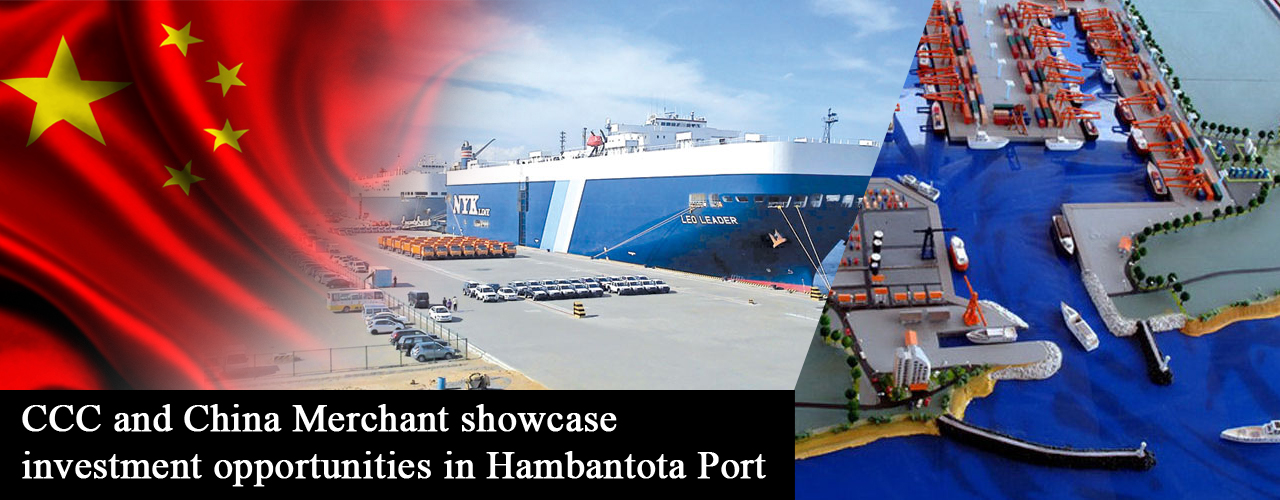
Sri Lanka’s CPC to build terminal to import fuel via China-backed Hambantota Port

Sri Lanka’s state-run Ceylon Petroleum Corporation has inked a deal to import fuel through the China-backed Hambantota International Port Group and store it at a nearby location.

HIPG said will sublease the required land area within the port, for the construction and operation of the pipeline, with approval of the Sri Lanka Ports Authority.

“The vision of HIPG is to develop the Hambantota International Port to become an energy hub for South Asia,” Johnson Liu, CEO of HIPG said.

“Whilst HIPG has put the infrastructure in place to realize that goal, we are also aware that we cannot achieve it without the participation of all the players in the equation.

“To this end, we recognize the importance of Ceylon Petroleum Corporation as a vital cog in the machinery.”

CPC will take the fuel to a facility to be built 15 kilometres away in a 15 acre land now belonging to the Mahaweli Authority.

The new facility will expand storage and bulk distribution facilities of CPC to about three months of supply from the current one month supply in Colombo.

“The partnership with HIPG will increase the storage facility of CPC to the expected capacity; thereby the impact of global fuel price fluctuations can be mitigated andit will drive CPC to minimize and save additional foreign currency outflows,” Sumith Wijesinghe, Chairman of CPC said in the statement.

“Apart from that, setting up in the Hambantota Industrial Zone, away from the traffic congestion of the country’s most residential cities, will make it an environmentally-friendly terminal.”

Due to money printing with a soft-pegged exchange rate regime, most of Sri Lanka’s economic policies are directed towards ‘saving foreign exchange’.

HIPG said it had already started bulk supply of marine bunker fuels.

“In order to build this energy hub, we entered into a strategic partnership with Sinopec Fuel Oil Lanka Limited (SFOL) to provide bunkering services for vessels,” Tissa Wickramasinghe, chief operating officer of HIPG said.

“Sinopec with their vast resources guarantees the supply of VLSFO and MGO in Hambantota, enabling the port to service all vessels plying the principal sea routes in the Indian Ocean.”

An LPG transshipment terminal is also at the port. HIPG had also partnered with Intertek Lanka (Pvt) Ltd to set up a petroleum testing laboratory.

Posted in Uncategorized

Norway offers assistance to Sri Lanka over X-Press Pearl impact

The Norwegian Coastal Administration has offered remote assistance in responding to marine pollution caused by X-Press Pearl, Ambassador Trine Jøranli Eskedal said.

In response to a query by Daily Mirror, the Norwegian Ambassador in Colombo said the Norwegian experts had held a meeting with the Sri Lankan authorities.

“Experts from the Norwegian Coastal Administration have offered remote assistance, and have held a meeting with relevant Sri Lankan counterparts. Norway is also exploring other avenues of possible support,” she said.

The contain vessel that caught fire off the Colombo Port triggered a marine environmental crisis for Sri Lanka. Fisheries activities have been barred in the area.

Posted in Uncategorized

MP raises alarm over China’s wolf warrior diplomacy

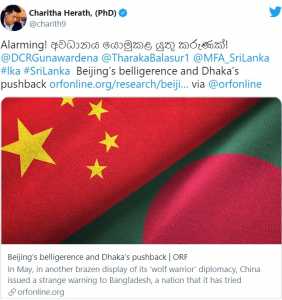
Parliamentarian Charitha Herath has raised the alarm over China’s “wolf warrior” diplomacy.

Herath tweeted calling on the Sri Lanka Foreign Ministry to look into reports that China had warned Bangladesh of “substantial damage” in bilateral ties if the latter joins the Quad.

He was responding to a report by the Observer Research Foundation which stated that in May, in another brazen display of its ‘wolf warrior’ diplomacy, China issued a strange warning to Bangladesh, a nation that it has tried to cultivate assiduously over several years.

While suggesting that China considers the Quad to be a minor anti-China initiative, the Chinese Ambassador to Bangladesh, Li Jiming, had reportedly warned Dhaka that there will be “substantial damage” in bilateral ties between China and Bangladesh if the latter joins the Quad.

It was an extraordinary statement by a diplomat in a host nation but it had all the chutzpah that Chinese diplomats think they deserve to embed in their seemingly non-diplomatic outpourings, the Observer Research Foundation had said.

According to the the Observer Research Foundation, Bangladesh Foreign Minister A.K. Abdul Momen promptly and publicly challenged the Chinese envoy’s statement, underlining categorically that Dhaka pursues an independent foreign policy.

Covid-19 in Sri Lanka: People of North and East in economic crisis

The extension of Covid-19 related travel restrictions by Sri Lankan government are severely affecting the Tamil daily wage workers in North and Eastern Province of Sri Lanka.

The assistance scheme provided by Sri Lankan government through Divisional Councils reach a certain number of people, and its does not reach economically deprived people of the community .

The local observers are urged that the diaspora organisations should work with the Tamil political parties at home to carry out a plan to save the Tamil people from the growing economic crisis. The diaspora should take note that the assistance given through Sri Lankan government are not reaching the poor Tamil families in North and East, they said.

Posted in Uncategorized

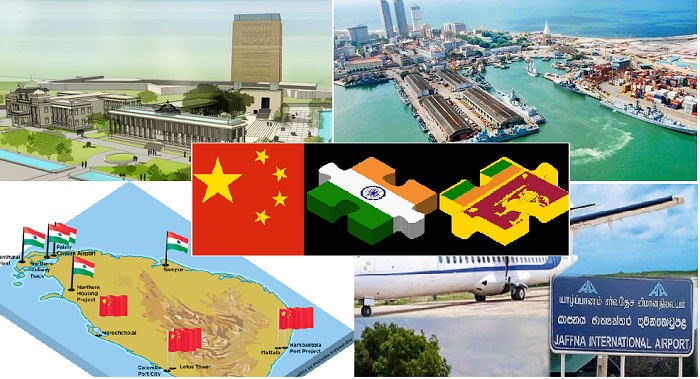
India to recalibrate ties with Sri Lanka as Colombo ‘sways towards China’

India is looking at a “recalibration” of its bilateral ties with Sri Lanka as China is gaining massive inroads in the Indian Ocean island nation, ThePrint reported today (14).

Colombo had last month decided to go ahead with the controversial $1.4 billion special economic zone (SEZ) project, the Colombo Port City project, funded by Beijing.

New Delhi, which aimed at resetting bilateral ties with Colombo following the return of the Rajapaksa regime, now believes that Sri Lanka has taken a firm decision on “completely aligning” with China even if that means doing away with the balancing act with India, sources said.

Last month, the Sri Lankan parliament passed a controversial bill — the Colombo Port City Economic Commission Bill — which will establish a Colombo Port City Special Economic Zone (SEZ) and the Colombo Port City Economic Commission (CPCEC).

The bill was passed despite stiff resistance from opposition parties and concerns that the Colombo Port City could turn into a ‘Chinese province’ inside Sri Lanka.

The proposed new CPCEC is expected to have wide-ranging powers and the port city will not be subject to laws and regulations of the Municipal Council and Urban Development Authority of Sri Lanka, thereby raising concerns that it will not function democratically.

According to one source, with the port city coming up and coupled with what happened in the Hambantota Port (where there is speculation that Colombo is looking to extend the 99-year lease to Beijing), Sri Lanka has now “completely come under China’s control” and this will pose a challenge for all future governments there while posing a security threat to India.

Ties between India and Sri Lanka began plummeting in February when Colombo scrapped the strategically important East Container Terminal at Colombo port, which was a tripartite pact with Japan. It instead offered India the West Container Terminal (WCT) as a private deal unlike the previous government-to-government agreement.

It is now clear that the initial bonhomie between Indian Prime Minister Narendra Modi and the Rajapaksa brothers — President Gotabaya Rajapaksa and Prime Minister Mahinda Rajapaksa — and Sri Lanka’s adherence to an ‘India-first’ policy are now “fast fading away”, said another source.

This has happened because Beijing has “worked towards” drifting the island nation away from India so that it can maintain its presence in the Indian Ocean region as the Indo-Pacific strategic construct takes shape, sources said.

However, the sources said, India is now banking on the West Container Terminal, being developed by the Adani Group to make its “strategic presence” felt there.

“They (Adani Group) will remain invested there for a long time. Be it private or public, as long as India has a presence there where China is present in a big way, New Delhi is satisfied,” said a source who refused to be identified.

Source: The Print

Growing Chinese shadow in Tamil Nadu’s backyard – TOI

CHENNAI: The enactment of the Colombo Port City Commission Act in Sri Lanka last month has created a lot of disquiet and dismay among the people on both sides of the Palk Strait. There has been much hype in the media about increased threat to south India as a result of China gaining control of the special economic zone coming up in the Colombo Port City (CPC), overlooking Colombo port.

In the next two decades, the CPC is poised to grow into an international financial hub like Dubai and Singapore. The only difference is, the state-owned China Harbour Engineering Co (CHEC), a subsidiary of the China Communications Construction Company, holding a 99-year lease on 85% of land, will be calling the shots.

Apprehension about CPC is real, not merely for south India, but India as a whole. Commercially Colombo port is important because nearly 70% of India’s container traffic passes through it. In strategic situations, Chinese presence close to it would make a difference. But, more than that, the CPC legitimises the huge presence of multifaceted Chinese interests —trade and commerce, logistics, communication, finance and infrastructure.

This gives China a big advantage in challenging India’s domination of the Indian Ocean Region (IOR). It will also enhance China’s ability to use its unmatched money power, to progress its influence in India’s neighbourhood in the name of development aid.

Many Sri Lankan leaders are equally worried about the increasing Chinese influence in Sri Lanka. The Archbishop of Colombo Cardinal Malcom Ranjith, obviously referring to the CPC Commission enactment, said, “Development is not selling the country’s resources … the politicians are responsible for protecting the country. Please do not offer our land to different countries.” Former President Chandrika Kumaratunga had warned that Sri Lanka “has all but become a colony of China.”

The SEZ will confer not only commercial and financial benefits to China, it will also augment its intelligence and counter-intelligence operations to eavesdrop with Indian communication, track warship movements, enhance cyber threat and satellite tracking. And more than all this, the SEZ can be a useful take-off point for infiltrating agents acting against Indian interests. In the past, Pakistan had used its high commission in Colombo to infiltrate agents and terrorists into south India. The southern states, in particular, will have to tighten their coastal and airport security to prevent such efforts.

Sri Lanka’s unique geographic location, midway astride the sea lanes of Indian Ocean, makes it an essential part of China’s maritime security architecture in the Indo-Pacific. China’s concern about Indian Ocean countries joining the Quadrilateral Security Dialogue (Quad) framework of the US, India, Japan and Australia has been increasing. The China-centric Quad aims at ensuring a free and open international order based on the rule of law in the Indo-Pacific.

China’s state councillor and defence minister General Wei Fenghe briefly visited Dhaka and Colombo in May-end, when a political controversy was raging in Sri Lanka over the draft CPC commission bill. After meeting with President Gotabaya Rajapaksa and Prime Minister Mahinda Rajapaksa, Gen Wei remarked that peaceful development and win-win cooperation is the global trend and the ‘right way’ forward. Without mentioning the Quad framework, he said certain major countries were keen to form cliques and factions and seek regional hegemony, which goes against peoples shared aspiration and harms the interests of regional countries. He had made a similar reference during his meeting with Bangladesh President Abdul Hamid, emphasising the two sides should make joint efforts against powers outside the region setting up military alliance in South Asia and practising hegemonism.

It is obvious Sri Lanka would come under tremendous pressure from China in the coming months in tandem with the criticalities of Indo-Pacific strategic situation. Under such circumstances, it is going to be extremely difficult for President Rajapaksa to resist the lure of the yuan, when the Sri Lankan economy is struggling to manage its mounting debts.

India and Sri Lanka have a good understanding of each other’s security concerns. According to Sri Lanka foreign secretary Admiral Jayanath Colombage’s statement in November 2020, President Gotabaya Rajapaksa has made it clear that Sri Lanka’s strategic security policy will have an “India first” approach, though Colombo was dealing with other countries for economic development. But such sentiments did not prevent Colombo from going back on its commitment to India, whether it is on jointly developing the Eastern Container Terminal or other projects like strategic development of Trincomalee port.

India should be prepared for dynamic changes in the trilateral relations involving Sri Lanka and China. As China firms up its presence within the CPC, we can expect it to increase its influence with the body politic of Sri Lanka. It is poised to become an indispensable part of the party politics, similar to a position India had occupied some years ago.

Obviously, India cannot compete with China’s money power and its development, but it can use its strength in shared history and culture with Sri Lanka. In this regard, India has not used the potential of cross-strait relations among Tamils to Sri Lanka’s advantage, ever since the muscular intervention during PM Rajiv Gandhi’s era.

(The writer is a former MI specialist on South Asia. He served as head of Intelligence of the Indian Peace Keeping Force in Sri Lanka between 1987 and 1990)

Posted in Uncategorized

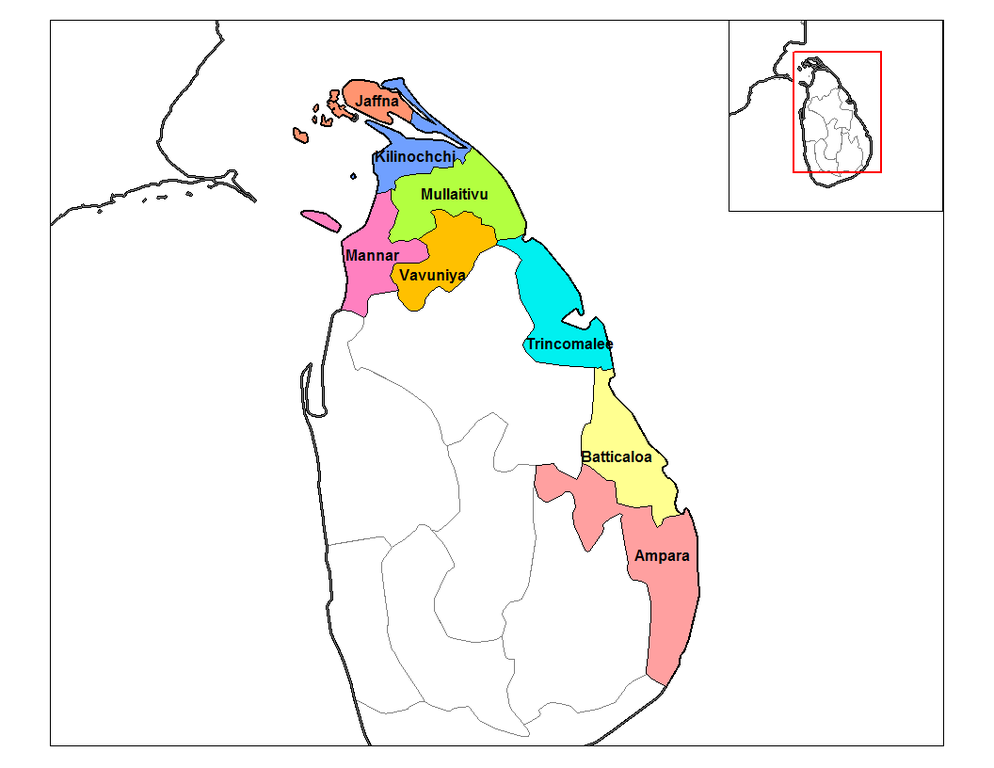
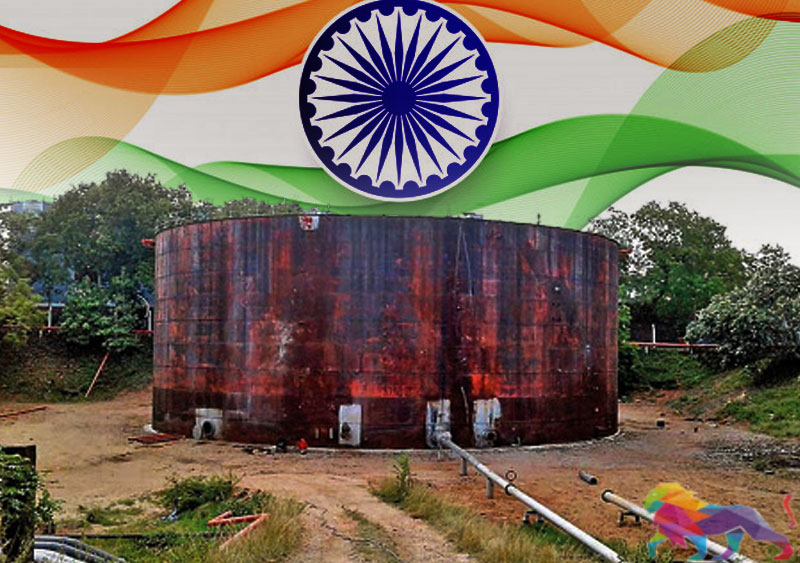
Trinco oil tank reclamation at snail’s pace

Regardless of an agreement being finalised between the Sri Lankan Government and its Indian counterparts in February for Sri Lanka to develop the Upper Oil Tank Farm in Trincomalee, discussions are still ongoing with the relevant officials to proceed with the next step.

Speaking to The Sunday Morning Business, Energy Minister Udaya Gammanpila stated that the progress is very slow despite the discussions held with official Indian counterparts to develop the Upper Oil Tank Farm.

“This is not urgent right now, hence no one is rushing into it. Both parties are trying their best for the best possible outcome in respect of their country’s wishes. However, nobody knows when this will be completed,” Gammanpila said.

Further, Gammanpila noted that this development in Trincomalee will enhance the oil storage capacity in Sri Lanka, as there are a total of 84 unutilised tanks with a capacity of 12,500 metric tons each, adding that money will be required to purchase facilities to store the tanks in the country.

We also spoke to Ceylon Petroleum Corporation (CPC) Chairman Sumith Wijesinghe who also stated that the progress has been slow and will require a little more time to move forward. “The Energy Ministry is having discussions with the High Commissioner of India, and to my understanding, it will take some time,” he noted.

Nevertheless, Lanka Indian Oil Company (LIOC) Managing Director Manoj Gupta told The Sunday Morning Business early this year that the discussions held with the Energy Ministry and its Indian counterparts had been very positive.

“This is a very important development for Sri Lanka. The discussions are very sensitive but also positive, as both the countries are trying their best for the best outcome,” Gupta added.

In February, the Indian High Commission (HC) said in a statement that India and Sri Lanka have identified an energy partnership as one of the priority dimensions of their co-operation, and noted that consultation and discussions have been undertaken to promote mutually beneficial co-operation for the development and operation of the Upper Oil Tank Farms in Trincomalee.

Meanwhile, Gammanpila, when contacted during the same month (February), clarified that both parties were able to come to a consensual agreement to jointly develop the oil tank farm by the LIOC and CPC with majority shares.

“We have not yet come to a conclusion over the management period, the agreement between the shareholders, and the number of tanks that would be released to the CPC. These details are yet to be discussed,” Gammanpila said.

He also noted that only 15 out of 99 oil tanks are currently being used by the LIOC and in 2003, the entire tank farm was leased out to the LIOC for $ 1,000 for a period of 35 years.

The development of the Upper Oil Tank Farm in Trincomalee was initially signed by the previous Government with a Memorandum of Understanding (MoU) on Co-operation on Economic Projects in order to set up a joint venture between the LIOC and the CPC.

According to the agreement signed in the presence of Indian Prime Minister Narendra Modi and then-Sri Lankan Prime Minister Ranil Wickremesinghe in 2017, India had agreed to the Sri Lankan proposal to refurbish and use the 84 giant oil tanks in the Upper Tank Farm as a “joint venture”.

The then Sri Lankan Government proposed the idea of developing and running the tanks as a joint venture in 2016 to store the fuel for power generation in an emergency situation. However, abandoning the measures taken by the previous Government, the present Government initiated fresh rounds of talks with India and LIOC, which have been ongoing for months.

The Sri Lankan Government showed keen interest in reclaiming the tanks, after the country was unable to take advantage of global oil prices dropping to negative levels in the peak of the first wave of the pandemic, due to the lack of storage facilities to store oil.