Nearly 10,000 army deserters granted legal discharge during amnesty

Nearly 10,000 soldiers who deserted the Sri Lanka Army have received legal discharge as of May 4 during an amnesty period declared by Sri Lanka’s Ministry of Defence.

The Sri Lanka Army, under the Ministry of Defence’s directive, has announced a General Amnesty from April 20, allowing all Army absentees to receive an official discharge from their service.

The general amnesty is in effect for one month, from April 20 to May 20, 2024. During this period, Army absentees have been given the opportunity to legally discharge from the Army in coordination with their respective Regimental Centers.

As of the end of the first two weeks of this amnesty period, between April 20, 2024, and May 4, 2024, a total of 9,735 Army personnel who were absent without leave since December 31, 2023, and earlier have been temporarily discharged from their Regimental Centers.

The Army said that 35 army deserters currently abroad are also among those who have received legal discharge.

Posted in Uncategorized

SLPP renews call for early general election after UNP’s poor May Day show

The Sri Lanka Podujana Peramuna (SLPP) has resumed ratcheting up pressure on President Ranil Wickremesinghe to call early parliamentary polls.

Political sources say the SLPP had made its move in the wake of the UNP’s failure to engineer a sizeable section of the breakaway Samagi Jana Balawegaya (SJB) parliamentary group to join President Wickremesinghe on the UNP’s May Day stage.

The UNP refrained from making an official announcement regarding Wickremesinghe’s candidature at the forthcoming presidential poll as its plan went awry.

Responding to The Island query, sources said that several SJB MPs, including two former Ministers who had been willing to switch sides on May Day, had declined to do so at the last moment.

Basil Rajapaksa, on behalf of the SLPP, has again urged President Wickremesinghe to advance parliamentary polls ahead of the presidential polls scheduled for later this year. They met at the President’s official residence at Malalasekera Mawatha on Saturday (04). There had been four previous meetings between them since Basil Rajapaksa returned from the US a couple of months ago. The two parties are yet to reach a consensus on this matter.

In terms of the Constitution, the presidential election will have to be held in Sept/Oct this year.

Posted in Uncategorized

China Pledges Full Support for Sri Lanka’s Debt Restructuring and Continued Economic Partnership

State Minister of Finance Shehan Semasinghe has met with the Chinese Vice Minister of Finance Liao Min.

This meeting was held on the sidelines of the ADB annual meeting in Georgia.

Minister Semasinghe said on X ”at this discussion China assured its fullest support and cooperation to conclude the debt restructuring process in Sri Lanka.”

Furthermore, he said that China reaffirmed steadfast support to Sri Lanka on all fronts.

Posted in Uncategorized

Sri Lanka may miss tourism target over IVS-GBS-VFS visa fees, complex forms, President told

Sri Lanka’s travel trade has appealed to President Ranil Wickremesinghe over high priced visas and hidden fees charged by IVS-GBS-VFS Global, a private contractor, which has made getting tourist visa difficult and as well as more expensive.

Sri Lanka’s widely acclaimed ease-of-use ETA web page operated by the Department of Immigration was shifted to a private contractor for reasons that are not clear, leading to a website which is seeking a lot of information through a complex process.

“The previous system was straightforward and extremely easy to use for those with limited IT knowledge,” key travel associations wrote to president.

“The current system is complex with an OTP system, scrolling sections that are not easy to find, requirements of documents, complex format requirements for documents, unnecessary required fields (Second Address Line, Post Code)…”

The website was also asking for tourists twitter handles and facebook pages, taking more time. It is not clear why the IVS-GBS-VFS Global is asking for the information.

In the Maldives tourists are only required to fill in an arrival form.

The inconvenient visa platform was also charging a hidden previously undisclosed ‘convenience fee’ as well as processing free of 18.5 dollars per visa.

A survey by the travel associations showed that Sri Lanka was charging as much as 100.77 dollar from a tourist while competitors like Singapore, Thailand and Vietnam were either charging nothing or 25 dollars.

A family of four would have to spend 400 dollars before even entering the country.

“We respectfully urge you to intervene and restore a competitive and user-friendly visa process through a government-operated website, similar to the previous ETA system to enable a tourist to obtain the necessary 30-day single entry visa with ease,” the letter said.

“This is crucial to sustaining the positive momentum in our tourist industry and supporting the broader economic recovery efforts.”

Sri Lanka Association of Inbound Tour Operators, Travel Agents Association of Sri Lanka, Sri Lanka Association of Professional Conference Exhibition and Event Organizers, Association of Small and Medium Enterprises in Tourism, IATA Agents Association of Sri Lanka, Boar of Airline Representatives, Sri Lanka Association of Airlines Representatives are making the appeal.

It the website and the fees are charged from tourists Sri Lanka may not be able to reach the 2.3 million target for tourism.

The private consortium stands to make about 12.7 billion rupees in 2024 based on a tourist target of 2.3 million, not counting a ‘convenience fee’ which may range from 5 to 7 odd dollar, which may add another 4 billion if all the cash goes to the firms.

However the travel trade warns that Sri Lank may miss the tourism target due to the IVS-GBS-VFS Global visa fees, the island may only get 2.0 million visitors.

Private firms like VFS Global are employed by Western nations who want to make it difficult to get visas and limit people entering their countries especially from Asian and African nations due to fears of illegal immigration.

Posted in Uncategorized

Sri Lanka falls 15 places in 2024 World Press Freedom Index

Sri Lanka has dropped fifteen places and ranks 150th in the 2024 World Press Freedom Index, published annually by Reporters Without Borders (RSF).

Sri Lanka’s ranking was 135 out of 180 countries last year. Pakistan is ranked 152 while India is 159th this year.

The index ranks 180 countries on the ability of journalists to work and report freely and independently.

On Sri Lanka, the report states: “Press freedom issues are closely tied to the civil war that ravaged the island until 2009, and to the still unpunished crimes of violence against many journalists when the Tamil rebellion was being crushed. With a media sector lacking diversity and highly dependent on major political clans, journalism is still in danger in this country of 22 million inhabitants.”

“Sri Lankan law does not restrict freedom of expression, but nothing guarantees the protection of journalists,” it said, adding that Parliament passed an internet regulation law in January 2024 creating the Online Safety Commission, whose members are appointed by the president. “Under the guise of defending “national security”, it can censor the content and accounts of dissident voices on social media, and suspend the confidentiality of their sources.”

On the safety of journos, it said: “Many media professionals were killed or disappeared during the past two decades, marked by the crushing of the separatist Tamil Tiger rebellion. No journalist has been killed since 2015, but the previous killings have gone completely unpunished.

“The tenth anniversary of the end of the civil war in 2019, was marked by a troubling increase in attacks on reporters based in the north and on the east coast, the traditional Tamil homeland. Journalists there are subjected to systematic surveillance and harassment by the police and army, and independent media are excluded from these areas. “

In the Asia-Pacific region – the world’s second most difficult region for practising journalism – five countries are among the world’s ten most dangerous countries for media personnel: Myanmar (171st), China (172nd), North Korea (177th), Vietnam (174th) and Afghanistan (178th).

In the Middle East and North Africa, the situation is “very serious” in nearly half of the countries. The United Arab Emirates joins the eight other countries in the red zone on the map: Yemen, Saudi Arabia, Iran, Palestine, Iraq, Bahrain, Syria and Egypt.

Palestine, occupied and under bombardment by the Israeli army, and the deadliest country for journalists, is also at the bottom of the Index. Qatar is now the region’s only country where the situation is not classified either as “difficult” or “very serious.”

The countries where press freedom is “good” are all in Europe, and more specifically within the European Union, which has adopted its first media freedom law (EMFA). Ireland has dropped out of the Index’s top three countries, replaced by Sweden, while Germany is now one of the top ten countries. Press freedom is nonetheless being put to the test in Hungary, Malta and Greece, the three lowest-ranked EU countries.

The overall decline in the political indicator has also affected the trio at the top of the World Press Freedom Index. Norway, still in first place, has seen a fall in its political score, and Ireland (8th), where politicians have subjected media outlets to judicial intimidation, has ceded its leading position in the European Union to Denmark (2nd), followed by Sweden (3rd).

Ex-President Mahinda affirms SLPP will field ‘winning candidate’ for Presidential Election

Former President Mahinda Rajapakse says that Sri Lanka the Podujana Peramuna (SLPP) will nominate a formidable candidate for the upcoming Presidential Election.

Speaking to the media in Colombo on Friday (03), the former President claimed that the current President Ranil Wickremesinghe has not solicited the support of the SLPP for the forthcoming elections yet.

Meanwhile, in response to a question raised by a journalist, ex-President Rajapakse reiterated that his son, Namal Rajapakse still has more time to run for the presidency and that he should exercise patience.

“No matter of whether he is young or middle-aged, but we will name a ‘winning candidate’ [for the presidential election]”, he said.

“[I] don’t anticipate Namal to be the presidential candidate, the decision rests with the party. He [Namal] should wait more”, the former President added.

Posted in Uncategorized

Japanese Foreign Minister calls on President Ranil, discuss future investment projects

Japan’s Foreign Minister Yōko Kamikawa called on President Ranil Wickremesinghe at the Presidential Secretariat a short while ago.

The meeting highlighted crucial discussions surrounding Sri Lanka’s ongoing debt restructuring process, economic recovery endeavors, and prospective investment initiatives by Japan within Sri Lanka.

During the discussions, both parties emphasized the importance of bilateral cooperation in addressing Sri Lanka’s economic challenges.

Sri Lanka may have to go for another IMF facility in 2028: Dr. W.A. Wijewardena

Any delay in reaching an agreement on Sri Lanka’s external debt restructuring will be a killer for the country, which will have to sacrifice all the hard-earned gains so far relating to pushing the country back to normalcy, warned independent economic analyst Dr. W.A. Wijewardena, in an interview with The Sunday Morning. “The ideal outcome should entail a massive haircut of about 51% of the bilateral and commercial borrowings of Sri Lanka,” he added.

While the Government is aiming for a September completion of the debt restructuring process – a deadline which was earlier set for June – Dr. Wijewardena said the outcome depended on whether Sri Lanka would get sufficient debt relief from all its creditors to make its foreign debt sustainable.

“As it is, the likely outcome will be a postponement of the repayment date beyond 2027, the last year of the present Extended Fund Facility (EFF) with the International Monetary Fund (IMF). But by this time, Sri Lanka’s debt obligations to the IMF will also rise to $ 2.9 billion if the country gets all the remaining EFF tranches as scheduled and meets all the debt servicing obligations to the IMF in time. What this means is that Sri Lanka may have to go for another IMF facility in 2028 to get out of the problem. But it is a ‘borrow-live-borrow’ cycle that enhances the debt stock, which is not the ideal solution,” added Wijewardena, who is a former Deputy Governor of the Central Bank of Sri Lanka.

In the course of the interview, he also spoke on the Macro-Linked Bond (MLB) proposed by the Ad Hoc Group of Bondholders, the suggested Governance-Linked Bond (GLB), the Government’s negotiations with the Official Creditor Committee (OCC) of Sri Lanka’s bilateral creditors, China’s role in finalising bilateral debt, the Asian Development Bank (ADB) forecast for Sri Lanka’s economy, and the Government’s move to introduce an ‘economic transformation act’.

Following are excerpts of the interview:

In the Government’s ongoing discussions with private creditors, the two parties have so far been unable to reach a consensus and the latest proposals by the private creditors presented earlier in April are currently being assessed by the IMF. What is your overall assessment of Sri Lanka’s debt restructuring process and efforts to finalise the debt restructuring programme, as things stand?

It is crucial for Sri Lanka to reach a permanent solution to its overhanging external debt. What is being restructured is only two of the debt sources contracted by the Central Government. The total country debt as at end-2022, which includes those of the Central Government, Government corporations, the Central Bank, and the private sector, had amounted to $ 58 billion. This is the total liability of the nation to foreigners and all these loans should be repaid in foreign exchange.

Of this only, the borrowings by the Central Government from the individual creditors – called bilateral creditors – and from commercial markets and under commercial conditions have been listed for restructuring. That had amounted to $ 27 billion or 47% of the total country debt. In the case of the Central Government, what had been borrowed from international financial institutions like the ADB, World Bank, or International Fund for Agricultural Development (IFAD) and what the Central Bank had borrowed from the IMF, amounting to about $ 11.5 billion, had been excluded from restructuring, since, in terms of the agreement with those agencies, Sri Lanka cannot default on payments without being blacklisted for further borrowing.

These loans should be repaid irrespective of whether Sri Lanka has or has not reached agreement with bilateral and commercial creditors. These loan repayment commitments will amount to about $ 1 billion per annum according to IMF estimates. But the actual payments made in 2023 had been about $ 1.9 billion. This is a continuing drain on the scanty foreign exchange resources of the country.

A country should gain capacity to repay its foreign debt by increasing net foreign exchange earnings through the export of goods and services, which are permanent sources of foreign exchange earnings. In this context, remittances and Foreign Direct Investments (FDIs) are temporary gains, which can be reversed at any moment if there is an unfavourable global condition like a pandemic or a regional war.

This gap is very large for Sri Lanka and the IMF has estimated it to be about $ 25 billion during 2022-’27. Of this, the IMF expects at least $ 14 billion by way of debt relief during this period. This amounts to about 51% of the debt to be restructured and this is the haircut which Sri Lanka should get from both the bilateral and commercial creditors if the country is to reach an external debt sustainability level. Any other arrangement will simply postpone the debt liability to a date beyond 2027. What is being bargained for is much less than this.

While noting that it is not a relief for Sri Lanka, the Government’s initiative to reach some agreement with them should be upheld. Hence, any delay in reaching an agreement will be a killer for Sri Lanka, which will have to sacrifice all the hard-earned gains so far relating to pushing the country back to normalcy.

What would an ideal outcome entail in terms of a viable debt restructuring with commercial and bilateral creditors?

As mentioned above, the ideal outcome should entail a massive haircut of about 51% of the bilateral and commercial borrowings of Sri Lanka. According to the data collected by IMF, as at end-2022, Sri Lanka had owed $ 11.4 billion to bilateral creditors and $ 19 billion to commercial creditors if a swap facility of about $ 2 billion contracted by the Central Bank is not taken into account.

It is useful to know the composition of these two categories. Of the bilateral debt of $ 11.4 billion, the country had owed $ 4.8 billion to Paris Club members, with $ 2.8 billion to Japan, $ 4.5 billion to China, and $ 1.8 billion to India. Accordingly, any agreement with Paris Club members including India will cover only $ 6.6 billion. If China agrees with the Paris Club agreement, even with a 100% haircut, Sri Lanka cannot meet the gap of $ 14 billion envisaged to be filled during 2022-’27.

Of the commercial credit, International Sovereign Bond (ISB) holders own $ 13.4 billion, including the arrears which had been added to them during April-December 2022. In addition, Sri Lanka owes $ 2.9 billion to China Development Bank and a further $ 200 million to other creditors. What is being negotiated in London – known as the London Club, because it is in London that these commercial borrowings are handled – with the Ad Hoc Group amounts only to 50% or $ 6.5 billion.

The haircut that Sri Lanka should get from both the bilateral and commercial creditors should be at least $ 14 billion if it is to be the ideal outcome. We all know that this is not possible and, hence, Sri Lanka should have haircuts from other creditors excluding multilateral creditors to meet its forex gap during 2022-’27.

The Government initially said the process would be completed by June but has now postponed the target date for September. Do you have faith that an agreement will be reached by September?

Nothing is impossible, but it all depends on whether Sri Lanka will get sufficient debt relief from all its creditors to make its foreign debt sustainable. As it is, the likely outcome will be a postponement of the repayment date beyond 2027, the last year of the present EFF with the IMF. But by this time, Sri Lanka’s debt obligations to the IMF will also rise to $ 2.9 billion if the country gets all the remaining EFF tranches as scheduled and meets all the debt servicing obligations to the IMF in time.

What this means is that Sri Lanka may have to go for another IMF facility in 2028 to get out of the problem. But it is a ‘borrow-live-borrow’ cycle that enhances the debt stock, which is not the ideal solution.

Sri Lanka has expressed its reservations about the Macro-Linked Bond (MLB) that has been proposed by the Ad Hoc Group of Bondholders. What is your view on the MLB?

The MLB proposal would have been a good proposal to accept. But since it means that the fruits of better economic performance than what the IMF has predicted should be shared with bondholders, Sri Lanka may be unwilling to do so due to two reasons.

One is that if accepted, other bilateral creditors too might ask for a similar facility. The other is that Sri Lanka expects with certainty that it will outperform IMF predictions during 2023-’27. So, as a precaution, the country would have rejected it. This is a totally selfish move and that is not the way you negotiate with your creditors.

The possible introduction of a Governance-Linked Bond (GLB) has also been suggested. How do you view this proposal?

This is a new proposal to be tried by Sri Lanka, or for that matter by any other country in the globe, as a debt restructuring instrument for the first time, providing a precedent to the rest of the world. It helps Sri Lankans to force their Government to implement good governance proposals suggested by both the IMF’s Governance Diagnostic Assessment and Civil Society’s Governance Diagnostic Report, released almost simultaneously in September 2023.

From the citizens’ point of view, it is a positive proposal. But it will not enhance the country’s capacity to meet its foreign debt obligations in the future. It is not a debt sustainability measure but a debt management measure for the time being.

The Government’s negotiations with the Official Creditor Committee (OCC) of Sri Lanka’s bilateral creditors are proceeding in a positive manner, according to the Government, which says it is only a matter of deciding whether there is going to be a single agreement with the OCC or individual agreements with each member state. What would you recommend as the best approach and why?

We should note that whatever the agreement to be reached is not adequate for Sri Lanka to gain foreign debt sustainability since the country’s debt liability is several times the amount to be restructured. The country will simply increase its debt stock to refinance the same.

Given this shortcoming, I believe that it is better if China is also brought to the table along with the OCC and a common agreement is signed with both parties. It will ensure the comparability principle enshrined in debt restructuring processes.

China’s role in finalising the bilateral debt remains key. How should Sri Lanka handle this?

Yes, without China on board, Sri Lanka cannot have a permanent solution to its debt problem. Ever since Sri Lanka signed the Rubber-Rice Pact in the early 1950s with China, ignoring the punitive objections placed by the US, that country has been a friend of Sri Lanka. In 1956, Sri Lanka established formal diplomatic relations with China and in 2026, it will have its 70th anniversary of unbroken, friendly relationship.

China also highly respects the father of the present Prime Minister, Dinesh Gunawardena. Sri Lanka should use these friendly sentiments to get a better deal from China than the one to be received from the OCC. What this means is that it is a Herculean diplomatic mission which Sri Lanka should have with China in the years to come.

There have been charges of a lack of transparency related to the restricted discussions the Government held with the Ad Hoc Group of Bondholders. How should the Government address this?

It is unfortunate that Sri Lanka has left room for the Ad Hoc Group to make this accusation. In my view, it is something that should not have happened. Unless both parties trust each other, there cannot be a long-lasting workable solution to the problem. Hence, in the name of reaching a pragmatic solution, Sri Lanka should maintain transparency in its negotiations with all the parties.

According to the ADB, Sri Lanka is showing signs of recovery and in its ‘Asian Development Outlook’ (ADO) for April, the ADB has forecasted Sri Lanka’s economy to record moderate growth of 1.9% in 2024 and 2.5% in 2025 following two consecutive years of contractions. What is your view?

Sri Lanka’s historical average growth rate is 4% and it is akin to the 2% growth attained by India prior to economic reforms which had been nicknamed ‘Hindu Rate of Growth’ by development economists. By the same token, this 4% growth that can be called ‘Lion’s Growth Rate’ is something which the country can attain without undertaking any policy strategy. Hence, any growth rate below this historical average is a negative growth rate for me.

Both the IMF and World Bank too have predicted similar low growth rates for Sri Lanka until 2027. Hence, this low growth, after six consecutive quarters of negative growth, is not something to be rejoiced over as had been done by some Government supporters.

What are your thoughts on the Government’s move to introduce an ‘economic transformation act,’ which supposedly envisions transforming Sri Lanka’s backward economy into a modern, robust economy?

The details of the economic transformation act have not been revealed by the Government. Previously in June 2023, addressing the nation, President Ranil Wickremesinghe pronounced that his Government would follow the growth lab approach to strategise the action to make Sri Lanka a developed country by 2048. This is a technique developed by the Center for International Development of Harvard University’s Kennedy School of Government.

Wickremesinghe said that he would assemble a growth lab with top private sector leaders, bureaucrats, and Cabinet ministers in July 2023 to design suitable strategies and these strategies were to be presented to the people in September 2023 for their approval. The outcome was to have been released in the form of a national transformation plan in January for adoption.

Since none of the milestones in the lab approach have been met, the national transformation plan has become a non-event. But now the Government has announced that it will present a narrower version of a national transformation plan in the form of an economic transformation act for approval by Parliament.

Cabinet Co-Spokesman and Minister Dr. Bandula Gunawardana recently revealed that the Cabinet had approved the draft economic transformation act containing a few bureaucratic reforms. According to him, an economic commission will be set up by amalgamating the Board of Investment (BOI), Export Development Board (EDB), and Industrial Development Board (IDB), provisions will be made for establishing economic zones of investment, there will be an international trade office to negotiate trade agreements, an international trade institute will be formed to study issues relating to international trade, and a national productivity commission will be established to improve the country’s productivity.

These are all bureaucratic reforms and their ability to push the country’s growth to a higher level without concrete action to promote private investment is rather limited. Hence, the economic transformation act should be followed by a comprehensive national economic plan to give full benefits to Sri Lanka.

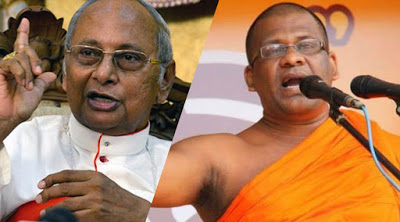
Gotabaya Rajapaksa cannot deny my allegations: Cardinal

Former President Gotabaya Rajapaksa cannot deny what he told me during the telephone conversation he had with me in 2021, Archbishop of Colombo Cardinal Malcolm Ranjith said today.

Cardinal was referring to the statement of former President Gotabaya Rajapaksa where he denies telling the former that recormendations made by the Presidential Commission cannot be implemented as he will have to take action against people and associations which were close to him.

“Both I and my secretary can confirm and prove that the fomer President talked to me over the phone on Febuary 2 2021. Rajapaksa has said recently that the Presidential Commission which probed the Easter Sunday bomb attacks has only recormended banning Islamic extrmist organizations. However, the report has clearly recommended banning a non-Islamic organization as well. The former President cannot deny these facts,” the Cardinal said in a statement.

He accused former President Gotabaya Rajapaksa of transferring intelligence officers who were probing the Easter Sunday attacks. Also, Cardinal Malcolm Ranjith has accused the present government for failing to implement recormendations made by the Presidential Commission. The Cardinal questioned as to why action has not been taken against former President Maithripala Sirisena though the Commission has recormended action against him.

“The present government also continues to push everything which is connected to the Easter Sunday bomb attacks under the carpet,” he added.