Families complain on over 400 Sri Lankans in Russia-Ukraine war

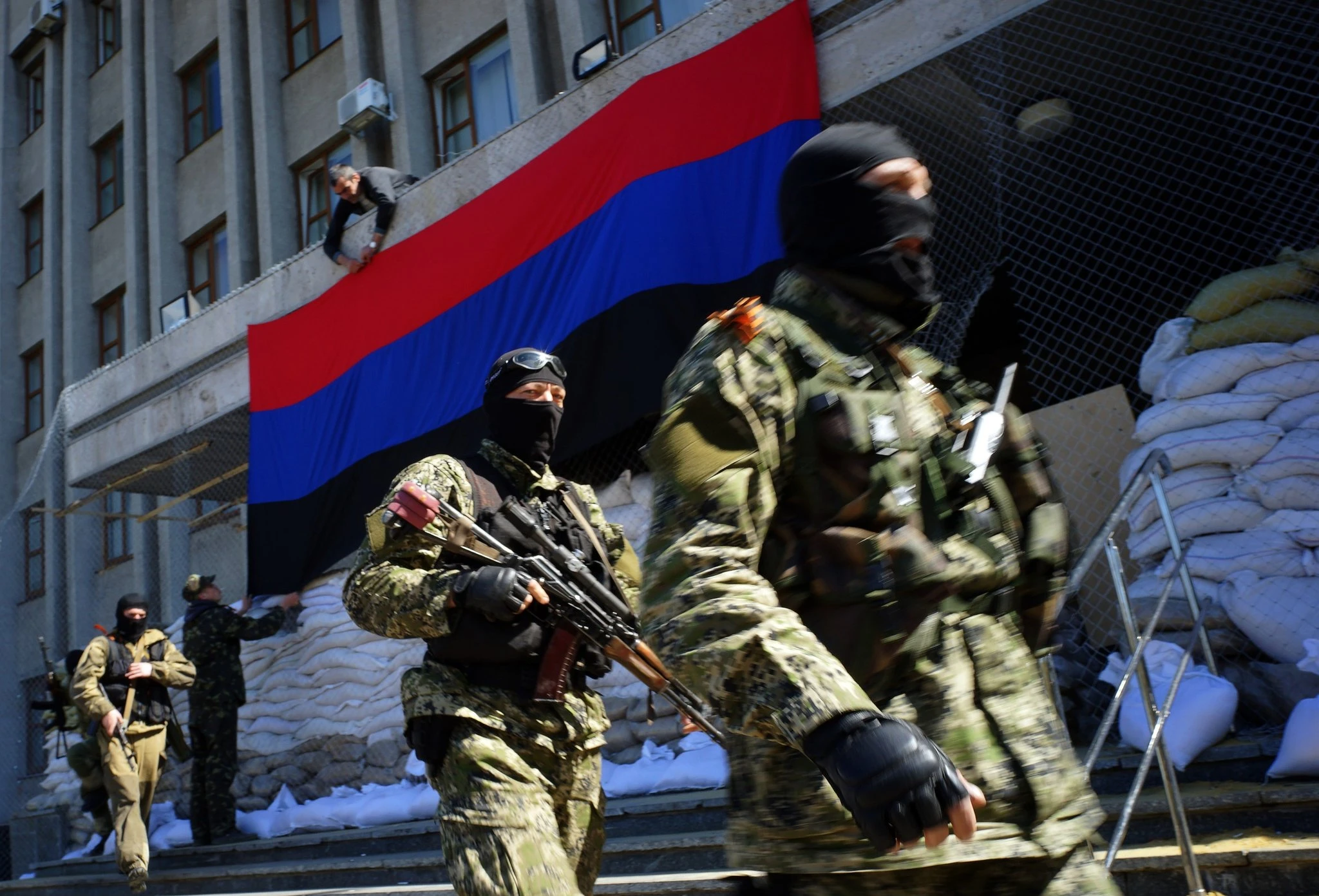
Sri Lanka’s Defence Ministry has received over 400 complaints from family members of citizens recruited by mercenary companies to fight in the Russia-Ukraine war.

Authorities launched an investigation earlier this month into reports of Sri Lankan nationals with military backgrounds being trafficked to fight in Ukraine.

In response, the Defence Ministry set up a hotline for family members to lodge complaints after a few returnees exposed the deadly conditions faced by mostly ex-soldiers fighting primarily for Russia. The Ministry reported that a total of 411 complaints have been received so far.

It was reported that not only former members of the security forces but also citizens without any military training have been recruited as mercenaries in the Russia-Ukraine conflict.

The government has decided to send a delegation to Russia to identify and repatriate its citizens fighting for Russia in Ukraine.

Sri Lanka Tamils mark 15 years since end of civil war – AFP

Sri Lanka’s minority Tamil community marked 15 years since the end of the island nation’s civil war on Saturday in an emotional ceremony that proceeded despite fears authorities would attempt to prevent its staging.

Public events celebrating the Tamil Tigers separatist group — which fought a no-holds-barred battle to establish an ethnic minority homeland — are illegal and authorities have blocked past memorials.

Tamils say the events are held to remember all victims of the decades-long war, which concluded in 2009 after a military offensive in the last Tigers stronghold. The operation was condemned internationally for the indiscriminate bombardment of civilians.

“Thousands died here the day before the war ended,” a 41-year-old Tamil village official, who asked not to be identified for fear of reprisal, told AFP at the memorial site in Mullivaikkal.

“There were lots of wounded people crying for help,” he added. “This will haunt me for the rest of my life.”

Several thousand Tamils had travelled to the village for the remembrance, where they lit oil lamps to commemorate the dead.

– ‘Impunity is prevailing’ –

Sri Lankan authorities have repeatedly disrupted similar memorials in the island’s former war zones over the years and arrested participants, but Saturday’s ceremony went ahead without incident.

This year it was attended by Amnesty International’s global chief Agnes Callamard, the most senior foreign dignitary so far to attend a remembrance event in Sri Lanka’s battle-scarred north.

The rights watchdog has for years pressed Sri Lankan authorities, who have repeatedly refused to permit an international probe into wartime atrocities, to properly investigate and prosecute those responsible for abuses.

“We are here to remind the international community that there are people in Sri Lanka waiting for justice,” Callamard told reporters after the event.

Prime Minister Justin Trudeau of Canada, which in 2022 voted to recognise May 18 as Tamil Genocide Remembrance Day, said on Saturday his country would “always advocate for justice and accountability for the crimes committed during the conflict”.

“Today, we honour the victims, survivors, and their loved ones, who live with the lasting pain caused by this senseless violence,” Trudeau said in a statement.

– Intimidation continues –

Tamil residents near the ceremony site told AFP that security forces had been noticeably more active in their communities as the anniversary neared.

“There is heavy surveillance of the people, and it is intimidation,” one Tamil resident said Thursday, asking not to be named for fear of harassment.

Saturday marked 15 years since the killing of the Tamil Tigers’ charismatic but reclusive leader Velupillai Prabhakaran, who had led the separatist group in open rebellion against Sri Lankan forces since 1972.

His death in the village of Mullivaikkal was the culmination of the lightning military offensive that killed at least 40,000 civilians in the final months of the fighting, according to UN estimates.

Sri Lankan forces were accused of indiscriminately shelling civilians after telling them to move to “no fire zones” to clear the path of their assault.

Sri Lanka strongly rejects UN report; questions its mandate and timing

Sri Lanka rejected Friday’s UN report from the Office of the High Commissioner for Human Rights (OHCHR) calling for accountability for enforced disappearances, stating such a report has not been mandated by the UN Human Rights Council.

It also questioned the timing of the report on the eve of the May 18 end of the armed conflict with the LTTE in 2009.

On Friday, the OHCHR issued a 45-page report titled ‘Accountability for Enforced Disappearances in Sri Lanka’, referring to the “continuing accountability deficit in Sri Lanka” and calling for “renewed action” at the domestic level to hold it to account through criminal justice and other relevant processes. The report calls for the international community to be engaged with Sri Lanka on this issue and for the instigation of investigations and prosecutions using universal jurisdiction or other bases of jurisdiction and the need for targeted sanctions.

A Foreign Ministry spokesman told the Sunday Times that the timing of the report seemed to politicise the entire issue of allegations of enforced disappearances.

He said UN Human Rights High Commissioner Volker Turk was not mandated by any UN member-state to issue such an “unsubstantiated, vague and biased” report against senior security and defence officials. “There is no resolution on the issuance of such a report,” he added.

Ambassador to the UN (Geneva) Himalee Arunatilka will be writing to High Commissioner Turk, questioning his unilateral initiative to issue this report and the motive for it when he has no mandate or authority to serve extraneous interests. She is also to speak to other member-states on the breach of protocol by the UN High Commissioner.

The Sunday Times further learns that the report has no author and no number as is customary for any UN report.

The spokesman raised the issue of the timing for the day before when commemorative events are being held in the north of Sri Lanka and in Western capitals by sections of the Sri Lankan diaspora to commemorate the dead especially during the last stages of the three-decade-long armed conflict that ended with the defeat of the LTTE on the battlefield.

He said that this was an attempt by the UN agency to target Sri Lanka “at a time when there are gross human rights violations happening elsewhere in the world,” a clear reference to the human rights violations currently unfolding in Occupied Palestine.

One of the highlights of the report has been that, for the first time, the UN has drawn references to those who ‘disappeared’ as far back as the JVP-led 1971 insurgency—more than half a century ago—and the second JVP insurgency from 1987 to 1989.

While there has been repeated questioning why the UN has only raised the issue of enforced disappearances during the LTTE-led armed conflict, though references have been in general to ‘enforced disappearances’, the formal specific inclusion of the JVP insurgencies, and references to the work of “paramilitary groups” are clearly a reference to the JVP insurgencies.

These come against the backdrop of a recent comment by a JVP parliamentarian that the party, now contesting the forthcoming presidential election, supports the commemoration of all those who died during all the armed conflicts in Sri Lanka. Of late, the JVP has intensified its campaigning in the north, with a May Day rally in Jaffna seeking northern votes for its presidential candidate.

The JVP’s Propaganda Secretary and International Affairs spokesman, Vijitha Herath, told Parliament that anyone who lost their loved ones in the (LTTE) war should be allowed to commemorate them, and “that is common whether it is in the South or North”. He said it was a right that families should have. “We too have lost people; we have two commemorative events to remember our members who have died, and no one has tried to stop us so far”.

The Foreign Ministry spokesman said it was “ridiculous” to even try and investigate allegations of forced disappearances of 1971 when the actors were “dead and gone” and that it was proof of a targeted agenda by the UN agency against Sri Lanka.

Posted in Uncategorized

Mahinda, Sajith Join Indian HC At Mayurapathy Kovil Ceremony

The procession of offerings for the Kumbhabhishekam Pooja began its journey from the Mayurapathy Kovil in Colombo, destined for the Seetha Amman Kovil in Nuwara Eliya.

A group of special representatives recently brought holy water from the Sarayu River in Ayodhya, India, considered the birthplace of Lord Rama, to Sri Lanka for the Kumbhabhishekam festival.

These offerings, including bowls containing the sacred water, were deposited at the Mayurapathy Kovil in Colombo yesterday.

Today, after a special pooja, the procession carrying the offerings began its journey.

Indian High Commissioner to Sri Lanka Santosh Jha, opposition leader Sajith Premadasa and former President Mahinda Rajapaksa were also present at this event.

The offerings are being taken to Seetha Eliya in a special procession.

The motorcade will travel to the Seetha Amman Kovil in Seetha Eliya, Nuwara Eliya.

It is believed that this temple is located in the jungle areas, where Princess Seetha was held after being brought to Sri Lanka.

Election Commission urges prompt action on LG polls

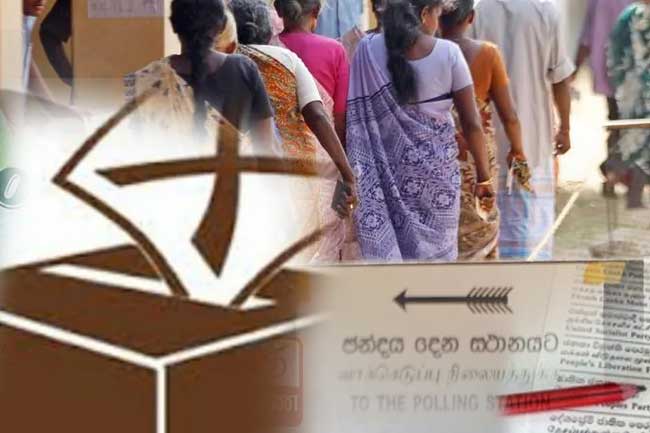
In a bid to resolve ongoing electoral issues and ensure the smooth functioning of local governance, the Election Commission has urged the government to hold the Local Government elections as early as possible.

This was discussed and conveyed in a recent meeting held between election commission officials and Prime Minister Dinesh Gunawardena.

During the meeting, the Election Commission also presented the Prime Minister with options for the upcoming Provincial Council elections.

Speaking to Daily Mirror, Election Commission Chairman R.M.A.L. Rathnayake highlighted that these elections could be held under either the existing system or a newly demarcated system, providing flexibility to accommodate various logistical and administrative considerations.

The discussion also focused on the hurdles impeding the Provincial Council elections.

The Commission underscored the need for specific legislative amendments to the Local Government Election Law, which would streamline the electoral process and address current challenges.

By advocating for these changes, the Election Commission emphasized the importance of timely and effective electoral procedures to uphold democratic principles and ensure robust local governance.

Posted in Uncategorized

UN report urges accountability and public apology for Sri Lanka’s enforced disappearances

Sri Lanka’s Government must take meaningful action to determine and disclose the fates and whereabouts of tens of thousands of people who have been subjected to enforced disappearance over the decades and hold those responsible to account, a UN Human Rights Office report released today (May 17) says.

It calls on the Government to acknowledge the involvement of state security forces and affiliated paramilitary groups, and to issue a public apology.

“This report is yet another reminder that all Sri Lankans who have been subjected to enforced disappearance must never be forgotten,” said UN High Commissioner for Human Rights Volker Türk. “Their families and those who care about them have been waiting for so long. They are entitled to know the truth”.

“The Government owes it to all those who have been forcibly disappeared. It is critical for these crimes to be investigated fully. These crimes haunt not only their loved ones, but entire communities and Sri Lankan society as a whole”, the report added.

Despite some positive formal steps by successive governments, such as the ratification of the International Convention for the Protection of All Persons from Enforced Disappearance, the establishment of the Office on Missing Persons and the Office for Reparations, tangible progress on the ground towards comprehensively resolving individual cases has remained limited, the report finds.

Between the 1970s and 2009, widespread enforced disappearances were carried out primarily by Sri Lankan security forces and affiliated paramilitary groups. The Liberation Tigers of Tamil Eelam also engaged in abductions which the UN Working Group on Enforced or Involuntary Disappearances described as “tantamount to enforced disappearances”, it mentioned.

Based on individual and group interviews, the report details the enduring psychological, social, and economic impact of enforced disappearances on the families of those forcibly disappeared, especially women. As most disappeared individuals have been male, women have often become the sole income-earner for a family, in a labour environment that poses many obstacles to women’s participation, including risks of sexual harassment and exploitation.

It adds that many women who have been at the forefront of efforts to find the disappeared have themselves been subjected to violations, including harassment, intimidation, surveillance, arbitrary detention, beatings and torture at the hands of army and police. “They told me if I continue, they will cut my husband in pieces or that they will go after my children,” said a woman who is still seeking a loved one.

Under international law, it is a clear obligation for the State to resolve cases of enforced disappearances, which constitute continuing violations, until the fate and whereabouts of those disappeared are clarified, said the High Commissioner.

Yet, most victim families remain without such clarification. “Two weeks passed, then two months, then two years. Now it has been 32 years, and I am still waiting,” said a man who testified before a national commission of inquiry about his disappeared son.

“Successive commissions of inquiry have been created by the Government. However, only a few of their reports have been made public and even when published, access has usually been limited. Most recommendations, particularly those relating to criminal accountability, have not been implemented. Alleged perpetrators, including current and former senior officials and diplomats, continue to evade justice.”

Despite the passage of nearly 15 years since the end of the armed conflict, and many decades since the earliest waves of enforced disappearances, Sri Lankan authorities are still failing to ensure accountability for these violations, it added.

Posted in Uncategorized

Sri Lanka’s ‘Mullivaikal Kanji’ Explained

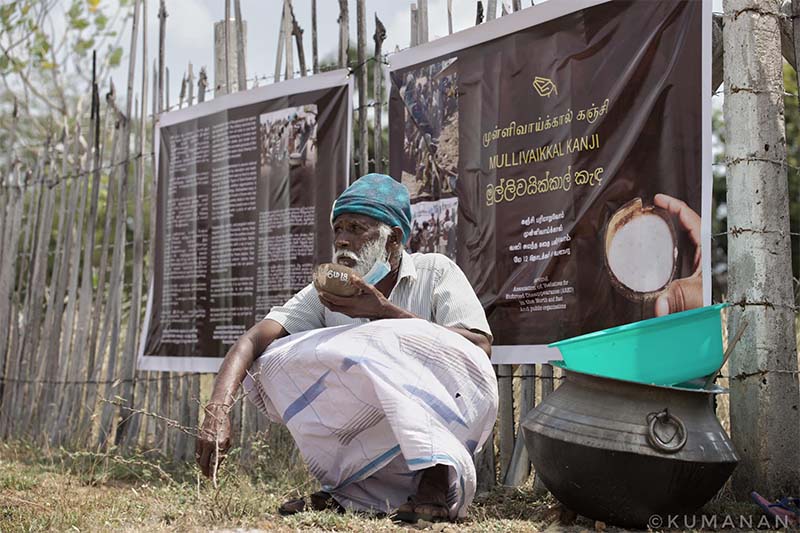
During the ongoing Mullivaikal Remembrance Week, commemorative events including the distribution of Mullivaikal Kanji or Porridge have been conducted across various locations in the Northern region, marking the fifth day of these activities.

What is this commemoration about?

The Mullivaikal Remembrance Week takes place to honor those who lost their lives in the final stages of the Sri Lankan Civil War. The week culminates on 18th May, the date marking the end of the war in 2009.

During this week, various events and ceremonies are held to honor the memory of those who lost their lives during the conflict, especially civilians caught in the crossfire.

These events often include religious services, memorial gatherings, candlelight vigils, and the distribution of symbolic food items like Mullivaikal Kanji or porridge.

This porridge is significant, as it depicts the only meal civilians had during the final week of the war, while trapped in Mullivaikal.

This meal is a mix of rice, and water. Some reports suggest that in the absence of clean water, sea water was used to prepare this meal.

Posted in Uncategorized

Sri Lanka: IMF Lauds Progress; Outlines Critical Steps for Debt Deal

The International Monetary Fund said on Thursday (16), that Sri Lanka’s overall program performance, has been strong.

Julie Kozack, Director of Communications at the International Monetary Fund (IMF) speaking to reporters in Washington D.C., said that the completion of the review by the IMF Executive Board requires two critical components.

“First, the implementation by Sri Lankan authorities of the agreed prior actions. Second, the completion of the financing assurances review. This review will confirm contributions from multilateral partners and assess adequate progress in debt restructuring,” she said in reponse to question raised by News 1st’s Zulfick Farzan.

Kozack noted that Sri Lanka’s macroeconomic policies are beginning to yield positive results.

She said that commendable outcomes include a rapid decline in inflation, robust reserve accumulation, and initial signs of economic growth, all while maintaining stability in the financial system

Looking ahead, Kozack outlined the next steps for Sri Lanka’s debt restructuring efforts, noting that the primary focus now is to conclude negotiations with external private creditors and to implement the agreements in principle with Sri Lanka’s official creditors.

She noted the challenges in reaching a consensus with external bondholders, stating, that the initial debt restructuring negotiations with external bondholders ended in mid-April without an agreement.

However, she said that discussions are ongoing with the aim of reaching an agreement in principle.

Posted in Uncategorized

Sri Lanka appoints special panel to provide state lands to military ahead of polls

Sri Lanka has appointed a special committee to provide state-owned lands to military, State Defence Minister Premitha Bandara Tennakoon said, ahead of the country declaring the Presidential polls.

The presidential election date is expected to be declared after July 17, but the Election Commission has already declared that the polls will be held between September 17 and October 16.

President Ranil Wickremesinghe, who is also the country’s Defence Minister, is expected to contest under an independent coalition with the support of most parties backing him in the current government, his close allies have said.

Wickremesinghe has launched a national programme to grant unconditional freehold ownership of lands allocated to farmers and low-income earners, titled “Urumaya”.

Granting of “Urumaya” freehold deeds is expected to enhance land value, preserve heritage, and strengthen family economies.

“President presented a cabinet paper to give concession when the lands are given to military personnel,” Tennakoon told a media briefing on Wednesday (15).

“So that they can obtain the lands if they are trying to receive government lands. A special committee has been appointed for this under President’s secretary including the defence secretary as a member. This will go in parallel with Urumaya programme.”

Backing of currently serving military and retired armed forces is vital for any political leader to win a presidency, analysts say.

Sri Lanka’s military is highly regarded among majority of the island nation for winning a 26-year war against the Tamil Tiger separatists popularly known as Liberation Tigers of Tamil Eelam (LTTE) despite strong human rights violations.

Refugee from Sri Lanka becomes mayor of British town

A British town’s new mayor is a refugee from Sri Lanka who will be the first Hindu to hold the position.

Labour councillor Elango Elavalakan has taken over the ceremonial role after a unanimous vote at Ipswich Borough Council’s annual meeting.

“I’m so happy today, and very proud to be mayor of this great town,” said Mr Elavalakan.

Council leader Neil MacDonald, who proposed the nomination, said Mr Elavalakan would get to read out a general election result during his year in office.

“The announcement by a refugee who fled war and persecution, and who has made a new life and contributed to society here, will send a message,” he said.

Members of Ipswich’s Hindu community attended Wednesday evening’s ceremony, with celebrations at the nearby temple planned for later in the week.

Dr Sachin Karale, chair of Ipswich Hindu Samaj, said: “It shows the great diversity and multiculturalism of Ipswich town that a Hindu man is becoming mayor. I’m really proud.”

Mr Elavalakan’s wife, Manchula Elavalakan, will be his consort.

The mayor’s theme for the year will be “support and wellbeing” with his two chosen charities Genesis Orwell Mencap and Cancer Support Suffolk.

‘Ipswich is my home town’

Having left Sri Lanka, Mr Elavalakan lived and worked in India, Uganda and Rwanda before moving to the UK.

He initially moved to Ilford in east London, before moving to Ipswich in 2006.

“When I came for one project here, in Ipswich, I felt the people were very friendly,” he said.

“So I decided, Ipswich is my home town.”

He became a Labour councillor for St John’s ward in 2014.

“Having lived in many different countries and experienced many different lifestyles, I have always been interested in helping those that need it,” he said.

“I am passionate about empowering communities and representing those in need.”

Mr Elavalakan is not the first Ipswich mayor from the Indian sub-continent, however.

Kavas Jamas Bashah was born in Mumbai and was a senior officer of the Indian Civil Service.

He retired to Ipswich and became mayor in 1925.

The town elected its first mayor, Benjamin Brame, in 1836 following the Municipal Corporations Act the previous year which reformed local government and made Ipswich a municipal borough.

Its first female mayor was Mary Whitmore, in 1946.

She was a suffragette and member of Women’s Social and Political Union (WSPU), and was made MBE in 1951 for her contribution to public services.

Albert Grant became Ipswich’s first black councillor and mayor of Ipswich in 1995.

He moved to the UK in 1955 at the age of 21 and has dedicated his life to tackling racism and fighting to secure equality and justice.

He was awarded an OBE in 2000 for his services to ethnic minorities and in 2021 received an honorary degree from the University of Suffolk.

Source: BBC News