Wickremesinghe’s visit to Japan signals a key change in Sri Lanka’s foreign policy By P.K.Balachandran/Counterpoint

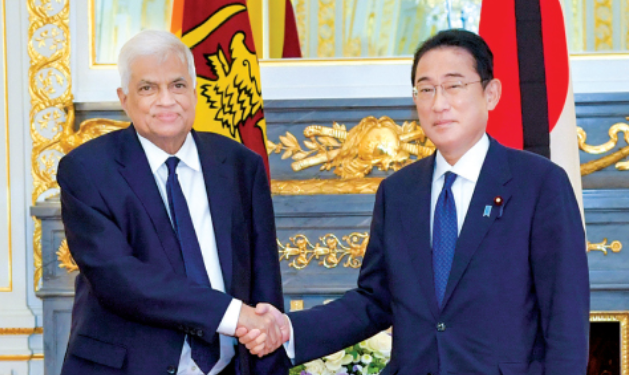
The Sri Lankan President, Ranil Wickremesinghe, will be in Japan from May 24 to 27 for talks with his Japanese counterpart Fumio Kishida and other Japanese leaders. The visit is expected to signal a key change in Sri Lanka’s foreign policy as it moves away from China and ties up with the Western powers and India to execute its developmental plans.

A statement from the Japanese foreign office says that Kishida and Wickremesinghe are to “exchange views on bilateral relations between Japan and Sri Lanka and regional and international affairs.” The statement also said that Japan expects President Wickremesinghe’s visit to “further deepen the friendly relations between Japan and Sri Lanka.”

This will be the second summit between Kishida and Wickremesinghe in less than a year. The first was held in September 2022 on the sidelines of the funeral of former Prime Minister Shinzo Abe.

The Wickremesinghe-Kishida talks this time round is expected to result in the announcement of some developmental projects including the US$ 2 billion Light Railway Transit (LRT) project for Colombo, which was abandoned by the Sri Lankan government led by Gotabaya Rajapaksa in 2020, a year after Japan had agreed to fund the project with a very soft loan with a long grace period.

Informed political sources said that the LRT project was stopped over the issue of commissions. Japan was hurt not only because of this but also because the government did not take it into confidence before announcing the cancellation.

The Gotabaya Rajapaksa administration led Japan up the garden path in regard to the construction of the East Container Terminal (ECT) in Colombo port in partnership with India. Under pressure from trade unions, that were allegedly in cahoots with a foreign power, the Gotabaya government reneged on the agreement citing its election manifesto. It declared that the ECT will be constructed by Sri Lankan organizations.

Coincidentally, a project to improve the Bandaranaike International Airport in Colombo at a cost of US$ 1 billion was abandoned in July 2021, this time by Japan. The BIA Development Project Phase II Stage 2, was suspended after the Japan International Corporation Agency (JICA) decided not to make further disbursement of funds citing the inability of the Sri Lanka Government to repay the loan. Sri Lanka had defaulted on its international debts in April 2021.

Seeing an opening, the China Harbor Engineering Company (CHEC), which had constructed the Colombo Port City, bid for the airport project on BOT basis and promised to complete it fast.

However, the economic and political situation in Sri Lanka was changing at that time and the CHEC had to be put in cold storage. That was an era when Sri Lanka was in the grip of the pandemic. It had defaulted on foreign loans. There were severe economic shortages. Political unrest was the order of the day.

Seeing an opportunity in this, India rushed in with a US$ 4.5 billion aid package with alacrity. And along with the Western powers, it helped Sri Lanka negotiate a bailout of US$ 2.9 billion with the IMF.

At this critical juncture, incredibly, China was found wanting. Piqued by Sri Lanka’s resort to the IMF at the instance of India and the West, China arrogantly advised Sri Lanka to exercise financial prudence and offered only short-term relief on debt repayment. It dragged its feet on coordinating with the Paris Club of lenders which was working on debt restructuring for Sri Lanka.

President Wickremesinghe, who is pro-West with a history of conflict with China on its investments in Sri Lanka, ignored China’s advice and went ahead with negotiations with the IMF with India’s help.

When Wickremesinghe was last in power as Prime Minister, in 2015, he had ordered the suspension of Chinese projects to investigate corruption charges. However, the investigations were abandoned and the projects were resumed after a gap of a year and a half.

Put off with Wickremesinghe for this and his supposed closeness to India, the Chinese supported anti-Wickremesinghe and anti-Indian politicians like Wimal Weerawansa, Vasudeva Nanayakkara, Sarath Weerasekara, and the Janatha Vimukthi Peramuna (JVP). When a controversial Chinese “research” vessel ‘Yuan Wang 6’ docked at Hambantota port in August 2022 against India’s objections, the leaders cite above welcomed the vessel at the port.

The Chinese are believed to be wishing for the exit of Wickremesinghe from power and the return of the Rajapaksas. But this wish is unlikely to be fulfilled in the foreseeable future because the Rajapaksa-led Sri Lanka Podujana Peramuna (SLPP), the single-largest party in the Lankan parliament, supports Wickremesinghe, enabling him to fulfill the IMF’s conditions.

Meanwhile, India’s influence over Wickremesinghe is increasing and China’s is decreasing. A front-page report in ‘Daily Mirror’ of May 22 said that a number of Chinese proposals in a variety of fields are in the doldrums now and the reason cited is the demand for commissions by Sri Lankan officials.

But an informed source said that the real reason is that President Wickremesinghe has turned away from China-funded projects. China-funded projects are suspect in the eyes of Wickremesinghe’s overseas supports – India and the West. These not only have security concerns but also maintain that these projects, attractive though they may be, have landed Sri Lanka in deep debt and will continue to do so if the government continues to take loans from China.

Sources close to Wickremesinghe said that his aim is to get commercial investments and loans from the World Bank, ADB and other such reputed institutions which give sustainable solutions and are transparent in their terms and conditions in contrast to the “opaque” Chinese terms.

However, given Sri Lanka’s geostrategic location and China’s ambitions in the Indian Ocean, the Chinese will continue to enlarge and deepen their foothold in the island. They are particularly keen on challenging India’s desire to dominate the Northern and Eastern provinces on the grounds that these have a preponderance of Tamils.

Towards this end, China is cultivating various constituencies in the North and East, like fishermen, universities and schools. In the North, the Chinese have set up sea cucumber and shrimp farms with locals. But their bid to set up wind energy plants in three islands close to India failed as these were called off by the Lankan government following India’s expression of security concerns.

In the Eastern Province, India is concerned that China is eyeing the Trincomalee harbor which New Delhi believes is vital for its security and dominance over the Bay of Bengal. Earlier, India had succeeded in scuttling a Sri Lankan-Chinese project to have an air force aircraft repair facility at Trincomalee.

Recently, a proposal to link Eastern Province with Yunan Province in China, made by Anuradha Yahampath when she was Governor of the Province, was reportedly shot down by Wickremesinghe because it had raised the hackles in New Delhi.

Yahampath was recently replaced by a pro-Indian Tamil politician, Senthil Thondaman, as Governor. Thondaman is expected to vibe better with the Tamil politicians in the East besides cubing Chinese influence. Incidentally, Thondaman is aslo close to Mahinda Rajapaksa, the most important of the Rajapaksas.

While in the view of the Chinese, the Rajapaksas are innately pro-China and that it would be good to have them back in power, the Rajapaksas are shrewed enough to learn lessons from the past and not alienate India and the West whose help is necessary for the progress of Sri Lanka.

However, this is not to say that any of the above-mentioned forces wants China to be eliminated in Sri Lanka. As the G7 resolved at its summit in Hiroshima recently, the plan of the West (and India too) is not to eliminate China or “de-couple” from it, but to “de-risk” it so that it is not a threat.

India and the West will be closely watching the activities of China in Sri Lanka and get the Sri Lankan government to take corrective action whenever China crosses security red lines.

Given Sri Lanka’s economic dependence on the West and India in terms of exports and imports as well as concessional trade agreements (GSP plus with the EU and FTA with India), Colombo is likely to fall in line with the expectations of India and the West.
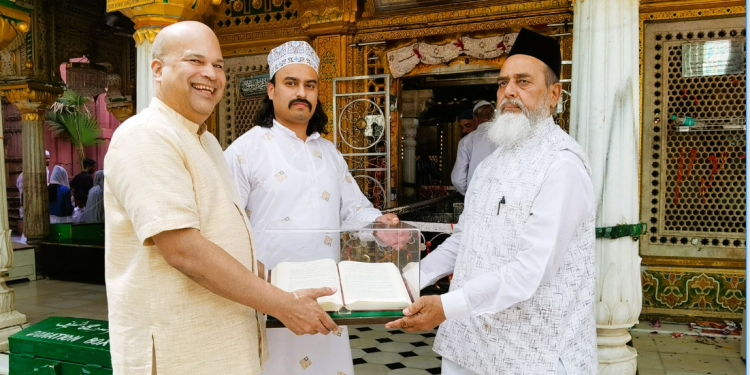
Lankan envoy to India presents Sinhala translation of the Holy Quran to the Hazrat Nizamuddin Aulia Dargah in Delhi

In keeping with its policy of promoting dialogue with all major religions in India, the High Commission of Sri Lanka in New Delhi presented a Sinhala translation of the Holy Quran to the historical Hazrat Nizamuddin Aulia Dargahof Delhi for permanent display.

Situated in the Nizamuddin West area of Delhi, Nizamuddin Dargah is the mausoleum of the Sufi saint Khwaja Nizamuddin Auliya (1238–1325 CE). The Dargah is visited by thousands of pilgrims every day. The site is also known for its evening qawwali devotional music sessions. The descendants of Nizamuddin Auliya look after the whole management of Dargah.

The impressive Sinhala translation of the Holy Quran, published by the All Ceylon Jamiyyathul Ulama (ACJU) of Sri Lanka, was presented to the Chief of the Dargah Syed Muzammil Nizami this afternoon by Sri Lanka’s High Commissioner Milinda Moragoda. The copy of the Holy Quran, fixed inside a transparent display box, was placed at a prominent place in the Dargah.

High Commissioner Moragoda and the accompanying senior officials of the High Commission also paid their respect to the tomb of Saint Khwaja Nizamuddin Auliya.

Previously, High Commissioner Moragoda had presented copies of the Sinhala Quran to the Jama Masjid of Delhi, the Jamiat Ulama-i-Hind (Council of Muslim Theologians of India) as well as to the Ambassadors of Morocco, Bahrain and Saudi Arabia and the High Commissioner of Nigeria in New Delhi.

Posted in Uncategorized

Pakistan High Commission awards Jinnah scholarships to Lankan students

As in previous years, the Pakistan High Commission organized the Jinnah Scholarship ceremony at the Bandaranaike Memorial International Conference Hall (BMICH), to award scholarships to bright and deserving A-Level students of Sri Lanka.

These scholarships have been awarded by the Government of Pakistan to Sri Lankan students of A Level since 2006. So far, more than 2400 Sri Lankan students have benefitted from this program, named after Muhammad Ali Jinnah, the revered founding father of Pakistan.

Vidura Wickramanayaka, Minister for Buddhasasana, Religious & Cultural Affairs, Sri Lanka graced the occasion as Chief Guest.

In his speech the Chief Guest highly appreciated the gracious gesture from the people and Government of Pakistan. He added that such efforts will be very fruitful in strengthening bilateral relations between the two friendly countries. He further said that the youth are our future and through such scholarship programs, we strengthen future generations.

In his remarks, High Commissioner Major General (Retd) Umar Farooq Burki thanked the honorable Chief Guest for gracing the occasion. He emphasized upon the importance of the relationship that both the countries enjoy and the fact that Pakistan aims at strengthening these strong ties manifold. He added that the Jinnah Scholarship is a testament to the strong bond between Pakistan and Sri Lanka, and reflects the commitment to enhancing the capabilities of youth with better educational opportunities.

The High Commissioner informed the audience that the Government of Pakistan has been awarding the Jinnah Scholarship for bright Sri Lankan students since 2006. Students who qualified for this prestigious scholarship came from all provinces of the island.

The ratio of Sinhalese, Tamil (67) and Muslim (74) students was also almost equal. It was very encouraging to see that the number of female students (87) was almost double as compared to that of the male students (44).

Moreover, Government of Pakistan takes pride in producing hundreds of doctors, engineers and other professionals in various faculties through separate fully funded scholarship programs.

During the Jinnah scholarship awarding ceremony, certificates were awarded by Vedura Wickramanayaka, Minister of Buddhasasana, Religious & Cultural Affairs, Governor of Central Bank of Sri Lanka, Dr. Nandalal Weerasinghe, the High Commissioner of Pakistan to Sri Lanka and Deputy High Commissioner.

Professors representing Universities, Ambassadors, political personalities and friends of Pakistan were also present at the occasion.

Posted in Uncategorized

India did not demand money from Sri Lanka for ship disaster help: HC

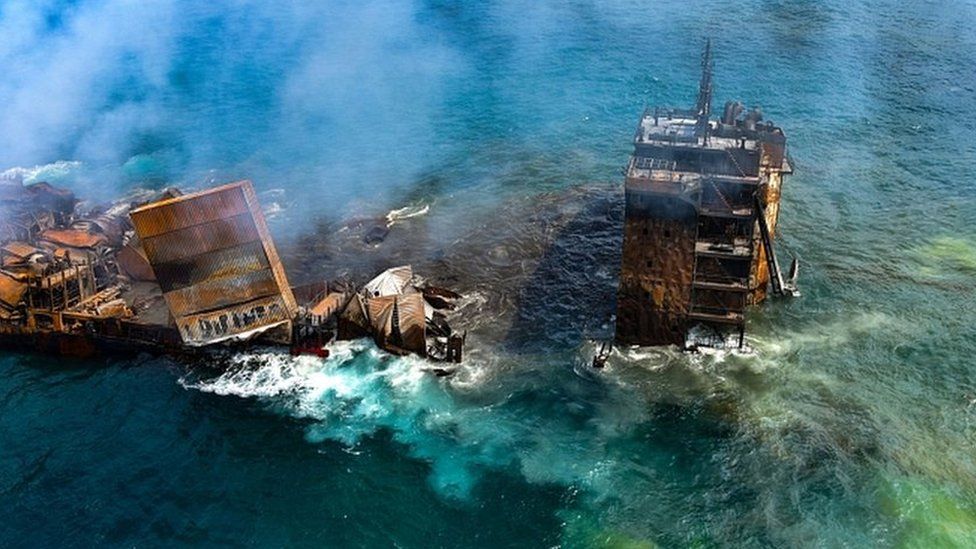
India did not demand money from Sri Lanka to cover the cost of helping with MT New Diamond or X-Press Pearl marine disaster, but only submitted cost to be claimed from insurers based on international practice, the country’s High Commission in Colombo said.

The full statement is reproduced below

High Commission of India
Colombo

PRESS STATEMENT

High Commission of India has come across media reports which suggest that Government of India has demanded compensation/damages from Government of Sri Lanka towards the assistance provided during the fire incidents onboard MT New Diamond and MV Xpress Pearl in September 2020 and May-June 2021. Such reports are completely false and incorrect.

2. It may be recalled that Government of India immediately deployed ships of the Indian Coast Guard (ICG) in response to specific requests from Sri Lanka Navy for providing expeditious assistance to fight the fire incidents onboard MT New Diamond and MV Xpress Pearl. Rescue operations conducted by these ships were instrumental in curtailing the hazardous effects of the two fire incidents and thereby limiting the damage on the maritime and marine environment of Sri Lanka.

3. In line with ‘Polluter Pay Principle’ as per international norms, we have raised a claim for deployment, salvage activities and items/stores undertaken by these ships. Government of Sri Lanka has been requested to join our claims with that of the Sri Lankan side in the respective forum. It is emphasized that the request has been for presenting these claims to the Insurer/Owner for settlement and reimbursing the compensation received through established channels.

4. It is reiterated that India has not demanded any damages/compensation from Government of Sri Lanka and Government of India’s immediate deployment of ships are in line with ‘Neighbourhood First’ policy and Security And Growth for All (S.A.G.A.R) doctrine.

Posted in Uncategorized

Remember our history, recognise our labour, say Sri Lanka’s Malaiyaha Tamils

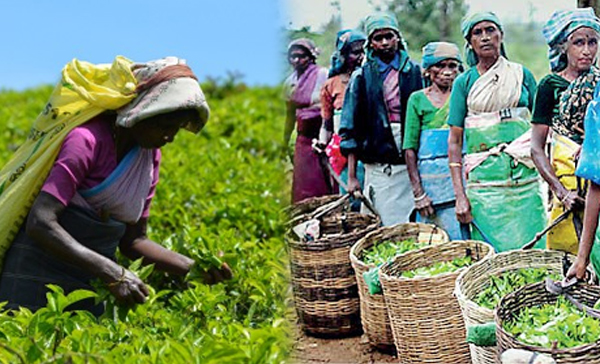
Marking 200 years since their arrival in Sri Lanka from southern India, to work in the British-run plantations, members of the island nation’s historically marginalised Malaiyaha [hill country] Tamil community have sought greater recognition, political rights, and improved living and working conditions.

“Design, resource, and implement a 10-year development plan that is explicitly based on the principle of affirmative action in response to the decades of structural exclusion that has resulted in poor human development indices of Malaiyaha Tamil community when compared with all other communities,” a key demand read, in a declaration released after a recent three-day public event held in the central Nuwara Eliya city.

The development plan must aim to reduce poverty, provide land and housing, enhance public health and education access, while ensuring labour rights, including a fair living wage and legal protection, the declaration said. Further, it asked the Sri Lankan government to recognise the Malaiyaha Tamils as a community with “a distinct identity and as equal citizens”, and ensure appropriate political power sharing and proportional system of electoral arrangements.

Organised by the Institute of Social Development, an NGO working on addressing challenges facing the Malaiyaha Tamils, the event sought to highlight the centuries-long struggle of the much-neglected community, while demanding long-pending solutions to their enduring problems. From being deprived of their citizenship in 1948 — the struggle for citizenship continued until 2003 — to being subjected to discrimination and exploitation, Sri Lanka’s Malaiyaha Tamil community has been enduring incessant injustices.

Around 1.5 lakh people from the million-strong community currently work in tea and rubber estates, bringing in crucial foreign exchange to Sri Lanka. A majority works outside the plantation ecosystem, including as professionals across sectors.

The estate-bound families, living in the Central, Southern and Uva provinces, are among Sri Lanka’s poorest, with some still residing in colonial-era line rooms, without basic amenities. India committed financial assistance to build 14,000 houses in the estate areas, but the slow pace of the project has come under frequent criticism.

The financial crisis that shook Sri Lanka last year has further compounded Malaiyaha Tamils’ economic distress, pushing more than half the population living in estate areas into acute poverty, a recent World Bank report noted.

Along with Sri Lankan legislators, scholars, workers, artistes and activists from the Malaiayah Tamil community, popular Tamil rapper Arivu, of ‘Enjoy Enjaami fame’ participated and performed at last weekend’s event.

In the declaration released, the community resolved to foster the linkages and solidarity between Malaiyaha Tamils living in different parts of Sri Lanka and those that have migrated to India.

Source:The Hindu

Posted in Uncategorized

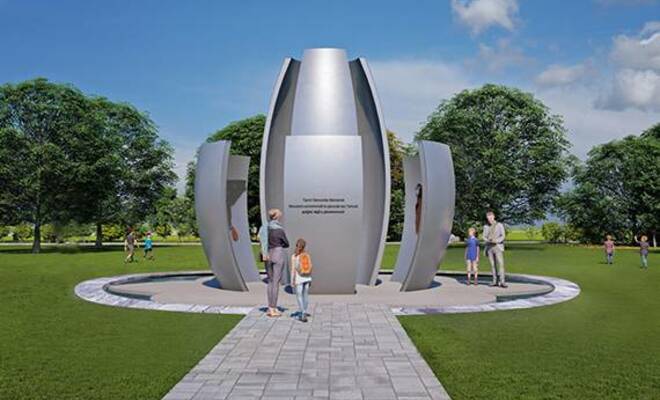
Tamil genocide memorial under construction in Canada

Sri Lankan High Commission in Canada has raised objections to the erection of a monument to commemorate what the Tamil community living there called genocide of Tamil civilians in Sri Lanka during the war’, Daily Mirror learns.

The groundbreaking for the construction of this memorial in the municipal area called ‘Brampton’ in the greater Toronto area took place recently.

Despite Sri Lanka’s objection, Daily Mirror learns that Brampton mayor Patrick Brown has granted permission to build a monument to commemorate the lives lost in the Sri Lankan civil war. It is an area with a large concentration of Sri Lankan Tamils.

A top official of the Sri Lankan mission in Ottawa told Daily Mirror that a request for a similar monument had been made to another municipal council, but the mayor had turned it down.

“The LTTE remains a banned organization in Canada. Therefore, extremist activists don’t use the word ‘LTTE’ in any of their activities. They indulge in these activities under different garbs,” the official said.

Posted in Uncategorized

Why is GR’s staff still heading a unit at President’s Office?

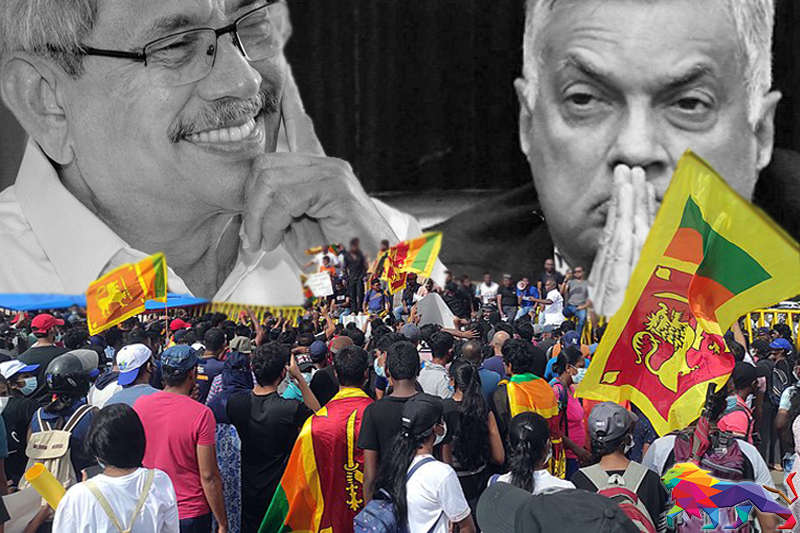
ust over a year since former President Gotabaya Rajapaksa resigned from office following nationwide protests demanding him to step down, evidence has come to light that the former president’s staff who are mostly political appointees continue to be recruited in the President’s Office under a newly created unit called ‘special projects’.

Even though Rajapaksa did not complete his full term and was forced to resign due to his mismanagement which spiraled the economic crisis, Rajapaksa’s hand-picked staff including his former private secretary Sugeeswara Bandara continue to receive a salary and perks from the state as they head the special projects unit in the President’s Office.

Rajapaksa himself continues to receive the incentives entitled to a former president despite his early resignation following public anger and has also had security appointed at his luxury bungalow provided to him by the state at Malalasekara Mawatha in Colombo and outside his private residence in Mirihana.

Rajapaksa is not residing at Malalasekara Mawatha due to complaints that the area was ‘noisy’ and other issues but it continues to be held by him with a security contingent also deployed for him.

In addition to the former president enjoying all benefits from the state despite the economic crisis, his former staff who functioned with him continue to be recruited at this specially created unit at the President’s office with serious concerns raised as to what the mandate of this office is.

This unit is now headed by Sugeeswara Bandara who was Gotabaya Rajapaksa’s private secretary when he was the president and is now functioning as the Director General of the Special Projects unit.

Senior officials attached to the former president’s staff told Daily Mirror that despite being recruited at the President’s office, officials such as Bandara are often seen accompanying Gotabaya Rajapaksa at events.

The former President’s staff being recruited at the President’s office raises serious concerns about why such special units continue to accommodate political appointees despite Gotabaya being forced out of office over a year ago.

A senior official from the President’s Office told Daily Mirror that the special projects section was a ‘unit’ at the President’s office and its staff were mandated to coordinate some projects which were taking place outside Colombo and liaise with the President’s staff. It was also a unit formed at the request by the SLPP.

With the economic crisis far from over, concerns have also been raised as to why the former president’s staff continue to enjoy the salary and perks from the state at a time when staff can be reduced in order to ease the burden on the Treasury.

Posted in Uncategorized

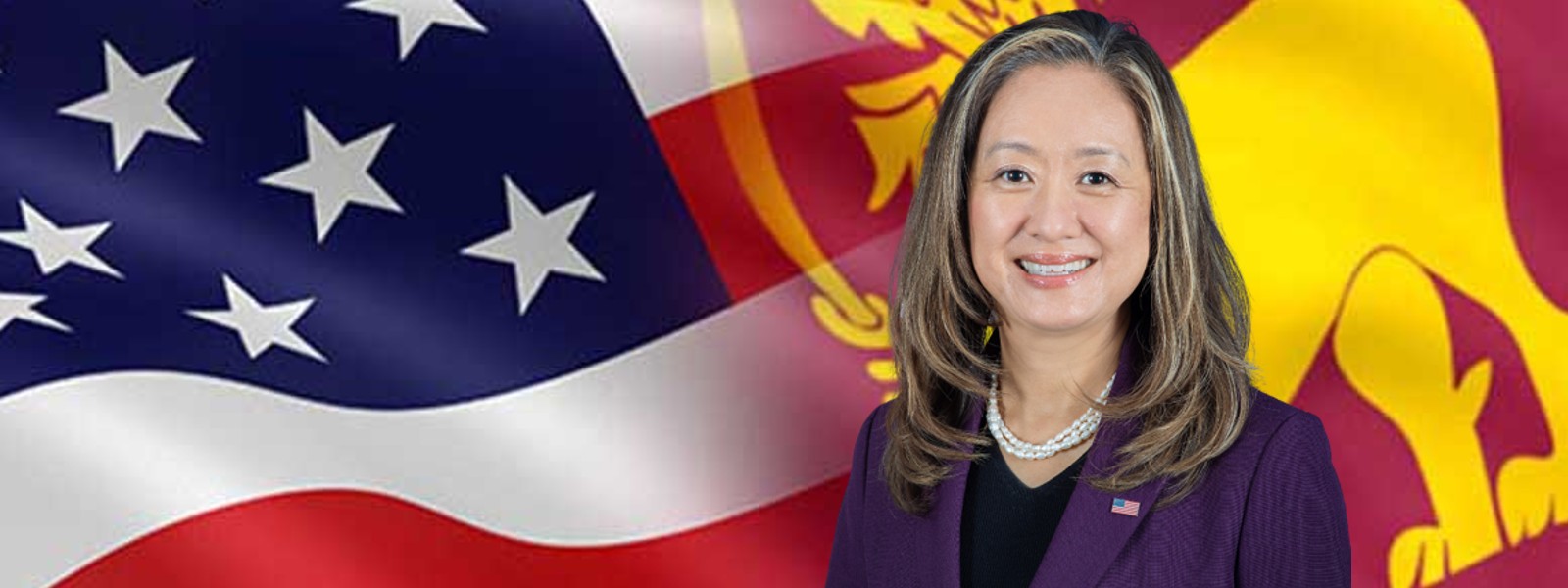
Ambassador Julie wants more reforms in Srilanka

US Ambassador Julie Chung says much more needs to be done in Sri Lanka to strenghten good governance and anti-corruption initiatives to achieve economic recovery.

“The job isn’t over yet. More needs to be done to improve good governance and anti-corruption efforts, and these improvements will help to create new opportunities for both Sri Lankan and American businesses, help the country recover from this crisis, and boost economic growth,” she said speaking at the AmCham Ball in Colombo.

She went on to say that the United States, and AmCham, believed that a vibrant and prosperous economy was built by including and drawing on the diverse skills of all members of society, adding that they have done their part to help empower the aspiring businesswomen of Sri Lanka. Guaranteeing equal opportunities to women in the workforce is not only a social justice issue, but also an economic one. Research has shown that when more women participate in the labour force, economies grow faster and are more resilient to shocks.

This is because women bring new perspectives and skills to the table that lead to innovation and new opportunities.

I have travelled all throughout Sri Lanka, meeting such inspiring women who work hard to overcome the challenges to maintain and improve their livelihoods. Whether its young women, starting a tech company at Yarl IT Hub (in Jaffna), or mothers working rice paddies in the Northcentral Province, to feed their families, and fellow Sri Lankans.

Despite the current challenges and brain drain concerns, many are determined to stay here and help build up their country. They have not given up. It’s in this spirit of resilience and optimism that I am so grateful to AmCham for its efforts to ensure economic opportunities exist for all Sri Lankans.

All Party Parliamentary Group for Tamils urges UK Foreign Office to investigate arrest of TNPF MP

Elliot Colburn, MP for Carshalton and Wallington and the Chair of the All Party Parliamentary Group for Tamils (APPGT) has urged the UK Foreign, Commonwealth and Development Office (FCDO) to investigate the arrest of TNPF MP Selvarajah Kajendren.

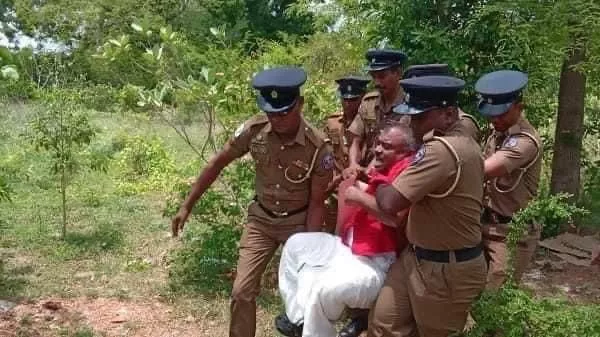
As Chair of the APPG for Tamils, I am deeply concerned about the reports of Tamil MP, Mr Kajendran, being subjected to brute force and arrest by Sri Lankan Police. I urge the FCDO to investigate and raise with Sri Lankan officials.

— Elliot Colburn MP (@ElliotColburn) May 23, 2023

Kajendren was arrested earlier today alongisde eight other TNPF members whilst they were protesting against the illegally constructed Buddhist vihara in Thaiyiddy, Jaffna which has been built on occupied land.

Colburn stated that he was “deeply concerned” by the arrest and urged the FCDO to “investigate and raise with Sri Lankan officials”.

The Tissa Rajamaha Vihara in Thaiyiddy was built last month under the protection of Sri Lanka’a military and police. Locals have expressed their concerns about the new vihara which forms part of the state’s ongoing Sinhalisation of the Tamil homeland.

Sri Lankans must understand the deep crisis, and together contribute to recovery

The International Monetary Fund notes that the present crisis in Sri Lanka is a combination of an economic and humanitarian crisis, citing that the present crisis is somewhat different from the previous crises the island nation had faced.

Resident representative of the IMF in Sri Lanka Sarwat Jahan speaking EXCLUSIVELY to News 1st on its Newsline program said “Sri Lanka has never faced debt sustainability issues before. This is the first time that Sri Lanka has announced a moratorium on its debt service. The situation is actually quite grave, and it is going to take quite a bit of effort on all to bring Sri Lanka back to its growth potential.”

In early 2023, the International Monetary Fund approved a $3 billion bailout for Sri Lanka, paving the way for the country to restructure its debt and for the economy to improve in 2024.

The South Asian country is grappling with its worst financial crisis in decades, and the IMF’s decision will allow an immediate disbursement of a $333 million loan over four years.

“The main part is to recognize how deep the crisis is, and then to for all Sri Lankan to contribute to the recovery, which means taking ownership of the deep reforms that are needed,” said Sarwat Jahan adding that these reform including tax reforms, SOE reforms, and structural reforms that will help build institutions so that Sri Lanka will not face such a situation again.

Posted in Uncategorized