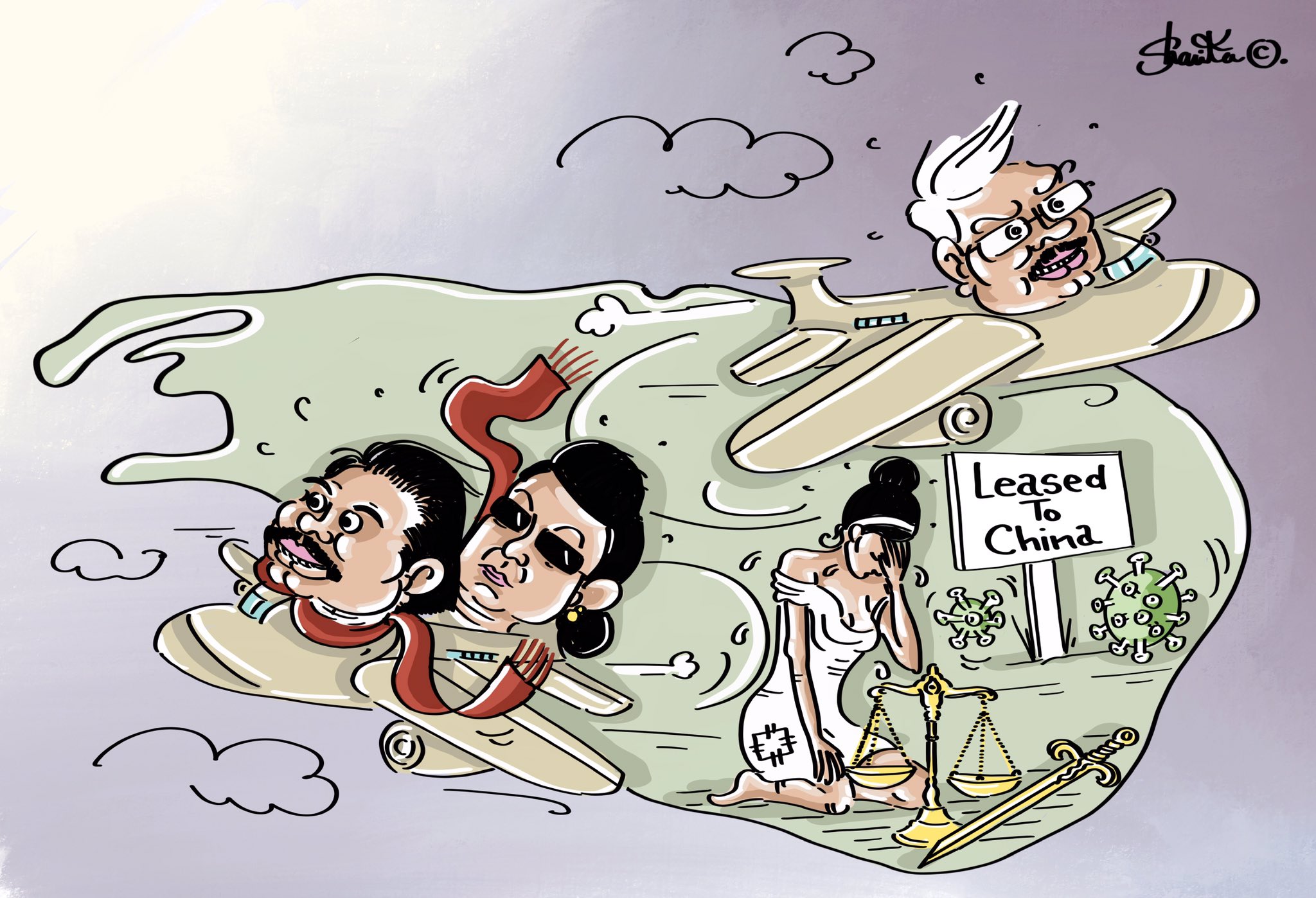
SL imposes new limits on foreign currency possession

Sri Lankan citizens may only possess USD 10,000 in the form of foreign currency, reduced from the earlier permitted amount of USD 15,000, the Minister of Finance announced.

The directive, issued pursuant to Section 08 of Foreign Exchange Act No. 12 of 2017, is effective from the 16th of June.

In a statement, the Central Bank of Sri Lanka (CBSL) said the decision was taken with the intention of attracting foreign currency in the hands of the public into the formal banking system.

According to the CBSL, an amnesty period of 14 working days effective from the date of the Order (June 16, 2022) is granted for persons in, or resident in, Sri Lanka who hold foreign currency notes in possession for the following:

To deposit into a Personal Foreign Currency Account or into a Business Foreign Currency Account as specified in the Order, or

To sell to an Authorized Dealer (A licensed commercial bank or National Savings Bank)

At the end of the said amnesty period, the CBSL has the right to initiate actions against persons who hold foreign currency in possession by violating the Order, in terms of the provisions of the Foreign Exchange Act.

For further information, the general public can contact any licensed commercial bank or National Savings Bank, or refer to the Order under Section 8 of the Foreign Exchange Act published in the Gazette (Extraordinary) Notification No. 2284/34 dated 16 June 2022 via the official website of the Department of Foreign Exchange (www.dfe.lk).

They can also contact the Department of Foreign Exchange via 011-2477255, 011-2398511 and dfe@cbsl.lk.

Posted in Uncategorized

High-Level Delegation from U.S. Government to visit Sri Lanka

A high-level delegation representing the U.S. Department of the Treasury and the U.S. Department of State will visit Sri Lanka from June 26- 29, the U.S. Embassy in Colombo says.

Members of the delegation include Deputy Assistant Secretary of Treasury for Asia Robert Kaproth and Ambassador Kelly Keiderling, who is also the Deputy Assistant Secretary of State for South and Central Asia.

The visitors will meet with a wide range of political representatives, economists, and international organizations.

In all their meetings, they will explore the most effective ways for the U.S. to support Sri Lankans in need, Sri Lankans working to resolve the current economic crisis, and Sri Lankans planning for a sustainable and inclusive economy for the future, the U.S. Embassy said further in its statement.

“This visit underscores our ongoing commitment to the security and prosperity of the Sri Lankan people,” said U.S. Ambassador to Sri Lanka, Julie Chung. “As Sri Lankans endure some of the greatest economic challenges in their history, our efforts to support economic growth and strengthen democratic institutions have never been more critical.”

Over the past two weeks, the U.S. has announced $120 million in new financing for Sri Lankan small and medium-sized businesses, a $27 million contribution to Sri Lanka’s dairy industry and $5.75 million in humanitarian assistance to help those hit hardest by the economic crisis.

The United States also committed $6 million in new grants to provide livelihood assistance to vulnerable populations, and technical assistance on financial reform that will help stabilize the economy.

In the coming months, the U.S. will continue to support Sri Lankans as they revive their economy, combat food insecurity, and promote public health and education.
The United States also strongly supports Sri Lanka’s decision to seek assistance from the International Monetary Fund, which can provide the most durable resolution to the present crisis.

Posted in Uncategorized

Consider us as friends, EU tells Pro China Sri Lanka

Sri Lanka must consider the European Union as a friend, the Ambassadors from the region yesterday emphasised to the Government whilst assuring support to come out of the crisis.

This pledge was shared by Ambassadors of European countries when they called on President Gotabaya Rajapaksa.

A statement from the President’s Media said the EU delegation members pointed out that a firm message about the future plans of building the country’s economy will certainly pave the way for the international community to assist Sri Lanka.

Nearly 90% of the country’s population lives in rural areas and 75% of those people depend on agriculture. The President said that by providing them with the required fertiliser and fuel, many problems as well as the issues related to the supply of food could be solved.

Steps have been taken to provide uncultivated Government lands to those interested in agriculture as a solution to the land issue.

President Rajapaksa explained the initiatives launched by the Government to provide a lasting solution considering the humanitarian situation that has arisen after the war, as well as the fair manner maintained in the process of enforcing law without any party affiliation and interfering with the Ambassadors.

A number of areas, including investment, tourism and education, were discussed at length.

Delegation of the EU to Sri Lanka and the Maldives Ambassador Denis Chaibi, France Ambassador Eric Lavertu, Italian Ambassador Rita Mannella, Norwegian Ambassador Trine Jøranli Eskedal, Netherlands Ambassador Tanja Gonggrijp, Germany Ambassador Holger Lothar Seubert, Romanian Ambassador Victor Chiujdea, Turkish Ambassador Rakibe Şekercioğlu, and Swiss Ambassador Dominik Furgler attended the meeting with President Rajapaksa.

Chief of Staff to the President Anura Dissanayake and Admiral Jayanath Colombage were also present.

Pillayan denies allegations by informant

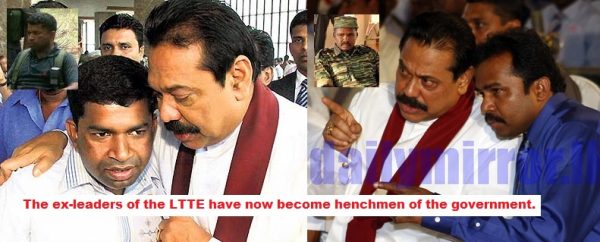
The Tamil Makkal Viduthalai Pullikal (TMVP) has denied allegations that it was involved in several kidnappings and murders as alleged by a former member who had fled the country.

TMVP Leader and Member of Parliament Sivanesathurai Chandrakanthan alias Pillayan told Daily Mirror that the allegations appearing in the newspaper yesterday were baseless.

The MP told Daily Mirror that anyone can leave Sri Lanka and seek asylum by making false allegations.

He said that the alleged claims made by a former TMVP member against the party seemed one such attempt.

“We are a party which has entered the democratic process and we reject all these allegations,” Chandrakanthan said.

Daily Mirror reported yesterday that an informant of the TMVP, the breakaway faction of the LTTE, had made explosive revelations to the United Nations (UN) in Geneva.

Diplomatic sources had told Daily Mirror that the informant had revealed sensitive information related to the Easter Sunday attacks and a number of murders and enforced disappearances.

The informant had written to some key diplomatic missions in Colombo and overseas giving brief details of the information in his possession.

He had then fled the country recently and sought refuge overseas fearing for his life.

Posted in Uncategorized

Crisis-hit Sri Lanka finally regretting the cancellation of Japanese projects

Minister of Ports, Shipping, and Aviation Nimal Siripala de Silva while regretting the cancellation of Japanese projects, urged Japanese Ambassador to Sri Lanka, Mizukoshi Hideaki, to invite investors to establish the proposed Trincomalee Industrial Zone.

The Minister met Ambassador Hideaki last week and regretted the cancellation of important development projects signed between Japan and Sri Lanka due to previous political decisions and mentioned that Japan has always assisted in development for closer political and socio-economic ties between the two countries, for which Sri Lanka is grateful to the people of Japan who have always come forward.

The Sri Lankan Government shelved the Japan-funded Light Rail Transit (LRT) project in 2020 and a major delay was shown in the Bandaranaike International Airport (BIA) expansion project also funded by Japan. Prime Minister Ranil Wickremesinghe too had said he is holding discussions with Japan to regain their confidence and secure their support and rebuild broken ties.

Minister de Silva recalled the immense assistance extended by the Japanese Government for the Peradeniya Children’s Hospital, Polonnaruwa General Hospital and many other health sector development projects during his tenure as the Minister of Health.

He also explained the delay of the Phase II BIA expansion project. A special report on the matter was handed over to the Japanese Ambassador. In particular, the Minister said that the Sri Lankan media has repeatedly raised the issue accusing him as the Subject Minister and the Government on delays in the project.

The Japanese Ambassador said he had been informed that project work had been delayed due to the Covid-19 Pandemic and Sri Lanka’s fuel crisis and pointed out that several other foreign companies engaged in the construction industry in Sri Lanka have also faced the situation.

The Ambassador expressed his confidence to resolve the matter soon and urged the Minister to sustain strong ties and credibility secured and continued between the two nations.

Mentioning that 65 per cent of the payments for the Phase II BIA expansion project are being done using Japanese Yen, the Minister inquired if the Government could facilitate to open a discussion with the Ceylon Petroleum Corporation if such foreign exchange could be used to purchase fuel required for construction work from foreign exporters.

The Minister also requested a meeting with the Japan International Cooperation Agency (JAICA), Taisai Corporation Japan that has undertaken the project and the Airport and Aviation Services (Sri Lanka) (Pvt) Limited with the presence of Japanese Ambassador, the Secretary to the Ministry of Ports, Shipping and Aviation and staffs to discuss the issues on the Phase II constructions at BIA. First Secretary of the Japanese Embassy – Chiharu Hoshiai, Japan Deputy Head of Mission – Katsuki Kotaro were also present at the meeting.

Posted in Uncategorized

India says ‘ready to help Sri Lanka in quick economic recovery’ -Aljazeera

A top Indian official has held talks with Sri Lanka’s president and prime minister as India signals its willingness to go beyond the $4bn in loans, swaps and aid that it has already provided its cash-strapped neighbour.

Sri Lanka is facing its worst economic crisis in seven decades, with a severe foreign exchange shortage hampering the importation of essentials including food, fuel and medicines.

The island nation off the tip of southeast India needs about $5bn in the next six months to cover basic necessities for its 22 million people, who have been struggling with long queues, worsening shortages and power cuts.

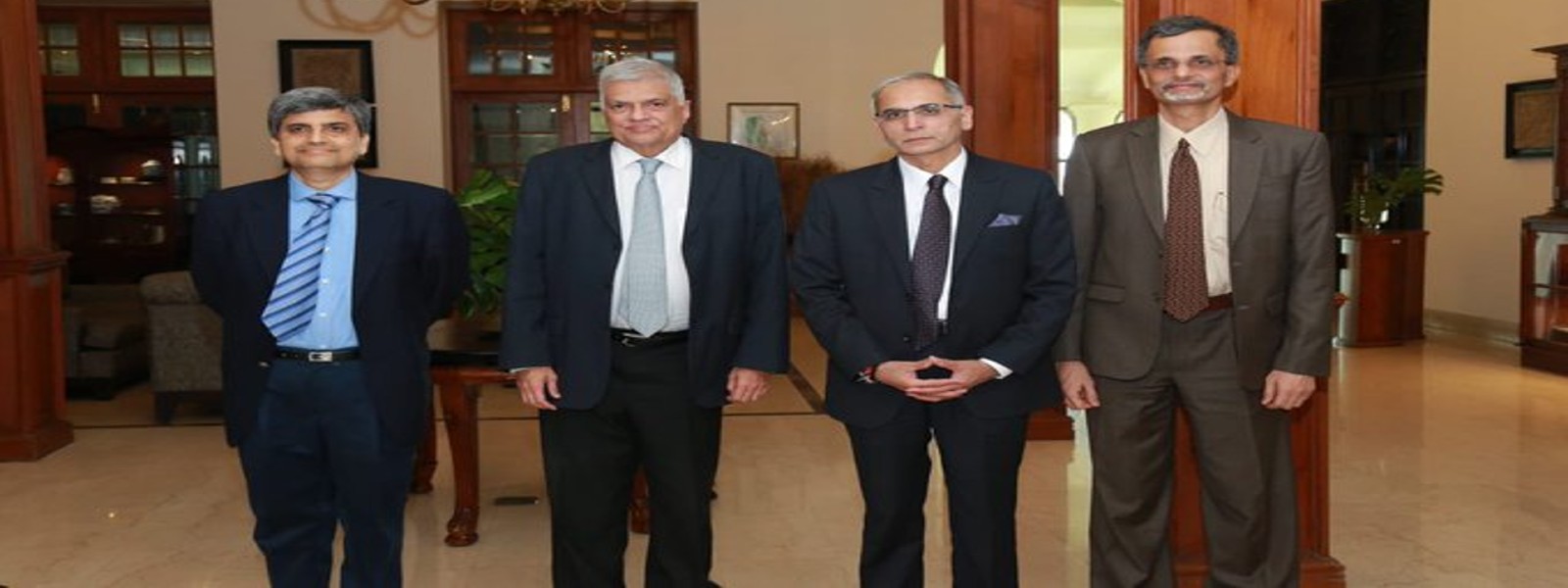
Indian Foreign Secretary Vinay Kwatra, accompanied by finance ministry officials, held talks with President Gotabaya Rajapaksa and Prime Minister Ranil Wickremesinghe in the commercial capital, Colombo, officials said on Thursday.

“Underlined India stands ready to help Sri Lanka in quick economic recovery through promoting investments, connectivity and strengthening economic linkages,” Indian foreign ministry spokesman Arindam Bagchi posted on Twitter.

The Indian team held a separate meeting with Wickremesinghe, the central bank governor and finance ministry officials, an official from the prime minister’s office said.

“The delegation will also hold discussions with senior officials on the economic situation in the country and the short-term and long-term assistance requirements,” Sri Lanka’s foreign ministry said in a statement.

India has been the principal source of foreign assistance to Sri Lanka this year, supplying more than $4bn, Wickremesinghe told parliament this week.

The neighbours are also in talks for additional support including a $500m credit line for fuel and help with importing fertiliser and rice as Sri Lanka attempts to stave off a food crisis, officials said.

Sri Lanka plans to hold a donor conference with China, India and Japan, Wickremesinghe said, as it continues talks with the International Monetary Fund for a bailout package of about $3bn.

A critical shortage of foreign currency and runaway inflation have made life a misery for the South Asian country’s 22 million people.

Economy ‘has collapsed’: PM

Meanwhile, Sri Lanka’s parliament cancelled its remaining sittings for the week to save fuel, officials said on Thursday, with a disastrous economic crisis rapidly depleting the island nation’s already scarce petrol supplies.

Parliamentary officials said politicians decided not to hold sessions on Thursday and Friday to avoid unnecessary petrol use, days after authorities closed schools and some state offices for the same reason.

Wickremesinghe told parliament on Wednesday the nation’s economy had “collapsed” and it faces “a far more serious situation” than the shortages alone as he warned of “a possible fall to rock bottom”.

“Our economy has completely collapsed,” he said. “We are now facing a far more serious situation beyond the mere shortages of fuel, gas, electricity and food.”

Energy minister Kanchana Wijesekera said a gasoline shipment that was due on Thursday had been delayed and urged motorists to cut down on travel.

“Only limited amounts of petrol will be distributed to pumping stations today and tomorrow,” he told reporters in Colombo, with motorists already waiting in line for days to top up their tanks.

Economists and other Sri Lankans said they were hoping the government would find ways to revive the economy.

“What the prime minister should do is not to make announcements. He has to come up with a plan to reactivate the system,” said W A Wijewardena, an economist and former deputy governor of Sri Lanka’s Central Bank.


Australia, India must work together for betterment of Indo-Pacific – Australian Deputy PM

Australia has reiterated its support for Sri Lanka, which is facing its worst economic crisis and is on the verge of an economic collapse amid shortages of food, fuel, and electricity.

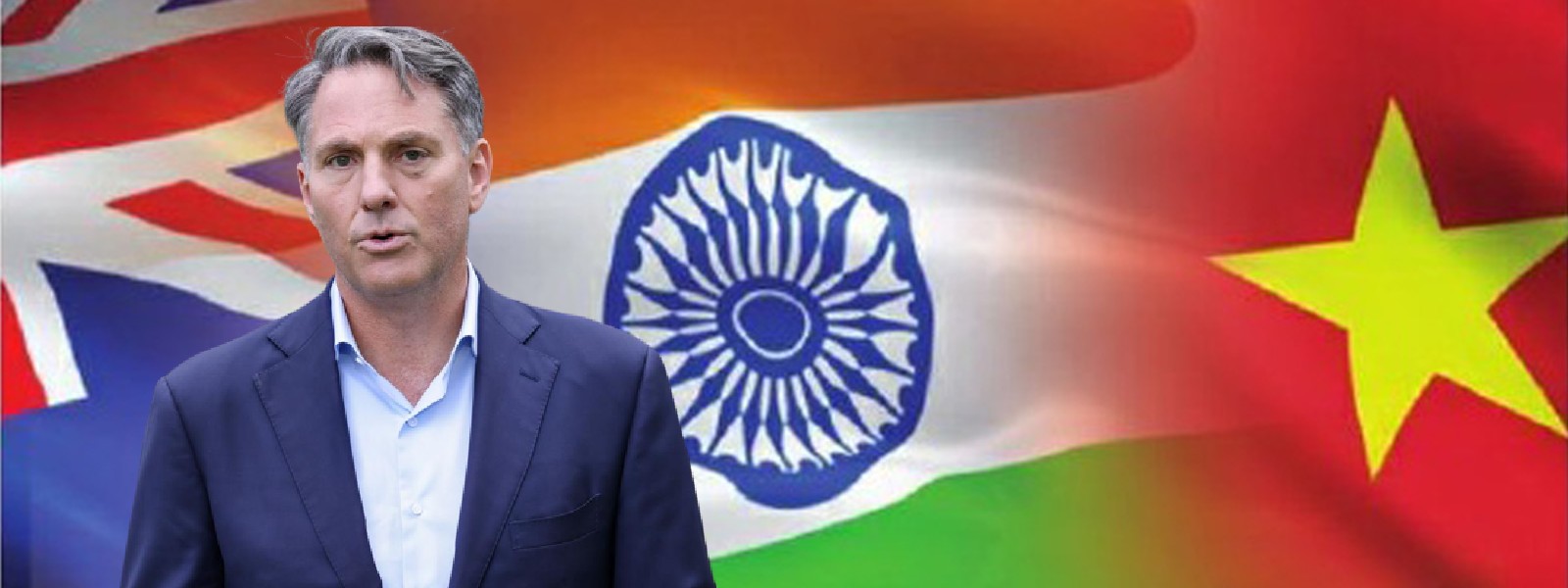
Australian Deputy Prime Minister and Defence Minister Richard Marles who is in India told ‘India Today’ that the South Asian powerhouse is the guide for Australia to help Sri Lanka.

“Our home affairs minister is in Sri Lanka at this moment seeking to look at ways in which Australia can help Sri Lanka at this moment. India is the guide and we want to be helping there within the framework of the assistance that India is giving and to make sure that we’re working closely with India in terms of how we can help Sri Lanka,” he said.

Commenting on the Chinese Debt Trap, the Deputy Prime Minister said that Australia and India need to work together for the betterment of other countries.

“I think you are right to use the term debt trap. We’ve seen that kind of relationship built by China with countries in the pacific and with the same consequence and it highlights I think the need for or the opportunity for Australia and India to work together for the betterment of a whole lot of countries within the Indo-Pacific,” he added.

Courtesy: India Today

Posted in Uncategorized

Economic situ in SL should not distract efforts to improve human rights: UK

Britain said that the current ‘very challenging economic situation’ in Sri Lanka does not distract from efforts to improve human rights there.

UK’s Parliamentary Under-Secretary Foreign, Commonwealth and Development Office Vicky Ford informed the UK Parliament on Tuesday that although the articles of the IMF do allow for conditionality linked to economic policy or to tackle the balance of payments, there is no provision to impose political-linked or human rights-linked conditionality in the IMF process. Therefore, “we will work with fellow members of international debt forums on a solution to the country’s debt problem, as well as continuing to lobby the Sri Lankan Government and working in other international forums on human rights,” she said in a written response to a question.

She also said that the UK is closely monitoring the difficult human rights situation and the lack of progress towards post-conflict accountability in Sri Lanka. “It is important that the current economic situation does not distract from human rights. We urge the Sri Lankan Government to engage meaningfully with United Nations Human Rights Council resolution 46/1. We continue to raise our concerns in international forums, including by doing so at the UNHRC on June 4,” she said.

She also stated that UK Prime Minister during a recent telephone conversation with Sri Lanka PM Ranil Wickremesinghe has underlined the UK’s continuing support for the people of Sri Lanka during their economic difficulties. “He (UK PM) has offered UK support through multilateral organisations such as the World Bank and IMF, and international forums such as the Paris Club. We have a very significant voice on international debt forums, and we are working closely with Paris Club members and multilateral organisations to find solutions to the debt crisis,” she added.

Hamilton Reserve Bank serves Summons to SL Ambassador to UN

Sri Lanka’s Ambassador to the United Nations Mohan Peiris has been served with a court summons over a lawsuit filed by the Hamilton Reserve Bank.

The Hamilton Reserve Bank, on Tuesday, sued Sri Lanka in the U.S. District Court in Manhattan over the country’s alleged default on a $1 billion sovereign bond maturing next month.

Hamilton Reserve Bank Ltd demanded immediate payment of $257.5 million of principal plus interest, saying Sri Lanka had stopped servicing its sovereign debt and missed payments on two other bonds, causing a cross-default.

EXPLAINER: Why Sri Lanka’s economy collapsed and what’s next

Sri Lanka’s prime minister says the island nation’s debt-laden economy has “collapsed” as it runs out of money to pay for food and fuel. Short of cash to pay for imports of such necessities and already defaulting on its debt, it is seeking help from neighboring India and China and from the International Monetary Fund.

Prime Minister Ranil Wickremesinghe, who took office in May, was emphasizing the monumental task he faces in turning around an economy he said is heading for “rock bottom.”

Sri Lankans are skipping meals as they endure shortages, lining up for hours to try to buy scarce fuel. It’s a harsh reality for a country whose economy had been growing quickly, with a growing and comfortable middle class, until the latest crisis deepened.

___ HOW SERIOUS IS THIS CRISIS?

Tropical Sri Lanka normally is not lacking for food but people are going hungry. The U.N. World Food Program says nearly nine of 10 families are skipping meals or otherwise skimping to stretch out their food, while 3 million are receiving emergency humanitarian aid.

Doctors have resorted to social media to try to get critical supplies of equipment and medicine. Growing numbers of Sri Lankans are seeking passports to go overseas in search of work. Government workers have been given an extra day off for three months to allow them time to grow their own food. In short, people are suffering and desperate for things to improve.

WHY IS THE ECONOMY IN SUCH DIRE STRAITS?

Economists say the crisis stems from domestic factors such as years of mismanagement and corruption, but also from other troubles such as a growing $51 billion in debt, the impact of the pandemic and terror attacks on tourism, and other problems.

Much of the public’s ire has focused on President Gotabaya Rajapaksa and his brother, former Prime Minister Mahinda Rajapaksa. The latter resigned after weeks of anti-government protests that eventually turned violent.

Conditions have been deteriorating for the past several years. In 2019, Easter suicide bombings at churches and hotels killed more than 260 people. That devastated tourism, a key source of foreign exchange.

The government needed to boost its revenues as foreign debt for big infrastructure projects soared, but instead Rajapaksa pushed through the largest tax cuts in Sri Lankan history, which recently were reversed. Creditors downgraded Sri Lanka’s ratings, blocking it from borrowing more money as its foreign reserves sank. Then tourism flatlined again during the pandemic.

In April 2021, Rajapaksa suddenly banned imports of chemical fertilizers. The push for organic farming caught farmers by surprise and decimated staple rice crops, driving prices higher. To save on foreign exchange, imports of other items deemed to be luxuries also were banned. Meanwhile, the Ukraine war has pushed prices of food and oil higher. Inflation was near 40% and food prices were up nearly 60% in May.

WHY DID THE PRIME MINISTER SAY THE ECONOMY HAS COLLAPSED?

Such a stark declaration might undermine any confidence in the state of the economy and it didn’t reflect any specific new development. Wickremesinghe appeared to be underscoring the challenge his government faces in turning things around as it seeks help from the IMF and confronts criticism over the lack of improvement since he took office weeks ago. He’s also fending off criticism from within the country. His comment might be intended to try to buy more time and support as he tries to get the economy back on track.

The Finance Ministry says Sri Lanka has only $25 million in usable foreign reserves. That has left it without the wherewithal to pay for imports, let alone repay billions in debt.

Meanwhile the Sri Lankan rupee has weakened in value by nearly 80% to about 360 to $1. That makes costs of imports even more prohibitive. Sri Lanka has suspended repayment of about $7 billion in foreign loans due this year out of $25 billion to be repaid by 2026.

AP (Source)