Pandora Papers hits the high ranks as Nirupama Rajapaksa documented in it

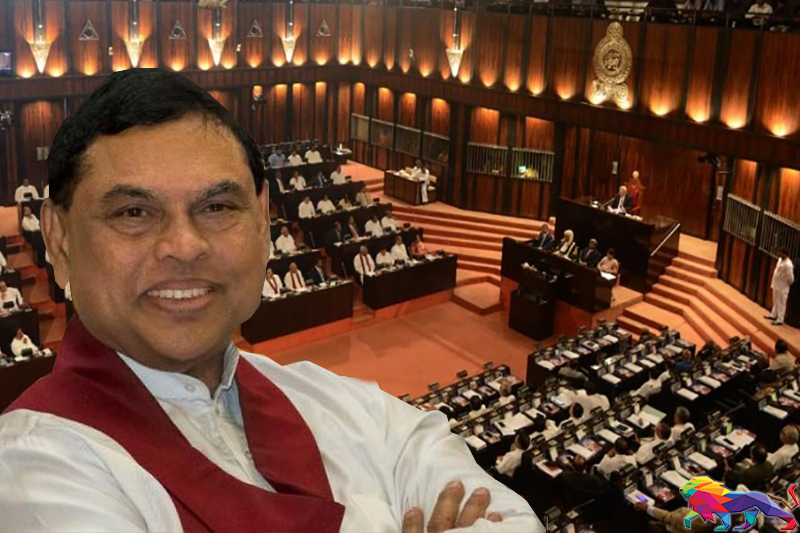
The Pandora Papers, which has exposed the secret wealth and dealings of world leaders, politicians and billionaires in one of the biggest leaks of financial documents, last night stirred up the high ranks within the government and political circles in Sri Lanka as former parliamentarian Nirupama Rajapaksa was documented in it.

The papers have been put together by the International Consortium of Investigative Journalists (ICIJ) and over 600 journalists the world over, in the largest collaboration in journalism history.

The Daily Mirror learns that the matter will be discussed within the high ranks today as some leaders such as Pakistan Prime Minister Imran Khan have already vowed to investigate the claims against all the citizens documented in the papers.

Nirupama Rajapaksa has been documented in the Pandora Papers as a ruling party member.

She was a former member of parliament.

According to the Pandora Papers, it is alleged that Nirupama Rajapaksa and her husband Thirukumar Nadesan together controlled a shell company they used to buy luxury apartments in London and Sydney and to make investments, according to leaked files.

It is alleged that Nadesan set up other shell companies and trusts in secrecy jurisdictions, and he used them to obtain lucrative consulting contracts from foreign companies doing business with the Sri Lankan government and to buy artwork.

According to the Pandora Paper leaks, in 2018, one of the companies, Pacific Commodities, transferred 31 paintings and other South Asian art pieces to the Geneva Freeport, an ultra-secure warehouse where assets are not subject to taxes or duties.

In confidential emails to Asiaciti Trust, a Singapore-based offshore services provider, a long-time adviser of Nadesan’s put his overall wealth, as of 2011, at more than $160 million. ICIJ said it couldn’t independently verify the figure. It was alleged that Asiaciti Trust managed some of Nadesan’s offshore companies and trusts, with assets valued at about $18 million, according to an ICIJ analysis.

The firm listed him as a politically connected individual because of his wife’s political position. asiaciti kept the family as clients even after Nadesan was charged with embezzlement in 2016.

Rajapaksa and Nadesan declined to answer ICIJ’S questions about their trusts and companies, the ICIJ said.

Indian Army chief to visit Sri Lanka to observe Mitra Shakthi

Indian Army chief General Manoj Mukund Naravane is expected to make a visit to Sri Lanka to observe the 8th consecutive iteration of the joint Exercise ‘Mitra Shakti’ between Sri Lanka and India, said Army Commander General Shavendra Silva.

General MM Naravane, PVSM, AVSM, SM, VSM, ADC, was commissioned in The Sikh Light Infantry Regiment in Jun 1980.

He held the appointment of Vice Chief of the Army Staff before assuming the appointment of the Chief of the Army Staff on 31 Dec 2019.

An all arms Indian contingent for ‘Mitra Shakti’, headed by Colonel Prakash Kumar, Commanding Officer are in Sri Lanka for the two-week long exercise.

From October 3 to 17, the India-Sri Lanka bilateral joint Exercise, designed to enhance understanding of transnational terrorism, inter-operability skills, conduct of joint tactical operations, sharing of each other’s best practices and experiences, etc will get underway with Vijayabahu Infantry Regiment (VIR) troops at the Combat Training School in Ampara.

Those 120 Indian Army personnel participate in the two-week long Exercise involving tactical level operations at the sub-unit level in an international counter-insurgency and counter-terrorism environment arrived on an Indian Air Force aircraft.

The Sri Lanka Army is represented by 120 troops of equal numbers. Under the close supervision of General Shavendra Silva, Chief of Defence Staff and Commander of the Army, Major General Nishantha Manage, General Officer Commanding, 53 Division functions as the Exercise Director with the Deputy Director of the Exercise.

The Indian contingent participating in the Exercise is commanded by Colonel Prakash Kumar of the Indian Army. Colonel Girish Godial, Colonel John Daniel and the Lady Officer Lieutenant Colonel Zulage Meera of the Indian Army as Observers will evaluate the Exercise during the final phase of the training before the Exercise culminates on 17 October 2021.

The annual training programme which has largely contributed to strengthen bilateral military cooperation, understanding and bonds of neighborly relations between both services takes place alternately either in India or Sri Lanka every year.

Adhering to COVID-19 health guidelines, the Exercise would maintain the bio bubble during its conduct.

Indian Foreign Secretary inspects Oil Tank Farm in Trincomalee

Indian Foreign Secretary Shri Harsh Vardhan Shringla inspected the Indian Oil Tank Farm in Trincomalee today.

The Foreign Secretary, who had visited Kandy earlier in the day, travelled to Trincomalee to inspect the Indian Oil Tank Farm.

Lanka Indian Oil (LIOC) officials briefed him on the developments undertaken at the Lower Tank Farms and the possibilities to further strengthen the India-Sri Lanka energy partnership to enhance Sri Lanka’s energy security.

The Foreign Secretary was also at hand for the launch of LIOC’s new product ‘Servo Pride ALT 15W-40’.

The Indian Foreign Secretary is on an official visit to Sri Lanka from 2-5 October 2021 at the invitation of the Foreign Secretary Admiral Prof. Jayanath Colombage.

The visit will contribute towards consolidating the longstanding multifaceted relations and enhance bilateral partnerships between two countries, the Sri Lanka Foreign Ministry said.

Apart from the bilateral discussion with the Sri Lankan Foreign Secretary, the Foreign Secretary Shringla’s programme includes a call on the President, Prime Minister, Minister of Finance, and the Foreign Minister.

Posted in Uncategorized

Jagath’s appointment as Sri Lanka’s High Commissioner to Australia halted?

The government is considering halting the appointment of Dr. Jagath Wellawatte as Sri Lanka’s High Commissioner to Australia, The Morning learnt.

It is learnt that the government is looking at nominating another in place of Wellawatte.

Foreign Minister Prof. G. L. Peiris and Foreign Secretary Jayanath Colombage were not available for comment despite several attempts by The Morning to receive confirmation on the matter.

Wellawatte is the former Chairman of the Sri Lanka Insurance Corporation (SLIC) and was nominated as the High Commissioner-designate to Australia in July this year.

Sri Lanka reports 55 Covid-19 deaths on Saturday, toll surpasses 13000

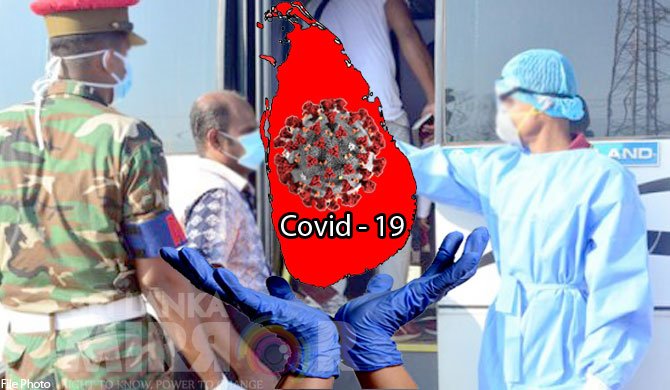
Sri Lanka Saturday reported 58 deaths due to COVID-19 after the figures were confirmed by the Director General of Health Services on Friday, October 01.

Among the deaths reported today, 38 are of males and 17 of females. The majority of deaths – 38- are of elderly people in the 60 years and above age group. Two females below the age of 30 also succumbed to the disease.

According to the data reported by the Government Information Department, the total deaths due to Covid-19 since the pandemic began last year has now risen to 13,019.

Posted in Uncategorized

Bringing Sri Lanka back into India’s fold – newsin.asia

The visit of the Indian Foreign Secretary Harsh Vardhan Shringla to Sri Lanka from October 2 to 5, will be taking place when the bilateral relationship is at the crossroads in a changing geopolitical context.

Though Chinese influence in Sri Lanka is hardly a new worry, the point is that China’s footprint and Beijing’ influence have been growing steadily and in significant ways, outstripping India’s. (See Anita Inder Singh’s article in Jamestown.org (https://jamestown.org/program/chinas-port-investments-in-sri-lanka-reflect-competition-with-india-in-the-indian-ocean/).


India’s projects or MoUs for its projects have been languishing. This, despite Colombo’s expressions of appreciation for India’s prompt assistance to meet marine disasters, the prompt supply of COVID vaccines in the first phase of the pandemic, and its efforts to foster Buddhist links between the two countries.

In 2017, India and Sri Lanka had signed MoUs for projects covering a wide range, but none of them has been implemented, raising serious concerns in New Delhi. The Eastern Container Terminal at Colombo port was to be built by India, but at the last moment, Sri Lanka called it off. An LNG project in Kerawelapitiya and a coal-fired power plant in Sampur also fell by the wayside. Even the US$ 15 million set apart for promoting Buddhist links lies unused.

On the other hand, China has massively invested in ports, roads, railways and other civil works, and is significantly involved in urban private high-rise construction also. According to Anita Inder Singh, in 2019, the value of cumulative Chinese infrastructure investment in Sri Lanka was equivalent to 14% of its GDP. In October 2020, at the height of the pandemic, when President Gotabaya Rajapaksa asked Beijing for a US$ 90 million aid grant for rural development, it was personally delivered by Chinese Communist Party Politburo member Yang Jiechi, she notes. To date, China has supplied 26 million doses of Sinopharm vaccines to Sri Lanka, far outstripping the contribution of other countries.

While Sri Lanka has been finding it hard to sell tea to India, China’s Fujian Star China International Trade Company Ltd., has entered into a 15-year MoU to promote Pure Ceylon Tea in the Chinese market and purchase 4 million kg of tea annually.


China and Pak Eye Northern Province

China has also been trying to move into the Tamil-majority Northern Province, which in New Delhi’s view, falls within its sphere of influence geo-strategically. When the Lankan cabinet approved a proposal to let Sinosoar-Etechwin of China install ‘hybrid renewable energy systems’ in Nainativu, Delft or Neduntivu and Analaitivu islands off Jaffna, close to the Indian shore, India objected on security grounds. New Delhi offered Colombo US$ 12 million if the project was re-allocated to India. Colombo stopped the Chinese project alright, but India is still to secure it.

Earlier in April 2018, the China Railway Beijing Engineering Group Co Ltd had won a tender worth more than US$ 300 million to build 40,000 houses in Lanka’s north. However, the then Prime Minister, Ranil Wickremesinghe, cancelled the project in October ahead of his New Delhi visit. Government then said that 28,000 houses worth US$ 210 million would be built in the Tamil areas of the North and East by an Indian firm ND Enterprises jointly with two Sri Lankan firms.

Pakistan too has been making tentative attempts to tap the Northern and Eastern Provinces. The outgoing Pakistan High Commissioner in Sri Lanka, Maj.Gen.(Rtd) Muhammad Saad Khattak had alleged in his farewell statement that he visited these areas “despite the opposition of a mutual neighbour.” The North and East have a sizeable Muslim population which Pakistan might want to woo.

In this context, it is significant that Foreign Secretary will be visiting Jaffna and Trincomalee besides Kandy.

China’s military ties with the Sri Lankan government have also grown. China has gifted a frigate to the Sri Lanka navy. It has also undertaken to supply counter-intelligence surveillance technologies in a U$ 14 million deal.

When India’s Foreign Minister S. Jaishankar met his Sri Lankan counterpart G.L.Peiris in New York on the sidelines of the 76th.session of the UN General Assembly, he stressed the need for implementing pending Indian projects on the grounds that doing so “would give more confidence to New Delhi to move forward in enhancing relations,” thus subtly making it a condition for better ties.

Given the concerns in New Delhi and pressure from the US (which is eager to involve Sri Lanka in its anti-China Indo-Pacific strategy) ) Colombo has begun making amends. Due to the ongoing economic crisis and also due to pressure from the Western human rights lobby, Sri Lanka is now eager to build bridges with the West. It is trying to live down the accusation that it has become a client state of China.


Western Container Terminal

The pending Western Container Terminal project in Colombo port, earmarked for the Adanis of India, has suddenly seen the light of day. On September 30, the Adanis and Sri Lankan parties signed a 35-year U$ 650 million deal to Build, Own and Transfer (BOT) the West International Terminal (CWIT).

Significantly, the deal was signed two days ahead of the Indian Foreign Secretary’s visit to Sri Lanka.

The CEIT will have a length of 1,400 meters and an alongside depth of 20 meters. It will have an annual handling capacity of 3.2 million TEUs. The current capacity of Colombo port is 7 million TEUs. The Adanis will have 51% stake, Sri Lankan company John Keells will have 34% and the Sri Lanka Ports Authority (SLPA) 15%.

Earlier, India was to build the Eastern Container Terminal in Colombo port. But it was cancelled when Gotabaya Rajapaksa came to power. His government offered India the construction of the Western Container Terminal in lieu of the Eastern Terminal. An utterly disappointed India demurred, but finally accepted the offer, and the Adani group undertook to do the work.

US-Lanka Energy Deal

Apparently to please the US, the Lankan government has, without calling for a tender, entered into a major deal with the US company New Fortress Energy Inc., to build an LNG facility in Kerawelapitiya. The US company will have gas supply rights to the Kerawalapitya Power plant, where a 310 mw of power is operational today and an additional 350 mw is scheduled by 2023. New Fortress will initially provide the equivalent of an estimated 1.2 million gallons of LNG per day. New Fortress will also buy a 40% stake in the West Coast Power plant and build an offshore LNG receiving, storage and regasification terminal.

The Lankan opposition has lashed out at the opaque manner in which the deal was struck. But government has justified the deal on economic grounds while keeping the geopolitical aspect of it under wraps.

Role of Market Forces

Market forces have been a major factor in changing Sri Lanka’s policy. While China buys little from Sri Lanka, the US and EU are Sri Lanka’s biggest markets. India is also a big market – bigger than China at any rate. If Sri Lanka is to come out of its present dollar shortage, it has to export, but its markets are in the West (and India) and not in China. The EU has to be placated because it can deny Sri Lanka its GSP Plus duty concession on human rights counts. An EU inspection team is currently in Sri Lanka to assess its performance as per EU’s conditions for the GSP Plus concession. There is anxiety in Sri Lanka about its report as garment exports, running into billions of dollars, will be crippled if the report is adverse and GSP Plus is withdrawn.

Non-Alignment Provides Cover

However, Sri Lanka is not directly saying that it is cozying up to the West or India. It is portraying the change as a re-assertion of its traditional non-aligned policy. Foreign Minister G.L.Peiris has been touting the relevance of non-alignment in his recent speeches.

Posted in Uncategorized

Sri Lanka a country without democracy: MP Harshana

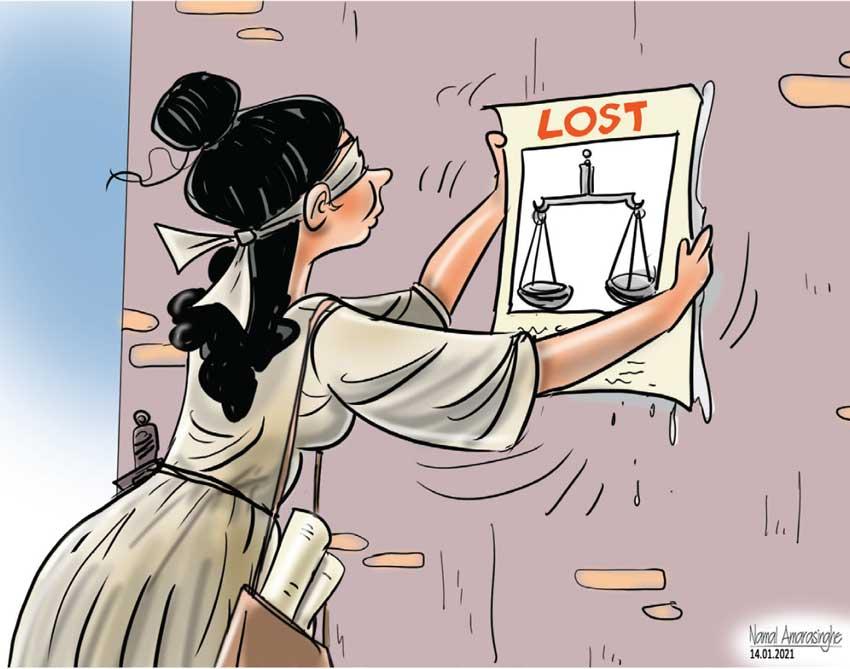
Samagi Jana Balawegaya MP Harshana Rajakaruna said that Sri Lanka is a country without democracy, judicial independence and human rights.

He stated this commenting on the GSP+ concessions during a media briefing in Colombo today (02).

” When the country has lost its democracy, when the judicial independence is lost, and when human rights are violated , the European Union has arrived at a decision again. That is to stop the GSP+ concession from being given to the country. They have arrived at this decision due to this crisis in the country. The international community will not have to interfere in our country if we didn’t make room for that. Due to the 20th amendment the independence of the judiciary was lost. It is very clear now that we do not have a police commission. We have seen the problems that have arisen as Ministers appoint OIC’s. This is a big problem for democracy in this country.” He said.

Posted in Uncategorized

EU gives Sri Lanka till 2022 to fix terror law, discusses institutions of liberty

ECONOMYNEXT – An European Union delegation has reviewed Sri Lanka’s attempts reform its Prevention of Terrorism Law which has led to extensive incarceration of citizens without trial and other abuses also discussed other institution of liberty.

“Sri Lanka provided an update on the action in process to review the Prevention of Terrorism Act, and reiterated its commitment to bring it in line with international norms and standards within a time bound process,” a joint statement following a meeting of the European Union – Sri Lanka Working Group on Good Governance, Rule of Law and Human Rights said.

“The EU and Sri Lanka agreed to take stock of progress in this regard by the next meeting of the EU-Sri Lanka Joint Commission in early 2022.

“The need to uphold international norms and standards of human rights while countering terrorism and violent extremism was also underlined.”

The EU has said GDP+ trade benefits extended to Sri Lanka may be under threat if freedoms and civil rights of citizens are undermined.

Sri Lanka became a European-style nation-state following British colonial rule where well-intentioned liberals exported the popular vote, constitutional restraint on rulers, judicial checks, along with a permanent civil service which treated everyone equally and kept the police from being mis-used by the ruling class.

However over time, institutions of liberty had been chipped away and the permanent civil service destroyed, critics say.

Sri Lanka ended up with some of the problems that were seen in Eastern Europe after the collapse of the Austro-Hungarian Empire. Extreme nationalism and gazette rule culminated in Nazism (national-socialism) in Germany, formerly a clutch of city states which were hotbeds of liberal thinking, but were unified under Prussian domination into a linguistic nation-state.

In Germany nationalism has largely been defeated by the main capitalist-liberal CDU-CSU, the FDP as well as the more control-oriented SPD, but in the former communist East German territories nationalism is festering again.

The EU is still grappling with nationalism in Hungary, which fought alongside Hitler in the Second World War. Hungary like East Germany was under communist rule after World War II and a version of rural nationalism has gained ground.

The European Union also has free trade, defeating economic nationalism.

Under a European style nation-state with a standing army and police, citizens get freedom from the ruling class and the state, through a constitution which is expected to restrain arbitrary action rulers and provide absolute guarantees of equality.

A judiciary is expected to uphold laws, which limit actions of rulers and also prevents citizens from infringing on the freedoms of others, and legislature which is expected to only pass law which conforms to the rules of natural justice and equality.

“They discussed common interests pertaining to the protection and promotion of fundamental rights and freedoms, and agreed to continue cooperation on issues of relevance,” the statement said.

“Sri Lanka updated the EU on the extensive legal reform programme undertaken by the Ministry of Justice, through consultative processes that brought together officials, sector experts and members of the official and unofficial Bars,”

“The EU encouraged Sri Lanka to consider a broad consultation process in this undertaking.

“The EU and Sri Lanka agreed on the importance of engaging civil society and giving it the necessary space to function in all its diversity.

“The EU expressed its readiness to continue supporting Sri Lanka in these efforts.”

Sri Lanka also enacted a hate speech law based on similar actions in Europe, which critics say tends to undermine free speech and has been implemented selectively against minorities.

“The Working Group discussed matters related to minorities and measures to address hate speech,” the statement sid.

“Sri Lanka highlighted the pluralistic composition of the country where the rights of all communities are equally guaranteed by the Constitution.”

The EU also urged Sri Lanka to abolish the death penalty. Sri Lanka now has a moratorium on carrying out the death penalty though it is in the law.

Posted in Uncategorized

US donates another 800,000 doses of Pfizer vaccines to Sri Lanka

Nearly 800,000 doses of Pfizer-BioNTech vaccines arrived in Sri Lanka this week to continue the fight against COVID-19, a gift from the American people.

These safe and effective vaccines, donated by the United States and delivered via COVAX, will protect lives and increase the COVID-19 vaccination coverage in Sri Lanka.

“I commend Sri Lanka’s commitment to public health. Increasing vaccination coverage is a critical step toward ending the pandemic,” said Alaina Teplitz, the U.S. Ambassador to Sri Lanka and Maldives. “This donation will help Sri Lanka provide safe and effective vaccines, especially to young people with health issues. It represents our continued investment in Sri Lanka’s future and comes at no cost to the Sri Lankan people.”

This delivery brings the total number of vaccines donated by the United States to Sri Lanka to nearly 2.4 million.

Since the pandemic began, the United States has partnered with the Sri Lankan Ministry of Health to provide over $17.9 million in emergency supplies and critical services.

This assistance has reached millions of people in all 25 districts and nine provinces of Sri Lanka to control the spread of COVID-19, address the urgent health needs of the Sri Lankan people, and mitigate the pandemic’s negative economic impacts.

At the U.N. General Assembly in September, U.S. President Joseph R. Biden announced that the United States will donate 1.1 billion Pfizer-BioNTech vaccines to countries in need, free of charge.

As the global leader in public health assistance, the United States has already delivered more than 160 million COVID-19 vaccines worldwide, donating more vaccines than all other countries combined.

The United States is also the largest donor to the global vaccine initiative, COVAX, and is proud to work with countries around the world to end this pandemic and build back a better world.

The United States is leading the global COVID-19 response not only to save lives and restart the global economy, but because it is the right thing to do.

The US Embassy in Sri Lanka said that the US is committed to its partnership with the Sri Lankan Ministry of Health, UNICEF, the World Health Organization, and others to end this pandemic.

Constituent Party Leaders Of Govt. Agitated Over Yugadanavi Deal: Meeting Scheduled On Tuesday To Discuss Way Forward

Leaders of the ten constituent parties of the government are meeting to discuss the next steps to be taken regarding the decision to transfer 40% of the Kerawalapitiya Yugadanavi power plant to an American company.

Democratic Left Front Leader Vasudeva Nanayakkara, Jathika Nidahas Peramuna Leader Wimal Weerawansa, PJU Leader Udaya Gammanpila, General Secretary of the Sri Lanka Freedom Party Dayasiri Jayasekara, General Secretary of the LSSP Prof. Tissa Vitarana, Communist Party General Secretary G.Weerasinghe, Sri Lanka Mahajana Party LeaderAsanka Navaratne, Tiran Alles, Gevindu Kumaratunga and Ven. Athuraliye Rathana Thera will be among the participants in the discussion to be held on Tuesday (05).

The group also met Prime Minister Mahinda Rajapaksa recently to discuss the Danavi power plant issue, but could not reach an agreement.

The delegation had decided to meet President Gotabhaya Rajapaksa to discuss the matter, but as the President did not return to the island until last weekend, they did not have the opportunity to do so.