UK raises concerns with Sri Lanka on forced cremations

The United Kingdom (UK) has raised concerns on forced cremations with the Government of Sri Lanka.

The UK Minister of State for South Asia and Human Rights, Lord Tariq Ahmad of Wimbledon said he had highlighted the impact of forced cremations continuing in Sri Lanka.

Many, including the Opposition and public have raised repeated concerns over the forced cremations of Muslim Covid victims in Sri Lanka. The matter was raised in Parliament by the Opposition, while many protests were held near the Borella cemetery after the forced cremation of a 21-day old infant.

However, Health Minister Pavithra Wanniarachchi announced in Parliament recently that the stance of the Expert Committee to study the issue remains unchanged, and the remains of Covid victims will be cremated as per the health guidelines.

Commenting on the matter, Lord Tariq Ahmad said he raised concerns on the forced cremations of COVID-19 victims in Sri Lanka, including on faith groups, justice and accountability in this regard.

He said attention was focused on the matter ahead of the upcoming United Nations Human Rights Council session.

Discussions were held in this regard during a telephone conversation between Lord Tariq Ahmad and Foreign Minister Dinesh Gunawardena today.

The UK Minister of State for South Asia and Human Rights also announced that the UK and Sri Lanka are collaborating on climate change and trade.

Sri Lanka reports two more COVID-19 deaths Friday, toll rises to 278

Sri Lanka confirmed two deaths on Friday due to COVID -19 raising the death toll from the viral disease to 278, according to health authorities.

The Director General of Health Services confirmed the following deaths caused by COVID -19 virus infection and accordingly the total number of deaths due to COVID -19 infection in Sri Lanka is 278 by now.

01.The deceased is an 82 year old male from Colombo 08. He was diagnosed as infected with Covid-19 virus and transferred from a private Hospital in Colombo to IDH Hospital where he died on 22.01.2021. The Cause of death is mentioned as Covid pneumonia.

02.The deceased is a 51 year old female from Homagama. She was diagnosed as infected with Covid 19 virus and transferred from General Hospital Colombo to Base Hospital Homagama where she died on 22.01.2021. The cause of death is mentioned as Covid pneumonia, blood poisoning and kidney dysfunction.

Planters demand action against SLPP MP over mob violence

The Planters’ Association of Ceylon has demanded action against Sri Lanka Podujana Peramuna (SLPP) Parliamentarian and Ceylon Workers Congress (CWC) member M. Rameshwaran over the mob violence at Park Estate in Kandapola.

Expressing the unanimous and unreserved condemnation of all 21 Regional Plantation Companies (RPCs) the Planters’ Association of Ceylon issued a statement decrying the shocking violence instigated by Member of Parliament (MP) M. Rameshwaran at Park Estate in Kandapola on 17th January 2021.

The Association called for an impartial investigation and swift justice following a brutal mob attack which resulted in a Trainee Assistant Superintendent being hospitalized at the Nuwaraeliya General Hospital. The victim of the assault was reported to have received severe injuries and was undergoing respiratory difficulties as a result of the assault perpetrated against him by a mob that was transported from outside of the region in two busses facilitated by the said MP.

The PA also called for further investigations in order to ascertain the extent of damage done to the Estate Manager’s Bungalow and grounds – all of which are classified as state property of significant historical value.

“The conduct of MP Rameshwaran is utterly disgraceful and totally unacceptable from any citizen, let alone a duly elected representative of the people of Sri Lanka. We call on legal authorities to uphold the rule of law and take swift action in order to ensure that the perpetrators of this brutal attack are immediately arrested, charged for their violent and illegal actions, and prosecuted to the fullest extent of the law,” the PA stated.

The attack took place following a phone call made by MP Rameshwaran to the Estate Superintendent wherein the MP demanded an immediate meeting on Sunday 17th January 2021 around 5.30PM.

The Estate Superintendent had calmly and politely suggested an alternate date, given that he was on leave at that moment and driving to Kandy in order to urgently purchase essential cancer medication for his father in-law.

Dissatisfied with this response, MP Rameshwaran had lashed out in a crude verbal assault against the Estate Superintendent who hung up the call. Thereafter MP Rameshwaran coerced workers at the estate to give him the Estate Superintendent’s wife’s number, whom he also verbally abused in extremely foul language unbecoming of a MP. This phone call had multiple witnesses.

Subsequently, MP Rameshwaran, together with Pradeshiya Sabha Chairman, Mr. Yogaraj, travelled directly to the estate with two busses full of people from outside the region in order to gather a mob and incite them to violence. At around 5.30 pm MP Rameshwaran and Mr. Yogaraj forcibly and unlawfully entered the bungalow premises with the mob.

A young Trainee Assistant Superintendent who was present on the premises at the time and had tried to de-escalate the sudden tense situation was brutally assaulted by the mob led by MP Rameshwaran. Following the vicious assault, MP Rameshwaran and his thugs prevented anyone from entering or exiting the premises. Instead they unlawfully detained those present, including the assault victim who was denied any medical attention or assistance for at least 5 hours after the brutal assault took place.

Following the intervention of the Police Special Task Force and local police, the Trainee Assistant Superintendent was finally removed from the premises under armed escort and immediately transported to the Nuwara Eliya base hospital where he remains hospitalized at present. As a result of the grievous assault led by MP Rameshwaran, the victim is still recovering from severe contusions and suffering from respiratory distress and other multiple injuries.

In the meanwhile, MP Rameshwaran and the mob continued the unauthorized and unlawful occupation of the bungalow premises for over 24 hours, burned rubber tires, damaged building structures, and also compelled workers from the estate, as well as surrounding estates of the company to stage a strike – resulting in loss of wages to workers and revenue to the company.

“At a time when RPC’s are making every possible endeavour to keep the industry and our national economy afloat by managing the estates in a manner that safeguards the livelihood of the plantation community, these kinds of random violent outbursts have undone a lot of our efforts, and will ultimately hurt the workers most.

“This is true financially, but in the context of a global pandemic, the foolish actions of the MP have also seriously increased the risk of COVID transmission in the very communities he is supposed to represent. While RPCs had taken every possible measure to protect them from these risks, the conduct of MP Rameshwaran may have severely compromised their safety. This is utterly inexcusable, in addition to being totally illegal. He must not be allowed to break the law with impunity. We hope that his standing as a Member of Parliament will not be an impediment to him being brought to justice,” the PA stated.

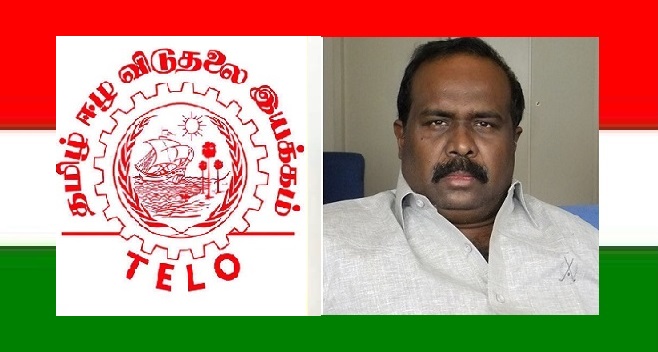
Appeal from the Tamil People to Refer Sri Lanka to the ICC was handed over to the UNHRC Commissioner by TELO Chairman MK.Shivajilingam

Appeal from the Tamil People to Refer Sri Lanka to the ICC that was handed over to the UNHRC Commissioner by TELO Chairman  MK.Shivajilingam.

Below is the full text of the letter that the six parties signed to the UNHRC High Commissioner

Her Excellency Michelle Bachelet, The High Commissioner for Human Rights, and
The Representatives of the Member Countries of the UNHRC
Palais des Nations
CH-1211 Geneva 10, Switzerland

Dear High Commissioner Bachelet, and the Representatives of the Member Countries of the UNHRC

Appeal from the Tamil People to Refer Sri Lanka to the ICC

On behalf of the Tamil speaking people of the North-East of Sri Lanka, we the undersigned elected representatives of the Tamil people and the representatives of the Tamil political parties, together appeal to you to help refer Sri Lanka to the International Criminal Court or to a specially created international criminal tribunal for the war-crimes, crimes against humanity and the Genocide committed against the Tamil people.

We respectfully note that the March 2011 Report of the UN Secretary General’s Panel of Experts on Accountability in Sri Lanka stated that there were credible allegations that war crimes and crimes against humanity were committed during the final stages of the armed conflict between the Government of Sri Lanka and the Liberation Tigers of Tamil Eelam, and there could have been as many as 40,000 Tamil civilian deaths. According to the November 2012 Report of the UN Secretary-General’s Internal Review Panel on UN Action in Sri Lanka, over 70,000 people were unaccounted for during the final phase of the war in 2009.

Although Sri Lanka had co-sponsored the UNHRC Resolution 30/1 titled “Promoting reconciliation, accountability and Human rights in Sri Lanka” at the UNHRC session in Geneva in September 2015, and again in March 2017 co-sponsored another Resolution 34/1, obtaining 2-year time extension to implement the Resolution 30/1, Sri Lanka has not taken any meaningful steps towards implementing the Resolution. In contrary, the President, Prime Minister and senior members of the Government of Sri Lanka have repeatedly and categorically stated that they will not implement the UNHRC Resolution.

Despite being one of the most notorious alleged war criminals, the Commander of the 58th Division of the Army Major General Shavendra Silva who was mentioned in the UN investigations, has been promoted in January 2019, to the Chief of Staff of the Sri Lanka Army. His Division was allegedly involved in many international crimes including repeated and deliberate attacks on hospitals, food distribution queues, and No-Fire-Zones resulting in the deaths of thousands of Tamil civilians. He was also personally present during the hundreds of surrenders of Tamils including women and children that later disappeared in Army custody. In addition, several senior military officials who were credibly accused of committing war crimes have been given promotions and other attractive positions and treated as “war heroes.”

It has been about 10 years since the end of the war, and the victims have not been given justice and they continue to suffer under the condition forced by the government of Sri Lanka. The oppression of the Tamil people still continues. The Tamil people do not believe that Sri Lanka will ever offer them justice, and have been calling for an international judicial mechanism.

We therefore jointly request the following:

1. Since Sri Lanka has not only failed to fully implement the UNHRC Resolutions 30/1 and 34/1, but also stated their unwillingness to implement the Resolutions, we urge not to give any extension of time to Sri Lanka.

2. We call upon the UNHRC to refer Sri Lanka to the UN General Assembly and to the UN Security Council to be referred to the International Criminal Court or to a specially created international criminal tribunal set up by the UN.

3. We call upon the UNHRC to appoint a UN Special Rapporteur for Sri Lanka, to monitor and report to the Council every six months, the plight of the war affected Tamil people, disappeared persons, political prisoners, continued arbitrary detention under the Prevention of Terrorism Act, presence of large number of Sri Lankan security forces in Tamil region, the occupation of private lands by the Sri Lankan security forces, and particularly the continuing Genocide of the Tamil people by the Sri Lankan state.

Thank you for your consideration.

Sincerely,

Jusitce C.V.Wigneswaran
Retired Judge of the Supreme Court
Former Chief Minister of Northern Province
Secretary General, Thamilzh Makkal Kootani
Co-Chairman, Tamil People’s Council

A.Selvam Adaikalanathan
Member of Parliament
President, Tamil Eelam Liberation Organization (TELO)

V.Anandasangaree
Secretary General, Tamil United Liberation Front (TULF)
Former Member of Parliament

Kandaiah Premachandran
President, Eelam People’s Revolutionary Liberation Front (EPRLF)
Former Member of Parliament

Dharmalingam Siddharthan
Member of Parliament
President, People’s Liberation Organization of Tamil Eelam (PLOTE)

Ananthi Sasitharan
Secretary General, Eelam Tamil Sua-Adchi Kazhagam
Former Minister of Women’s Affairs, Rehabilitation, Social Service, Co-operatives, and Industries & Enterprise Promotion, Northern Province

Cc: Secretary General of the UN

Posted in Uncategorized

The Judicial Process Must Be International and Under the Control of the UN- M.K.Sivajilinkam

Given below the full memorandum :

Northern Provincial Council
Jaffna, Sri Lanka
September 14, 2015

The Member Countries of the UNHRC & the UN High Commissioner for Human Rights
United Nations Human Rights Council
Geneva, Switzerland

Dear UNHRC Member Countries, and the High Commissioner,

Re: Accountability, Justice, and Non-Recurrence in Sri Lanka

We the undersigned elected members of the Northern Provincial Council in Sri Lanka would like to jointly request you to consider the following that is related to accountability, justice, and non-recurrence in Sri Lanka.

The Tamil people in Sri Lanka have suffered tremendously for the last 67 years ever since the island got its independence in 1948, and today more than ever, counting on the UN and the International Community to give them justice and assure their protection. The Tamil people have been subjected to Genocide and massacres, their churches and temples have been destroyed, their lands have been taken away, their rights have been denied, and they have been oppressed and occupied. The injustice against the Tamils continues even today, at this very moment.

The Northern Provincial Council in Sri Lanka unanimously passed the “Sri Lanka’s Genocide Against Tamils” resolution in February 2015, providing historic proof for the Genocide of Tamils, and urging the UN to properly investigate the crime. Similarly, two weeks ago on September 01, 2015, another resolution was passed by the Northern Provincial Council, citing reasons why a domestic process would be a travesty of justice. The resolution specifically called against any judicial mechanism instituted by the Government of Sri Lanka, and called on the International Community to set up an international criminal tribunal on Sri Lanka.

On behalf of the victimized Tamil population, we would like to respectfully request you to consider the following to be included in the upcoming UNHRC Resolution:

1. The judicial process must be international and under the control of the UN. The Tamil people request the UN to recommend the referral to the International Criminal Court or to an international special criminal tribunal for Sri Lanka.

2. The judicial process must have the jurisdiction to handle all international crimes, including Genocide.

3. In consultation with the victims, the UN must be in charge of selecting the judges, prosecutors, and other officials for the judicial process. The UN also must ensure protection of the witnesses.

4. Sri Lanka had promised to the International Community to release the full details of those surrendered, but so far has failed to provide any info on them. The UN must require Sri Lanka to provide data on at least the 12,000 missing persons, and at least the 6000 within those several thousand LTTE members and their family including children, that surrendered to the Sri Lankan military, and unaccounted for so far.

5. The UN must require Sri Lanka to become signatory and ratify the Rome Statute of the International Criminal Court to act as deterrence and ensure legal avenues against any recurrence.

6. The UN must offer technical assistance and require Sri Lanka to accept a UN mediated political solution towards finding a permanent political solution that can address the root cause of the war and prevent recurrence.

7. The UN must require Sri Lanka for a time-bound withdrawal of military from the North-East region, and return all private lands to the rightful owners.

8. The UN must require Sri Lanka to free all those Tamil political prisoners that are in prisons.

9. There must be a follow up during the March 2016 UNHRC Session to evaluate the progress of the process related to Sri Lanka.

If Sri Lanka has genuine intention of cooperating with the UN, and genuinely interested in accountability, justice and permanent political solution, it must show willingness and progress to the International Community and to the UN. The Tamil people hope that the UN and the International Community obtain unambiguous commitment from Sri Lanka to fulfill these.

The victimized Tamil people are counting on you, the UN, and the International Community towards finding justice, protection and non-recurrence.

We seek your assistance. We seek your help. Above all, we seek your protection and assurance against recurrence.

Thank you.

Sincerely yours,

M.K. Shivajilingam
Member of Northern Provincial Council
[Former Member of Parliament, Sri Lanka]

Ananthy Sasitharan
Member of Northern Provincial Council
President, Organization for the Relatives of Missing and Surrendered Personals

NPC Member M.K. Sivajilingam letter to the UNHCR Prince Zeid Ra’ad Al Hussein

February 23, 2015

The Hon. Zeid Ra’ad Al Hussein

United Nations High Commissioner for Human Rights
Office of the High Commissioner for Human Rights (OHCHR)
Palais Wilson, 52 rue des Pâquis
CH-1201 Geneva, Switzerland
Dear Honorable High Commissioner Zeid,

Re: Accountability and Political Solution in Sri Lanka

The Tamil people are highly disappointed and dismayed by your announcement on February 16, to delay the OHCR Investigation on Sri Lanka – OISL Report until September 2015. The Tamil people had been anxiously waiting with high hopes for the release of the Report, but this unexpected delay has caused serious concerns to the victimized Tamil population, and we strongly believe justice delayed is justice denied.

The Tamil people, however, take solace in your “personal, absolute and unshakable commitment that the report will be published by September”, and it will be “stronger and more comprehensive report.”

The UN’s failure to protect the Tamils in 2009 was termed as “systemic failure” of the UN by the UN’s own “Report of the UN Secretary General’s Internal Review Panel on UN Action in Sri Lanka” released in November 2012 by the head of the Panel Charles Petrie. The Tamil people sincerely hope that the UN System will not victimize the Tamils once again by delaying or denying them full and complete justice. We see this delay yet again as a failure of the UN system to protect and listen to the victims of mass atrocities.

The Tamil Nation has been systematically destroyed by the successive Sinhalese dominated Sri Lankan governments, ever since the island got its independence in 1948. The Tamil people have been massacred in thousands, they have been tortured, their churches and temples have been destroyed, their lands have been taken away, their rights have been denied, and they have been oppressed and occupied. The injustice against the Tamils continues even at this very moment.

We are hopeful that the Report by the OISL will be released in September of this year, and the UN judicial proceedings will follow without any further delay. We sincerely hope this extended time will be used to strengthen the Report and not to weaken it. Tamil people have experienced disappointments and disillusions in the last 67 years, and we do not believe Sri Lanka will ever deliver true justice to the Tamils; instead, it will use the time and space to hoodwink the International Community again, and try to derail the UN process of accountability and justice to the Tamils.

The main reason given for delaying the OISL Report is that Sri Lanka now has a new government, and they need to be given time. However, the Tamil people, who have first-hand experience of the Sri Lankan political culture which thrives on oppressing Tamils with Sinhalese Buddhist nationalistic Majoritarian sentiments, do not believe the new government which consists of several of the same personals that were part of the previous regimes that committed the crimes, will deliver anything new to the Tamils. The new regime came to power with the slogan of opposing the UN Investigation and opposing equitable political solution based on a federal model.

The new regime came to power on January 9th of this year. Within days of coming into power, the new regime has given the police-powers to its armed-forces. This is not a sign of demilitarization or good-will from the new regime. The fact that the Northern Provincial Council unanimously passed a historic resolution on February 10th clearly indicates the Tamils’ mistrust against the new Sri Lankan government. The Resolution details the genocide, crimes, and injustice committed against the Tamil people by the Sri Lankan governments and its system since 1948, and includes the roles of some of the leaders in the current regime including the President. This Resolution is tabled by our Chief Minister of the Northern Provincial Council Honorable Justice C.V. Wigneswaran, who is a retired Judge of the Supreme Court of Sri Lanka. The Resolution describes the systematic historical atrocities against the Tamil people by Sri Lanka and calls for comprehensive investigation of Genocide against the Tamil people and referral to the International Criminal Court. Some of the highlights of the Resolution are attached at the bottom of this letter.*

While the OISL Report is being delayed to give more time and space to Sri Lanka, we Tamils kindly and respectfully request that the International Community and the UN must set clear requirements to measure the progress of the commitment of Sri Lanka. Although the UNHRC Resolution of March 2014, “Calling upon the Government of Sri Lanka to fulfil its public commitments, including on the devolution of political authority”, Sri Lanka has not made any progress towards finding a permanent political solution, instead, its oppression of the Tamils continues.

Sri Lanka often talks about “reconciliation” but conciliation cannot begin without accountability, justice and a permanent equitable political solution. Sri Lanka must stop its anti-Tamil agenda including the land-grab, and hand over all the lands taken from the Tamil people and remove its military camps from the North and East.

I respectfully request you, UNHRC Member countries, and the International Community to urge Sri Lanka to show progress before September, on both the Accountability as well as the political solution. Here I list some of the major requests:
Accountability:

Sri Lanka must allow the UN Investigative Team to enter Sri Lanka and visit any areas without any restrictions.

The UN Team must be able to meet up with victims, and witnesses. It must be able to meet with military officials that were involved in the war. The UN Team must be able to visit the areas of mass-killings, mass-graves and others places of interest to the Investigative Team. They should be able to visit prisons and other places where the Tamil prisoners are kept.

The witnesses must be given protection, and conditions must be created for the witnesses and victims, such a way that they will be able to meet the UN Team without any fear or reprisals.

Political Solution:

Towards finding a permanent political solution, Sri Lanka must accept technical assistance from the UN, and accept mediation by the EU, India, US and the UN. The Negotiation must start as soon as possible and progress be made before September.

The Negotiation must begin from the Oslo Declaration where both the Tamil side and Sri Lanka side agreed on Dec 5, 2002 to explore political solution based on a federal structure. The current Prime Minister Hon Ranil Wickeramasinghe was also the Prime Minister of the government that agreed to the Oslo Declaration in Oslo, Norway in the presence of Norwegian facilitators.

If Sri Lanka is unwilling or unable to find a permanent political solution, I request you and the International Community to help conduct a UN monitored Referendum for the Tamil people to determine their political destiny.

If Sri Lanka has genuine intention of cooperating with the UN, and genuinely interested in accountability, justice and permanent political solution, it must show progress to the International Community and to the UN, before September on all fronts. The Tamil people hope that the International Community obtains unambiguous commitment from Sri Lanka to fulfill these.

The Tamil people are counting on you and the International Community towards finding justice and permanent political solution. We seek your assistance. We seek your help. Above all, we seek your protection. We sincerely hope you are listening.

Thank you.
M.K.Shivajilingam
Member of Northern Provincial Council, Sri Lanka
[Former Member of Parliament, Sri Lanka]

CC: UNHRC Member Countries, EU Member Countries

Posted in Uncategorized

Northern Provincial Council (NPC) member M.K. Sivajilingam letter to Indian PM Modi

June 02, 2014

His Excellency Shri Narendra Modi

Prime Minister of India

South Block, Raisina Hill

New Delhi-110001, India

Your Excellency,

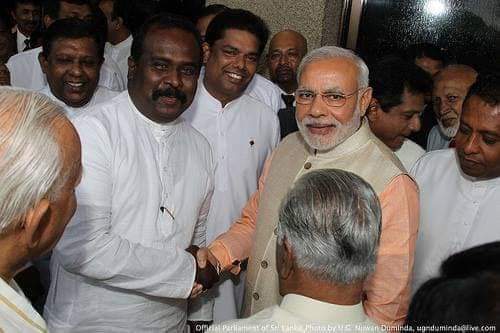
As a Member of the Northern Provincial Council of Sri Lanka, on behalf of my constituents and myself, I would like to extend my warmest congratulations and heartiest felicitations to your Excellency, as you begin your premiership of the greatest and the largest democracy of the world.  I recall my meeting you in September 2007 in Chennai, during the funeral for late BJP leader Mr. Jana Krishnamoorthy. I then stated to you and wished you that one day you will be the Prime Minister of India, and I am delighted to see that wish has become true.

As the great people of India have given you their historic endorsement and mandate, we Tamils living in Sri Lanka too are very hopeful of your leadership and sincerely believe your leadership will lead to a political solution that offers us our legitimate political rights along with equality, dignity and justice.  I also recall my meeting with the media at the BJP leader Mr. L. K.Advani ‘s residence in New Delhi on December 18, 2008, where I talked about the destruction of more than 1000 Hindu temples and the killings of thousands of Tamils in Sri Lanka by its armed forces, and stated in public my hope that if the BJP ever came to power the sufferings of the Tamils could end.  I am now very hopeful, with your leadership our sufferings in Sri Lanka could end.

Your Excellency, as you know, the successive Sri Lankan leaderships have repeatedly refused to offer the Tamils their political rights. All the negotiations and agreements between the Tamil and Sinhala leaderships were never implemented due to the intransigence of Sri Lanka’s Sinhala leadership. As Your Excellency knows well, even the Indo-Lanka Accord of 1987 has not been properly implemented by Sri Lanka. The government of Sri Lanka has demerged the Northern and Eastern Provinces which were merged as per the Indo-Lanka Accord. Sri Lanka even refuses to implement the 13 Amendment in full, despites its obligation to India and promises to the International Community.

Having gone through more than 65 years of injustice by successive governments of Sri Lanka, Tamil people are fully aware that no political solution will reach us without the direct and active involvement of India. I therefore, wish to urgently bring the following issues to Your Excellency’s kind attention:

  1. Help halt the ongoing Genocide and the oppression of the Tamil people:  halt systematic Sinhalese settlements and land grabs in the Northern and the Eastern Provinces, and demilitarize the Provinces.
  2. The Tamil people do not believe that the 13 Amendment could lead to an equitable political solution that meets the aspirations of the Tamil people, and I request your leadership towards a solution which can, at the minimum, offer a true federal autonomy to the Tamils in a single merged North-East special region.
  3. To meet our urgent need for our medical and educational needs of the Tamils, I request Your Excellency makes arrangements to send Tamil speaking doctors, and English and IT teachers from Tamil Nadu, to help us rebuild our livelihood.
  4. Help solve the issues faced by the fishermen from both India and Sri Lanka.
  5. Help create closer economic integration between Tamil Nadu and the Tamil speaking Northern and Eastern Provinces.

May Your Excellency enjoy success in every one of your endeavors.

Thank you.

Yours sincerely,

M. K. Shivajilingam

Member of Northern Provincial Council, Sri Lanka

Former Member of Parliament, Sri Lanka

Posted in Uncategorized

TELO’s Proposal submitted to the Parliamentary select committee of the then Ranasinghe Premadas’s UNP Government to resolve the Sri Lanka’s North-East crisis

TO: The Chairman and Members of the Parliamentary Select Committee on the North-East Crisis

PROPOSAL TO SOLVE THE NORTH-EAST CRISIS

The political solution to the ethnic question should be one that is capable of satisfying the political aspirations of the Tamil speaking people-Tamils and Muslims-within the frame work of a united Srilanka.

The present crisis in the North-East province cannot be politically and permanently solved unless autonomy is granted to the people of that province.

Full-fledged autonomy is the only answer to the ethnic question, that shall while removing the reasonable and justifiable political grievances of the Tamils and Muslims inhabiting that region for the last so many centuries would undoubtedly ensure a truly united and strong Sri Lanka by providing a viable and vigorous constitutional frame-work within which the Tamils and Muslims as two different communities with their own, distinct identities, yet speaking the same language and sharing a common heritage shall be assured of an adequate and effective institutional arrangement to manage their own affairs.

We, therefore having in mind the past experience of our country in regard to the political efforts attempted to grant limited autonomy within the ambit and scope of a unitary state since 1957 with a view to solve the ethnic question and conscious of our solemn duty to speak sincerely and honestly on behalf of our people who are yearning for peace with dignity submit the following proposals for the utmost consideration of your committee.

1. The Republic of Sri Lanka shall be a union of states on the basis of a full- fledged and full-blooded Federal system.

2. In the union of states of Sri Lanka, the now merged North-East province shall constitute one single state.

3. The city of Colombo and the capital Sri Jayawardene Kotte shall be union territories under the control of the federal government.

4. The following subjects shall be within the jurisdiction of the Federal government.

(A) Foreign affairs

(B) Defence

(C) Foreign Trade

(D) Currency and Federal Taxation

(E) Emigration, Immigration and Customs

(F) Aviation, Railways and National Highways

(G) Postal and Telecommunication Services

(H) National Planning and Development

(I) National Police Force

5. All other subjects shall be with the states.

6. No constitutional amendment shall be made without the concurrence of all states of the union.

7. No state legislature shall be dissolved or no state government shall be dismissed by the Federal government except on the ground of violation of the unity and territorial integrity of the union of Sri Lanka. Such dissolution or dismissal shall only be made on the recommendation of the Supreme Court.

8. Section 2 of the constitution shall be repealed to pay way for the above arrangements.

9. Special institutional arrangements and constitutional guarantees shall be made to ensure the rights of the minorities in the states of the union. In regard to the North-East, state, there shall be an autonomous Muslim region comprising all predominantly Muslim areas in the state. An elected autonomous council with an executive board shall administer the region and have jurisdiction over the subjects allotted to the council including (a) Development (b) education except that at the University level (c) Religious and cultural affairs (d) Law and order subject to the power and authority of the state government in the event of internal disturbances leading to serious Law and Order situations. The autonomous council shall have adequate financial powers to discharge its responsibilities efficiently.

In the state cabinet with a strength of 10 ministers including the chief Minister, there shall be at least 2 Muslims and 1 Sinhalese. In the event of the Chief Minister being a Tamil, the Deputy Chief Minister shall be a Muslim and vice verse. At least one of the following ministries shall be in the charge of a Muslim and Sinhalese respectively in the council of ministers.

A. Finance

B. Home Affairs

C. Education

D. Industries

E. Land and Agriculture

F. Fisheries

10. In regard to the complicated and sensitive problem of colonisation the following arrangements shall be accepted with a view to find a rational solution.

A. There shall be an immediate freeze on all colonisation in the North-East province till a national land policy is evolved.

B. The former parliamentary constituency of Amparai shall be exercised from the North-East province and annexed with the Uva province.

C. A national land policy based on the ethnic composition of each district shall be evolved and implemented.

D. The 1953 census figures shall be the guide line for the said basis of the National land policy.

E. All illegal settlements in the North-East province since 1983 August shall be dismantled.

11. In regard to the state police force of the North-East state, there shall be D.I.G in charge of the police personnel and their powers and functions within the autonomous Muslim region of the North-East state. The said D.I.G shall report to the I.G.P of the state police service.

12. In regard to the judiciary, while the Supreme Court shall continue to enjoy the same constitutional status as it is now, there shall be a court of appeal in each state instead of the present court of appeal of Sri Lanka. The court of appeal of each state shall, in addition to the appellate Jurisdiction of the present court of appeal would have the appellate Jurisdiction of the present High courts as well.

Section 18 of the constitution as amended by the 13th amendment to the constitution has while conferring the status of an official language on Tamil, unfortunately been ambiguous leading to conflicting interpretations.

This situation should be rectified.

Posted in Uncategorized

Economic, Social and Cultural Rights of Tamils in Sri Lanka

56th Session of the UN Commission on Human Rights, Geneva 2000, Item 10
Economic, Social and Cultural Rights of Tamils in Sri Lanka
The armed confrontation between the government’s security forces and the Tamils in the North and East of the country has claimed since 1983 more than 55.000 lives (90 % of them civilians), over 700 000 internally displaced persons and close to half a million expatriates: almost all of the victims are Tamils. The conflict is the result of the long standing violations of the rights of the Tamils by successive governments. And, as the 1998 report of the Committee on Economic, Social and Cultural Rights observes, discrimination remains the central issue in the armed conflict in Sri Lanka.
The history of independent Ceylon/Sri Lanka is the history of the majority community of Sinhalese (74% of the population) imposing itself by means of its electoral weight as the nation‘ at the expense of the other ethnic-cultural groups [mostly Tamil speaking Muslims (7.6%) and Tamils (18.1%), seven out of ten belonging to the indigenous Sri Lankan Tamils‘ concentrated in the North-East as against the remaining 30% consisting of Indian Tamils’in the up-country].

Some of the very first acts after independence was achieved in 1948 were directed against the Indian Tamils, mostly descendents from 19th cent. migrants from India for work on the plantations in the Southern and Central part of the island, who then formed one half of the Tamil population. Thus, not only were existing restrictions in their access to certain professions, such as agriculture, fishing and transport, confirmed, but new measures were taken which while reducing the number of respective Tamil managing personnel accorded preferential employment in the public sector and on the plantations to Sinhalese.

The „Citizenship Act“ of 1948 followed by the „Indian and Pakistani Residents Act“ and the „Ceylon (parliamentary elections) Amendment Act“, both of 1949, rendered the majority of Indian Tamils first stateless, made their naturalisation almost impossible, and deprived them of the right to vote which they had enjoyed for more than 20 years. As a result, the political clout of the Tamils was drastically diminished and new employment possibilities for Sinhalese were openend up (against today’s share of 1/3, the Sinhalese represented less than 1/8 of the estate labour force between 1946 and 1953). Eventually, a majority of Indian Tamils was made to leave the country consequent upon various agreements with India, so much so that the share of Indian Tamils in Sri Lanka fell from 12 % (1946/1953) to 5,5% of the population. While these were to obtain Sri Lankan citizenship, there are still today 85.000 Tamils of Indian origin possessing neither Indian nor Sri Lankan citizenship about whose denial of fundamental human rights, including access to basic services such as education, the Committee on Economic, Social and Cultural Rights expressed its concern in the concluding comments of its June 1998 report on Sri Lanka.

Next came the turn of the Sri Lankan Tamils. Separated by culture (Dravidian), language (Tamil), religion (Hinduism), and settlement area (North and East), they had been brought under an island-wide government only in the 19th cent. That this measure was introduced merely in order to facilitate the colonial administration, and neither signified nor led to an economically and socio-culturally integrated society testify the (colonial) constitutions since 1931 heralding self-government (Donoughmore, Soulbury) with their explicite safeguards for the minorities. Very densely populated (the Jaffna peninsula counted 940 inh./km² at the last census in 1981), plagued by landlessness, water-deficiency, and practically devoid of any modern industry (80 % are concentrated in and around Colombo), the Sri Lankan Tamils have traditionally flourished on fishing, and on the export of agricultural products (rice, vegetables, spices) and of (highly qualified, English speaking) manpower (to Colombo as well as abroad). The language and education policy of independent Sri Lanka drastically curtailed these chances of gaining a livelihood, and seriously infringed upon the social, economic and cultural rights of the Tamils.

Thus, the „Official Languages Act“ of 1956 proclaimed Sinhala the sole official language of the country; with later legislation restricting the use of Tamil in various fields of administration even further. The final recognition of Tamil as a ‚national language‘ in the 1978 constitution, does not alter the systematic discrimination. Thus, at police stations in Colombo, everything is recorded in Sinhalese, so that Tamils are obliged to sign statements written in a language they can’t read. And the Centre for the Independence of Judges and Lawyers notes, that ‚the access to justice of Tamil-speaking parties to proceedings and lawyers is seriously restricted by the lack of interpreters, by delays in publishing legislation and Emergency Regulations in Tamil, and by the absence of Law Reports and textbooks in Tamil‘.

In 1973, the ethnic bias in language policy was complemented by ‚standardisation of education‘, an admission policy to higher education which severely limited the chances of Tamils students. Meanwhile, outright neglect of Tamil medium schools even at lower levels has been reported. Thus, according to the Ceylon Tamil Teachers Union there are 470 technical and vocational courses in Sinhala, but only 65 in Tamil; in the Vanni, there are no technical colleges at all; against eight courses in computer studies offered in Sinhala, there is but one in Tamil, and none at all in vocational and technical education in radio and TV technology, electronics and motor vehicle maintenance. Officially, there was a shortage of 10.000 Tamil medium teachers in 1996. But only 4000 have so far been appointed despite the availability of funds from the World Bank and the Asian Development Bank. By contrast, inspite of a surplus of 14.000 Sinhala medium teachers, another 10.000 have been recruited.

As a result, the employment pattern in administration and state enterprises has become decidedly mono-ethnic: the Sinhalese represent today 93 % of all government servants and 99% of the armed forces (in 1956 40 % of the latter were Tamils). Excluded, the Tamils, by contrast, have been effectively driven into unemployment, abroad or into rebellion.

The constitution of 1972 (Art.6) accorded to Buddhism, the religion of the Sinhalese majority, „the foremost place“, a provision reaffirmed in the 1978 constitution (Art.9) as well as the constitutional proposals of 1997/8 (the latter even providing for a ‚Supreme Council‘ of Buddhist Clergy to advice the government). It marks a decisive departure from secularism and the proclaimed multi-culturalism in a society where 15% of the population are Hindus, and 7 % each confess to Islam, Christianity respectively. It is but another step in the identification of the majority with the nation as such, as became clear when in 1974 the then and today’s Primeminister, Mrs. Sirimavo Bandaranaike, declared Anuradhapura a Sacred Buddhist Area, in consequence of which all Hindu temples in the vicinity were demolished. The burning in 1981 of the Jaffna Historic Public Library by the Sri Lankan army and police not only destroyed this repository of some of the most valuable manuscripts and books on the history and culture of Sri Lankan Tamils. It was an attempt on the latter’s cultural identity and, thus, on the people itself.

In the course of the government’s peasant colonization schemes, about a quarter of the island’s population, overwhelmingly Sinhalese peasants from the South, is thought to have been moved since 1946 from the Wet to the Dry Zone (North-Centre, East). The ethnic composition in the North and East which the Tamils for historical and demographic reasons regard as their traditional homeland was thereby drastically altered: in 1881 the Sinhalese accounted for less than 2% of the population in these two provinces; by 1981, their share had increased in Trincomalee District to 33.6% and to 38% in Amparai District, whereas the respective proportion of Tamils decreased from 57 to 34 and 37 to 20%.

Starting in Amparai district in 1956, these resettlement schemes were often accompanied by forceful evictions of long-time Tamil villagers, amounting to ethnic cleansing (e.g. Gal Oya). As a result, the demographic continuity of the Tamil region was disrupted, while the creation of almost exclusively Sinhalese majority areas gave rise to two new Sinhalese electorates by the late 1970s. Analogous events took place in the early 1980s in Trincomalee District as well as in the Northern Province where under the Mahaveli Development Scheme exclusively Sinhalese peasant colonies were established in the Manal Aru area at the expense of over 3000 evicted Tamil families. There, the traditional Tamil names were not only replaced by Sinhalese ones (Manal Aru by Weli Oya, Thannimurippu by Janakapura), the oppressive nature of the state’s colonisation manifests itself, moreover, in that the 25.000 new Sinhalese settlers were given arms and army camps were additionally contructed in the neighborhood. As for the Tamils, similar government sponsored regroupings into Sinhalese dominated districts did not occur.

The Internally Displaced Persons (IDP), particularly in the Vanni, a rural and forest area in the North, present another case of denial of human rights to Tamil people. As a result of the war, 50 % of the district‘s 250.000 original inhabitants has been displaced and another 250.000 people have entered the area. Unemployed and penniless as most of these half a million people are, they depend on the government for survival. Thus, there are only 8 physicians, no dentists, no gynecologists or paediatrician. Cultivable area in 1998 had been reduced to one fifth or less of what was available in 1994. The land shortage has been compounded by an economic embargo that –theoretically applying only to potentially military items- has led in practice to restricted supplies of fertilizers and chemicals, kerosene and agricultural machinery, etc. Fishing, the other major source of livelihood, stands officially banned. In consequence, many people, 400.000 according to Government Agents, depend on the government, i.e. are eligible for dry rations. However, in line with other accounts, the 1997 and 1998 reports of the US Committee for Refugees conclude, that the supply of food and medicine by the government has been consistently inadequate, with the situation in the government detention camps, where 40.000 families are housed with 5-8 persons living in shelters of 8 x 10ft, reportedly being even worse. In consequence, malnutrition, anemia, low birth rates, and a return of malaria have been observed. Such withholding of necessary basic supplies are in clear violation of human rights and humanitarian law which can in no way be justified by the war.

In order to put an end to these multiple denials of economic, social and cultural rights, the Society for Threatened Peoples asks the United Nations Commission for Human Rights:

To put pressure on the Sri Lankan government to end its employment of food and medicine as weapons of war, and to adequately supply forthwith the internally displaced persons in the country, particularly in the Vanni, according to human rights and humanitarian law;

To recognize the long-standing systematic pattern of discrimination against the Tamils by successive Sinhalese dominated governments;

To take into account this violation of economic, social and cultural rights of the Tamils as the root cause for the present armed conflict while deliberating the human rights situation in the country and measures to improve it;

To take into consideration that economic, social and cultural rights are not only invariably and intimately linked to political and civil rights, but that the rights of minorities are neither safeguarded in a formal democratic set-up, nor can they based on individual rights. What is urgently needed are collective rights.


OUR LAND’S FREEDOM IS OUR BIRTHRIGHT

“The Tamils of Ampara have had to face the brunt of both Sinhala chauvinism and Muslim intimidation. But they have refused to submit or yield their national pride as Tamils. We have to show the world that we will never sell our dignity for a mess of pottage, that we will not be intimidated by the terror that the Sri Lankan state has unleashed on us. The democratic campaign of the Tamil national alliance for our people’s rights will strengthen the struggle of those who are fighting for our Liberation. We do not believe that we can achieve anything for the Tamils from the Sri Lankan Parliament. We consider it only as a forum to draw the world’s attention to our people’s plight,”
said Mr. Selvam Adaikalanathan, the leader of the Tamil Eelam Liberation Organisation, addressing an election campaign meeting of the Tamil national alliance Friday in Kalmunai, a large town on Sri Lanka’s southeastern coast .
“The Tamil national alliance is not interested in bargaining with any Sri Lankan government in power to secure positions for itself. If that was our intention we could have supported the People’s Alliance (PA) regime when it was in crisis and helped it stay in power. Neither the PA nor the UNP is genuinely interested in solving the Tamil problem. They are only keen to satisfy the sentiments of the Sinhalese”.

“The Tamil should have no illusions about the ruling party and the opposition. Both are Sinhala chauvinists in the final analysis”.

“No Sinhalese will ever vote for a Tamil party. But there are some Tamils among us who shamelessly support the Sinhala parties. We should persuade them to become self-respecting Tamils”.

“Has President Chandrika Kumaratunga ever said that she will recognise the unity of the Tamil homeland? Has she ever accepted that the north and east are one territorial entity? But the EPDP which is a major coalition partner her regime declares that it stands for the territorial unity of the Tamil homeland. This is sheer duplicity”.

“The Sri Lankan government is trying to buy off the self-respect national dignity of Tamil people through the EPDP with money and jobs. We Tamils have to stand united and show the world that we treasure our freedom and self-respect more than our lives. Liberating our land is our birthright”.

Posted in Uncategorized