UK reinstates warning against travel to Sri Lanka

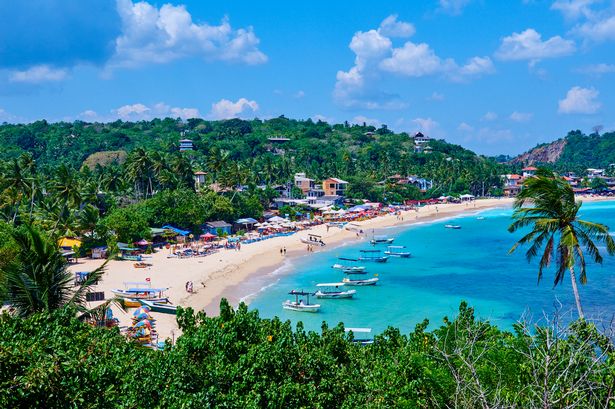
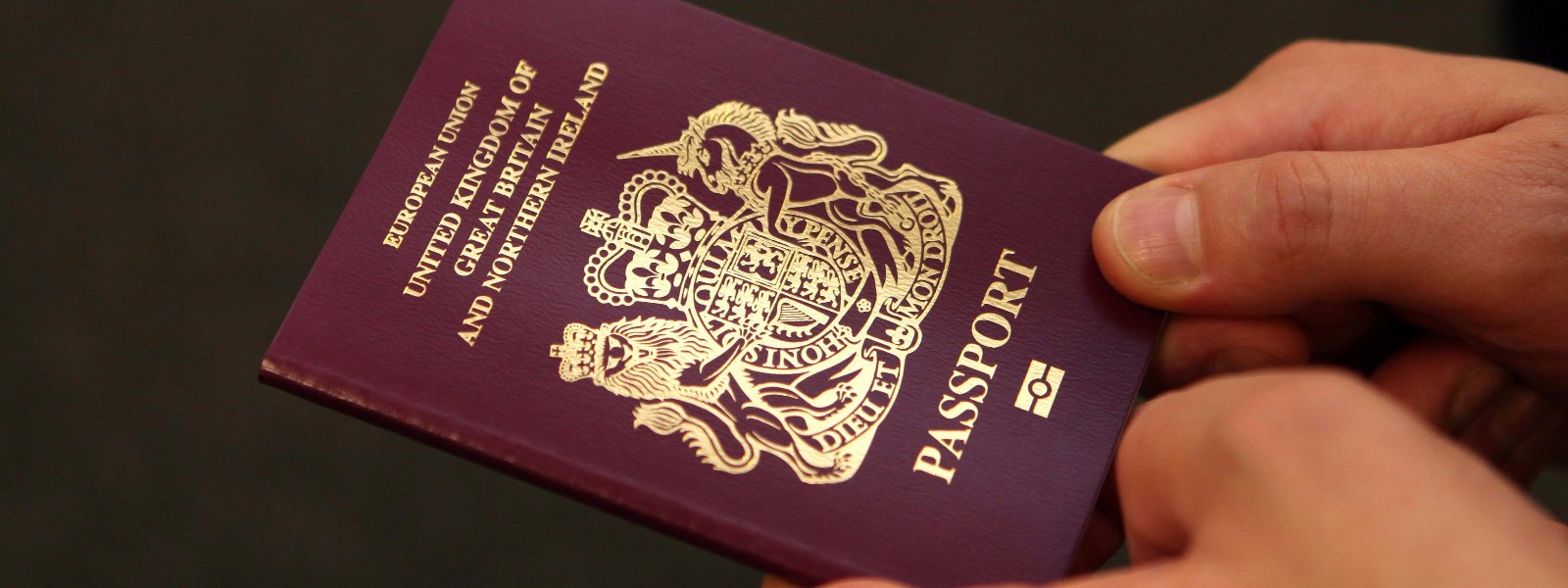
The UK government has reinstated advice against all but essential travel to Sri Lanka as a severe economic crisis has sparked civil unrest. A shortage of basic necessities including medicines, cooking gas, fuel and food has sparked protests and violence in the Asian country.

Sri Lanka’s government said it only had enough petrol to last one day as it faces its worst crisis in 70 years.

The travel warning was previously in place from 13 May to 10 June.

The popular tourist destination ended a state of emergency prompted by angry demonstrations over the economic crisis on 21 May.

But on Sunday, the nation said its petrol stocks had almost run dry once again and its next shipment was not due for two weeks.

The Foreign Office warned holidaymakers could encounter “demonstrations, roadblocks and violent unrest at short notice”.

Visiting countries against Foreign Office advice would be likely to invalidate your travel insurance, the Association of British Insurers said.

It said anyone who changed their plans as a result of a travel warning should also check their insurance could be transferred to cover their new destination.

The Sri Lankan government has blamed the Covid pandemic for the crisis, which affected the country’s tourist trade – one of its biggest foreign currency earners.

Nearly 200,000 Britons travelled to Sri Lanka in 2019, but this figure dipped to 55,455 in 2020.

But Sri Lanka’s government exacerbated its foreign currency shortage in 2021, when it banned imports of chemical fertiliser.

Widespread crop failure forced the country to import food from abroad, compounding its foreign currency crisis.

BBC (Source)

Debt restructuring plan will be given to the IMF in August-PM

Prime Minister Ranil Wickremesinghe says the government’s next step with the International Monetary Fund is to submit the plan on debt restructuring and sustainability.

Delivering a special statement in Parliament today pertaining to the progress of talks with the IMF, the Premier said the plan is being prepared by financial and legal experts Lazard and Clifford Chance.

Premier Wickremesinghe said the government hopes to submit the report to the IMF by August.

Full statement

Today, in front of this Assembly and the citizens of this country, I am ready to outline the roadmap that we are following which will revive the economy that has collapsed.

We were able to successfully proceed with the round of negotiations with the International Monetary Fund.

Our country has held talks with the IMF on many occasions before. But this time the situation is different from all those previous occasions. In the past, we have held discussions as a developing country. In such a case, both parties have only to reach an agreement on the EFF or Extended Credit Facility. It is like moving along a straight line.

But now the situation is different. We are now participating in the negotiations as a bankrupt country. Therefore, we have to face a more difficult and complicated situation than previous negotiations. Once a staff-level agreement is reached, this will be submitted to the IMF Board of Directors for approval. But due to the state of bankruptcy our country is in, we have to submit a plan on our debt sustainability to them separately. Only when they are satisfied with that plan can we reach an agreement at the staff level. This is not a straight-forward process.

But we have been able to end the round of discussion effectively despite these difficulties. According to the IMF’s official announcement, “Positive and productive discussions were held on supportive economic policies and reforms. Significant progress was achieved.”

Now the next step is to submit to them the plan on debt restructuring and sustainability, which is being prepared by financial and legal experts Lazard and Clifford Chance. We hope to submit this report to the IMF by August.

Once this is done we will be able to reach an agreement. However, even after this agreement, it must be presented to the IMF Board of Directors for approval. After approval for this plan is provided, a comprehensive loan assistance program will be prepared for a period of 4 years. We are now on that path.

After obtaining the staff-level agreement, we will organize a donor-aid conference by bringing together the friendly countries that provide us with loan assistance, such as India, China and Japan. We hope to create a system where we can get loan assistance through a common agreement.

Among the problems we are facing today, the primary problem is the fuel crisis. At the same time, we are also facing the problem of food availability. In terms of fuel and food, our country was going to have to face this crisis at some point in time. Fuel was scarce. Food prices went up.

Due to the recent global crises, this situation has become more acute and we who were in the frying pan fell into the oven. Due to the Ukraine-Russia war, our problem has been made worse. What has happened now is the addition of an international crises on top of our crisis. This situation is not unique to us. This affects other countries as well. India and Indonesia are also affected by this global crisis. Therefore, India has had to limit the loan assistance that they have given to us.

This situation affects the whole world equally. As a result of this, the United Nations Secretary General has warned that the gap between developed and under-developed countries will increase. He also warns that the gap between the upper class and the lower class within a country may increase. No country in the world can isolate itself themselves from this world crisis. We all have to face this.

We have prepared this road map considering all the domestic and global challenges that are facing us. We can refuse to change our ways. But if things do not change, the whole country will collapse.

Therefore, we should strive to move forward on this path. It is not an easy journey. I have reminded you of that from time to time. This will be a difficult and bitter journey. But we can get relief at the end of this journey. Progress can be made.

Our economy is currently shrinking. We are trying to reverse it. According to central bank statistics, our current economic growth rate is between negative four and negative five. According to IMF statistics, it is between negative six and negative seven. This is a serious situation. If we make a determined journey along this road map, we can achieve an economic growth rate of negative one by the end of 2023.

By 2025, our aim is to create a surplus in the primary budget. Our effort is to raise the economic growth rate to a stable level. Our expectation is to establish a stable economic base by 2026.

I would like to give you an idea of ​​the debt we have to pay off so far. $3.4 billion between June and December this year. $5.8 billion in 2023. $4.9 billion in 2024. $6.2 billion in 2025. $4.0 billion in 2026. $4.3 billion in 2027.

The total debt burden of the government at the end of 2021 was Rs 17.5 trillion and by March 2022 it has increased to Rs 21.6 trillion.

This is the real situation. In addition, we are facing the effects of many problems that have worsened in the past two or three years. These are not problems that can be solved in two days. We are suffering from the effects of certain traditional ideas that have been followed in our country for many years. Therefore, as I mentioned earlier, we will have to face difficulties in 2023 as well. This is the truth. This is the reality. Some may try to cover up this reality by showing the people a false image. But this reality will be confirmed in time.

Our plan is to control inflation. By the end of this year, inflation will rise to 60%. This is mainly due to the increase in the prices of goods in the world and the fall in the value of the rupee.

Due to the current inflation, the depreciation of the rupee has reduced the value of the money in the Employees’ Provident Fund and the Employees’ Trust Fund by 50% and the real value of pensions has also decreased by 50%. Think about how this situation affects our senior citizens. Poverty is spreading among all of them. The value of the money they receive has decreased by 50%. Their purchasing power has decreased by about 50%. Presenting positive ideas is easy. But it is difficult to find answers to these problems.

What is the solution to this? Stabilizing the rupee as soon as possible, strengthening the rupee without letting it fall. For that purpose, we have implemented a plan to limit the printing of money in the future.

In 2023, we will have to print money with restrictions on several occasions. But by the end of 2024, it is our intention to stop printing money completely.

We aim to reduce the inflation rate to between 4 and 6 percent by 2025.

Another top priority for us is to protect the banking and financial system. The pressure on these systems during an economic crisis does not need to be explained anew to this House. But due to this pressure, we will not allow the banking system to be pressured by poor policies. The government has given priority to strengthening the banking and financial system.

Meanwhile, we pay special attention to state banks. They have been beaten from both sides. On the one hand, the economic crisis, on the other hand, the huge amount of loans they have given to state enterprises.

As of March 31, 2021, SriLankan Airlines owes Rs. 541 billion as of May 31, 2022, the Electricity Board owes Rs. 418 billion. Petroleum Corporation owes Rs. 1.46 trillion.

When public enterprises continue to incur losses, the entire citizenry suffers. People who have never traveled on a plane in their lifetime are suffering for the loss of SriLankan Airlines. The people who have paid money for fuel all their lives are suffering for the loss of the petroleum corporation. After hours, days and days of waiting in queues to get fuel, they pay compensation to the oil company to cover the loss of the company. The people who get electricity by paying money all their life, sit in the dark for several hours a day and suffer for the loss of the electricity board.

Excuse have been used for a long time to cover up the sufferings, persecutions and troubles of the people and the compensation paid for the losses of the institutions. People’s resources, people’s property as well as the failure of the respective institutions are covered up by this mask. If these are real people’s properties and people’s resources, they should provide relief, convenience, ease and profit to the people. But the people have inherited sufferings, troubles and losses from these institutions.

Therefore, we have to think anew about such institutions which have become a burden to the country and the people. Is it fair to burden the people like this for thirty or forty years? Should we continue to burden the people and run these institutions? Why can’t the services provided by these institutions be provided without burdening the people? Are there no other options for providing these services? Considering all these facts, we are taking immediate steps to restructure these institutions. It will be ensured that they are maintained in a manner that does not burden the country.

There are a number of other issues that need to be addressed in our journey forward to overcome the current challenges.

One is to prepare the background of getting food without shortages and keeping the increase in food prices under control.

On the other hand, taking steps to increase food availability. We have now prepared the necessary background for the successful harvest of the next season. All measures have already been taken to provide chemical fertilizers without shortage. Provisions for seeds and planting materials are allocated through the interim budget.

Also, we have started a program to increase food availability in collaboration with the World Food Program and the Food and Agriculture Organization. Currently, their delegation is studying the food crisis in Sri Lanka. At my invitation, the head of the Food and Agriculture Organization will visit Sri Lanka next week.

No matter how much we are in the middle of a huge economic crisis, we cannot forget the problems faced by the poorest sections of the society regarding food. The upcoming interim budget will allocate money to provide short-term relief to the highest sections of the society. This relief will be given to the people under the Social Welfare Benefits Act.

We are also launching activities to prevent malnutrition caused by lack of food.

In parallel to these activities, necessary incentives are being provided for cultivation. Facilities are being provided. An island-wide cultivation program is being launched with the intervention of the Prime Minister’s Office along with the Ministry of Agriculture and other relevant ministries. The aim of this program is to increase food availability at a decentralized level. In this regard, the responsible institutions meet weekly and take necessary actions. We hope to increase overall food production in the next six to seven months.

We are taking steps to take a number of policy decisions to boost the export economy. The upcoming Interim Budget will include detailed information about it.

If we continue on this planned path, we can have hope for a brighter future. All of us should shoulder that task unitedly. We must all come together to lift the net we are tangled in and fly.

If we do so, we will be able to fulfill the expectation of reaching the situation we were in 2019 by 2025. This journey cannot be stopped from there. We have to continue this journey until we create a new economy.

We hope to prepare the necessary background for this progress through the interim budget.

When I assumed the responsibility of the Prime Minister, I made a written request from the opposition parties to come forward to work together for the country in this difficult and crisis situation. You all know about the responses received at that time.

The importance of this unity, the importance of getting out of this difficult time together, has been pointed out by a number of our Parliamentarians from time to time.

Remembering that, I once again request all party representatives in this House to come together to overcome this challenge.

Our ultimate goal is to create a highly competitive social market economy. Here we also have examples to take from countries like China and Vietnam. They are countries that successfully maintain competitive socialist market economies.

As far as I know there are no shortcuts to achieve our goals. There is no magic or panacea. Dr. Harini Amarasuriya MP also emphasized that the other day. She said: “We get an empty pot. This is not easy. We don’t think that everything will be solved once we come to power. Everything will not be solved just by coming to power. There are several things that need to be done. It will take time to get this right. It will be a difficult time for all of us. You have to make commitments. You have to work very hard.”

As MP Harini Amarasuriya said, this crisis is not one that can be resolved in a few days or a few months. A more serious one.

But if there is a more effective plan than the one we have presented, if there is a faster plan, then present it. We can discuss it. Run it if the most effective path to recovery.

MP Anura Kumara Dissanayake has stated that if he is handed over the country, it will be restored in six months. Indeed, it would be a very good thing if it could be done. Taking a country whose economic growth has fallen to negative six or seven to a positive economic growth rate in six months is an action that has never happened in any country in the world. But we cannot rule out Mr. Anura Kumara Dissanayake’s opinion that it has not happened so far. It would be great if he has a plan to restore the country within six months. With such a plan, we will be able to restore the economy in a short period of time. Not only that, it also sets a good precedent for the world.

That is why I am asking MP Anura Kumara Dissanayake to submit this plan to the President. If you don’t want to go to the President, present it to this Parliament. Let us discuss it in this Parliament. If that plan is better and more effective than the plan we are implementing now, we will implement it. Such a plan would be brilliant enough to win the Nobel Prize in Economics.

So if there is such a plan, I am ready to resign and let him take up this position. I am ready to give up my position and support that program. Because the positions I hold are not new to me. At a time when the country has become anarchic and no one has taken responsibility, I have not accepted this position out of desire for the chair.

At that time the country was in an anarchic and dangerous situation. If that situation had developed further, the country would have turned into a sea of blood. There would have been an environment where no country in the world would look at us with friendship.

I accepted this position with the aim of saving the country from that situation. I took up the responsibility for the country, using my experience and connections to help the country recover from its fallen state. That’s why I took over this anarchic country without any conditions and now we were able to prevent the country from falling into the abyss. Now we have to slowly raise the country again.

The main thing for me was not the power, but the country. Therefore, I have no desire or need for power. I only have a need to see this country recover. I would like to let this House know that we are moving forward in a planned and steady way towards meeting that need.

The journey we are on is a good opportunity to change the system that we followed in our country previously. Past experience has shown us that no victory or progress can be achieved by changing persons or characters. The importance of implementing a common national plan has been confirmed through past experiences.

So if there are better ways than the method we are following now, please point it out, put forward. Let us all join in the effort to lift the country up. Let’s join together as one people to rise again from this place. Let’s make this journey more an acceptable one through collective ideas and suggestions.

Posted in Uncategorized

Opposition chants “go home gota” in Parliament while Prez attends sessions

A protest by the Samagi Jana Balawegaya (SJB) forced President Gotabaya Rajapaksa to walk out of Parliament today.

The President was in Parliament briefly today when Prime Minister Ranil Wickremesinghe made a special statement on the economic crisis.

However, the SJB held placards and protested by shouting slogans telling Goatabaya Rajapaksa to go home.

The President later left the chambers surrounded by some Government MPs

Parliament has been adjourned for 10 minutes after the opposition staged a protest during the Prime Minister’s speech.

Accordingly, the Parliament was adjourned at around 10.40 am today.

PM Ranil Wickremesinghe today delivered a special statement in Parliament regarding the progress of negotiations with the International Monetary Fund (IMF).

He said that Sri Lanka’s discussions with the IMF had ended successfully and that the next step is to submit a report on debt restructuring.

Meanwhile President Gotabaya Rajapaksa had also arrived at the Parliament, a short while ago, to attend the parliament sessions.

Wickremesinghe was presenting the road map with proposed solutions to the existing economic problem to the Parliament, and the President had entered the chamber and listened to the speech.

Opposition MPs representing the Samagi Jana Balawegaya (SJB) had then proceeded to stage a protest in the chamber while holding placards that read ‘Go Home Gota’ resulting in a tense situation.

Opposition MPs protest at Parliament

Members of the Opposition at the Parliament took steps today (05) to express their disappointment with the President, while the President was on visit to the Parliament.

Prime Minister Ranil Wickremesinghe also took steps to brief the Parliament on the current status of the International Monetary Fund’s assistance program.

Following the Opposition MPs protest, the Speaker adjourned Parliamentary sittings for a period of 10 minutes.

Posted in Uncategorized

To resume flights, Russia has sought SL assurance of not repeating Aeroflot action-Sirisena

Russia has sought an assurance from the Sri Lankan government of not repeating the diplomatic spat it followed including legal action after grounding an aircraft operated by Russia’s Aeroflot in Colombo, former president Maithripala Sirisena told the parliament.

The aircraft was grounded in Colombo early in June following a court order obtained by Celestial Aviation Trading 10 Limited of Ireland, the owner of the aircraft, against Aeroflot in a Colombo court, over a lease dispute.

Sri Lanka’s action has created a diplomatic spat with Russia, which has threatened of impact in the bilateral trade and flight services, government sources have said.

Former president Maithripala Sirisena said he wrote a letter to Russian President Vladimir Putin on the issues faced by Sri Lanka after the Aeroflot action. Sri Lanka has rendered apology for its action.

“I got a reply after three days I sent the letter. I have also forwarded that letter to Presient Gotabaya Rajapaksa. There are three key facts mentioned in the latter,” Sirisena told the parliament on Monday (04).

“If we could fulfill the requests, the bilateral trade and flight services could be resumed. The first one they had mentioned was the issue of the Aeroflot could be prevented through diplomatic channels instead of going for legal issue.”

“The second one was the Russian government had asked an assurance that there won’t be any repeat of Aeroflot on which legal action was taken. If there is an assurance, they could start flight services.”

Sirisena also said the third fact written by the Russian President was that the trade does not have to go through the Russian embassy in Colombo and instead individual companies could directly deal with Russian companies for bilateral trade.

Government officials are divided on the way Aeroflot issue was handled. Some say the government should have sought diplomatic channels while others say it was a legal issue hence the way it was handled was appropriate.
On 2 June 2022, the Commercial High Court of the Western Province issued an enjoining order on the Aeroflot flight restraining it from taking off from Sri Lanka’s main airport near Colombo.

The case relates to a commercial dispute between the plaintiff, Celestial Aviation Trading 10 Limited, an Irish company, against the first defendant the public joint stock company “Aeroflot” and the second defendant, N C Abeywardene/Acting Head of Air Navigation/Airport and Aviation Services of Sri Lanka (AASL), Katunayake.

Later the Sri Lankan Court suspended an order preventing the Aeroflot flight from leaving Sri Lanka. The order was suspended after the Colombo Commercial High Court considered a motion filed by the Attorney General.

The Airbus A330-343 operated by Russian state-owned airline Aeroflot was denied permission to fly to Moscow as scheduled on June 2nd amid a legal dispute with a leasing company. The flight had more than 200 passengers onboard.

Posted in Uncategorized

India could bail out SL as IMF rescue package appears to take time- economist Dr. Ganeshan Wignaraja

As China is in dilemma while the rest of the world has qualms over helping Sri Lanka, India could deepen its role in bailing out its debt-strangled neighbour by giving the leadership for the proposed donor consortium, as an International Monetary Fund (IMF) rescue package could take some time, according to a leading economist with strong links to Sri Lanka.

Dr. Ganeshan Wignaraja, a Senior Fellow at the National University of Singapore, speaking of the narrowing options for Sri Lanka said bailing out Sri Lanka is in India’s best interest, as it can deepen its trade, commercial and investment relationship, transcending from the current humanitarian and
aid relationship.

India was the first country to come to the rescue of Sri Lanka from the beginning of this year by providing roughly US $ 3.5 billion worth of assistance from a combination of instruments such as credit lines, term loans and deferred loans but the credit lines, under which Sri Lanka received oil, came to an end in June, bringing the country to a near standstill, as the fuel stocks ran out.

Dr. Wignaraja estimated that Sri Lanka needs at least between US $ 20 billion to US $ 25 billion worth of funds in the next three years to put its declining economy to some decent footing and to restart growth, as he fears that Sri Lanka could get caught up in entrenched stagflation, where the prices would continue to soar while the economy declines, making scores of people go jobless and throwing millions into poverty.

“Now my own sense is that, you know, stabilising Sri Lanka’s economy could be a major win for Prime Minister Modi’s neighbourhood-first policy and this is the largest bilateral programme India has given to any country I believe in recent times, in this kind of rescue mode,” Dr. Wignaraja told a recently held Central Bank webinar, referring to the assistance that India has already provided.

“And I feel India could go really big, much bigger and lead a proposed aid consortium for Sri Lanka, providing may be US $ 20 billion to US $ 25 billion over the next three years for Sri Lanka, incorporation with the IMF and other friendly countries,” he added.

Dr. Wignaraja, who is also a Senior Research Associate at the Overseas Development Institute, said Sri Lanka is in a really tight spot in getting assistance, as 60 percent of the world’s poorest countries are also in debt distress in some form, although they haven’t defaulted while the risk of a global recession amid decades high prices has further complicated and hamstrung the rest of the world to offer support to
Sri Lanka.

Meanwhile, he said there are also questions why the taxpayers of another country should bail out a failed economy like Sri Lanka, specially when some perceive Sri Lanka’s debt default was its own making, as a result of poor economic management and weak governance.

Despite being a close ally, China is facing a big dilemma in bailing out Sri Lanka because they fear it could set a wrong precedent, where other countries that borrowed from China and facing debt distress could line up seeking debt restructuring from the world’s second largest economy.

On the other hand, according to Dr. Wignaraja, China may also be unwilling to tarnish its image in the global stage by helping a failed economy.

“China worries that unilaterally restructuring Sri Lanka’s debt or giving it moratoria would set a new precedent in its lending practices and there could be a whole queue of countries lining up to get assistance from China because of what is seen to be a failed Belt and Road project and excessive borrowings for such projects,” he said.

“And there is a second problem that China, which is a G2 economy, wanting to challenge the United States, doesn’t want to be hamstrung by the reputation of helping out a so-called failed economy. That’s a very important reputational issue for China,” he added.

Further, China is dealing with its own economic problems, after the lingering virus condition put a strain on its growth and as a result, it is increasingly turning inward.

However, while agreeing that the IMF rescue package is the only option at the moment for Sri Lanka, although it could take time, Dr. Wignaraja said in order to make it work, Sri Lanka must show the world that it is seriously committed to fix its economy in a sustainable manner while implementing its IMF programme in a transparent and a credible manner.

As Sri Lanka has already gone to the IMF 16 times and has failed to follow through recommended policies, Dr. Wignaraja said this time Sri Lanka could come under the microscope.

He also said it is important to build a national consensus for the IMF programme.
“You know there are still people out there going around and saying forget the IMF and we grow Batala kola in Mattala or something like that. You know, that’s not going to cut the mustard in Sri Lanka’s current financial circumstances. And I think those sorts of people have to be called out,” he said.

He also called to publicise the implementation of the IMF programme and for tough anti-corruption measures to ensure that any foreign aid is distributed fairly and isn’t siphoned off. Further, he called for a non-aligned foreign policy by Sri Lanka.

Posted in Uncategorized

Sri Lanka: ‘I can’t afford milk for my babies’

The smell hits you first – freshly cooked rice, lentils and spinach, served in ladles from steaming pots. Dozens of families – including mothers with babies – are lined up with plates to get a serving of what will likely be their only meal for the day.

“We are here because we are hungry,” says Chandrika Manel, a mother of four.

As she kneads a ball of rice with her hands, mixing it with the lentils and spinach before feeding it to one of her children, she explains that even buying bread is a struggle.

“There are times I [give them] milk and rice, but we don’t cook any vegetables. They’re too expensive.”

Depleted foreign reserves and soaring inflation have devastated Sri Lanka’s economy in recent months. And President Gotabaya Rajapaksa has been accused of exacerbating a crisis triggered by the pandemic and shrinking tourism.

But now Sri Lanka is on the brink of a humanitarian crisis, the United Nations Children’s Fund (Unicef) has told the BBC.

The organisation found that 70% of the country’s families have cut down on food since the start of the year, and stocks of fuel and essential medicines are also fast running out.

My children are miserable’

This is Ms Manel’s first visit to a community kitchen as she found her options disappearing: “The cost of living is so high, we are taking loans to survive.”
The kitchen is a month old – Pastor Moses Akash started it in a church hall in Colombo after meeting a single mother who lived off a jackfruit for three days.

“We get people who haven’t had a second plate of rice for the last four months,” Pastor Moses says.

By his estimate, the number of people queuing up for food has grown from 50 to well over 250 a day. It’s not surprising given that food prices in Sri Lanka went up by 80% in June alone.

“I see a lot of children especially, most of them are malnourished,” he says.

Sahna, a pregnant 34-year-old who goes by her first name only, is also in the queue with her three young children. She is due in September and anxious about the future.

“My children are miserable. They’re suffering in every possible way. I can’t even afford a packet of biscuits or milk for my babies.”

Sahna’s husband, who is a labourer, earns just $10 (£8.20) a week to support the entire family.

“Our leaders are living better lives. If their children are living happily, why can’t my children?” she asks.

A looming humanitarian crisis

By the time Sahna’s child is born, things are expected to get worse.

The mayor of Colombo recently said that the capital has enough food only until September.

With shortages of fuel and cooking gas, and daily power cuts, families are unable to travel to buy fresh food or prepare hot meals.

BBC (Source)

Posted in Uncategorized

Sajith-Maithri talk on forming new all-party Govt

Opposition Leader Sajith Premadasa and the SLFP leader Maithripala Sirisena are currently holding talks on constitutional reforms to establish an all-party government.

The ‘Samagi Jana Balawegaya’ said the crucial meeting of the “National Reforms and Future” program to rebuild the country which has collapsed, took place at the Opposition Leader’s Office in Colombo today (04).

Former President and Sri Lanka Freedom Party (SLFP) leader Maithripala Sirisena, Opposition Leader and SJB leader Sajith Premadasa, SJB General Secretary Ranjith Madduma Bandara, SJB Chairman Sarath Fonseka, MPs Dr. Rajitha Senaratne, Mano Ganesan, Rauff Hakeem, P. Digambaram, C.V. Wigneswaran and several other political leaders participated in the discussion.

Civil activists Victor Ivan, Janaranjana, Gamini Viyangoda, Rohan Samarajeewa and several other representatives of political parties, civil society, professional and trade union organisations also joined the discussion.

CM Stalin writes to EAM Jaishankar over release of 12 Indian fishermen held by Sri Lankan Navy -ANI

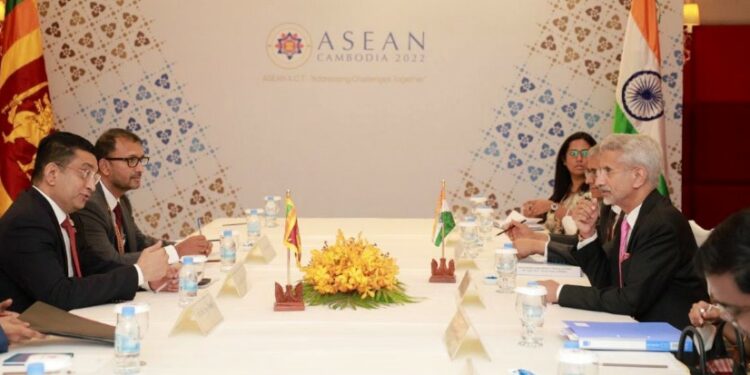
Tamil Nadu Chief Minister MK Stalin on Monday requested External Affairs Minister (EAM) S Jaishankar to take appropriate action for the immediate release of 12 Indian fishermen arrested by the Sri Lankan Navy.
In a letter to EAM, the Chief Minister said, “This arrest intimidates the fisherfolk of Tamil Nadu and is also likely to create a sense of insecurity and fear in the coastal areas of the State. I, therefore, request you to take up this matter through appropriate diplomatic channels to secure the immediate release of 12 fishermen and their fishing boat.”

Among the 12 arrested Indian fishermen, 7 are from Tamil Nadu and 5 are from Puducherry.

He further pointed out that the fishermen of Tamil Nadu have recently resumed fishing after the annual ban period of 61 days that ended on June 15, 2022.
On March 25 this year, the fifth meeting of the India-Sri Lanka Joint Working Group on Fisheries was held through virtual mode.

The Joint Working Group discussed all relevant issues in detail including the concerns relating to fishermen and fishing boats which have been on the agenda of bilateral discussions between India and Sri Lanka for many years.
The Indian side expressed its readiness to work together with Sri Lanka for joint research to enhance the productivity of the Palk Bay fisheries.

The meeting concluded on a positive note, with a commitment toward continued cooperation and dialogue to solve the fishermen-related issues and to hold the next meeting of the Joint Working Group as per schedule. (ANI)

India to again send fuel supplies to crisis-hit Sri Lanka

India has again extended assistance to Sri Lanka and will send two ships each of diesel and petrol to the neighbouring nation facing an acute shortage of fuel.

One ship is expected in Sri Lanka between July 13 and 15 and another between July 29 and 31.

The last one will reach the island nation between August 10 and 15, ET has learnt from Colombo-based sources.

The decision to supply fuel comes after recent discussions held between Sri Lankan high commissioner to India Milinda Moragoda and minister of petroleum and natural gas Hardeep Singh Puri.

Moragoda explained the urgent energy requirements of Sri Lanka to Puri.

Lanka has received more than 400,000 tonne of fuel from India over the past three months.

Moragoda and Puri also discussed ways in which India and Sri Lanka could further expand cooperation in the petroleum sector to overcome the current crisis, according to the high commission. They also talked about establishing long-term relationships in the petroleum, oil, gas and related supply sectors.

The current diesel stocks in Sri Lanka will only be used for essential services until the arrival of a new shipment.

About 33,000 metric tonne of gas will arrive in Sri Lanka in July, and 100,000 metric tonne of gas will be procured for the next four months, the Lankan media reported.

Sri Lanka has been facing the worst economic crisis since independence in 1948, leading to a severe shortage of essential items like food, medicine, cooking gas and fuel.

The nearly bankrupt country, with an acute foreign currency crisis, announced in April that it was suspending nearly $7 billion foreign debt repayment due for this year out of about $25 billion due through 2026. The economic crisis has particularly impacted food security, agriculture, livelihoods, and access to health services.

Food production in the last harvest season was 40-50% lower than previous year, and the current agricultural season is at risk, with seeds, fertilisers, fuel and credit shortages.

Posted in Uncategorized