TMVP informant spills the beans

An informant of the Tamil Makkal Viduthalai Pullikal (TMVP), the breakaway faction of the LTTE, has made explosive revelations to the United Nations (UN) in Geneva, Daily Mirror learns.

Diplomatic sources told Daily Mirror that the informant had revealed sensitive information related to the Easter Sunday attacks and a number of murders and enforced disappearances.

The informant had written to some key diplomatic missions in Colombo and overseas giving brief details of the information in his possession.

He had then fled the country recently and sought refuge overseas fearing for his life.

Sources revealed that the TMVP informant has met officials at the UN Office of the High Commissioner for Human Rights and given statements related to crimes linked to the TMVP and others.

UN officials had recorded statements from the informant over a period of approximately 5 days, sources said.

Daily Mirror learns that the informant had made revelations linked to the murder of former MPs Joseph Pararajasingham and Nadarajah Raviraj as well as the disappearance of journalist Prageeth Eknaligoda.

The informant had also revealed details of murders committed directly and indirectly by the TMVP.

Daily Mirror learns that the information revealed to the UN and diplomatic missions implicates some individuals who were linked to the former regime.

It is not clear what the UN or the diplomatic missions will do with the information in their possession.

Daily Mirror attempted to reach TMVP Leader and MP Sivanesathurai Chandrakanthan for a comment but he could not be contacted.

Daily Mirror also attempted to obtain a comment from the UN in Geneva, but the attempts proved futile.

Posted in Uncategorized

India top team visits Sri Lanka to help with currency crisis

A top finance team led by India’s Foreign Secretary Vinay Kwatra has arrived in Colombo to discuss support as Sri Lanka reels from the worst currency crisis in the history of the island’s soft-pegged central bank.

“During the visit, the Indian delegation will call on the President and Prime Minister of Sri Lanka,” the Foreign Ministry said.

“The delegation will also hold discussions with senior officials on the economic situation in the country and the short-term and long-term assistance.

Ajay Seth, Secretary of the Department of Economic Affairs of India’s Ministry of Finance, Chief Economic Advisor to the Government of India, V. Anantha Nageswaran are accompanying the Foreign Secretary.

Also in Sri Lanka is the Joint Secretary of the Indian Ocean Region Kartik Pande of the Ministry of External Affairs.

India has given over 4.0 billion US dollars to Sri Lanka to import oil and other materials as the country suffers forex shortages.

The central bank has hiked rates but with monetary stability is yet to be restored money with money still bring printed from time to time.

Sri Lanka plans donor conference with China, India and Japan

Sri Lanka will hold a donor conference with China, India and Japan, as the island nation seeks overseas assistance to overcome the worst economic crisis since its independence, Prime Minister Ranil Wickremesinghe told Parliament yesterday.

“We need the support of India, Japan and China, who have been historic allies,” he said.

A high-level delegation from India is expected to arrive today for talks on additional support from New Delhi, while a special team from the U.S. Treasury would visit next week, Wickremesinghe said.

Tamil Nadu sends second batch of relief materials to Sri Lanka

The second ship, carrying over 15,000 tonnes of relief materials donated by the Tamil Nadu government, sailed from the VOC Port in India to Colombo Port on Wednesday.

India’s Minister for the Welfare of Minorities and Non-Resident Tamils Gingee K.S. Masthan; Food Minister R. Sakkarapani; Minister for Fisheries and Animal Husbandry Anita R. Radhakrishnan; and Minister for Social Welfare P. Geetha Jeevan flagged off the merchant vessel VTC Sun that carried relief materials worth ₹67.70 crore.

After Chief Minister M.K. Stalin announced that Tamil Nadu would donate 40,000 tonnes of rice, 500 tonnes of milk powder and medicines worth ₹28 crore to the Sri Lankans in view of the economic crisis in the neighbouring country, the first ship with 9,045 tonnes of rice, 50 tonnes of ‘Aavin’ milk powder and 8 tonnes of medicines left Chennai for Colombo on May 18.

The second ship carried 14,712 tonnes of rice, 250 tonnes of ‘Aavin’ milk powder and 38 tonnes of medicines. “We have stocked up on more essential commodities to be sent to Sri Lanka. They will be sent once we receive the request from the Sri Lankan government,” Mr. Masthan said.

Source: The Hindu

Posted in Uncategorized

USD shortage affects coal purchase for Norochcholai

The Public Utilities Commission of Sri Lanka (PUCSL) said that a situation has arisen where it is NOT possible to order the coal required for the Norochcholai Thermal Power Plant due to the lack of dollars in the country.

Accordingly, the Chairman of the PUCSL Janaka Ratnayake said that the supply of electricity will become a problem from September (2022) to next April (2023).

The 2.2 Million MT of coal is required to generate electricity for that period and $610 Million is needed to purchase the coal.

Posted in Uncategorized

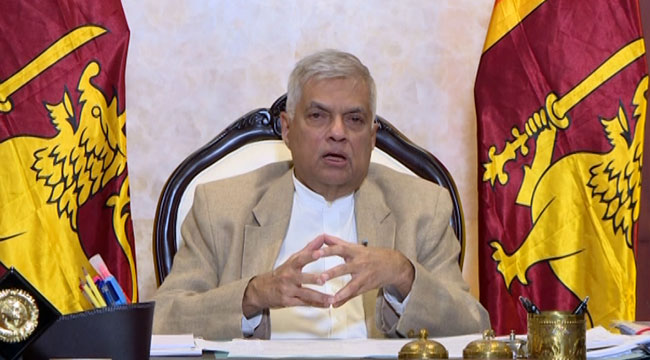
PM says elections after economic stability

Prime Minister Ranil Wickremesinghe says fresh elections can be held once the government manages to establish a firm economic foundation.

In a special statement, Prime Minister Wickremesinghe said firstly the economy must be stabilized and then elections can be held.

The Prime Minister noted that once the critical issues are resolved, the public should be given an opportunity to elect 225 suitable representatives to Parliament.

Premier Wickremesinghe said the responsibility and power to elect suitable representatives to Parliament lie with the citizens.

Prime Minister Ranil Wickremesinghe also reiterated the importance of uniting to tackle the financial crisis.

Prime Minister Wickremesinghe said the world will only assist Sri Lanka if they sense a strong urge and dedication from the people including politicians.

The Premier said politicians and people as a whole must show the world that we are determined to rebuild Sri Lanka.

The Prime Minister therefore requested all factions to support the programme taken forward to resolve the issues faced by the country without committing various acts of sabotage.

I am proud of my breasts says Hirunika

Samagi Jana Balawegaya (SJB) member Hirunika Premachandra says she is proud of her breasts.

She made the comments after some people began to make fun of her exposed breasts during a protest staged today.

“I am proud of my breasts! I breastfed three beautiful kids. I nurtured them, comforted them and dedicated my whole body for them. I am sure people who make fun of my exposed breasts ( due to the clash with the police) also sucked thier mothers nipples until its raw when they were infants. Anyway when you are done talking, making memes and laughing about my breasts , there was ANOTHER civilian died in a queue… Just so you know!” she said in a post on social media.

A group led by Hirunika Premachandra staged a protest near the private residence of Prime Minister Ranil Wickremesinghe at 5th Lane today.

The former MP demanded to meet the Prime Minister to hand over a letter.

However, the Police placed barricades and prevented the protesters from getting close to the Prime Minister’s residence.

A tense situation also took place when some women who accompanied the former MP attempted to force their way past the barricade.

Posted in Uncategorized

Dozens of Sri Lanka bondholders join for debt-restructure talks

More than 30 asset managers holding Sri Lanka’s international bonds announced on Tuesday the formal launch of a creditor group to start debt restructuring talks with the island nation, according to a statement from legal adviser White & Case LLC.

Amundi Asset Management, BlackRock, HBK Capital Management, Morgan Stanley Investment Management and T. Rowe Price Associates Inc are among members of the group’s steering committee, which has Rothschild & Co as a financial adviser.

“The Group is broadly representative of Sri Lanka’s bondholder base, both by type of institution and by geography, and holds Bonds across each outstanding series,” the statement added, though it did not specify the percentage of bonds it holds on the outstanding $12.6 billion overseas sovereign debt.

Sri Lanka has hired heavyweight financial and legal advisers Lazard and Clifford Chance as it prepares for the difficult task of renegotiating its complex web of creditors, including bilateral lending from Japan, India and China.

The creditor group said it was ready to engage in talks with both Sri Lanka’s authorities and other creditors, adding that the country should “implement a package of meaningful reforms and fiscal adjustments.”

Economic mismanagement and the COVID-19 pandemic hit have left the country of 22 million people battling its worst financial problems since its independence in 1948, and a lack of foreign exchange reserves has stalled imports of essentials including fuel, food and medicines.

Late Tuesday, a privately held bondholder sued Sri Lanka in the U.S. District Court in Manhattan over the country’s alleged default on a $1 billion sovereign bond maturing next month.

Hamilton Reserve Bank Ltd demanded immediate payment of $257.5 million of principal plus interest, saying Sri Lanka had stopped servicing its sovereign debt and missed payments on two other bonds, causing a cross-default.

An International Monetary Fund (IMF) staff mission arrived in Sri Lanka early this week to continue talks on a bailout program.

Source: Reuters

Top level Indian delegation to visit SL tomorrow on special aircraft for 3 hours

A top level Indian government delegation led by Chief Economic Advisor V. Anantha Nageswaran will arrive in Sri Lanka tomorrow (June 23) on a special aircraft to assess the ground situation here in pursuit of further economic assistance, Daily Mirror learns.

The delegation will stay in the country only for three hours and hold talks with both President Gotabaya Rajapaksa and Prime Minister Ranil Wickremesinghe.

The visit is consequent to the meetings held by Sri Lankan envoy in New Delhi Milinda Moragoda with Indian External Affairs Minister Dr. S. Jaishankar and Finance Minister Nirmala Sitharaman on June 20.

India is currently in the process of finalising another credit line of US $ 500 million for Sri Lanka to purchase oil. The country is undergoing its worst ever economic crisis with people queuing up for miles at filling stations.

India-Sri Lanka relations were marked by such specially arranged visits for short durations during the latter part of the war against the LTTE in 2009.

‘We want justice, not fuel’: Sri Lanka’s Tamils on north-south divide – THE Guardian UK

For months now, the sounds of protest and anger have rung out across Colombo, Sri Lanka’s largest city. Every day, along the city’s seafront promenade of Galle Face, people have gathered in their tens of thousands to rage against the government for plunging the country into its worst financial crisis in modern history.

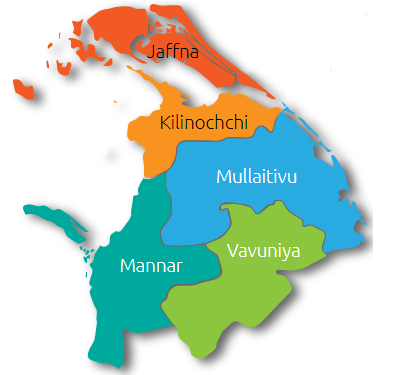
But 200 miles north, in the district of Mullaitivu, the streets are silent. The economic crisis has hit Sri Lanka’s Tamil minority, who are concentrated in the north and eastern provinces, as hard as those in the south; the fishermen here say they are already starving. But they will also tell you that protesting is a privilege in Sri Lanka – one they have never been afforded.

“If we staged a protest here like they are doing in Galle Face, they would shoot us dead,” said Ravikaran Thurairajah, 58, a former councillor from Mullaitivu who has been arrested 14 times for his involvement in local peaceful demonstrations. “We respect their struggle, but we don’t see our struggles represented there.”

It was 13 years ago that Sri Lanka’s three-decade civil war between the Tamil separatist militant group, the Liberation Tigers of Tamil Eelam (LTTE) – commonly known as the Tamil Tigers – and the Sri Lankan military came to a bloody end in this district. Tens of thousands lost their lives as the LTTE was defeated and up to 100,000 people, mostly Tamils, were abducted by the Sri Lankan armed forces and never seen again.

Since then, many in Mullaitivu have not stopped demanding justice, accountability and political representation for Tamils. Among them is Mariasuresh Eswari, 49, whose husband, Mariyadas, a fisher, was taken by the navy in March 2009 as he went to collect his catch. He never came back.

In a protest that has gone on for more than 3,000 days, dozens of wives and mothers have sat in a camp outside the local administrative offices, demanding the return of their loved ones or answers as to where they are. But the price these women pay is heavy.

“Every time we protest, they issue court orders to stop us,” said Eswari. “We have been harassed, groped and beaten by police. They use indecent language against us, and I had to be hospitalised recently after police used force against us. Military intelligence has us under constant surveillance.”

With tears in her eyes, she pointed to her husband’s photograph on the wall, yellowing and mottled with age. All around in this makeshift office, the missing people of Mullaitivu stare out hauntingly from the walls: old men with furrowed brows, girls stiff in school uniforms with bows in their hair, and teenage boys awkwardly Photoshopped on to tropical backgrounds.

“Where were the protests in the south when the military killed and took away our families?” asked Eswari, as she recounted clambering over dead bodies with her children in her arms as they tried to flee to safety at the end of the war. “It’s easy for them to protest there, it’s not the same here. When I see the Colombo protests, all I see is discrimination.”

While those in Mullaitivu are supportive of the calls in Colombo for the resignation of the president, Gotabaya Rajapaksa, who is part of Sri Lanka’s most powerful political family, there is also frustration. The Rajapaksa dynasty had always played on Sri Lanka’s ethnic tensions to gain the votes of the Sinhalese majority, and has almost no support among Tamils.

“We already rejected the Rajapaksas and their racist majoritarian politics a long time ago,” said Thurairajah, the former councillor. “Unlike those people in Colombo who are now protesting, we never voted for them in 2019. We always said this family would destroy this country.”

Mahinda Rajapaksa, the former president, was in power and Gotabaya Rajapaksa was head of the armed forces during the final, brutal phase of the war when most deaths occurred in the north. Since Gotabaya Rakapaksa became president, all progress towards war crimes tribunals and accountability mechanisms for wartime atrocities has been halted.

There were fears that by joining the economic protests, other issues inflicted on the Tamils in the north, particularly around land, would be drowned out. The loss of Tamil land to military and government agencies is seen by many as a concerted effort to change the demography of the region. Several local Hindu temples where Tamils have been worshipping for hundreds of years have recently been seized by the archaeology department for excavation, and new Buddhist temples are being built in their place.

In Mullaitivu, dozens of farmers have spent over a decade unsuccessfully trying to reclaim their land, which they say was illegally occupied by the military and where the Gotabaya naval base, named after the president, now stands.

“There have been invitations from the south for us to join them in protest, but there is a clear distinction from what they want and what we want,” said Prabhakaran Ranjana, 55, whose son has been missing since May 2009. “We don’t want fuel and economic assistance from the government, we want answers. We want justice for our people, we want our land back.”

Though widespread anti-government protests in Colombo have been largely dominated by the Singhalese-Buddhist majority – with Muslims and Christians also taking part – significant attempts have been made to include Tamils. An event was held where the national anthem was sung in Tamil, a very rare occurrence. And for the first time, memorials for those who died at the end of the war in Mullaitivu and a commemoration of the burning of the library in the Tamil city of Jaffna – considered one of the worst cultural atrocities carried out by the Sri Lankan military during the war – were held on 18 May.

Nonetheless, these efforts have all come up against issues exposing the continued ethnic segregation of the island. A Buddhist monk said on stage that the national anthem should only be sung in Singhala, and attempts were made to stop the Mullaitivu memorial on the basis that it was glorifying the Tamil Tigers. Conflicts over the language used in the memorial were particularly thorny; in the south, 18 May is celebrated as a day of victory, but in the north it is known as the anniversary of Mullaitiv.

Unlike in the south, which has benefited from decades of investment and development, people in Mullaitivu said that dire economic circumstances were nothing new for them. During the war they had no access to sugar, milk or soap, and many survived on a boiled rice porridge, with the adults drinking the starchy water and giving the children the grains. “It feels like those war days again,” said Ranjana.

The mounting economic deprivation has, however, pushed one group in Mullaitvu to breaking point. Fishers said they were on the brink of starvation, as without paraffin to power their boats they could no longer go out to fish. Usually, 1,600 boats would go out a day, supporting about 12,000 jobs, but now they are lucky if they can send out any at all.

“There’s a bleak future for us if we don’t get fuel for the boats,” said Alagarasa Rasarathina, 53, who has been a fisher all his life. “If we want to eat, we need to go to sea.” The fishers said they were pooling their resources to buy some paraffin on the hidden market for seven times the usual price, but even that was hard to find, and would not have supported the community.

“It’s very difficult to share this small catch among all the fishermen – it’s not enough to feed all the families,” said Rasarathina. “People are already going hungry, they will start dying soon.”

Things were even tougher for the female labourers who depend on small pieces of work fixing and cleaning fishing nets in exchange for some of the catch. Now they have nothing at all. Vaithaijah Mariyai, 59, who lost five children in the war and relied on small pieces of work on the boats, is living off donations, the last of some leftover fish and some vegetables she picked from the side of the road. “I don’t know how I will survive after this,” she said.

The fishers have recently held protests outside the district offices, accusing the government of abandoning them to their deaths, but still no fuel has arrived. “Take a photograph of us,” said one fisher, Thiyakarasa Thiyagalingam, 42, as he sat looking out bleakly at all the grounded fishing boats. “I don’t know how much longer we will be here.”