Sri Lanka call by German warship under Indo-Pacific strategy

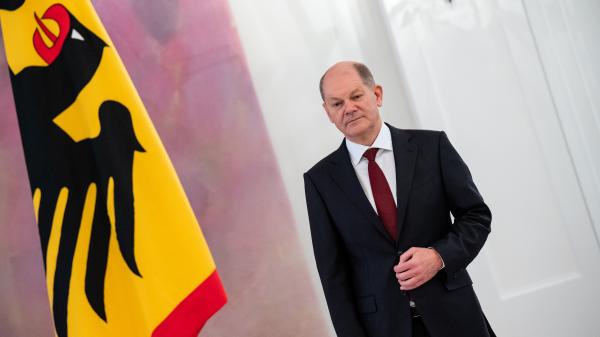
With Germany now following an Indo-Pacific strategy to keep sea lanes open for global trade, the frigate Bayern will visit Sri Lanka in January, Ambassador to the Indian Ocean island, Holger Seubert said.

Germany unveiled an Indo-Pacific strategy in 2020.

https://www.auswaertiges-amt.de/en/aussenpolitik/regionaleschwerpunkte/asien/indo-pazifik-leitlinien-fortschritt/2481700

“Is there any hidden agenda by the Germans of assertion for new zones of influence? What’s the background of this decision?” Seubert said addressing Top German Brands in Sri Lanka.

Ambassador Seubert said there were two pillars to Germany’s Indo-Pacific strategy.

“First of all, we are convinced that the future of international relations in the region of Indo Pacific will be shaped here in the direct neighborhood of Sri Lanka,” Ambassador Seubert said.

“And the second pillar of our Indo Pacific strategy is free and open trade lines. So we are a traditional trading country and have been so for many decades. That’s why free and open and shipping routes are so essential for us.”

“But that’s not a political or military statement. It is basically a statement for free and open shipping lanes.”

Germany is among the top three importing nations of the world and also exporters along with China and the US.

Germany had a presence in Asia and the Pacific including mainland China and islands until World War II. Most of them went to Japan at the end of the war. In World War I Japan was allied with Britain.

After the end of World War II Japan lost the territories and some are now under US control. The Bayern is visiting Asian nations has been in Naval exercises with Japan, Australia and ASEAN nations.

Sri Lanka bans travellers from several South African Countries

As the newly-detected highly mutated Covid-19 variant of concern ‘Omicron’ sparked serious global worry, Sri Lanka has decided to ban the arrival of foreign travellers who have been to six countries in the African continent.

Accordingly, passengers with a travel history – including transit – to South Africa, Namibia, Zimbabwe, Botswana, Lesotho and Eswatini (Swaziland) within the past 14 days will not be allowed entry to the island nation with effect from midnight on 28 November.

In a communiqué, the Director-General of Health Services noted that irrespective of the COVID vaccination status, the travelers aged 12 years and above, who arrived in Sri Lanka on 26 and 27 November from the aforementioned countries, would be referred to a PRC test upon arrival.

If the PCR test turns out to be negative for the virus, the travelers will have to undergo mandatory quarantine.

All travelers of 12 years and above will subsequently be referred to a PCR or rapid antigen testing on Day 14 and released from quarantine with a negative test report.

The new variant was first reported to the World Health Organization (WHO) from South Africa on 24 November. It has also been identified in Botswana, Belgium, Hong Kong and Israel.

It was revealed that the virus strain, first called B.1.1.529, carries an unusually high number of mutations. Researchers said the Omicron variant has about 50 mutations, more than 30 of which are on the spike protein.

With increasing concerns across the world over the new COVID variant of concern, the United Kingdom was the first to impose a travel ban on six countries in southern Africa.

Later, the United States, EU countries and Switzerland also temporarily halted flights to and from some southern African countries.

Japan announced that travellers from much of southern Africa will need to quarantine for 10 days starting from Saturday and take a total of four COVID tests during that time.

India has ordered more rigorous screening and testing for travellers arriving from South Africa, Botswana and Hong Kong, according to local media.

Meanwhile, Iran will ban travellers from six southern African countries, including South Africa. Iranians arriving from the region will be admitted after testing negative twice, state TV says.

In response, South Africa’s Health Minister Joe Phaahla told reporters that the flight bans were “unjustified”.

“2/3 Majority Hinges On SLFP MPs: When I Attack, It Will Come In Unexpected Ways”: Sirisena Strikes Back

Former President Maithripala Sirisena today warned the Government of the consequences as a result of the statements being made against him by Minister Mahindananda Aluthgamage.

The former President and leader of the Sri Lanka Freedom Party (SLFP) warned that such statements could have repercussions on the relationship between the SLFP and the ruling Sri Lanka Podujana Peramuna (SLPP).

Sirisena said that Aluthgamage has been repeatedly making statements against him in Parliament, despite the SLFP being part of the Government.

SLFP General Secretary Dayasiri Jayasekera also spoke saying that the SLFP has 14 MPs in Parliament.

He said that as a party, the SLFP will not tolerate its leader being attacked by a Government MP.

Jayasekera warned that if Aluthgamage continues to make unfounded allegations then the SLFP will also not remain silent.

However, Aluthgamage stood by his statements and insisted that all he said were facts.

He said that he was trying to compare the expenses of the former President and current President.

Aluthgamage said that he had a right to show that the current President had reduced expenses as compared to the expenses of the former President.

Sirisena responded saying that he set an example as President by not travelling frequently in helicopters and reducing overseas travels.

He also warned that the Government has 2/3rd majority because of the SLFP.

Posted in Uncategorized

US invites Taiwan to ‘Summit for Democracy’, infuriating China and Ignores Srilanka

The Biden administration has invited Taiwan to its “Summit for Democracy” scheduled to be held next month, a move that infuriated China, which views the democratically governed island as its territory.

The first-of-its-kind gathering was announced in the first foreign policy address of President Joe Biden in February, when he stated that he would return the United States to global leadership to face down authoritarian forces led by China and Russia.

China and Russia have been excluded from the 110 participant list on the State Department’s website for the virtual event on 09 and 10 December, which aims to help stop democratic backsliding and the erosion of rights and freedoms worldwide.

Taiwan’s Foreign Ministry said the Government would be represented by Digital Minister Audrey Tang and Hsiao Bi-khim, Taiwan’s de facto ambassador in Washington.

“Our country’s invitation to participate in the ‘Summit for Democracy’ is an affirmation of Taiwan’s efforts to promote the values of democracy and human rights over the years,” the ministry added.

China’s Foreign Ministry said it was “firmly opposed” to the invite.

“U.S. actions only go to show democracy is just a cover and a tool for it to advance its geopolitical objectives, oppress other countries, divide the world and serve its own interests,” ministry spokesman Zhao Lijian told reporters in Beijing.

Meanwhile, several other countries, including Sri Lanka have not been invited while India, Pakistan, Nepal and Seychelles have been invited to the summit.

Sri Lanka awards port project to China after dropping Japan, India

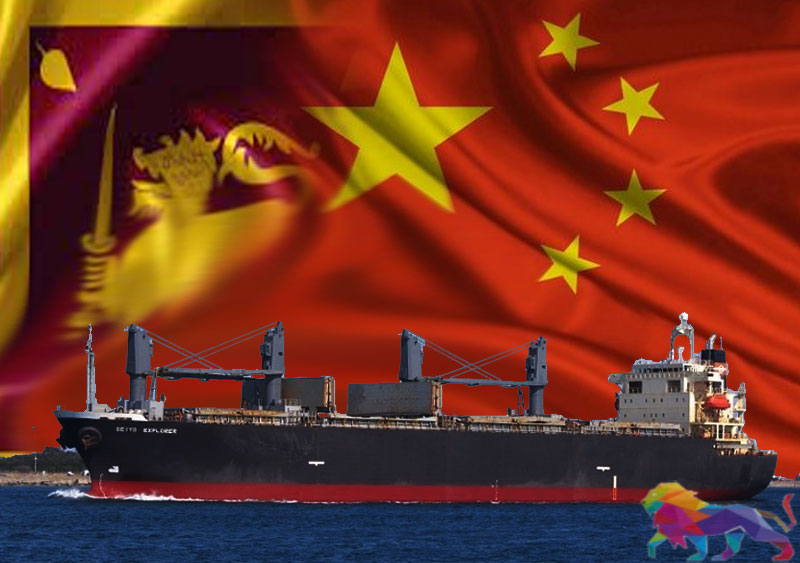
Sri Lanka will tap a Chinese company for a port project in Colombo, its largest city, that had been awarded to Japan and India before the partnership was scrapped early this year.

The decision highlights Colombo’s balancing act and comes a month after Indian conglomerate Adani Group was awarded another deal worth over $700 million to develop the West Container Terminal at the Colombo port. President Gotabaya Rajapaksa has said he wants to be “neutral” in Sri Lanka’s relations with India and China as the nation struggles with a shortage of foreign currency.

His cabinet on Tuesday agreed to have state-run China Harbour Engineering develop the Eastern Container Terminal while stipulating that local authorities would handle all operations. It cited recommendations by a cabinet-appointed committee as the basis for the decision.

The apparent pro-China tilt of Rajapaksa’s government is seen as a factor in the change of plans. Beijing has invested heavily in projects on the strategically positioned island under its Belt and Road infrastructure initiative.

Sri Lanka had signed a memorandum of understanding with Japan and India in May 2019, under previous President Maithripala Sirisena, to jointly develop the Colombo terminal. The operating company would be 51% owned by the Sri Lankan government, with the rest held by Japan and India.

Rajapaksa, who took office in November of that year, indicated at first that the project would stay on course.

That changed this past February, when the cabinet decided that the operating company would be wholly owned by Sri Lanka, pushing Japan and India out of the project. The Japanese government called the unilateral move “regrettable.”

China has continued to provide financing for Sri Lankan infrastructure, taking control of projects such as roads and port facilities in the process. Concerns have been raised that this support is pushing the country into a debt trap, as was seen in a 2017 lease deal of the Hambantota port in the southern coast of the island. The previous government leased it out to a Chinese state-run company for 99 years, in return for $1.1 billion as a part of Colombo’s efforts to repay debt to China.

Source:Nikkei Asia

Posted in Uncategorized

Scotland Police will not renew training contract with SL Police

Scotland Police has said that they will not renew their training contract with Sri Lanka’s police force during the remainder of the agreed period, which ends in March 2022, citing human rights concerns.

Chief Constable of Police Scotland Iain Livingstone told Scottish authorities that they have informed the British High Commission in Colombo, to advise that they are not going to seek a renewal of its engagement to support policing in Sri Lanka.

“Our training in Sri Lanka was suspended in early 2020. We have not deployed to Sri Lanka since that time, because the overseas Security and Justice Assistance assessment (OSJA), require a review to accurately reflect the current security and human rights issues in the region, which have changed since our initial deployment after the end of the Civil War in 2010,” he said.

He also said that the OSJA assessment review remains incomplete.

“As such there will be no further deployments of Police Scotland officers to Sri Lanka during the remainder of the agreed period, which ends in March 2022,” he has said.

“We remain, of course, committed to supporting the international development of policing services right across the world, so that we can enhance and enable human rights or we can underline the values that we hold dear of integrity, fairness and respect. Those values will always be at the heart of the work that we deliver in Scotland and at the heart of everything we do internationally”, he added.

Earlier, Human Rights Watch (HRW) urged the international community, including the UK government’s Police Scotland, to suspend assistance until the SL government takes concrete steps to investigate police abuses.

“Sri Lanka’s police are increasingly killing and abusing people under cover of the Covid-19 pandemic measures and an anti-drug campaign,” the HRW earlier stated.

Posted in Uncategorized

Special team to scrutinize quality of all ferries in EP

A special team will be dispatched to inspect the quality of all ferries currently in operation in the Eastern Province, Eastern Province (EP) Governor Anuradha Yahampath said.

She said the team will be headed by the Police, Engineering Division of the Provincial Road Development Authority and the Navy, she said.

She made this statement when she visited the Kinniya Hospital this morning to see the people receiving treatment for injuries after a barge capsized in the Kurinchankerni area in Kinniya.

“We all need to make sure that such incidents do not happen again. This is not the time to point finger at each other. After the war, higher number of bridges in Sri Lanka were built in the Eastern Province. That is during the Mahinda Rajapaksa government. The longest brige in the Eastern Province also included with this. There was an alternative route but people did not want to use it. We will take further action on the recommendations contained in that report.

If there are culprits, we will not hesitate to take action against them. She said no one can evade responsibility.

However, at present, the transport facilities required by these people are being provided by the Navy, she said.

In addition, the government has paid attention to completing the work on this bridge as soon as possible, the governor added.

Posted in Uncategorized

Sri Lankan delegation visits India to observe on ground operation of election machinery

A delegation of Sri Lankan election officers visited India to observe the operation of election machinery on the ground level.

The Election Commission of India entrusted this responsibility to the District of New Delhi.

A short programme was also held at the AC-38 Voter Centre in the Delhi Cantonment area, a statement from the office of the Chief Electoral Officer said.

The visiting delegation from Sri Lanka was amazed to learn about the effective utilization of information technology in election offices and expressed interest in incorporating it into the Sri Lankan election machineries, the statement said.

During the event, the visiting delegation was given information on the various forms, including EROnet, GarudaApp, Voters Helpline app, PwD app, NVSP portal, Roll of BLOs, and the 1950 helpline. (ANI)

Posted in Uncategorized

Divisions within Government on seeking IMF help

Amidst proposals and recommendations by various economists and international rating agencies to seek International Monetary Fund (IMF) assistance, the Government of Sri Lanka is divided on seeking such assistance, both within the Cabinet of Ministers and the parliamentary group, according to Co-Cabinet Spokesman and Minister of Mass Media Dullas Alahapperuma.

Speaking during the Cabinet press briefing held yesterday (24), he admitted that there exists contradicting views within the aforementioned groups and stated that the Government will consider the pros and cons of both views and will implement the more favourable view. However, he further claimed that as of now the Government is yet to reach a final decision on the matter.

“Last week, an extensive discussion was held on whether to seek IMF assistance and various views were put forward by the Cabinet of Ministers on the pros and cons of working with the IMF. Similarly there exist two contrasting views among the parliamentary group as well,” he added.

According to Alahapperuma a comprehensive discussion on the matter was carried out by the Cabinet of Ministers last week where differing views were disclosed, setting out the pros and cons of working with the IMF.

During the press briefing, the need to explore the possibilities of securing a bailout from the IMF due to the increasing foreign reserves crisis was discussed.

Sri Lanka’s foreign reserves have, as per Central Bank of Sri Lanka (CBSL) data, fallen to $ 1.6 billion by the end of October from $ 2.1 billion at the end of September.

During this Cabinet meeting, Minister of Energy Udaya Gammanpila cautioned that the country was treading a very dangerous path if it didn’t formulate a proper plan to address the foreign reserves crisis. He proposed that the Government approach the IMF.

Explaining further he stated: “Although the IMF will lay down conditions in order to support us, we are still in a situation where we could bargain and negotiate the conditions,” Gammanpila explained to the Cabinet, adding that delaying such a move would put Sri Lanka in a worse situation that might compel the Government to go begging to the IMF. “Once we are in a worse situation a few months down the line, we will not be in a position to negotiate and will have to accept their (IMF) conditions.”

However, Minister of Trade Dr. Bandula Gunawardana, Minister of Water Supply Vasudeva Nanayakkara, and the Minister of Finance Basil Rajapaksa opposed seeking IMF assistance, claiming that the Government would not be able to persuade the people to accept the IMF’s conditions in return for financial support.

Nanayakkara observed that based on past experience, the IMF would call for the slashing of subsidies and harsh measures to bridge the budget deficit. Dr. Gunawardana also agreed and observed that the people would not be able to bear the conditions.

Adding to this view, Minister of Finance Basil Rajapaksa had stated that the Government will not be able to justify turning to the IMF. He added that the IMF conditions would not be marketable to the people. Meanwhile, CBSL Governor Ajith Nivard Cabraal too stated on Tuesday (24) that Sri Lanka will not seek assistance from the IMF.

Accordingly, as per reports, the Cabinet of Ministers had debated on the pros and cons of seeking IMF assistance for a one-hour period, where they had considered slashing subsidies now and resolving the crisis in the long term against continuing with the status quo and eventually being compelled to cut back on the import of essential items to resolve the forex issue.

The Cabinet meeting had concluded without reaching a final decision on the matter nor had they come to an agreement on an alternative programme to address the foreign reserves crisis.

TNA met German Ambassador for Sri Lanka

The TNA delegates held a meeting with the German Ambassador Excellency Holger Seubert and his deputy Olaf Maichow. This politically important official meeting took place at the Embassey in Colombo on Wednesday 24 November 2021 at 10 am.

It was attended by TNA MPs Selvam Adikalanathan, Vino Noharathalingam, and TELO media spokesperson Surenthiran.

The full implementation of the 13th Amendment proposed in the UN Resolution in an attempt to halt the land grabbing and ethnic dispersal a major issue faced by the Tamil people, Provincial Councils Elections, UN 46/1 Resolution, political solution, Prevention of Terrorism Act, its implications on Tamils, GSP tax concessions, were discussed.

The emphasis on the parties involved in the Tamil cause to voice unanimously, its significance, the steps taken for it, their progress, supporting parties and future moves were also explained by the Tamils side.

This is the most politically significant meeting of the Tamil side with Germany, an international super power, important stake holder in the European Union and in Europe, and a close ally of India lasted for almost an hour.

Surenthiran G
Media Spokesperson TELO
Tamil National Alliance