Sri Lanka warned against ‘Hitler’ wish by German Ambassador Holger Seubert

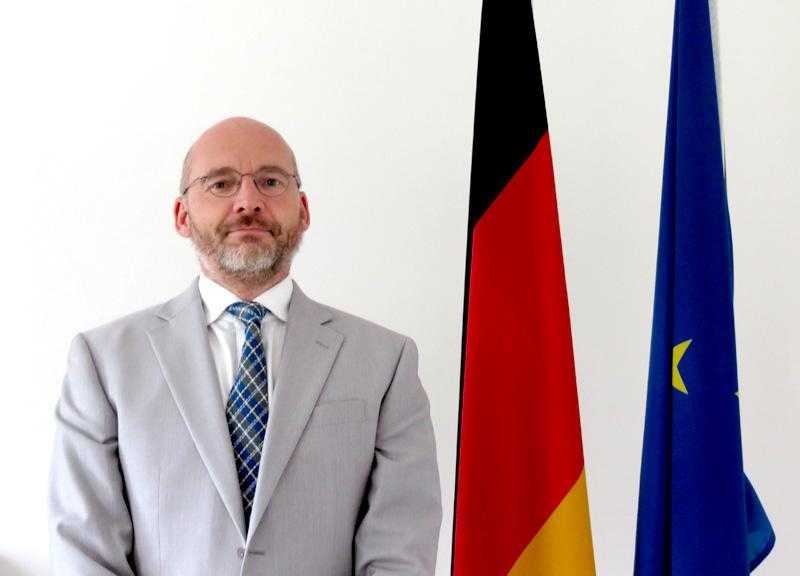
German Ambassador Holger Seubert has warned Sri Lanka against wishing for a ‘Hitler’ after a minister expressed a wish for President Gotabaya Rajapaksa to act more like Hitler, on top of a similar call by a Buddhist monk earlier.

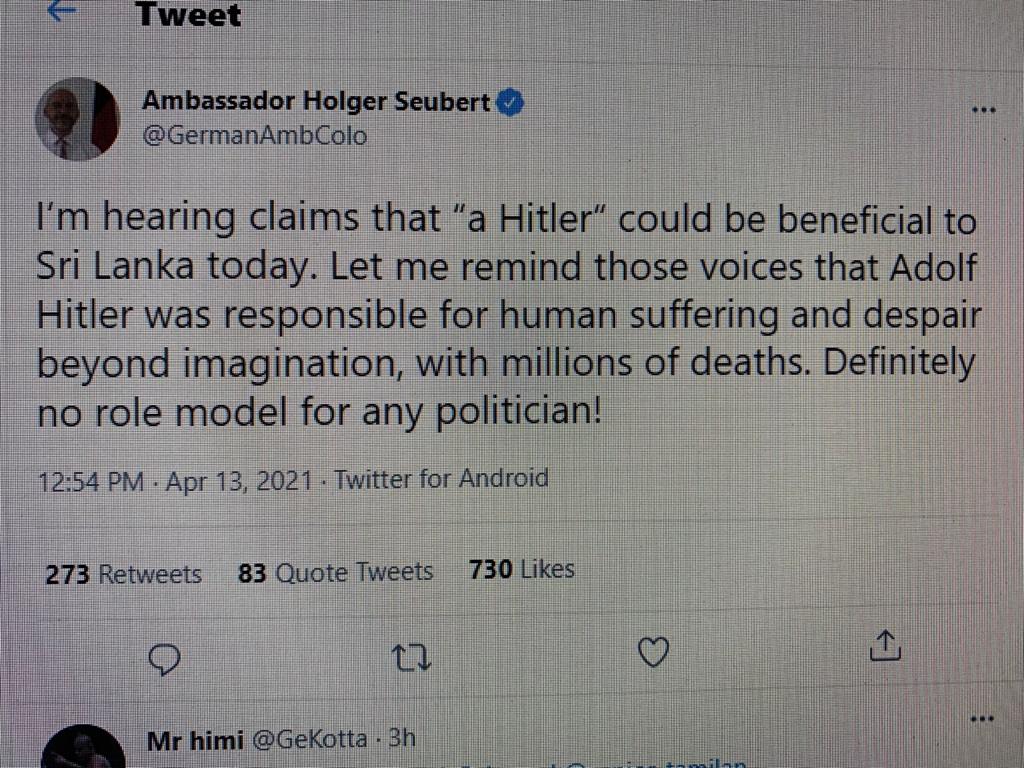
“I‘m hearing claims that “a Hitler” could be beneficial to Sri Lanka today,” Seubert said in a twitter.com message.

“Let me remind those voices that Adolf Hitler was responsible for human suffering and despair beyond imagination, with millions of deaths. Definitely no role model for any politician!”

Strong Man

Hitler came to power in the wake of money printing, hyperinflation and socialist policy confusion of the post-World War I World War I Germany’s Weimar Republic and later stabilization efforts by the Heinrich Brüning administration which increased unemployment on top of a depression triggered by the US Federal Reserve.

The illiberal socialist policy confusion of the Weimar Republic led to the call of a ‘strong man’ to come to power.

State Minister Dilum Amunugama claimed that people expected President Rajapaksa to run a dictatorship to some extent (yum tharamakerter).


“The Buddhist clergy also said it is ok to be a Hitler, that is good,” Minister Amunugama said. “Now criticism of the government is due to not being a Hitler. I also accept that.

“I do not think the President has a liking to become a Hitler immediately. If he is pushed to towards that, he will become a Hitler and the people will stop blaming him. Things will then happen well.”

Hitler rode to power on the strongly nationalist, anti-minority platform of the National Socialist (Nazi) party which killed and incarcerated millions of Jews, gypsies, homosexuals and later took land from Slavs in East Asia and Russia.

He had support from sections of the Lutheran church and banned all NGOs except some churches.

However Hitler also printed money, primarily through Mefo bills, a mechanism to circumvent a ban on money printing by Reichsbank, Germany’s then central bank cooked up by economy minister Hjalmar Schacht by discounting contractor bills through a third party agency.

Schacht had been at the Reichsbank during the Weimar Republic.

Sri Lanka’s central bank in addition to printing money indirectly by discounting contractor bills has engaged in the biggest outright money printing exercise in the history of modern Sri Lanka.

The Mefo bills discounting led to forex shortages in Germany as early as 1934 and Hitler promoted a Nazi autarky (autarchy) or what is now known as ‘self-sufficiency’ amid widespread import controls under his Wehrwirtschaft economic policy.

Self-sufficiency was also driven by the Allied naval blockade during World War I.

Hitler engaged in ‘import substitution’ long before the term became popular among Latin American nations which printed money through Argentina-style central banks and ran out of forex.

The Germany industrial complex went so far as to produce synthetic fuel, cellulose fibres and synthetic rubber, as forex shortages intensified.

Hitler also made a famous ‘Export or Die’ speech, a slogan used by Sri Lanka’s leaders during the 1980s money printing and currency depreciation.

After Hitler was defeated by the Allies and which include the Soviet Union at the time, liberals came back to power.

Germany became a global economic power under the Ordoliberals who started their economic program by setting up a new central bank, the Deutsche Bundesbank, which laid the foundation for the German Economic Miracle (Wirtschaftswunder) defying the Keynesian ideology of depreciation and state spending.

Germany rapidly outpaced Britain, which won World War II but continued to print money under Keynesian ‘stimulus’ and only ended foreign exchange controls 40 years later after Margarat Thatcher came to power applying Austrian economic principles.

Posted in Uncategorized

PC polls unlikely this year

The long-delayed provincial council (PC) elections are unlikely to be held within this year, with the passage of an essential legal amendment still pending, The Morning learnt.

Speaking to The Morning yesterday (12), Co-Cabinet Spokesman Udaya Gammanpila said that since the amendment to the Provincial Councils Elections Act No. 2 of 1988 is yet to be passed, the elections would most likely be held in 2022.

“We hope to reach a final decision soon. The next party leaders’ meeting will be held on 19 April where this would be discussed,” added Gammanpila.

Similarly, Sri Lanka Freedom Party (SLFP) General Secretary State Minister Dayasiri Jayasekara told The Morning that PC elections are most likely to be held at the end of this year or early next year.

The amendment proposed by the Ministry of Public Services, PCs, and Local Government is to hold PC elections either under the old system as per the Provincial Councils Elections Act No. 2 of 1988, which is the proportional representation (PR) system, or under the mixed system, i.e. to elect 70% of the members under the PR system and 30% under the first-past-the-post (FPTP) system.

The Sunday Morning reported last week that the Cabinet of Ministers, excluding a few senior members, has agreed to hold PC polls under the mixed system.

Currently, the terms of all nine PCs have expired and are presently functioning under the administration of the provincial governors.

China’s Defense Minister to arrive in Sri Lanka after New Year

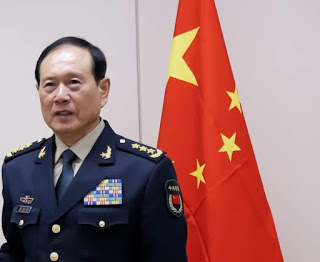
China’s Defense Minister General Wei Fenghe will arrive in Sri Lanka later this month to hold bilateral discussions with Government leaders and officials, making it one of the highest level visits undertaken by a Chinese government official since the Rajapaksa government was sworn into power, the Daily Mirror learns.

According to sources at the Foreign Ministry, the final dates of General Wei’s arrival are yet to be received but the visit is confirmed to take place after the Sinhala and Tamil New Year.

During his visit, Wei will hold discussions with President Gotabaya Rajapaksa, Prime Minister Mahinda Rajapaksa and other leading government officials. This is the second-highest visit to be undertaken by a Chinese official to Sri Lanka following senior Chinese diplomat, Yang Jiechi’s visit in October.

Meanwhile, dates are being finalised for President Gotabaya Rajapaksa’s visit to Beijing following a fresh invitation extended by President Xi Jinping during the recent discussion held between the two leaders earlier this month, sources said.

President Rajapaksa had assured his Chinese counterpart he would undertake a formal visit as soon as the travel restrictions ease due to the COVID-19 pandemic, but the Daily Mirror learns the visit is likely to take place sometime next month.

Proposed law will turn Port City into a province of China – JVP

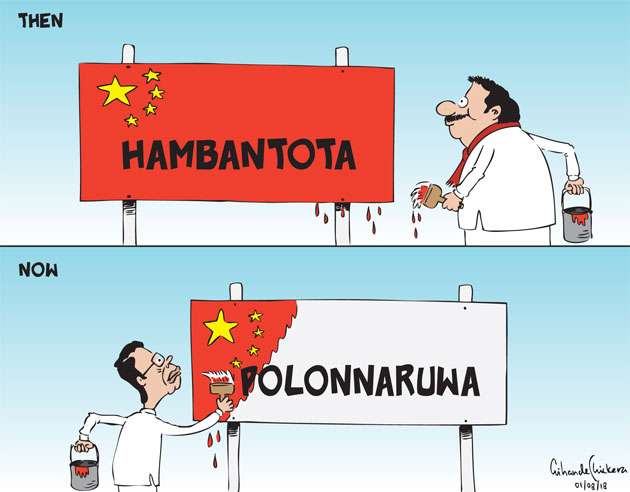
The JVP yesterday warned that Colombo Port City area was going to be another province of China if Parliament passed the proposed legislation for a Colombo Port City Commission, providing for sweeping tax breaks, tax-free salaries and to be an offshore financial centre.

Addressing the media at the party headquarters in Pelawatte, JVP leader Anura Kumara Dissanayake said that the draft bill, titled Colombo Port City Commission Bill, presented to Parliament by the government sought to exempt the Port City from the administrative control of any existing local government body. “Local government bodies consisting of people’s representatives have the administrative control of their respective local government areas. But the Port City is going to be under a Commission,appointed by the President. The members of that commission are going to enjoy immunity and none of them could be brought before a court of law of this country. The Commission is to be given special financial powers to maintain a separate fund

“Usually, the government’s revenue goes to the Consolidated Fund and approval of Parliament is needed for withdrawals from the Fund, but the Post City Commission is to be given powers to maintain a separate fund, separate independent of the Consolidated Fund. The proposed Commission is also expected to have powers to grant tax exemption. It is Parliament which has such powers. The financial affairs of the Port City will not come under the auditing of the Auditor General. It is proposed to hand over that task to private auditing firms. None of these instiutions are answerable to Parliament. It has been proposed to pay the salaries of workers in the Port City in foreign currency. It could be Yuan. The government with a two-thirds majority could rush this legislation through the House.”

Posted in Uncategorized

Sri Lanka seeks closer security tie-up with India to counter sea-borne terror in region

Sri Lanka’s Gotabaya Rajapaksa government is concerned that the banned Al Qaeda and Abu Sayyaf outfits may create a terror hub in the island nation which could have major implications for the southern Indian Ocean region.

ET has learnt that Lankan authorities are working closely with their Indian counterparts to probe the Al Qaeda-Abu Sayyaf network and its links in the Gulf and eastern and southern African regions.

Against this backdrop, expansion of security partnership could be on the agenda if the Lankan president visits India later in April. Rajapaksa is mulling a New Delhi visit, people in the know told ET.

Over the years, Sri Lanka has become a vulnerable trans-shipment hub for transnational organised crime (TOC) since the LTTE commenced drug trafficking and money laundering in the 1980s to fund purchase of arms and ammunition.

India’s security establishment believes that the Sri Lankan boat intercepted on March 25 off the coast of Vizhinjam, in Kerala, with narcotics and firearms could have been be a part of a narco-terrorism network with strong links to a group in Sri Lanka.

The Indian Coast Guard and the Narcotic Control Bureau (NCB) found 300 kg of heroin worth Rs 3,000 crore (LKR 720 million) stashed in the boat along with AK-47 rifles and 1,000 rounds of 9 mm ammunition. “A number of incriminating documents were also seized from the occupants of the vessel,” said the NCB, adding that six Sri Lankan nationals were arrested in this regard.

In March, a multi-national drug smuggling racket with links in both India and Sri Lanka was unearthed. The network may have been part of Easter bombings in Sri Lanka. The Lankan authorities are also probing the link of the network in Pakistan, ET has learnt.

Terrorists in Lanka are suspected to have links with drug cartels operating from Pakistan. The drug mafias in Pakistan have been using Lanka as a route to export drugs to Europe through sea routes. The money generated from drug smuggling was used to fund the terror activities in Sri Lanka, alleged sources.

In this regard, the revival of India-Sri Lanka-Maldives NSA level dialogue has been helpful in countering terror through the seas, according to experts on the subject.

Posted in Uncategorized

A grim new year for debt-trapped rural women in Sri Lanka – The Hindu

M. Champa Irangani is in no mood to celebrate ‘Avurudu’, or New Year, the biggest annual festival that Sri Lanka’s majority Sinhalese community observes mid-April, while Tamils celebrate the Tamil New Year around the same time.

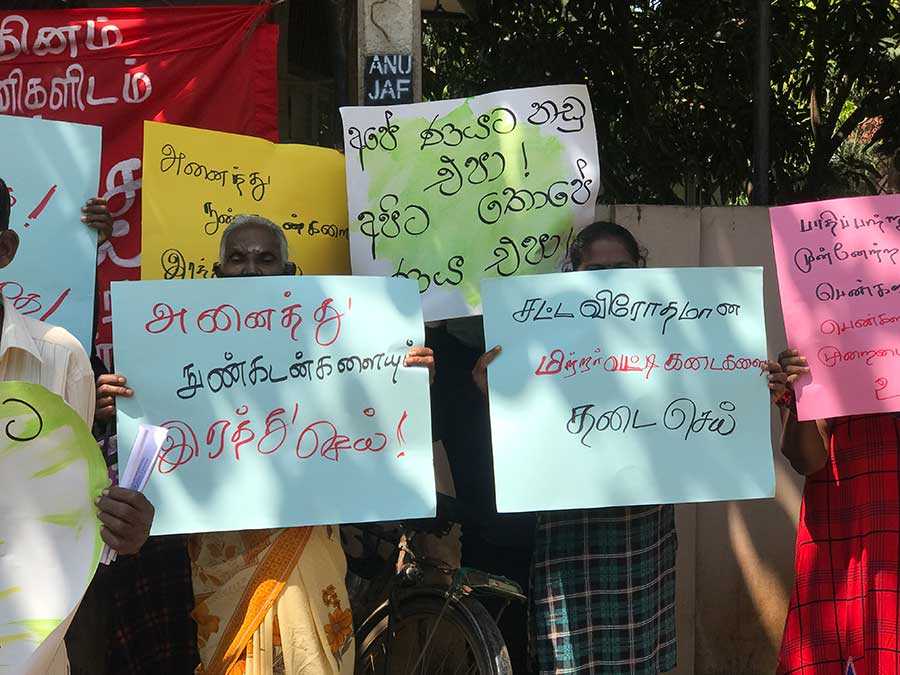
“The New Year will dawn only the day our debts are cancelled. Until then we cannot celebrate. Surely not, when so many women have died by suicide under the pressure of microfinance loans,” she says, seated with dozens of affected women who have been observing a ‘satyagraha’ off the main road in Hingurakgoda town, in Sri Lanka’s Polonnaruwa district, for a month now.

Seeking relief

They want their microfinance debt abolished, and an alternative source of credit that will free them from poverty, rather than worsen it. Their experience, shared by tens of thousands who have taken microfinance loans in Sri Lanka, not only counters popular claims in South Asia of microcredit alleviating poverty and empowering women, but also highlights the devastating consequences of the individualised, high-interest microfinance loans, entangling women in a pile of debt.

Ms. Irangani feels especially let down since there has been no relief in over a year after President Gotabaya Rajapaksa, whom she voted for, came to power pledging — among other things — to abolish their loans.

Their ongoing protest is the latest against the Rajapaksa government — after the farmers’ agitations in the southern Hambantota district — from among those who backed their party in the 2019 and 2020 polls.

President Rajapaksa’s astute election campaign in 2019 had two main thrusts – enhancing national security, on the heels of the Easter terror bombings that April, and improving rural livelihoods to develop the country. His poll manifesto ‘Vistas of Prosperity and Splendour’, which has since graduated to a national policy framework, promised to “ensure relief of village women falling victim from unregulated micro finance schemes”, instead offering “government-sponsored concessionary loan schemes and agricultural loans”.

Ms. Irangani had reason to be hopeful. “I went all out and canvassed for their candidate in the general elections [August 2020] too, asking women in my village to back their party so our fate might change, but here we are, hearing of more and more indebted women dying by suicide [nearly 200 women, according estimates]. They simply don’t care.” The government has spoken of possible low interest loans as alternatives, but the women are not convinced yet.

Drawing a circle in the air, she says: “Livelihoods have become a big zero”. If the pandemic severely affected the country’s economy — with external sector earnings dropping sharply, foreign reserves draining, and the Sri Lankan rupee plummeting to 203 against the U.S. dollar — daily-waged agriculture labourers like her, who were already reeling under debt, were in for even harder times, amid growing joblessness, falling wages and uncertainty.

Ms. Irangani’s “debt trap” began when she returned to Sri Lanka some years ago, after working as a domestic help in West Asia for seven years. Exhausting her meagre savings in an unexpected court battle, she resorted to a loan to survive, and soon, one loan led to another, as companies relentlessly sold easy loans at her doorstep. The lending companies had done the same with war-affected Tamil women in the north and east, who were struggling to rebuild their lives and livelihoods with little state support.

Exorbitant interest rates

“Banks refused to give loans without any collateral security. Many families had no steady income or big lands to cultivate. At a time when children in our village were going hungry, these microfinance companies offered money,” says Priyanthika Kumari, who heads the Collective of Women Affected by Micro Finance from a cluster of more than 60 villages in the district. “There are some 1,02,000 women in Polonnaruwa district who have taken such loans.”

The women paid exorbitant interest rates – 40 % to over 200 % — amid harassment from collection agents. They signed up for more loans to cope, to ensure their families can afford two decent meals. But despite regular repayments, their principal loans amounts remained undiminished, and their impoverished lives, unchanged.

When they realised that their exhausting labour was never going to be enough in the face of their mounting debt, they took to the streets, much like their Tamil counterparts who repeatedly agitated during the last five years, demanding a solution to the crisis.

In fact, it was their persistent calls that pressured the former Maithripala Sirisena-Ranil Wickremesinghe government to announce some targeted relief measures through the Central Bank in late 2018. Acknowledging the predatory nature of microfinance loans, the administration announced greater regulation, an interest rate cap on microfinance loans, a moratorium, and cheaper credit alternatives. But the measures proved too little, too late.

“It all sounded like a dream at that time, but eventually turned out to be a mirage,” Ms. Irangani recalls. The then incumbent government did not see through the measures announced in its last leg in power.

That is when President Rajapaksa made the promise, renewing the hopes of affected women. As that hope fades now, the women seated off the main road in Hingurakgoda say that if the government does not meet to their demands by the end of the month, they will launch a “fast unto death”. “We want to raise this issue nationally. We cannot afford to lose this struggle, we will not give up,” Ms. Priyanthika Kumari says.

What is behind the anti-Muslim measures in Sri Lanka? – Aljazeera

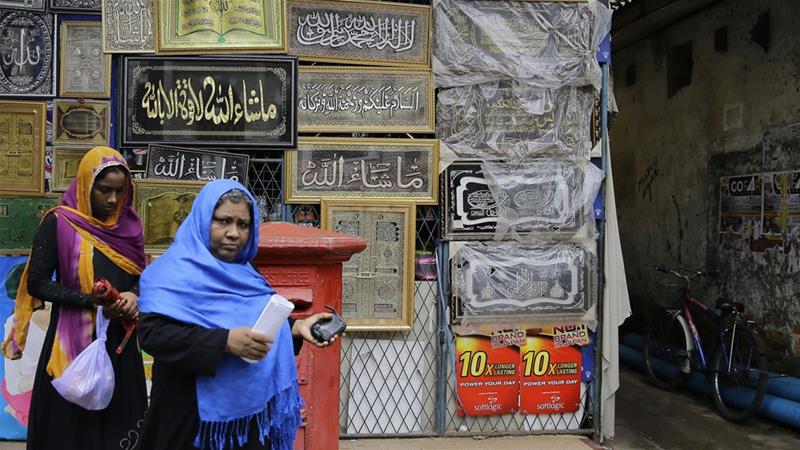
On March 13, Sarath Weerasekara, Sri Lanka’s minister of public security, announced that the government will ban wearing of the burqa and close more than 1,000 Islamic schools in the country. The minister was quoted as saying that “the burqa” was a “sign of religious extremism” and has a “direct impact on national security”.

The news was picked up internationally and resulted in several statements by human rights organisations and the UN special rapporteur on freedom of religion or belief, Ahmed Shaheed, as well as from Pakistan’s ambassador to Sri Lanka. Three days later the government stepped back from Weerasekera’s statement. Cabinet spokesman Keheliya Rambukwella announced that the decision “requires time” and a consultative process.

The burqa ban announcement caused a stir among Muslims, who saw it as yet another attack on their community. In the past few months, the government has undertaken a number of controversial measures under the banner of fighting extremism, which have increasingly intimidated the Muslim population and disregarded rule of law principles.

The anti-Muslim movement

Since it gained independence from the British in 1948, Sri Lanka has witnessed tumultuous relations between the Sinhala Buddhist majority, which makes up about 70 percent of the population and the Hindu and Christian Tamil minority, which accounts for roughly 12 percent. During the war between the military forces and the Liberation Tigers of Tamil Eelam (LTTE), other minorities, like the Muslims, who make up around nine percent of the population, were targeted less frequently by ultra-nationalist Sinhalese groups.

After the end of the civil war in 2009, an anti-Muslim movement initiated by the Bodu Bala Sena (BBS), with the monk Galabod Aththe Gnanasara at the helm, began to emerge. The BBS is an activist group led by Buddhist monks which mobilised around what they described as the threat posed by the “social separatism” of “extremist Muslims”. Their definition of extremism, however, seems to encompass the majority of Muslims’ everyday practices.

The BBS’s large public rallies and their strident social media campaigns normalised hate speech and everyday low-intensity harassment of Muslims across the country. Incitement by the BBS and the cultivation of anti-Muslim sentiment over the post-war years also led to violent attacks against small Muslim communities in 2014, 2017 and 2018. The BBS also aligned itself with similar groups in Myanmar.

Following these incidents, the local authorities did not take serious action against BBS and other similar groups and in some cases blamed Muslims for the violence.

In 2019, anti-Muslim hatred escalated further after eight suicide bombers pledging allegiance to the Islamic State detonated themselves at churches, hotels and other locations across the country on Easter Sunday. There was evidence of the failure to pursue available intelligence by the security establishment and negligence on the part of the political leadership. However, the media coverage of the event and government policy discussion in the aftermath primarily targeted the country’s Muslim population.

Experts rarely referenced the role of the anti-Muslim movement in radicalising local Muslims. In May, there were violent retaliatory attacks against Muslim communities in the northwest.

The government response to the attack was to embrace the anti-Muslim language of the BBS and initiate sweeping arrests of suspected followers of the group responsible for the bombings.

Since then, several prominent Muslims have also been arbitrarily targeted by the government, with little or no evidence produced of their wrongdoing. In April 2020, the police arrested Hejaaz Hisbullah, an activist lawyer, on suspicion of aiding the attackers. Then in May 2020, Ahnaf Jazeem, a young Muslim poet, was also detained under the same pretext. Recently, the former leader of the Jamati Islami, Hajjul Akbar was arrested and detained for a second time, again without charges being filed.

In the aftermath of the Easter Sunday attacks, a parliamentary sectoral oversight committee on national security was set up to put together proposals for terrorism prevention measures. It has made recommendations in 14 areas, many of which curb the religious rights of the Muslim minority.

The burqa ban and the closing of Islamic schools stem from these recommendations, as do several other measures recently taken. In early March, the government declared that all Islamic books imported into the country will need defence ministry approval. Several days later, it gazetted a set of regulations ominously sub-titled “Deradicalisation from holding violent extremist religious ideology” under the Prevention of Terrorism Act. The regulations give it powers to arrest and forward persons to a rehabilitation centre to be “deradicalised” for one year on suspicion without requiring any additional process.

Apart from the above, the government has sought other ways to intimidate the country’s Muslims. When the COVID-19 pandemic spread to Sri Lanka in the spring of 2020, it imposed a mandatory cremation policy for the COVID-19 dead and refused to allow Muslims to bury their dead, in accordance with their religion.

Muslims’ call for the burial option on religious grounds was written and talked about as “tribal” and “backward” and as reprehensible behaviour in the middle of a public health emergency. Despite condemnations at home and abroad and guidelines by the World Health Organization emphasising the safety of burials, the government maintained its position for nearly a year. Burial was permitted only recently under international pressure.

Demonising Muslims as a political strategy

Political elites in Sri Lanka have consistently demonised minorities and incited ethno-religious animosity to win elections. After the end of the war in 2009, when victory over the Tamil Tigers was glorified by the government, enmity against all other minorities and especially the Muslims was cultivated with renewed vigour.

The Rajapaksa family, which has dominated the political scene in Sri Lanka since 2005, was complicit in this cultivation until their electoral defeat in the 2015 elections. During their political campaigning after 2015, the Rajapaksas’ new party, the Sri Lanka Podujana Peramuna (SLPP), took on a Sinhala supremacist position, accommodating activist monks and anti-Muslim movement stalwarts.

Rhetoric regarding Muslim business prowess as challenging the ascendence of Sinhala entrepreneurs, Muslims conspiring to upend the majority status of Sinhalese or constituting a terrorist threat was widely used.

In October 2018, the Rajapaksas suffered a significant setback. Former president and then MP Mahinda Rajapaksa, in collusion with President Maithripala Sirisena staged a coup to take control of the government. They were defeated when the Supreme Court threw out their claim to legitimacy and the Rajapaksa brand suffered some damage as a result.

The 2019 bombings energised the Rajapaksas’ familial politics and helped them overcome the momentary unpopularity they were struggling with. The Rajapaksas attempted to leverage the bombings to their political advantage in the immediate aftermath. They accused the ruling regime of concentrating on reconciliation with minorities and neglecting security. When several months later, Gotabaya Rajapaksa, the brother of Mahinda Rajapaksa, was nominated as the SLPP’s presidential candidate, he declared in his platform: “My main task would be to ensure that our motherland which is once again under threat from terrorist and extremist elements is safe and protected.”

Using anti-minority and pro-security rhetoric in his campaign, Rajapaksa won the presidential election by a high percentage of Sinhala Buddhist votes and appointed his brother, Mahinda, the former president as prime minister. Since then, at every opportunity, the president has reiterated his commitment to this majority and outlined his actions to combat Islamic extremism, and the government has pressed forward with anti-Muslim policies.

In this context, the recent flurry of anti-Muslim government activity, including the burqa ban, serve not only to mitigate the fallout from the shift in position on COVID-19 burials, but also to distract from the Rajapaksa administration’s ongoing failures. The cabinet is facing anger over a vast tax scam, mounting opposition to its permission of deforestation, and growing public anxiety over the economic downturn. It is likely that anti-Muslim activities will increase if their popularity continues to decline.

But the anti-Muslim policies of the government may be backfiring. In March, it suffered a defeat at the UN Human Rights Council (UNHRC), which passed a resolution empowering the UN High Commissioner for Human Rights to collect and preserve information and evidence of war crimes committed during the civil war. The motion went through mainly because of the loss of support for the government from some Muslim-majority countries, who abstained from voting. The resolution included reference to the government’s treatment of Muslims in its COVID-19 response and the continued marginalisation of minorities.

The current government’s inability to mobilise its constituency around anything other than ethno-religious animosity is a legacy of Sri Lanka’s post-independence politics that looks set to continue in the long term. The UNHRC resolution was a welcome development. However, the future outlook for minorities in the country remains bleak. Ten years after a devastating war the Sri Lankan polity shows little evidence of having learnt from its past.

The views expressed in this article are the author’s own and do not necessarily reflect Al Jazeera’s editorial stance.


Posted in Uncategorized

Govt. plans to bring new bill to control Internet publishing

Arrangements are being made to present a new bill in order to control the alleged false information circulated on the Internet at the Cabinet meeting scheduled to be held on April 19, sources said.

The new bill seeks to provide protection from false information and practices allegedly taken place on the Internet.

However, Justice Minister Ali Sabry has told Aruna newspaper that it has become a timely matter to introduce new laws to curtail damage caused by false information maliciously circulated on the Internet by various interested parties.

Aruna newspaper is published by Liberty Publication which is chaired by Dilith Jayaweera.
The paper says the new laws will cover areas such as the country’s national security, public health, public peace, public finance, state relations with other countries and alleged moves to weaken the public confidence in the state.

The bill is said to propose actions such as deactivating the fake accounts that circulate false information, remove websites that continuously spread false information and reducing the speed of the Internet when false news are circulated.

However, several rights activists said the new bill is aimed at controlling the social media.
Professional Web Journalists Association Freddi Gamage said his association was the first one that voiced against Sirisena’s government when it banned social media and “in the same spirit, we will express our protest against this new move which is clearly aimed at controlling the Internet based media.”

He said although the government claims that some people are using the Internet to sling mud at the government, “actually the certain people related to the government are using the Internet to throw mud at the opponents.”

Time for the UK to Sanction Sri Lanka’s Army Commander – ITJP

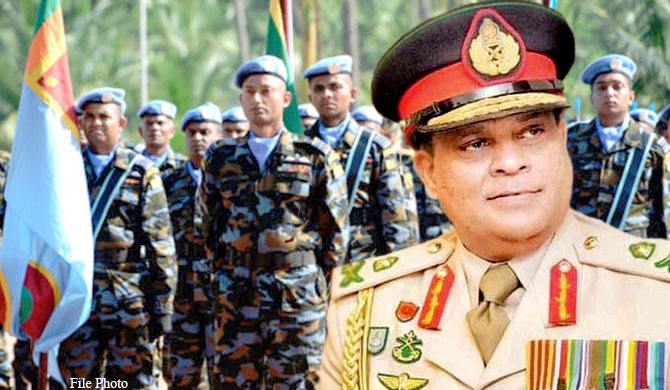
Johannesburg: The International Truth and Justice Project has compiled a 50-page dossier which it has submitted to the Sanctions Department of the UK’s Foreign Commonwealth and Development Office on General Shavendra Silva. The Submission argues why Silva, who is Sri Lanka’s current Army Commander, should be designated under the United Kingdom’s Global Human Rights (GHR) Sanctions Regime established on 6 July 2020.

“We have an extensive archive of evidence on the final phase of the civil war in Sri Lanka, meticulously collected by international prosecutors and lawyers. The testimony of victims and witnesses – many now in the UK – was vital in informing this Submission, and making the linkages to Shavendra Silva and those under his command,” said the organisation’s executive director, Yasmin Sooka.

The ITJP Submission details Shavendra Silva’s role in the perpetration of gross human rights violations including of the right to life when he was 58 Division commander during the final phase of the civil war in 2009 in the north of Sri Lanka. It draws on searing eyewitness testimony from Tamils who survived the government shelling and bombing of hospitals and food queues in the so called No Fire Zones, many of whom now reside in the UK as refugees. The Submission also looks at Silva’s alleged involvement in torture and sexual violence, including rape, which is a priority area of the UK Government’s foreign policy.

“The US State Department designated Shavendra Silva in 2020 for his alleged role in the violations at the end of the war but the remit of the UK sanctions regime works is broader and includes his role in the shelling of hospitals and other protected civilian sites during the military offensive. This is important in terms of recognising the full extent of the violations, as well as supporting the US action,” commented Ms. Sooka. “UK designation would be another significant step forward in terms of accountability and would be in line with the recent UN Human Rights Council Resolution passed in Geneva for which Britain was the penholder,” she added.

Political will in applying the UK’s new sanctions regime to Sri Lanka was apparent in a recent parliamentary debate which saw eleven British parliamentarians ask why the UK government had not applied sanctions against Sri Lankan military figures, including Shavendra Silva who was named six times in this context .

US tells Sri Lanka Biden committed to democracy

The United States (US) has briefed the Sri Lankan Government on the commitment of US President Joe Biden to democracy.

The matter was discussed when Foreign Minister Dinesh Gunawardena met with the US Ambassador to Sri Lanka, Alaina B. Teplitz at the Foreign Ministry on Friday.

Joe Biden assumed duties as the President of the United States in January and his administration has since implemented its new policies, including the policy on human rights.

“The Ambassador and Foreign Minister discussed a range of issues, from the pandemic and the U.S. contribution to COVAX, to trade and President Biden’s commitment to democracy,” US Embassy Spokesperson Nancy VanHorn told Daily Mirror.

Meanwhile, the Foreign Ministry said that the United States and Sri Lanka are to broaden relations in multiple areas.

“The Minister briefed the Ambassador on the various positive developments taking place in the country under the guidance of President Gotabaya Rajapaksa. They also discussed ways and means of enhancing bilateral cooperation including through development assistance. Climate change, green energy and information technology were identified as priority areas for US support,” the Foreign Ministry said.

The United States, which had earlier withdrawn from the UN Human Rights Council, has now reengaged with the Council.

The US is expected to take a lead role again in the Council on the Sri Lanka issue over the next few years.