AG authorizes to proscribe 11 Islamic organizations

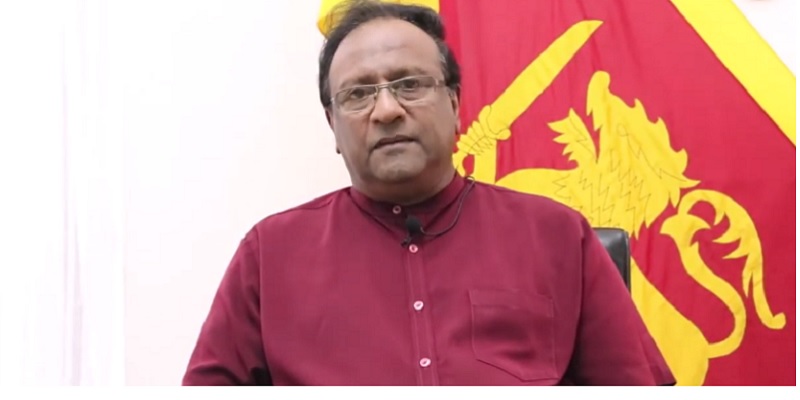
Attorney General Dappula De Livera has authorized the proscription of 11 Islamic Organizations connected to extremist activities, said State Counsel Nishara Jayaratne, the Coordinating Officer to the Attorney General.

The organizations are :

01. United Thowheeth Jama’ath – UTJ
02. Ceylon Thowheeth Jama’ath – CTJ
03. Sri Lanka Thowheeth Jama’ath – SLTJ
04. All Ceylon Thowheeth Jama’ath – ACTJ
05. Jamiyathul Ansaari Sunnathul Mohomadiya – JSM
06. Dharul Adhar @ Jamiul Adhar
07. Sri Lanka Islamic Student Movement – SLISM
08. Islamic State of Iraq and Syria
09. Al-Qaeda
10. Save the Pearls
11. Super Muslim

The move follows the Government’s decision in March to proscribe a number of Tamil diaspora groups, including some influential organizations based in the UK.

The Government also banned a number of individuals based in the UK, Germany, Italy, Malaysia and several other countries.

Posted in Uncategorized

Where did Buddhism get its reputation for peace?

When teaching an undergraduate class on “Buddhism and Violence”, I usually start by asking students to rank religious groups in the order of how many followers they have in the British army. Typically Christians are at the top of students’ lists and Buddhists at the bottom.

This reflects an unconscious bias many of these students have regarding Buddhism – they assume that all Buddhists are peaceful and that a Buddhist isn’t likely to embrace a career that may well involve violence at some point.

So they’re always surprised to find out that there are more Buddhists in the British Army than Muslims and Sikhs put together – despite the relatively small number of Buddhists in Britain.

But why do so many people in the west associate Buddhism with peace?

According to historian Professor Jonathan Walters, the roots lie with colonialism and Christian missionaries. In encountering different beliefs among colonised peoples, missionaries adopted a strategy of framing other religions in such a way that Christianity could be presented as superior and attractive.

In their eyes Islam was too aggressive and focused on strict adherence to rules. Buddhism was too other-worldly, pacifist, and passive to the point of stagnation. Christianity was placed in the Goldilocks spot between the two.

The framing still has serious traction and leads to a certain cognitive dissonance when, for example, Buddhists make the headlines for the wrong reasons.

Avoiding “onslaught on living beings” and instead cultivating loving-kindness towards them is at the heart of Buddhist ethics; it’s the first of five moral precepts, and the one that you have to take if you opt to take any of them at all. The Buddha discouraged violence and counselled kings to find alternative ways of resolving problems. Selling weapons is considered an inappropriate livelihood for a Buddhist.

Buddhist violence

But Buddhists have been involved in violent conflicts pretty much since the religion first emerged. Justifications for such actions have typically been based on defending the Dharma (the Buddhist teachings), occasionally demonising or dehumanising the enemy to make it less karmically wrong to kill them.

A particularly uncomfortable example of this is found in the fifth century Sri Lankan quasi-mythological Mahavamsa chronicle, in which monks reassure a king that out of the millions he’d just slaughtered only two were Buddhists and the others were more like animals than humans.

When it comes to “Buddhist violence”, as with any perceived religious conflicts, religion is only one factor in a complex situation. Often ethnic identity is the real issue – it just happens that one of the ethnic groups in question has historical Buddhist affiliations, the others do not.

At one point the Sri Lankan conflict of 1983-2009 saw three different civil wars playing out at once, as much as anything along ethnic and political lines: Sinhalese vs Tamils, Sinhalese extremists vs the Sinhalese government, and the Liberation Tigers of Tamil Eelam vs other Tamil militant groups.

While it was not as simple as Buddhists, Muslims, and Tamil Hindus fighting each other, the conflict nevertheless saw the rise of Jathika Chintanaya or “Nationalist Thought” which promoted an exclusively Buddhist vision for Sri Lanka which is influential today in organisations such as the Bodu Bala Sena (“Buddhist Power Force”).

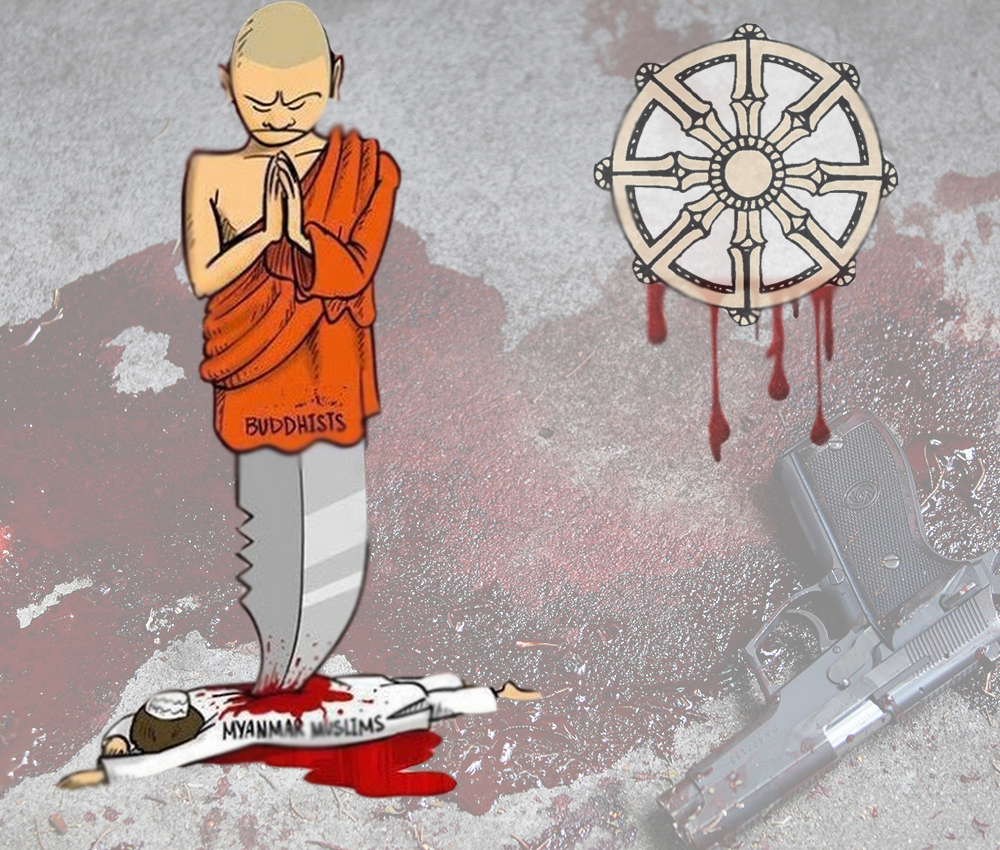
Tensions between Buddhist and Muslim ethnic groups in Rakhine State in Myanmar spilled over into riots in 2012 and eventually led to the displacement of more than 700,000 Rohingya Muslims to neighbouring Bangladesh. While it explicitly describes itself as non-violent and not responsible for these events, the Buddhist nationalist 969 Movement has nevertheless stoked anti-Muslim sentiments in Myanmar and framed Muslims as a threat to national identity. It’s important to note, meanwhile, that these nationalist movements do not speak for all Buddhists – lay or monastic – in either Sri Lanka or Myanmar.

Buddhist monks actually bore arms and fought in the Korean defence against Japanese invasions of the late 16th century. While military service is not prohibited in Buddhist texts, a soldier’s life is considered problematic because of the likelihood of dying in battle, psyched up for killing and fixated on violence. Ideally, a Buddhist wants to die with a calm mind which is more likely to be attracted to a positive rebirth. A violent mind could lead one to Buddhism’s realms of hell.

It’s not only war and external threats that provide examples of Buddhist violence. Corporal punishment was a feature of the pre-modern Tibetan legal system. In 1997 three Tibetan monks were murdered in Dharamsala – the police linked the suspects in the case to an ongoing controversy within Tibetan Buddhism. Thailand retains the death penalty, last using it in 2018.

Peaceful at its core

At the end of the class I always fear that students will fixate on the more sensationalist and violent material covered: that one extreme view will replace another. However, the pacifist stereotype of Buddhism is not without foundation.

Witness the Dalai Lama’s continued opposition to violence when it comes to the issue of Tibetan independence, the peace activism of Vietnamese monk Thich Nhat Hanh, or the efforts of Navayana (“Ambedkarite”) Buddhists in relation to social justice in India, lifting millions of Dalits out of the structural violence of the “caste” system.

But then Buddhism is at least as internally diverse as Christianity or Islam – and, as such, we should be wary of making generalisations. After all, few Christians would like the perception of their religion to be based solely upon images of the the Quakers or of the Westboro Baptist Church.

Source:Theconversation.com

Indo-Lanka religious, cultural ties to be strengthened – Buddhist Advisory Committee

Attention has been drawn to reinvigorate religious and cultural ties between Sri Lanka and India during the first meeting of the Supreme Buddhist Advisory Committee on Indo- Sri Lanka relations.

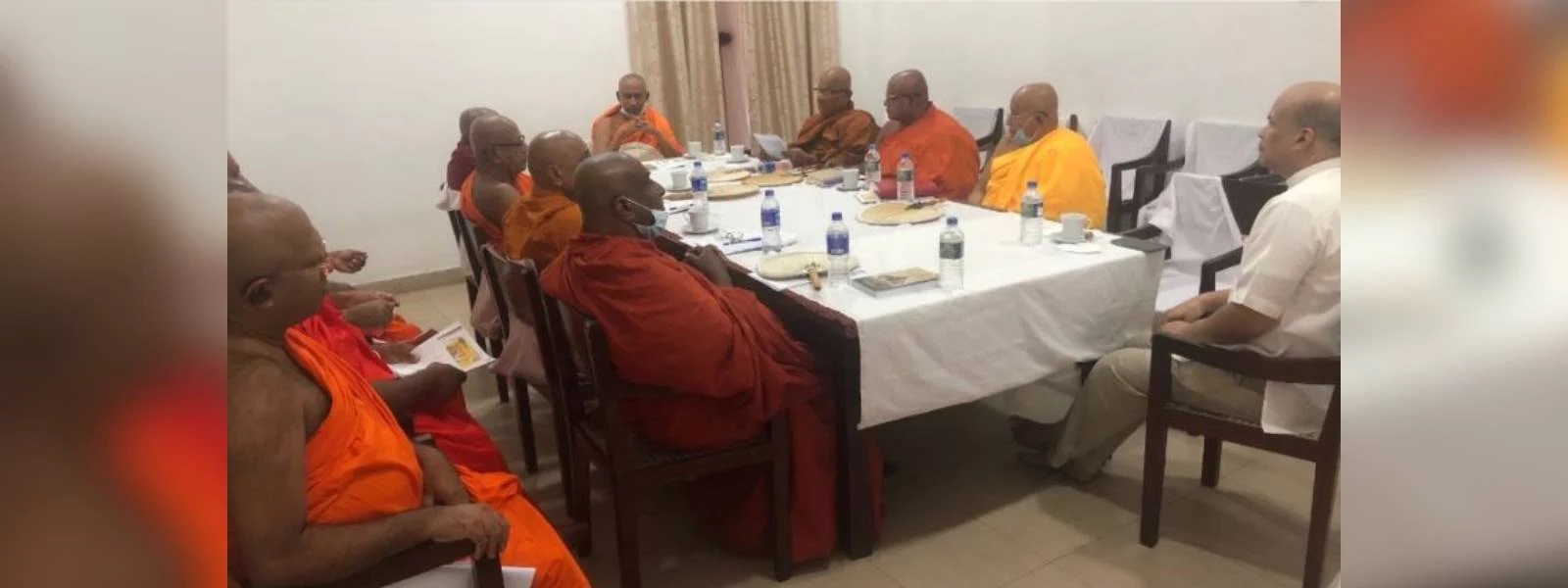
The first meeting of the Supreme Buddhist Advisory Committee on Indo-Sri Lanka named by Milinda Moragoda, who has been nominated as the Sri Lankan High Commissioner to India, was held at the Charikaramaya affiliated to the Ministry of Buddha Sasana yesterday.

The meeting was headed by the Anunayake of the Malwathu Chapter of the Siam Sect Venerable Dr Niyangoda Vijithasiri Thero.

It has been decided at the meeting to take relevant steps to revitalize religious and cultural tied between the two nations.

Attention has also been drawn towards coordinating with the places of lodging of Sri Lankan monks in India and providing facilities for Buddhist pilgrims.

Sri Lanka 2021 GDP growth forecast lowered to 4.0-pct by IMF

Sri Lanka’s gross domestic product in 2021 has been downgraded to 4.0 percent by the International Monetary Fund from a 5.3 percent forecast in October 2020, with global growth upgraded to 6.5 percent from an earlier 6.0 percent.

Sri Lanka has already reported a contraction of 3.6 percent for 2020 amid a Coronavirus pandemic and monetary instability.

Recovering Faster

The global expansion is led by the US, which is expected to grow at 6.4 percent after contracting 3.5 percent in 2020.

Europe is expected to grow 4.5 percent, with the Euro area growing 4.4 percent, the IMF’s World Economic Outlook report said.

Asia is expected to grow 7.6 percent with China growing 8.4 percent after growing 2.3 percent in 2020 and India 12.5 percent after contracting 8.0 percent last year.

“Thanks to the ingenuity of the scientific community hundreds of millions of people are being vaccinated and this is expected to power recoveries in many countries later this year,” IMFs Chief Economist Gita Gopitnath said.

“Economies also continue to adapt to new ways of working despite reduced mobility, leading to a stronger-than-anticipated rebound across regions.

“Additional fiscal support in large economies, particularly the United States, has further improved the outlook.”

US President Joe Biden has unveiled an infrastructure plan on top of the expected economic recovery.

His Treasury Secretary, ex-Fed Chief Janet Yellen, who imposed two monetary squeezes in 2014 (quantity tightening) and 2018 (rate hikes and more quantity tightening), has said it will be tax funded.

She has also called for a single corporate tax around the world.

China, where the Wuhan virus originated has been controlling the spread of the disease through tracing and quarantine.

Vietnam, another contact tracing country, that grew in 2020 at 2.9 percent is foretasted to grow 6.5 percent in 2021.

Vietnam has eschewed stimulus and engaged in contact tracing and kept its currency stable at 23,000 to the US dollar as an external anchor, after a stimulus debacle after Feds housing bubble bust in 2009 led to collapse of the currency from 15,000 to 22,000.

Bangladesh has also kept is currency stable at around 87 to the US dollar, maintaining domestic stability and is expected to grow 5.0 percent in 2021, after growing 3.8 percent in 2020. Coronavirus deaths have been low in Bangladesh.

Taiwan which also contact traced Covid-19, grew 3.1 in 2020 (3.1 percent) and is expected to grow 4.7 percent in 2021.

“The pandemic is yet to be defeated and virus cases are accelerating in many countries,” Gopinath said.

“Recoveries are also diverging dangerously across and within countries, as economies with slower vaccine rollout, more limited policy support, and more reliance on tourism do less well.”

Heavily tourism reliant Maldives is expected to grow 18.9 percent in 2021 after contracting 32.2 percent in 2020.

Sri Lanka has kept down Coronavirus with active tracing and home isolation and a vaccination drive is underway.

Sri Lanka’s central bank is forecasting a 6.0 percent growth for 2021.

External Drain

Sri Lanka’s central bank is printing money at an unprecendented rate despite running pegged exchange rate, after tax cuts in December 2019 in a fiscal ‘stimulus’, put the budget in a crisis.

The IMF is estimating a budget deficit of 11.8 percent for 2020 and 10.5 percent for 2021. Central government debt is expected to have topped 100 percent of GDP in 2020 and is forecasted to reach 105 percent in 2021.

The printed money is leaving the country in a classic ‘external drain’ eating away at foreign reserves backing the peg, mainly through the financial account amid debt repayments. Sri Lanka’s sovereign rating has been downgraded to ‘CCC’.

However economic activity is recovering and oil prices are rising, putting further pressure on the credit system, due to a mandated fuel prices.

Taxes were cut in December 2019 after Sri Lanka’s highly-unstable peg collapsed twice in three years due to operating un-anchored monetary policy involving ‘flexible’ exchange rate (no credible external anchor) and ‘flexible’ inflation targeting (no-credible domestic anchor).

The IMF itself taught the central bank to calculate an output gap, though the agency has no growth mandate.

Stimulus

Gopinath said rising Federal debt in the United States was made affordable by low interest rates.

The Federal Reserve had indicated that it will continue to inject liquidity in a ‘stimulus’ despite the economic recovery.

Meanwhile US bond yields have been edging up and commodity prices are also picking up.

Classical economists have warned that Federal Reserve Chair Jerome Powell’s claims lack credibility and inflation would rise faster than expected and a commodity bubble is on the way.

Gopinath said the Fed had promised prior warning before reversing its policy stance. Meanwhile South American nations were benefiting from rising food commodity prices, she said.

The Federal Reserve, which is the world’s youngest reserve currency central bank, has been single-handedly responsible for the worst central banking errors in the last century which had global impact.

It created the Great Depression soon after then New York Fed Chief Benjamin Strong discovered open market operations and fired the ‘roaring 20s’ bubble.

The Fed ended the Gold Standard, which had existed for over three centuries, under its then Chief Arthur Burns, who targeted an output gap under pressure from President Nixon who eventually closed the gold window in 1971 creating floating fiat money.

In 2008 under Alan Greenspan egged on by Ben Bernanke, the Fed fired a so-called ‘mother of all liquidity bubbles’ to reverse ‘deflation’ which resulted in what is now called the Great Recession or Great Financial Crisis.

Bernanke outlined the the outlined the idea in his now infamous speech “Deflation: Making Sure “It” Doesn’t Happen Here” before the National Economic Club in Washington on November 21, 2002.

Posted in Uncategorized

Is Sri Lanka’s debt problem a dramatised story? FT.LK

Sri Lanka faces mounting foreign loan commitments exceeding $ 6 billion a year, absorbing 50% of export earnings. It also implies that almost the entire annual inflow of worker remittances has to be dedicated to foreign debt settlements.

Following the downgrade of the country’s sovereign debt ratings on several occasions, access to foreign capital markets has been severely constrained. Hence, the Government has now turned to bilateral swap agreements to overcome the immediate balance of payments difficulties.

In this background, Secretary to the President and former Treasury Secretary Dr. P.B. Jayasundera is reported to have stated at a recent symposium organised by Biznomics that Sri Lanka’s debt is the “most dramatised story” which is unwarranted given the country’s unblemished track record of repayment.

Sri Lanka’s debt repayment reputation is undeniable, in contrast to some Latin American countries that encountered several debt crises with massive loan defaults in recent decades.

But it needs to be recognised that the successive Governments have been able to uphold such fame for Sri Lanka not by means of any improvement in the country’s external finances, but by continuously borrowing from abroad risking debt sustainability.

Resolving the country’s debt burden, therefore, remains a major challenge for the authorities, and the debt problem is not a fabricated story but a bitter reality.

Sri Lanka’s bad debt dynamics

Sri Lanka is on the verge of a debt crisis, as pointed out by Prof. Ricardo Haussman, Director, Growth Lab, Harvard University’s Center for International Development at a webinar on debt sustainability hosted by the Adovocata Institute in October last year (See https://www.youtube.com/watch?v=aOJMEhChCwU).

Hausmann, who himself witnessed many debt crises in Latin America including three of them in his own country, Venezuela says that prior to a debt crisis, everything looks calm. But when it happens the repercussions would be disastrous, just like the big bad wolf, initially pretended to be harmless, swallowing the little girl and her grandmother in the fairy-tale ‘Little Red Riding Hood,’ he elaborates.

While emphasising to look at the debt problem from a practical perspective since it is no more a theoretical issue, Hausmann emphasises that the debt burden should be assessed in terms of the ratio of interest payments to tax revenue rather than the popularly used indicator of debt to GDP ratio.

For instance, although Japan has a very high debt to GDP ratio of 240%, the Japanese Government has to devote nothing out of its tax revenue for interest payments, as interest rate on debt is zero in that country. In the case of Sri Lanka, by contrast, debt to GDP ratio is around 90%, but interest payments to tax revenue is as high as 50%.

Moreover, the tax revenue to GDP ratio is over 40% in Japan, whereas the ratio for Sri Lanka is as low as 12%.Thus, the fiscal burden of the debt problem is much heavier in the case of Sri Lanka.

At some point of time, the borrowing country becomes not good for the money, and as a result, the lenders started levying higher interest rates to cover the risks. This makes rolling-over of maturing debts costlier thus, aggravating debt service problems.

This is the kind of bad debt dynamics facing Sri Lanka today, as reflected in the substantial under-subscriptions of International Sovereign Bonds and Treasury bills in recent auctions asking for high yield rates by foreign and domestic investors.

Foreign debt stock rising

State banks have been mobilised to raise borrowing from abroad, and the private sector banks too should go for same, according to Dr. Jayasundera.

Such borrowings will further tighten the debt burden as in the past, since the repayments and interest payments pertaining to such loans have to be met by using the country’s foreign reserves in any case, irrespective of the type of borrower.

Since 2013, commercial banks and blue-chip companies have been allowed to borrow specific amounts of foreign currency from global capital markets. Eventually, the State-owned banks (Bank of Ceylon, NSB, NDB and DFCC) became indirect borrowing sources for the Government.

The outstanding total foreign debt of the Government, Central Bank, financial institutions and other entities amounts to nearly $ 55 billion by now, which is equivalent to as much as 65% of GDP. Five years ago, it amounted to $ 44 billion or 57% of GDP. This reflects the continuous accumulation of foreign debt over the years without showing any signs of debt reduction.

Foreign investors leaving SL bonds

The Government has to settle an International Sovereign Bond of $ 1,000 million in July, and Sri Lanka Development Bonds amounting to $ 1,325 million in August this year.

The debt problem has aggravated due to the difficulties faced by the Government in attracting foreign investors to its dollar-denominated bonds in recent auctions. This restrains the rolling-over of maturing foreign bonds.

Reflecting the investor concerns with regard to Sri Lanka’s credit worthiness, the last two auctions of the Sri Lanka Development Bonds (SLDBs) were heavily undersubscribed.

In the auction held in November last year for $ 200 million, the Central Bank was able to raise only $ 24.82 million accounting for as much as 67 percent of undersubscription. The auction held in January, which had an offering of $ 200 million raised only $ 43.6 million reflecting undersubscription to the tune of 78%.

There is a noticeable increase in yields of recent SLDBs, which again is a reflection of the disturbing concerns among foreign investors on the country’s debt servicing capacity.

Government borrowing weakens banks

As evident from Latin American countries, debt crises are likely to extend to the banking sector heavily exposing themselves to government borrowings.

In the backdrop of the limitations in borrowings from foreign capital markets as explained above, the Government has turned to the domestic bank borrowings.

Bank lending to the Government and public corporations has risen at a rapid pace, as I explained in a previous column (http://www.ft.lk/columns/Bank-credit-to-private-sector-picking-up-at-slow-pace-in-response-to-monetary-easing/4-712502).

Given the significant exposure of Sri Lankan commercial banks to Government securities, the Fitch rating agency is of the view that the operating environment for banks has weakened considerably.

Weakening of the banking sector causes capital flight, which in turn, leads to exchange rate depreciation and to further increase debt servicing costs.

Swaps are temporary solutions

Much publicity has been given with some pride during the last couple of days on the bilateral currency swap agreement between the Central Bank of Sri Lanka (CBSL) and the People’s Bank of China. Under this arrangement, CBSL is entitled for a swap facility amounting to CNY 10 billion (approximately $ 1.5 billion). The agreement is valid for a period of three years.

The swap facility is to be received in Chinese currency, and therefore, it helps Sri Lanka to make payments for imports from China in the same currency without using dollars. Imports from China amounted to nearly $ 4 billion a year, and thus, the swap is sufficient to finance around one-third of Chinese products, and the balance two-thirds will have to be paid in dollars. Hence, the swap does not help very much to improve the country’s reserve position.

Sri Lanka’s debt position has become so acute, that the Government is reported to have sought a swap agreement with Bangladesh.

Policy options to tackle external finance fragility

Against the backdrop of heavy debt repayments and the rise in crude oil import prices this year, the balance of payments is likely to be under severe stress although the export sector shows signs of recovery following COVID-19 pandemic.

Meanwhile, the CBSL has imposed several regulations forcing exporters to convert a part of foreign exchange earnings, and some of those rules had to be withdrawn due to their adverse effects on the export sector hit by the pandemic.

The import restrictions, which are in operation at present, help to overcome the immediate balance of payments problems. But continuation of such controls will have negative effects on the export sector and economic growth, as I explained in a previous column as per the thesis of “balance of payments-constrained economic growth”.

The efforts made by the CBSL to keep the exchange rate around Rs. 185 per dollar has become futile proving the “impossible trinity” phenomenon, which says that it is impossible to fix both the exchange rate and interest rate simultaneously without capital outflows. The selling rate now exceeds Rs. 201 per dollar.

While the interim measures such as import restrictions and mandatory remittance conversion supported by swap arrangements may ease the balance of payments tensions in the short run, far-reaching economic reforms are essential to attain debt sustainability.

It is the prime responsibility of the authorities to accept the gravity of the debt problem and to address it with corrective policy measures, instead of denying the impending debt crisis.

(Prof. Sirimevan Colombage is Emeritus Professor in Economics at the Open University of Sri Lanka and Senior Visiting Fellow of Advocata Institute. He is former Director of Statistics, Central Bank of Sri Lanka and reachable through sscol@ou.ac.lk)

Posted in Uncategorized

The Dragon Connection: Why India Abstained From UN Vote Against Sri Lanka

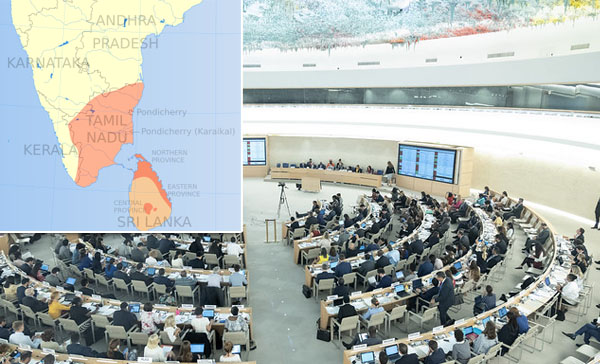
CHENNAI, India — In a bid to strengthen its diplomatic ties with Sri Lanka and maintain its presence in the Indian Ocean Region, India has abstained from voting on a resolution during the United Nations Human Rights Council’s 46th regular session in Geneva that aimed to probe further into the war crimes committed during the Sri Lankan civil war.

Sri Lanka witnessed an almost four-decade-long civil war (1983 to 2009) between the Tamil population, led by the Liberation of Tamil Tigers Eelam, and the Sinhalese government. The Liberation Tigers of Tamil Eelam sought to establish an independent state, Eelam, in northern and eastern Sri Lanka.

“Two fundamental considerations guide India’s approach to the question of human rights in Sri Lanka,” read India’s official statement before the vote. “One is our support to the Tamils of Sri Lanka for equality, justice, dignity, and peace. The other is in ensuring the unity, stability, and territorial integrity of Sri Lanka.”

“We have always believed that these two goals are mutually supportive, and Sri Lanka’s progress is best assured by simultaneously addressing both objectives,” it said.

A recent UN report has warned that the failure of Sri Lanka to address past violations has “significantly heightened the risk of human rights violations being repeated”.

“It highlights worrying trends over the past year, such as deepening impunity, increasing militarization of governmental functions, ethno-nationalist rhetoric, and intimidation of civil society,” the report states.

Despite India’s abstention from the vote, the resolution — which focuses on setting up a central database to collect and preserve evidence of human rights violations for future accountability — was approved by 22 in favor, 11 against, and 14 abstentions. China, Pakistan, and Bangladesh voted against it.

Sri Lanka rejected the vote, terming it “politically motivated and an intrusion into their internal matters”.

This was the second time India abstained from voting against its island neighbor after 2014. India has voted in favor of resolutions critical of Sri Lanka in 2009, 2012, and 2013. Since 2009, there have been eight resolutions on Sri Lanka at the UN Human Rights Council, with the last in March 2021.

Differing views over India’s stand

While some see this as India’s diplomacy to counter China’s presence in the region and its preference to maintain peace, some observers back home are not happy.

“In deciding on the voting, India had to balance its domestic politics with foreign policy imperatives,” Lieutenant General (retired) Deependra Singh Hooda told Zenger News.

“Obviously, India does not want to position itself in an adversarial role vis-a-vis Sri Lanka as it does not want to drive its neighbors closer into the Chinese embrace. It feels that it can better help the Tamil population by a positive engagement with Sri Lanka,” Hooda, who oversaw the 2016 surgical strikes at the Line of Control, said.

“Also, India has had its issues with the UN Human Rights Commissioner over Kashmir and recently on the issue of farmers’ protest. India feels that there is an overreach by the Office of the United Nations High Commissioner for Human Rights that amounts to interference in the country’s internal affairs. India would have found it difficult to support a resolution that enables the commissioner to investigate human rights cases in Sri Lanka,” Hooda said.

However, Tamil Nadu’s ruling party’s founder member had his point to make.

“Both Congress and the Bharatiya Janata Party [the two national political parties of India] are always against the welfare of Tamils, so it was not surprising at all,” Trichy K. Soundararajan, a former member of the legislative assembly and founding member of All India Anna Dravida Munnetra Kazhagam, told Zenger News.

“It is only at the time of elections that people see what is happening around them with political parties also raking up the Tamil issue for their benefit,” he said.

The China threat — Geopolitical or Geo-economical?

Historically, India has had good trading and cultural relationship with Sri Lanka. The relations took a backseat during India’s role in the peacekeeping operations in Sri Lanka and the assassination of India’s then prime minister Rajiv Gandhi in 1991.

Despite these, India is one of Sri Lanka’s largest trading partners in the South Asian Association for Regional Cooperation (SAARC), with exports from India in 2018 alone touching $4.16 billion.

But the preferred trading partner tag is now being taken over by China. Sri Lanka has fallen into a debt trap and, as per 2018 numbers, the Island nation had a total external public debt of $34.7 billion. China held 5 percent of the external public debt as of 2018, followed by Japan at 3.4 percent.

“China is not a military superpower but is an economic superpower,” Thirumurugan Gandhi, Indian human rights activist and geopolitical commentator, told Zenger News. He is noted for founding the May 17 Civil Rights Movement, a tribute to Liberation Tigers of Tamil Eelam founder and leader Velupillai Prabhakaran.

China has the capability to wage attacks in multiple locations, as seen in Arunachal Pradesh and Ladakh in India. The Galwan Valley attacks led to diplomatic breakdowns between India and China that are now being restored. In retaliation, India shut down over 200 Chinese apps, issued a blanket ban on Chinese imports, and canceled tenders of Chinese companies.

“China pushed its way into Sri Lanka as it is advantageous for them. If they have other intentions, such as emerging as a threat to India [by] utilizing Sri Lanka’s ports, for example, it will be clear in the long run. For now, it is not so.”

Sri Lanka’s proximity to China has increased over the years, with the latter pumping money for infrastructure and port construction.

London-based Chatham House, an independent policy institute, in their report states, China’s ambitious Belt and Road Initiative led to the acquisition of the Hambantota Port, a coal-fired Norocholai power station, the Mattala Rajapaksa International Airport, Colombo International Container Terminals, and the Colombo Lotus Tower. It has been guesstimated, investments of over $15 billion have been pumped into Sri Lanka by China till 2018.

Last month, Sri Lanka announced it would fully operate the Colombo Port’s Eastern Container Terminal under the Sri Lanka Ports Authority. The announcement was a deviation from the trilateral pact signed by India, Japan, and Sri Lanka in 2019, under which India and Japan were to develop the terminal.

Further, last year, ministers from the Sri Lankan Rajapaksa government called for the scrapping of the 13th Amendment, which devolves power to provincial councils as per the 1987 India-Sri Lanka accord. The 13th Amendment had agreed to empower nine provinces in Sri Lanka. This move has not taken off despite reminders from the succeeding governments of India.

Commenting on India’s stand on the 13th Amendment, Hooda said, “There is no change in the Indian position, and it will continue to encourage Sri Lanka to implement it.”

“China’s investment is to do with the Belt and Road Initiative,” Solaimuthu, chief executive officer, Global Lifestyle Limited, a multi-product company spread across Sri Lanka, told Zenger News.

“Developing harbors and ports is crucial for them, and Sri Lanka’s strategic location makes it an ideal investment. Sri Lanka has always maintained China is a strategic investor when building infrastructure, transportation, and energy. There is nothing to speculate in this matter.”

The response from the Indian Tamils

Tamils in Sri Lanka suffered deeply at the hands of the warring parties during the civil war. It is estimated that between 40,000 and 100,000 Tamil Sri Lankans were killed and hundreds of thousands displaced. Almost 12 years after the war ended, the community is still looking for justice and reparations.

The Tamils in the southern Indian state of Tamil Nadu are supporters of the Eelam movement. With refugees coming into Tamil Nadu in the thousands, there was an uproar in Tamil Nadu against the Sri Lanka government’s actions. The Indian Tamils demanded strict action from India, which forced the Indian government to intervene in the war through its peacekeeping operations.

Organizations such as the May 17 Movement and Journalists for Democracy in Sri Lanka have filed petitions in the UN Human Rights Council and other international forums demanding justice for the Tamils in Sri Lanka.

“Promises were made by former prime ministers to support the Tamils in Sri Lanka. There were promises made to even grant citizenship to them, and yet they are in camps. March 23 is a black day as India abstained from voting against Sri Lanka,” said Gandhi.

But Malini Saba, founder and chairman, Saba Group & Anannke Foundation, believes “it is both in India’s and Sri Lanka’s interest to get a full and final closure on these allegations of war crimes and the killings.”

“Not getting the closure will allow the wounds to fester. We should let everyone heal and the nations move forward. Most of us who raise noises are never truly living in the nation. We never want to go back there.”

(Edited by Gaurab Dasgupta and Amrita Das. Map by Urvashi Makwana)

Source:Tntribune

Ringleaders behind Easter attacks identified: Sarath Weerasekara

Naufer Mawlawi, who is currently in remand custody, has been identified as the ringleader of Easter Sunday terror attacks, says Minister of Public Security Sarath Weerasekara.

The minister’s remarks came during a special media briefing held this evening (April 06). The press conference was also attended by Minister of Mass Media Keheliya Rambukwella and State Minister of National Security Chamal Rajapaksa.

Naufer Mawlawi is allegedly the theoretician of the now-banned organization National Thowheed Jamaath.

According to Minister Weerasekara, Naufer Mawlawi was involved in bringing down the ideology of the Islamic State (IS) to Sri Lanka in 2014.

Naufer Mawlawi is also the person who brainwashed Zahran Hashim into following the IS ideology, the Public Security Minister said further.

In addition, Hajjul Akbar, who was taken into custody by the Terrorism Investigation Division (TID) on March 12, has also been identified as a ringleader of the coordinated bomb attack. He was arrested in the area of Dematagoda for promoting Wahhabism and Jihadist ideology in the country.

It was revealed that Hajjul Akbar had served as the chairman of Jamaat-e-Islami Organization for many years. The 60-year-old is also a close relative of one of the suspects who was taken into custody over the Buddhist statue vandalism incident in Mawanella.

Speaking further, he said a total of 32 suspects who are directly linked to the carnage have been identified and relevant evidence has already been submitted in order to file cases against them. However, investigations into the matter are moving forward, he added.

In the meantime, 75 suspects are currently held under detention orders while 211 are under remand custody in connection with the Easter Sunday terror attacks, Minister Weerasekara continued.

Posted in Uncategorized

Gotabaya regime comes under multiple pressures

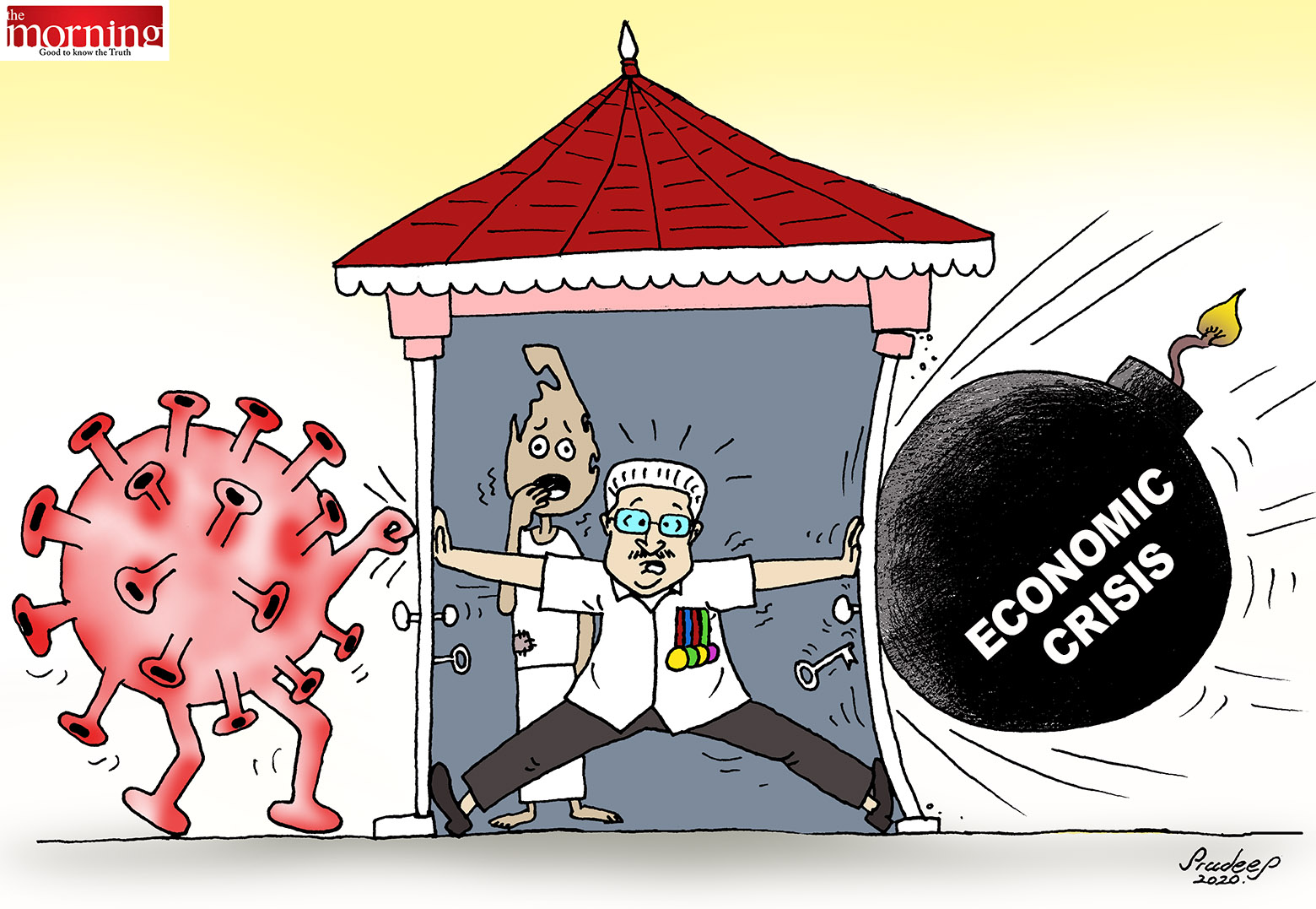
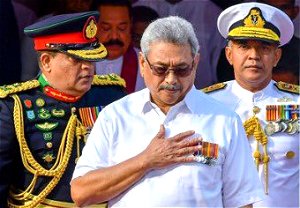
The Gotabaya Rajapaksa Presidency, which is in its second year, is facing multiple problems, both domestic and external, economic as well as political.

Divisions have arisen in the ruling Sri Lanka Podujana Peramuna (SLPP) and also with alliance partners. There is difficulty in kick-starting the economy derailed by the COVID-19 pandemic, mainly due to flaws in the decision making and implementing apparatuses. The external debt repayment issue is looming in the horizon.

And last, but not the least, there is pressure from the UN Human Rights Council (UNHRC) on war time and post-war accountability issues with the Council getting authorization for the setting up of a mechanism to collect data on alleged war crimes and rights violations after the war.

The government is under pressure from India (and also the UNHRC) to hold the Provincial Council (PC) elections, not held since 2018. India insists that the 13 th. Amendment (13A) of the constitution which had set up the semi-autonomous, elected Provincial Councils, should not be repealed. The leadership is divided on the issue of PC elections and also on retaining the 13A.

President Gotabaya is against devolution power, especially as envisaged by the 13A. “Sri Lanka will not allow other countries to achieve their geopolitical needs by introducing separatism under the guise of power devolution in the island nation”, he told a village audience recently.

Nationalist and Sinhala-majoritarian hardliners, who claim to be the architects of the SLPP’s victory in the November 2019 and August 2020, elections, strongly back the President on this issue. But Prime Minister Mahinda Rajapaksa and SLPP organizer Basil Rajapaksa look at Provincial Councils with devolved power as a useful political institution. They are keen on holding elections to the Councils.

Nevertheless, considering the opposition to the Provincial Councils and to holding elections to them now, Prime Minister Mahinda Rajapaksa has sought a parliamentary committee to go into the system under which they could be held. This issue has been pending for long. In 2018 parliament rejected the electorate de-limitation report submitted by the Delimitation Commission.

According to official sources, Provincial Council polls, if held at all, are unlikely before the end of 2021. Doubts about their being held at all have mounted since a section of Buddhist monks demanded that they should not be held before government delivers on its election promise to give a new constitution for the country. The new constitution is expected to be centralized and Sinhala-majoritarian in character to accord with the SLPP’s voter base. But that will run into trouble with the Tamil minority.

The 11 parties which are in alliance with the SLPP are now restive complaining that the SLPP leadership does not take them into confidence before taking decisions. Their target is the SLPP organizer Basil Rajapaksa. They plan to meet President Gotabaya to apprise him of their grievances. They have decided to display their autonomy by holding May Day programs separately this year.

Due to COVID-19 triggered restrictions, the total number of jobs in the economy contracted by 160,996 in the first quarter of 2020. Overall, in 2020, unemployment had increased from 48% to 6% according to one estimate. With tourism still curbed and the Middle East labor market being down, there is no immediate relief in sight as regards jobs. While agriculture has revived, the industrial and service sectors are sluggish with government reluctant to relax pandemic time restrictions. Sri Lanka has about US$3.5 billion foreign currency denominated debt to repay between March and December 2021.

To manage the challenge posed by the UNHRC, President Gotabaya has appointed a commission to go into alleged rights violations during the war and afterwards. Foreign Minister Dinesh Gunawardena has appealed to Tamil leaders and agitators to present their case before the commission and also utilize the existing Office of Missing Persons and the reparations office, instead of lobbying with the international community and the UNHRC.

But the Tamils say that they have no faith in Sri Lanka’s domestic mechanisms. In justification of this dim view, they cite Prime Minister Mahinda Rajapaksa’s repeated plea that the “missing persons” had all died in the conflict.

Meanwhile, pressure is mounting on the government to take action on the report of the Presidential Commission which went into the April 21, 2019 suicide bombings in which 260 persons, mostly Catholics, were killed. Government is dithering on this report as it would be difficult to punish many named in the commission’s report, including former President Maithripala Sirisena who is now an ally of the SLPP government.

Cardinal Malcolm Ranjith has threatened to launch an agitation if the masterminds behind the bombings by Islamic zealots were not found out and all those who aided the bombers were not punished. But government has to tread carefully in this matter because any reckless action or unjustified actions against Muslims will alienate Islamic countries like Pakistan which supported Sri Lanka in the UNHRC recently, braving Western pressure to vote for their anti-Sri Lankan resolution.

Source:By P.K.Balachandran/Daily Express

Heated Arguments At Government Party Leaders Meeting Over PC Election Timeline And Electoral System

Heated arguments took place at the SLPP-led alliance party leaders meeting yesterday over the upcoming Provincial Council elections, informed political sources said.

The main topic discussed at the meeting was the timeline of the PC election and the issues surrounding the electoral system.

As there was no agreement over the two issues, Prime Minister Mahinda Rajapaksa said he would convene another party leaders meeting on April 19 to make a final decision on the matter.

A paper prepared by Minister Janaka Bandara Tennakon on the electoral system was discussed at the meeting and a number of party leaders raised strong objections to the proposed system.

Ministers Wimal Weerawansa and Udaya Gammanpila, two strong critiques of the PC system, were not present at the party leaders meeting yesterday.

When the cabinet paper was presented to the cabinet last week, ministers Wimal Weerawansa, Udaya Gammanpila, Vasudeva Nanayakkara, Bandula Gunawardena and Dullas Alahapperuma strongly objected and the President called for a meeting of party leaders to take a final decision on the matter.

UNP seeks UN intervention to protect Sinharaja

The United National Party (UNP) has sought the intervention of the United Nations (UN) to protect the Sinharaja forest.

A letter addressed to UN Secretary General Antonio Guterres in this regard, was handed over to the UN Resident Coordinator by UNP Deputy Leader Ruwan Wijewardena today.

It was handed over after the party had staged a demonstration outside the United Nation’s compound in Colombo this morning.

In the letter, the UNP pointed out that it was essential to consider the urgent need to protect the natural environment of Sri Lanka, while acknowledging the importance of forest cover and the contribution made to the natural resources.

The Sinharaja forest was declared in 1978 as a Rainforest Reserve Area, by the late President J.R. Jayawardene. In 1988 the National Heritage Wilderness Areas Act was introduced, and the Sinharaja rainforest, which was the original tropical rainforest, was brought under the said Act. Following the introduction of the Act an area of 7,848.2 hectares with a further proposed area of 2,772 hectares was declared protected. By 1992 the protected areas including the adjoining forest area was increased to 11,178 hectares, it said.

The UNP said according to Section 4 (1) (a) of the National Heritage Wilderness Areas Act “no person shall; in a National Heritage Wilderness Area, cut, mark, lop, girdle, saw, convert, collect, or remove any plant, tree or any part thereof or other forest produce”. It further provided that if anyone was found to be acting in contradiction to the above would face criminal proceedings.

The binding articles of the UNESCO Convention Concerning the Protection of the World Cultural and Natural Heritage, to which Sri Lanka is a signatory, states “each State party to this convention undertakes not to take any deliberate measure which might damage directly or indirectly cultural and natural heritage.”

Accordingly, it can be seen that the protection of the environment is not only covered by the laws of Sri Lanka but also guided by the principles of international agreements and undertakings, the UNP said.

The UNP pointed out that Sri Lanka has in furtherance of the UN Goals to protect the environment, reduce carbon emissions and preserve the natural resources entered into international agreements under the Stockholm Agreement, the Rio +20 Conference, the Kyoto Protocols, the Paris Climate Agreement, the Rio Forest Principles and the UN Forum on Forests.

All these bodies are setup under the United Nations, in order to protect the planet and its inhabitants.

Plans are afoot to build two reservoirs within the Sinharaja Rainforest area, which is a protected area under both the local laws and the international obligations. A breach will amount to a criminal offense and a contravention of the international undertaking, the UNP said.

The United National Party has requested the United Nations Secretary General to ensure that he and his agencies will not permit such a breach.