Parliament to convene tomorrow

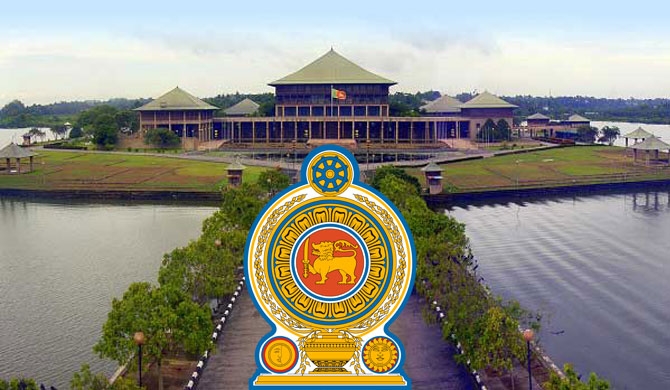
The Parliament of Sri Lanka is scheduled to convene at 10.00 am tomorrow (May 04), with this week’s Parliament sittings limited to just two days.

Accordingly, the party leaders had agreed at the meeting of the Committee on Parliamentary Business held recently to pass an order under the Sri Lanka Export Development Act, 04 notifications under the Excise Ordinance, the Value Added Tax (VAT) (Amendment) Bill and the Inland Revenue (Amendment) Bill from 10.00 am to 11.00 am, said the Secretary General of Parliament.

The Secretary General Dhammika Dasanayake also said that no time would be allotted for oral questions of MPs and for questions under Standing Order 27(2).

Subsequently, an adjournment debate on the current situation in the face of the Covid-19 would be held tomorrow from 11.00 am to 5.30 pm without a lunch break, Mr. Dasanayake further said.

Meanwhile the debate on the Colombo Port City Economic Commission Bill is expected to be held on May 5th from 10.00 am to 8.00 pm during the entire day.

Assembly Election Results 2021: Stalin-Led DMK Heads For Big Win In Tamil Nadu

The opposition DMK-Congress alliance is heading for a big win in the 234-member Tamil Nadu assembly. The DMK and its allies are leading in 140-plus seats. The ruling AIDMK – which started the day with a lead on 95 seats — is now leading in 80-plus seats. The majority mark stands at 118. The DMK has not been in power in the state for a decade, and this time the party and the AIADMK are contesting without their towering leaders, J Jayalalithaa and M Karunanidhi whose deaths have brought a huge change in the political landscape.
Tamil Nadu’s most iconic leaders J Jayalalithaa died in 2016, and M Karunanidhi in 2018. Their absence has left a huge political vacuum that many have raced to fill.

Actor Kamal Haasan and his Makkal Needhi Maiam or MNM, made a rather drab electoral debut in the 2019 general election, failing to win a single seat. This time, Mr Haasan is trailing.

“This has been an unprecedented election because of the pandemic. We are watching closely and frankly expected to perform better than what we are seeing so far,” DMK’s Manu Sundaram told NDTV. “The people saw this election as a choice between the BJP and BJP-controlled alliances and that of the DMK, which stands to oppose the BJP and its ideology,” he added.

The senior leader also said they expect the numbers to rise further as the counting of votes continues. “Though we have the overall lead at the moment, we were hoping to do much better,” he said.

SLPP party leaders meet on Tuesday: PC polls to be primary agenda

The provincial council (PC) elections, specifically the electoral system under which it is to be held, will be the main topic of discussion at the party leaders’ meeting to be held on Tuesday (4), under the patronage of Prime Minister Mahinda Rajapaksa, The Sunday Morning learnt.

Key governmental factions are yet to reach an understanding on the PCs polls.

The current political atmosphere within the country as well as the Covid-19 pandemic situation are to be taken up at the said meeting.

Speaking to The Sunday Morning, Sri Lanka Freedom Party (SLFP) General Secretary and State Minister Dayasiri Jayasekara confirmed that the meeting would be held this week and that the main topic of discussion would be the elections.

Speaking to The Sunday Morning, Co-Cabinet Spokesman Minister Udaya Gammanpila, when queried concerning what other issues would be raised at the said meeting, added: “I am unaware of what other topics would be taken up at the meeting.”

Efforts made by The Sunday Morning to contact Democratic Left Front Leader and Minister Vasudeva Nanayakkara, National Freedom Front Leader and Minister Wimal Weerawansa, and People’s United Front Leader and Minister Dinesh Gunawardena to gain more insight as to what would be discussed at the meeting, proved futile.

Posted in Uncategorized

Govt seeks vaccine from Australia and UK

The Government is in discussion with the British and Australian Governments to secure the Oxford-Astrazeneca vaccine doses to continue the domestic vaccination drive.

Co-Cabinet Spokesman Minister Keheliya Rambukwella said these Governments have excess doses of the Astrazeneca vaccine since they were continuing their vaccination drive with the Pfizer vaccine.

“We have come to know that there are 4.5 million doses of the vaccine with these two countries and we are trying to secure a part of that to meet our requirement until the situation in India eases,” the Minister told the Sunday Observer.

Sri Lanka placed an order for 1.5 million doses of the Oxford-Astrazeneca vaccine to India’s vaccine producer Serum Institute. The Indian Government donated 500,000 doses and the remaining one million is yet to be received.

In March, India suspended vaccine exports due to the spike in domestic cases and the country recorded the highest daily figure of over 400,000 cases yesterday.

President’s Senior Advisor and Head of the Presidential Task Force for National Deployment and Vaccination Plan for Covid-19 vaccines Lalith Weeratunga last week said, “According to medical experts we need to vaccinate 13 million of our 21 million population to counter the effects of the virus,”

Under the state vaccination program 925,242 have been vaccinated so far.

The Government started the vaccine rollout in late Janaury 2021 and last week the Epidemiology Unit began giving the booster shot for frontline health and other workers.

Weeratunga said the Government has reserved 356,000 doses of the vaccine for the second dose which is administered within 12-16 weeks of the first dose. The extra doses should be acquired within three months to continue the ongoing drive uninterrupted.

Posted in Uncategorized

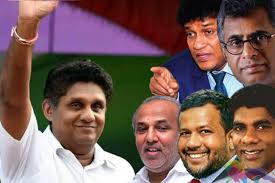
SJB Gripped By Infighting And Internal Power Struggles After Sajith’s Veiled Attack On Champika Ranawaka

The main opposition party, the Samagi Jana Balawegaya, is currently gripped by infighting and sharp differences of opinion, informed political sources said.

This infighting was made obvious by Opposition Leader Sajith Premadasa when he made a controversial statement in Hambanthota last week, asking those who could not work with him to leave the party.

“In this party, I am the leader and no one will be able to hold me back as in the past. Those who cannot work with me can leave the party,” Premadasa said addressing a gathering in the Hambanthota district.

Many believe his remarks were aimed at Patali Champika Ranawaka who recently launched the ’43rd Brigade’ as a civil society movement to project himself as an alternative leader. When contacted by several journalists, Ranawaka has refused to comment on Premadasa’s statement.

Several close allies of Ranawaka who are strongly involved with the “43rd Brigade” have been sidelined within the Samagi Jana Balawegaya.

Posted in Uncategorized

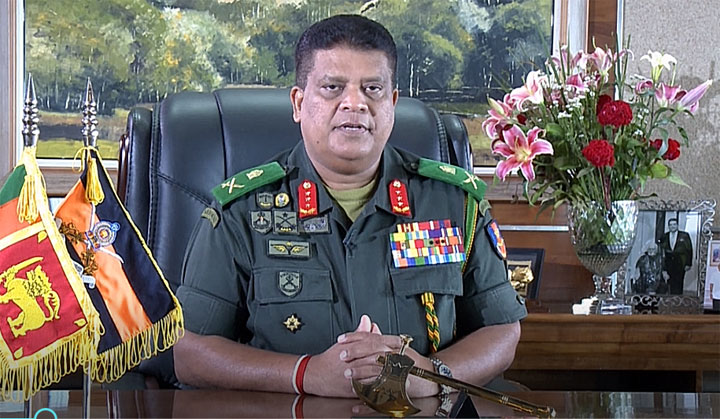
Army Chief warns against organizing weddings, parties to homes

Army Commander General Shavendra Silva says that public gatherings such as parties and weddings which have been prohibited due to the current Covid-19 situation cannot be organized at homes or any other locations as this is also prohibited under the quarantine regulations.

He stated that it has been reported that events such as parties and weddings which were planned to be held in hotels are being prepared to be held at other places and venues.

He said that they have received information that events such as parties, functions and weddings, which have been temporarily prohibited from tomorrow (03) due to the spike in Covid-19 cases, have now been moved to residences in some areas.

He requested the people to refrain from organizing any such gatherings or functions at homes as there is a high risk of coronavirus spreading through such activities.

Meanwhile police spokesman DIG Ajith Rohana says that the law will be strictly implemented against anyone who organizes parties or celebrations.

Posted in Uncategorized

Sri Lanka reports 9 more COVID-19 deaths Sunday, toll rises to 696

Sri Lanka confirmed nine more deaths on Sunday due to COVID -19 raising the death toll from the viral disease to 696, according to health authorities.

The Director General of Health Services confirmed the following deaths caused by COVID -19 virus infection and accordingly the total number of deaths due to COVID -19 infection in Sri Lanka is 696 by now.

01. The deceased is a 94-year-old male resident from Kebithigollewa. He died on April 29 while receiving treatment at Kebithigollewa Base Hospital. The cause of death was identified as acute COVID pneumonia.

02. The deceased is a 51-year-old male resident in Polonnaruwa area. He died on May 01 while receiving treatment at Welikanda Special Treatment Center. The cause of death was identified as COVID pneumonia and chronic kidney disease.

03. The deceased is a 72-year-old male resident in Lewla area. He died on May 01 while receiving treatment at Kandy National Hospital. The cause of death was identified as COVID pneumonia.

04. The deceased is a 79-year-old female resident in Tennekumbura area. She was diagnosed as infected with Covid 19 and transferred from Panideniya Treatment Center to Peradeniya Teaching Hospital, where she died on May 02. The cause of death is mentioned as COVID pneumonia.

05. The deceased is an 86-year-old female resident in Mattegoda area. She was diagnosed as infected with Covid 19 and transferred from Colombo South Teaching Hospital to National Institute of Infectious Diseases, where she died on May 02. The cause of death is mentioned as COVID pneumonia, high blood pressure, diabetes, asthma, and heart disease.

06. The deceased is an 87-year-old male resident in Malabe area. He died on May 01 while receiving treatment at National Institute of Infectious Diseases. The cause of death was identified as COVID pneumonia, heart disease and chronic kidney disease.

07. The deceased is a 56-year-old male resident in Kantale area. He was diagnosed as infected with Covid 19 and transferred from Kantale Base Hospital to Welikanda Special Treatment Center, where she died on May 02. The cause of death is mentioned as COVID pneumonia.

08. The deceased is a 53 year old male resident in Warakamura. He was diagnosed as infected with Covid 19 while undergoing treatments at Kandy National Hospital and transferred to Katugastota District Hospital where he died on May 02. The cause of death is mentioned as COVID Pneumonia.

09. The deceased is a 78 year old male resident in Bandaragama. He has died on April 30 at his residence. The cause of death is mentioned as COVID-19 and chest infection.

Posted in Uncategorized

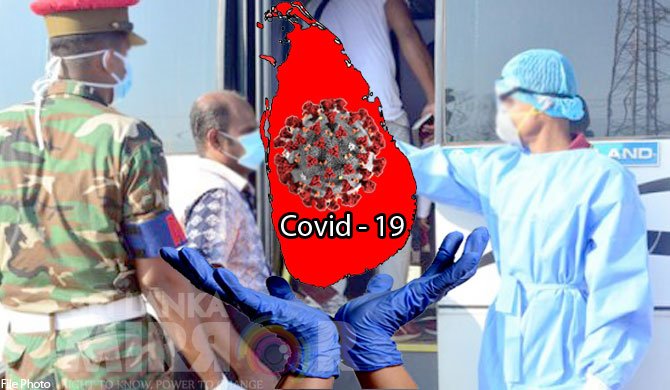
New health guidelines issued to contain the spread of Covid

The Ministry of Health has issued a new set of guidelines to prevent the spread of the coronavirus.

The guidelines, which take effect from today, have been issued with Sri Lanka placed on Alert Level 3.

Accordingly, the new guidelines state:

01. Conference / Seminars / Meetings / Brand Luncheons are not allowed until 21st May 2021. The decision will be reviewed based on the COVID-19 situation in Sri Lanka.

02. Super Markets, Shopping Malls, Financial Institutions, Textile Stores, retail outlets can operate only with 25% customer capacity present at any given time.

03. Events and public gatherings held at closed and open venues prohibited until further notice

04. The gathering of people in religious places should be suspended.

05. Cinemas and Theaters, Kids Playgrounds, Swimming Pools, Pubs and Bars, Casinos and Nightclubs, betting centers and spas will remain closed until further notice.

06. Accommodation in Hotels, Inns and Guest Houses etc. can only operate with 50% of the total capacity and should not be in operation after 10.00 pm.

07. Carnival, musical shows, beach parties / festivals are not allowed.

08. Open-stalls, Fairs and Bakeries should operate with 25% of the customer capacity present at any given time.

09. Courts – Up to 25% of the total capacity is open to the public.

10. No visitation for prison inmates

11. Schools, Preschools, Universities and Higher Educational Institutions, Tuition Classes Closed until notice.

12. No permission for Weddings from May 04 to May 20, 2021.

Posted in Uncategorized

Human Rights Watch urges Sri Lanka parliament to reject Presidential Commission’s ‘Political Victimization’ findings

Sri Lanka’s parliament should reject a resolution to exonerate officials implicated in human rights abuses and to prosecute police and prosecutors investigating them, Human Rights Watch (HRW) said today.

Adopting the resolution, brought before parliament on April 9, 2021, would further undermine the independence of the judiciary and rule of law, which have been severely weakened under the administration of President Gotabaya Rajapaksa, the HRW said.

The resolution would put into effect the recommendations of the Commission of Inquiry to Investigate Allegations of Political Victimization, which President Rajapaksa established in January 2020, to derail investigations of his relatives and allies begun by the previous administration in 2015-19, Human Rights Watch said.

“It seeks to block investigations and prosecutions in emblematic human rights cases, overturn a murder conviction, reinstate security force members disciplined for serious misconduct, and protect Rajapaksa family members and others from investigations into fraud and money laundering.”

“President Gotabaya Rajapaksa is being brazen in his efforts to help his family and associates evade Sri Lankan justice,” said Meenakshi Ganguly, South Asia director at Human Rights Watch. “Rajapaksa’s administration has spared no effort in covering up serious alleged crimes, including those implicating Rajapaksa himself.”

During its hearings throughout 2020, the commission of inquiry impeded or prejudiced legal proceedings. It quickly intervened in cases in which Rajapaksa allies and associates were facing police investigations or prosecution for alleged corruption or human rights abuses, leading the attorney general to repeatedly accuse it of exceeding its authority.

The commission threatened to take action against investigators in human rights cases, including the former Criminal Investigation Division investigators Shani Abeysekara and Nishantha Silva, and officials in the attorney general’s office with expertise in combatting money laundering and corruption.

The Bar Association of Sri Lanka has said that the commission’s report, which was submitted to the president on December 8, but not yet officially published, “may undermine the Rule of Law in this country, impair the independence of the Judiciary, and erode the impartial and efficient functioning of the Attorney General’s Department.” The cabinet approved carrying out the commission’s recommendations in the report, purported copies of which have been leaked, on January 19.

Among the human rights cases that the Rajapaksa government has attempted to block are the legal proceedings in the 2008-2009 enforced disappearance and suspected murder of 11 men and boys by alleged members of naval intelligence as part of a conspiracy to extract ransom from their families. Fourteen former and serving naval officers including Adm. (ret.) Ravindra Wijegunaratne, a former chief of defense staff, were due to stand trial last year before the trial was postponed.

Other cases include the 2008 abduction and torture of a journalist, Keith Noyahr; the 2009 murder of a newspaper editor, Lasantha Wickrematunge; the 2010 disappearance of a journalist, Prageeth Ekneligoda, in which a criminal trial is proceeding; and the 2012 Welikada Prison massacre, in which security force personnel are currently facing trial. In all of these cases, evidence produced in court by the police has implicated Gotabaya Rajapaksa, who was defense secretary at the time, in the crimes. The resolution before parliament would acquit the suspects and instead bring prosecutions against police, prosecutors, and witnesses in the cases for supposedly fabricating evidence.

Political interference in these cases has already led to lengthy delays in the justice process, Human Rights Watch said. Following the persistent failure of the Sri Lankan authorities to provide accountability for these and other grave crimes, the United Nations Human Rights Council adopted a resolution in March that establishes an investigative capacity within the UN Office of the High Commissioner for Human Rights to collect and analyze evidence for use in future international accountability efforts.

The commission of inquiry also investigated a number of high-profile corruption cases relating to events when Rajapaksa family members were previously in government, between 2005 and 2015. The commission similarly recommended that suspects be acquitted and that officials responsible for bringing cases be charged with fabricating evidence. Some of these corruption cases, such as suspected fraud in the purchase of MiG military aircraft, are linked to alleged human rights abuses.

The commission’s mandate was to examine cases involving members of the military, police, and public service. However, it appeared to exceed its mandate by also examining a number of private sector corruption and money laundering cases involving allies of the president and members of his family.

Instead of fostering impunity for serious offenses, the Sri Lankan government should uphold its obligations under international law. It should cooperate with the UN in carrying out the Human Rights Council resolution to create an independent mechanism to secure evidence and investigate allegations of grave human rights abuses, war crimes, and crimes against humanity, and to prosecute those responsible, Human Rights Watch said.

“The Rajapaksa government should reject the findings of its bogus commission of inquiry and instead take seriously the UN Human Rights Council’s March resolution,” Ganguly said. “Concerned governments should make clear that pursuing the commission’s recommendations will be a major setback for Sri Lankan government accountability.”

“Government seeks to absolve allies for abuses, prosecute officials pursuing justice”

‘Sri Lanka’s majoritarian rhetoric cements Islamophobia’ -OIC

The rights body of the Organization of Islamic Cooperation (OIC) on Friday urged Sri Lanka to fulfill its international human rights obligations, calling majoritarian rhetoric and discriminatory measures in the country “clear manifestations of Islamophobia.”

The Independent Permanent Human Rights Commission (IPHRC) in a statement condemned the Sri Lankan Prevention of Terrorism Act (PTA) and its recently enacted regulation titled “de-radicalization from holding violent extremist religious ideology”.

“[These] are contrary to the ideals of pluralism, counterproductive to social cohesion,” said the IPHRC.

The regulation allows the creation of “reintegration centers” to “arbitrarily detain Muslims and subject them to torture and other human rights violations without any legal oversight with impunity,” it underlined.

The statement said these “tragic developments” are further “compounded by reports of newly imposed Burqa ban, under the pretext of counter-terrorism measures, which squarely violates minorities’ right to freedom of religion.”

Referring to a report by the Office of the UN High Commissioner for Human Rights (OHCHR), the IPHRC called on Sri Lankan authorities to immediately repeal the draconian PTA and impartially investigate reported incidents of human rights violations while allowing access to justice, and a free trial to all its minorities.

It said the OHCHR report highlighted the prevalence of “endemic patterns of custodial deaths, torture, and other ill-treatment, and extrajudicial killings with impunity” and that the COVID-19 pandemic “exacerbated the prevailing marginalization and discrimination suffered by the Muslim community.”

It added that discriminatory measures like the Burqa ban would “cement negative stereotypes against Muslim women, disproportionately restrict their freedom to manifest their religion, cause intersectional discrimination and greater marginalization as well as stoke undue hostility/physical violence because of their clothing.”

The human rights body asked Sri Lanka to protect the rights of its Muslim minority to practice their religion, free from any coercion or discrimination.

It also stressed Sri Lanka’s Muslim minority to “exhaust all available domestic remedies including domestic courts for redress of grievances and repeal of discriminatory laws,” besides urging the international community to engage with Sri Lankan authorities “to seek redress for the aggrieved minority including by punishing those found guilty as per international human rights law.”