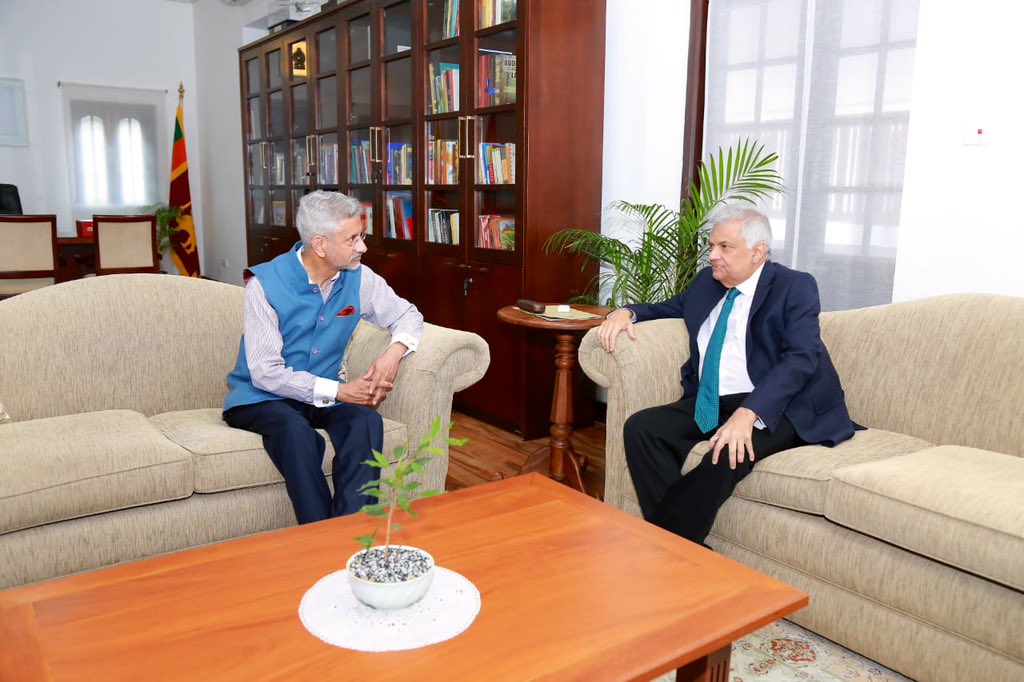
Opposition says LG polls will test Government popularity

The opposition says the Local Government (LG) elections will test the popularity of the Government.

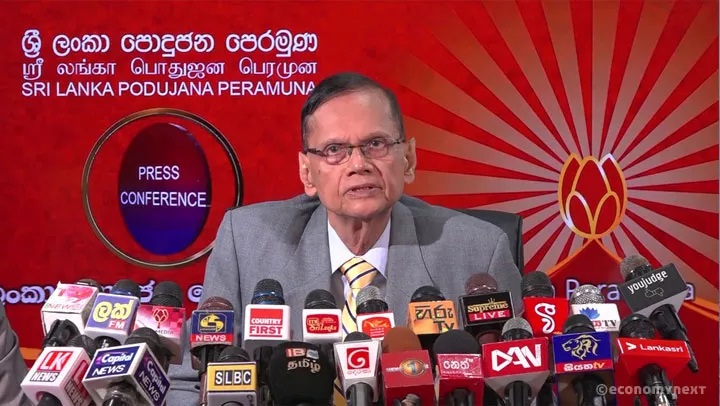
Former Minister, Professor G.L Peiris said that the election is not just about electing local council members.

He said the 9th March election has more significance at a national level.

The former Minister said that the Government is fast losing popularity.

He said the public will judge the actions of the new Government at the LG polls.

Professor G.L Peiris, representing the Freedom People’s Congress, said that several attempts made by the Government to postpone the elections, have failed.

He said the Elections Commission has made it clear the elections will be held on 9th March.

However, he said the Government is attempting to look for reasons to postpone the polls.

2023 LG election: Postal voting to end at midnight today

The acceptance of postal votes for the upcoming Local Government (LG) election is scheduled to end at midnight today (23 Jan.).

The accepting of postal votes from all eligible voters commenced on 05 January.

Meanwhile, the acceptance of cash deposits ended on Friday (20 Jan.), followed by the deadline for submitting nominations for the upcoming election, which was on Saturday (21 Jan.).

Although the Election Commission of Sri Lanka has convened all political parties and independent groups for a meeting, focusing on the 2023 LG election, tomorrow (24 Jan.), the leaders of independent groups contesting within Colombo were summoned to the District Secretariat today.

Further, the printing of ballot papers is also expected to get underway this week.

SL concerns over proposed Sethusamudram ship canal project BY P.K.Balachandran

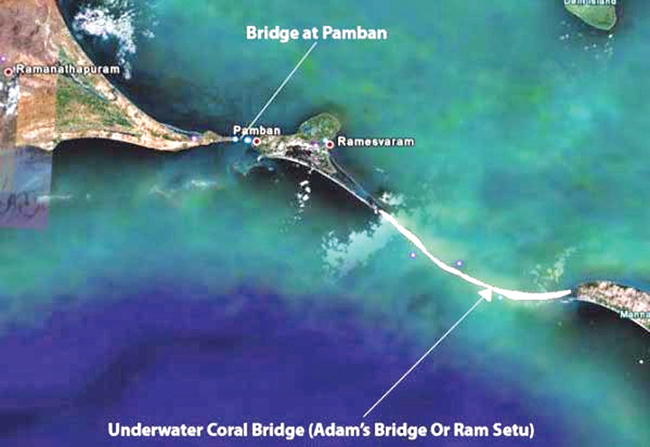
On January 12, the Tamil Nadu State Assembly unanimously adopted a government resolution urging New Delhi to immediately implement the long-pending “Sethusamudram project” which envisages a canal cut through the Gulf of Mannar and the Palk Strait to facilitate ship movement between the East and West coasts of India by the shortest route.

The proposal to cut a canal in the shallow sea dividing India and Sri Lanka to save on coast-to-coast journey time and promote the development of South Tamil Nadu, has been objected to in India on navigational, environmental and economic grounds. Since the project will have an impact on Sri Lanka too, objections have been raised in the island also.

Although Sri Lanka has an environmental impact assessment procedure for coastal conservation, the Sethusamudram project was not brought under its jurisdiction because it was to be within India’s territorial waters. But despite this, it is felt in Sri Lanka, that its environmental concerns have to be addressed given the proximity of the proposed canal to Sri Lanka. However, the Environment Impact Assessment (EIA) of the project carried out by India is said to have alluded to Sri Lanka only in passing.

Calls by Sri Lankan environmental groups for a joint Indo-Lankan Environmental and a Social Impacts Assessment fell on deaf ears in India, claim S. C. Withana and C. V. Liyanawatte of the Sir John Kotelawala Defence University in Sri Lanka, in their 2016 paper entitled: “Sethusamudram Ship Canal Project adverse to Sri Lanka?” Legal and Environmental Impact on Sri Lanka.”

They say that in 2005, Sri Lanka had sought the establishment of a standing joint mechanism for exchange of information on the project. It wanted to set up a common database on hydrodynamic modelling, environmental measures and the impact on fish resources, fisheries-dependent communities and also on measures to cope with navigational emergencies. They also contend that the UN Convention on the Law of the Sea (UNCLOS) had been violated.

Like the Indian environmental activists, Withana and Liyanawatte point out that the environmental impact study carried out by the National Environmental Engineering Research Institute (NEERI) of India in 1988 and the technical feasibility report carried out for the Tuticorin Port Trust (TPT) had failed to pay attention to the latest studies carried out by specialist groups on sedimentation dynamics in the Palk Bay and ignored major risks inherent in that cyclone-prone area.

Since the project is to be implemented in an ecologically sensitive area, the researchers quote Article 15 of the Rio Declaration on Environment and Development of 1992 which says: “In order to protect the environment, the precautionary approach shall be widely applied by States according to their capabilities. Where there are threats of serious or irreversible damage, lack of full scientific certainty shall not be used as a reason for postponing cost-effective measures to prevent environmental degradation.”

The executive summary of the EIA on the canal project itself says that the 83 km deep water channel is to be built in a biologically rich and highly productive sea area. There are over 3600 species of plants and animals, including 117 species of corals and 17 species of mangroves. Further, the EIA report states that this area is home to rare species such as sea turtle, whales, dolphins and sea cows. The sea cow is a rare and endangered species migrating with the change of seasons.

“Dredging the canal could stir up the dust and toxins that lie beneath the sea bed, affecting marine life,” the Lankan researchers say. The canal will damage coral reefs too. Further, by damaging the ecology of the zone, there could be changes in temperature, salinity, turbidity and flow of nutrients, leading to high tides and more energetic waves and hence coastal erosion. The pattern of sea breeze and rainfall pattern will be altered they say echoing Indian environmentalists. R.K. Pachauri, who was Chairperson of the Intergovernmental Panel on Climate Change (IPCC), had said that the project would not be “economically and ecologically viable.”

Resort to UNCLOS

Withana and Liyanawatte suggest that Sri Lanka could use the UN Convention on the Law of the Sea (UNCLOS) for getting redress.

Article 235 (1) of UNCLOS says that: “States are responsible for the fulfillment of their international obligations concerning the protection and preservation of the marine environment.” Art. 194(2) recognizes that: “States shall take all measures necessary to ensure that activities under their jurisdiction or control are so conducted as not to cause damage by pollution to other States and their environment and that pollution arising from incidents or activities under their jurisdiction or control does not spread beyond the areas where they exercise sovereign rights in accordance with this Convention.”

Article 235 (3) mentions that: “With the objective of assuring prompt and adequate compensation in respect of all damage caused by pollution of the marine environment, States shall cooperate in the implementation of existing international law and the further development of international law relating to responsibility and liability for the assessment of and compensation for damage and the settlement of related dispute.”

The Sri Lankan researchers point out that Section 2 of part XV of UNCLOS has general provisions dealing with the settlement of disputes by negotiations. Article 283 says that “when a dispute arises between state parties concerning the interpretation and application of the convention, the parties to the dispute shall proceed expeditiously to an exchange of views regarding its settlement by negotiations or other peaceful means”.
Withana and Liyanawatte say that Sri Lanka and India could negotiate for a dispute settlement mechanism. Sri Lanka could point out that India had not exchanged views regarding the project with Sri Lanka.

“If India is looking at continuing the project notwithstanding the objections of Sri Lanka, Sri Lanka can move on to the compulsory procedures entailing binding decisions according to Article 287. Sri Lanka can move on to a settlement of disputes by compulsory procedure through the International Tribunal for the Law of the Sea (ITLOS),” they suggest. In 2003 Malaysia had complained against Singapore over ‘Land Reclamation’ and got a ruling in its favor.

Be that as it may, the implementation of the Sethusamudram Ship Canal Project (SSCP) is not at all certain although the Tamil Nadu State Assembly has passed a resolution on it unanimously, with even the Bharatiya Janata Party (BJP) supporting it.

Firstly, the environment-protection lobby is strongly against it. Shipping experts have maintained that constant dredging will be needed and the time saved by using the canal rather than taking the circuitous route around Sri Lanka will be negligible as the speed of ships will have to be curtailed drastically when traversing the canal. Experts have even said that the huge expenditure to be incurred in cutting the canal and maintaining it cannot be justified.

Lastly, Dr. Subramanian Swamy, a vocal and activist BJP Member of Parliament, had gone to the Supreme Court against the project, citing religious objections. His plea was that the canal will cut the “Rama Sethu”, which is a string of limestone shoals Hindus believe constituted the bridge Hanuman had built to enable Rama and his army to cross over to Lanka to fight Ravana according to the epic Ramayana. The shoals are also said to be of importance in Abrahamic religions for they are believed to be Adam’s footprints. Hence the English name ‘Adam’s Bridge’ for Rama Sethu.

The Supreme Court had stayed the project in 2007 due to Swamy’s petition. In 2018, the Indian government told the court that it intends to explore an alternative alignment so that no damage is done to the Rama Sethu. That alternative has not been worked out yet.


Posted in Uncategorized

Sri Lanka local govt polls: president’s party adamant time is not right for elections

Amid some lingering uncertainty over the timely conduct of Sri Lank’s local government polls scheduled for March 09, the United National Party (UNP), headed by President Ranil Wickremesinghe, maintains that now is not the time for an election.

UNP parliamentarian Vajira Abeywardena, a long-time Wickremesinghe loyalist, told reporters on Monday January 23 that the party is disappointed that an election is being held at a time that is not conducive to the conduct of an election.

“The election is not a priority for the people. The crisis is still not over,” Abeywardena said, speaking at an event.

Sri Lanka’s national election commission has announced that the local government polls will be held as scheduled on March 09 for 340 municipal councils, urban councils and pradeshiya sabhas. However, accepting nominations for the Kalmunai Municipal Council has been suspended following an interim injunction issued by the Supreme Court.

Both the UNP and sections of the ruling Sri Lanka Podujana Peramuna (SLPP), which have teamed up to contest some of the local bodies, continue to insist that now is not the time for elections, despite both parties submitting nominations and placing deposits for the polls.

The government, however, claims that Sri Lanka cannot afford an election at this juncture. The local government polls is estimated to cost around 10 billion rupees.

Abeywardena said an election is taking place at a time when even government workers’ allowances are being taxed.

“It would’ve been better to stop the election and cancel that tax. The private sector has also collapsed,” he said.

An election in March will also affect tourism, with many more tourist arrivals anticipated between February and April, he said.

“If an election process begins again, tourism businesses and hotels that suffered for three years will collapse once again,” the national list MP said that

“If the country is destroyed once again, it is your future that will be destroyed,” he added.

Meanwhile opposition the National People’s Power (NPP), a leftist outfit headed by the Janatha Vimukthi Peramuna (JVP), who some analysts predict will fare well at the upcoming polls, is adamant that the election go ahead.

NPP legislator Harini Amarasuriya said at a public event that an opportunity has presented itself to end 75 years of “corrupt rule”.

“The 9th is an unlucky day for these rogue leaders. But a very lucky day for citizens.

“March 09 is the day the first step will be taken towards establishing a people-centric administration elected by the people,” she said.

JVP Sees Local Polls As National Referendum

The ability to change leaders is a fundamental right and if the government delays Sri Lanka’s upcoming local government polls, the people must take to the streets, surround the president’s house and parliament if needed, and demand that the election be held, opposition Janatha Vimukthi Peramuna (JVP) former legislator K. D. Lal Kantha said.

He said the local government election, scheduled to be held in March, has assumed the importance of a national referendum and must be treated as one.

Addressing a group of indigenous medical practitioners at an event, Lal Kantha said that if the people cannot change their leaders through an election, those leaders must be “beaten and kicked out.” (gahala pannanna oney).

“The people of Sri Lanka have changed and as a result the leaders are also compelled to change,” he said.

By delaying elections, he said, the leaders are giving the people a different message: “Kick us out.”

The former MP said the message would be that Sri Lankans must kick them out the way they did former President Gotabaya Rajapaksa, who was forced to resign after a wave of popular protests.

Posted in Uncategorized

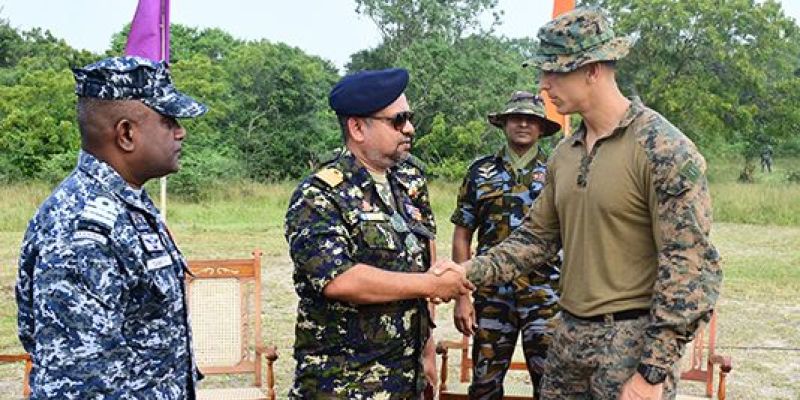
Marine Exercise of CARAT-2023 commences in Mullikulam

The Marine Exercise of Cooperation Afloat Readiness and Training (CARAT) 2023 commenced in Mullikulam yesterday (21).

The opening ceremony was held under the patronage of Commanding Officer SLNS Barana, Captain Sanjeewa Kodikara and Company Commander, 2nd Battalion, 4th Marines of US Marine Corps, Captain Shan Mandrayar.

The Sri Lanka Navy said this also marked the commencement of shore phase training of CARAT -2023, where Tactical Combat Casualty care (TCCC), Combat Life Saving CLS), Jungle Warfare, Military Operation in Urban Terrain (MOUT) and Rescue Operation training exercises were performed.

The exercises were carried out by personnel of Sri Lanka Navy Marines, Special Boat Squadron, Rapid Action Boat Squadron, Naval Infantrymen, and U.S. Marine Corps.

Posted in Uncategorized

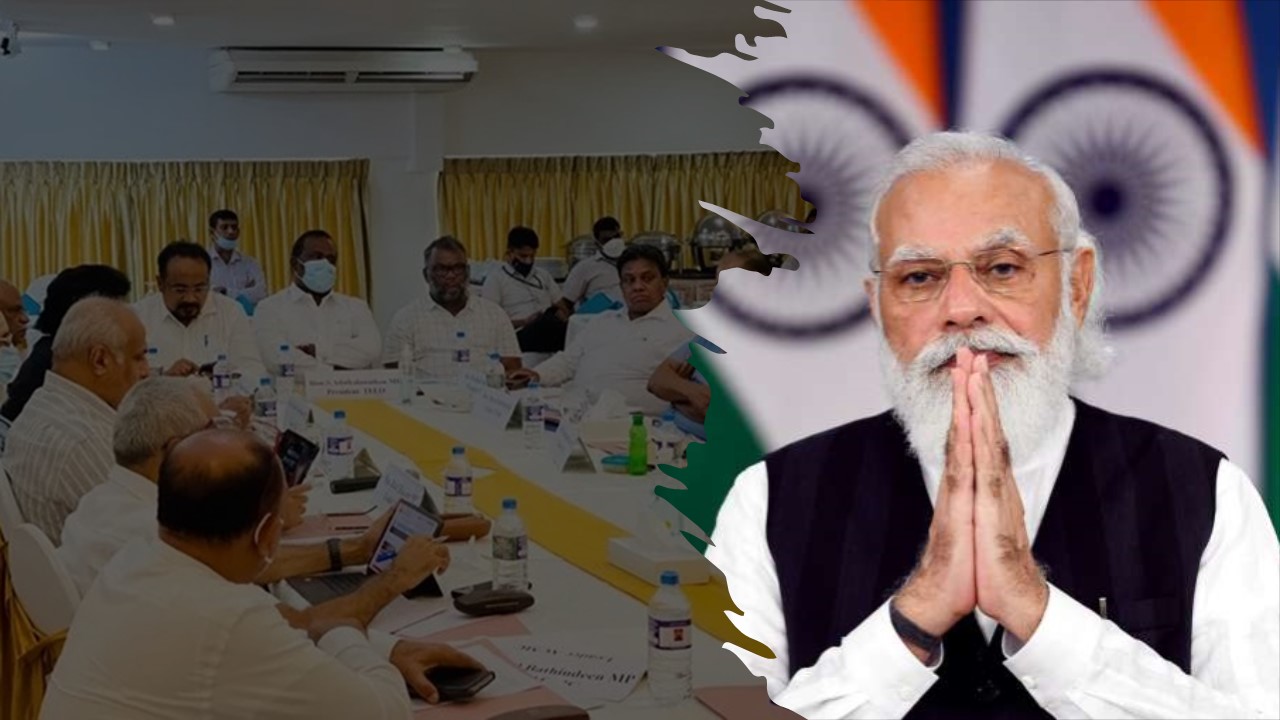
Sri Lankan Tamils seek India’s support in addressing socio-economic problems

Members of the Tamil community in Sri Lanka has sought help from India in addressing their socio-economic problems, during External Affairs Minister Dr. S. Jaishankar’s two-day visit to the island nation.

“Jeevan Thondaman, Minister of Water Supply and Estate Infrastructure Development-led Ceylon Workers’ Congress leaders and leaders of Tamil Progressive Alliance highlighted the socio-economic difficulties faced by people of plantation areas and sought India’s support in addressing their problems,’’ the Indian High Commission in Sri Lanka said in a statement.

The interaction of minister Jaishankar with the leadership of the government of Sri Lanka provided an opportunity to review the whole gamut of bilateral relations between the two countries, the MEA said.

He stressed his presence in Sri Lanka at a time when the country was going through multiple challenges sent a clear and strong message of continued support from the Government and the people of India to the people of the island-nation.

On Friday (20 Jan.), Jaishankar said full implementation of the 13th amendment in the island country is critical for achieving reconciliation with the minority Tamil community.

‘‘India has always supported both the political and economic stability of Sri Lanka. The President briefed me on the question of political devolution and his thinking. I shared with him our considered view that the full implementation of the 13th amendment and early conduct of provincial elections are critical in this regard,” Jaishankar was quoted as saying in a press statement in Sri Lanka.

The 13th Amendment provides for the devolution of power to the minority Tamil community which India has been pressing Sri Lanka to implement.

This amendment was brought in after the Indo-Sri Lankan agreement of 1987.

Jaishankar paid an official visit to Sri Lanka from 19 – 20 January, making this his fourth bilateral visit to the island nation during his tenure as India’s External Affairs Minister.

Jaishankar was accompanied by a four-member official delegation from the Ministry in his latest visit to Sri Lanka, following earlier visits to the island nation in January 2021 and March 2022.

Before Jaishankar’s visit, Sri Lankan President Ranil Wickremesinghe on Sunday said his government is discussing problems of the North and the Tamil people, in a step towards reconciling the island nation that has suffered three decades of war and insurgency.

‘‘We are discussing the problems of the North and the Tamil people. I called all the party leaders to the Parliament and said let us work to unite this country and restore harmony,’’ Wickremesinghe was quoted as saying by the Sri Lankan President’s media division in an address at the National Thai Pongal Festival on Sunday afternoon.

In his address, Wickremesinghe said his government is hoping to fully implement the 13th Amendment to its Constitution not only in the northern part of the country but also in the South.

Source – ANI News

Posted in Uncategorized

Over 100 nominations for LG election rejected

Several nomination papers submitted by major political parties for the upcoming election have been rejected by the respective district secretariats.

Accordingly, over 100 nominations have been rejected across nearly 15 districts.

Nominations submitted by the United National Party (UNP) to the Haldummulla and Mahiyangana Pradheshiya Sabhas in Badulla have been rejected, while those submitted by the Ceylon Workers’ Congress (CWC) to the Hali-Ela Pradheshiya Sabha were also rejected.

Nomination papers submitted by the newly-formed Freedom People’s Alliance under the helicopter logo were also rejected in Galnawa, Anuradhapura, and in Kantalei, Trincomalee.

Submissions made by the Tamil National Alliance have also been rejected by the Seruwila Pradheshiya Sabha in Trincomalee.

Nomination papers submitted by the All Ceylon Makkal Congress (ACMC), led by MP Rishad Bathiudeen, were also rejected by the Kantalei Pradheshiya Sabha, while those submitted by the Frontline Socialist Party were rejected by the Kuruwita and Kalwana Pradheshiya Sabhas in the Ratnapura district.

Nominations submitted by a total of 10 political parties and three independent groups were rejected by local government institutions within the Kalutara district, whiles ix nomination papers were rejected in Galle.

Meanwhile, the Election Commission of Sri Lanka has convened all political parties and independent groups for a meeting pertaining to the upcoming Local Government (LG) election.

Accordingly, the meeting is expected to take place next Tuesday, the Commission noted, making this the first such meeting since the announcing of the 2023 LG election.

Posted in Uncategorized

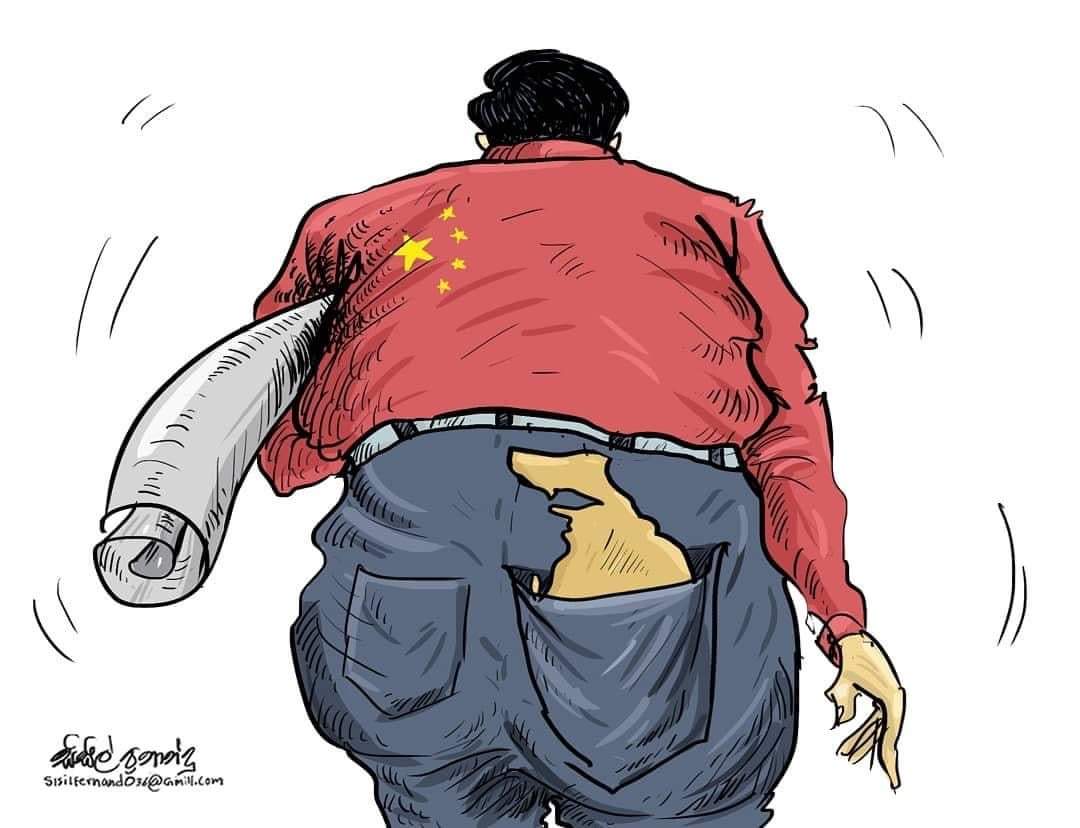
China offers Sri Lanka support with two-year moratorium on debts

President gets Exim Bank’s letter supporting IMF’s loan programme

China yesterday responded to Sri Lanka’s long-standing request for a commitment on rescheduling its debts as a prelude to a bailout by the International Monetary Fund (IMF) with an offer for a two-year moratorium, the Sunday Times learns.
In a letter to President Ranil Wickremesinghe in his capacity as Finance Minister, the Exim Bank of China responsible for much of the loans given to Sri Lanka said the two-year moratorium would be a short-term suspension of the debts owed to China while asking all parties, i.e. Sri Lanka’s creditors to get together to work out medium-term and long-term commitments.

It is learnt that the letter also extends China’s support to the IMF’s Extended Fund Facility (EFF) and requests the IMF to go ahead with the discussions on debt restructuring that will lead to an IMF programme.

The letter giving China’s assurances arrived on the eve of a Paris Club meeting of Sri Lanka’s creditors scheduled for next week where Sri Lanka’s debt restructuring measures are to be discussed as a prelude to a US dollars 2.9 million IMF programme to bail out Sri Lanka from its current economic crisis.

Sri Lanka’s efforts to get China’s support along with India’s support for rescheduling its loans were being negotiated for several months.

It comes shortly after India announced that it had written to the IMF extending its assurances in writing that it would support an IMF programme for an Extended Fund Facility for Sri Lanka. China, India and Japan are Sri Lanka’s largest bilateral creditors.

Soon after the Indian assurances were given to the IMF, its External Affairs Minister S. Jaishankar called upon other countries to be “proactive” in supporting Sri Lanka. Dr. Jaishankar who was in Sri Lanka on a 24-hour visit on Thursday and Friday said India was willing to support Sri Lanka “fully” in its efforts to come out of its current financial crisis.

China’s International Department Vice Minister Chen Zhou who was in Sri Lanka earlier in the week, also announced that China was about to announce some “good news” on Sri Lanka’s request to consider rescheduling its debts.

The letter from the Chinese Exim (Export-Import) Bank, the state-run institution responsible for foreign loans, arrived in Colombo on the eve of the Chinese lunar New Year which begins today.

It was not immediately known if the Chinese assurances contained in the letter would meet the requirements of the Paris Club and the IMF.

Participation at the Paris Club by India and China was also not immediately known, but the Sunday Times learns that the Sri Lankan Finance Ministry was confident it was sufficient consent for the IMF to go ahead with discussions on its debt restructuring schedule leading to its bailout programme for Sri Lanka.

India considers full implementation of 13A in Sri Lanka ‘critical’: EAM

India considers the full implementation of the 13th Amendment in Sri Lanka “critical” for achieving reconciliation with the minority Tamil community, External Affairs Minister S Jaishankar said on Friday, underlining that New Delhi has always supported both the political and economic stability in the island nation.

India has been pressing Sri Lanka to implement the 13th Amendment which was brought in after the Indo-Sri Lankan agreement of 1987. The 13A provides for the devolution of power to the Tamil community.

Fully implementation of the 13th Amendment to Sri Lanka’s Constitution will facilitate unity among all the communities in the island nation so that they could live as one.

“India has always supported both the political and economic stability of Sri Lanka,” Jaishankar said in a press statement after talks with Lankan President Ranil Wickremesinghe and Foreign Minister Ali Sabry.

He further said that he shared with Lankan President Wickremesinghe, “our considered view that the full implementation of the 13th Amendment and early conduct of provincial elections is critical” for both the political and economic stability of the debt-ridden island nation.

“Durable efforts towards reconciliation are in the interests of all sections in Sri Lanka. I also spoke of the need to pay special attention to the requirements of the Indian-origin Tamil community,” he said.

Jaishankar, who is here on a two-day visit, called on President Wickremesinghe on Friday morning.

Sri Lankan President Wickremesinghe on Thursday called for reconciliation and coexistence in the island nation, saying his government has initiated the process by talking to Sri Lankan Tamils and understanding their problems.

He said the government has already started discussions with the Tamil community and will also be talking with the Tamil section in the “Hill Country” to integrate them into the society.

Sri Lanka has had a long history of failed negotiations to end the Tamil claim of discrimination by allowing some form of political autonomy.

An Indian effort in 1987 that created the system of a joint provincial council for the Tamil-dominated north and east faltered as the Tamils claimed it fell short of full autonomy.

Tamils say that not enough power had been devolved to the provincial councils to make them meaningful.

Wickremesinghe himself tried an aborted constitutional effort between 2015-19 which too came to be scuttled by the hardline majority politicians. The Tamils put forward their demand for autonomy since gaining independence from Britain in 1948 which from the mid-70s turned into a bloody armed conflict.

Over the years, the Sri Lankan government has been aggressive against Tamilian groups following its war with the Liberation Tigers of Tamil Eelam (LTTE).

The LTTE ran a military campaign for a separate Tamil homeland in the northern and eastern provinces of the island nation for nearly 30 years before its collapse in 2009 after the Sri Lankan Army killed its supreme leader Velupillai Prabhakaran.

According to Sri Lankan government figures, over 20,000 people are missing due to various conflicts including the three-decade brutal war with Lankan Tamils in the north and east which claimed at least 100,000 lives.