China assures Sri Lanka of continued support

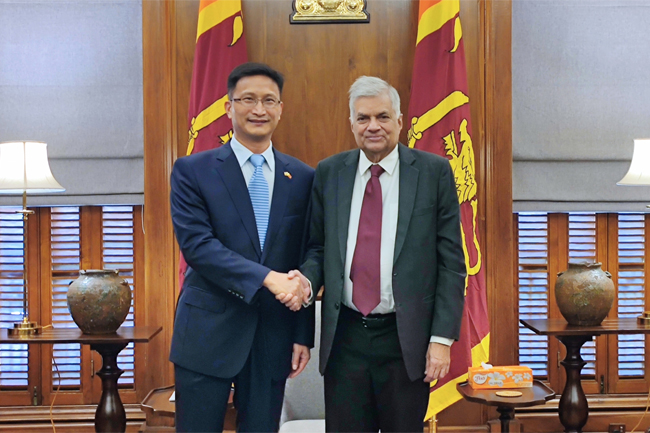
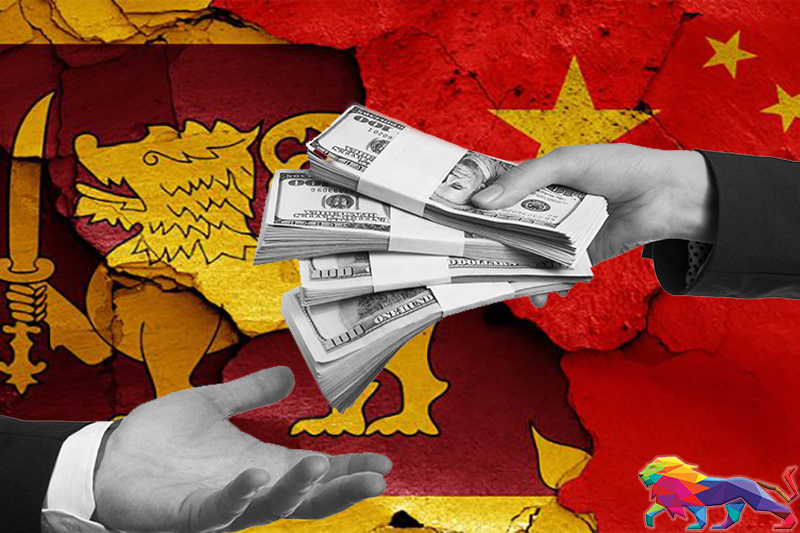
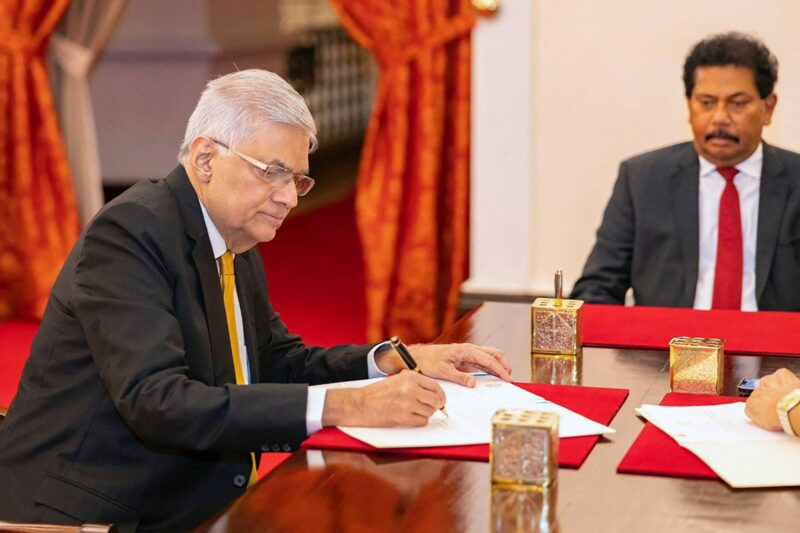
Chinese Ambassador Qi Zhenhong today assured President Ranil Wickremesinghe that China would continue to extend its support to overcome the current challenges faced by Sri Lanka.

They reviewed the progressive bilateral & multilateral negotiation on the debt issue of Sri Lanka and denounced misinformation by foreign media on #China.

UK provides £880,000 to help Sri Lankan fishing community

The United Kingdom through the Food and Agriculture Organization of the United Nations (FAO) is providing GBP 880,000 (USD 1,043,395) to strengthen the food and nutrition security of marginal fishers in Tangalle, Negombo, Colombo, Kalutara, Galle, Matara, Puttalam, Chilaw, and Mannar.

In light of World Fisheries Day (21 November) being celebrated this week, the British High Commissioner to Sri Lanka, Sarah Hulton OBE announced the support stating “We recognize that the fisheries sector in Sri Lanka has been going through a very difficult period. The UK is contributing £880,000 to help address some of the challenges faced by those working in this industry. The support will focus on increasing access to nutritious food and other essentials for families.”

FAO will utilize the contribution of the British government to support over 5,000 small-scale marine artisanal fishers using non-motorized traditional boats, who have traditionally been amongst the poorest within the fishing community. Eligible fishers will receive 47 USD per month for a period of 3 months in unconditional cash transfers to help affected households meet their essential needs, including immediate food and livelihood requirements.

The Minister of Fisheries, Douglas Devananda appreciated the support extended to the fisheries community “Fish has traditionally been a primary source of protein and a major source of foreign exchange earnings for the country. We must stand with the fishing community during these times to ensure they can continue their valued work which contributes to the food security and financial stability of the country. I thank the British government and FAO for supporting the community.”

Speaking on the initiative FAO Representative for Sri Lanka and the Maldives, Vimlendra Sharan stated “Small-scale fishers have been faced with multiple challenges this year. Reduced fishing days a week, decreased fish catch, and reduced demand due to the fall in purchasing power in rural areas have all significantly impacted this group. As FAO we are committed to protecting the livelihoods of vulnerable fishers during this crisis and thank the United Kingdom for extending their support for the fisheries community.”

Together with its partners, FAO in Sri Lanka is addressing urgent food security needs, protecting the livelihoods of vulnerable farmers and fishers in the most affected districts while promoting agriculture, including in urban settings.

Posted in Uncategorized

Chinese cruise ships to visit Sri Lanka after travel restrictions relaxed

The Sri Lanka Embassy in Beijing says that it is actively exploring the possibility of Chinese cruise ships and yachts visiting Sri Lanka with a view to attracting more Chinese tourists to the island nation.

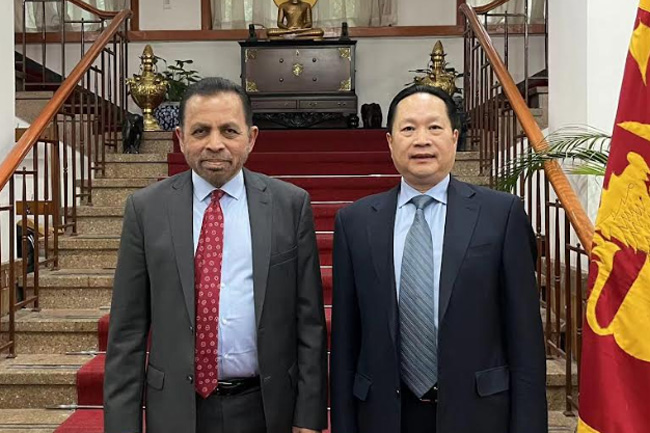
Sri Lankan Ambassador, Dr. Palitha Kohona has had a very successful virtual meeting with the Vice President of the China Cruise and Yacht Industry Association (CCYIA), Zheng Weihang, on 23 November 2022.

Vice President Zheng said that Sri Lanka will be promoted as a new market for Chinese cruise ships.

On 15 November, he had attended a conference of Chinese cruise ship operators, where he formally proposed that Sri Lanka be designated as a destination for cruise ships after the travel restrictions are relaxed.

He had proposed creating four/five Sri Lankan cruise itineraries. Ships will dock at Sri Lanka’s ports for a day and give the passengers the option of taking tours in the region close to the port thus engaging land operators as well. He specified that the CCYIA will work with the Embassy to promote Sri Lanka at cruise-related conferences.

Sri Lankan Ambassador responded that the Embassy will also assist with these goals actively.

Sri Lanka has three well-established ports for cruise ships: Colombo, Galle, and Trincomalee. Dr. Kohona stated that there were many cruise visitors from Europe before the pandemic, and recently welcomed the Cruise ship VIKING MARS with 900 tourists on board.

He highlighted that other European cruise ships are scheduled to call at Sri Lanka ports in the coming weeks. The Ambassador suggested that tourists could experience not only the coastal cities but also the Buddhist sites of the island, like the Temple of the sacred Tooth Relic in Kandy, or the lush green forests, home to the biggest concentrations of wild elephants and leopards in Asia.

Vice President Zheng added that CCYIA plans to organize exhibitions of Sri Lankan products in Shanghai (Nov 2023), Shenzhen (Nov 2023), and Haikou (Apr 2023) and the association will also organize exhibitions and sales outlets on Chinese cruise ships to promote Sri Lankan gems, tea, artifacts and other products.

Ambassador Dr. Kohona said that the Embassy successfully participated in the last CIIE, with two National Pavilions (Food and Beverages, Gem and Jewelry).

He opined that collaboration with CCYIA will benefit both Sri Lanka and the cruise industry. The Ambassador extended an invitation to Vice President Zheng and the team of CCYIA to participate in the upcoming Sri Lanka Tourism Promotion Event which is to take place in mid-December at the Embassy.

Posted in Uncategorized

‘Will go to the IMF in January 2023 if December doesn’t work’

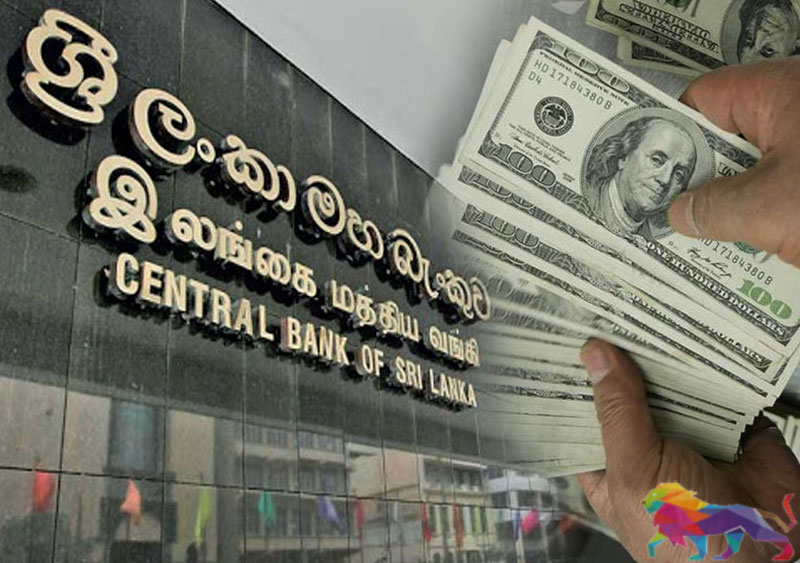
The Governor of the Central Bank of Sri Lanka Nandalal Dr. Weerasinghe says the government will go to the International Monetary Board in January 2023 if they misses the December timeframe.

Speaking to media today (24), Governor Weerasinghe said “most probably meeting the IMF target is too optimistic but if we miss that we still have time till January”.

The CBSL Governor said Sri Lanka is also hopeful of reaching an agreement with creditors as well.

He said “We should get the assurance from our bilateral creditors in the next couple of weeks. We are very confident on that with the way discussions are going on.”

The Governor also stated that money printing has drastically reduced in the first ten months of 2022 in comparison to the entirety of 2021.

Weerasinghe said the Central Bank printed money amounting to Rs.341 billion in 2021 while between January to October this year the sum reduced to Rs.47 billion.

Furthermore, the Governor condemned claims by politicians that he receives a monthly salary of Rs.2.5 million and a pension from the IMF.

Refuting the charges Weerasinghe said he receives the pension entitled to a retired CBSL official and privileges entitled to the Governor.

Meanwhile, the Governor was questioned over allegations levelled by former CBSL Governor Ajith Nivard Cabraal who released a book recently that claimed that Governor Weerasinghe is also responsible for the present economic crisis.

The Governor said he saw the cover of the book posted on social media, adding that he only reads the comments on the post which will depict the true story.

Posted in Uncategorized

Financial partners should support basic needs in SL-HRW

Human rights organisation Human Rights Watch has urged Sri Lanka’s major foreign creditors, including China, Japan, and India to help restructure debt.

In a report by South Asia Director, Meenakshi Ganguly, the New York-based human rights watch dog stated that to stabilise the economy, international creditors should agree to restructure Sri Lanka’s debt so the country could secure final approval for an International Monetary Fund (IMF) loan and financing from other global agencies.

Full report:

The dramatic fuel shortages that accompanied mass protests in Sri Lanka earlier this year may have eased, but for millions of Sri Lankans the economic crisis is worse than ever.

This month, the United Nations renewed a humanitarian appeal, stating that 28 percent of the population faces food insecurity and that the poverty rate this year has doubled.

Food price inflation was over 85 percent in October, and acute shortages of foreign currency mean that many imports, including essential medicines, are scarce or unobtainable. Meanwhile, authorities have cracked down on peaceful protest. President Ranil Wickremasinghe has suppressed demonstrations and has used the notorious Prevention of Terrorism Act (PTA) to detain student activists. Wickremasinghe has even warned that he will again declare a state of emergency and deploy security forces in the event of major protests.

Without respect for human rights, including the right to peacefully protest, Sri Lankans cannot hold politicians accountable, whether for mismanagement or corruption. It is essential that Sri Lanka’s international partners, including the United States and European Union, press the government to fulfill its human rights obligations as an essential step towards addressing the crisis.

Sri Lankan economists fear the economic situation could deteriorate rapidly without action by foreign creditors, placing the basic needs of millions of people in further jeopardy. To stabilize the economy, international creditors should agree to restructure Sri Lanka’s debt so the country can secure final approval for an International Monetary Fund (IMF) loan and financing from other global agencies.

In April, Sri Lanka defaulted on over US$50 billion in debts to international creditors, and in September it reached a staff-level agreement with the IMF for a four-year, $2.9 billion bailout. The first tranche of that bailout would ease the crippling shortage of foreign exchange and unlock access to other funding, including from the World Bank and Asian Development Bank, which cannot provide new funding until the IMF agreement is completed.

Sri Lanka’s major foreign creditors, including China, Japan, and India, should urgently mitigate the adverse human rights impacts of the economic crisis. The IMF should use its procedures to make needed funds available as soon as possible, putting into place safeguards to protect people’s economic and social rights.

And the Wickremesinghe administration should respect fundamental rights, including to peaceful protest.

Posted in Uncategorized

Dollar volatility cuts China’s swap in Sri Lanka reserves by $100 mln – Cenbank

Dollar variation has reduced the worthiness of Chinese swap in Sri Lanka’s reserves by $100 million, Central Bank Governor Nandalal Weerasinghe said.

China’s 10 billion yuan by the end of last year helped to boost the island nation’s reserves by $1.5 billion and this swap has been in the foreign currency reserves since then.

“The gross official reserves are estimated at US dollars 1.8 billion as at end September 2022, including the swap facility from the People’s Bank of China, equivalent to around US dollars 1.4 billion, which is subject to conditionalities on usability,” the central bank said in its monetary policy statement.

Central Bank Governor Nandalal Weerasinghe said the decline was due to dollar strengthening. The Chinese yuan has depreciated to 7.15 per dollar as of Thursday from 6.36 when the swap deal was done in December last year.

“It is in Chinese currency yuan. The US dollar variation will have an impact on that,” Weerasinghe told reporters at the post-monetary policy media briefing.

Posted in Uncategorized

Sri Lanka President ends import ban that raised an ugly stink

Sri Lanka President Ranil Wickremesinghe has ended a ban on the import of beauty care products and deodorants, slapped amidst the worst currency crisis in the history of the island’s intermediate regime central bank.

Sri Lanka’s beauty care industry sector had warned that it received a body blow from the import ban at a time when demand from customers were anyway hit and they were forced to shed staff.

Other small and medium industries also said they had run out of inputs and spares due to import bans.

From November 22, deo-odorants, anti-perspirants, shampoo, toilet waters and dental floss could be imported. Wigs and hair dryers were also allowed.

Sri Lanka’s economists got the power to print money in 1950 when a soft-pegged (intermediate regime) central bank styled after Argentina’s BCRA was set up.

In 1969 mostly after printing money for rural credit, economists misled the politicians in to enacting an import control law instead of tightening the monetary law of the country to prevent mis-targeting of interest rates.

Economists also caused politicians to enact draconian exchange controls, crimininalizing attempt to protect their savings from expropriation, instead of retraining their powers to suppress rates through open market operations.

In the 1970s, the entire economy was closed. In 1977 the economy was re-opened but the central bank was not restrained.

Three years before the Mercantilist import control law was enacted, J R Jayewardene who was instrumental in setting up the Latin America style central bank in 1950, hired the best classical economist in South Asia, BR Shenoy to give advice to the country’s economic bureaucrats.

“..[T]he Balance of Payments difficulties cannot be solved by intensifying the rigorous of exchange control and import restrictions; nor by extending the schemes for expanding domestic production to substitute import goods — the so called measures for “economising” on foreign exchange,” Shenoy wrote in 1966.

“Intensification of the rigorous of exchange control and import restrictions may reduce the
quantum of import goods flowing into the market.

“It cannot reduce the flow of moneys seeking to purchase goods, either for consumption or for investment. This flow of money is determined by the national product and the inflationary part of the Net Cash Operating Deficit.”

Over half a century later the same controls and the same money printing has continued.

Adhesive sheets, wooden planks, parquet, bags, trunks, mitten gloves, sails, brake linings, crucibles, refractory bricks, freezers and milk chillers would also be allowed.


Posted in Uncategorized

Sri Lanka’s gross official reserves at USD 1.7 billion by end October

Sri Lanka’s gross official reserves were estimated at US dollars 1.7 billion as of end October 2022, including the swap facility from the People’s Bank of China, equivalent to around US dollars 1.4 billion, which has certain conditionalities on usability, the Central Bank of Sri Lanka said today.

The Central Bank said that the merchandise trade deficit for the ten months ending October 2022 contracted significantly, owing to the robust export earnings and a substantial decline in import expenditure due to policy measures taken to curtail demand for imports, amidst the shortage in foreign exchange.

Workers’ remittances are expected to improve in the period ahead with rising departures for foreign employment, while the tourism sector is set to mark an improvement in view of the upcoming season for tourist arrivals.

Amidst the improvements observed in liquidity in the domestic foreign exchange market, the Central Bank continued to facilitate the import of essential goods to ensure the availability of energy, power and other supplies necessary for uninterrupted economic activity. Meanwhile, the exchange rate remained broadly stable.

The Central Bank said that risks to external demand could emerge amidst moderating global growth prospects in the near term, however, rising prospects of the tourism sector and workers’ remittances would help offset any negative spillovers to a large extent.

Meanwhile, in consideration of the current and expected developments, both locally and globally, the Monetary Board of the Central Bank of Sri Lanka, at its meeting held on 23 November 2022, decided to maintain the Standing Deposit Facility Rate (SDFR) and the Standing Lending Facility Rate (SLFR) of the Central Bank at their current levels of 14.50 per cent and 15.50 per cent, respectively.

The Board reiterated its continued commitment to restoring price stability and ensuring financial system stability, and remains confident that inflation would follow the projected disinflation path underpinned by the prevailing monetary policy stance, while supporting the economy to reach its potential over the medium term.

EC gets Rs. 10 bn from Budget 2023, purpose unclear

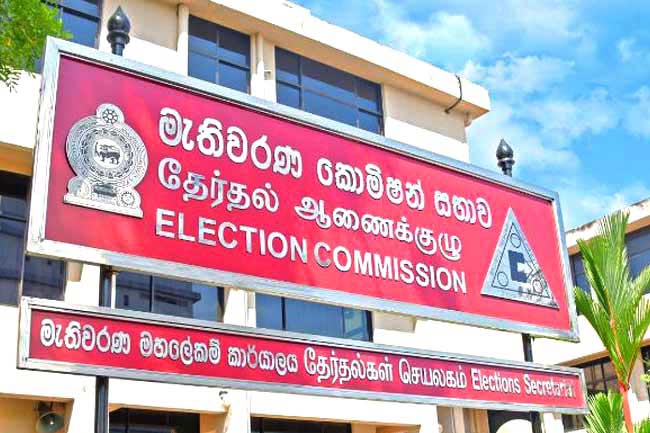
An allocation of around Rs. 10 billion has been made in Budget 2023 for the Election Commission (EC), although the commission is unsure whether this allocation was to be utilised for the Local Government (LG) Poll and/or any other poll to be held in the upcoming year (2023).

When The Morning asked Election Commission Chairman Attorney Nimal Punchihewa as to the purpose of these funds yesterday (23), he said: “We don’t know; we requested the money on an earlier occasion. This allocation was then reserved in the Budget. We are not clear as to which election this is allocated.”

On an earlier occasion, the Election Commission had requested the Ministry of Provincial Councils and Local Government for budgetary allocations to hold the LG elections.

Meanwhile, Punchihewa said that the EC has not received any advice from the Attorney General’s (AG) Department with regard to the EC’s power to declare the LG election in the wake of the enactment of the 21st Amendment to the Constitution, in response to a query by The Morning. And when questioned as to whether he is expecting a response within the course of this week, he said: “It depends on the AG.”

Earlier, the Election Commission was to seek legal advice from AG President’s Counsel Sanjay Rajaratnam on whether it has the power to declare the LG elections following the adoption of the 21st Amendment to the Constitution.

Speaking to The Morning, Punchihewa said on 7 November: “There are some legal problems regarding which we have to get advice on from the AG. Under the 21st Amendment to the Constitution, the tenure of all independent Commissions such as the EC will expire. Then, for an interim period, administrative matters could be carried out.

“However, the declaring of elections is a major matter. We do have the power to make decisions on major matters. Regardless, we have to get the legal view of the AG as to whether, under the 21st Amendment to the Constitution, we can declare elections,” he added.

Earlier, Punchihewa told The Morning that a declaration regarding the date of the LG Election will be made by early next year (2023) by the Election Commission. He noted: “Our expectation is to hold the LG Election before 20 March 2023.”

Former President Gotabaya Rajapaksa summoned to court over pardoning murder convict

The Supreme Court Thursday issued a notice to former President Gotabaya Rajapaksa asking him to state his facts regarding the granting of presidential pardon to former MP Duminda Silva, who was sentenced to death for murder of a lawmaker in 2011.

Mr. Duminda Silva was sentenced to death for the murder of former MP Bharata Lakshman Premachandra.

The apex court issued notice to former President Gotabaya Rajapaksa to present his facts in response to a fundamental rights petition filed requesting the court to annul the decision to release him by granting a presidential pardon.

Accordingly, the Supreme Court has issued a notice to state the facts on the 16th of December.

Several people, including former MP Hirunika Premachandra, the daughter of Mr. Bharata Lakshman Premachandra, and his wife Sumana Premachandra, have filed these petitions asking for an order to revoke the presidential pardon granted to Mr. Duminda Silva.

Duminda Silva was sentenced to death on September 8th 2016 for shooting dead four people, including former parliamentarian Bharatha Lakshman Premachandra in October 2011.

Duminda Silva was released on 24 June 2021 under a presidential pardon granted by President Gotabaya Rajapaksa.

Posted in Uncategorized