President praises troops for defending Parliament in maiden visit to Army HQ

The Army Headquarters at Sri Jayawardenepura on Tuesday (9) laid a red carpet welcome to the Commander-in-Chief of the Armed Forces, President Ranil Wickremesinghe when he made his first formal visit to the HQ at the invitation of the Commander of the Army, Lieutenant General Vikum Liyanage after the former’s recent assumption of office as the 8th Executive President of Sri Lanka.

The Head of the State was saluted in a drive-past Guard Turnout in front of the Defence Ministry building. Lieutenant General Vikum Liyanage, Commander of the Army extended a warm welcome to President Ranil Wickremesinghe before ushering him to the parade square to receive honours.

Colourfully and elegantly-attired troops of the Gajaba Regiment (GR) presented arms and saluted the day’s Chief Guest, President Ranil Wickremesinghe after he reviewed the Guard of Honour at the request of the Parade Commander from the special dais in keeping with military traditions.

No sooner than President reviewed the highest military salute closely, made up of 04 Officers, 100 Other Ranks along with squads of President Colours and Regimental Colours.

At the main entrance to the AHQ, President Ranil Wickremesinghe was introduced to the Principal Staff Officers (PSOs) of the Army HQ by Lieutenant General Vikum Liyanage, Commander of the Army.

At the Commander’s office, both the visiting Commander-in-Chief of the Armed Forces and the host, Lieutenant General Vikum Liyanage had a very brief exchange of views. Commander of the Army also availed himself of the opportunity to present the first editions of the “Sri Lanka Army Keystone Doctrines; Command, Operations Other Than War and Sustenance ” to the visiting Commander-in-Chief.

Attaching more importance to the day’s itinerary, the President in an appreciative move did not forget to meet a representative gathering of Army troops who performed their duties on that fateful day a few weeks ago when a violent mob tried hard to take control of the Parliamentary complex which is considered as the pinnacle of the Democracy and Sovereignty of Sri Lanka. Army soldiers on duty while trying to prevent their entry sustained injuries and some of them had to be admitted to hospitals for urgent treatment.

President Ranil Wickremesinghe, addressing the gathering after a welcome note appreciated their timely intervention at the expense of their own lives and gave away certificates of appreciation to those heroic troops of the Army where he stated ” Your actions that day preserved the Constitution, Democracy and Sovereignty of the country”.

Lieutenant General Vikum Liyanage towards the end of the distribution of appreciative certificates among soldiers, showed his organization’s gratitude to the visiting Commander-in-Chief of the Armed Forces by presenting a special memento on behalf of all in the Army.

The country’s 8th Executive President Ranil Wickremesinghe afterwards made a complimentary note in the Visitors’ Book before he posed for a couple of group photos with Senior Officers at the Army Headquarters on request.

SL to allow competing parties to import fuel?

The Cabinet of Ministers approved the amendment presented by the Minister of Power and Energy of the Petroleum Products to enable other competing parties to be granted licenses for the import of petroleum products to ensure the continuous supply of petroleum products due to the current severe foreign exchange deficit.

The Attorney General’s clearance has been received for the bill prepared by the legal draftsman.

Posted in Uncategorized

UN experts condemn repeated use of emergency laws in Sri Lanka

UN human rights experts today condemned the extensive, prolonged and repeated use of state of emergency measures since 2 April 2022 by Sri Lankan authorities to crackdown on peaceful protesters and prevent them from voicing their grievances amidst an economic collapse in the country.

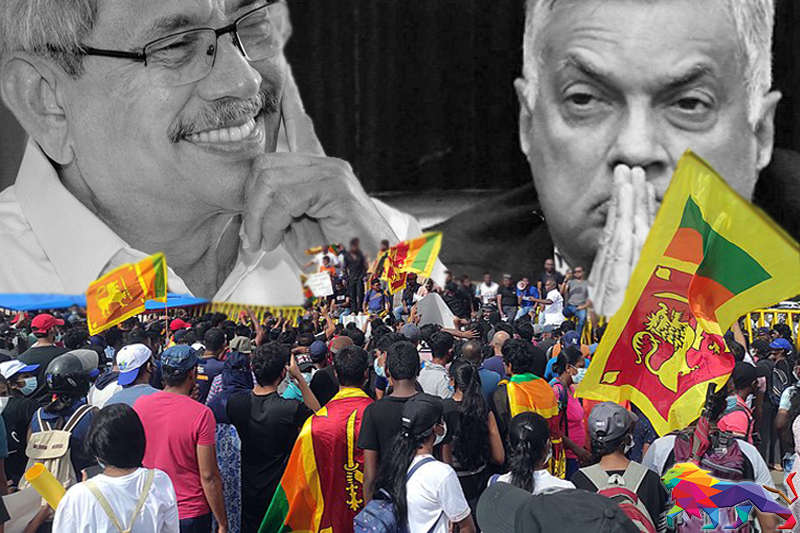
On 15 July, President Gotabaya Rajapaksa resigned and left the country following months of mass protests in the capital Colombo and across the island nation. His successor President Ranil Wickremesinghe declared another state of emergency on 17 July 2022, vowing to take a tough line against “trouble-makers”. The Sri Lankan Parliament has since ratified an ordinance on 27 July 2022 extending the current state of emergency for another month, imposing a curfew, and granting broad and discretionary powers to security forces and the military. Such powers allow them to detain protesters and search private properties without judicial supervision.

“We have raised our concerns to the Government on a number of occasions over the misuse of emergency measures, but to no avail. We condemn the recent and continued abuse of such measures to infringe on the legitimate exercise of the rights to freedom of peaceful assembly and expression,” the experts said.

Given the long-standing abuse of emergency powers in Sri Lanka, documented by United Nations human rights experts over many years, the experts raised particular concern about the impact of such powers on the exercise of a range of human rights, and reports of the targeting of vulnerable and minority groups under this state of emergency. They also highlighted that the procedural requirements to exercise the use of emergency powers under international law were not met.

Since March 2022, thousands have joined protests in Colombo and across the country to express their discontent with the Government over its handling of the grave economic crisis Sri Lanka is facing. The mass protests garnered momentum, in response to the deepening economic crisis, allegations of corruption, rising inflation, shortages of fuel and essential goods and prolonged power cuts as well as a failure to properly manage illicit financial flows.

“In the wake of an unprecedented economic crisis in which families sometimes have to choose between food and medicine, these repressive measures further close avenues for dialogue and maintain a political climate prone to an escalation of tensions,” the experts said.

Security forces have used the extensive powers granted to them by the emergency measures to violently repress the protest movement, including through the use of live ammunition, teargas and water cannons. On 22 July 2022, a joint operation of the police and military reportedly raided a protesters’ camp at Galle Face in the capital Colombo, tearing down tents, injuring over 50 and arresting dozens, including several journalists and lawyers. In recent weeks, Police have made a spate of arrests that appear to target individuals involved in organising the demonstrations and raided the homes and offices of protesters and opposition political parties.

“Limitations to the right to freely assemble must be applied only in exceptional circumstances and strictly according to the law. National security cannot be used as a pretext to shut down expressions of dissent, and detention purely due to peaceful exercise of rights is arbitrary. We wish to recall that protesters, including civil society representatives, journalists and human rights defenders, should be protected in the context of peaceful protests and not face criminal liability for their participation,” the UN experts said.

“We urge the Government to halt its repeated use of emergency measures and instead seek an open and genuine dialogue with Sri Lankans on political and economic reforms to reduce the impact of the economic crisis,” they said.

Posted in Uncategorized

Sri Lanka’s new president must ensure basic rights of all: Human Rights Watch

Sri Lanka President Ranil Wickremesinghe should ensure that his administration adopts measures to protect the basic rights of all Sri Lankans, Human Rights Watch (HRW) said in a letter addressed to the president outlining key human rights concerns.

HRW South Asia director Meenakshi Ganguli writing to Wickremesinghe on Tuesday August 08 acknowledged the challenges facing Sri Lanka’s newly sworn in president, but raised concerns over what protestors have called a crackdown.

“Human Rights Watch is extremely concerned by the draconian and abusive state of emergency currently in effect, and the security forces’ use of unnecessary and excessive force against protesters and journalists, as well as arbitrary arrests, abductions, intimidation and reprisals that have contributed to a growing climate of fear and repression,” said Ganguly.

“You have acknowledged that the protests were ‘conducted on a non-violent basis and creative manner.’ But you have also said that some have ‘turned towards terrorism.’ And you have denied that your government is ‘hunting down the protesters’ – though the facts belie this claim,” she said.

Gangulay wrote that the emergency regulations introduced on July 18 contain vague, overbroad, arbitrary and excessive curtailments of human rights, including of fundamental rights that cannot be suspended even during a state of emergency.

Ganguly said in order to protect the human rights of Sri Lankans, Wickremesinghe’s administration should:

Ensure that people are able to freely and peacefully express their views safely and without fear of reprisal or arrest
Investigate and appropriately prosecute officials and security force personnel responsible for serious violations of human rights regardless of position or rank
Withdraw emergency regulation provisions that are vague, overly broad and disproportionate or that violate fundamental rights
Refrain from using the military, which are not trained in law enforcement, in policing protests
Order security forces to end the harassment, intimidation and arbitrary arrest of people believed to have participated in or supported recent protests, as well as civil society activists, lawyers and journalists
Stop accusing protesters of “terrorism,” which in the context of Sri Lanka’s history can lead to serious human rights violations
Amend the constitution to ensure that the judiciary, attorney general, Election Commission, Public Service Commission, Police Commission, Judicial Service Commission and Human Rights Commission, which are mandated to protect fundamental rights, are independent of the executive
Ganguly also called drew attention to allegations of discimination against Tamil and Muslim minorities. She said the government should take the following measures in this regard:

Announce a formal moratorium on the use of the PTA until rights-respecting counterterrorism legislation is enacted, and release remaining prisoners arbitrarily detained under the PTA
Amend the ICCPR Act to prevent its abuse in prosecuting members of ethnic and religious minorities for speech that is protected under international human rights law
Undertake to curtail speech that incites violence, discrimination or hostility against specific groups
End acts of discrimination, intimidation and violence at places of worship
Allow members of the Tamil community to freely commemorate and memorialize victims of the civil war
Disband and revoke orders of the Presidential Task Force for Archaeological Heritage Management in the Eastern Province, which discriminates against religious minorities
With regard to social and economic rights, Ganguly noted that, as recognised by the International Monetary Fund (IMF), to mitigate the adverse impacts of proposed macroeconomic adjustment on vulnerable groups, particularly by strengthening safety nets.

“However, Sri Lanka’s principal current social protection scheme, Samurdhi, is widely recognized to be ineffective. The World Bank assessed that in 2019, even before the current crisis, that ‘less than half of the poor were beneficiaries of Samurdhi… and benefit amounts remain largely inadequate.’ It is crucial that your government develops a more robust, inclusive and transparent social justice program,” wrote Ganguly.

“As the [IMF’s] Article IV report shows, Sri Lanka’s tax-to-GDP ratio is among the lowest in the world. Among the huge tax cuts introduced by the Gotabaya Rajapaksa administration shortly after entering office, cuts to income taxes benefitted the wealthiest households. While the Article IV report proposes raising income tax rates, it also proposes increases to VAT, which disproportionately burdens low-income families because it consumes a larger share of their income. Moreover, if steps are taken to reduce or remove fuel subsidies, it is critical that this is done in a progressive manner or with an adequate compensatory system to ensure affordability for low-income people in advance of the reforms.”

In her letter, Ganguly highlighted increased defence budgetary allocation, a fall in a Transparency International corruption perception index, among other things.

Ganguly’s recommendations with regard to ensuring social and economic rights are as follows:

Establish a new social protection mechanism that is both adequate to protect everyone’s rights from the effects of the economic crisis and designed to prevent mismanagement and corruption. In particular, consider universal programs as recommended by the United Nations Development Programme and UNICEF
Implement progressive tax measures that do not further burden people living in poverty; implement any reduction or removal of subsidies in a progressive manner or with an adequate compensatory system to ensure affordability for low-income people in advance of reforms
Adopt policies to increase women’s access to employment by reducing barriers, including by providing state-funded maternity leave and access to affordable menstrual hygiene
Restore the independence of institutions including the Commission to Investigate Allegations of Bribery or Corruption
Resume Sri Lanka’s participation in the World Bank and United Nations Office on Drugs and Crime’s Stolen Asset Recovery (StAR) initiative, and include a commitment to do so as part of an agreement with the IMF
Conduct independent and impartial investigations into allegations of high-level corruption and appropriately prosecute those responsible
End attempts to implement the recommendations of the Commission of Inquiry to Investigate Allegations of Political Victimization, and revive police investigations into conflict-related crimes;
Adopt the anti-corruption legislation that was developed during your previous term as prime minister and is currently before parliament
Ensure that auditing of the Ministry of Defence meets the same criteria as other government departments; end audit exemptions for “secret services” that can be used to obscure the use of public funds

Posted in Uncategorized

Sri Lanka’s black market for fuel churns alongside mileslong lines

COLOMBO — Serpentine lines of motorists awaiting fuel rations have become a common sight in Sri Lanka’s commercial capital of Colombo, as the country grapples with an unprecedented economic crisis. Some queues stretch for miles, with auto-rickshaw drivers and car owners baking in the sun to get their hands on a few precious liters. Several people are reported to have died while waiting.

But not everyone waits. A black market for gas has sprung up. The fuel trade is a microcosm of the different ways people in the country of 22 million are experiencing the economic woes, depending on their level of wealth, as the authorities scramble to stop illicit sales and find long-term solutions.

Dylan Lloyd, 19, is one of the many who dutifully wait in line. He suffers from a respiratory condition that makes taking public transport daunting, especially now.

“I need to stand in the line from Tuesday to get my quota of 13 liters on Thursday,” he said, standing outside a Ceylon Petroleum Corporation (Ceypetco) gas station when he should have been in school. “It doesn’t even last us half a week. A few days later, I am back in the queue. I even tried to take the bus. But there are fewer buses now and they get very crowded. If I am sitting in the middle, it gets difficult for me to breathe.”

Lloyd and others like him are in this position due a combination of factors — COVID-19’s impact on tourism, economic mismanagement, and the Ukraine war’s pressure on prices. As Sri Lanka’s foreign reserves dwindled, the country defaulted on foreign debt for the first time in May, making it even harder to borrow money and import essentials like fuel and medicine.

The country has resorted to fuel rationing. On July 21, Ceypetco began dispensing fuel based on the last digit of a driver’s license plate. Those ending with 0, 1 or 2, for can buy fuel on Tuesday and Saturday, and so on. Limits vary, depending on vehicle type.

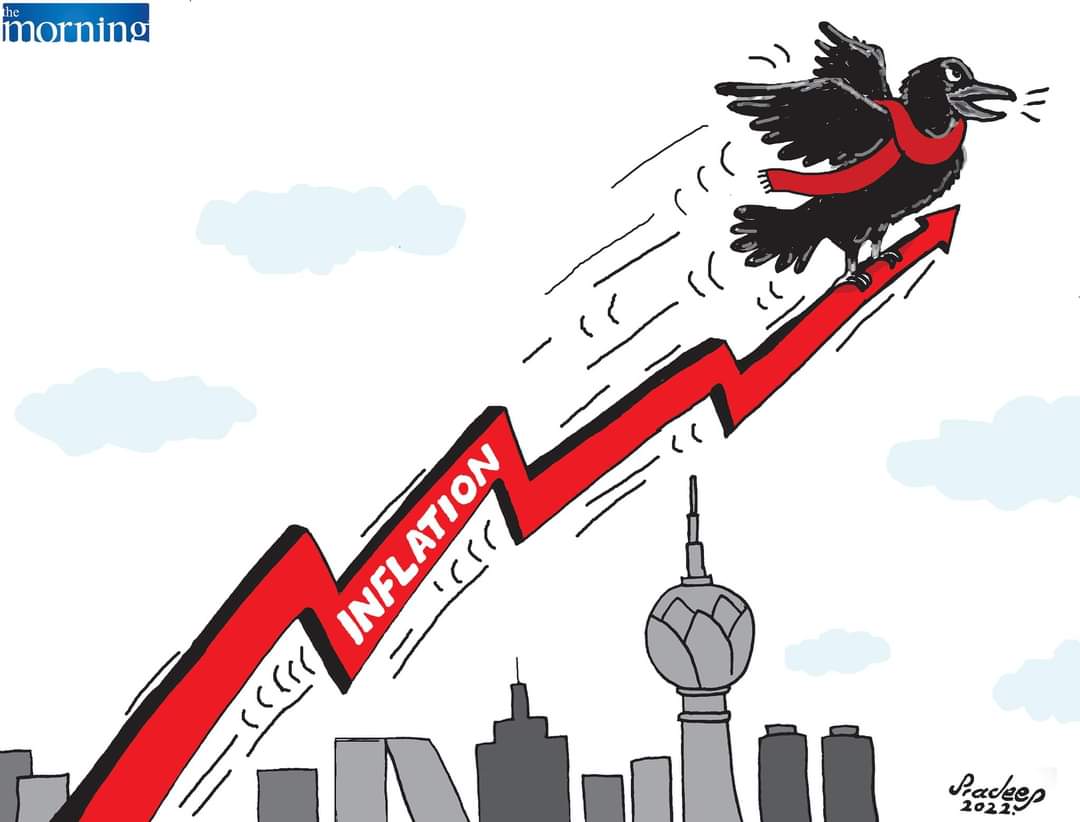
Sri Lanka’s annual inflation rate has hit 60%, according to the central bank. Fuel is so scarce that stations are charging 450 Sri Lankan rupees ($1.24) a liter for gasoline, up more than 500% from around 70 rupees before the crisis.

Some are willing to pay much more — a fact not lost on some Sri Lankans amid the daily fight for survival.

“Wealthy people don’t like to wait in queues. So when I get my quota of 5 liters, I sell it to the highest bidder. I charge 2,500 rupees per liter, which is far more than what I’ll earn from driving people around,” said Ibrahim, an auto-rickshaw driver who asked to use a pseudonym.

He explained that black marketeers hide fuel in cans and deliver it to buyers. Still, Ibrahim said his earnings have remained far below his living expenses. And it is only getting harder to scrape by as the authorities try to stamp out the black market.

On Aug. 1, the government introduced a QR-code-based National Fuel Pass that requires all motorists to register their vehicles. Kanchana Wijesekera, the energy minister, posted on Twitter that all gas stations must exclusively dispense fuel to vehicles through this system.

A media release also encouraged citizens to send video or photographic evidence of illegal fuel stockpiling or sales to designated hotlines.

Ibrahim said he sold his smartphone for 9,000 rupees, so he “can’t even use the QR system.”

“Our life is very tough,” he said. “We are six people in my family, and some days my kids eat only one meal. Everything is so costly these days that even selling fuel illegally is not enough to meet our needs. I will soon have to look for another job.”

Relief is nowhere on the horizon. The Energy Ministry said in late July that fuel imports had to be restricted for 12 months due to the foreign currency crunch.

Some question that move, arguing it runs counter to the government’s earlier decision to open up the energy market to overcome the fuel shortage. On June 29, Wijesekera had announced on Twitter that the cabinet had decided to allow companies from any oil-producing countries to offer fuel, in effect ending the duopoly that allowed Ceypetco to control 80% of the market while Lanka IOC, a unit of Indian Oil, handled the rest.

The companies “will be selected on the ability to import fuel and operate without forex requirements” from the central bank for the first few months of operations, the minister wrote at the time.

“The strategy to restrict imports is wrong,” said Shashi Dhanatunge, who was a Ceypetco board member from July 2017 to October 2018. With the economy already in shambles, he said, “fuel rationing will not achieve any results rather than postponing our recovery time.”

Instead, he argued the cabinet needed to act on the decision to liberalize the market, by reducing paperwork and simplifying the procurement process. But it may be a big ask: Dhanatunge said the government was insisting that interested parties should import cargo for up to 12 months without obtaining dollars locally.

Meanwhile, it remains uncertain how successful the QR system will be at curbing the black market, and desperate Sri Lankans are likely to continue seeking ways to augment their incomes.

“I know many people who buy fuel from the black market,” said S. Devagurunathan, a 56-year-old hardware story owner in Colombo. “it is illegal and one should not do it. But not everyone can stand in a queue. For instance, I should be at my shop, but I am standing here in a line.”

Devagurunathan said the economic woes have forced citizens to take “extreme” measures. “How else will we feed our families?”

Source:asia.nikkei.com

Posted in Uncategorized

All parties’ all-party proposals to be shared with all parties today

President Ranil Wickremesinghe stated on Saturday (7) that the proposals presented by each political party during the several rounds of talks held regarding the formation of an all-party Government will be distributed to all the other political parties that attended these discussions by today (8), the President’s Media Division (PMD) announced.

President Wickremesinghe had stated thus at the discussions held with leaders of the 11 independent parties in Parliament and the “43 Brigade” party regarding the formation of an all-party Government. The discussions were held at the President’s Office.

President Ranil Wickremesinghe had pointed out that only the Janatha Vimukthi Peramuna (JVP), National People’s Power (NPP), and a few other Tamil political parties are left to hold discussions with, and he commended everyone’s enthusiasm for all-party governance by setting aside political ideologies to fulfill the people’s aspirations.

As per 43 Brigade Leader MP Patali Champika Ranawaka, the 43 Brigade is working optimistically with the President’s position regarding bringing back the 19th Amendment to the Constitution.

He also said that there is a strong need to do away with the political party system and appoint professionals as heads of State institutions.

Ranawaka further said that a country cannot be developed by political reforms alone, and added that the contribution of professionals should be a key factor. He also said that in education reforms, syllabi should be formulated by looking at the future.

Sri Lanka Podujana Peramuna (SLPP) “independent” MP Vasudeva Nanayakkara opined that by preparing a common programme to build the country, we can move forward step by step.

SLPP “independent” MP Udaya Gammanpila pointed out that the identity of all political parties should be protected in the discussions that are being held regarding the formation of an all-party Government, and further said that taking forward the discussion with a foundation document will help to succeed the expectations of the all-party Government.

SLPP MP Mohamad Muzammil said that his team discussed a common programme for an All-Party Government with former President Gotabaya Rajapaksa as well. He also said a common consensus is needed although political party policies cannot be agreed upon.

Prime Minister Dinesh Gunawardena, MPs Prof. Tissa Witharana, Asanga Navaratne, Premanath C. Dolawatta, Karu Paranavithana, Secretary to the President Saman Ekanayake, and Additional Secretary to the President Attorney-at-Law Chaminda Kularatne were present in this discussion.

Posted in Uncategorized

Court rejects request to ban a protest in Colombo tomorrow

The Colombo Chief Magistrate’s Court has rejected a request made by Police to issue an order preventing a protest planned for tomorrow (9) at the Viharamaha Devi Park in Colombo organised by several organisations and political parties.

Colombo Chief Magistrate Nandana Amarasinghe rejected a request by the Cinnamon Gardens Police.

The Magistrate informed that the Police is vested with powers to take action in the event law and order is disrupted and public property is damaged during the protest.

Posted in Uncategorized

JVP to take part at discussion with President: Handunnetti

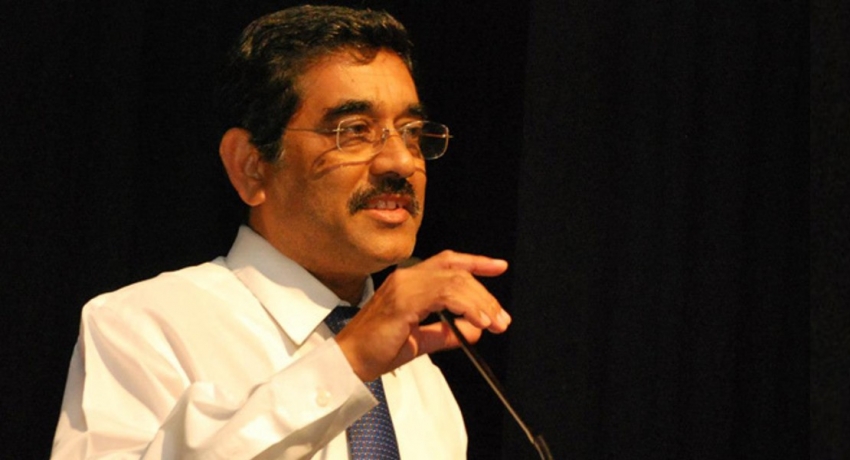
The Janatha Vimukthi Peramuna (JVP) will participate at a discussion with President Ranil Wickremesinghe tomorrow to discuss forming an all-party government, JVP politburo member Sunil Handunnetti said today.

He told a news conference that they would take part at the discussion following an invitation from the President.

Hadunnetti said they would clarify to the President the stance of the JVP on forming an all-party government and added that they would, however, not join the all-party government.

“We have already disclosed our stance to the country on an all-party government. The all-party government in the making is not an interim government which would hold or facilitate a general election. It was formed to establish the power of President Wickremesinghe and to win the confidence of the international community to obtain loans. The President has formed a government and is now inviting other parties to join it. It is not an all-party government at all,” he said.

Hadunnetti said the JVP would not join the all-party government but they would participate at the discussion with the President to convey their stance.

Sri Lanka union leader Joseph Stalin released on bail

Sri Lanka trade union leader Joseph Stalin who was arrested on August 03 has been released on bail.

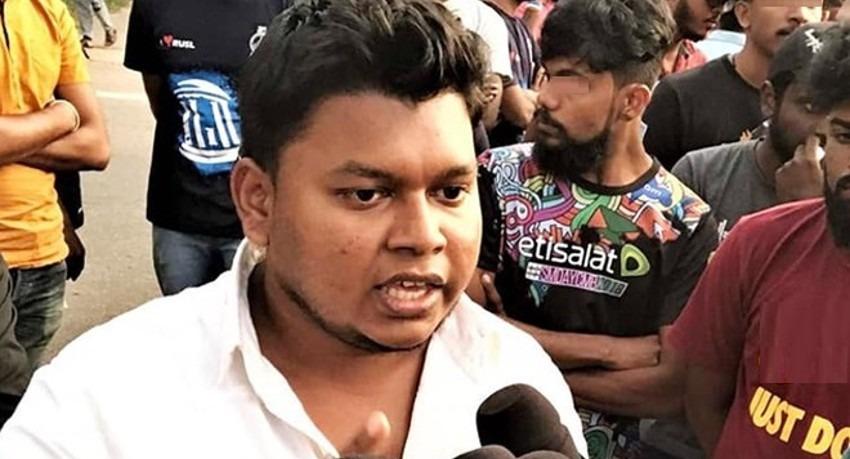
Upon his release on Monday August 08, Stalin told reporters that Sri Lanka’s youth-led Aragalaya (Struggle) protests will continue against what he called the suppressive actions of President Ranil Wickremesinghe’s government.

“Many protestors and unionists have been arrested using their own selfies taken at the president’s house and prime minister’s office as evidence,” he said.

Stalin, who is general secretary of the Ceylon Teachers’ Union, was arrested on Wednesday August 03 by a police team that arrived in several jeeps, reportedly for holding a protest on May 28 in violation of a court order.

Stalin’s arrest was condemned by representatives of the protest movement and organisations such as the Free Media Movement.

China asks India to ‘stop disturbing’ its exchange with Sri Lanka

In the wake of Sri Lanka’s request to defer the planned docking of a high-tech Chinese research vessel at the strategic Hambantota Port, China on Monday took a dig at India, saying it was “senseless to pressure” Colombo by citing the issue of security concerns.

According to reports from Colombo, Sri Lanka has asked Beijing to defer the arrival of the Chinese space and satellite tracking research vessel ‘Yuan Wang 5’ which was scheduled to dock at the Hambantota Port from August 11 to 17 due to security concerns expressed by India.

Responding to the reports, Chinese Foreign Ministry spokesman Wang Wenbin told a media briefing in Beijing that China has taken note of the reports and asserted that “the cooperation between China and Sri Lanka is independently chosen by the two countries and meets common interests. It does not target any third party”.

It is “senseless to pressure Sri Lanka” by citing the issue of security concerns, he said, in reference to the reports that Sri Lanka’s move was attributed to concerns expressed by India.

“Sri Lanka is a sovereign state. It can develop relations with other countries in the light of its own development interests,” he said.

“China urges relevant parties to see China’s scientific explorations in a reasonable and sensible way and stop disturbing the normal exchange between China and Sri Lanka,” Mr Wang said.

Sri Lanka is a transport hub in the Indian Ocean. Many scientific exploration ships including those from China have stopped at the port of Sri Lanka for resupplies, he said. “China has always exercised the freedom of navigation in the high seas and fully respects the jurisdiction of coastal states for the scientific exploration activities within their waters,” he said.

According to media reports, India informed Sri Lanka that the docking of the high-tech Chinese research vessel could pose a threat to its national security.

Sri Lanka received strong messages of protests from India as the ship was said to have the capability to track satellites and intercontinental ballistic missiles, the reports said.

India has said it carefully monitors any development having a bearing on its security and economic interests.

“We are aware of reports of a proposed visit by this vessel to Hambantota in August,” India’s External Affairs Ministry Spokesperson Arindam Bagchi said in New Delhi when asked about the reports of a proposed visit by the Chinese vessel.

“The government carefully monitors any development having a bearing on India’s security and economic interests and takes all necessary measures to safeguard them,” he said last month.

Reports from Colombo on Sunday said China’s embassy in the country sought an urgent meeting with senior Sri Lankan authorities after Colombo sought deferment in the planned docking of the research vessel.

Some Sri Lankan news portals also reported that the country’s President Ranil Wickremesinghe held a closed-door meeting with China’s Ambassador Qi Zhenhong after Colombo sought the deferment of the planned docking.

On July 12, amidst the political turmoil in Sri Lanka, the previous government approved the Chinese vessel’s docking at the Hambantota port.

The Chinese vessel was expected to dock at the Sri Lankan port for “refuelling and replenishment” and to conduct satellite control and research tracking in the northwestern part of the Indian Ocean region through August and September.

Prime Minister Dinesh Gunawardena recently said Sri Lanka was looking forward to settling the issue of the vessel’s visit with an “approach of friendship”.

Posted in Uncategorized