At London vigil, UK Tamils seek justice for civil war victims

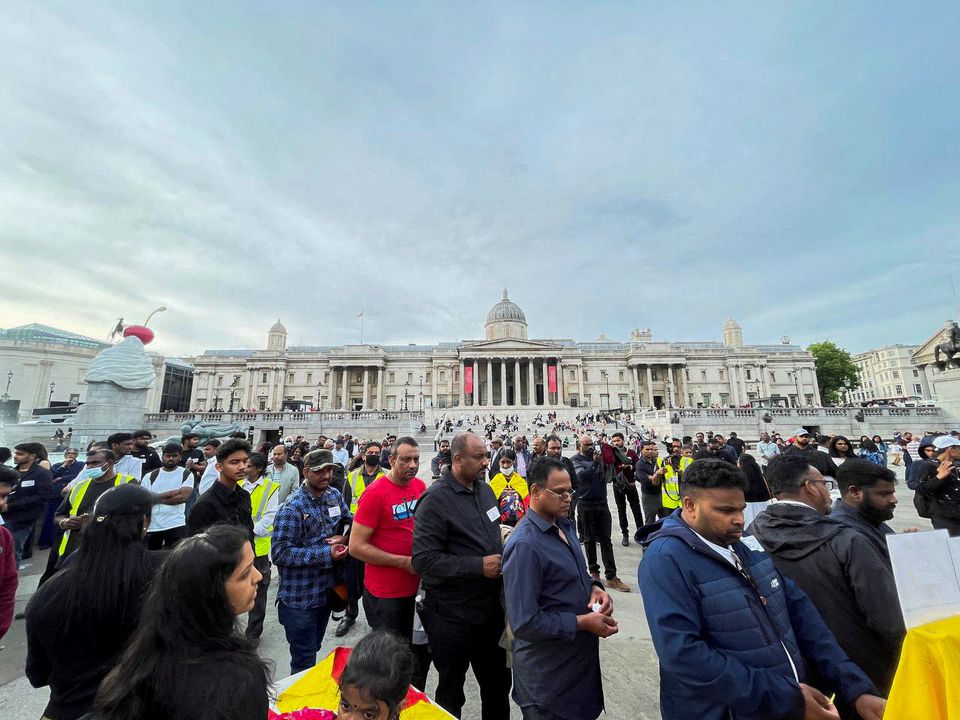
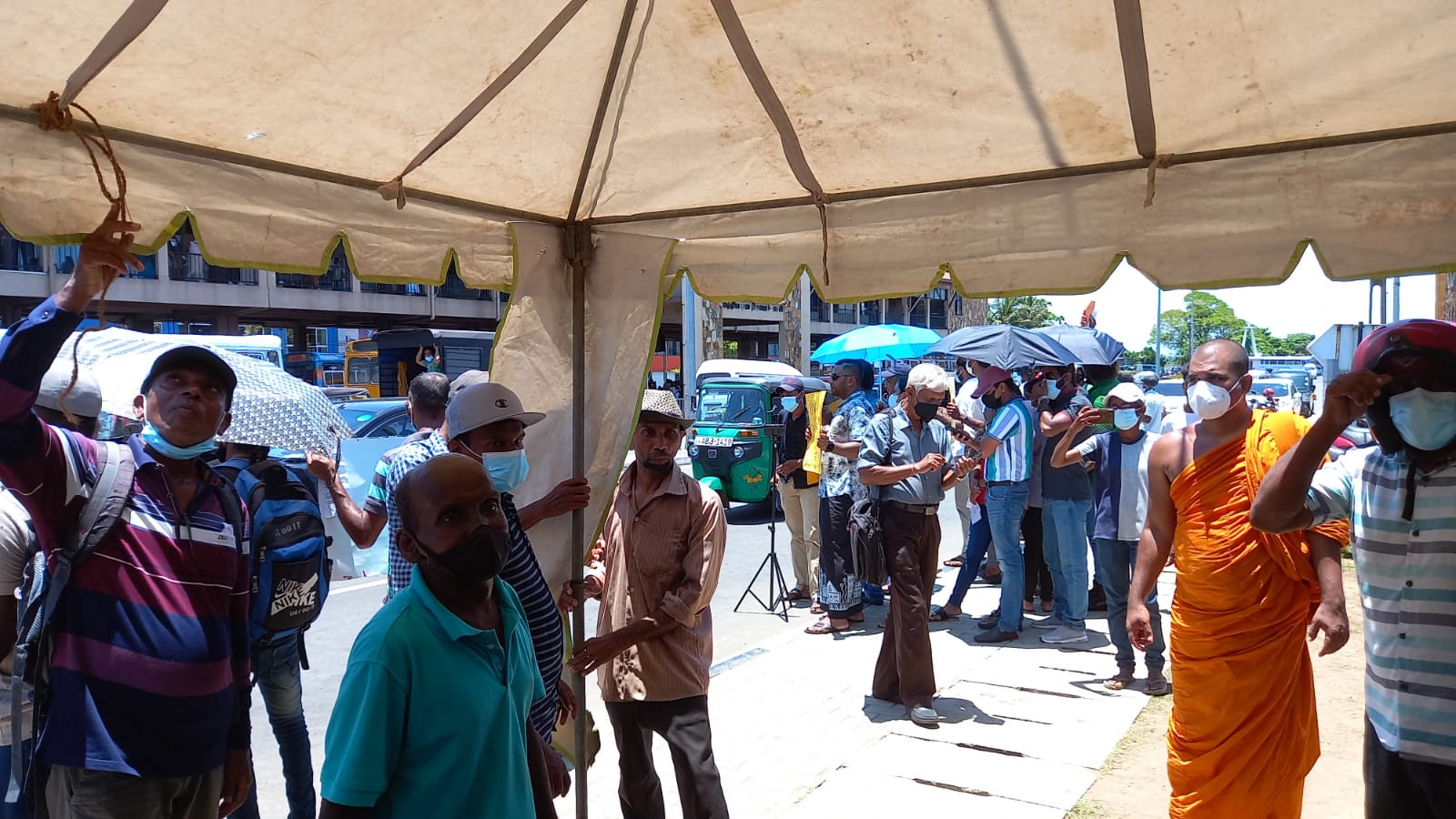
Tamils who resettled in Britain after fleeing the Sri Lankan civil war held a vigil in London on Wednesday, with some likening the island nation’s current economic crisis to the conditions they faced during the decades-long conflict.

The gathering of Tamils seeking justice for those from their community who were killed in the South Asian country during the war, coincided with Sri Lanka’s worst economic crisis since its independence in 1948 that has forced out its prime minister.

“The current crisis in Colombo reminds me of our struggles during the war. Shortage of fuel, food, medicine – the Tamil-dominated parts of Sri Lanka faced the same issues then as what the entire nation is facing today,” Thanikai, 42, who came to Britain eight years ago, told Reuters.

He is amongst the hundreds of thousands of Tamils who fled the conflict, which ended in May 2009 with the Sri Lankan government defeating the Tamil Tiger rebels.

Human rights groups have since accused the country’s military of killing civilians towards the end of the war, in which the rebels fought for a separate state for the Tamil minority.

“We need justice for all the people who were killed,” Thanikai said.

The United Nations has accused both sides of war crimes and has been given a mandate to collect evidence.

The U.N. has also warned the failure of Sri Lanka to address past violations has significantly heightened the risk of human rights violations being repeated.

“My parents and friends are still in Sri Lanka but I have been too scared to go back,” said Elilarasi Manoharan, who attended the peaceful demonstration in Trafalgar Square to mark the 13th anniversary of the end of the war.

“But now with the economic crisis and the changes we are seeing, maybe if the Sri Lankan system changes it will open up doors for us to be able to visit our loved ones.”

Sri Lanka misses payment to Asian Development Bank: Prime Minister

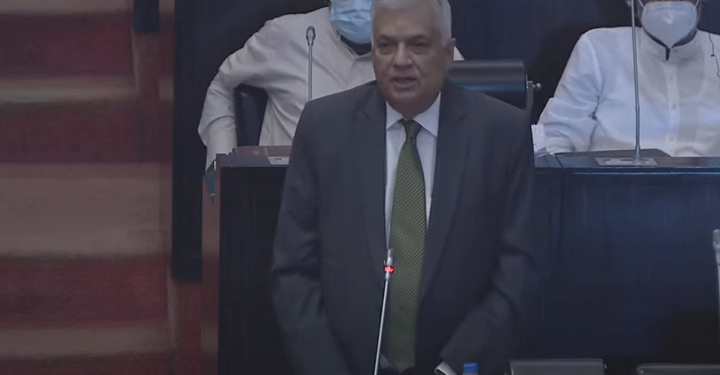
Sri Lanka has missed a payment to Manila-based Asian Development Bank blocking fresh funds Prime Minister Ranil Wickremesinghe said amid warnings that the currency crisis-hit country could be locked out of multilateral funding in a new blow.

The Asian Development Bank and the World Bank also continued to fund Sri Lanka by re-purposing loans after the country was cut off from capital markets when it was downgraded to CCC.

The ADB and World Bank had just promised around 160 million each to Sri Lanka, Wickremesinghe said but the loan from the Manila-based lender was blocked.

“But because we could not repay three million US dollars last month it is stuck,” Wickremesinghe said.

“We are finding money for that.”

Multilateral Warning

Sri Lanka is facing the prospect of being locked out of financial assistance from multilateral organisations if its repayments are not maintained.

“If we do not pay the IMF (International Monetary Fund) and World Bank, that money will also not come,” ex-Finance Minister Ali Sabry said.

“That is the problem. As the Prime Minister said there are some payments due to ADB. It is a very big problem.”

Sri Lanka has already suspended repayments for international sovereign bonds, commercial bank loans, Exim bank loans and bilateral loans.

But multilateral lenders, as senior creditors are excluded.

“We decided on April 12, that we would not pay ISBs and everyone else except multilateral,” Sabry said.

“We did that because we had no option. By the 18th (of April) we had to pay 78 million dollars and we had to pay 105 million US dollars to a Chinese bank. We announced and defaulted.”

Sri Lanka is now negotiating a loan with the IMF. By April 2022, Sri Lanka had to pay 106.34 million US dollars and 12.4 million US dollars had been paid so far.

“Whether the payment is a billion or 10 billion we do not have a million to pay,” Wickremesinghe said promising to provide statistics to the parliament soon.

Sri Lanka had to repay 7,139 million US dollars in the year from March 2022. In April Sri Lanka had to pay 250 million US dollars made up of 145 million US dollars of principle and 106 million in interest.

Opposition legislator Harsha de Silva said from now on there were about 5.5 billion dollars to be paid in the coming 12 months, and 2.5 billion was suspended, leaving about 3.0 billion to be repaid.

Sri Lanka’s central bank is also deep in debt, owing money to the IMF, Reserve Bank of India and swap counterparties.

Sri Lanka was hit with chronic monetary instability from 2015 to 2022 as money was printed to keep interest rates down under ‘flexible inflation targeting’ and ‘output gap targeting’ triggering three currency crises, excessive foreign borrowings and eventual default.

Sri Lanka is now facing the worst currency crisis created by its 72-year-old soft-pegged central bank.

An attempt to shift to a floating exchange rate has so far not succeeded due to a surrender rule though interest rates have been raised to slow domestic credit and halt or reduce money printing.

With monetary stability yet to be restored authorities are now chasing after 3-4 billion US dollars of ‘bridging finance’.

Money will have to be printed to pay the salaries of state workers, Prime Minister Wickremesinghe said which will likely trigger more forex shortages.

Posted in Uncategorized

Sri Lanka war anniversary: Tamil victims remembered in Colombo

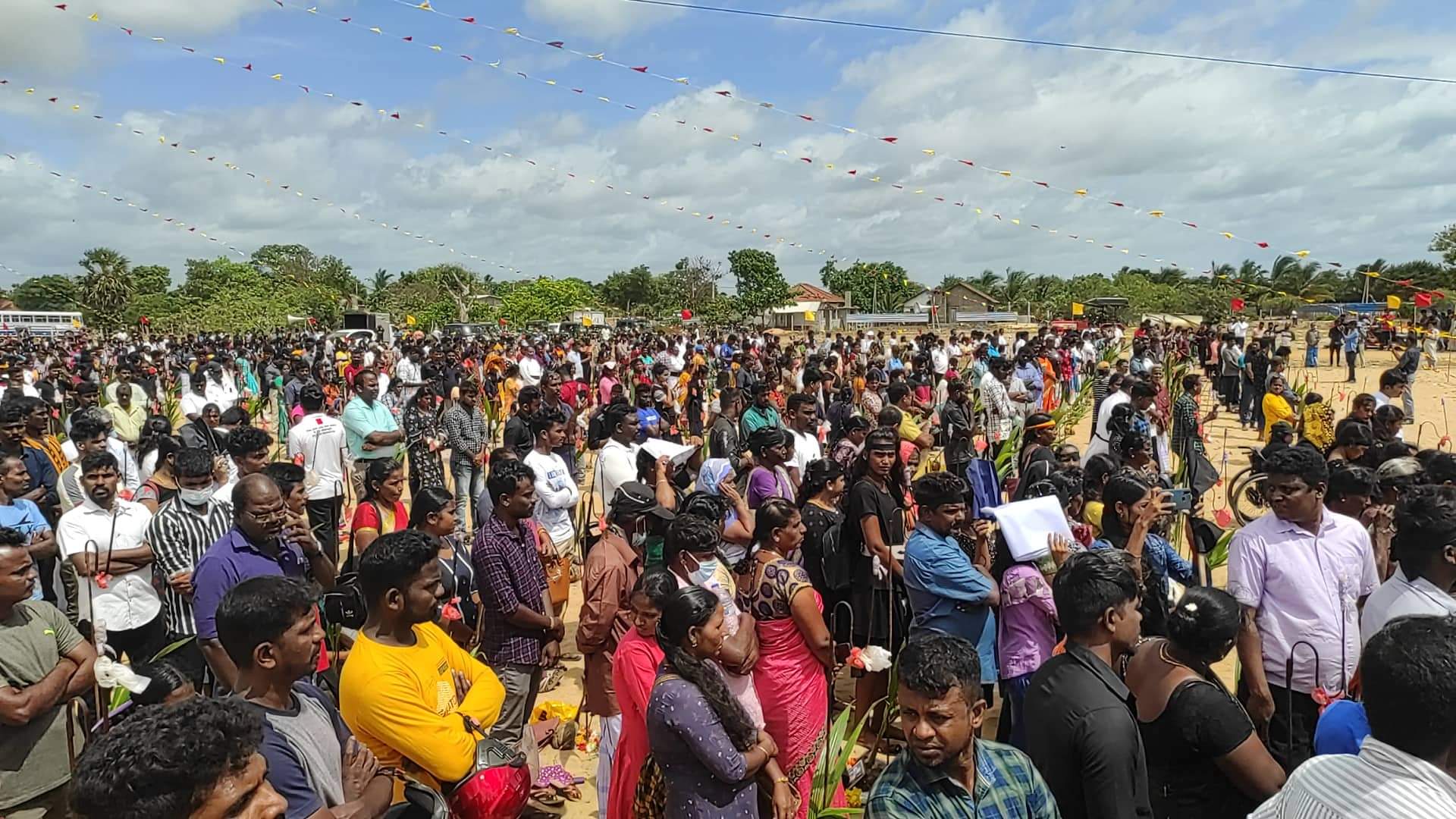
Scores of people on Wednesday gathered in Mullivaikkal village, in Sri Lanka’s northern Mullaitivu district, to remember the tens of thousands of Tamil civilians who were brutally killed in the final stages of the civil war in May 2009, when the armed forces crushed the LTTE.

Simultaneously, dozens came together expressing solidarity in a rare public remembrance event in capital Colombo, at Galle Face, the ocean front where citizens’ groups are protesting for 40 days now, asking President Gotabaya Rajapaksa to quit over the economic crisis stifling the country.

Although small, the commemoration in Colombo assumed significance, amid sharp divisions in how the Sinhala-majority south and Tamil majority north perceive the civil war’s end.

While the UN has recorded at least 40,000 civilian deaths in the final stages of the war, many in the island’s south are yet to confront hard questions about the Sri Lankan military’s alleged human rights abuses at the time, that too targeting civilians reportedly directed to a ‘No fire zone’. Their popular narrative conflates the LTTE with Tamil civilians, hails soldiers as “heroes” for crushing the outfit, and celebrates the end of the war as the military’s “victory”.

The divide has starkly manifested in the war anniversaries observed since 2009 – with some citizens reliving the enormous pain of losing their loved ones, and others cheering Sri Lankan troops marching down the very same Galle Face promenade in “victory day” parades.

Today, the stretch in the international spotlight is for other reasons. Citizens, mainly Sinhalese, are mounting unprecedented resistance against the Rajapaksas, who they blame for the economic meltdown. The ruling clan, once revered for “defeating” the LTTE in war, is now widely detested. But President Gotabaya Rajapaksa seems determined to stay in office, despite other resignations including that of his brother Mahinda Rajapaksa, who stepped down as Prime Minister on May 9.

In a ‘War heroes’ day message on Wednesday, President Gotabaya said there is “no doubt that various local, foreign groups and individuals are trying to use” the economic and political crisis “as a pretext to influence” national security. “We must defeat it together. Only then will the courageous war hero’s commitment to the country be preserved,” he said in a statement.

Remembering victims
“Let us remember our Tamil brothers and sisters who died, or were forcibly disappeared on this day in Mullivaikkal,” said Fr. Jeewantha Peiris at the remembrance event at Galle Face, where participants drank kanji or porridge in coconut shells, as many Tamils did while living precariously amidst indiscriminate shelling. Participants made speeches in English, Tamil, and Sinhala, as they expressed solidarity with the victims and their families.

“This is a very significant moment, as some Sinhalese have also joined this event in solidarity with Tamil families in Mullivaikkal remembering those killed during the war. Conversations about how we address our troubled past, how we confront questions of justice and accountability are just beginning,” said lawyer Swasthika Arulingam.

Tamil lawmaker from Batticaloa Rasamanickam Shanakiyan termed the commemorative event in Colombo “a great leap” in reconciliation efforts.

“The memorial held at #GGG [Gota go gama or village] to commemorate the lives lost & families affected in #Mullivaikkal 13 yrs ago today is a great leap in the reconciliation efforts as it acknowledges the pain Tamils in Sri Lanka went through during the war.

We are hopeful about an equal and just future,” he said in a tweet on Wednesday.

Meanwhile, Tamil families commemorated their loved ones in Mullivaikkal, offering flowers and lighting lamps in their memory. In the 13 years since the war ended, Tamils have frequently raised concerns over heightened surveillance and intimidation around memorial events. Last year, a plaque erected in Mullaitivu was found vandalised, while authorities bulldozed a memorial on the University of Jaffna campus.

Posted in Uncategorized

Mullaivayakal and the Meaning of Justice, 12 Bitter Years On

The first five months of 2009 brought immense and unprecedented pain to the people of northern Sri Lanka, and to their many Tamil relatives outside the country who looked on and received daily reports of death and injury and misery. Their efforts, and the efforts of concerned people in the rest of Sri Lanka and the world to bring a humanitarian pause to the war to limit the loss of life, ultimately failed. They failed due to the determination of the Sri Lankan government to destroy the Liberation Tigers of Tamil Eelam and their civilian support base once and for all, regardless of the human cost. And they failed thanks to the support the government’s military strategy received from key regional and global powers with only tentative resistance towards the end.

I remember well the feeling of helplessness and horror I felt in Colombo those months, as the warnings of a humanitarian catastrophe made by my organisation and others, including parts of the UN – warnings made possible by reporting by Tamil health and humanitarian workers trapped in the fighting – fell largely on deaf ears.

The numbers of those killed in the four months leading up to the official end of the war on 18 May 2009, and in the days that immediately followed, still remain disputed. Estimates range from government’s unlikely claims of fewer than 10,000, to the UN’s two estimates of as many as 40,000, or even 70,000, to those that point to as many as 147,000 people unaccounted for based on figures from district-level government officials at the time. With the Sri Lankan government allowing no independent investigation to take place in Sri Lanka, all estimates have remained disputed and highly politicised. What is more clear are the crimes committed in those final months: by the military, which indiscriminately shelled and bombed areas densely packed with civilians, attacked hospitals and makeshift medical centres, and executed surrendering LTTE fighters, political wing leaders and their families; and by the LTTE, who forcibly recruited civilians to fill their depleted ranks and who shot many civilians who attempted to flee from the scenes of battle into government controlled territory.

The circles of trauma and pain extend much wider, throughout the communities of the north and east and through the global Tamil diaspora and those who work with them or who have reported on or covered the events and their aftermath. While the stories and evidence of terrible suffering and crimes of war are readily available outside Sri Lanka, the voices and experiences of victims and survivors are still well-hidden outside the north and east and in the Sinhala language media in Sri Lanka. The injustice of the crimes themselves have been compounded by the security forces, under successive governments, actively obstructing attempts by families to find the truth of what happened to their loved ones, tens of thousands of whom remain disappeared to this day, and were often last seen in the custody of the military or police.

Nonetheless, in and out of Sri Lanka, the suffering of those final months of the war, and the crimes committed, have been too great to ignore. If there is to be any chance of repairing the damage done to Tamil communities in Sri Lanka by the trauma and injustice of the war, and if the promise of democracy and the rule of law in Sri Lanka is ever to be made real for all Sri Lankans, justice is needed. And yet the gravity and breadth of the crimes pose real challenges for any attempts to bring justice.

The challenge begins with the deep resistance to facing the truth from within Sinhala society. With the media censored, and/or strongly nationalist, many Sinhalese have never heard the real story of suffering of their Tamil co-citizens in the north. In part as a result, many feel their own pain and suffering from the war – from the loss of loved ones fighting with the government or killed in LTTE bombings – has been ignored. There is also a deep resistance among many to acknowledge the crimes committed in their name and thereby to relinquish the symbolic and material benefits of their collective victory over what they have been taught to see as merely a “ruthless terrorist group”.

These sentiments have been encouraged and exploited politically by past governments and most vigorously by the current government, now headed by one of the proud architects of the victorious military campaign and featuring, in senior positions, many of the generals and commanders who fought the final battles – some of them implicated by UN reports in some of the worst alleged crimes of the war. Justice for crimes by state agents has never been easy to achieve in modern Sri Lanka, but for the foreseeable future, justice will be virtually impossible for the crimes of the war, especially during its final horrific months.

However, a small spark of hope for survivors of the final battles and for justice arrived recently in Geneva when the United Nations’ Human Rights Council for the first time clearly acknowledged that the justice system in Sri Lanka is too weak and politically biased to provide justice for the events of the war, and that it is the responsibility of the UN and its member states to pursue justice through their own mechanisms.

In its key paragraph, the Council resolved “to strengthen .. the capacity of the Office of the High Commissioner to collect, consolidate, analyse and preserve information and evidence and to develop possible strategies for future accountability processes for gross violations of human rights or serious violations of international humanitarian law in Sri Lanka, to advocate for victims and survivors, and to support relevant judicial and other proceedings, including in Member States, with competent
jurisdiction.”

Following the council’s adoption of its most critical resolution to date on Sri Lanka, there are growing calls for the US, the UK and the EU to use their recently adopted “Magnitsky” laws to apply targeted sanctions against key figures in the Sri Lankan government for their alleged involvement in some of the worst crimes of the war.

The slow wheels of international justice have thus started to turn – but they will provide no quick solutions or easy answers. However necessary, initial steps will likely be slow, incomplete and frustrating. Despite more than a decade of calls for Sri Lanka’s case to be taken to the International Criminal Court in the Hague, it has long been known that the politics of the UN Security Council mean there is no chance of this happening. With regard to more recent calls by activists for a state party to present a case of genocide against Sri Lanka at the International Court of Justice, experienced international lawyers have indicated there is very little chance of this being taken up. Foreign governments, in turn, are likely to remain reluctant to pursue cases in their own courts, given the extensive resources needed to produce a strong case.

This reluctance is compounded by worries about the effects within Sri Lanka of foreign sanctions and potential prosecutions within Sri Lanka. Many worry, and not without reason, that trials and sanctions outside the island could further harden attitudes of some Sinhalese and be used by the government to rebuild its flagging public support.

To date, unfortunately but not surprisingly, demands for justice for war crimes and genocide have often been articulated – and rejected – as part of Sri Lanka’s long-running battle of competing communal identities. This is in part the effect of the refusal of the Sri Lankan state and Sinhalese leaders to acknowledge the crimes committed by the forces they commanded. But it is also an effect of the fact that demands for war time justice are for many Tamils a continuation of the Tamil nationalist liberation struggle. The events of 2009 are seen by many Tamils, and not without some significant evidence, as a key stage in an ongoing campaign of structural genocide by the Sri Lankan state, a campaign that makes living amongst Sinhalese in a single state unsafe and unjust. The call for international justice, in this version, is effectively part of the larger call for liberation from oppression and foreign occupation.

Recent history suggests, however, for better or worse, that the future of the island currently known as Sri Lanka is one that must be shared by all its distinct communities. This sharing is currently not an equal one, nor a secure one for many, and especially not for its numerically minority peoples, Tamils and Muslims.

This poses a fundamental challenge: is it possible to rethink – and refashion – justice as a process of liberating all the peoples of Lanka from the now half-century of political violence and political marginalisation that has wounded all communities and degraded its democratic institutions? Can the process of justice be shifted from being part of a battle between communities to being a process of liberation from the cycle of violence and discrimination that can bring lasting peace to the island and a safe and secure and rights-respecting future to all its peoples? Can the fight for justice become a vehicle to ensure that all people on the island are secure and equal, with their specific traditions, languages, religions and identities recognised and protected?

To achieve this ambitious – but if Sri Lanka is to achieve lasting peace, essential – goal, will require addressing the continuing conflict and the mistrust on all sides. This will, crucially, require winning acknowledgement by much larger numbers of Sinhalese of the injustices and crimes committed in their name and in many cases, with their complicity. Meeting this challenge – and it is an enormous challenge – is largely the responsibility of Sinhalese political, religious, community and business leaders. As the majority community, Sinhalese leaders have the greater moral burden to take up the task. But as the majority, they also have a smaller incentive to do so.

For the process of justice to be liberating – for the Tamil people most urgently, but for all people on and from the island – some part of this challenge must also be taken up by Tamil leaders. Just as there has been resistance from many Sinhalese to acknowledge the injustice of what so many see as a just war against terrorism, so there is also resistance from many Tamils to accept the injustices and crimes that often accompanied their own national liberation struggle.

As we remember today the pain and suffering of victims of the final battles at Mullivayakal and elsewhere in the north, we must not forget that the silenced voices also included the many thousands – Tamil, Sinhala, Muslim, Burgher – who struggled in their different ways for a Sri Lanka that is equally shared by all people, and were killed for this radical idea – killed by government forces, killed by Sinhala mobs, but also killed by the LTTE and other Tamil militants.

This involved not only the crimes and acts of terror committed over the years against non-combatant Sinhalese, but also against other Tamils. More directly relevant to today’s commemoration, this includes the forced recruitment, including of teenagers, and murders of many who attempted to flee the LTTE’s final shrinking areas of control in April and May 2009. These crimes have been well- documented by UN and other reporting and are only part of the ways in which the Tamil Tigers’ own policies contributed in significant ways to the enormous suffering of Tamil civilians in 2009.

To acknowledge the LTTE’s contribution to the catastrophe of 2009 is not to assert a false equivalence between their actions and the government’s disregard of international humanitarian law or to lessen the moral gravity and need to reverse the Sri Lankan state’s years of deeply institutionalised discrimination. It offers, instead, a small but important opening for building bridges across the island’s ethnic and religious divides and ultimately for winning support from enough Sinhalese to create the political space for justice claims to be heard – and maybe eventually acted on – within Sri Lanka, which is where they will have the most useful and liberating effect. We have already seen a parallel example of the productive possibilities of cross-community bridge-building with this year’s Pothuvil-to-Polikandy, or P2P, march, which brought together the different and shared concerns of Tamils and Muslims and has begun to repair the deep damage done by the actions of the LTTE and Muslim armed groups and politicians during the war.

Forging new alliances with Sinhalese political forces will be no easy task, and will require major shifts among Sinhalese as much or more than among Tamils. Being optimistic about the political possibilities of this approach is admittedly difficult, especially in the wake of the failure of the coalition government of 2015, which was built on a cross-ethnic alliance. Learning from its mistakes, and the mistakes made by those in Sri Lankan civil society and at the international level who tried to support its positive initiatives, will, however, be essential if Sri Lanka is ever to emerge from its increasingly dark political abyss – and if the calls for justice from Tamils, Sinhalese and Muslims alike are ever to be answered.


Posted in Uncategorized

JPMorgan backs Sri Lanka bonds on bets that crippling crisis to ease

U.S. investment bank JPMorgan backed Sri Lanka’s crisis-hit government bonds on Wednesday, saying recent political changes in the country should gradually improve its strains and help its talks with the International Monetary Fund.

Adding an ‘overweight’ – effectively a buy recommendation – JPMorgan analysts said: “political stability should pave the way for bonds to move higher from near all-time lows”.

Sri Lanka is officially now in default as a so-called “grace period” to make some already-overdue bond interest payments expired on Wednesday.

“We think this stability should result in both IMF discussions and the process of appointing legal and financial advisors moving forward,” JPMorgan added.

Posted in Uncategorized

Tamils gather in Mullivaikkal to mark Tamil Genocide Day

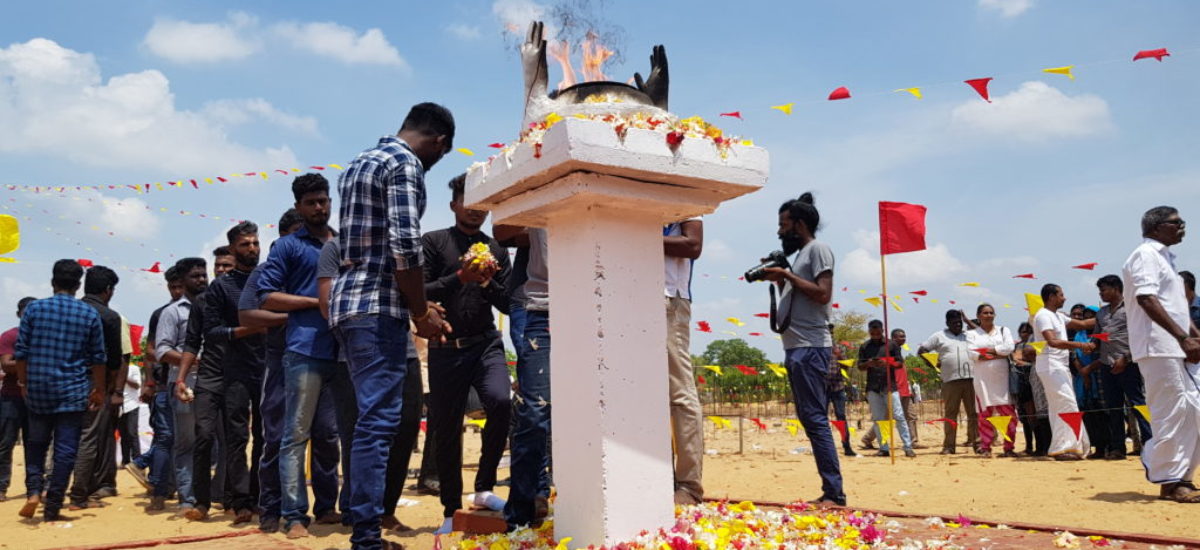
Over a thousand Tamils are gathering in Mullivaikkal today as the Tamil nation remembers the tens of thousands of Tamils killed by Sri Lanka’s military in the final days of the armed conflict.

A flame was lit and flowers were laid at the Mullivaikkal memorial monument located at the site where Tamils were subjected to heavy artillery fire and deliberate starvation 13 years ago.

On this day 13 years ago, the Sri Lankan military over ran the last remaining ‘No Fire Zone’ where thousands of Tamils were trapped.

A US State Department report says there are “accounts from witnesses in the NFZ of SLA soldiers throwing grenades into several civilian bunkers”.

“Some civilians also reported seeing an army truck running over injured people lying on the road. Later in the day, the SLA brought in earth-moving equipment to bury the bodies that had been lying outside for two days or more. Civilians reported seeing among the corpses injured people who were asking for help, and believed that the SLA did not always attempt to separate the injured and the dying from those who had died.”

Posted in Uncategorized

What’s next for the Sri Lankan Economy?

By Kalani Kumarasinghe

Monday’s briefing by Prime Minister Ranil Wickremesinghe was a rude awakening for many across the country. Although several parliamentarians, economists and industry stakeholders had long warned that the Sri Lankan economy would eventually come to a standstill unless interventions are made, much of these calls went unheard.
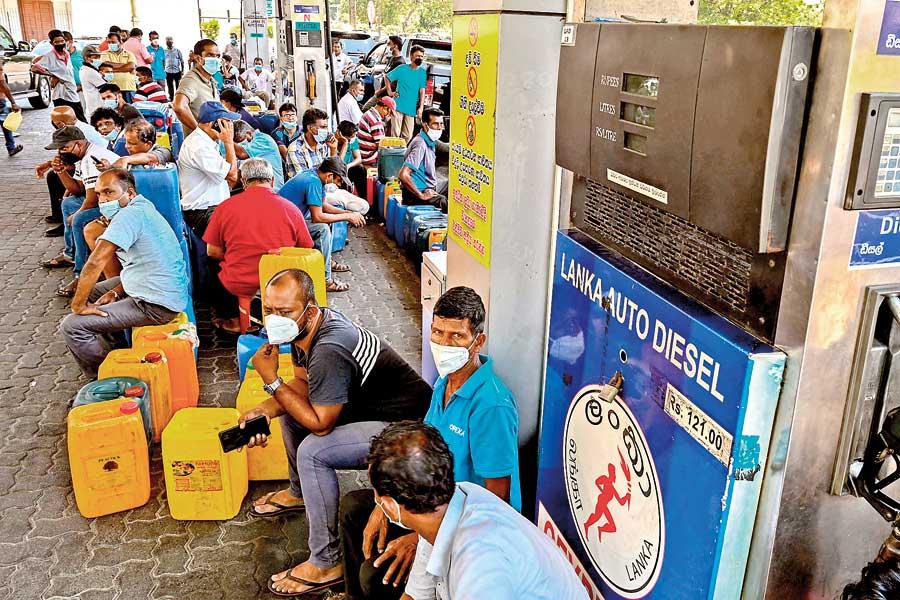
Over the Vesak weekend, usually marked with dansal, colourful lanterns and illuminated pandols, people were seen queuing for petrol and kerosene. Unlike other years, only a few events to distribute food were organized by community groups despite skyrocketing prices of food. Sri Lankans it seemed are slowly adjusting to their new normal of extended power cuts and long queues.

Prime Minister Ranil Wickremesinghe meanwhile exposed many realities and inconvenient truths on the state of the Sri Lankan economy. According to his speech, the Government incurs massive losses, as does the Ceylon Electricity Board. Meanwhile the State Pharmaceutical Corporation he said is at the risk of getting blacklisted as a result of not making payments for some four months. The result is a shortage of drugs which includes drugs that treat heart disease. Moreover, as the generation of electricity requires oil, Sri Lanka could face power outages that could last 15 hours a day, he warned.

How did we get here?

How will a country come out of an economic crisis as severe as this? How did we as a country get into a situation this bad, we asked Economist Umesh Moramudali of the Colombo University. “We have various forms of debt. All of this debt is responsible for the situation we are in. But the biggest concern was the international sovereign bonds, accounting for the majority of the foreign loans that we have currently, which is around 40% of outstanding foreign loans. You can see how big this burden is when you look at the foreign debt repayments. Out of the total foreign loan repayments — almost 50% for last year, this year and upcoming years are for sovereign bonds. That is a clear indication that significant burden is coming from there,” he explained.

These loans are difficult to pay because they have different maturity structures, Moramudali added. “You don’t pay these loans across a number of years. For instance a 500 million loan is not repaid in 100 million installments. Instead you pay a very high interest every year and then you pay the full amount in one go. Imagine a situation where you take 10 lakhs from a friend, every year you pay the interest. After five years, you pay the entire 10 lakhs. It’s a big burden, so the way in which a repayment structure is arranged in a sovereign bond is one of the major concerns as to why we are in this situation,” he said.

Sri Lanka is unable to make these repayments as the country doesn’t generate enough foreign currency because our exports haven’t gone up. “On the other hand, loan repayments go up. This means that there is more dollar outflows and very little dollar inflows. Obviously the gap is higher and it’s very difficult to manage,” he added.
According to Former Governor of the Central Bank Dr. Indrajit Coomaraswamy, the origins of the crisis can be traced back to seven decades. “In my view, the primary cause for Sri Lanka’s regression from being the second most advanced country in Asia at the time of independence, to where we are now is due to macroeconomic instability. The primary cause for that has been the government’s fiscal operations, the government’s budget has been the main source of instability,” Coomaraswamy said speaking at an online event organized by the Ceylon Chamber of Commerce.

“It is only the first step. The staff will then have to make a proposal to the executive board of the IMF for an Extended Fund Facility (EFF) which would give us about a billion dollars a year, over three years” – Former Governor of the Central Bank Dr. Indrajit Coomaraswamy

“Sri Lankans have been living beyond our means since the 1950s. That has not changed. But we got away with it. 16 times we went to the IMF. We were a donor darling for much of the time because we were a low income country and were able to attract high levels of concessional foreign aid which helped us to tide things over. Despite that, we never really disciplined fiscal operations; A result of a toxic combination of populist politics on one hand and entrenched entitlement on the part of the people,” Coomaraswamy opined.
Around 2010 when Sri Lanka graduated to middle income country status, the country had negligible amounts of commercial borrowing, according to the former Governor. “At that time the major central banks were flushing a lot of liquidity into their system and there were many looking for high yield in the global economy and we were able to take advantage of it and borrow in the form of international sovereign bond.” he said.

“Problems were aggravated—fiscal deficit was affected by the dramatic decline in revenue. Upto the mid-1990s, revenue was around 20% of GDP. It has now come down to a little over 8%. Even before the pandemic and tax cuts, revenue was down to 13% of GDP and expenditure was 20%, so it was an inherently unsustainable situation,” he said.
He went on to explain how underlying problems were amplified by tax cuts introduced by the Rajapaksa government, the pandemic, the war in Ukraine, and the adherence for too long to the ‘alternate strategy’. Coomaraswamy was referring to the alternate strategies adopted by the Central Bank in response to dwindling reserves.

The next steps

While commending recent moves by the new Central Bank Governor, Coomaraswamy said the recent interest rate adjustments and fuel price revisions alone won’t suffice in the long-term. Sri Lanka has ‘two big buckets’ it has to address along with the negotiations to achieve an IMF programme, he said. “One is the fiscal framework, one that will get us on a path to debt sustainability. Two, electricity prices need to be adjusted significantly.”

Coomaraswamy also expressed confidence that a staff level agreement with the IMF is likely to be achieved within four to eight weeks. “It is only the first step. The staff will then have to make a proposal to the executive board of the IMF for an Extended Fund Facility (EFF) which would give us about a billion dollars a year, over three years. For that to happen we have to show significant progress towards debt sustainability,” he said.

“There are concerns that there is stress in the banking systems,” Coomaraswamy said. “The Governor was very clear the other day, where he said that the Central Bank is standing behind the banking system, do what is necessary to maintain the stability of the domestic banking system. There is an FX (forex) liquidity problem in one or two banks, which will need to be addressed. They need to come up with a plan to maintain stability of this side of the banking system, particularly the state banks as well as the whole of the domestic banking system,” Coomaraswamy cautioned.

Economist at Frontier Research Chayu Damsinghe opines that the manner in which Sri Lankan leaders communicate the issues will remain crucial in building stability. “At this point, from Sri Lanka’s perspective, the critical requirement is getting things available, getting rid of shortages. The more stability you can bring economically into the situation, the more those other things don’t have to happen,” he said.
Stability will aid in containing depreciation, interest rate hikes and therefore inflation, Damsinghe said. “But we are not talking about things immediately turning for the better. Things will get worse; some parts of the society are left out. The middle class who have had to only deal with a certain type of pain, now will have to deal with a different type of pain as a result of reforms,” he warned.

How the country deals with that will be a challenge, Damsinghe believes. “You are talking about a lot of people having less disposable incomes, having to make consumption choices. There are a lot of challenges in the short-term, for the people of the country. Politically, whatever the system is, to build enough trust and credibility with the people to convince them that the pain that they are going through is not permanent, that will be a difficult challenge in the current climate,” he said.

Posted in Uncategorized

40 Days for GotaGoGama – As demand for President’s resignation grows

The peaceful Occupy Galle Face protest is on for the 40th day on Wednesday (18) demanding a solution to the problems faced by the people and demanding the resignation of President Gotabaya.

People from various parts of Sri Lanka are at the GotaGoGoama peaceful protest site since last night.

They demand the immediate resignation of the President who has not solved the problems of the people.

Meanwhile, GotaGoGama branches that were established throughout the country in support of the GotaGoGama protest site near the President’s Office in Colombo are still active.

At the same time, a protest was held in front of the GotaGoGama branch in Galle yesterday (17) demanding both the President and the News Prime Minister to step down.

The GotaGoGama Kandy branch is on for the 32nd Day on Wednesday (18).

The Peradeniya University Students’ Union staged a protest at the venue yesterday (17) afternoon with the theme of “Continuing The Struggle”.

Sri Lanka has asked to use world bank money for oil

Sri Lanka has received 160 million US dollars from the World Bank and officials are in discussion with the bank to use the dollars to buy fuel as the country announced on Wednesday (18) that it ran out of petrol.

“Yesterday we received 160 million dollars from the World Bank. We cannot use it for fuel but we are discussing with them if we can or not,” Prime Minister Ranil Wickramasinghe told the parliament on Wednesday (18).

PM said the World Bank money is for cash transfers only.

“However, we are going to ask them whether we can use some of the money urgently to get petrol,” Wickramasinghe said.

A World Bank team is in Colombo at the moment and the PM said he will meet the team today to discuss the matter.

Power and Energy minister Kanchana Wijeskera told parliament that due to the dollar shortage there would be no petrol in the country and distribution will only begin after three days.Sri Lanka has not paid for a petrol shipment that’s in Sri Lankan waters since March 28 while the country has an overdue of 53 million dollars for a consignment that came in January.

Mahinda in Parliament for the first time since mob violence

Former Prime Minister Mahinda Rajapaksa attended Parliament sessions today, for the first time since the mob violence last week.

His son and former Sports Minister Namal Rajapaksa also attended Parliament sessions today.

Both MPs were absent when their names were called for the vote to elect the new Deputy Speaker yesterday.

Mahinda Rajapaksa and Namal Rajapaksa were believed to be in hiding together with their families, following the mob violence last week.

Both were believed to have sought refuge at a Navy camp in Trincomalee.

A mob had attacked peaceful protesters near Temple Trees and at Galle Face after attending a meeting at Temple Trees with then Prime Minister Mahinda Rajapaksa.

Revenge attacks later took place targeting the property of several ruling party MPs and their supporters.

Posted in Uncategorized