DEW: Rs. 229 bn relief package will lead to printing more money

Former Minister D.E.W. Gunasekera says that the cash-strapped government lacked the wherewithal to implement the much publicized Rs 229 bn relief package.

Therefore, the one-time General Secretary of the Communist Party said the government had no option but to print more money at the expense of financial stability at a time the country was under tremendous pressure. The former minister quit the top party post in August 2020.

CP organ ‘Aththa,’ in its January 09, 2022 edition quoted the former lawmaker as having alleged that the Rs 229 bn relief package meant for the public sector, pensioners and Samurdhi recipients was nothing but a political strategy to revive the waning popularity of the government.

Declaring that he had no issue with the government providing relief to the public sector et al, the ex-MP warned that such measures wouldn’t help resolve the growing crisis. The outspoken former minister said that the controversial relief package should be examined against the backdrop of the failure on the part of the government to allocate the required funds through the 2022 budget.

Mr. Gunasekera last served as a National List MP from 2010 to 2015.

Reiterating that such a move had been necessitated by political compulsions, the veteran Communist warned of the grave risk of rising inflation. The CP member questioned the absence of a mechanism to assist those in the private sector, small and medium scale industries as well as the unregulated economy. The much weakened national economy couldn’t be revived unless the government paid attention to the neglected sectors.

The veteran politician explained how the global Covid-19 epidemic devastated the unregulated economy world over. However, the government hasn’t taken into consideration the fuller picture. Instead the government sought to use the financial package to counter dissenting views within the government.

The ex-Minister said that even if printing money caused inflation, the government could have achieved positive results if the total amount was used to increase domestic production. Had that happened, the government could have accomplished both political and economic objectives.

The former MP said that incumbent Finance Minister Basil Rajapaksa hadn’t still understood the developing economic crisis.

Mr. Gunasekera told The Island that the private sector, including the plantation companies had quite clearly turned down the government request to match the special Rs. 5,000 monthly grant to employees. The government seemed not to have examined the situation at all, the former MP said, asserting that the current crisis could be the worst ever in post-independence Sri Lanka.

Continuing political instability in the wake of serious differences among coalition members with three ministers challenging a cabinet decision in the Supreme Court has jeopardized recovery attempts, Mr. Gunasekera said.

The one-time Chairman of the Committee on Public Enterprises (COPE) emphasized the pivotal importance of some real effort to reach consensus on the country’s response to the emerging threat. “We are almost overwhelmed. Unless tangible measures are taken there can be a catastrophe. Losses are likely to be immeasurable and irrevocable.”

Posted in Uncategorized

Adjournment Debate on the Statement of Government Policy scheduled for Jan 19 & 20

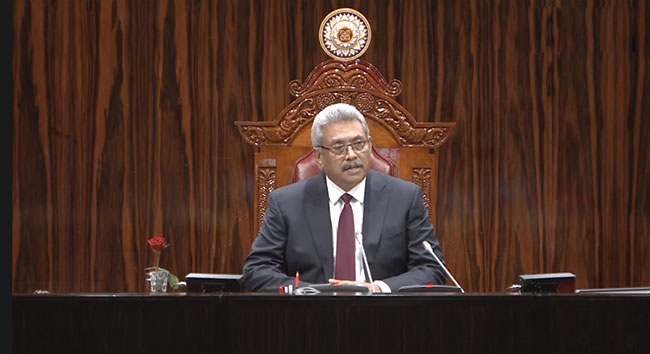
The Secretary General of Parliament Mr. Dhammika Dasanayake stated that the Adjournment debate on the Statement of Government Policy is scheduled to be presented by His Excellency the President Gotabaya Rajapaksa on January 18th , will instead be held on January 19th and 20th.

This was made known via the Government Official News website today (14).

Accordingly, the Adjournment debate by the Government will be held on January 19th from 1.00 pm to 6.00 pm and on January 20th from 10.00 am to 6.00 pm. The decisions were made at a special meeting held by the Hon. Speaker Mahinda Yapa Abeywardana together with party leaders and Members of Parliament yesterday (13) at the Parliament premises, the Secretary General said.

Parliament Sittings have been scheduled for January 21 st at 10.00 am. Accordingly, the Code of Criminal Procedure (Amendment) Bill, Prohibition of Anti-Personnel Mines Bill, Judicature (Amendment) Bill and Civil Procedure Code (Amendment) Bill is scheduled to be taken into debate until 4.30 pm.

The Secretary General further stated that the Sri Shakysinharama Viharastha Karyasadhaka Sanvidanaya (Incorporation) Bill is scheduled to be moved following Government Business. Time has been allotted from 4.30 pm to 4.50 pm for Questions at the Adjournment Time and from 4.50 pm to 5.30 pm time has been allotted for the Motion at the Adjournment Time.

Posted in Uncategorized

Central Expressway from Mirigama to Kurunegala to be opened from tomorrow

The second phase of the Central Expressway from Mirigama to Kurunegala (Athugalpura entrance) will be opened to the public on January 15, 2022 under the patronage of the President Gotabaya Rajapaksa and the Prime Minister Mahinda Rajapaksa.

The length of the second phase of the Central Expressway from Mirigama to Kurunegala is 40.91 km.

Built to minimize environmental and social impact, the expressway will bypass urban areas and pass through mainly vacant lands.

The four-lane section of the road from Mirigama to Kurunegala has now been identified as the most beautiful expressway section in Sri Lanka.

The Central Expressway segment from Mirigama to Kurunegala includes 5 interchanges with toll counters at Mirigama, Nakalagamuwa, Dambokka, Kurunegala and Yaggapitiya.

This section of road was constructed by local contractors with local funds at a cost of Rs. 149 billion.

Statement by the Prime Minister on Thai Pongal

The Prime Minister, Justin Trudeau, today issued the following statement on Thai Pongal:

“This week, the Tamil community in Canada and around the world will celebrate Thai Pongal, the harvest festival.

“Thai Pongal is a time of joy, celebration, and community. Traditionally, families and friends gather to give thanks for a bountiful harvest and share Pongal, a sweet rice pudding. While festivities may look different again this year as we continue to fight the COVID-19 pandemic, I know Tamil Canadians will find ways to embody the core values of peace, unity, and compassion at the heart of the celebration of Thai Pongal.

“In January, we also mark Tamil Heritage Month in Canada. It is an opportunity for all Canadians to reflect on the rich history, resiliency, and strength of the Tamil community. It is also a time for us to recognize and celebrate the many contributions Tamil Canadians have made, and continue to make, to our country’s social, economic, and cultural fabric. Together, we will build a stronger, fairer, and more inclusive Canada.

“On behalf of our family, Sophie and I wish everyone celebrating Thai Pongal, here in Canada and around the world, a joyful festival.

“Iniya Thai Pongal Nalvazhthukkal.”

Posted in Uncategorized

China enters Colombo Port East Terminal in collaboration with Lankan company

The construction of Colombo port’s East Container Terminal was to be given to India by an MOU signed by the Ranil Wickremesinghe government and India in 2017. This was subsequently reiterated by another bilateral Memorandum of Cooperation (MOC) in 2019 entered into by the successor Gotabaya Rajapaksa government. India and Japan were to partner with the Sri Lanka Ports Authority (SLPA).

However, in early 2021, the Gotabaya government abrogated the 2019 MOC and declared that the work will be done by the Sri Lanka Ports Authority (SLPA) only. But on Wednesday, it was announced that the construction of the East Terminal has been given to a joint venture of the China Harbor Engineering Company (CHEC) and Access Engineering of Sri Lanka. A cabinet decision to give it to the CHEC had been taken in November 2021.

China has thus entered the East Container Terminal project by the backdoor, as it were.

India had sought to build and run the East Container Terminal in order to match China’s presence in the strategically located Colombo port. The China Merchant Port Holdings (CMPH) had built and has been running the Colombo International Container Terminal (CICT) very successfully. India’s case for having a foot in Colombo port was that 70% of the port’s business is accounted for by Indian transshipment. An additional, but unstated, reason was that India wanted to keep an eye on the activities China, its geopolitical rival.

In 2019, President Gotabaya Rajapaksa had said in his election manifesto that the East Container Terminal will be built and run by the SLPA. But on coming to power at the end of 2019, he perhaps felt the need to keep India in good humor. Therefore, government decided to give the work to India. However, the Colombo port trade unions agitated against the grant of the contract to India. Under pressure, the President withdrew the offer made to India citing his election promise. To compensate India for the loss, the government gave the contract to build and run the West Terminal to India. The Adanis would do the project for US$ 700 million.

However, constructing the East Terminal would have been cheaper for India as it was already half done. A disappointed India finally agreed to take the West Terminal offer.

On Wednesday, President Gotabaya Rajapaksa and Prime Minister Mahinda Rajapaksa jointly inaugurated the second phase of the Eastern Container Terminal project. The construction of the terminal will be conducted in three phases and completed in 2024. Spread over an area of 75 hectares, the terminal is 1,320 meters long. Once completed, the Sri Lanka Ports Authority (SLPA) will inherit a fully-fledged terminal equipped with 12 STC cranes that handle operations from ships to land and 40 Rail Mounted Gantry (RMG) Cranes.

“The total expenditure expected to be spent for the project is US$ 510 million and the Ports Authority will spend US$ 200 million,” a statement from the President’s Media Office said. “Access Engineering PLC and China Harbor Engineering Company Ltd. are jointly carrying out constructions,” it added.

The China Harbor Engineering Co., has been building the US$ 1.4 billion Colombo Port City, a world-class financial hub near the harbor.

Posted in Uncategorized

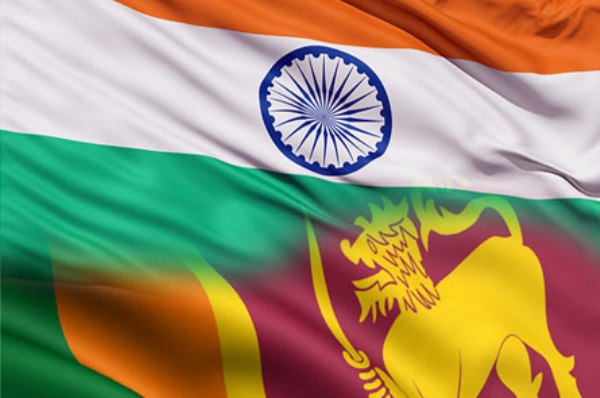
India extends forex support of more than US$ 900 million to Sri Lanka

In response to Sri Lanka’s immediate requirement of foreign exchange, India on Thursday allowed the Central Bank of Sri Lanka (CBSL) to defer the payment of about US$ 500 million given under the Asian Clearing Union Settlement Framework.

This was conveyed to the Governor of the Central Bank of Sri Lanka Ajith Nivard Cabraal by the Indian High Commissioner Gopal Baglay here on Thursday.

In addition to this, there is a US$ 400 million currency swap between the two countries. In total, India has extended to Sri Lanka forex support of more than US$ 900 million.

These are among the four pillars of bilateral economic cooperation identified during Sri Lankan Finance Minister Basil Rajapaksa’s visit to New Delhi in December 2021.

Indian sources said that this is a manifestation of India’s continued support to Sri Lanka. On January 6, Indian External Affairs Minister Dr. S Jaishankar had tweeted that India will support Sri Lanka “during these difficult times” after a phone conversation with his Sri Lankan counterpart, Prof. G.L Peiris.

Sri Lanka has been extended a US$ 1.9 billion aid package by India, that includes facilities to acquire petroleum, medicines and food from India. Work on the other pillars of support announced after Basil Rajapaksa’s visit is in progress.

Sri Lanka to import fertilizer again from Qingdao?

The government is preparing to import fertilizer again from China’s Qingdao Seawin Biotech Group.

A stock of fertilizer sent by the Chinese fertilizer company was rejected earlier, for containing harmful pathogens.

However, the government eventually paid 6.9 million US dollars Qingdao Seawin Biotech Group for the rejected shipment.

Now the Sri Lanka Standards Institute is preparing new standards for special types of fertilizer.

Its Senior Deputy Director K.A. Anil said initial work is being done to prepare the new standards.

Agriculture minister Mahindananda Aluthgamage said the ministry had requested the SLSI to prepare new standards for liquid biofertilizer and solid fertilizers.

He noted that the previous standards did not allow the importation of fertilizer containing bacteria.

The minister said that authorities would not allow fertilizer containing harmful bacteria into the country.

The Sri Lanka Standards Institute says it would not set standards targetting Chinese fertilizer.

Senior Deputy Director K.A. Anil who is attached to the SLSI’s Agriculture Section said the new standards will cover compound fertilizer.

He said the standards will apply to the fertilizer from the Chinese company if it confirms that the organic fertilizer has special compounds.

Methsiri Wijegunawardana, the chairman of Colombo Commercial Fertilizers Ltd., says the agriculture ministry has appointed a special committee to implement the agreements reached with the Chinese fertilizer company.

He noted that Sri Lanka hopes to import fertilizer in February or March from the Chinese company from which the initial fertilizer stock was rejected.

Posted in Uncategorized

President Reverses Basils’s Decision To Remove Litro Chairman: Directs Finance Min. Secretary To Withdraw Letter

In an interesting turn of events, President Gotabhaya Rajapaksa has personally intervened to reverse the made by Finance Minister Basil Rajapaksa to remove Litro Gas Chairman Theshara Jayasinghe.

President Rajapaksa has informed the Finance Ministry Secretary to withdraw the letter appointing Renuka Perera as the new Chairman of Litro Gas.

Accordingly, Jayasinghe will continue to function as the Chairman of the gas company.

Perera, an associate of Basil Rajapaksa, is the administrative Secretary of the Sri Lanka Podujana Party.

Sri Lanka’s Jaffna is not the south of a third country: China envoy

China’s Ambassador to Colombo, Qi Zhenhong dismissed speculation about a recent visit to the northern Jaffna peninsula saying the journey was without any ‘hidden agenda’ to a part of Sri Lanka.

Ambassador Qi Zhenhong visited Jaffna’s Point Pedro, the northernmost end of Sri Lanka and Mannar from where a land bridge is thought to have existed at one time to Rameswaram in India.

“Jaffna is a city in Sri Lanka in the north of the island. It is not a city in the south of any other country,” Qi Zhenhong said when he was asked about his visit to Jaffna and his message to Jaffna people at a media briefing on Sunday.

“It is actually my duty to travel to different parts of this country as an ambassador of China to Sri Lanka. It is because of Covid-19 that I could not visit. I had a much earlier plan to visit different parts of the country.”

The visit came against a backdrop of suspended Chinese power projects in three islands off Jaffna after India had raised security concerns, government officials have said.

Qi Zhenhong’s visit to Jaffna had raised concerns as he distributed compensation for Sri Lanka’s northern fishermen who had been facing a lack of fish catch mainly due to Indian bottom trawling.

Some observers had characterized the visit as “provocative”.

China had been eyeing infrastructure projects in Sri Lanka’s war-torn north and east, but it hardly got any because of India’s dominant role in the region, Sri Lankan government officials have said.

“I know that it is a very important city in the north. It is a city of minority ethnicity and also after almost the end of three decades of war,” Qi Zhenhong said.

“I would like to see how the situation is and how the people there are. I would like to see what we can do as the Chinese government or Chinese embassy, what we can do to help local people and help development.”

“It is a very simple and open visit without any private or hidden agenda.”

Ganesan refuses to sign PCoI’s Sinhala document

Leader of Tamil Progressive Alliance (TPA) MP Mano Ganesan refused to sign the final document of the Special Presidential Commission of Inquiry (PCoI) yesterday (12) as the document was in Sinhala. Citing his Constitutional right, he told investigators that his testimony, although translated from Tamil to Sinhala and from Sinhala to Tamil, must be written in Tamil if it is to be signed. He asked them to call him back when the final document is ready in Tamil.

The MP was summoned to the Special PCoI investigating ‘how corruption ministers were prosecuted in the previous government’ late last year when the MP received a summons in Sinhala from his local Police Station. He returned the summons written in Sinhala, requesting it be sent in Tamil. He accepted the summons once it was translated but later refused to sign when the Special PCoI presented a Sinhala document to sign, citing a legal problem because it was not in Tamil.

“I was the cabinet minister responsible for the country’s language law and language policy. Do I have to break the language policy?” he queried. When the trial was adjourned and set to take place on another day, he said, “We will be back in power soon, so finish all these investigation as soon as possible, ” the MP told Media.

“Under Article 22 of Chapter 4 of the Constitution of Sri Lanka, every citizen has the right to receive oral and written answers in any of the national languages; Sinhala, Tamil and English. When I went to the hearings today, the parliamentary oral interpreter was there. They were doing it because I had returned the Sinhala invitation. He did the text translation between me and the investigators. My confession was typed in Sinhala. But in the middle of the hearing I asked: ‘do I have to sign my confession?’ to which they said, ‘Yes’. Then I said, ‘Then prepare the document in Tamil’ ”.

Any law, including criminal law, must be enacted under the Constitution of the country. Interpretation is different from translation, he said alleging that the Special PCoI was silent when he mentioned his right to receive both documents in his mother tongue under Article 22 of Article 4 of the Constitution.