Multiple dimensions of India-Sri Lanka relations: An exclusive interview with Col R Hariharan

Col R Hariharan is a retired officer of an intelligent corps in the Indian Army, an expert on South Asia and terrorism. He served as the head of intelligence of the Indian Peace Keeping Force in Sri Lanka 1987-90. He is associated with the Chennai Centre for China Studies.

You served as the head of intelligence and as the first and last Colonel General Staff (Intelligence) at the Headquarters of the Indian Peace Keeping Force in Sri Lanka. I think you’re one witness to what was right and wrong during the Indo-Sri Lanka accord. Almost 34 years have passed since then. There is a comment that the Indo-Sri Lankan accord has been unsuccessful in controlling Sri Lanka. What are your thoughts on this?

Indo-Sri Lanka Accord was not to “control” Sri Lanka, as you call it. The Accord document indicates its objectives were three-fold: 1. To ensure Sri Lanka does not offer any space to powers inimical to India. 2. To reassure Sri Lanka that India stood for a unified Sri Lanka and as a corollary does not support independent Eelam. 3. To ensure Sri Lanka recognises the legitimate rights of minority Tamils recognising their distinct language, culture and traditional areas of habitation and enjoy equal rights on par with the majority community. To ensure this, Sri Lanka introduced the 13th amendment to the Constitution creating provincial council system with a level of autonomy for Tamils of the Northeast.

A section of Eelam Tamils continues to blame India, including Eelam supporters in Tamil Nadu. Their basic argument is that Indian policymakers failed to understand the Sinhala ruling bloc and did not realise that Tamils are loyal friends for the long-term strategic interest of India. What is your comment on this?

A section of the people of Sri Lanka, let alone Eelam Tamils, will always blame India, because it is a big country dominating Sri Lanka in many ways: culturally, religiously, historically, politically, commercially etc. India’s relations with Sri Lanka are not nurtured on the ethnic binary of Sinhala vs Tamil. I have not understood your point on Tamils being “loyal” friends of India. On the other hand, it is Tamil Tigers who fought and killed Indian troops and Ex PM Rajiv Gandhi – the man who signed the Accord. Sri Lanka army or Sinhala JVP militants had never fought with India.

A question still arises why India rejected the idea of a separate state for Tamils in Sri Lanka. You know that the entire Tamil political establishments of those days, including the moderate TULF, held the same position and expected India would do the same as it did in Bangladesh. But after the Indo- Sri Lankan accord, they all realised that India would never support it except Prabhakaran. Some observations often emerge in the Tamil political debate about why India refuses it. They argue that if such a state formed for Tamils, it may revive the dream of secession in Tamil Nadu. The other argument is that if such an independent state formed for Tamils, India cannot manage two countries at very close distances. As a veteran of Sri Lankan issues, what is your opinion on these arguments?

TULF leaders had apparently misread India and misled the people. India had always fought against secessionist forces operating in India. In Bangladesh, the people as a whole rose up against Pakistan army dictatorship to create an independent nation. Indian army operation was in support of the peoples struggle for independence. You cannot imagine that India would automatically support creation of independent Eelam carved out of Sri Lanka, just because TULF politically rallies Tamils in support of it.

Any secessionist movement in Tamil Nadu will not enjoy public support because the state, as a part of India, has advanced to become one of the top states of the county. Why should it breakaway and what purpose will it serve?

“India cannot manage two countries at very close distances,” is a laughable statement. You seem to have forgotten India is a regional big power dominating Indian Ocean. India IS managing at the same time Pakistan, Nepal, Bangladesh, Bhutan, Burma and China which share a land border with India.

Tamil politicians and intellectuals who are staunch supporters of Tamil nationalism are still investing in Tamil Nadu (TN). Some believe that if a party like Nam Thamilar comes to power in TN, it will help change India’s foreign policy favouring Eelam Tamils. Can TN change New Delhi’s foreign policy towards Sri Lanka? Can you share your knowledge of Indian foreign policymaking concerning domestic influence?

There are lots of “ifs” in your question. It is not only Naam Thamilar, who are Tamil nationalists. I am also investing in my state as a Tamil nationalist, because I feel Tamils must safeguard their distinct language and culture. Of course, I am not paranoid and suspicious of all others, who speak their language. I am absolutely confident Tamils will prevail, against all odds.

India is a democracy and Indian government will always factor Tamil sensitivities in its Sri Lanka policy, because it is politically wise. Remember, MGR (who supported LTTE) was the biggest supporter of Rajiv Gandhi’s Sri Lanka Accord, because he probably felt it was politically wise to avoid conflict.

In the present environment, India’s Sri Lanka policy would depend upon how Sri Lanka manages China, which is making huge inroads in Sri Lanka. I don’t expect any basic change in India’s Sri Lanka policy, provided Sri Lanka adheres to President Rajapaksa’s promise not to take any action that would jeopardise India’s security. I think Rajapaksas are astute and politically savvy to understand India’s concerns. Let’s hope they continue to maintain it.

Tamil politics in Sri Lanka remains a matter of debate. Most Tamils have realised that the problem will not solve without India’s involvement. While asserting that the 13th Amendment is not a political solution for the Tamils, the Tamil National Alliance (TNA) insists that India supports them. Other Tamil nationalist parties also feel that way. How do you see this? How can India help resolve the Tamil issue, and how should the Tamils approach India?

I fear I will not be able to answer this question because I have given up on understanding Eelam Politics. I hope the leaders understand it. India will always support just demands of Tamils. I am not a privy to India’s policy formulation, but going by past history, I can think of a few things. Tamil demands should be constructive, expand upon existing scheme of things, not against the unity of the country and enjoy widespread support, preferably across ethnic barriers. If Tamil polity can do it, I can’t imagine, India refusing its good offices in support. But the initiative for action should come from the people.

An observation remains that the ‘heat of Chinese aggression in South Asia is a serious threat to India’s position as a regional power. U. S Secretary of state Mike Pompeo remarked that ‘We see from bad deals, violations of sovereignty and lawlessness on land and sea in Sri Lanka’. Can we conclude that India has been facing severe setbacks in the geopolitical contest in the island nation? What is your take on Chinese influence on Sri Lanka?

I will not call it a severe setback because foreign policy and diplomacy are dynamic processes that go up and down. China has made huge inroads into India’s strategic areas of influence in South Asia including Sri Lanka. There is no doubt about it. And China will continue to do so.

So far it was China’s money power that had enabled it to make rapid strides in the name of aiding development in other countries through the Belt and Road initiative. Now, I expect China to increase its political, diplomatic and military muscle power [to influence other countries]. In a democratic country like Sri Lanka, we are likely to see China as an indispensable political supporter of parties, similar to a position India was sought after. Of course, while China doesn’t enjoy the closeness of cultural identity India enjoys, its money power will compensate it.

I expect, as it happened in the US and even India, China will cultivate the media to soften its image as a harsh one-party country. Sri Lanka will become more beholden to China, if international pressure increases, say at the UN instittuions. I expect China to take advantage of this to improve its image. The next logical political development would be showcasing China’s achievements through strengthening people to people links. Of course, as PLA navy is becoming more and more powerful, we will see more Chinese warships calling on Sri Lanka ports, increasingly coming under Chinese control. Whether Sri Lanka likes it or not, Chinese cyber capabilities to eavesdrop in the regional communication will increase; I expect suitable installations for this to come up in Port City.

India, though globally 4th largest economic power, cannot match China in this race. So, I expect India to try build multi-layered linkages with other world powers, who are equally worried about China’s ever-increasing clout in Indo-Pacific. Overall, we will be handling Cold War of a different kind. And Sri Lanka is likely to be buffeted more and more in the eye of the storm.

According to the strategic community, Free and Open Indo–Pacific (FOIP) and QUAD are significant moves in the Indian Ocean region. Pompeo’ called this a new ‘alliance of democracies.’ China has recently warned Dhaka against joining Quad and said, ‘if Bangladesh did so, it will ‘substantially damage’ bilateral relations between China and Bangladesh and calling the Quad a ‘military alliance aimed against China’s resurgence’. I think that Sri Lanka faces a similar situation. As a military strategist, how do you see these developments influence India’s neighbours?

I have been writing on this theme in quite a few articles, particularly in the recent piece ‘China gets tough with Bangladesh’. They’re in my blog. Please see them. I expect China to tone down its wolf diplomacy as President Xi has asked his people to improve their image. Bangladesh cannot be equated with Sri Lanka in their relations with China, as well as India, because the two strategic environments are different. Quad will not be a military alliance like NATO because national interests of members widely differ in the Indo-Pacific. So, I expect it to be more adaptive, beyond depending only on the use of force. It is too early to see how it will affect Sri Lanka. Let the situation mature.

Source: CSST: Interviewed by A Jathindra

European Parliament Alarmed over Sri Lanka’s Rights Situation

The European Parliament today sent a powerful message to Sri Lanka’s government that its growing human rights violations will no longer be tolerated and may jeopardize bilateral and trade relations.

The resolution draws attention to abuses under the notorious Prevention of Terrorism Act (PTA), which has long enabled prolonged arbitrary detention, torture and sexual abuse. The government is using the law to target members of minority communities and civil society, including activists, lawyers, and writers. The resolution specifically mentions Hejaaz Hizbullah, a prominent lawyer, and Ahnaf Jazeem, a poet, who are both arbitrarily detained under the act.

The European Parliament also denounced the Sri Lankan government’s obstruction of efforts to secure accountability for widespread human rights abuses during the country’s decades-long civil war. The resolution notes that several current and former military commanders implicated in serious abuses have been appointed to senior government positions. In March, the United Nations Human Rights Council mandated a new effort to collect and analyze evidence for use in future trials.

The European Parliament resolution provides a grim, but accurate, picture of “Sri Lanka’s alarming path towards the recurrence of grave human rights violations.” Among numerous issues highlighted are discrimination against ethnic and religious minorities, the situation of LGBT people, and a crisis of labor rights in garment factories.

Since 2017, Sri Lanka has benefited from a trading arrangement with the European Union called GSP+ which provides better access to European Union markets in return for progress implementing international human rights treaties. The resolution recalls that “one of the key commitments of Sri Lanka was to fully align its counter-terrorism legislation with international human rights conventions,” and calls upon the European Commission to “use the GSP+ as a leverage to push for advancement on Sri Lanka’s human rights obligations.”

Crucially, the resolution calls on the European Commission to urgently evaluate its funding for a UN project to support Sri Lanka on counter-terrorism. It instead calls for the EU and member states to increase support for Sri Lanka’s civil society.

The Sri Lankan government needs to realize that its international partners are watching with concern, and that friends around the world can act to promote fundamental rights in Sri Lanka.

Posted in Uncategorized

Sri Lanka expects US$400mn swap with India in August: CB Governor

Sri Lanka can draw down on a 400 million US dollar foreign exchange swap with the Reserve Bank of India in August 2021, as part of measures to boost reserves, Central Bank Governor W D Lakshman said.

Sri Lanka originally signed the swap deal available to SAARC countries in 2020 and repaid it in February 2021 after rolling it over once.

“There are a couple of more drawings available,” Governor Lakshman told reporters. “After the completion of the first couple, we have to wait for a certain cooling-off period of six months.

“So this is going to be available in August.”

A swap with the Bangladesh banks which had been approved was also progressing with “rapidity” with requirements being fulfilled.

He said it could come as early as one month. Sri Lanka has to pay a billion US dollar sovereign bond in July 2020. Sri Lanka had 4.4 billion US dollars of reserves in April 2021.

Posted in Uncategorized

SJB vows to change pro-China Port City policy

The opposition Samagi Jana Balawegaya has vowed to make drastic changes to the Port City project if it comes to power.

SJB Parliamentarian and former State Minister Dr. Harsha de Silva said that an SJB government will look to take the project beyond China.

Dr. Harsha de Silva was responding to a question raised on a Twitter Spaces discussion hosted by Daily Mirror Twitter.

He said in its current form the Port City is likely to be marketed as a project of the Chinese company managing the Port City or a Chinese project and not Sri Lankan project.

“Geo-politics is as important as the law. When we come we hope we will be able to take the project to beyond China,” he said.

Dr. Harsha de Silva said that the project was suspended in 2015 by the then government over concerns related to the deal between China and Sri Lanka and the environment.

He also noted that the SJB has no issue with Chinese investments, but its policy is that Sri Lanka must not be partial to one country.

The former State Minister noted that Sri Lanka must have countries like India and Japan on its side.

He said that Sri Lanka was sending the wrong message by rejecting Indian and Japanese projects and approving Chinese projects.

Posted in Uncategorized

Sri Lanka reports highest single-day Covid-19 death count with 101 deaths, toll exceeds 2000

The COVID-19 death toll in the country surpassed the 2,000 mark with 101 more fatalities being reported, the Epidemiology Unit said.

This is the highest number of deaths recorded in the country in a single day since the outbreak of the pandemic.

Accordingly, the death toll in the country stands at 2,011.

Posted in Uncategorized

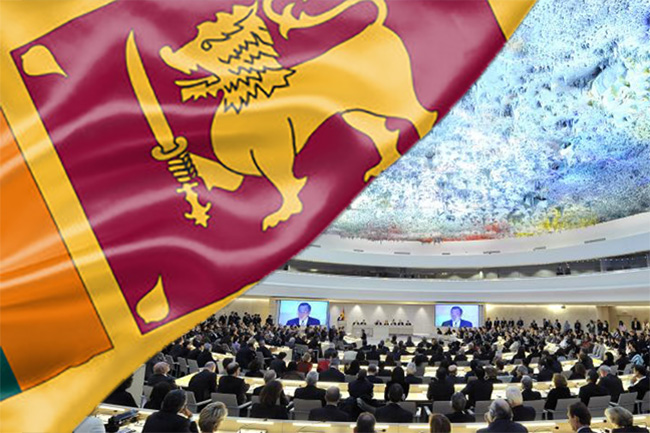
EU Parliament adopts resolution on Sri Lanka

The EU Parliament adopted a resolution on Sri Lanka today calling for the repeal of the Prevention of Terrorism Act (PTA).

EU MPs have also propose to carefully assess whether there is sufficient reason, as a last resort, to initiate a procedure for the temporary withdrawal of Sri Lanka’s GSP+ status.

Parliament adopted three resolutions on the human rights situation at the Spanish/Moroccan border, in Russia, and in Sri Lanka.

The resolution on Sri Lanka was adopted with 628 votes in favour, 15 against and 40 abstentions.

The resolution notes that the EU Parliament expresses its deep concern about Sri Lanka’s alarming slide towards a recurrence of grave human rights violations, as described by the most recent UN report on the country.

Members reiterated their strong opposition to the continued application of the controversial Prevention of Terrorism Act (PTA), which grants the country’s police broad powers to search, arrest and detain civilian suspects. The resolution alleged that the PTA has led to consistent and well-founded allegations of torture, sexual abuse and forced confessions.

The resolution calls on the Sri Lankan authorities to fulfil their pledge to review and repeal the act and replace it with anti-terrorism legislation which follows international best practices.

Sri Lanka regained access to generous EU tariff preferences under the GSP+ on 19 May 2017, on the condition that it replace the PTA and effectively implements 27 international conventions, including on human rights.

EU MPs are therefore calling on the European Commission and the European External Action Service to use the GSP+ as leverage to push for progress on Sri Lanka’s human rights obligations. They also want them to carefully assess whether there is sufficient reason, as a last resort, to initiate a procedure for the temporary withdrawal of Sri Lanka’s GSP+ status.

Posted in Uncategorized

Chinese Ambassador lists difficulties faced by Chinese investors in Sri Lanka

The Chinese Ambassador to Sri Lanka, Qi Zhenhong, told the Sri Lanka Investment Forum 2021 this week here that while the island nation is well positioned geographically to develop into an international investment hub, it has to remove certain impediments such as policy inconsistency, administrative inefficiency and indulgence in biased anti-Chinese propaganda.

“Sri Lanka’s industry is not strong. Its development of the supply chain and supporting facilities is far from perfect. Second, although the policies to attract foreign investment are in place, the following problems still exist at the stage of implementation: lack of concrete measures, cumbersome administrative procedures, lengthy coordination process among government agencies and inefficiency in decision-making etc. Much remains to be done in terms of investment facilitation. Thirdly, Sri Lanka has a dynamic environment of public opinion. Among the diversified views, unfortunately, there are at times baseless accusations and attacks on Chinese businesses.”

“Only with the guarantee of the right policies, could we expect foreign investment to take root and bear fruit. Therefore, it is important for the Sri Lankan government to ensure the consistency, stability, transparency and effectiveness of its investment policies to the largest extent. As such, China and Sri Lanka need to continue our efforts promptly to carry out the outline of the medium and long-term plan for investment cooperation and development between our two countries signed in 2017. At the same time, negotiations on the China-Sri Lanka FTA should be resumed as soon as possible. If a timely agreement can be reached, it will surely further promote our bilateral trade and investment.”

“Only by creating an easy-to-do-business environment and providing favorable conditions for investors, the host country can obtain an early advantage from the get go, in the increasingly competitive world to attract international investment. As mentioned earlier, we count on the Sri Lankan government’s efforts to further streamline its review and approval processes, promote digitalization in the administration and improve the efficiency of government services provided (for instance, to establish the electronic one-stop-shop for investors), with the view to minimizing the cost of communication and coordination between businesses and authorities.”

“Third, to better cultivate the pro-business atmosphereattacks targeting Chinese businesses in the media while discussing the Colombo Port City and Hambantota Port from time to time. The accusation sometimes even labels the Chinese government for creating “debt trap” and “colonialization” in Sri Lanka. Those groundless accusations have to some extent affected the healthy atmosphere for our extensive cooperation. As a matter of fact, those Chinese companies took on the projects at the request of the Sri Lankan government in an hour of need, rather than “taking advantages” as claimed by some.”

“The Belt and Road Initiative is guided by the principles of extensive consultation, joint contribution and shared benefits, with the view to achieving the win-win outcome, rather than the “zero-sum” game. I believe, in order to properly address the difficulties encountered in bilateral cooperation, both sides should always keep in mind the mutually beneficial nature of our cooperation and our strong partnership as a whole.”

“We should neither overlook the prominent problems arising in key projects because of our friendship, nor can we allow anxiety to cloud our judgement over short-term gains and losses: we need to avoid the mentality of feeling on the losing side when the projects are making progress with promising benefits; or to throw blame around when the projects are moving slow or temporarily hindered.”

However, ending on a note of optimism, the envoy said: “All in all, despite existing challenges, the time has come to invest in Sri Lanka. I sincerely believe, with the strong commitments by the Sri Lankan government to address those challenges, as well as the wisdom of our experienced investors, we are looking at an extremely promising future of our investment cooperation ahead.”

Posted in Uncategorized

Government decides to lift travel ban on Monday

The Government has decided to lift the travel ban enforced in the entire country on Monday and not extend it.

The ban was enforced till Monday but there were calls to extend it further.

However, Army Commander General Shavendra Silva said that the ban will nit be extended and will be lifted at 4am on Monday 14th June.

Health experts had requested President Gotabaya Rajapaksa to extend the travel ban till 21st June.

The request was made on the basis that extending it by another week will help contain the spread of the virus.

The ban was to expire on 7th June but was extended till 14th June on a request made by health experts.

Health inspectors had claimed that the travel ban which was extended until 14th June was ineffective due to a large number of people still moving around the streets.

PHI Association Secretary M. Balasooriya had told Colombo Gazette that the public were not strictly adhering to the travel restrictions in several areas.

Ex-military personnel dominating Covid-19 response lack expertise: NCCSL

Sri Lanka’s pandemic response mechanisms and important parts of the public administration seem to be dominated by ex-military personnel, many of whom lack the relevant expertise for the task, the National Christian Council of Sri Lanka (NCCSL) expressed in a statement issued yesterday (09).

Adding that Sri Lanka’s quality medical personnel are not adequately at the helm to meet this health crisis, the NCCSL stated that Sri Lanka continues to remain as a nation which lacks a suitably designed public health response.

According to the NCCSL, Sri Lanka’s well-staffed and highly skilled health infrastructure does not seem to be at the centre of the pandemic response, even though the country possesses many advantages such as a literate society, a comprehensive and extensive public health system, a middle-income country status, and a mass media system that reaches across the island.

Upon consideration of the Covid-19 pandemic situation in the country, the churches affiliated with the NCCSL seek to urge the government to address the current situation.

“The worsening COVID-19 pandemic situation and related deterioration of socio- economic conditions, along with mounting ecological calamities, has prompted the Churches affiliated with the NCCSL to alert the nation and its political leadership to the need to meet the challenge for proper governance and economic and environmental management to resolve the worsening public health crisis,” it said.

Further, it was also expressed that justice should be present with regard to access to vaccines both locally and internationally.

“We are concerned at the absence of a rational policy based on equality and devoid of political favouritism with respect to the vaccination of people in the country. We also deplore the vaccine apartheid between the global north and south in the distribution of vaccines and call upon political leaders and church leaders in the developed world to ensure that such injustice and discrimination is ended forthwith,” the NCCSL stressed.

Due to this, the NCCSL stated that the nation suffers from an increasing trend of ad hoc, autocratic and non-consultative actions of governance across the gamut of national affairs, directly resulting in anomalous governmental behaviour such as: use of counterinsurgency and sedition mechanisms against civil activists, intellectuals and artistes; attempts to curtail the work of religious and social service organisations; a mounting death toll of suspects in police custody, a deplorable lack of commitment in the investigations into the Easter Sunday tragedy, and the reversal of numerous ongoing judicial actions that seek to redress large scale plunder, maladministration and other mis-governance, among other serious anomalies not expected of a country committed to freedom and the Rule of Law.

Additionally, the NCCSL notes that various less-advantaged social sectors like the urban and rural poor, the agricultural and plantation community and the fishing community all face deteriorating livelihood conditions arising out of the profound failure to manage the health crisis.

Commenting on the X-Press Pearl disaster, it was expressed that the fishing community received another serious blow by the incompetence demonstrated in handling the stricken X-press Pearl and the ensuing calamitous environmental consequences. In this regard, the NCCSL stated that it calls for a credible and independent inquiry into how such a crisis could have occurred.

“We are disturbed that even as we must overcome these calamities, the governmental leadership seems more focused on undermining democratic processes, stifling dissent and rushing through ill-conceived legislation such as the Port City Commission Bill that may endanger national sovereignty and long- term economic prosperity. The nation and its collective leadership must heed the rising call by our spiritual leaders to rise up and focus on harnessing our best resources and attributes to respond to the crises rather than indulging in autocratic exercises that only serve further to emasculate our island civilisation,” it concluded.

Indian envoy in Sri Lanka seeks stable and predictable policies – Newsin.Asia

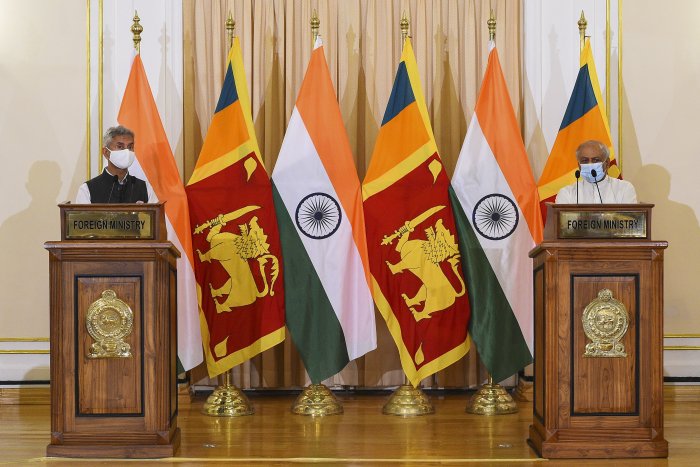
The Indian High Commissioner in Sri Lanka Gopal Baglay has emphasized the need for “stable and predictable policies” for the promotion of economic interactions between India and Sri Lanka.

Speaking at a session dedicated to India on June 9, at the Sri Lanka Investment Forum (SLIF) 2021 organized in the virtual format by the Board of Investment (BoI) of Sri Lanka, the Ceylon Chamber of Commerce (CCC), and the Colombo Stock Exchange, Baglay said that expedited implementation of bilateral projects would enhance investor confidence and boost economic growth. He identified stable and predictable policies as being the key for the promotion of economic interactions between India and Sri Lanka.

Economic and commercial bilateral partnership could focus on areas such as ports, shipping, connectivity, logistics, energy/renewable energy, IT, tourism and hospitality, transport, real-estate, health, education and agriculture, the envoy said.

Outlining the comprehensive nature and scope of Indian investments in Sri Lanka, the High Commissioner underlined the importance of private sector participation and noted that Indian business and industry are perhaps the best suited to partner with Sri Lanka by the virtue of proximity, familiarity, and longstanding ties between the two sides.

He mentioned that expedited implementation of bilateral projects would enhance investor confidence and boost economic growth. Stable and predictable policies were identified as being the key for promotion of economic interactions

Lankan Minister Balasuriya

The dedicated session also heard remarks by several dignitaries including the State Minister for Regional Cooperation Tharaka Balasuriya. In addition there was a panel discussion involving representatives of three Indian companies with successful ongoing investments in Sri Lanka – HCL, IOCL (LIOC), and Ashok Leyland.

Minister Tharaka Balasuriya spoke about significant Indian investments in Sri Lanka and highlighted various sectors and projects in Sri Lanka that could be of interest for Indian investors. The areas outlined by him included automobile components, apparel industry/fabric parks, IT sector, pharmaceuticals, and education. He also thanked India for its support in terms of medical supplies related to Covid-19, specially the supply of vaccines under the Vaccine Maitri Programme.

The Acting High Commissioner of Sri Lanka to India Mr. Niluka Kadurugamuwa and Mr. Vish Govindasamy Vice-Chairman of CCC also spoke at the country session.

Mr. Pasan Wanigasekara, Director General of BoI of Sri Lanka gave a presentation on investment opportunities in Sri Lanka along with the regulatory and tax framework for investors.

During the panel discussion, the three Indian companies shared their investment experience in Sri Lanka and spoke about their efforts to expand the business in Sri Lanka, especially in the context of the challenge posed by the pandemic.

Posted in Uncategorized