Daily coronavirus case tally moves to 2,340

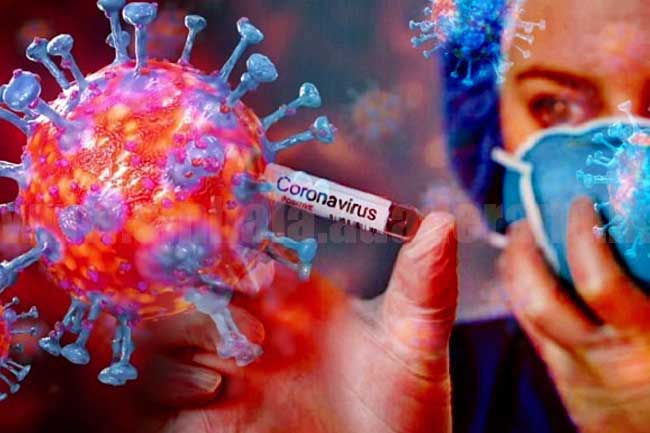
The Epidemiology Unit of the Health Ministry reports that another 707 persons have tested positive for COVID-19 in Sri Lanka, moving the daily total of new cases to 2,340.

This brings the total number of confirmed cases of coronavirus reported in the country to 221,277.

As many as 186,516 recoveries and 2,073 deaths have been confirmed in Sri Lanka since the outbreak of the pandemic.

The Epidemiology Unit’s data showed that 32,688 active cases are currently under medical care.

Posted in Uncategorized

Concerns raised over possible security threats to Colombo Port City

Concerns have been raised over possible security threats to the Colombo Port City.

The concerns were raised at a virtual closed door round table discussion hosted by the Institute of National Security Studies (INSS).

The Institute of National Security Studies, the premier think tank on national security established under the Ministry of Defence, organized a discussion on “Urban Security and Safety: the Port City” with the participation of experts from the tri-forces.

INSS was the first institute to identify the importance of a strategic security plan for the Colombo Port City, at a time there is no discussion about a security plan in the foreseeable future.

The speakers at the discussion included Colonel General Staff, Security Forces West from the Sri Lanka Army Colonel BMA Balasooriya, the Commanding Officer of SLNS Rangalla of the Sri Lanka Navy Captain Rohan Joseph and Group Captain Poojana Gunathilake, Commanding Officer of No. 8 Light Transport Squadron from the Sri Lanka Air Force Base in Ratmalana.

The Moderator, Rear Admiral Dimuthu Gunawardena, Director of Communication and Publication welcomed the guest speakers and briefly introduced the topic in discussion, explaining the urgency to discuss the physical security of the Colombo Port City.

The audience consisted of the INSS staff and invitees from the tri-forces.

“When the Port City is emerging as an economic hub and a maritime center in the Indian ocean, ensuring security becomes a priority for all,” the Ministry of Defence said.

Colonel Balasooriya highlighted that joint security operations and conducting foresight analysis are two vital steps to maximize urban security and safety within the Port City area.

Captain Joseph discussed the maritime security perspective of the Colombo Port City, emphasizing on the importance of a proactive rather than a reactive response to the foreseeable and unforeseeable threats befalling the new piece of land.

He proposed that achieving physical security could only be implemented through a multi-pronged approach and an overarching security policy and a strategy, without which the intended economic ambitions would be severely handicapped.

Referring to the aerial security dimension, Group Captain Poojana Gunathilake illustrated how the Port City will increase and diversify air movements by private entities, culminating in new security concerns.

He therefore recommended to re-visit the existing aerial defence network to upgrade low level detection capabilities, and incorporate the Port City to the wider national air security framework.

The Defence Ministry said that all three guest speakers stressed on the critical need of conducting a comprehensive threat analysis and creating a national policy for the Colombo Port City.

Project kicks off to culture artificial reef in Northern waters

The Department of Fisheries and Aquatic Resources with the assistance of Navy launched a project to culture artificial reef off the Delft Island.

The project is expected to enhance biodiversity in the coastal waters off the islands in Jaffna peninsula.

As part of this project, launched by Department of Fisheries and Aquatic Resources, 20 discarded buses are to be submerged off island sector in Jaffna to help create artificial reef conducive to marine environment.

Commencing the project, the Northern Naval Command rendered assistance to submerge four discarded buses, transferred by ‘Sayuru’ a dredging ship belongs to the Fishery Harbors Corporation, off the Delft Island Friday.

Integrated well with coastal biodiversity, it is expected that the project will help increase fish stocks in northern waters in the time to come and the Navy will continue to provide essential support for the success of the same.

SLPP calls energy minister to resign over fuel price hike

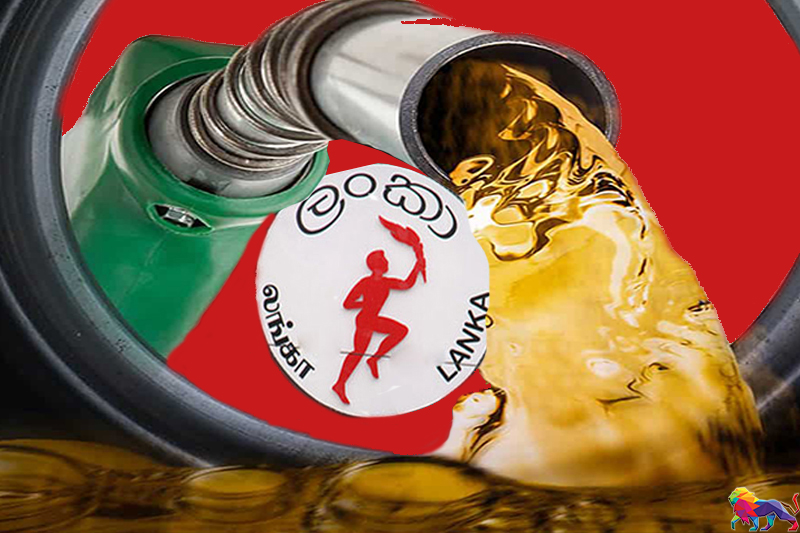
Sri Lanka Podujana Peramuna (SLPP) says that the Minister of Energy must step down from his post over the increase in fuel prices.

Issuing a statement the General Secretary of SLPP MP Sagara Kariyawasam says that the subject minister must take complete responsibility for pushing the people into more difficulties with a fuel price hike amidst the COVID-19 pandemic.

The statement reads that the government has been put into a difficult position of increasing the fuel prices by the subject minister due to his failure to make the necessary decisions by realizing that such a situation could arise.

Kariyawasam says that they have a suspicion as to whether this situation was created on purpose to create displeasure among the public regarding the leaders who are committed to the development of the country amidst various challenges.

Thereby, the subject minister is directly responsible for this situation and should take responsibility and resign from his post, SLPP said.

China-Sri Lanka Friendship Hospital inaugurated in Polonnaruwa

President Gotabaya Rajapaksa on Friday inaugurated the China-Sri Lanka Friendship Hospital in Polonnaruwa, built with a Chinese grant of $ 60 million.

The hospital, located in Sri Lanka’s North Central Province, will specialise in treating kidney ailments, a widely prevalent and recurring concern in the region, especially among farmers.

For years now, residents of this agriculture-intensive area, have been frequently diagnosed with a kidney disorder that the country’s medical experts have identified as Chronic Kidney Disease of Unknown Etiology (CKDu), a condition for which causal factors remain unknown.

Following a request from former President Maithripala Sirisena during his time in office — he is from and currently represents Polonnaruwa in Parliament — the Chinese government provided the grant. The facility was built within 30 months, a press release from the President’s office said.

The hospital, said to be one of the largest in South Asia for nephrology care, with a capacity of 200 beds, follows China’s earlier grant projects in Sri Lanka, also built as large public spaces, such as the well-known Bandaranaike Memorial International Conference Hall in Colombo, that Beijing gifted in the 1970s, and the Nelum Pokuna Mahinda Rajapaksa Threate, that China funded during former President Mahinda Rajapaksa’s time in office.

In addition to sanctioning loans and a currency swap facility worth more than $ 2 billion since the pandemic struck last year, China also announced $90 million grant to Sri Lanka in October last year, following a request from President Gotabaya Rajapaksa, when a high-powered Chinese delegation visited the island nation.

Meanwhile, the Jaffna Cultural Centre, built with Indian assistance of $ 11.5 million, whose construction was completed a year ago, awaits inauguration as authorities “iron out” issues over the administrative set up to the run the Centre. Prime Minister Narendra Modi, speaking in February at an election rally in Chennai, ahead of the Tamil Nadu Assembly polls, said he hoped to open the Centre in Jaffna “soon”. India’s grant assistance to Sri Lanka totals over $500 million.

Posted in Uncategorized

Police could misuse “fake news” allegations to stifle free speech: Sri Lanka Bar Association

The Bar Association of Sri Lanka (BASL) has expressed deep concern that a recently announced decision to arrest people who share “fake news” on social media could be misused by police to stifle free speech.

“Whilst the BASL has no objection to enforcing laws relating to hate speech and incitement to voilence, it is important to ensure that authorities do not use such laws to stifle genuine expression of dissent and criticism,” the BASL said in a statement on June 11.

The BASL is apprehensive of the executive including the police being allowed to decide on what is or is not fake news and on the basis of their subjective decisions to cause arrests and detention of persons, it said.

Related: Poorly worded legal provisions can be construed to cover “fake news”: Sri Lanka lawyer

“The BASL is deeply concerned that the provisions of the laws mentioned in the circular could be misused by police officers in order to stifle the freedom of speech and expression which is a fundamental right enshrined in the constitution. At a time when the country remains under travel restrictions as a result of the COVID-19 pandemic, it is essential that freedom of speech and expression of the people and their right to dissent and disagree are protected,” it said.

In its statement, the BASL cited judgements of the Supreme Court in this regard, where Justice Buwaneka Aluwihare held on February 17, 2021 that: “The judgements of the Supreme Court constitute a body of jurisprudence that has evolved over the years, and the Supreme Court has recognised that the right to comment on public issues and criticise public officials and public institutions is essential for the exercise of civil and political freedoms so valued by democratic society.”

The court quoted with approval the following passages found in several decisions of Sri Lankan courts, the BASL said:

“The right to support or to criticise governments and political parties, policies and programmes is fundamental to the democratic way of life; …and democracy requires not merely that dissent be tolerated, but that it be encouraged”
“Criticism of the Government, and of political parties and policies, is per se, a permissible exercise of the freedom of speech and expression under Article14 (1) (a).”
Given that the very prospect of being arrested for expressing harsh criticism or dissent can itself have a chilling effect that would erode the citizens’ freedom to openly share critical views or freely comment on important matters as members/stakeholders of society, the Bar said, utmost care and restraint should be exercised in causing the arrest of any person for an offence pertaining to alleged ‘fake news’ prior to a full investigation of any complaint.

“It would be consistent with due respect for democratic values and freedoms, for any decision to arrest without warrant to be resorted to keeping in mind the spirit of preserving fundamental freedoms and the need to avoid suppressing or oppressing the right to free expression of views. In our view this would be better achieved, if any decision to arrest or charge any person is taken only after careful due consideration and professional assessment that there is a real and reasonable prospect of an alleged offence in law being committed, with advice from the Attorney General as may be warranted in the relevant context.”

“Needless to say, enforcement of the law must be fair, even-handed and non-selective in its application, the importance of which we urge you to consistently uphold,” it added.

Posted in Uncategorized

Special gazette issued to regulate stocks of four essential items

A Gazette Extraordinary has been issued directing individuals who stock corn, sugar, powdered milk and paddy/rice to register themselves with the Consumer Affairs Authority (CAA), in a bid to prevent them from concealing stocks.

Accordingly, importers, producers, mill owners, collectors, store owners, distributors or wholesale sellers will not be allowed to keep stocks of aforementioned essential food items in their possession without being registered with the CAA.

The relevant individuals have been instructed to register themselves within a period of 7 days.

The gazette notification issued by the CAA Chairman Major General (Rtd.) Shantha Dissanayake on Friday (June 11) noted that that importers, producers, mill owners, collectors, store owners, distributors or wholesale sellers are required to provide information on the product stocks in their possession to the CAA when asked.

These directives will come into effect from June 11, and they are not applied to farmers who harvest rice and corn from their own cultivation, the gazette notification further stated.

State Minister Lasantha Alagiyawanna stated that all stockists and traders of paddy/rice, sugar, powdered milk and corn can register and update their stock details through the official website of the Consumer Affairs Authority website: www.caa.gov.lk

Posted in Uncategorized

Remembering 1956 – Sri Lanka’s first Anti-Tamil pogrom

This week marks 65 years since Sri Lanka’s first anti-Tamil pogroms, when government backed Sinhala mobs murdered more than 150 Tamils across the island – the first of many massacres that were to take place in the decades to come.

Violence first flared as Tamil politicians protested peacefully outside the Sri Lankan parliament in Colombo, condemning the Sri Lankan Freedom Party’s (SLFP) efforts to pass the Sinhala Only Act on June 5, 1956.

As hundreds of Tamils, led by the Federal Party’s SJV Chelvanayakam, staged a satyagraha – peaceful sit-in protest – on Galle Face Green, they were set upon by a Sinhala mob.

“What happened?” recalled Somasundaram Nadesan, a leading Tamil lawyer and member of the Senate of Ceylon, two years later.

“Hooligans, in the very precincts of Parliament House, under the very nose of the Prime Minister of this country, set upon those innocent men seated there, bit their ears and beat them up mercilessly. Not one shot was fired while all this lawlessness to persons were let loose… Why? Orders had been given: ‘Do not shoot, just look on.’

Thereafter… every Tamil man was set upon and robbed. He was beaten up. His fountain pen and wristlet were snatched away. He was thrashed mercilessly, humiliated and sent home. The police were looking on while all this was happening before their very eyes.

Shops were looted… but the police did nothing… specific instructions had been given to the police that they should not shoot, should not arrest, should not deal with the lawlessness and disorder that was let loose… rowdies and hooligans were given a free hand to assault, humiliate and rob any innocent Tamil walking the roads on that day.

That was the attitude taken up by a Cabinet composed of Sinhalese Ministers…These (hooligans) were instigated by some members of Parliament… they were heading the gang of hooligans. The Prime Minister made a remarkably wonderful speech on that occasion. He came, he smiled and he told the crowd, “Don’t do that. Rain is coming down. They will be cooled in no time.” That was the type of appeal he made. If Sinhalese men were being thrashed by Tamils and their ears bitten, I wonder whether the Prime Minister would have adopted the same attitude.”

“Some Tamil Satyagrahis were thrown into Beira Lake, near the Parliament House,” wrote Satchi Ponnambalam, another leading Tamil lawyer and judge, in The National Question and the Tamil Liberation Struggle.

“From that moment, every Tamil seen on the roads of Colombo was attacked. Tamil office employees going home from work in public transport were caught and manhandled. Tamils lead to stay indoors for personal safety, for days on end. Sinhalese hooligans took charge of the situation and went on a rampage of arson and looting of Tamil shops and homes. The rioting and violence were instigated by the government and actively supported by the Sinhalese organisations and Bhikkhus to frighten the Tamils into accepting the “Sinhala only” act.”

“The satyahgrahis were beaten and pelted with stones; at least one Tamil was thrown into the nearby Biera Lake, and another had an ear “bitten and torn off”,” wrote Neil DeVotta in Blowback: Linguistic Nationalism, Institutional Decay, and Ethnic Conflict in Sri Lanka.

“Some Tamils were hospitalized, and among those wounded were members of parliament. The police, in the main, stood by as passive observers, having been given explicit orders not to intervene unless they themselves were attacked.”

Amongst those that led the attack on the peaceful Tamil protestors was then a junior Sri Lankan minister K. M. P. Rajaratne, added DeVotta. Following a career in Sri Lankan politics he died in 2011, having never been held accountable for the attack.

The attack on the Tamils on Galle Face Green and subsequent violence in Colombo which saw further attacks and looting on Tamils throughout the city, sparked a wave of state-backed Sinhala mob attacks across the island.

“While the Sinhala-only bill continued to be debated over the next few days, the riots spread to many parts of the country, and the parliamentary debate was interrupted on a number of occasions when Tamil members read out telegrams from various outposts in the Eastern Province, where Tamils were being assaulted and murdered,” DeVotta continues.

A demonstration in Batticaloa, attended by 10,000 Tamils was fired upon by the Sri Lankan police. At least two Tamils were killed in the shooting, with then Sri Lankan president S. W. R. D. Bandaranaike subsequently banning another large Federal Party march planned in the city.

Violence also flared in Trincomalee, but “the worst violence occurred in Gal Oya, an area of heavily Tamil Eastern Province which had been colonized by Sinhalese settlers,” wrote James Manor in The Expedient Utopian: Bandaranaike and Ceylon. Tamils in the region were murdered by Sinhala mobs on the night of 11 June, 1956.

“Sinhalese toughs – inspired as always by fantastic rumours – seized government cars, bulldozers and high explosives and for a few days terrorized the Tamil minority in the colony. Scores of Tamils, certainly well over on hundred, were massacred and hundreds more were driven into hiding.”

“The press and the government both severely understated the death toll and the extent of the campaign of terror.”

“The worst violence ensued in Gal Oya, a Sinhalese colonization settlement in the Eastern Province, where transplanted Sinhalese hoodlums took possession of government vehicles and explosives and terrorized and killed dozens of Tamils,” added DeVotta. “The government underreported the violence in Gal Oya, which perhaps helped prevent further violence. However, word soon got out regarding what had actually transpired in Gal Oya and caused the thunderstricken Tamils to seriously question what their future was going to be in a Sinhala-only Ceylon”

“In Batticaloa and the Gal Oya valley there was such violence that between 20 and 200 persons were killed, depending on which side was doing the tallying,” wrote former US Ambassador to Sri Lanka, William Howard Wriggins in Ceylon: Dilemmas Of A New Nation.

Stanley Jeyaraja Tambiah, a celebrated Tamil anthropologist, was a twenty-seven-year-old social scientist in Gal Oya when the violence took place and recorded events he had pieced together in a memorandum.

“Violence broke out on a scale hitherto unknown,” he wrote in Buddhism Betrayed?: Religion, Politics, and Violence in Sri Lanka. He went on to note that it “set the precedent for even more destructive violence two years later.”

Two years later in 1958, Sinhala mobs once more began to attack, rape and murder Tamils across the island, in what was to become another in a series of deadly anti-Tamil pogroms.

Sri Lanka’s lobby to disrupt war crimes evidence collection

Several media reports from Sri Lanka have expressed happiness on the fund shortage in setting up a separate secretariat by United Nations Human Rights Council to probe the war crimes under the Resolution passed against Sri Lanka at Geneva.

The UN Human Rights Council on March 23 adopted a resolution promoting reconciliation, accountability and human rights in Sri Lanka. The Resolution also mandates UNHRC to collect, consolidate and preserve evidence for future prosecutions and make recommendations to the international community on steps they can make to deliver on justice and accountability, for which the budget of $2.8 million has allocated. But, now, the Sri Lankan medias’ claim that the UNHRC’s evidence collection plan has facing fund shortage.

“Sri Lanka too can be happy about a negative response from donors at the world body to the United Nations Human Rights Council’s (UNHRC’s) move to set up a separate secretariat to enforce matters relating to the Resolution it passed on Sri Lanka in March this year. The inability to raise sufficient funds is a major setback to UNHRC plans to implement the Resolution.

The moment UN Human Rights Commission chief Michelle Bachelet had sought to set up a 13-member Secretariat with a budget cost of US$ 2,856,300 for the current year to give effect to the implementation of the Secretariat on Sri Lanka as required in the UN Resolution, Sri Lanka launched a major campaign in New York to lobby against the fund,” said in a report published on Daily News.

The news report furthers claimed that the campaign spearheaded by Sri Lankan Foreign Minister Dinesh Gunawardena, Sri Lankan delegates urged the UN members not to provide funds for unilateral plans of the UNHRC to implement a Resolution from which Sri Lanka had already withdrawn.

“We have learnt that the UN Headquarters has cut down by more than 50 per cent of the amount the Council sought,” Foreign Minister Dinesh Gunawardena told The Sunday Times. The Sri Lankan minister further says that the only option for the UNHRC is to seek the balance from the Western Co-Sponsors.

Posted in Uncategorized

Islandwide travel restriction extended till June 21

The ongoing islandwide travel restriction has been extended til June 21 at 4 am, under the instructions of President Gotabaya Rajapaksa, Army Commander General Shavendra Silva said.

Silva told Daily Mirror that following a discussion with the COVID-19 task force, President Gotabaya Rajapaksa decided to extend the ongoing travel restriction, but under certain conditions.

Under the new conditions, all factories including apparel factories, major construction projects, essential services, economic centers, who will be notified what are the days they can open per week, those involved in agricultural projects, organic fertilizer manufacturers and weekly fairs (sathi pola) will be allowed to operate.