20A weakened domestic mechanisms, says Civil Society Platform

The Civil Society Platform (CSP) says President Gotabaya Rajapaksa’s call for a dialogue between his government and the expatriate Tamils is not realistic. President Rajapaksa made the declaration in talks with UN Secretary General Antonio Guterres. CSP says an environment conducive for such an initiative is not available at the moment.

Dr. Ms. Nimalka Fernando was a member of the Office on the Missing Persons (OMP) from 2018-2021 and Brito Fernando, Chairperson of Families of the Disappeared in Sri Lanka issued the following statement in response to The Island query:

“When Sri Lanka co-sponsored the UNHRC Resolution 30/1 in Oct 1, 2015, the then Foreign Minister the late Mangala Samaraweera, informed the Human Rights Council that the Government would initiate a domestic mechanism after consulting the victims and survivors.

The Government established a Secretariat to Coordinate Reconciliation Mechanisms (SCRM) to coordinate the domestic mechanisms. After a lengthy public consultation process,conducted by Consultation Task Force on Reconciliation Mechanisms, chaired by the late Ms. Manouri Muttetuwegama, a comprehensive report was published.

Based on the recommendations of the Task Force, domestic or internal mechanisms were established. Office on Missing Persons (OMP) was established for truth seeking, while Office for Reparations (OR) was created to address the issue of Reparations. The independence of these institutions had been guaranteed as appointments to these mechanisms were done by the President, based on the recommendations of the Constitutional Council created by the 19th Amendment to the Constitution.

Those were the steps taken to establish credible domestic mechanisms.

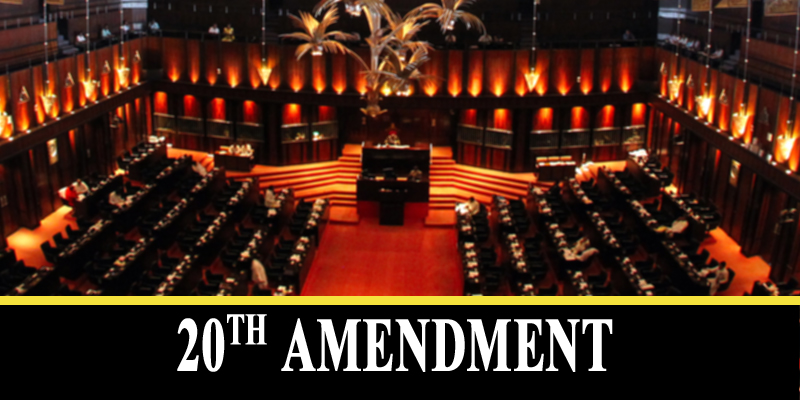
The present government distanced itself from the UNHRC Resolution 30/1 in March 2020. It dissolved the Secretariat to Coordinate Reconciliation Mechanisms. The government continues to maintain two domestic mechanisms created under the UNHRC resolution 30/1. However, the enactment of the 20th Amendment to the Constitution has impacted on the very nature of the independence of the two existing domestic mechanisms with the Constitutional Council being replaced by the Parliamentary Council.

The appointment of members to these mechanisms are now vested in the President in his discretion. The Parliamentary Council can only direct observations related to the nominees given by the President. Thus the independence of the two mechanisms are seriously compromised and the confidence of victims and survivors, which is of paramount importance for the success of any mechanism, has eroded.

According to the statement by the PMD, the President has said that the internal issues of Sri Lanka should be resolved through an internal mechanism of the country and he has further said that the Tamil Diaspora would be invited for discussions in this regard. The previous government has engaged with the Tamil diaspora groups as stakeholders of the domestic reconciliation process. However, in February 2021, Secretary to the Ministry of Defence has proscribed seven prominent organisations of Tamil diaspora including the Global Tamil Forum, British Tamil Forum and Canadian Tamil Congress, and hundreds of individuals, by listing them under the United Nations Act No. 45 of 1968.

Some of the individuals and organisations have been actively engaged in building the domestic reconciliation mechanisms in Sri Lanka during the previous government. While appreciating the President for extending an invitation for dialogue to the Tamil diaspora organisations, we note that continuation of the proscription of organizations and individuals is counterproductive to achieve this goal. Wouldn’t it be necessary to take steps to delisting these individuals and organisations in order to facilitate the genuine engagements and dialogue?

Civil Society Platform has noted the President’s assurance of continued engagement with civil society organisations to bring about development and reconciliation in the country. However, this policy has to be reflected at the grass-root level. We have credible reports where civil society organisations working at community level with victims and survivors are subjected to surveillance and harassment. It is important that the Government and the civil society agree on issues of common concern in order to have a meaningful dialogue with an aim to achieve deliverable targets in achieving reconciliation and development.

We note with concern the statement of the President referring to issuing death certificates to the families of the missing and the disappeared. Prior to providing them with the death certificates it is important that circumstances related to the disappearances be investigated based on the information provided by families. Further information is also available in the previously appointed Presidential Commissions of Inquiry including the Lessons Learnt and Reconciliation Commission (LLRC) and Paranagama Commission. It is the responsibility of the State to account for each individual who has disappeared. The basic principle of accountability is linked to ascertaining the truth related to the disappearance. The issuance of death certificates is a complex issue. Even families in the south whose loved ones disappeared in the 1989 era are contesting the death certificates they have received. It is a grieving community that requires an honest and credible process. If we are honest about what happened, then healing becomes easier. If we hide information the scars will remain forever, festering.

The government has failed to even facilitate the granting of the interim-relief of Rs 6000/- approved in October 2019 by the previous government as recommended by the interim recommendations of the OMP. No doubt the government is presently developing a compensation package. But the families need the interim relief very badly. They too have been affected by the Covid-19 pandemic. Requests made to the authorities to include the families of the disappeared too under the Covid-19 relief package have gone unanswered. Letters sent to the Ministry of Justice, which is the line ministry responsible for the payment of Rs 6000/- remains unanswered.

We believe that the Civil Society Organisations and NGOs can be partners in development and reconciliation. Historically, we have been engaged with every government and we are willing to engage with this government too. But, we need to do so, maintaining our independence and remaining as a critical mass affirming the principles of Freedom of Expression, Freedom of Assembly and Freedom of Association.”
Prisoners’ rights group writes to UN chief

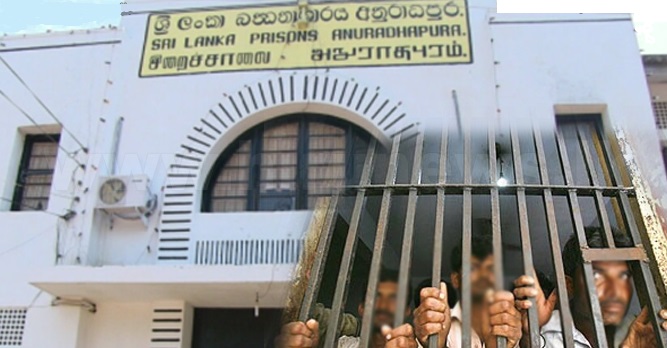
With the United Nations (UN) General Assembly (GA) ongoing in New York, the Committee for Protecting the Rights of Prisoners (CPRP) yesterday (22) has written to the UN Secretary General Antonio Guterres urging him to pay attention to the needs of prisoners in Sri Lanka.

“A total of 78%-82% of those admitted to prisons between 2015-2019 were suspects who were remand prisoners. Some are remanded due to their inability to make deposits for bail while others are remanded due to the Police and Magistrates choosing remanding as the norm and bail as the exception. A total of 58.9% of the daily average number of prisoners in 2019 were remand prisoners, with the figures for the same during 2011-2018 being between 45-56%. Delays in waiting for and completing trials were another reason for overcrowded prisons in Sri Lanka. As of 31 December 2019, 1,809 (12.3%) were awaiting trial for more than a year and 680 (4.6%) were awaiting trial for more than two years,” the CPRP claimed in a letter to Guterres and UN General Assembly (GA) President Abdulla Shahid.

The CPRP has noted that as President Gotabaya Rajapaksa addressed the 76th UNGA session yesterday, some prisoners at the Welikada Prison complex were engaged in a protest, demanding that the four years review of prisoners behaviour and conduct, as per the provisions of the Prisons Ordinance, be carried out.

Accordingly, the CPRP has brought attention to the food and nutrition related issues of prisoners, prolonged detention under the Prevention of Terrorism (Temporary Provisions) Act, No. 48 of 1979 as amended (PTA), the overcrowding inside prisons, and the importance of Prisons Department authorities exercising restraint in their interactions with prisoners.

In particular, the organization has highlighted the recent actions of the former Prisons Management and Prisoners Rehabilitation State Minister Lohan Ratwatte who had broken into the Anuradhapura and Welikada Prisons complexes during the last two weeks and allegedly threatened political prisoners held under the PTA at the Anuradhapura Prison, using his firearm.

“Last year (2020), 16 prisoners were reported to have been killed in four prisons, in five incidents. In one incident, 11 prisoners were killed. Around 12 suicides have been reported last year in prisons, with most appearing to be suspects who are alleged to have used and/or traded drugs and/or illicit liquor and have been denied professional support and care,” claimed the letter.

Although Sri Lankan prisons have a capacity of housing only 11,000 prisoners, the CPRP said that sometimes they have held up to 32,000 prisoners, where some prisoners have been forced to sleep on stairways as a result of overcrowding.

The organization added that in 2019, the average cost of food for a prisoner per day was Rs. 151 (approximately $ 0.75) which is insufficient to provide daily nutritious meals for a person.

“As a result, many remand prisoners depended on food brought by visiting family members and friends (remand prisoners are allowed visitors, six days of the week). This had reduced drastically due to the suspension of prison visits citing Covid-19.”

Commenting on the PTA, the CPRP recorded the cases of a male PTA detainee who was released after 13 years in prison this year, citing a lack of evidence, and a female PTA detainee who was found not guilty after 15 years in prison.

“We would also like to stress the importance of prisoner releases (including Presidential pardons) being based on transparent criteria and procedures that are in line with Constitutional provisions and that priority be given to the most vulnerable. Prisoners over 70 years of age, those with serious illnesses, those who have received minor punishments and those who have been unable to pay small fines, should be prioritised over politicians, soldiers and monks, which pardons are based on political considerations,” said the CPRP.

President Gotabaya Rajapaksa addressed the UNGA, in New York, United States, yesterday (22). He met Guterres on 20 September.

SLFP leadership responsible for Government sins: CBK

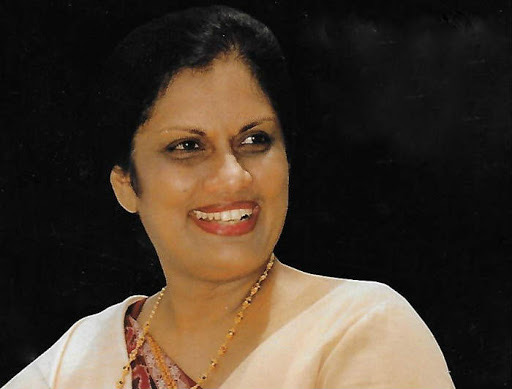
Former President and incumbent Patron of the Sri Lanka Freedom Party (SLFP) Chandrika Bandaranaike Kumaratunga has stated that the present SLFP Leaders are also responsible for all the wrongdoings of the present Sri Lanka Podujana Peramuna (SLPP) led coalition Government of which they are a part of, and therefore, they can never evade responsibility for such.

In a media statement yesterday (22), she said that if the current SLFP Leaders have a genuine desire to build the country and the party, they should resign and hand over the party to a group of principled young persons.

She issued the said media statement in response to reports that current SLFP Leaders were preparing to invite her back to join the party. Kumaratunga responded that she had never left the party. “I have never left the party. I am still the patron of the SLFP, but I have not been invited to any discussion or meeting of the party since June 2018.”

She was removed from the post of the SLFP Electoral Organiser in Attanagalla, when she, along with several others, had objected to the SLFP preparing to form an alliance with the SLPP in 2020. Kumaratunga said that the present SLFP Leaders themselves have now understood that what she said at that time was true. “We emphasised that an alliance with the SLPP would destroy the SLFP. What we said three years ago has come true today. Even the SLFP Leaders accept it today. The SLFP then joined the SLPP since they were greedy for power. They do not love the party nor do they have a vision,” she added.

Explaining further about the reports that the SLFP Leaders are to invite her to join the party’s affairs, Kumaratunga said: “If there is a real need for them to build the country and the party, the present party leaders should resign from their posts and hand over the party to a group of principled youth. These ambitious, short-sighted leaders can never rebuild the SLFP or the country. I am not prepared to waste my time dealing with such people.”

Kumaratunga, the third Chairperson of the SLFP, in a recent interview with The Morning said that the present SLFP Leaders should all resign now. “Instead, young, honest, and educated people who have their own income should take over the party. They don’t have to come from rich and aristocratic families. However, they should have their own income, either by doing some business or employment. They should not think that politics is the best way of earning money. We need such people to take over not only the SLFP, but also the country,” she said in the interview.

The SLFP is chaired by former President and incumbent Parliamentarian Maithripala Sirisena.

Posted in Uncategorized

Electoral system should be fair and transparent, political parties tell Select Committee

Political parties presenting their recommendations before the Parliamentary Select Committee (PSC) on Election law reforms told the PSC that the electoral system should be fair and transparent.

The Select Committee of Parliament to Identify Appropriate Reforms of the Election Laws and the Electoral System and to Recommend Necessary Amendments met yesterday (21) under the chairmanship of Leader of the House, Minister Dinesh Gunawardena.

Addressing the PSC, General Secretary of the United National Freedom Front Maithri Gunaratne said the Electoral Roll should be further expanded to include information about the voter’s occupation, permanent residence, source of income, telephone number, marital status, vehicles, housing, etc..

Mr. Gunaratne also said that local government bodies need the representation of all communities. He added that the reason for many of the problems in the North was due to the lack of proper representation.

He said the electoral system should be fair and transparent as well as free from corruption.

He said that it was appropriate to establish a divisional electoral system and that it should be used for local government, provincial council and parliamentary elections.

Mano Ganesan, Member of Parliament who testified on behalf of the Tamil Progressive Alliance, said that the proportional representation system is suitable for the country.

He emphasized in the committee that fair representation of the dispersed ethnic groups is needed and that it can only be achieved through proportional representation.

He added that under the current system of proportional representation, every vote cast by a voter has a valid value.

Speaking at the Select Committee on behalf of the Illankai Tamil Arasu Kachchi (ITAK), MP M. A. Sumanthiran said that the Election Commission should be further strengthened and its independence ensured.

He emphasized that the current local government election system was weak and needed to be amended. He further stated that the electoral system should be strengthened to protect the rights of minorities.

The Chairman also requested the Parliamentary Select Committee to inform the Attorney General’s Department of its views on the steps to be taken to hold the Provincial Council Elections expeditiously.

Ministers Nimal Siripala de Silva, Jeevan Thondaman, Members of Parliament Anura Kumara Dissanayaka, Ranjith Madduma Bandara, Kabir Hashim, Madhura Withanage and Sagara Kariyawasam were present at this meeting held.

The next meeting of the Parliamentary Select Committee is scheduled to be held on the 22nd, 29th and 30th of September, said the Secretary to the Select Committee, Deputy Secretary General & Chief of Staff of Parliament Ms. Kushani Rohanadheera.

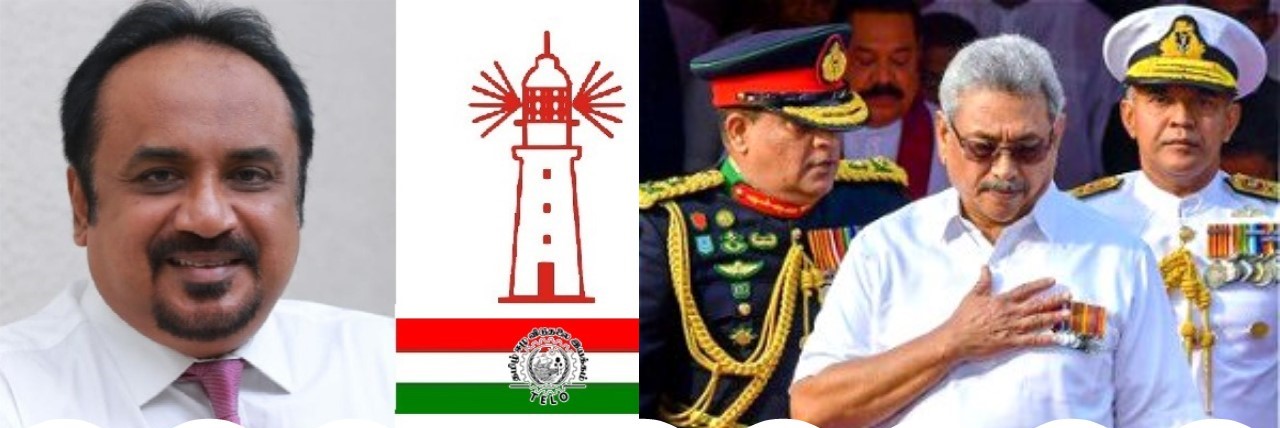
President shut the door tight and invites for partying – Surenthiran Spokesperson TELO -TNA

It’s surprising to note while banning diaspora organizations and inviting them to come forward to invest in the country.

Sri Lankan President Gotabhaya Rajapaksa, who is attending the United Nations General Assembly in New York, has made amusing statement.

The fact that he welcomes the diaspora Tamil community to invest in Sri Lanka is like locking the door inside and inviting guests to dine. It is amusing to note that the president made statements to the UN Secretary-General that he is inviting diaspora to come forward to invest in Sri Lanka while banning many of the organisations and creating a climate of fear. President has failed to realize that congenial political and administrative environment is essential for investors to come to a country. Investors usually decide on investments by considering these factors first and foremost.

Militarization continues in the state administration. Political problems and human rights issues remain unresolved by the government. The whole country has realized that the internal mechanism cannot bring just solutions for any one belonging to any race, in the country.

To crown it all, political prisoners have been intimidated at gunpoint by the state minister in charge of prisons. Not only has the internal mechanism failed to take legal action and ensure justice, it has also shown that the government is protecting such elements.

In this context, the comments made by the President of Sri Lanka to the UN Secretary General are amusing.

If the government fails to act in good faith with the international community to ensure a lasting political solution, improving human rights issues, justice system, reconciliation and accountability, it will only lead to plunge the entire country into the abyss.

Surenthiran
Official Spokesperson TELO
Tamil National Alliance

Posted in Uncategorized

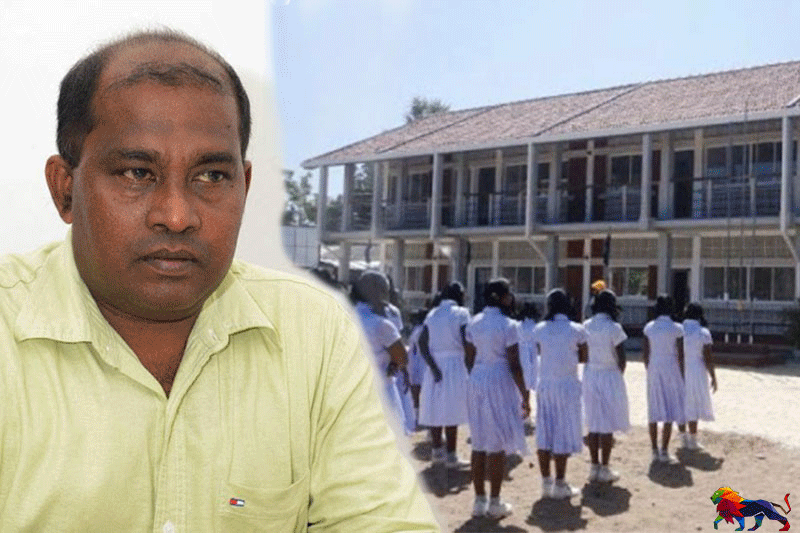
Several teacher trade union reps summoned to the CID

Several representatives of the teachers’ and principals’ trade unions were summoned before the Criminal Investigation Department this afternoon to make statements regarding the investigation into the alleged incident of teachers engaged in online teaching being intimidated.

Representatives of several trade unions, including the Sri Lanka National Principal Association, appeared before the CID today.

Speaking to media subseqeuntly, the President of the National Principal Association Mohan Weerasinghe said they were summoned by the Computer Crimes Investigation Department to appear before the CID on Friday, adding however they changed the dates upon request.

Weerasinghe said after three hours, they met with the Director and were informed of the complaint.

He said they never threatened any colleague adding they only requested the support of teachers for the ongoing trade union struggle.

Posted in Uncategorized

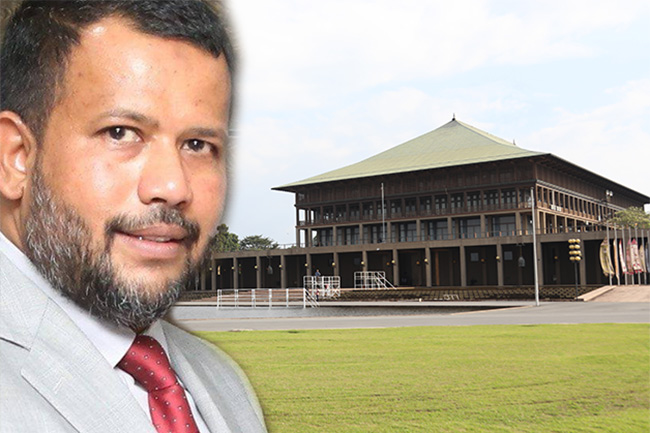
Rishad returned back to remand custody

Ex-Minister Rishad Bathiudeen was returned to remand custody until the 05th of October, as per an order issued by Fort Magistrate Priyantha Liyanage on Tuesday (21).

Detectives produced Ex-Minister Bathiudeen to the court on the charges of giving priority to a firm owned by Ibrahim Ahamed, one of the suicide bombers responsible for the 2019 April 21st Terror Attacks, by providing scrap metal and copper owned by the Ministry of Industries, and using the funds generated through that scheme to fund terrorism.

The Criminal Investigations Department was ordered by the Magistrate to have representation from the Attorney General’s Department to make submissions on the bail application made on behalf of the suspect at the previous hearing.

Posted in Uncategorized

Sri Lanka opposition JVP raise concerns over organic fertilizer imports from China

Sri Lanka’s plans to import 63 million US dollars of organic fertilizer from a China based company after a ban on chemical fertilizer could be risky if they contain harmful micro-organisms and if they are made from municipal waste, a legislator warned.

Sri Lanka has banned the import of agro-chemicals as money printing triggered forex shortages and agrochemicals made people sick.

Opposition Janatha Vimukthi Peramuna said the government at first said they would produce organic fertilizer in Sri Lanka, and that farmers would be compensated for crop losses from money saved from a chemical fertilizer subsidy.

“But what happened was, after stopping the local production of fertilizers, a tender was placed to buy fertilizers with 17 percent nitrogen,” Vijitha Herath told parliament.

“The suppliers said they can’t find fertilizers with 17 percent nitrogen. Therefore, this cannot be done. All importers withdrew except one.

“This one does not intend to import the requested fertilizers, but fertilizers that only have 5-8 percent nitrogen.”

He said, a company called Qingdao Seawin Biotech Group, a China based company, had now got a 63 million US dollar contract to supply organic fertilizer.

Herath questioned what the organic fertilizer was made of warning that municipal waste fertilizer could contain harmful residues.

He said a sample was brought and supposedly tested and found to contain Erwinia bacteria through the government had said organic fertilizer was supposed to be sanitized or sterilized.

Some species of Erwinia bacteria are plant pathogens which destroy crops.

Herath said now claims were made that the sample was wrong.

In May 2021 Hearth fired what appeared to be a conspiracy theory that authorities had banned chemical fertilizer so that interested parties could import organic fertilizer from China which could be harmful.

Environmentalists then warned that organic fertilizer from animal or plant waste could contain harmful pathogens.

Sri Lanka has subsidized chemical fertilizer and promoted their excessive use since it became an election issue in 2004.

Posted in Uncategorized

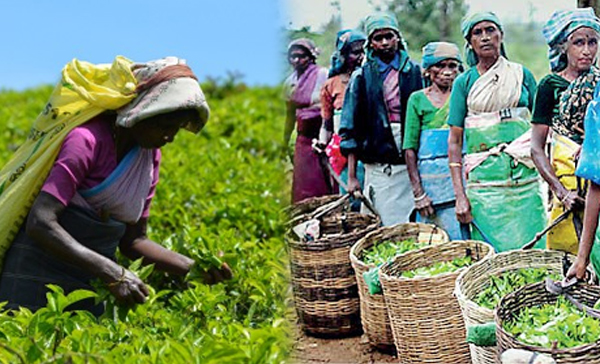
Fertilizer shortage will deprive Sri Lanka of critical forex earnings – Planters’ Association

Due to the shortage of suitable fertilizer, Sri Lanka is unlikely to be able to achieve its export earnings target for 2021, according to the Planters’ Association of Ceylon (PA), which also reiterated calls for a sustainable solution to the worsening crisis.

Earlier this year, the Export Development Board (EDB) set a target of USD 1.47 billion in export earnings from tea for 2021, but the industry expects there to be a gradually widening shortfall of around 30-40% moving into the end of 2021 and beyond, primarily due to the decline in harvest as a result of fertilizer unavailability, the PA, which represents the Regional Plantation Companies (RPCs), points out.

In total, in the first seven months of 2021 (up to end July), Sri Lanka has recorded export earnings of USD 766 million from tea, an increase of 9% compared with the same period of 2020. However, this increase was off a low base, influenced greatly by improved weather conditions in 2021, as compared with a severe drought which impaired production 2020. However, when considering a more valid comparison with the corresponding period of 2019, the 2021 performance shows a 4% reduction.

In addition to the target for 2021, Ceylon Tea will also be unable to meet its target of USD 1.8 billion in export earnings by 2025, unless a solution is provided, the Planters’ Association says.

“It is unfortunate that that the export earnings generated by the tea industry, which has sustained Sri Lanka for more than a century, is unable to contribute to its fullest potential at a time the country is in dire need of it,” PA Media Spokesperson, Dr. Roshan Rajadurai said. “This is an unnecessary opportunity cost for both the industry and the country. Sadly, based on the analysis of credible experts, the worst is yet to come. Long-term reduction of yield from tea plantations is inevitable, unless a solution is provided immediately.”

The Association has already warned that in the absence of suitable fertilizer to replenish the nutrients in a timely manner, tea production will decrease by 25% within six months and as much as 40% to 50% thereafter, together with the quality of the end product. With tea being a perennial (long-term) crop, the negative effects of insufficient nutrition will be felt throughout the economic lifespan of the plant, which tends to be more than 25 years.

Even prior to the overall ban of fertilizer and agro-chemicals, the government’s ban of the primary weedicide used by the tea industry resulted in Ceylon Tea losing the highly lucrative Japanese market. Changes in fertilizer and agro-chemicals also alter the properties of the final product that tea consumers associate with Ceylon Tea – including a strong aroma and taste.

Sri Lankan tea plantations managed by Regional Planation Companies (RPCs) have all necessary safeguards in place already to ensure the proper application of fertilizer and agro-chemicals. This is evidenced by the industry’s capability to meet the highly stringent standards of buyer countries, including European countries, in terms of maximum residue limit (MRL), which refers to the highest level of a chemical residue legally allowed in food and beverages. The industry already adheres to ‘integrated agriculture’ practices, hence relying on natural methods as well beyond agro-chemicals, to repel pests, avoid diseases and stop the growth of weeds.

In addition, plantations only make use of inputs approved by the Tea Research Institute (TRI) of Sri Lanka, which follows a highly rigorous testing and approval process in allowing use of agro-chemicals for tea cultivation. Similarly, RPCs strictly adhere to the parameters recommended by the TRI for the application of fertiliser. Sri Lanka is also by far the most environmentally and otherwise certified tea industry in the world, with a plethora of international certifications.

The industry has pointed out that limiting fertilizer to only organic inputs is infeasible for commercial-scale tea production, given especially the high cost involved. This is because a significantly greater amount of organic fertilizer needs to be applied when compared with chemical fertilizer and the application process also requires vastly greater use of labour – which is both highly costly and not available sufficiently in Sri Lanka. Organic tea is a small and emerging niche within the industry and would not provide sufficient scale to sustain the sector.

Daily COVID-19 cases count hits 1,321 today

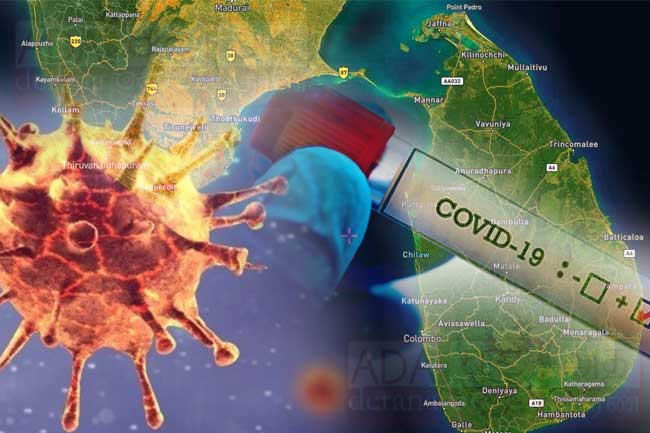
The Epidemiology Unit of the Health Ministry reported that 403 more people were tested positive for COVID-19 in Sri Lanka today (Sep. 21), moving the daily total of new cases to 1,321.

According to the Government Information Department, all new cases were associated with the New Year Cluster.

This brings the tally of coronavirus infections confirmed in the country to 507,330.

Official data showed that more than 60,900 active cases are currently under medical care at hospitals, treatment centres and homes.

Total recoveries from the virus infection reached 434,140 earlier today as 1,047 more patients were discharged from medical care upon returning to health.

Meanwhile, Sri Lanka registered 66 new COVID-related fatalities confirmed by the Director-General of Health Services on Sep. 20 The new development pushed the official death toll from the virus outbreak in Sri Lanka to 12,284.