‘By no stretch of imagination could you call this country a Sinhala or Sinhala Buddhist Country’ – Wigneswaran

Q Recently in Parliament the words “Tamil Homeland” and “Tamil National Leader Prabhakaran” were used and objected to by the Government Members who wanted those words to be expunged from the Hansard. The Chairman of that time Velukumar MP had promised to bring the matter to the notice of the Speaker. He did not make any decision on the objections raised. Do you not think this Country is a Sinhala Country and that a Terrorist Leader who killed so many innocents must not have his name mentioned as a National Hero?

Response: –

No. I do not think so.
Firstly, this Country is not a Sinhala Country. It is a Sinhala Majority Country. But in the North and East the majority of people are Tamil Speaking. Before 1833 when the British united the Country for administrative purposes there was a Jaffna Kingdom in the North and the Chiefs in the East who were Tamils paid tithes to the Kandyan King. As you know the last King of Kandy was a Tamil and signed the 1815 Agreement with the British in Tamil. So did some of the Kandyan Chiefs.

By no stretch of imagination could you call this Country a Sinhala or Sinhala Buddhist Country. It consists of areas which are majority Sinhala-speaking and majority Tamil-speaking. The original inhabitants of this Country 3000 years ago were Tamil speaking. There was no Sinhala language born then. Therefore no Sinhalese existed then. The Sinhala Language is a mixture of mainly Tamil and Pali. Some Sanskrit words went into Sinhala language through the Tamil Language.

The first grammar of the Sinhalese the “Sidath Sangarawa” was written in the 13th Century AD just eight centuries ago. If the Sinhala language had come into being 3000 years ago why did it take 1700 years for its grammar to be born?

The Sinhala people have been fed with wrong history based on Mahawansha. When Mahawansha was written there was no Sinhala Language born then. That is why it was written in Pali. The Attakatta too was written in Pali. There are no evidence of any Sinhala inscriptions before 5th Century AD. Mahawansha was written for the glorification of Buddhism as the Author Mahanama himself says at the end of every stanza.

“Sinhalese cannot refer to themselves as the Aryan Race. They were local Dravidians who adopted a new language in course of time around 1500 years ago. That the Sinhalese and the Tamils belong to a common origin is proved by DNA Tests conducted recently”

During the past 73 years the Sinhala politicians and the Sinhalese intelligentsia have resorted to the gimmick of giving a distorted picture of Sinhalese Language and Sinhala History.
Officially the Tamil names of places in the North and East of the Island were translated into Sinhala language during the second half of last Century only. For example Manal Aru which was for Centuries referred to as Manal Aru (in Tamil) was translated to Weli Oya (Manal-Weli-Sand / Aru- Oya-River), post-Independence. After sometime, since the translations were done, Buddhist priests and others have started referring to the Tamil areas and the Tamil place names in the North and East by the Sinhala translated names saying that the Original names of those places in the North East were in the Sinhala Language and that those Sinhala names were translated into Tamil after the Chola Conquest in the 10th Century AD. If the Sinhala language came into being in the 5th or 6th Century AD how could there have been Sinhala names of Tamil places 2000 years ago?
There is no evidence of any of those Sinhala names existing in the North and East prior to the translations of recent times. How they resorted to such deception, was, by connecting Buddhism to the Sinhalese and say wherever Buddhist remains exist those were originally occupied by Sinhalese.

This is an absolute falsehood. Prof. Sunil Ariyaratne has written a Book in Sinhalese a few years ago by the name of Demala Bauddhayo (Tamil Buddhists). He accepts that Tamils at a stage in our history were Buddhists. That was a time when the Sinhalese language had not come into existence. Hence there were no Sinhalese when the Demala Bauddhayo existed.
How the Sinhalese racial historians and scheming Buddhist priests manage to refer to the existence of Sinhalese prior to 5th and 6th Centuries AD is by referring to words in Pali which later got into Sinhala to make the Sinhalese Language. Those words were not Sinhala words but Pali words. Since in later times those words from Pali got into the new language to make the Sinhala Language, these historians refer to the existence of the Sinhala language then, by identifying the Pali words in inscriptions and other sources which were not Sinhala words but Pali words because they only later came into the Sinhalese Language.
Their argument that Sinhala language existed for over 3000 years is like saying I existed when my grandfather (who died long before I was born) existed because I came from my grandfather!

There is every plausibility to refer to Sri Lanka as a Tamil Hindu Country. The Saivaite Tamils were the original inhabitants of this Island. The Shivalingas at Naguleswaram at Keerimalai (North), Munneswaram in Chilaw (West), Koneswaram in Trincomalee (East) and Thondeswaram in Dondra (South) protected the Country from pre historic times. The Sinhalese descend from the original Tamil inhabitants who adopted a new language called Sinhala language around 5th or 6th Century AD. Their language is a mixture of Tamil, Pali and other dialects.
No proper historian now believes there was an Aryan invasion of the Country. The Westerners misunderstood our history. The word Aryan did not refer to a race. So the Sinhalese cannot refer to themselves as the Aryan Race.

“Tamils of the North and East do not call Prabhakaran a terrorist and an enemy. They call him their Saviour and National Leader. The truth is that. When the Sinhalese brought the Sinhala Only Act in 1956, it was an act of betrayal of the Tamils”

They were local Dravidians who adopted a new language in course of time around 1500 years ago. That the Sinhalese and the Tamils belong to a common origin is proved by DNA Tests conducted recently.
In Chennai today, a new language is in the offing. May be in 25 to 50 years it would be identified as Tamilish because the new language is a mixture of Tamil and English!
On the other hand, North and East of Sri Lanka is Tamil Homeland (for over 3000 years). This has been accepted by the Sri Lankan Government in the 1987 Indo Sri Lanka Accord. I need not explain at length about this matter.
Now to come to Tamil National Leader Prabhakaran.

If Prabhakaran was a Terrorist, so too Keppetipola Disawe who fought the British must be considered a Terrorist. But why are the Sinhalese building Roads in his name and naming Buildings in his name and calling him a Hero? It is the British who considered Keppetipola a Traitor and an enemy. The Sinhalese still call him a Hero and a leader among the Sinhalese.
Tamils of the North and East do not call Prabhakaran a terrorist and an enemy. They call him their Saviour and National Leader. The truth is that. When the Sinhalese brought the Sinhala Only Act in 1956, it was an act of betrayal of the Tamils. They foisted the Language of the majority of the Seven Provinces (Sinhala) on the majority of the Two Provinces (Tamils). The Sinhalese started the violence.

They ill-treated Tamil leaders in 1956 and threw them into the Beira Lake. The Sinhala Politicians unleashed violence on the Tamils in 1958 and got the Sinhalese to rape Tamil women, kill Tamils including infants and burn properties owned by the Tamils in Colombo and other areas in the Island. Sirimavo Bandaranaike sent her relative Colonel Udugama in 1961 to quell the “Uprising” in the North. When Tamils in the North and East demonstrated against the unreasonable ‘Sinhala Only Act’ and other discriminatory laws passed against the Tamils, their activities were referred to as an “Uprising”. The discriminatory law that broke the back of the Camel was the Higher Education Standardization scheme with regard to University Entrants. It was only after this, the Tamil youth took up to arms. Having taken up to arms, they kept the Sinhala Armed forces at bay for nearly 30 years. This is something the Tamils are proud about concerning their Youth.

Finally it was the participation of 22 other countries in favour of the Sri Lankan Army that brought an end to Prabhakaran and the LTTE. What is wrong in the Tamils calling Prabhakaran a Leader of the Tamil Nation? They are not calling him a Leader of the Sinhala South! How could Sinhala MPs ask for the expunging of Prabhakaran’s name from the Hansard?
In any event who decides whether a person is Terrorist or not? Any independent, international, professional Inquiring Panel would no doubt refer to the Sri Lankan Forces as Terrorists. They did not protect the Tamils as the Government claimed. They destroyed the Tamils, their properties and their cultural remains. It was they who burnt the Jaffna Library which was the best in South East Asia at that time with 95,000 Books including rare manuscripts.

Innocent Tamils were killed by Prabhakaran, the Sinhalese say as if they are so concerned about Tamils’ lives. Many a Sinhala Leader killed those Sinhalese whom they considered traitors and enemies during the JVP riots and during the War. If proper independent International inquiries are held the culprits would be known. Many of their killings were foisted on the LTTE and its Leader. While I do not condone any form of violence by anyone, picking out one person out of a Country full of political killers and picturing him as a terrorist leaving out the others, amuses me.

Just as killers like Keppetipola Disawe among the Sinhalese are now called Leaders and Heroes, those Tamils who fought the Sinhalese and their acolytes among the Tamils, could no doubt be called Heroes considering their ultimate purpose to free Tamils from Sinhala hegemony. Keppetipola wanted emancipation of his people. So did Prabhakaran. There was nothing wrong in remembering the martyrs and heroes among the Tamils on a suitable day. Tamils have fixed the week starting from November 21 and ending on 27th as Martyrs’ Week.

Justice C. V. Wigneswaran
Member of Parliament
Jaffna District

Foreign Remittance update: Notice to the public from Central Bank of Sri Lanka

The Governor of the Central Bank Ajith Nivard Cabraal has stated that under the Money Laundering Act if a person credits money to another account without any reason, the Central Bank will investigate the transaction.

He also added that the Central Bank will take steps to freeze such suspicious accounts.

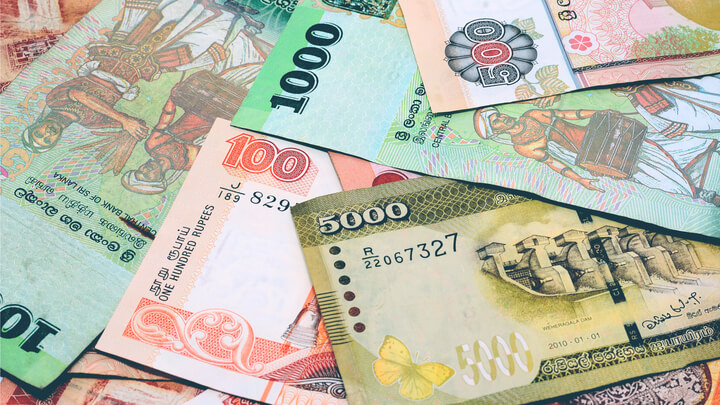
“Remittances are one of the top foreign exchange earning sectors in Sri Lanka, which used to be about US$ 7 billion a year,” he said addressing a media briefing held at Central Bank.

However, Cabraal said that during the past month alone, there was a reduction of about US$300 million in remittances as money has been exchanged through various other means.

“We feel that the exchange rate which is around Rs. 200 is paid at around Rs. 240 in some places. Rs. 72 billion is required to distribute US$300 million. That is around Rs. 7200 crores to be distributed in the country. If so, where is all this money coming from? Most can be from drug trafficking,” he added.

Cabraal went on to say that under the Money Laundering Act, investigations will be conducted if any person is sending money to another person without any reason.

He also warned that the Central Bank has the authority to suspend such accounts.

Notice from the CBSL

The Central Bank of Sri Lanka (CBS) has received information that some Sri Lankans residing abroad send remittances to their dependents in Sri Lanka, knowingly or unknowingly, through various racketeers.

CBS is aware that there have been instances where certain brokers collect foreign currency from Sri Lankan employees in other countries and credit the accounts of their dependents in Sri Lankan rupees by way of cash or transfers through the financial system.

The public may not be aware that they are committing offences punishable in terms of law for the violation of the provisions of the Prevention of Money Laundering Act.

Further, available information indicate that these transactions could be linked to drug trafficking and other illegal activities.

Hence, the CBSL hereby informs all Sri Lankans residing abroad and their dependents not to be victims of such illegal activities, knowingly or unknowingly.

The CBSL emphasizes the need for all concerned parties not to become victims of illegal operators and to ensure that they remit their foreign remittances to Sri Lanka only through banks and through financial institutions which are supervised by the CBSL or other international banks and financial institutions

Posted in Uncategorized

SJB lodges complaint with CPU & IPU over alleged attempted assault of MP Manusha Nanayakkara

Samagi Jana Balawegaya (SJB) has lodged a formal complaint with the Inter Parliamentary Union (IPU) and Commonwealth Parliament Union (CPU) over the recent alleged attempted assault of MP Manusha Nanayakkara at the Parliamentary complex.

Chief Opposition Whip Lakshman Kiriella who had lodged a written complaint to CPU and IPU Secretary Generals has sought their intervention to prevent further undemocratic acts.

“I kindly call upon you as the secretary generals of IPU and CPU to intervene and to take all necessary measures required to prevent any further undemocratic actions by the government and to safeguard the parliamentary democracy of Sri Lanka,” Mr. Kiriella said in his letter.

Mr. Kiriella who had elaborated on the incidents which took place in Parliament had accused the Chief Government Whip Johnston Fernando and other government MPs of forcefully stopping the additional time that would have been given to MP Manusha Nanayakkara after the time of the debate was extended.

He said Mr. Nanayakkara approached the Speaker only to discuss with him the situation.

Mr. Kiriella in his letters accused State Minister Kanchana Wijesekera of verbally assaulting Mr. Nanayakkara.

He also accused several MPs including Mr. Wijesekera for trying to assault Mr. Nanayakkara at the lobby.

“ I firmly state that the attacks were provoked and were intended to be malicious. These are little more than mafia type actions by the government MPs.I further believe that the said actions of the government MPs were carried out with the intension of deterring the members of opposition from exercising their freedom of speech, inquiry and debate,” he further said in his letters to IPU and CPU leaders.

Demanding justice for Priyantha Demonstration outside the High Commission of Pakistan

At least ten associations staged a silent demonstration outside the High Commission of Pakistan today condemning the heinous attack on Nandasiri Priyantha Kumara in Sialkot, Pakistan and demanding justice for him. Multi-religious leaders were also present at the occasion.

Posted in Uncategorized

Lynched Sri Lankan man’s family seeks justice from Pakistan – ALJazeera

Pakistani police say they have arrested seven “prime actors” in the brutal mob lynching of a Sri Lankan factory manager over alleged “blasphemy”, as the man’s family say they are still struggling to make sense of the “inhumanity” of the killing while they make preparations for his funeral.

The body of Priyantha Kumara, 48, a general manager at a Pakistani textile factory in the eastern city of Sialkot, was due to arrive in the Sri Lankan capital Colombo on Monday afternoon, his elder brother Kamal Kumara told Al Jazeera.

“I have to tell the [the perpetrators]: please don’t do this, this kind of attack, don’t react inhumanly,” Kumara told Al Jazeera via telephone from Colombo.

“We are humans, no? We have to respect each other and each other’s religion.”

On Friday, the younger Kumara was accused of committing blasphemy against Islam at the factory he managed in Sialkot, a huge industrial centre located about 100km (62 miles) north of Pakistan’s second-largest city, Lahore.

Police say he was beaten with sticks, fists and kicks by a mob of dozens, before being dragged to the road outside the factory and set on fire. Social media footage of the attack showed dozens of young men chanting slogans associated with supporting Islam’s Prophet Muhammad, as some took selfies with the burning body.

Blasphemy is a sensitive subject in Pakistan, where certain forms of the crime, including insulting Prophet Muhammad, can carry a mandatory death sentence. Increasingly, blasphemy allegations have led to extrajudicial murders or mob lynchings, with at least 80 people killed in such attacks since 1990, according to an Al Jazeera tally.

The victim is survived by his wife and two children, aged nine and 14. Kumara’s family has asked the Sri Lankan government to request financial compensation from either the Pakistani government or Kumara’s employer for his immediate family.

“We believe that [Pakistani Prime Minister Imran Khan] will take serious action,” said Kamal Kumara. “I told [Sri Lankan officials to] please ask the Pakistani government to help his family, because he has a wife and two children who are alone, and they need to be educated.”

On Monday, a statement by the Pakistani police said they had arrested seven additional suspects, bringing the total number of those arrested for the attack to 131.

“These include those involved in planning the attack on the Sri Lankan manager, as well as those who tortured him and those who incited others,” said a statement.

Brutal killing shocks nation

Priyantha Kumara was the youngest of six siblings, and his mother has still not been told the details of how he was killed, his brother Kamal, 53, said. He said the family members have been tasked with keeping her away from social media and television news lest she sees footage of the attack.

“My mother is 80 years old, she is not well in health, and still we can’t explain to her what has happened,” he said. “She is crying continuously.

“We just told her there is some accident, we cannot say what has happened.”

Kamal Kumara and a second brother live in the Pakistani city of Faisalabad, about 175km (108 miles) southwest of Sialkot, where both also work in textile factories. Priyantha Kumara, a textile engineer, moved to Sialkot in 2010 to pursue work as an industrial engineer and later became a factory manager “because of better economic prospects”.

Kamal said all three Kumara brothers had never had any complaints while living in Pakistan.

“Many people are my friends, and other [Pakistanis], they have taken my number they are calling us and crying, they are saying that we [feel] shameful to talk to you, we are, all Pakistanis, with you,” he said.

The brutal killing has shocked Pakistan, with religious leaders, civil society and politicians across the spectrum condemning the murder. On Sunday, civil society groups held a small demonstration against the killing in the eastern city of Lahore.

‘Gone from this world’

On Friday, rights group Amnesty International called for an impartial inquiry into the killing.
“Authorities must immediately conduct an independent, impartial and prompt investigation and hold the perpetrators accountable,” Amnesty said in a statement.

“Today’s event underscores the urgency with which an environment that enables abuse and puts lives at risk must be rectified.”

Religious violence around the issue of blasphemy has risen in the South Asian country in recent years, with the rise of the far-right Tehreek-e-Labbaik Pakistan (TLP) religious group accompanied by an increase in violence against alleged “blasphemers”.

“[Priyantha] was not concerned [about this], because we are always focusing on our duty [and] at our company we are not having any religious discussions,” said Kamal. “We are respecting that they are religious, so we never got a bad impression, and we didn’t want them to have a bad impression from our side.”

A post-mortem examination of Priyantha Kumara’s body will be carried out by Sri Lankan authorities on Tuesday, with his funeral scheduled for Wednesday in his native Gampaha district, 20km (12.4 miles) northeast of Colombo.

His brothers, meanwhile, are debating whether they can return to Pakistan safely, and how to break the details of his death to their ailing mother, who suffers from diabetes and high blood pressure.

“We are struggling how to explain this thing to her,” said Kamal. “My brother is gone now, is gone from this world.”

Asad Hashim is Al Jazeera’s digital correspondent in Pakistan. He tweets @AsadHashim.

Posted in Uncategorized

Cardinal condemns Sialkot killing, calls for justice

The Archbishop of Colombo, His Eminence Malcolm Cardinal Ranjith says that he was deeply shocked and saddened to hear of the brutal killing of Priyantha Kumara Diyawadana by extremists in Pakistan.

He condemned the brutal and inhumane killing and said that the leaders of all countries should work tirelessly to end such heinous acts of extremist violence under the guise of religion.

The Cardinal has emphasized the worse tragic situation in the world is when extremists kill people to achieve their personal and political goals in the name of religion.

Posted in Uncategorized

China has accused India of meddling in Chinese energy projects in Sri Lanka

China has accused India of meddling in Chinese energy projects in Sri Lanka, saying that New Delhi’s interference poses a serious threat to development and prosperity in South Asian countries such as Sri Lanka.

The comments came after Indian media reported that a project involving the installation of hybrid energy projects on some Sri Lankan islands had been shelved, owing to “security concerns from a third party.”

India has worked for almost a year to “get China off” the projects in Sri Lanka, the Times of India reported on Saturday.

India has not commented on the development, but sources in Colombo said that “concerns were raised”, citing the site’s proximity to the Indian coastline, the Hindu reported in February. New Delhi has offered to execute the project with a grant of $12 million, according to the Hindu.

Sino Soar Hybrid Technology, a Beijing-based high-tech renewable energy company, is responsible for the project.

“It is ridiculous that India uses security reasons to meddle in the project. The Sri Lankan project is small, supplying electricity to villages on three small islands. Since the islands and the main territory of Sri Lanka are separated by the sea, it is very likely that the power grid will not be connected to other places in Sri Lanka,” a source close to the company told the Global Times.

All major renewable energy projects in the world are installed with data collection systems to collect weather information, such as wind speed and light intensity, according to the source. However, since 2010 this information has been required to be saved at local data centers as countries around the world have strengthened data security, the source said.

“India has always taken neighboring countries such as Sri Lanka as its backyard, and our help in Sri Lanka will be regarded as China moving India’s cheese, for China has been regarded as the potential enemy for India,” Wang Dehua, a senior South Asian affairs expert in Shanghai, told the Global Times on Friday.

India took a heavy blow after the deadly Galwan Valley border clash last year, and it has gotten more sensitive on South Asian countries regarding Chinese issues. India is pursuing head-to-head competition with China in the Indian Ocean, by fair means or foul, said Liu Zongyi, secretary-general of the Research Center for China-South Asia Cooperation at the Shanghai Institutes for International Studies.

Experts warned that India’s meddling in projects will hurt the interests of Sri Lanka, as the project being smashed by India has started again in the Maldives.

On Monday, the Maldives’ Minister of Environment Shauna Aminath said in a tweet that the country is installing a total of 2.5 MW of solar photovoltaic power in all the inhabited islands in the Thaa Atoll.

The Chinese Embassy in Sri Lanka said in an earlier tweet that Sino Soar Hybrid Technology, after being suspended from building a Hybrid Energy system in three northern islands due to “security concerns” from a third party, signed a contract with the Maldivian government to establish solar power plants on 12 islands in the Maldives.

“If the project is operated successfully in Sri Lanka, it could avoid over 2,000 tons of carbon dioxide emissions per year,” the source said.

Sinosoar’s Solar Hybrid System for Sri Lanka was to have a capacity of 1,700 kilowatts (KW) at peak solar power and 530 KW of wind power. The planned capacity for the battery energy storage system was 2,350 KW and that of the generators was 2,050 KW, according to an article from the company on Sina Weibo in August.

It is not the first time for India to put pressure on Sri Lanka over a Chinese investment project.

The Sri Lanka Ports Authority said it signed an agreement with India’s Adani Group to build a new terminal next to a $500-million Chinese-run jetty in Colombo, according to AFP on October 1 this year, a move seen as countering China’s rising influence in the region.

Posted in Uncategorized

Recall all Lankans from Pakistan unless Pakistan ensures their safety: Anura

The Sri Lankans living and working in Pakistan should be recalled unless the Pakistani Government is prepared to ensure their safety, JVP Leader Anura Kumara Dissanayake said today.

He told a news conference that the Pakistani Government should give maximum punishment to those who were involved in the gruesome lynching of Priyanatha Kumara, who was brutally tortured, killed and burnt in Sialkot, Pakistan by a mob and guarantee the safety of other Sri Lankans living there.

The MP said the Sri Lankan Government should ensure that no Sri Lankan should be subject to such a barbaric murder.

He said the Sri Lankans had to face religious extremism in 2019 due to Easter Sunday attacks and added that the countrymen should no longer be victimised by religious extremism.

“It is seen that various religious extremists are raising their heads in Sri Lanka. The Sri Lankan Government and the citizens have an additional task to defeat and curb extremism,” he said.

Govts. will have to pay compensation if religious extremism is condoned

If religious extremism is condoned and perpetrators are not brought to justice, it is the relevant Governments that end up paying compensation, says Minister of Industries Wimal Weerawansa.

He made this statement while speaking to the media today (06) in reference to the brutal killing of Sri Lankan factory worker Priyantha Kumara in Pakistan.

“What we can understand from this incident is that if religious extremism is condoned, there is no freedom for people. People will not have the freedom to say what is on their minds. Majority of the population of Pakistan does not agree with the brutal killing, but as a country, we request that the Government of Pakistan will take all measures to ensure that such brutality does not happen again to anyone. It can be against any nationality, but this must not be allowed. Governments of countries end up paying for religious extremism in the end,” he said.

Weerawansa further added that by allowing religious extremism to spread, many people and countries are inconvenienced.

“We have requested the Government of Pakistan for compensation to be paid for the life of Priyantha Kumara. As a Government we have made a firm request that the Government of Pakistan will do so accordingly,” he said.

He concluded by expressing his condolences to the family of the late Priyantha Kumara, and said that the Government of Sri Lanka will ensure justice is served.

Killing of Sri Lankan factory worker: JVP condemns act of “religious extremism”

The Janatha Vimukthi Peramuna (JVP) has condemned the attack on Sri Lankan factory manager Priyantha Kumara, and has invited people of the world to unite against religious extremism.

This was made known through a media release by the JVP today (06).

“As the body of brother Priyantha is brought to Sri Lanka, we must not forget that religious extremism is on the rise. The same is in Sri Lanka. Religious extremism has driven people to the extent that they would commit murder in the name of religion. The brutal assassination of Brother Priyantha shows that our country and the world does not respect humanity. I invite everyone who believes in humanity must step forward against such barbarism,” said JVP leader Anura Kumara Dissanayaka.

Dissanayaka added that whilst every religion teaches humanity as a basic concept and peace is taught as a basic of all religions, people believe that one religion is superior to the other and have resorted to killing others in the name of religion.

“We do not condone such brutality, and we would like to discuss religious extremism is Parliament as well. However, due to the current situation in Parliament, this topic discussion cannot be done right now. The government of Pakistan must impose the maximum punishment on these criminals. We must also ensure the protection of all Sri Lankans living in Pakistan. The Government of Sri Lanka has a role to play in this. If the Government of Pakistan is not prepared to ensure the safety of Sri Lankans living in Pakistan, Sri Lankans there should be summoned to Sri Lanka immediately. No Sri Lankan citizen should be subjected to such barbaric killings,” said Dissanayaka.

Dissanayaka went on to say that such religious extremism is also seen in Sri Lanka, reminding people of the April 2019 Easter attacks.

“A large number of people were killed and others became disabled during the 2019 Easter attacks. No Sri Lankan should continue to fall prey to the fanaticism of religious extremism. This also shows that various extremist noises are re-emerging in the country. The Government and citizens of Sri Lanka have a special role to play in defeating and suppressing extremism,” he said.

The statement continues to say that the Priyantha Kumara was well known in his industry for his professionalism and skills, and for him to fall prey to such barbarism was a pity.

“As a party we express our condolences on behalf of Brother Priyantha and take all possible measures to defeat the madness of religious extremism. We also reiterate our call on the Government of Pakistan to impose the maximum punishment to the perpetrators,” Dissanayaka stated.

Additionally, Dissanayaka mentions in the statement that the current situation in Parliament has arose due to the speaker showing partiality towards the Government.

“An explanation should be given regarding the situation that arose in Parliament today (06). The current speaker is extremely partisan. He has proved to be a speaker representing the government. His loyalty, constant thinking about his camp and lack of personality have created a great deal of anarchy in Parliament. A debate in the Committee Stage is required only if a motion is tabled in Parliament by a Member of the Opposition to cut off the Expenditure Head with prior notice, or a motion should be brought that the same head of expenditure should be abolished. Bringing such a resolution from the Opposition has been accepted in accordance with the Standing Orders. If such a motion is not brought, there will be no debate in the Committee Stage. The budget will be passed without debate,” he stated.

He added that without such a resolution, standing orders are being violated, parliamentary traditions and the rights of Members of Parliament are being ignored, and the behavior of the ruling party MP’s have proved to worsen every day.

“When the government fails on all sides, when the government’s frauds and corruption are exposed to the public, when the fertilizer issue is raised in Parliament, when issues such as the gas crisis and rising commodity prices are raised, government MPs are incensed by mudslinging,” said Dissanayaka, adding that the speaker of the house should stop being partial and make decisions independently to protect the dignity and rights of all Members of Parliament.

The JVP leader went on to say that failure to do so would pose a serious threat to the very existence of Parliament and the rights of Members of Parliament, and that the Speaker should immediately revive the role of protecting the rights of all Members of Parliament.

“Buddhism is a non-violent religion based on compassion. Never in history have there been any coercion, aggression or conflict for the spread or embrace of Buddhism. We were proud to be associated with that culture. What has happened today is that under the guise of Buddhism, various groups have come to the fore destroying that unique system of values. Their behavior, their verbal attack is a complete disgrace to Buddhism,” said Dissanayaka in reference to the behavior of the Members of Parliament.

He added that despite such behavior, the President has appointed these Members as heads of Ministries and in leadership roles, thus setting a bad example to the nation.

“The government is sometimes using extremism and other conflict groups to cover up the real issues. It has failed to answer any of the common problems facing the people today. So once again these rulers have the potential to develop old-fashioned extremist and conflicting tendencies. We do not believe that the people will accept the government’s efforts to return to such a state. People have understood what has happened,” said Dissanayaka in conclusion.

Posted in Uncategorized