China firm slams ‘third-party’ interference in Lanka project – The Hindu

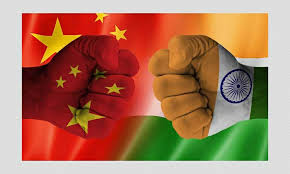
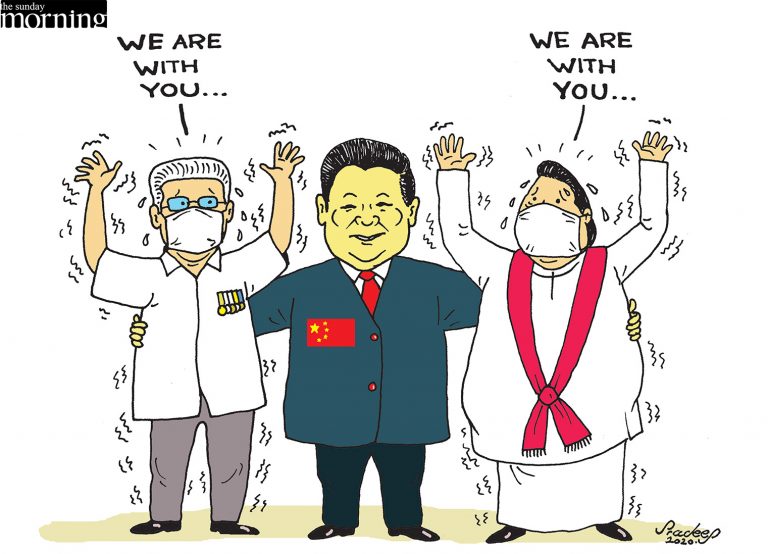
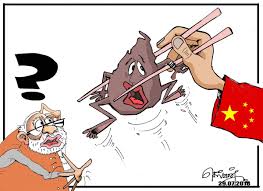
A Chinese firm, which had won the bid to execute a renewable energy project in Sri Lanka’s northern islands, has objected to “outrageous interference” by a “third party”, apparently referring to India voicing concern recently.

In a statement issued on Monday, Sinosoar-Etechwin Joint Venture said it learned from media reports that “a third party” had protested against Sri Lanka’s Cabinet decision clearing the project, on grounds of “so-called self-security”. “We firmly oppose any outrageous interference by any third party without legal and factual basis,” the firm said.

On January 18, Sri Lanka took a Cabinet decision to engage a Chinese firm to install hybrid renewable energy systems in Nainativu, Delft or Neduntheevu, and Analaitivu, off Jaffna Peninsula, located in the Palk Bay, some 50 km from the Tamil Nadu coast. Although New Delhi did not officially comment on the move, official sources confirmed that India had offered a $12-million grant, to execute the same. The project’s proximity to India’s coastline reportedly set off security concerns in New Delhi.

ADB loan
Colombo had originally obtained a loan from the Asian Development Bank (ADB) for the project. Sri Lanka’s Minister of Power Dullas Alahapperuma told local media that the government would consider India’s proposal, for it was a grant rather than a loan. But there is no change yet to the January 18 decision.

Outlining the tendering process in 2019, through which it obtained the project, the Chinese consortium said the “third party” — intervention “seriously affected” its reputation and legitimate rights, and “damaged the credibility and image” of the Government of Sri Lanka. The consortium is only responsible for the construction and handover of the project, it said, adding the firm would “strictly abide” by the laws and regulations of the ADB and the Ceylon Electricity Board.

A group of Sri Lanka’s Tamil parties have objected to the Chinese project in the northern islands, noting that India’s concerns are “legitimate”.

Posted in Uncategorized

Bangladesh must speak out against forced cremation of Muslims in Sri Lanka

Baby Shaykh was only 20 days old when his life came to a tragic end last December out of a sudden illness. Born in a Muslim family in Sri Lanka, his last rites would be a burial followed by a funeral but instead, authorities cremated his body against the wishes of his parents. A rapid test for COVID-19 (an antigen test) returned positive, yet his parents, including his mother who was breast feeding him, tested negative. This has created doubts in his parents’ mind about the credibility of the test. The authorities had no sympathy for the desperate pleas and protests of Baby Shaykh’s parents. The bodies of Muslims who die or are suspected of having died of COVID-19 are resigned to the same fate across Sri Lanka.

Muslims, who make up nine per cent of the population of Sri Lanka, have historically faced violence, harassment, and discrimination, especially since 2012. This anti-Muslim sentiment in the country has now manifested itself in an arbitrary government policy which orders the cremation of anyone who has died of COVID-19 or are suspected to have died of COVID-19. This has caused great distress to Muslims, as the act of cremation is explicitly forbidden in Islam. With the human rights situation of Sri Lanka coming under review at the 46th UN Human Rights Council session, beginning on 22 February 2021, it is imperative that the government of Bangladesh, as a member of the council, stands in solidarity with the minority Muslim community in Sri Lanka who are being denied dignity in their final moments.

While it is becoming increasingly difficult for Muslims in Sri Lanka to live in peace, with the constant fear of further threats, discrimination and violence hanging over the community, the government seems to have used COVID-19 as an excuse to ensure Muslims in Sri Lanka cannot even die in peace.

Sri Lanka is one of the few countries in the world which has a forced cremations policy to dispose of COVID-19 victims. Guidelines issued by the Ministry of Health in 2020 originally permitted both burials and cremations. However, the health ministry amended the guidelines to make cremations mandatory after the body of the first Muslim to succumb to the virus was forcibly cremated, against the wishes of the victim’s family, and in spite of vehement protests from religious leaders, politicians and the wider Muslim community

The government’s chief epidemiologist, Dr. Sugath Samaraweera, claimed that burials would “contaminate ground drinking water”. The State Minister of Primary Health Care, Epidemics and COVID-19 Disease Control, Dr. Sudarshini Fernandopulle, in January 2021, has since refuted this claim. Additionally, interim guidance set out by the World Health Organization on the safe management of a dead body in the context of COVID-19, provides that victims of the virus can be buried or cremated. In a letter to the Health Minister, Muslim groups reported that over 185 countries allow for the burial of COVID-19 victims, making Sri Lanka an outlier in its disregard for the religious practices of minorities.

The Muslim community in Sri Lanka has strongly criticized the forced cremation of COVID-19 victims. Under pressure from various groups, including the Minister of Justice, Ali Sabry PC, it was reported on 4 November that a government-appointed committee would meet to reassess the government’s policy on mandatory cremations, but on 22 November, the committee reaffirmed the earlier decision, without giving reasons. Subsequently, a second expert committee appointed by the health ministry in December, stated that burial of victims of COVID-19 would be safe. Yet, the country’s health minister dismissed these recommendations in Parliament, stating that the second committee was “informal”.

On 1 December 2020, the Supreme Court of Sri Lanka dismissed all Fundamental Rights petitions before it which challenged the directive on mandatory cremations, without providing any reasoning, thereby closing the door to further legal challenges, and any domestic recourse to this violation of religious rights. According to a news report in the same month, of 124 deaths due to COVID-19 whose bodies have been cremated, as many as 50 of them are Muslims. There have also been reports of instances where bodies of Muslims who tested negative for COVID-19 were forcibly cremated.

On 11 February 2021, Prime Minister Mahinda Rajapaksa, speaking in Parliament, stated that burials of COVID-19 victims would be allowed. Yet, the next day, the State Minister Sudarshini Fernandopulle, who had earlier sought compliance with scientific findings about COVID-19, stated that mandatory cremations would continue until the government’s expert committee reached a conclusion. The polarized opinions of expert committees and indecision of the Sri Lankan authorities, in spite of the clear international guidelines, not only demonstrate a lack of empathy towards religious minorities in the country but also a disregard to their human right.

Reports also indicate that families are being forced to bear the cost of cremation, typically around LKR 50,000-60,000 (approximately BDT 21,850-26,200), in a year that has economically strained many families. The cruelty of not only having to stand idle as a loved one’s body is desecrated but being forced to shoulder the cost of this act has led some Muslim families to refuse the ashes and the associated payment, in an act of protest.

Against a backdrop of attacks targeting Muslim businesses, homes and places of worship in the country through 2014, 2017, 2018, and following the Easter Sunday bombings in 2019, these latest directives come at a time when Muslims in Sri Lanka already have plenty to fear. In a year when we have seen the importance of solidarity as communities rally together to survive the pandemic, Sri Lanka has chosen to further alienate a community already reeling from violence, hatemongering, and discrimination.

The government of Bangladesh, as a regional ally, can demand that the Sri Lankan government reverses this unnecessary practice of forced cremations that has had a devastating and discriminatory effect on the Muslim community. The Bangladeshi government can also raise the issue as a concern at the upcoming UN Human Rights Council sessions, where it has the power to vote in support of promoting human rights in Sri Lanka. At a time when anti-Muslim rhetoric and sentiment is on a rise in Sri Lanka, the government of Bangladesh must stand in solidarity with the Muslim community in Sri Lanka who are being put through unspeakable pain. It must uphold its international commitments to ensure that no one is subjected to discrimination based on their religion, and the right to freedom of religion. The Bangladeshi government must join the fight to end this discriminatory policy and ensure Muslims in Sri Lanka can be laid to rest in peace.

Saad Hammadi is South Asia Campaigner at Amnesty International. His Twitter handle is @saadhammadi

This op-ed originally appeared in The Dhaka Tribune

China tells Sri Lanka to strictly follow international bidding procedures

China has called on Sri Lanka to strictly follow international bidding procedures after concerns were raised over a Chinese funded power project in the North of the country.

In a statement issued today, a Chinese company defended the proposed wind-photovoltaic-energy storage hybrid power generation project in the North.

Sionsoar-Etechwin JV said that tens of thousands of “poor people” in Northern Sri Lanka will benefit from the project.

The company said that the politicization of the project goes against the interests of the people and does not meet the manifesto of the current Government.

Sionsoar-Etechwin JV said that the project is funded by the Asian Development Bank, in full accordance with the international bidding procedures.

“According to the bidding regulations, the consortium is only responsible for the construction and handover of the project. All moves are under the complete supervision and management of the employer-Ceylon Electricity Board. There is no so-called “security” concern issue raised by third parties,” the company said.

The consortium said that it strictly abides by the laws and regulations of Sri Lanka and the relevant requirements of the Asian Development Bank as well as the Ceylon Electricity Board.

At the same time, the Chinese company said it firmly opposes any “outrageous interference” by any third party without legal and factual basis.

The consortium called on the Sri Lankan Government to strictly follow the international bidding procedures to implement the project, and protect the legitimate rights and interests of the contractor, as well as its own credibility and international reputation.

India allows Pakistan to use its airspace for PM Imran’ Sri Lanka visit

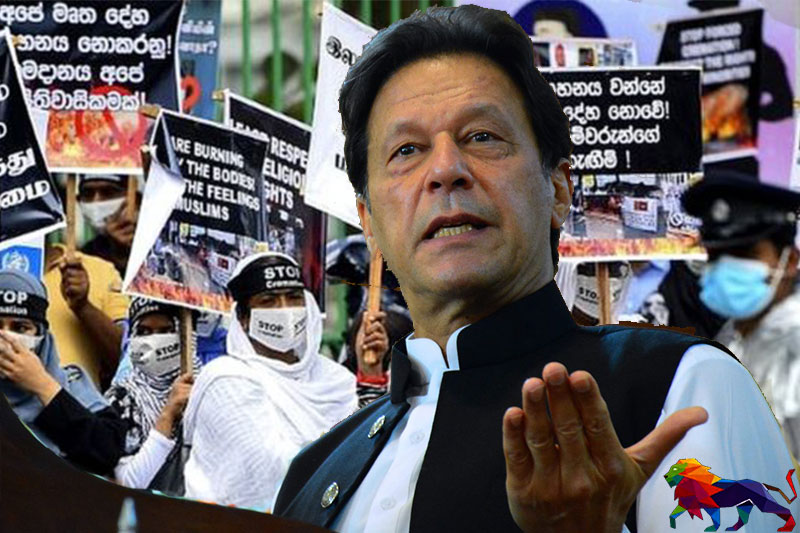
India has allowed Pakistan to use its airspace for Prime Minister Imran Khan’s visit to Sri Lanka, it emerged on Monday.

Pakistan had another option to use Sri Lankan airline for the premier’s visit on cards if Delhi refused to open its airspace, according to the Pakistan Observer.

Now, the prime minister will embark on two-day long visit on a special plane while flying across Indian airspace on Tuesday.

The premier is visiting Sri Lanka on the invitation of his counterpart Mahinda Rajapaksa and he will be accompanied by a high-level delegation, including members of the Cabinet and senior officials.

His engagements include meetings with President Gotabaya Rajapaksa and Prime Minister Mahinda Rajapaksa.

Khan will also lead the delegation-level talks, covering all areas of cooperation between the two countries including trade, investment, health, education, agriculture, science & technology, defence and culture tourism.

Besides bilateral matters, views will be exchanged on key regional and international issues.

The Pakistani PM will also participate in a joint ‘Trade and Investment Conference’ aimed at promoting trade and investment between the two countries.

A number of MoUs to enhance bilateral cooperation will be signed during the visit.

Pakistan and Sri Lanka have maintained close, cordial and mutually supportive relations and the two countries share commonality of views on a wide range of international and regional issues.

In Sri Lanka, India’s loss, China’s gain – Deccan Herald

At a cabinet meeting chaired by Sri Lankan President Gotabhaya Rajapaksa on February 1, Sri Lanka abruptly scrapped the Colombo Port East Container Terminal project with India and Japan, delivering a body blow to Prime Minister Narendra Modi’s much touted ‘Neighbourhood First’ policy that has been unable to forestall the re-entry of China into the Indo-Sri Lankan theatre; or, for that matter, in the rest of the ‘neighbourhood.’

The project was announced by President Gotabhaya himself on January 13 in the presence of India’s External Affairs Minister S Jaishankar, who was visiting Colombo. What changed between January 13 and February 1? And why did India’s foreign policy mandarins not see this coming?

Was it payback by the island-nation’s first family, which India had alienated when it worked behind the scenes to edge Gotabhaya’s brother Mahinda Rajapaksa (who is now Prime Minister) out of the presidential office in 2015? Or was it more than just that? The multiple ramifications of the move go beyond a simple tit-for-tat settling of scores by the Rajapaksas.

With Sri Lanka reeling under an economic downturn, post the Easter bombings and the pandemic, Beijing has gone back to being Colombo’s main benefactor, with the door now open for it to take control of India’s strategic underbelly.

That President Rajapaksa used specious objections by trade unions protesting against handing over the project to foreign interests as the reason for going back on the 2019 deal gives weight to the charge of a Chinese role in scuppering the project, which would have had the much-favoured Adani Group as the major investor in the port development. Currently, more than 80% of the cargo from there is India-bound.

Adding weight to the charge is the fact that China is developing the Colombo International Container Terminal right next door to ECT, and no trade union has raised an objection over it. This, despite the fact that a huge parcel of land, some 50 acres along the harbour in the capital, has become the sole property of Beijing.

As Colombo-based security and geopolitical analyst Asanga Abeyagoonasekera remarked on the Rajapaksa government’s unilateral decision to back out of the ECT citing local protests: “When did geopolitics become the preserve of local trade unionists? When did they start to decide our foreign policy?”

At the same cabinet meeting, Gotabhaya signed off on a Chinese renewable energy project in three islands off the coast of Jaffna, barely 50 km from Rameswaram in Tamil Nadu. This is the third big-ticket Chinese investment, after the Hambantota Port project and the Colombo container terminal.

Hambantota, which had been first offered to India in 2009, was the first move in Beijing’s playbook to use investments to gain a strategic foothold in this critical waterway. (India’s foot-dragging extended to its inability to move forward on upgrading oil tankers leased to the Indian Oil Corporation in 2003 in the deep sea port of Trincomalee, which would have given Delhi a strategic base on the critical north-east coast. Protests by another set of trade unions held that up).

The Modi government’s inexplicable silence over the ECT, even in the face of the consolatory offer of the “larger” West Container Terminal, is in marked contrast to the loud dinner diplomacy that Indian High Commissioner Gopal Baglay indulged in when he took office last year. He hosted Colombo’s power elite to a glittering dinner. On the guest list was the heir to the Mahinda Rajapaksa line, Namal, the prime mover behind greater Chinese investment in Hambantota.

Clearly, Colombo’s march back into Beijing’s embrace is unlikely to change. The docking of Chinese submarines in Sri Lanka in 2014 – during a visit to Colombo by then Japanese Prime Minister Shinzo Abe – had raised concerns in India. Delhi’s worries have only increased with the Chinese presence in Colombo, and now, the three islands of Delft, Analativu and Nainativu.

China will now have the wherewithal to impose a chokehold in the narrow stretch of sea, and block trade and oil supplies, just as India and Vietnam have done in the Malacca Straits and the East China Sea. The islands will become a key listening post from where Beijing can monitor’s India’s southern naval operations all the way from Port Blair in the Andaman & Nicobar islands to Vishakapatnam in the Bay of Bengal to Kochi on the Arabian Sea coast and up to the Pakistani port of Gwadar at the mouth of the Persian Gulf, as part of its strategy to limit India’s remit in these waters.

Limiting India in its sphere of influence in South Asia is clearly a counter to its advance eastward, where India has been a willing partner with the US, Australia and Japan to thwart China as part of the Quad grouping in the Indo-Pacific. The Indian Ocean Region that Delhi has sought to dominate, in tandem with Bangladesh, Myanmar, the Maldives and Sri Lanka, backed by the US to keep Chinese expansionism at bay, is now going to be that much harder to secure. Beijing’s ability to take control of Colombo will not be easy to thwart.

The Rajapaksa government’s intent was evident with its Foreign Minister Dinesh Gunawardena’s quick amending of his ‘India First’ policy to a ‘Sri Lanka First’ policy. Yet, when the Modi government dispatched Jaishankar to the island-nation in January, when President Rajapaksa announced the Colombo Port’s ECT project, he was blind and deaf to the Rajapaksas’ shift.

Insiders say that Jaishankar’s visit to a key Tamil leader, even a moderate like Sampanthan of the Tamil National Alliance (TNA), and openly voicing support for devolution to the provinces, in what was widely seen as a move for the BJP to secure votes in the forthcoming elections in Tamil Nadu, was the proverbial red rag to the Sinhala majoritarian bull. The Rajapaksas had little choice but to move swiftly to appease their Buddhist vote bank, which is raising the false bogey of a return of the LTTE, with the TNA as a front.

Blindsided in Nepal, caught napping by China’s nibbling of border areas in Bhutan, Ladakh and Arunachal, and playing the long game in Myanmar, insiders say that India has had no answer, no forward policy, to thwart China’s mode d’emploi of building infrastructure projects such as ports and roads to gain influence across South Asia.

In a giveaway of China’s real intent, one of the key elements of the Sri Lankan port agreements not only bars all foreign countries from use of their ports, it asks for China to be alerted to all ship movement in and out of Lankan ports.

The changing equations between India and Sri Lanka are set to get a further twist with the arrival in Colombo on February 23 of Pakistan’s PM Imran Khan, one of the first South Asian nations used by China in its signature Belt and Road Initiative.

The timing of Khan’s visit is curious. It comes at a time when the Tamil diaspora has stepped up calls to the United Nations Human Rights Commission to re-open the Lessons Learnt and Reconciliation Commission report that had all but cleared the Mahinda Rajapaksa government of human rights abuses during the 2009 war against the LTTE.

The new report by Michele Bachelet, the UN Commissioner for Human Rights, however, is particularly damning. It states that “in the 12 years since the end of the war, Sri Lanka has failed to demonstrate that it has the political will to move forward on a domestic or a hybrid justice process and reparations for atrocity crimes committed during the war in 2009.”

Bachelet will call for “alternative international options for ensuring justice and reparations, including referral to the International Criminal Court, and restrictions and a travel ban on alleged Sri Lankan war criminals, and stronger presence of the body in Sri Lanka” when the UNHRC convenes later this week.

How Pakistan, a member, like India, votes will separate friend from enemy.

The Rajapaksa government’s worry also stems from the coming together of the Tamils and Muslims (whom they had successfully divided) in the east and the north. In a show of strength, tens of thousands from both communities embarked on a long march from Ampara all the way to Jaffna in the north, a fallout of the crackdown on Muslims post the Easter bombings in April 2019. The government banning burials of Muslim Covid-19 victims has made matters worse. The government’s cancellation of Imran Khan’s address to Parliament has not gone down well, either, especially with leaders like Rauf Hakeem of the Sri Lanka Muslim Congress.

Can India use this tiny window of opportunity, and put aside the hurt and embarrassment of the ECT, and offer to play the role of interlocutor with the Tamil people, with whom it shares a civilisational link that transcends boundaries, and expedite the many stalled projects to rebuild the lives of the Tamils, still reeling from the civil war that ended 12 years ago?

India’s Colombo conundrum could see some light with the appointment of the new Sri Lankan envoy to Delhi, Milinda Moragoda. Having served as one of the government’s main negotiators with the LTTE in 2002 when he was part of former Prime Minister Ranil Wickremesinghe’s team makes him an ideal bridge to the Rajapaksas, though unconfirmed reports that his Sri Lanka Pathfinder Foundation, with close links to China, is a possible beneficiary of the ECT project and BRI largesse can only complicate matters.

If Delhi does not want to see ‘India’s Ocean’ turn into China’s backyard, it needs to step up at multiple levels, not take relations with Sri Lanka for granted.

(The writer was formerly Foreign Editor for the Dubai-based Gulf News and has reported extensively on Afghanistan, Pakistan, Sri Lanka and the Middle East. She is the author of ‘The Assassination of Rajiv Gandhi’)


Posted in Uncategorized

Rs.48 billion printed in February -Patali

Samagi Jana Balawegaya Parliamentarian Patali Champika Ranawaka claims the government has printed Rs.48 billion within the first 19 days of this month.

Speaking during an event in Thalawathugoda MP Champika Ranawaka said printing money is no easy task adding at present it is the only solution.

He claimed the present administration had printed Rs.659 billion in 2020 alone.

The MP noted the country’s tax income in 2020 was Rs.1,040 billion, while stating the government printed Rs.659 billion in addition to the tax income.

He added, only Rs.4 billion was printed in 2019.

MP Patali Champika Ranawaka said money is being printed at full capacity of the machines.

He noted however that the reality is clear through the increasing prices of goods, while adding that the value of the rupee will continue to depreciate against the dollar as long as the government continues to print money.

Posted in Uncategorized

ACJU says Muslim community in Sri Lanka unjustly demonized

The All Ceylon Jamiyyathul Ulama (ACJU) says the Muslim community in Sri Lanka and its representative organizations and institutions have been unjustly portrayed and demonized.

ACJU says this has caused the community to be viewed with suspicion resulting in irreparable harm to communal harmony.

“While living in a country with people of diverse ethnic and religious backgrounds, Muslims in Sri Lanka have co-existed and continued to co-exist with those of other communities while preserving their unique religious and cultural values,” ACJU said.

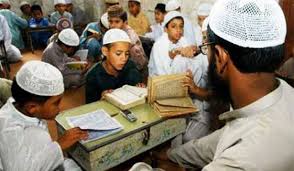
ACJU noted that institutes and systems such as Masjids, Arabic Madarasas, Quran Madarasas – Maktabs, Ahadiya, Muslim Personal Laws, Halal food consumption etc, that are prevalent in this country have facilitated the Muslims to live as good citizens of this country while preserving their religious and cultural values.

“It is a well-known fact to those who are well-informed that these organizations do not pose any threat to national security or the social coexistence of the country,” ACJU said.

The ACJU noted that the heinous Easter Sunday terrorist attacks carried out on 21/4/2019 by imposters claiming to be Muslims have been unreservedly condemned by the Muslim community and its representative organizations and institutions.

“Terrorists must be punished. Terrorism must be eliminated. But innocent persons must not be harassed or incarcerated. Muslim institutions which had served the community must not be made the scape goats for the terrorist attacks. As a consequence of this attack, the Muslim Community and its representative organizations and institutions have been unjustly portrayed and demonized causing the community to be viewed with suspicion resulting in irreparable harm to communal harmony,” ACJU said.

The ACJU urged all politicians as well as others to refrain from making false allegations and disseminating hate speech against the Muslim community in pursuance of political agendas.

“We further request politicians and others to refrain from indulging in hate campaigns against the Muslim Community by spreading misinformation in respect of Madarasas, Muslim personal laws, burial of Covid-19 Janazas (dead bodies) or any other rights enjoyed by the Muslims living in this country. We are of the view that those who are engaged in politics based on racism, shall never be able to guide this country towards prosperity,” ACJU said.

The ACJU noted that the Muslims and other citizens of this country have suffered immensely due to the despicable activities of those who seek to drive a wedge between communities by creating suspicion about each other for political reasons.

The ACJU also urged the media to refrain from providing a platform to evil forces who propagate anti Muslim sentiments among the public.

SAHR expresses concern over the timing of the Pakistan PM’s visit to Sri Lanka

South Asians for Human Rights (SAHR), a regional network of human rights defenders, expressed concern over the timing and purpose of the Pakistan Prime Minister Imran Khan’s two-day visit to Sri Lanka on Monday.

Prime Minister Kham’s visit to Colombo from February 22-23 coincides with the virtual launch of 46th session of UN Human Rights Council (UNHRC), where it is reported that a new resolution on Sri Lanka will be discussed based on the report by the High Commissioner for Human Rights mandated by 40/1(2019).

SAHR recalls that this is also at a time when the Government of Sri Lanka (GoSL) has been criticized for forcibly cremating the corpses of COVID infected Muslim persons against WHO guidelines.

SAHR believes that the Pakistani PM’s visit is to garner support from the Organization of Islamic Cooperation (OIC) to vote against a resolution on Sri Lanka that is due to come up on 23 February 2021.

Further, Prime Minister Khan, during his visit, is expected to address the human rights concerns of Muslims and will hold talks with key government officials and party leaders.

Sri Lanka Prime Minister, Mahinda Rajapaksa’s recently made an announcement to allow burial of the bodies of COVID 19 infected Muslims, but the government later described it as merely the personal view of the Prime Minister.

“While commending PM Khan’s willingness to address the issues faced by the Sri Lankan Muslim minority during his visit, we are also apprehensive of the impact these talks would have on the Tamil minority in the country,” SAHR said in a statement.

In February 2020 the Government of Sri Lanka informed the UNHRC of the decision to withdraw its co-sponsorship of resolutions 30/1, 34/1 and 40/1, which calls for a process of transitional justice promoting reconciliation, accountability and human rights, and instead, to pursue a domestically designed and executed reconciliation and accountability process.

Support from Pakistan and other countries would permit the Sri Lankan government to deliberately bypass the proper process of transitional justice deserved by the victims who are mainly the Tamil and Muslim minorities in the country, SAHR says.

Prime Minister Khan’s visit marks a remarkable bilateral moment for the two countries but it is also important to reflect on the common human rights issues concerning Sri Lanka, Pakistan and the South Asian region Numerous restrictions on people’s freedom of expression and right to peaceful protest are common across the region, the right organization noted.

The increase in nationalism and religious extremism leading to marginalization of minorities, shrinking civic space, journalists and media personnel being specifically targeted by state and non-state authorities and activists, human rights defenders and opposition members vilified and detained without due process and persecuted through the misuse of the laws and undue influence of executive powers are rampant in South Asia. Indian climate activist Disha Ravi’s arrest is the latest example for the rapid degradation of human rights.

Moreover, there have been numerous instances of people’s rights and respect for democratic values been blatantly violated by the governments using the pandemic containment as a facade. In Pakistan as well as Sri Lanka the intensification of militarization and especially the military leading the COVID 19 containment measures as well as the civil administration, business and other aspects of civilian life have further reduced freedoms and civil liberties enjoyed by the people of South Asia. The agony and suffering faced by the minorities in Pakistan and the use of the draconian blasphemy laws have sometimes pushed them to become refugees in neighboring countries. The ruthless measures taken to curb the students’ movement and Pashtun peoples’ movement without attempting to find sustainable solutions to their problems raises concerns of PM Khan’s legitimacy to address issues of the Muslim minority in Sri Lanka.

“We believe that such bilateral occasions should not be used to address issues of one minority community while overlooking the concerns of another. Therefore, SAHR calls upon the Governments of Pakistan and Sri Lanka to respect the rights of all minorities guaranteed in the constitutions and to resolve and address their concerns while providing equal treatment to all,” SAHR says.

The regional human rights organization urged the governments of Sri Lanka and Pakistan to use this occasion to celebrate the true South Asian camaraderie while working together to address human rights concerns of all citizens in the region.

India committed to ensuring Tamil refugees in SL live with peace: Defence Minister Rajnath

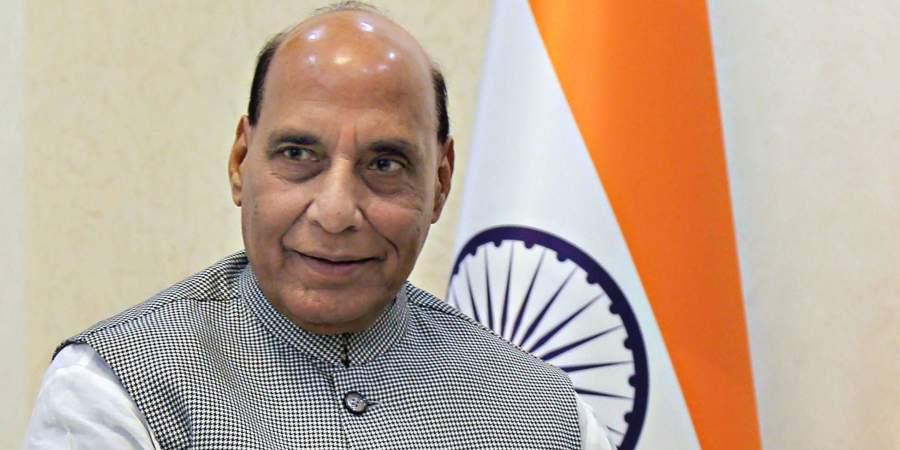
Asserting that Indian Prime Minister Narendra Modi has a “personal relationship” with Tamil Nadu, Defence Minister Rajnath Singh on Sunday said that the central government is committed to ensuring that Tamil refugees in Sri Lanka live with peace, equality and dignity, ANI news reported today.

It said, ahead of the Assembly polls in Tamil Nadu, Singh addressed Bharatiya Janata Yuva Morcha (BJYM) convention in Salem and said that he is proud to be in the land of great warriors like Rajaraja Chola and Rajendra Chola who were known for making an exemplary contribution in strengthening India’s Military and Naval capabilities.

“Former Prime Minister Atal Bihari Vajpayee made Dr APJ Abdul Kalam the President…was that not respect of Tamil Nadu? In 1974, when then Congress government left Katchatheevu island for Sri Lanka, Vajpayee condemned the decision to cede the island and spoke for moving to Supreme Court against it,” he said.

“BJP can never forget that it was Tamil Nadu’s daughter puruchi thalaivi Jaya Amma who wholeheartedly supported the first government of Atal Bihari Vajpayee,” he added.

Singh said that similar to Vajpayee, Prime Minister Modi also has a “personal relationship” with Tamil Nadu and it is reflected in his work.

“PM Modi has continuously tried for the Eempowerment of Tamil refugees in Sri Lanka. When Modi visited Sri Lanka after becoming Prime Minister in 2015, he also visited the Jaffna area and became the first Prime Minister of India to do so. New houses were given to about 27,000 Tamil brothers and sisters who had become ‘homeless’ due to the civil war there,” he said.

“Our government under the leadership of Prime Minister Modi is committed to ensuring that Tamil Refugees in Sri Lanka live with peace, equality and dignity. 1,600 fishermen have been released from Srilankan government’s custody by the PM,” he added.

Hailing the culture, tradition, poets and history of Tamil Nadu, stating that Tamil language is not only beautiful and ancient but ‘Amma’ of all the Indian languages.

Posted in Uncategorized

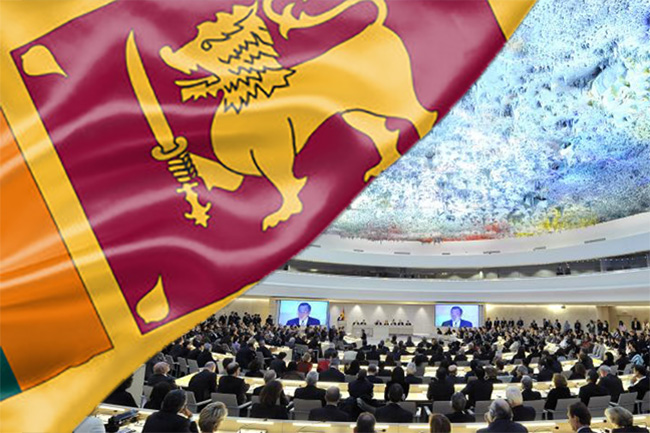
Sri Lanka prepared to face Core Group’s resolution at UNHRC – Dinesh

Sri Lanka is prepared to face the Core Group’s resolution to be presented at the upcoming session of the United Nations Human Rights Council, says Minister of Foreign Affairs Dinesh Gunawardena.

His remarks came during the Ada Derana ‘Big Focus’ talk show earlier today (February 20).

Issuing a statement yesterday, the Core Group on Sri Lanka – consisting of UK, Canada, Germany, North Macedonia, Malawi, and Montenegro – revealed its plans to take forward a further resolution to promote reconciliation, accountability and human rights in the island nation.

They stressed that there is an ‘ongoing importance’ of addressing Sri Lanka in the Human Rights Council.

The Core Group reiterated that more needs to be done to address the ‘harmful legacies of war’ and build sustainable peace in Sri Lanka.

Meanwhile, the facts in favor of the resolution put forward by the High Commissioner for Human Rights can never be implemented in accordance with the Constitution of this country, said Minister Gunawardena.

He mentioned this with regard to the report published by the UN Human Rights Commissioner Michelle Bachelet in late January, calling for an International Criminal Court investigation into Sri Lanka’s Tamil separatist conflict and sanctions on military officials accused of war crimes.

Gunawardena pointed out that there can be no foreign judges in the courts of Sri Lanka.

Speaking on allies who would stand with Sri Lanka to oppose such a resolution, the Foreign Minister said, “Forty-seven countries represent the Human Rights Council. Out of these 47, countries in Asia, Africa, and Latin America have given a very friendly response towards Sri Lanka. So far, the vast majority have exchanged views with us. However, we have not yet seen the final draft of this.”