Trade unions redouble efforts to keep India out of ECT

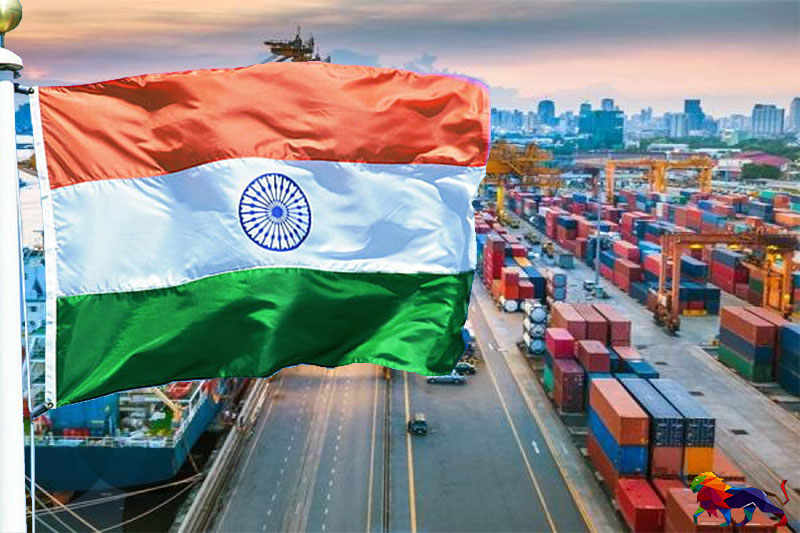
A selection of trade unions yesterday doubled down on attempts to keep the East Container Terminal (ECT) ownership and development completely under the Government with a new proposal to a Cabinet sub-committee.

The National Movement for the Protection of the Colombo Port East Jetty (NMPCPEJ) yesterday handed over their proposals for the development and management of the ECT to the head of a recently appointed Cabinet sub-committee.

The sub-committee is responsible for discussing ECT investment with a number of Colombo Port trade unions and organisation which want to the Government to develop the terminal without foreign stakeholders. The NMPCPEJ proposal was prepared after consultation between the 23 affiliated organisations.

According to Prassana Kalutharage, a trade union leader of the Sri Lanka Independent Port Employees’ Association (SLIPEA), the proposal was handed over the Ports Ministry Secretary U.D. Jayalal, who also heads the Cabinet sub-committee. The proposal includes two options for the Government to consider, with the first option expected to be complete in two years and the second, in three.

The proposal indicates that new equipment worth $ 65 million is needed to fully equip the terminal and claims that the funds for the new equipment has already been allocated in the Sri Lanka Ports Authority (SLPA). The proposal by the NMPCPEJ estimates the cost of construction and equipping the ECT at $ 486 million.

The proposed first option envisages the ECT completed in three stages within a two-year period. The proposal states that $ 74 million has already been allocated for the project by the SLPA and that a $ 125 million shortage can be accommodated by a commercial loan from the Bank of Ceylon (BOC) or another local bank at a 4.25% interest rate, to be repaid in six years.

The second option presented by NMPCPEJ proposes a three-phase development plan by changing the investment duration in order to avoid any loan facility. The new proposal will also be presented to President Gotabaya Rajapaksa and Prime Minister Mahinda Rajapaksa, unions assured.

Earlier this month, President Rajapaksa told trade unions ownership of ECT will be retained by the Government while a 49% stake will be held by India’s Adani Group. The President pointed out that after the present Government negotiated with India on the contract, it was possible to reach an agreement to retain 51% of the ownership and the control of the terminal under the Sri Lanka Ports Authority (SLPA).

Under the former Government, a tripartite memorandum of understanding (MoU) was signed between the SLPA, Japan and India to develop the ECT. Japan was to provide a loan of $ 500 million while India was to undertake the construction. However, the United National Party (UNP) this week denied that the MoU was designed to take ownership away from the Government.

INDIAN COVID-19 VACCINE TO SL ON WEDNESDAY (27): PRESIDENT

A consignment of the Indian COVID-19 vaccine will be brought to the country on Wednesday (27th January), President Gotabaya Rajapaksa said on Saturday (Jan. 23).

The Head of State made this statement while participating at a ‘Gama Samaga Pilisandarak’ session at a village in Wallawita area on Saturday morning.

Posted in Uncategorized

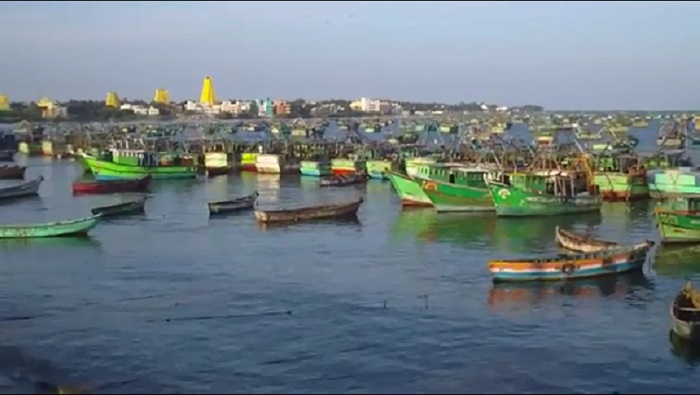
Indian vessel sank in SL waters: Bodies of fishermen to be handed over to India

The bodies of four Indian fishermen who died when their boat collided with a Sri Lankan naval vessel would be handed over to the Indian Coast Guard today, a source said.

The bodies will be sailed from Kankesanthurai to the International Maritime Boundary for handing over.

Sri Lanka Navy launched a Search and Rescue (SAR) operation in search of the missing fishermen.

The Indian fishing boat collided with a Sri Lankan naval craft on January 18 while engaging in illegal fishing in the seas off the Delft Islands.

The incident sparked off when the fishermen resisted arrest. The Navy diving teams launched a SAR operation later, recovered corpses of fishermen of the fishing trawler.

The recovered bodies were then flown ashore by an SLN craft.

The crash also caused damages to the SLN Fast Attack Craft, which was later brought to Kankesanthurai harbour safely for necessary repairs.

Treading a fine line in big power rivalries By P.K.Balachandran Weekend Express

Small nations, which are situated in strategically important places, have the unenviable task of managing Big Power rivalries. On the one hand, their geographical positioning is a boon because world powers seek their goodwill and could shower some benefits. But on the other hand, the location makes them vulnerable to military action or dubious blandishments which have the potential to abridge their sovereignty, even to the point of extinction.

These concerns were succinctly stated by the Sri Lankan Foreign Secretary and former Navy Commander Adm.Prof.Jayanath Colombage at a recent Pathfinder Indian Ocean Security Webinar with a galaxy of internal security experts participating.

The former navy chief regretted the militarization of the Indian Ocean Region (IOR) and the deleterious impact of securitization and militarization on the economies of the littoral States, especially the economies of small States. The latter lack human, material and financial resources for development and need fruitful connections with the world through the oceans.

Colombage asked in deep anguish: “Shouldn’t we be focusing of economic and social development and achieving Sustainable Development Goals by the target year of 2030?” He then went on to point out that the Asian Development Bank had estimated that the infrastructure needs of Asia and the Pacific would exceed US$ 22.6 trillion through 2030. If the required funds are not provided, there would be difficulty in achieving sustainable development goals, he warned.

“We can witness a slowing down of economies and socio-economic tensions. Human emotions could rise high and create fear and insecurity. This also results in extreme forms of nationalism. There is, and there will be, interruptions to Global Supply Chains,” he said.

Quad and BRI

Although the IOR has historically been important, there are now two new factors of gigantic importance, he points out. Firstly, there is the Indo- Pacific Strategy of the US, India, Japan and Australia, called the Quad. Secondly, there is China’s Belt and Road Initiative (BRI). The Quad is essentially defense and security-oriented, and the BRI is essentially economic, based on trade, infrastructure development and investment.

However, the US and its allies propagate the notion that the BRI’s development work is but a fig leaf to cover China’s security agenda and is a thinly veiled effort to enslave recipient countries by trapping them in unmanageable debt.

Sri Lanka’s Case

Stating Sri Lanka’s case, Colombage says that it wishes to have a free and open Indian Ocean with a rules-based maritime order to carry out maritime commerce, the development of maritime related infrastructure and establish connections to the global supply chain across the oceans. However, the development agenda has taken a backseat and the IOR has become an arena for strategic competition between the Big Powers, he bemoans.

“I like to call it a competition for RMB – Resources, Markets and (military) Bases. More and more governments, organizations and institutions worldwide are making the Indo-Pacific their conceptual frame of reference and thus the basis of their policies. However, they differ in terms of their objectives and emphasis on different policy fields,” Colombage notes.

The Quad’s resolve to dominate Indo-Pacific high seas is being questioned, he points out. The Quad is portraying itself as the principle driver of Indian Ocean maritime security. But Colombage wonders if the Quad is preparing for a “Cool War” ( a 21st.Century version of the 20 th.Century of the “Cold War”) behind the smokescreen of a laudable concern for free and unfettered navigation. Colombage contends that no single country can be the net-security provider in the IOR. He observes that the insecurity of one country is leading to insecurity of others. Because insecurities play such a dominant role in devising nations’ strategies that the IOR is characterized by increasing military/naval activity.

“It (the IOR) is one of the most militarized oceans in the world. For example, from 2008 to 2020, 575 warships from 29 different countries had visited Sri Lanka,” Colombage points out.

The IOR is characterized by a “huge mistrust and trust deficiency.” South Asia is militarily, politically and economically, a dynamic region but it sorely lacks a security consensus and regional interdependence which is the bedrock of a security consensus. There is also strategic ambiguity. On top of it all, the IOR is also a nuclearized region with two nuclear powers, India and Pakistan, having had violent confrontations several times in the last 72 years.

The impact of geographic proximity to large nuclear powers is greatly felt in smaller countries such as Sri Lanka, the former naval chief says. The security of an innocent small State could be gravely affected as a consequence of someone else’s war, Colombage points out.

According to the Lankan Foreign Secretary, the in the present context, the most important question to ask is: What is the purpose of free and open navigation? Is it for waging war and jockeying for power in the IOR or is it for a free flow of trade, investment, development and cooperation?

Stating Sri Lanka’s position on this matter, Colombage says: “We do believe that we need a rules-based order, as the survival of the State is most important for Sri Lanka. A rule-based order is one way to overcome problems of asymmetry. Sri Lanka is a small State and does not have any hegemonic intentions. We believe in Multilateralism and not in Unilateralism and do not like to see securitization of maritime trade and development.”

“Conversely, we wish to see a balance of power and not hegemonic power. We also would like to convey that Sri Lanka is not a piece of ‘Real Estate’ (to be parceled out among rival powers). Please respect Sri Lanka’s national interests.”

Five Principles To Ensure Independence

Colombage proposes a five-point program to sustain the independence of small States:

“In order to overcome being caught in the great power rivalry in the Indian Ocean, Sri Lanka has five pillars to its foreign policy. One is Neutrality. Technically, we are a non-aligned country, but we wish to remain neutral, at the same time maintaining friendly relations with everyone, which is number two. The third is not to get caught in major power games. We do not like to ‘hedge’ or ‘choose’ between States or jump on to one or the other of the bandwagons. We need to maintain strategic autonomy in the Indian Ocean. The fourth point is that Sri Lanka will not cede control of its strategic assets to foreign concerns. Investment, according to Sri Lanka’s vision articulated in President Gotabaya Rajapaksa’s ‘Vistas of Prosperity and Splendor’, should be in FDIs and joint ventures. But they should not lead to take overs. The Fifth point is, Sri Lanka does not want to be a strategic security concern to India, especially in maritime and air domains.


Posted in Uncategorized

Ukrainians cancel visit to Sri Lanka over PCR concerns

Over 200 Ukrainian tourists who were expected to arrive in Sri Lanka on a charter flight on January 19 under the Government’s pilot project, backed out of visiting the country while a further 100 tourists who were expected to arrive today, have cancelled their plans.

They have cancelled their plans following Sri Lanka’s health protocols which require every tourist to undergo three PCR tests if the stay is more than seven days, the Daily Mirror learns.

The charter flight which was expected to arrive with at least 214 tourists from Ukraine on January 19, flew into the country empty to take back the returning tourists while today, another flight is expected to arrive, but the number of arrivals have been reduced from an estimated 240 to 100.

Sri Lanka’s former ambassador to Russia Udayanga Weeratunga, who was part of the government’s pilot project told Daily Mirror that following the new health guidelines released for tourists on January 6 many tour operators in Ukraine and Russia had been reluctant to take fresh bookings simply because tourists were reluctant to undergo so many PCR tests during a short span.

Weeratunga said that in addition to undergoing a PCR test in their respective countries within 96 hours before flying to Sri Lanka, upon arrival here, tourists were required to undergo another PCR test upon their check-in at their hotel, another test on their fifth to seventh day and another test during their 14th day.

Posted in Uncategorized

UK raises concerns with Sri Lanka on forced cremations

The United Kingdom (UK) has raised concerns on forced cremations with the Government of Sri Lanka.

The UK Minister of State for South Asia and Human Rights, Lord Tariq Ahmad of Wimbledon said he had highlighted the impact of forced cremations continuing in Sri Lanka.

Many, including the Opposition and public have raised repeated concerns over the forced cremations of Muslim Covid victims in Sri Lanka. The matter was raised in Parliament by the Opposition, while many protests were held near the Borella cemetery after the forced cremation of a 21-day old infant.

However, Health Minister Pavithra Wanniarachchi announced in Parliament recently that the stance of the Expert Committee to study the issue remains unchanged, and the remains of Covid victims will be cremated as per the health guidelines.

Commenting on the matter, Lord Tariq Ahmad said he raised concerns on the forced cremations of COVID-19 victims in Sri Lanka, including on faith groups, justice and accountability in this regard.

He said attention was focused on the matter ahead of the upcoming United Nations Human Rights Council session.

Discussions were held in this regard during a telephone conversation between Lord Tariq Ahmad and Foreign Minister Dinesh Gunawardena today.

The UK Minister of State for South Asia and Human Rights also announced that the UK and Sri Lanka are collaborating on climate change and trade.

Sri Lanka reports two more COVID-19 deaths Friday, toll rises to 278

Sri Lanka confirmed two deaths on Friday due to COVID -19 raising the death toll from the viral disease to 278, according to health authorities.

The Director General of Health Services confirmed the following deaths caused by COVID -19 virus infection and accordingly the total number of deaths due to COVID -19 infection in Sri Lanka is 278 by now.

01.The deceased is an 82 year old male from Colombo 08. He was diagnosed as infected with Covid-19 virus and transferred from a private Hospital in Colombo to IDH Hospital where he died on 22.01.2021. The Cause of death is mentioned as Covid pneumonia.

02.The deceased is a 51 year old female from Homagama. She was diagnosed as infected with Covid 19 virus and transferred from General Hospital Colombo to Base Hospital Homagama where she died on 22.01.2021. The cause of death is mentioned as Covid pneumonia, blood poisoning and kidney dysfunction.

Posted in Uncategorized

Planters demand action against SLPP MP over mob violence

The Planters’ Association of Ceylon has demanded action against Sri Lanka Podujana Peramuna (SLPP) Parliamentarian and Ceylon Workers Congress (CWC) member M. Rameshwaran over the mob violence at Park Estate in Kandapola.

Expressing the unanimous and unreserved condemnation of all 21 Regional Plantation Companies (RPCs) the Planters’ Association of Ceylon issued a statement decrying the shocking violence instigated by Member of Parliament (MP) M. Rameshwaran at Park Estate in Kandapola on 17th January 2021.

The Association called for an impartial investigation and swift justice following a brutal mob attack which resulted in a Trainee Assistant Superintendent being hospitalized at the Nuwaraeliya General Hospital. The victim of the assault was reported to have received severe injuries and was undergoing respiratory difficulties as a result of the assault perpetrated against him by a mob that was transported from outside of the region in two busses facilitated by the said MP.

The PA also called for further investigations in order to ascertain the extent of damage done to the Estate Manager’s Bungalow and grounds – all of which are classified as state property of significant historical value.

“The conduct of MP Rameshwaran is utterly disgraceful and totally unacceptable from any citizen, let alone a duly elected representative of the people of Sri Lanka. We call on legal authorities to uphold the rule of law and take swift action in order to ensure that the perpetrators of this brutal attack are immediately arrested, charged for their violent and illegal actions, and prosecuted to the fullest extent of the law,” the PA stated.

The attack took place following a phone call made by MP Rameshwaran to the Estate Superintendent wherein the MP demanded an immediate meeting on Sunday 17th January 2021 around 5.30PM.

The Estate Superintendent had calmly and politely suggested an alternate date, given that he was on leave at that moment and driving to Kandy in order to urgently purchase essential cancer medication for his father in-law.

Dissatisfied with this response, MP Rameshwaran had lashed out in a crude verbal assault against the Estate Superintendent who hung up the call. Thereafter MP Rameshwaran coerced workers at the estate to give him the Estate Superintendent’s wife’s number, whom he also verbally abused in extremely foul language unbecoming of a MP. This phone call had multiple witnesses.

Subsequently, MP Rameshwaran, together with Pradeshiya Sabha Chairman, Mr. Yogaraj, travelled directly to the estate with two busses full of people from outside the region in order to gather a mob and incite them to violence. At around 5.30 pm MP Rameshwaran and Mr. Yogaraj forcibly and unlawfully entered the bungalow premises with the mob.

A young Trainee Assistant Superintendent who was present on the premises at the time and had tried to de-escalate the sudden tense situation was brutally assaulted by the mob led by MP Rameshwaran. Following the vicious assault, MP Rameshwaran and his thugs prevented anyone from entering or exiting the premises. Instead they unlawfully detained those present, including the assault victim who was denied any medical attention or assistance for at least 5 hours after the brutal assault took place.

Following the intervention of the Police Special Task Force and local police, the Trainee Assistant Superintendent was finally removed from the premises under armed escort and immediately transported to the Nuwara Eliya base hospital where he remains hospitalized at present. As a result of the grievous assault led by MP Rameshwaran, the victim is still recovering from severe contusions and suffering from respiratory distress and other multiple injuries.

In the meanwhile, MP Rameshwaran and the mob continued the unauthorized and unlawful occupation of the bungalow premises for over 24 hours, burned rubber tires, damaged building structures, and also compelled workers from the estate, as well as surrounding estates of the company to stage a strike – resulting in loss of wages to workers and revenue to the company.

“At a time when RPC’s are making every possible endeavour to keep the industry and our national economy afloat by managing the estates in a manner that safeguards the livelihood of the plantation community, these kinds of random violent outbursts have undone a lot of our efforts, and will ultimately hurt the workers most.

“This is true financially, but in the context of a global pandemic, the foolish actions of the MP have also seriously increased the risk of COVID transmission in the very communities he is supposed to represent. While RPCs had taken every possible measure to protect them from these risks, the conduct of MP Rameshwaran may have severely compromised their safety. This is utterly inexcusable, in addition to being totally illegal. He must not be allowed to break the law with impunity. We hope that his standing as a Member of Parliament will not be an impediment to him being brought to justice,” the PA stated.

Appeal from the Tamil People to Refer Sri Lanka to the ICC was handed over to the UNHRC Commissioner by TELO Chairman MK.Shivajilingam

Appeal from the Tamil People to Refer Sri Lanka to the ICC that was handed over to the UNHRC Commissioner by TELO Chairman  MK.Shivajilingam.

Below is the full text of the letter that the six parties signed to the UNHRC High Commissioner

Her Excellency Michelle Bachelet, The High Commissioner for Human Rights, and
The Representatives of the Member Countries of the UNHRC
Palais des Nations
CH-1211 Geneva 10, Switzerland

Dear High Commissioner Bachelet, and the Representatives of the Member Countries of the UNHRC

Appeal from the Tamil People to Refer Sri Lanka to the ICC

On behalf of the Tamil speaking people of the North-East of Sri Lanka, we the undersigned elected representatives of the Tamil people and the representatives of the Tamil political parties, together appeal to you to help refer Sri Lanka to the International Criminal Court or to a specially created international criminal tribunal for the war-crimes, crimes against humanity and the Genocide committed against the Tamil people.

We respectfully note that the March 2011 Report of the UN Secretary General’s Panel of Experts on Accountability in Sri Lanka stated that there were credible allegations that war crimes and crimes against humanity were committed during the final stages of the armed conflict between the Government of Sri Lanka and the Liberation Tigers of Tamil Eelam, and there could have been as many as 40,000 Tamil civilian deaths. According to the November 2012 Report of the UN Secretary-General’s Internal Review Panel on UN Action in Sri Lanka, over 70,000 people were unaccounted for during the final phase of the war in 2009.

Although Sri Lanka had co-sponsored the UNHRC Resolution 30/1 titled “Promoting reconciliation, accountability and Human rights in Sri Lanka” at the UNHRC session in Geneva in September 2015, and again in March 2017 co-sponsored another Resolution 34/1, obtaining 2-year time extension to implement the Resolution 30/1, Sri Lanka has not taken any meaningful steps towards implementing the Resolution. In contrary, the President, Prime Minister and senior members of the Government of Sri Lanka have repeatedly and categorically stated that they will not implement the UNHRC Resolution.

Despite being one of the most notorious alleged war criminals, the Commander of the 58th Division of the Army Major General Shavendra Silva who was mentioned in the UN investigations, has been promoted in January 2019, to the Chief of Staff of the Sri Lanka Army. His Division was allegedly involved in many international crimes including repeated and deliberate attacks on hospitals, food distribution queues, and No-Fire-Zones resulting in the deaths of thousands of Tamil civilians. He was also personally present during the hundreds of surrenders of Tamils including women and children that later disappeared in Army custody. In addition, several senior military officials who were credibly accused of committing war crimes have been given promotions and other attractive positions and treated as “war heroes.”

It has been about 10 years since the end of the war, and the victims have not been given justice and they continue to suffer under the condition forced by the government of Sri Lanka. The oppression of the Tamil people still continues. The Tamil people do not believe that Sri Lanka will ever offer them justice, and have been calling for an international judicial mechanism.

We therefore jointly request the following:

1. Since Sri Lanka has not only failed to fully implement the UNHRC Resolutions 30/1 and 34/1, but also stated their unwillingness to implement the Resolutions, we urge not to give any extension of time to Sri Lanka.

2. We call upon the UNHRC to refer Sri Lanka to the UN General Assembly and to the UN Security Council to be referred to the International Criminal Court or to a specially created international criminal tribunal set up by the UN.

3. We call upon the UNHRC to appoint a UN Special Rapporteur for Sri Lanka, to monitor and report to the Council every six months, the plight of the war affected Tamil people, disappeared persons, political prisoners, continued arbitrary detention under the Prevention of Terrorism Act, presence of large number of Sri Lankan security forces in Tamil region, the occupation of private lands by the Sri Lankan security forces, and particularly the continuing Genocide of the Tamil people by the Sri Lankan state.

Thank you for your consideration.

Sincerely,

Jusitce C.V.Wigneswaran
Retired Judge of the Supreme Court
Former Chief Minister of Northern Province
Secretary General, Thamilzh Makkal Kootani
Co-Chairman, Tamil People’s Council

A.Selvam Adaikalanathan
Member of Parliament
President, Tamil Eelam Liberation Organization (TELO)

V.Anandasangaree
Secretary General, Tamil United Liberation Front (TULF)
Former Member of Parliament

Kandaiah Premachandran
President, Eelam People’s Revolutionary Liberation Front (EPRLF)
Former Member of Parliament

Dharmalingam Siddharthan
Member of Parliament
President, People’s Liberation Organization of Tamil Eelam (PLOTE)

Ananthi Sasitharan
Secretary General, Eelam Tamil Sua-Adchi Kazhagam
Former Minister of Women’s Affairs, Rehabilitation, Social Service, Co-operatives, and Industries & Enterprise Promotion, Northern Province

Cc: Secretary General of the UN

The Judicial Process Must Be International and Under the Control of the UN- M.K.Sivajilinkam

Given below the full memorandum :

Northern Provincial Council
Jaffna, Sri Lanka
September 14, 2015

The Member Countries of the UNHRC & the UN High Commissioner for Human Rights
United Nations Human Rights Council
Geneva, Switzerland

Dear UNHRC Member Countries, and the High Commissioner,

Re: Accountability, Justice, and Non-Recurrence in Sri Lanka

We the undersigned elected members of the Northern Provincial Council in Sri Lanka would like to jointly request you to consider the following that is related to accountability, justice, and non-recurrence in Sri Lanka.

The Tamil people in Sri Lanka have suffered tremendously for the last 67 years ever since the island got its independence in 1948, and today more than ever, counting on the UN and the International Community to give them justice and assure their protection. The Tamil people have been subjected to Genocide and massacres, their churches and temples have been destroyed, their lands have been taken away, their rights have been denied, and they have been oppressed and occupied. The injustice against the Tamils continues even today, at this very moment.

The Northern Provincial Council in Sri Lanka unanimously passed the “Sri Lanka’s Genocide Against Tamils” resolution in February 2015, providing historic proof for the Genocide of Tamils, and urging the UN to properly investigate the crime. Similarly, two weeks ago on September 01, 2015, another resolution was passed by the Northern Provincial Council, citing reasons why a domestic process would be a travesty of justice. The resolution specifically called against any judicial mechanism instituted by the Government of Sri Lanka, and called on the International Community to set up an international criminal tribunal on Sri Lanka.

On behalf of the victimized Tamil population, we would like to respectfully request you to consider the following to be included in the upcoming UNHRC Resolution:

1. The judicial process must be international and under the control of the UN. The Tamil people request the UN to recommend the referral to the International Criminal Court or to an international special criminal tribunal for Sri Lanka.

2. The judicial process must have the jurisdiction to handle all international crimes, including Genocide.

3. In consultation with the victims, the UN must be in charge of selecting the judges, prosecutors, and other officials for the judicial process. The UN also must ensure protection of the witnesses.

4. Sri Lanka had promised to the International Community to release the full details of those surrendered, but so far has failed to provide any info on them. The UN must require Sri Lanka to provide data on at least the 12,000 missing persons, and at least the 6000 within those several thousand LTTE members and their family including children, that surrendered to the Sri Lankan military, and unaccounted for so far.

5. The UN must require Sri Lanka to become signatory and ratify the Rome Statute of the International Criminal Court to act as deterrence and ensure legal avenues against any recurrence.

6. The UN must offer technical assistance and require Sri Lanka to accept a UN mediated political solution towards finding a permanent political solution that can address the root cause of the war and prevent recurrence.

7. The UN must require Sri Lanka for a time-bound withdrawal of military from the North-East region, and return all private lands to the rightful owners.

8. The UN must require Sri Lanka to free all those Tamil political prisoners that are in prisons.

9. There must be a follow up during the March 2016 UNHRC Session to evaluate the progress of the process related to Sri Lanka.

If Sri Lanka has genuine intention of cooperating with the UN, and genuinely interested in accountability, justice and permanent political solution, it must show willingness and progress to the International Community and to the UN. The Tamil people hope that the UN and the International Community obtain unambiguous commitment from Sri Lanka to fulfill these.

The victimized Tamil people are counting on you, the UN, and the International Community towards finding justice, protection and non-recurrence.

We seek your assistance. We seek your help. Above all, we seek your protection and assurance against recurrence.

Thank you.

Sincerely yours,

M.K. Shivajilingam
Member of Northern Provincial Council
[Former Member of Parliament, Sri Lanka]

Ananthy Sasitharan
Member of Northern Provincial Council
President, Organization for the Relatives of Missing and Surrendered Personals