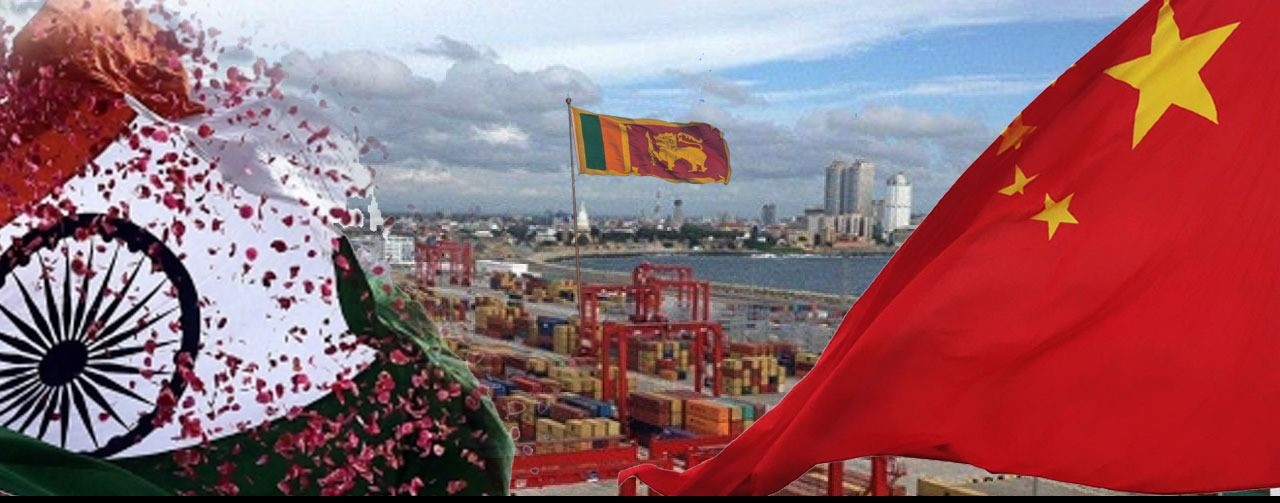
Sri Lanka awards port project to China after dropping Japan, India

Sri Lanka will tap a Chinese company for a port project in Colombo, its largest city, that had been awarded to Japan and India before the partnership was scrapped early this year.

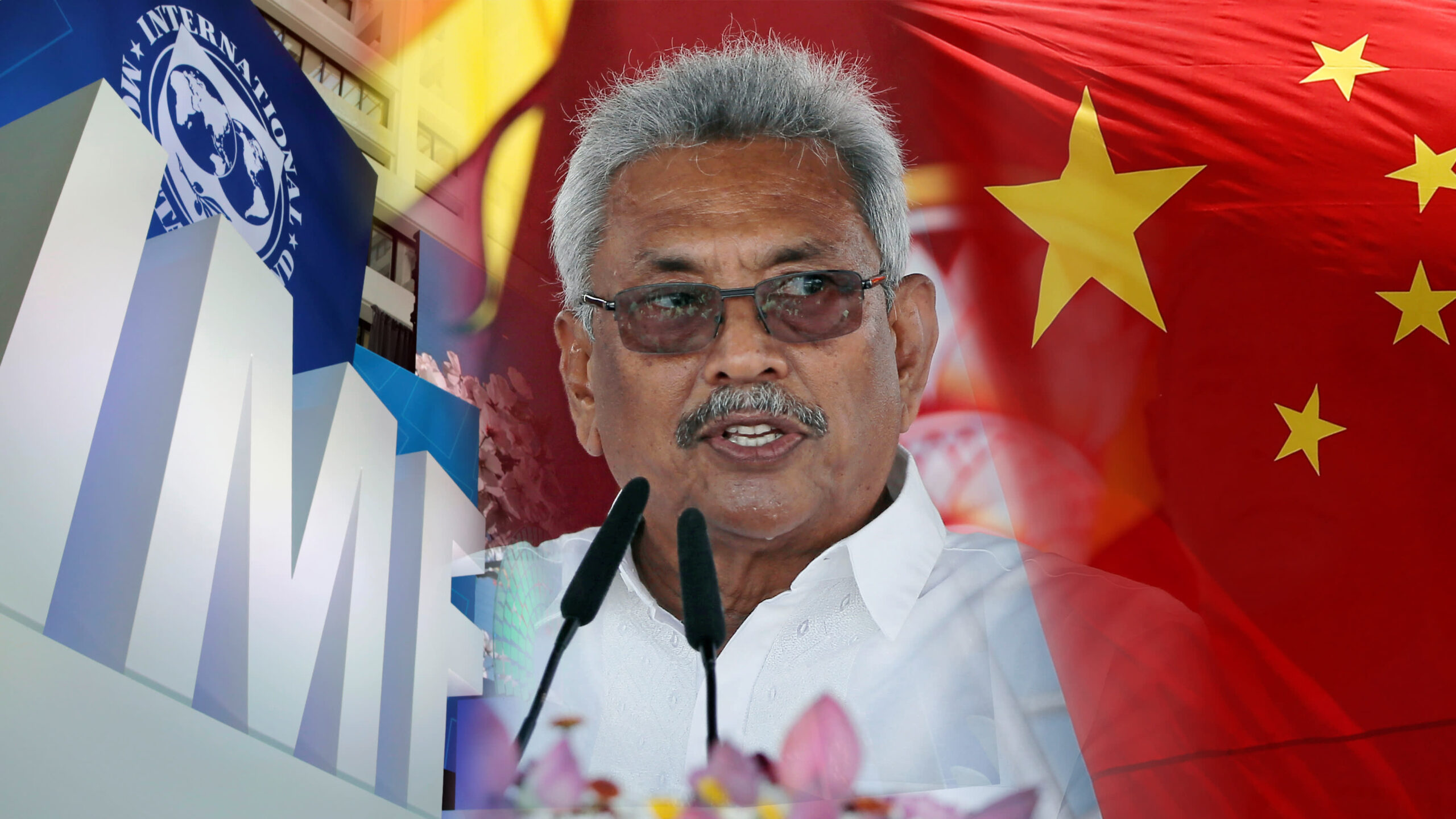
The decision highlights Colombo’s balancing act and comes a month after Indian conglomerate Adani Group was awarded another deal worth over $700 million to develop the West Container Terminal at the Colombo port. President Gotabaya Rajapaksa has said he wants to be “neutral” in Sri Lanka’s relations with India and China as the nation struggles with a shortage of foreign currency.

His cabinet on Tuesday agreed to have state-run China Harbour Engineering develop the Eastern Container Terminal while stipulating that local authorities would handle all operations. It cited recommendations by a cabinet-appointed committee as the basis for the decision.

The apparent pro-China tilt of Rajapaksa’s government is seen as a factor in the change of plans. Beijing has invested heavily in projects on the strategically positioned island under its Belt and Road infrastructure initiative.

Sri Lanka had signed a memorandum of understanding with Japan and India in May 2019, under previous President Maithripala Sirisena, to jointly develop the Colombo terminal. The operating company would be 51% owned by the Sri Lankan government, with the rest held by Japan and India.

Rajapaksa, who took office in November of that year, indicated at first that the project would stay on course.

That changed this past February, when the cabinet decided that the operating company would be wholly owned by Sri Lanka, pushing Japan and India out of the project. The Japanese government called the unilateral move “regrettable.”

China has continued to provide financing for Sri Lankan infrastructure, taking control of projects such as roads and port facilities in the process. Concerns have been raised that this support is pushing the country into a debt trap, as was seen in a 2017 lease deal of the Hambantota port in the southern coast of the island. The previous government leased it out to a Chinese state-run company for 99 years, in return for $1.1 billion as a part of Colombo’s efforts to repay debt to China.

Source:Nikkei Asia

Posted in Uncategorized

Scotland Police will not renew training contract with SL Police

Scotland Police has said that they will not renew their training contract with Sri Lanka’s police force during the remainder of the agreed period, which ends in March 2022, citing human rights concerns.

Chief Constable of Police Scotland Iain Livingstone told Scottish authorities that they have informed the British High Commission in Colombo, to advise that they are not going to seek a renewal of its engagement to support policing in Sri Lanka.

“Our training in Sri Lanka was suspended in early 2020. We have not deployed to Sri Lanka since that time, because the overseas Security and Justice Assistance assessment (OSJA), require a review to accurately reflect the current security and human rights issues in the region, which have changed since our initial deployment after the end of the Civil War in 2010,” he said.

He also said that the OSJA assessment review remains incomplete.

“As such there will be no further deployments of Police Scotland officers to Sri Lanka during the remainder of the agreed period, which ends in March 2022,” he has said.

“We remain, of course, committed to supporting the international development of policing services right across the world, so that we can enhance and enable human rights or we can underline the values that we hold dear of integrity, fairness and respect. Those values will always be at the heart of the work that we deliver in Scotland and at the heart of everything we do internationally”, he added.

Earlier, Human Rights Watch (HRW) urged the international community, including the UK government’s Police Scotland, to suspend assistance until the SL government takes concrete steps to investigate police abuses.

“Sri Lanka’s police are increasingly killing and abusing people under cover of the Covid-19 pandemic measures and an anti-drug campaign,” the HRW earlier stated.

Special team to scrutinize quality of all ferries in EP

A special team will be dispatched to inspect the quality of all ferries currently in operation in the Eastern Province, Eastern Province (EP) Governor Anuradha Yahampath said.

She said the team will be headed by the Police, Engineering Division of the Provincial Road Development Authority and the Navy, she said.

She made this statement when she visited the Kinniya Hospital this morning to see the people receiving treatment for injuries after a barge capsized in the Kurinchankerni area in Kinniya.

“We all need to make sure that such incidents do not happen again. This is not the time to point finger at each other. After the war, higher number of bridges in Sri Lanka were built in the Eastern Province. That is during the Mahinda Rajapaksa government. The longest brige in the Eastern Province also included with this. There was an alternative route but people did not want to use it. We will take further action on the recommendations contained in that report.

If there are culprits, we will not hesitate to take action against them. She said no one can evade responsibility.

However, at present, the transport facilities required by these people are being provided by the Navy, she said.

In addition, the government has paid attention to completing the work on this bridge as soon as possible, the governor added.

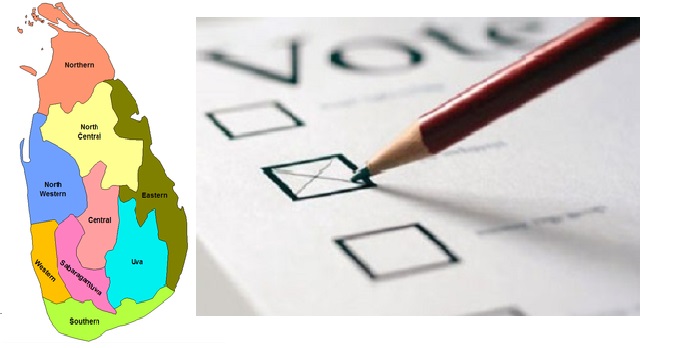
Sri Lankan delegation visits India to observe on ground operation of election machinery

A delegation of Sri Lankan election officers visited India to observe the operation of election machinery on the ground level.

The Election Commission of India entrusted this responsibility to the District of New Delhi.

A short programme was also held at the AC-38 Voter Centre in the Delhi Cantonment area, a statement from the office of the Chief Electoral Officer said.

The visiting delegation from Sri Lanka was amazed to learn about the effective utilization of information technology in election offices and expressed interest in incorporating it into the Sri Lankan election machineries, the statement said.

During the event, the visiting delegation was given information on the various forms, including EROnet, GarudaApp, Voters Helpline app, PwD app, NVSP portal, Roll of BLOs, and the 1950 helpline. (ANI)

Posted in Uncategorized

Divisions within Government on seeking IMF help

Amidst proposals and recommendations by various economists and international rating agencies to seek International Monetary Fund (IMF) assistance, the Government of Sri Lanka is divided on seeking such assistance, both within the Cabinet of Ministers and the parliamentary group, according to Co-Cabinet Spokesman and Minister of Mass Media Dullas Alahapperuma.

Speaking during the Cabinet press briefing held yesterday (24), he admitted that there exists contradicting views within the aforementioned groups and stated that the Government will consider the pros and cons of both views and will implement the more favourable view. However, he further claimed that as of now the Government is yet to reach a final decision on the matter.

“Last week, an extensive discussion was held on whether to seek IMF assistance and various views were put forward by the Cabinet of Ministers on the pros and cons of working with the IMF. Similarly there exist two contrasting views among the parliamentary group as well,” he added.

According to Alahapperuma a comprehensive discussion on the matter was carried out by the Cabinet of Ministers last week where differing views were disclosed, setting out the pros and cons of working with the IMF.

During the press briefing, the need to explore the possibilities of securing a bailout from the IMF due to the increasing foreign reserves crisis was discussed.

Sri Lanka’s foreign reserves have, as per Central Bank of Sri Lanka (CBSL) data, fallen to $ 1.6 billion by the end of October from $ 2.1 billion at the end of September.

During this Cabinet meeting, Minister of Energy Udaya Gammanpila cautioned that the country was treading a very dangerous path if it didn’t formulate a proper plan to address the foreign reserves crisis. He proposed that the Government approach the IMF.

Explaining further he stated: “Although the IMF will lay down conditions in order to support us, we are still in a situation where we could bargain and negotiate the conditions,” Gammanpila explained to the Cabinet, adding that delaying such a move would put Sri Lanka in a worse situation that might compel the Government to go begging to the IMF. “Once we are in a worse situation a few months down the line, we will not be in a position to negotiate and will have to accept their (IMF) conditions.”

However, Minister of Trade Dr. Bandula Gunawardana, Minister of Water Supply Vasudeva Nanayakkara, and the Minister of Finance Basil Rajapaksa opposed seeking IMF assistance, claiming that the Government would not be able to persuade the people to accept the IMF’s conditions in return for financial support.

Nanayakkara observed that based on past experience, the IMF would call for the slashing of subsidies and harsh measures to bridge the budget deficit. Dr. Gunawardana also agreed and observed that the people would not be able to bear the conditions.

Adding to this view, Minister of Finance Basil Rajapaksa had stated that the Government will not be able to justify turning to the IMF. He added that the IMF conditions would not be marketable to the people. Meanwhile, CBSL Governor Ajith Nivard Cabraal too stated on Tuesday (24) that Sri Lanka will not seek assistance from the IMF.

Accordingly, as per reports, the Cabinet of Ministers had debated on the pros and cons of seeking IMF assistance for a one-hour period, where they had considered slashing subsidies now and resolving the crisis in the long term against continuing with the status quo and eventually being compelled to cut back on the import of essential items to resolve the forex issue.

The Cabinet meeting had concluded without reaching a final decision on the matter nor had they come to an agreement on an alternative programme to address the foreign reserves crisis.

Posted in Uncategorized

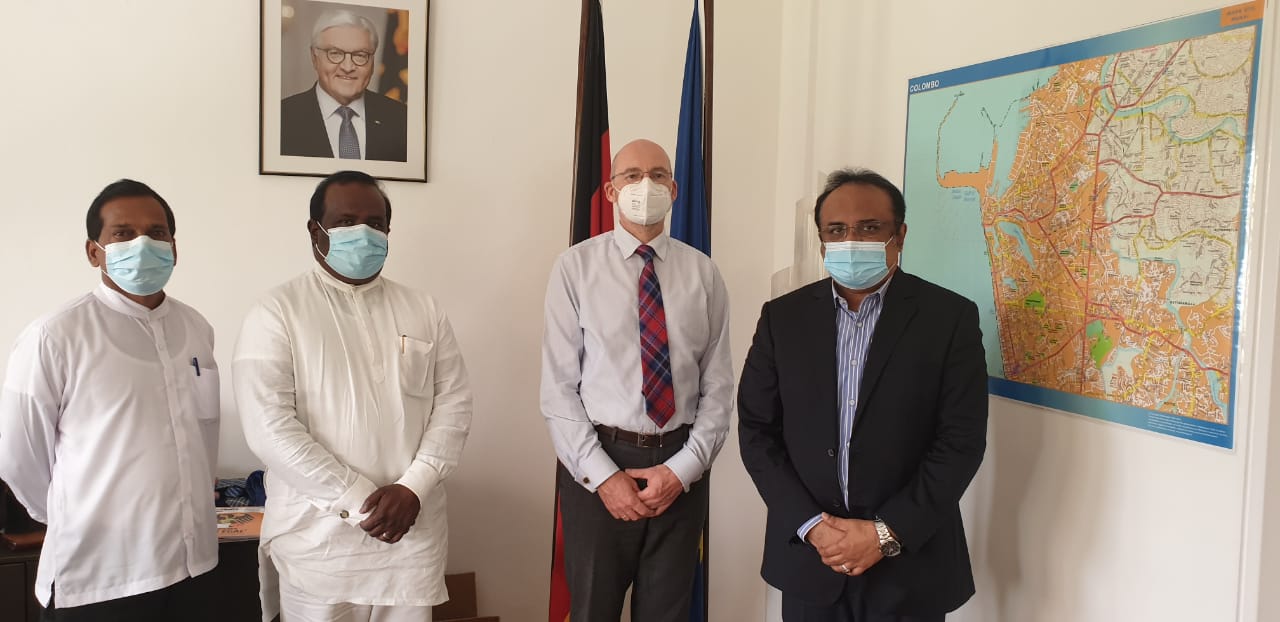
TNA met German Ambassador for Sri Lanka

The TNA delegates held a meeting with the German Ambassador Excellency Holger Seubert and his deputy Olaf Maichow. This politically important official meeting took place at the Embassey in Colombo on Wednesday 24 November 2021 at 10 am.

It was attended by TNA MPs Selvam Adikalanathan, Vino Noharathalingam, and TELO media spokesperson Surenthiran.

The full implementation of the 13th Amendment proposed in the UN Resolution in an attempt to halt the land grabbing and ethnic dispersal a major issue faced by the Tamil people, Provincial Councils Elections, UN 46/1 Resolution, political solution, Prevention of Terrorism Act, its implications on Tamils, GSP tax concessions, were discussed.

The emphasis on the parties involved in the Tamil cause to voice unanimously, its significance, the steps taken for it, their progress, supporting parties and future moves were also explained by the Tamils side.

This is the most politically significant meeting of the Tamil side with Germany, an international super power, important stake holder in the European Union and in Europe, and a close ally of India lasted for almost an hour.

Surenthiran G
Media Spokesperson TELO
Tamil National Alliance

Human rights situation in SL continues to deteriorate: UK

The human rights situation in Sri Lanka continued to deteriorate during the first half of 2021, the United Kingdom said in its latest report on the global human rights situation.

This statement provides an updated assessment of 31 priority countries from Jan.1 to June 30, 2021 and Sri Lanka is among the 31 Human Rights Priority Countries.

“The January 2021 report on Sri Lanka by the Office of the UN’s High Commissioner for Human Rights (OHCHR) expressed deep concern over “trends emerging over the past year, which represent clear early warning signs of a deteriorating human rights situation and a significantly heightened risk of future violations”.

The UN Human Rights Council (UNHRC) adopted Resolution 46/1 in March, expressing serious concern about these trends, and stressing the importance of a comprehensive accountability process for all human rights violations and abuses committed in Sri Lanka,” it said.

“Security forces increased their surveillance and intimidation of human rights activists and their use of the Prevention of Terrorism Act, with a number of arbitrary arrests. The government proposed new regulations with powers to arrest and send individuals to rehabilitation centres to be ‘deradicalised’ with no judicial oversight or requirement for further process,” the Foreign, Commonwealth and Development Office (FCDO) published the 2020 Annual Human Rights and Democracy Report issued in July 2021 stated.

The report provided an assessment of the global human rights situation, and set out the UK Government’s thematic, consular, and programme work to advance human rights throughout the world. It focused on 31 countries where we are particularly concerned about human rights issues, and where we consider that the UK can make a real difference.

“The President pardoned a convicted murderer on death row and appointed controversial individuals to lead independent institutions such as the Office of Missing Persons. The government initiated activity to obstruct accountability in a number of emblematic human rights cases. There were several deaths in custody which the Sri Lankan Bar Association described as having “all the hall-marks of extrajudicial killings.”

“Government marginalisation of minority groups continued, with the banning of several groups including Tamil and Muslim welfare organisations, and restrictions on memorialisation events particularly for communities in the North and East,” the reported added.

Posted in Uncategorized

Be careful what you wish for – warns President

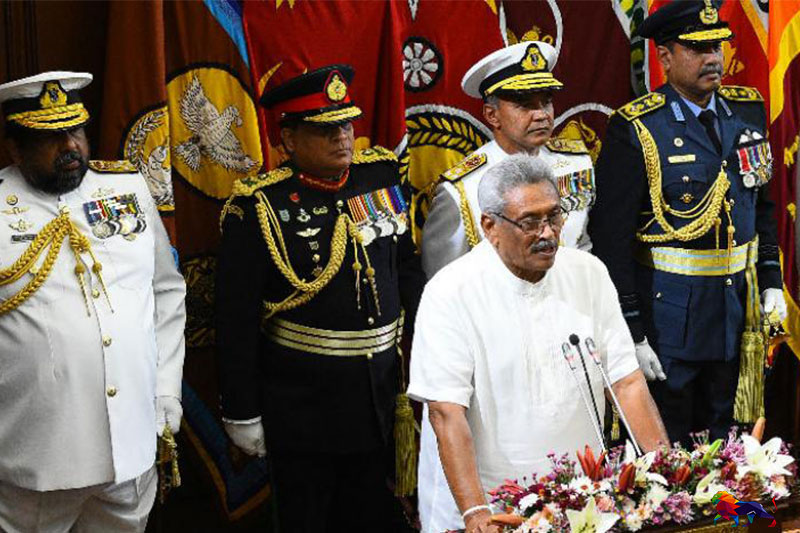
Sri Lankan President Gotabaya Rajapaksa warned to revoke the civic rights to those responsible for the 2019 Easter Attacks by an act of parliament.

“If necessary we can take action to ensure they do not repeat those offenses,” he said while slamming the Yahapalana Government (2015 – 2019) for showing no regard to national security, and eventually being held accountable for failing to prevent the 2019 Easter Sunday Attacks.

“They ruined the intelligence services and demoralized the military power by imprisoning war heroes,” he told a gathering on Wednesday (24), after opening the New Kelani Bridge in Colombo.

He said the Presidential Commission of Inquiry appointed by the previous government clearly mentions those who need to be held responsible, from the President, Prime Minister to the entire Cabinet of Ministers.

President Rajapaksa said his government has a 2/3 majority, and the government is prepared to revoke the civil rights of those accountable for the attacks.

“If you are demanding for something, be careful what you wish for,” he said.

He also questioned if the present opposition is the alternative to replace him and his government, while noting that he proved the critics wrong that he would not win without the votes of the minorities and also a 2/3 majority in parliament.

China’s ZPMC wins Sri Lanka STS and gantry crane deal

China’s Shanghai Zhenhua Heavy Industries Company Limited has won a deal to supply 14 ship-to-shore cranes and 40 rail mounted gantry cranes for a deep water terminal in Sri Lanka, a government statement said.

The cabinet of ministers had approved the deal to buy the cranes from ZPMC for the Eastern Container Terminal of the state-run Sri Lanka Ports Authority.

Six parties have bid the contract.

ZPMC has a unit in Sri Lanka as a joint venture with Access Engineering which is servicing cranes already in operations.

Separately, China Harnbour Engineering and Access also won a civil works contract to build Phase II of a partially build East Container Terminal.

Posted in Uncategorized

Will New Delhi provide succor to struggling Sri Lanka? By P.K.Balachandran

Sri Lankan Finance Minister Basil Rajapaksa is planning to visit New Delhi at the earliest, to seek from Prime Minister Narendra Modi, urgent help to tide over the economic crises in the island, especially the part concerning foreign debt repayment. According to sources, a request has been made for an appointment with Modi. If the appointment is given, the Lankan Minister will make a day’s trip.

As stated by Foreign Minister G.L.Peiris, Basil Rajapaksa’s agenda is wide – to seek loans, investment and economic cooperation. Rescheduling debt repayment could be an unstated item, as Sri Lanka had already sought it earlier from India and China.


But experts wonder if a hurried one-day trip will help Sri Lanka, when the agenda is large, and lacking in focus. There is a manifest absence of detailed planning with the involvement of both sides. Further, it is not even clear if the Sri Lankans have worked out details to make the discussions useful.

During the virtual bilateral summit between Indian Prime Minister Modi and Sri Lankan Prime Minister Mahinda Rajapaksa in September 2020, the two leaders agreed to deepen cooperation in renewable energy with particular emphasis on solar projects under the US$ 100 million Line of Credit from India. Then on 16 June 2021, the agreement in this regard between the Government of Sri Lanka and the Export-Import Bank of India, was exchanged by the High Commissioner of India to Sri Lanka, Gopal Baglay, and the Secretary to the Treasury, Mr. S.R. Attygalle, in the presence of Sri Lankan President Gotabaya Rajapaksa. But Colombo is yet to chalk out plans to utilize the existing US$ 100 million Indian line of credit.

The other nagging question is whether, in the foreseeable future, Sri Lanka will be able to repay loans even if there is rescheduling.


Parlous State

Be that as it may, if an urgent meeting is being sought with Modi, it is because of the parlous state of the Lankan economy. According to the Central Bank of Sri Lanka, the total outstanding government debt is LKR 15 trillion and the Debt/GDP ratio is 101%. 60% of the total debt is domestic and 40% is foreign.

In April 2021, foreign debt amounted to US$ 35.1 billion. Out of the US$ 35.1 billion, 47% (US$ 16383.4 million) was accounted for by international market borrowings; 10% (US$ 3388.2 million) was owned to China; 13% (4415.7 million) to the Asian Development Bank; 9% (US% 3230.9 million) to the World Bank; 2% (US$ 859.3 million) to India, and the rest was owed to others.

Sri Lanka’s gross official foreign exchange reserves fell to US$ 2,267 million in October 2021, down 73% August 2019.

Meeting foreign-currency debt-servicing needs for 2022 will be government’s immediate concern, economic commentator Dinesh Weerakkody says. According to him, two big payments are due in 2022 – a US$ 500 million bond in January, followed by US$ 1 billion of debt maturing in July. It is estimated that a total of US$ 5 billion will be required to service debt obligations (principal plus interest) and other commitments in 2022.

In 2020, imports were reduced by approximately US$ 3.9 billion (a 20% reduction in comparison to 2019) resulting in a US$ 2 billion drop in the trade deficit. This gave the government temporary breathing room to manage foreign debt repayments in 2020, points out Umesh Moramudali, a Colombo University economist in his detailed paper in The Diplomat.

Moramudali warns that with the increase in oil prices in the global market and an expected post-COVID economic revival in Sri Lanka in 2022, fuel import bills will rise again, putting further pressure on foreign reserves. Referring to the government’s policy of barring imports to save foreign exchange, Moramudali argues that the strategy of managing foreign debt through curtailing imports is not a sustainable solution for a country like Sri Lanka, in which more than half of imports are intermediary and capital goods.


“The continuous restriction of imports will curtail economic growth. which is not something that Sri Lanka can afford right now,” he avers.

Sri Lanka has resorted to issuing International Sovereign Bonds (ISB) and roll over of foreign loans. Successive have been swearing by ISBs. This is because, unlike the IMF and concessionary loans, the ISBs carry few or no conditions. But the terms are not favorable for poor countries with low foreign exchange reserves.

In a stinging comment on the penchant for ISBs, Moramudali says: “ISBs are commercial borrowings, have a short payback period, high interest rates, and no grace period. ISBs have a payback period of 5-10 years with an annual interest rate above 6% to be paid biannually. On top of that, there are principal payments – in other words the total borrowed amount of an ISB is settled at the bond maturity date, all at once, rather than being distributed over the years through annual repayments. Therefore, when an ISB matures, foreign debt repayment requirements skyrocket, resulting in a large foreign currency outflow. This leads to significant BOP vulnerabilities. Consequently, even if the foreign debt-to-GDP ratio is less than what it was two decades ago, Sri Lanka’s vulnerabilities are a lot more severe and alarming, because the debt dynamics of the country have completely shifted to a new paradigm.”


Unwise Rejection of IMF

Sri Lanka is adamantly opposed to seeking IMF assistance because the IMF will impose conditions related to economic management which its populist governments have tended to sneer at. But what Colombo does not realize is that Sri Lanka might not be able to maintain a sufficient level of foreign currency reserves and meet foreign debt repayment obligations in the absence of IMF assistance, Moramudali points out.

“With Sri Lanka’s low sovereign credit ratings and the ongoing pandemic, issuing ISBs does not seem like an easy option for the Sri Lankan government (indeed, it looks almost impossible in the near term),” he observes.

Due to the fear of COVID and lockdowns, there has been a great contraction of trade, low tax revenue, and lack of Foreign Direct Investment (FDI) in Sri Lanka. Trade contracted relative to GDP, falling from roughly 33% in 2000 to roughly 13% in 2019. Tourism has completely collapsed because, unlike the Maldives, Sri Lanka has been too scared of opening its borders to foreigners. About 4 million of a total of 21 million Sri Lankans depend on tourism directly or indirectly. These were at the end of their tether in 2021.


Failure to provide comprehensive and consistent, long-term solutions to address structural weaknesses in the Sri Lankan economy has resulted in Sri Lanka’s running into serious Balance of Payment (BOP) crises every other year. Sri Lanka has been relying heavily on foreign loans for development purposes over the last four decades and has now gone in for swaps with a number of countries.

Swaps

Sri Lanka had sought assistance from China and India to resolve the foreign exchange crisis. In March 2021 Sri Lanka got a US$ 1.5 billion three-year swap facility from China. In August 2021 it got US$ 400 million swap with the Reserve Bank of India. Sri Lanka had signed the swap deal available to SAARC countries in 2020 and repaid it in February 2021 after rolling it over once. It entered into a SWAP deal for US$ 250 million with Bangladesh too.


Silver Lining

But there is a silver lining in this dark cloud. It is that Sri Lanka did not default on loan repayments even in 2020 when conditions were excruciatingly bad. It repaid the US$1 billion bond by its deadline. A further US$ 400-500 million in other commitments were met. It kept intact its reputation for honoring sovereign debts.