Lanka tightlipped over Indian protest over deaths of fishermen

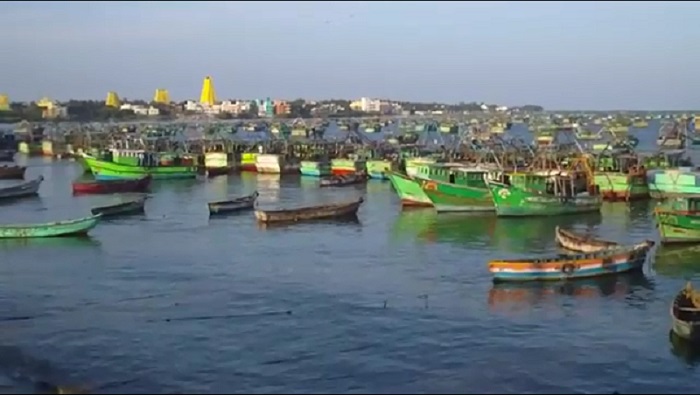
Colombo has not responded, and is unlikely to respond, to New Delhi’s strong demarche earlier this week over the death of four fishermen on board an Indian poaching vessel which sank off

Sri Lanka’s northern Delft Island after a mid-sea collision with a
Sri Lanka Navy boat. The Foreign Ministry said it had no statement and that the matter would be under the Attorney General’s (AG’s) Department, the Defence Ministry or the Fisheries Ministry. The AG’s Department also had no response. The Defence Ministry said its position was contained in Navy media statements which largely offered details of the incident.

“The death of the fishermen is a very tragic incident,” Fisheries Minister Douglas Devananda told the Sunday Times. “We need to resolve this urgently to ensure the livelihood and safety of the fisher communities of the two countries without aggravating the issue with incidents like this.’

He was assigned his portfolio to bring about a solution to the longstanding dispute, the Minister pointed out. But despite several attempts and discussions, there has been no finality. The matter was even raised during the visit to Colombo earlier this month of Indian External Affairs Minister S. Jaishankar.

Minister Devananda, too, had no specific reply to India’s demarche. But his office this week appointed a three-member committee headed by the Ministry Secretary to look into illegal fishing activities by Indian fishermen in Sri Lanka’s territorial waters and to suggest measures to protect the fish stock from harmful fishing methods–mainly bottom trawling, a fishing method designated as illegal, unreported and unregulated (IUU).

The contents of the demarche, which is a petition or protest presented through diplomatic channels, were identical to the statement subsequently released by the Indian Ministry of External Affairs (MEA), authoritative sources said. It was delivered via Sri Lanka’s Acting High Commissioner in New Delhi while the Indian mission in Colombo also lodged a protest with the Foreign Ministry in Colombo.

The Indian statement expressed shock at the unfortunate loss of lives of three Indian fishermen and one Sri Lankan national following a collision between their vessel and a Sri Lanka naval craft. (The Sri Lankan national was a refugee resident in South India who was working on the Indian boat).

“Our strong protest in regard to this incident was conveyed by our High Commissioner to the Sri Lankan Foreign Minister today,” it continued. “A strong demarche was also made to the Sri Lankan Acting High Commissioner in New Delhi.”

It expressed “deep anguish” over the incident and called for issues pertaining to fishermen to be dealt with in a humanitarian manner. “Existing understandings between the two governments in that regard must be strictly observed. Utmost efforts should be made to ensure that there is no recurrence,” it said.

The Navy earlier said there were around 50 trawlers in Sri Lankan waters that night. One of these “with aggressive manoeuvres resisting the arrest” collided with the Navy craft, lost stability and sank. The Navy vessel was also damaged. The clash occurred just 15km North-East of Delft Island.

“It is quite evident that Indian fishing trawlers poaching in Sri Lankan waters are making aggressive manoeuvres resisting their arrest by SLN [Sri Lanka Navy] units time and again,” the Navy said. “In such backdrop, Sri Lanka Navy on a number of early occasions had informed Indian authorities to make the Indian fishermen aware of the vulnerability attached to such acts performing with scant regard.”

Meanwhile, agitating Indian fisher groups in Rameswaram have cancelled a planned march to Katchchativu Island yesterday after an Indian Union Minister, Dairying Giriraj Singh, assured them there would be no recurrence of such incidents. He told fisher leaders that India took up the issue with the Sri Lankan Government in ‘strong terms’ and assured safety in the future.

Fishermen were to go towards the island with black flags, protesting the continuing arrests of Indians by the Sri Lankan Navy and claiming they had a traditional right to fish around that area.

Rameswaram Fishermen’s Association President P. Sesuraja told the Sunday Times: “This is totally unacceptable. We have strong suspicions on the death of our fishermen. That’s why we have requested that those bodies should be subjected to re-post-mortem here in India after we saw their condition.”

The Sri Lankan refugee who died is 28-year-old Samson Darvin from Gurunagar in Jaffna. His family was displaced to India during the final phases of the war in 2009 and lived at the Mandapam refugee camp in Rameswaram. They have requested Indian authorities to have his body repatriated to India. Jaffna Magistrate A. Peter Paul issued a directive to conduct post-mortem examinations on all the deceased before the bodies were sent back to India through the Indian Coastguard yesterday morning.
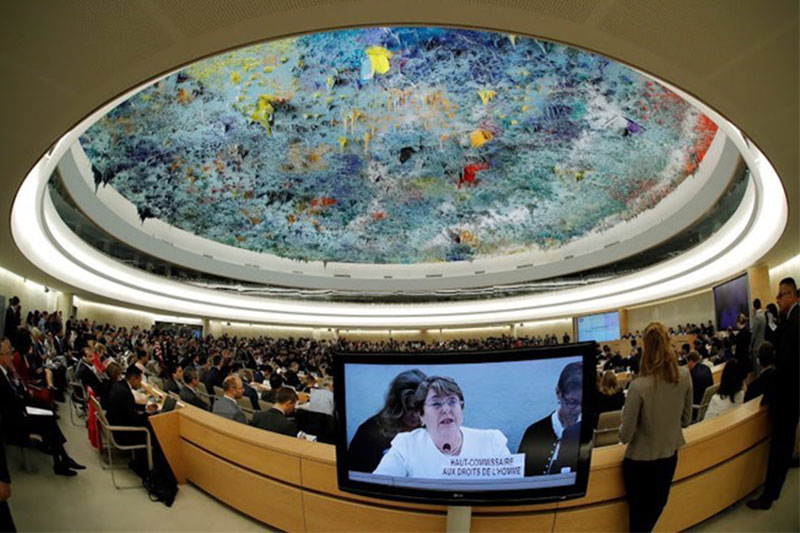

UNHRC Chief warns of asset freezes and travel bans for Sri Lankans

The United Nations Human Rights High Commissioner’s latest report on Sri Lanka goes so far as to suggest targeted sanctions such as asset freezes and travel bans for Sri Lankans “credibly accused of human rights violations”.

The report is with the Sri Lankan Government and it has till January 27 to respond, said Foreign Secretary Admiral (Prof) Jayanath Colombage. High Commissioner Michelle Bachelet even recommends starting criminal proceedings in the International Criminal Court (ICC) and the setting up of an international mechanism to look into allegations of and gather evidence on war crimes.

“It refers to people against whom nothing has been proven,” Admiral Colombage said. “They are accused. There are certain things in the report that we feel are completely not required at this juncture. We feel Sri Lanka is a much more peaceful and stable than any of the countries trying to discredit us.”

The Government would go public with its position once it was finalised, the Secretary said.

According to him, there are discussions every day in preparation for this. Apart from support from domestic experts, volunteers in some other countries are also sending their observations and input which is all being collated.

“To me, this is worse than previous reports because they are referring also to last year with passing reference to the war, saying there is now a dangerous trend emerging,” he said. Sri Lanka has fulfilled nearly all the commitments made by the previous administration to the UN Human Rights Council (UNHRC) through resolution 30/1 except a judicial mechanism with, among others, foreign judges.

“We believe these reports [of the High Commissioner] are based on shadow reporting from here and the Tamil diaspora’s influence,” Admiral Colombage said. “They are not bona fide.”

Meanwhile, Colombo has still not decided to grant consensus to a new resolution that will be presented at the UNHRC sessions in February-March by the Sri Lanka Core Group led by Britain. The Government has already maintained that it has withdrawn from resolution 30/1 and will not co-sponsor any others. But a consensus will see Sri Lanka refrain from objecting at the UNHRC.

The draft resolution is also now with the Sri Lanka Government and it intends to respond “paragraph by paragraph” by early this week, the Secretary said. A position has not been decided on yet but Colombo has maintained that a consensus can be agreed upon only if the text could categorically be agreed upon by both sides.

“We have to go through the meat of the resolution now,” he pointed out. “The onus is on our side”.

Posted in Uncategorized

Sri Lanka Seeks Diversion, Not Justice, Over Wartime Abuses

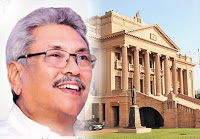
Sri Lanka’s grim record is under scrutiny at the United Nations Human Rights Council in Geneva, so the government of President Gotabaya Rajapaksa has announced yet another internal inquiry. Foreign governments should not be swayed by this disingenuous attempt to avert urgently needed international action.

There have been at least a dozen domestic commissions of inquiry during the decades of Sri Lanka’s civil war, often created to forestall international pressure on human rights. None has led to prosecutions, or helped families trace missing relatives. Their findings have often gone unpublished, and recommendations never implemented. International observers, UN experts, and the UN high commissioner for human rights have repeatedly highlighted deep systemic problems in Sri Lanka’s judicial processes.

The Human Rights Council has engaged on Sri Lanka for years. Atrocities at the end of the war with the Liberation Tigers of Tamil Eelam shocked the world in 2009, and a series of UN reports found evidence of war crimes and crimes against humanity. In 2012 the council passed a resolution calling on Sri Lanka to implement recommendations of an earlier inquiry. When that did not happen, it recognized the need for an international role to address international crimes.

In 2015 Sri Lanka joined a consensus resolution of the Human Rights Council with commitments to ensure truth, justice, reparation and guarantees of non-recurrence including an accountability mechanism involving international judges, prosecutors, investigators, and defense lawyers. There was progress, albeit slow, which encouraged the council to extend the mandate.

But in November 2019, Gotabaya Rajapaksa was elected president and quickly reversed that progress. Last February, the government said it would no longer honor its commitments in the council resolution. This is not surprising. As defense secretary between 2005-2015, Rajapaksa is implicated in many of the worst abuses. As president he has appointed alleged perpetrators to senior positions, and even pardoned one of the few soldiers ever jailed for killing civilians.

Fear has returned to Sri Lanka as victims of past abuses, activists, journalists, lawyers, and even police investigators and are silenced. Rajapaska’s government has persecuted vulnerable minorities, and this month it demolished a monument to Tamil civilian victims of the war.

The warning signs are obvious. It is crucial that the Human Rights Council adopts a new resolution to ensure continued monitoring, as well as the collection, analysis, and preservation of evidence for future prosecutions. Member countries should not be swayed by the latest outrage or false promises of Sri Lanka’s government.

Your tax deductible gift ca

Posted in Uncategorized

Trade unions redouble efforts to keep India out of ECT

A selection of trade unions yesterday doubled down on attempts to keep the East Container Terminal (ECT) ownership and development completely under the Government with a new proposal to a Cabinet sub-committee.

The National Movement for the Protection of the Colombo Port East Jetty (NMPCPEJ) yesterday handed over their proposals for the development and management of the ECT to the head of a recently appointed Cabinet sub-committee.

The sub-committee is responsible for discussing ECT investment with a number of Colombo Port trade unions and organisation which want to the Government to develop the terminal without foreign stakeholders. The NMPCPEJ proposal was prepared after consultation between the 23 affiliated organisations.

According to Prassana Kalutharage, a trade union leader of the Sri Lanka Independent Port Employees’ Association (SLIPEA), the proposal was handed over the Ports Ministry Secretary U.D. Jayalal, who also heads the Cabinet sub-committee. The proposal includes two options for the Government to consider, with the first option expected to be complete in two years and the second, in three.

The proposal indicates that new equipment worth $ 65 million is needed to fully equip the terminal and claims that the funds for the new equipment has already been allocated in the Sri Lanka Ports Authority (SLPA). The proposal by the NMPCPEJ estimates the cost of construction and equipping the ECT at $ 486 million.

The proposed first option envisages the ECT completed in three stages within a two-year period. The proposal states that $ 74 million has already been allocated for the project by the SLPA and that a $ 125 million shortage can be accommodated by a commercial loan from the Bank of Ceylon (BOC) or another local bank at a 4.25% interest rate, to be repaid in six years.

The second option presented by NMPCPEJ proposes a three-phase development plan by changing the investment duration in order to avoid any loan facility. The new proposal will also be presented to President Gotabaya Rajapaksa and Prime Minister Mahinda Rajapaksa, unions assured.

Earlier this month, President Rajapaksa told trade unions ownership of ECT will be retained by the Government while a 49% stake will be held by India’s Adani Group. The President pointed out that after the present Government negotiated with India on the contract, it was possible to reach an agreement to retain 51% of the ownership and the control of the terminal under the Sri Lanka Ports Authority (SLPA).

Under the former Government, a tripartite memorandum of understanding (MoU) was signed between the SLPA, Japan and India to develop the ECT. Japan was to provide a loan of $ 500 million while India was to undertake the construction. However, the United National Party (UNP) this week denied that the MoU was designed to take ownership away from the Government.

Posted in Uncategorized

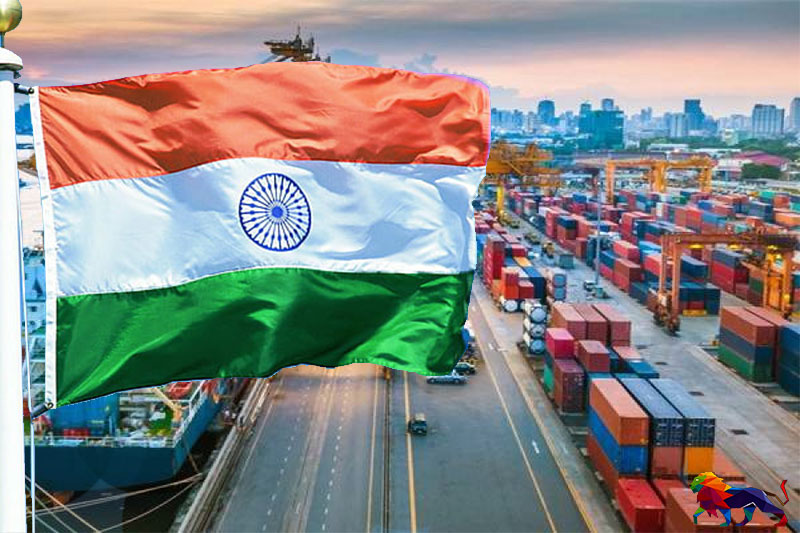
INDIAN COVID-19 VACCINE TO SL ON WEDNESDAY (27): PRESIDENT

A consignment of the Indian COVID-19 vaccine will be brought to the country on Wednesday (27th January), President Gotabaya Rajapaksa said on Saturday (Jan. 23).

The Head of State made this statement while participating at a ‘Gama Samaga Pilisandarak’ session at a village in Wallawita area on Saturday morning.

Posted in Uncategorized

Indian vessel sank in SL waters: Bodies of fishermen to be handed over to India

The bodies of four Indian fishermen who died when their boat collided with a Sri Lankan naval vessel would be handed over to the Indian Coast Guard today, a source said.

The bodies will be sailed from Kankesanthurai to the International Maritime Boundary for handing over.

Sri Lanka Navy launched a Search and Rescue (SAR) operation in search of the missing fishermen.

The Indian fishing boat collided with a Sri Lankan naval craft on January 18 while engaging in illegal fishing in the seas off the Delft Islands.

The incident sparked off when the fishermen resisted arrest. The Navy diving teams launched a SAR operation later, recovered corpses of fishermen of the fishing trawler.

The recovered bodies were then flown ashore by an SLN craft.

The crash also caused damages to the SLN Fast Attack Craft, which was later brought to Kankesanthurai harbour safely for necessary repairs.

Posted in Uncategorized

Treading a fine line in big power rivalries By P.K.Balachandran Weekend Express

Small nations, which are situated in strategically important places, have the unenviable task of managing Big Power rivalries. On the one hand, their geographical positioning is a boon because world powers seek their goodwill and could shower some benefits. But on the other hand, the location makes them vulnerable to military action or dubious blandishments which have the potential to abridge their sovereignty, even to the point of extinction.

These concerns were succinctly stated by the Sri Lankan Foreign Secretary and former Navy Commander Adm.Prof.Jayanath Colombage at a recent Pathfinder Indian Ocean Security Webinar with a galaxy of internal security experts participating.

The former navy chief regretted the militarization of the Indian Ocean Region (IOR) and the deleterious impact of securitization and militarization on the economies of the littoral States, especially the economies of small States. The latter lack human, material and financial resources for development and need fruitful connections with the world through the oceans.

Colombage asked in deep anguish: “Shouldn’t we be focusing of economic and social development and achieving Sustainable Development Goals by the target year of 2030?” He then went on to point out that the Asian Development Bank had estimated that the infrastructure needs of Asia and the Pacific would exceed US$ 22.6 trillion through 2030. If the required funds are not provided, there would be difficulty in achieving sustainable development goals, he warned.

“We can witness a slowing down of economies and socio-economic tensions. Human emotions could rise high and create fear and insecurity. This also results in extreme forms of nationalism. There is, and there will be, interruptions to Global Supply Chains,” he said.

Quad and BRI

Although the IOR has historically been important, there are now two new factors of gigantic importance, he points out. Firstly, there is the Indo- Pacific Strategy of the US, India, Japan and Australia, called the Quad. Secondly, there is China’s Belt and Road Initiative (BRI). The Quad is essentially defense and security-oriented, and the BRI is essentially economic, based on trade, infrastructure development and investment.

However, the US and its allies propagate the notion that the BRI’s development work is but a fig leaf to cover China’s security agenda and is a thinly veiled effort to enslave recipient countries by trapping them in unmanageable debt.

Sri Lanka’s Case

Stating Sri Lanka’s case, Colombage says that it wishes to have a free and open Indian Ocean with a rules-based maritime order to carry out maritime commerce, the development of maritime related infrastructure and establish connections to the global supply chain across the oceans. However, the development agenda has taken a backseat and the IOR has become an arena for strategic competition between the Big Powers, he bemoans.

“I like to call it a competition for RMB – Resources, Markets and (military) Bases. More and more governments, organizations and institutions worldwide are making the Indo-Pacific their conceptual frame of reference and thus the basis of their policies. However, they differ in terms of their objectives and emphasis on different policy fields,” Colombage notes.

The Quad’s resolve to dominate Indo-Pacific high seas is being questioned, he points out. The Quad is portraying itself as the principle driver of Indian Ocean maritime security. But Colombage wonders if the Quad is preparing for a “Cool War” ( a 21st.Century version of the 20 th.Century of the “Cold War”) behind the smokescreen of a laudable concern for free and unfettered navigation. Colombage contends that no single country can be the net-security provider in the IOR. He observes that the insecurity of one country is leading to insecurity of others. Because insecurities play such a dominant role in devising nations’ strategies that the IOR is characterized by increasing military/naval activity.

“It (the IOR) is one of the most militarized oceans in the world. For example, from 2008 to 2020, 575 warships from 29 different countries had visited Sri Lanka,” Colombage points out.

The IOR is characterized by a “huge mistrust and trust deficiency.” South Asia is militarily, politically and economically, a dynamic region but it sorely lacks a security consensus and regional interdependence which is the bedrock of a security consensus. There is also strategic ambiguity. On top of it all, the IOR is also a nuclearized region with two nuclear powers, India and Pakistan, having had violent confrontations several times in the last 72 years.

The impact of geographic proximity to large nuclear powers is greatly felt in smaller countries such as Sri Lanka, the former naval chief says. The security of an innocent small State could be gravely affected as a consequence of someone else’s war, Colombage points out.

According to the Lankan Foreign Secretary, the in the present context, the most important question to ask is: What is the purpose of free and open navigation? Is it for waging war and jockeying for power in the IOR or is it for a free flow of trade, investment, development and cooperation?

Stating Sri Lanka’s position on this matter, Colombage says: “We do believe that we need a rules-based order, as the survival of the State is most important for Sri Lanka. A rule-based order is one way to overcome problems of asymmetry. Sri Lanka is a small State and does not have any hegemonic intentions. We believe in Multilateralism and not in Unilateralism and do not like to see securitization of maritime trade and development.”

“Conversely, we wish to see a balance of power and not hegemonic power. We also would like to convey that Sri Lanka is not a piece of ‘Real Estate’ (to be parceled out among rival powers). Please respect Sri Lanka’s national interests.”

Five Principles To Ensure Independence

Colombage proposes a five-point program to sustain the independence of small States:

“In order to overcome being caught in the great power rivalry in the Indian Ocean, Sri Lanka has five pillars to its foreign policy. One is Neutrality. Technically, we are a non-aligned country, but we wish to remain neutral, at the same time maintaining friendly relations with everyone, which is number two. The third is not to get caught in major power games. We do not like to ‘hedge’ or ‘choose’ between States or jump on to one or the other of the bandwagons. We need to maintain strategic autonomy in the Indian Ocean. The fourth point is that Sri Lanka will not cede control of its strategic assets to foreign concerns. Investment, according to Sri Lanka’s vision articulated in President Gotabaya Rajapaksa’s ‘Vistas of Prosperity and Splendor’, should be in FDIs and joint ventures. But they should not lead to take overs. The Fifth point is, Sri Lanka does not want to be a strategic security concern to India, especially in maritime and air domains.

Posted in Uncategorized

Ukrainians cancel visit to Sri Lanka over PCR concerns

Over 200 Ukrainian tourists who were expected to arrive in Sri Lanka on a charter flight on January 19 under the Government’s pilot project, backed out of visiting the country while a further 100 tourists who were expected to arrive today, have cancelled their plans.

They have cancelled their plans following Sri Lanka’s health protocols which require every tourist to undergo three PCR tests if the stay is more than seven days, the Daily Mirror learns.

The charter flight which was expected to arrive with at least 214 tourists from Ukraine on January 19, flew into the country empty to take back the returning tourists while today, another flight is expected to arrive, but the number of arrivals have been reduced from an estimated 240 to 100.

Sri Lanka’s former ambassador to Russia Udayanga Weeratunga, who was part of the government’s pilot project told Daily Mirror that following the new health guidelines released for tourists on January 6 many tour operators in Ukraine and Russia had been reluctant to take fresh bookings simply because tourists were reluctant to undergo so many PCR tests during a short span.

Weeratunga said that in addition to undergoing a PCR test in their respective countries within 96 hours before flying to Sri Lanka, upon arrival here, tourists were required to undergo another PCR test upon their check-in at their hotel, another test on their fifth to seventh day and another test during their 14th day.

UK raises concerns with Sri Lanka on forced cremations

The United Kingdom (UK) has raised concerns on forced cremations with the Government of Sri Lanka.

The UK Minister of State for South Asia and Human Rights, Lord Tariq Ahmad of Wimbledon said he had highlighted the impact of forced cremations continuing in Sri Lanka.

Many, including the Opposition and public have raised repeated concerns over the forced cremations of Muslim Covid victims in Sri Lanka. The matter was raised in Parliament by the Opposition, while many protests were held near the Borella cemetery after the forced cremation of a 21-day old infant.

However, Health Minister Pavithra Wanniarachchi announced in Parliament recently that the stance of the Expert Committee to study the issue remains unchanged, and the remains of Covid victims will be cremated as per the health guidelines.

Commenting on the matter, Lord Tariq Ahmad said he raised concerns on the forced cremations of COVID-19 victims in Sri Lanka, including on faith groups, justice and accountability in this regard.

He said attention was focused on the matter ahead of the upcoming United Nations Human Rights Council session.

Discussions were held in this regard during a telephone conversation between Lord Tariq Ahmad and Foreign Minister Dinesh Gunawardena today.

The UK Minister of State for South Asia and Human Rights also announced that the UK and Sri Lanka are collaborating on climate change and trade.

Sri Lanka reports two more COVID-19 deaths Friday, toll rises to 278

Sri Lanka confirmed two deaths on Friday due to COVID -19 raising the death toll from the viral disease to 278, according to health authorities.

The Director General of Health Services confirmed the following deaths caused by COVID -19 virus infection and accordingly the total number of deaths due to COVID -19 infection in Sri Lanka is 278 by now.

01.The deceased is an 82 year old male from Colombo 08. He was diagnosed as infected with Covid-19 virus and transferred from a private Hospital in Colombo to IDH Hospital where he died on 22.01.2021. The Cause of death is mentioned as Covid pneumonia.

02.The deceased is a 51 year old female from Homagama. She was diagnosed as infected with Covid 19 virus and transferred from General Hospital Colombo to Base Hospital Homagama where she died on 22.01.2021. The cause of death is mentioned as Covid pneumonia, blood poisoning and kidney dysfunction.

Posted in Uncategorized