‘Will go to the IMF in January 2023 if December doesn’t work’

The Governor of the Central Bank of Sri Lanka Nandalal Dr. Weerasinghe says the government will go to the International Monetary Board in January 2023 if they misses the December timeframe.

Speaking to media today (24), Governor Weerasinghe said “most probably meeting the IMF target is too optimistic but if we miss that we still have time till January”.

The CBSL Governor said Sri Lanka is also hopeful of reaching an agreement with creditors as well.

He said “We should get the assurance from our bilateral creditors in the next couple of weeks. We are very confident on that with the way discussions are going on.”

The Governor also stated that money printing has drastically reduced in the first ten months of 2022 in comparison to the entirety of 2021.

Weerasinghe said the Central Bank printed money amounting to Rs.341 billion in 2021 while between January to October this year the sum reduced to Rs.47 billion.

Furthermore, the Governor condemned claims by politicians that he receives a monthly salary of Rs.2.5 million and a pension from the IMF.

Refuting the charges Weerasinghe said he receives the pension entitled to a retired CBSL official and privileges entitled to the Governor.

Meanwhile, the Governor was questioned over allegations levelled by former CBSL Governor Ajith Nivard Cabraal who released a book recently that claimed that Governor Weerasinghe is also responsible for the present economic crisis.

The Governor said he saw the cover of the book posted on social media, adding that he only reads the comments on the post which will depict the true story.

Financial partners should support basic needs in SL-HRW

Human rights organisation Human Rights Watch has urged Sri Lanka’s major foreign creditors, including China, Japan, and India to help restructure debt.

In a report by South Asia Director, Meenakshi Ganguly, the New York-based human rights watch dog stated that to stabilise the economy, international creditors should agree to restructure Sri Lanka’s debt so the country could secure final approval for an International Monetary Fund (IMF) loan and financing from other global agencies.

Full report:

The dramatic fuel shortages that accompanied mass protests in Sri Lanka earlier this year may have eased, but for millions of Sri Lankans the economic crisis is worse than ever.

This month, the United Nations renewed a humanitarian appeal, stating that 28 percent of the population faces food insecurity and that the poverty rate this year has doubled.

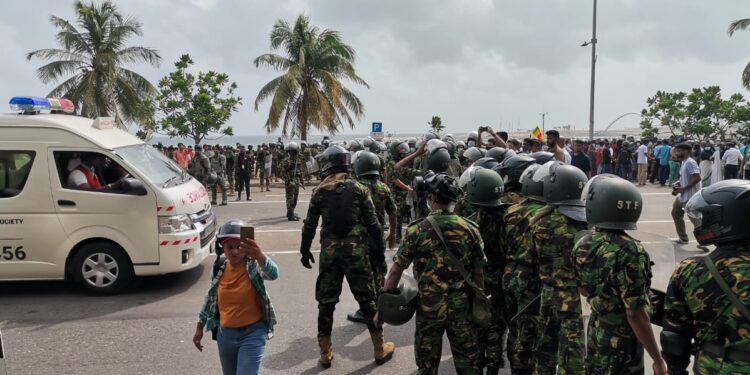
Food price inflation was over 85 percent in October, and acute shortages of foreign currency mean that many imports, including essential medicines, are scarce or unobtainable. Meanwhile, authorities have cracked down on peaceful protest. President Ranil Wickremasinghe has suppressed demonstrations and has used the notorious Prevention of Terrorism Act (PTA) to detain student activists. Wickremasinghe has even warned that he will again declare a state of emergency and deploy security forces in the event of major protests.

Without respect for human rights, including the right to peacefully protest, Sri Lankans cannot hold politicians accountable, whether for mismanagement or corruption. It is essential that Sri Lanka’s international partners, including the United States and European Union, press the government to fulfill its human rights obligations as an essential step towards addressing the crisis.

Sri Lankan economists fear the economic situation could deteriorate rapidly without action by foreign creditors, placing the basic needs of millions of people in further jeopardy. To stabilize the economy, international creditors should agree to restructure Sri Lanka’s debt so the country can secure final approval for an International Monetary Fund (IMF) loan and financing from other global agencies.

In April, Sri Lanka defaulted on over US$50 billion in debts to international creditors, and in September it reached a staff-level agreement with the IMF for a four-year, $2.9 billion bailout. The first tranche of that bailout would ease the crippling shortage of foreign exchange and unlock access to other funding, including from the World Bank and Asian Development Bank, which cannot provide new funding until the IMF agreement is completed.

Sri Lanka’s major foreign creditors, including China, Japan, and India, should urgently mitigate the adverse human rights impacts of the economic crisis. The IMF should use its procedures to make needed funds available as soon as possible, putting into place safeguards to protect people’s economic and social rights.

And the Wickremesinghe administration should respect fundamental rights, including to peaceful protest.

Dollar volatility cuts China’s swap in Sri Lanka reserves by $100 mln – Cenbank

Dollar variation has reduced the worthiness of Chinese swap in Sri Lanka’s reserves by $100 million, Central Bank Governor Nandalal Weerasinghe said.

China’s 10 billion yuan by the end of last year helped to boost the island nation’s reserves by $1.5 billion and this swap has been in the foreign currency reserves since then.

“The gross official reserves are estimated at US dollars 1.8 billion as at end September 2022, including the swap facility from the People’s Bank of China, equivalent to around US dollars 1.4 billion, which is subject to conditionalities on usability,” the central bank said in its monetary policy statement.

Central Bank Governor Nandalal Weerasinghe said the decline was due to dollar strengthening. The Chinese yuan has depreciated to 7.15 per dollar as of Thursday from 6.36 when the swap deal was done in December last year.

“It is in Chinese currency yuan. The US dollar variation will have an impact on that,” Weerasinghe told reporters at the post-monetary policy media briefing.

Posted in Uncategorized

Sri Lanka President ends import ban that raised an ugly stink

Sri Lanka President Ranil Wickremesinghe has ended a ban on the import of beauty care products and deodorants, slapped amidst the worst currency crisis in the history of the island’s intermediate regime central bank.

Sri Lanka’s beauty care industry sector had warned that it received a body blow from the import ban at a time when demand from customers were anyway hit and they were forced to shed staff.

Other small and medium industries also said they had run out of inputs and spares due to import bans.

From November 22, deo-odorants, anti-perspirants, shampoo, toilet waters and dental floss could be imported. Wigs and hair dryers were also allowed.

Sri Lanka’s economists got the power to print money in 1950 when a soft-pegged (intermediate regime) central bank styled after Argentina’s BCRA was set up.

In 1969 mostly after printing money for rural credit, economists misled the politicians in to enacting an import control law instead of tightening the monetary law of the country to prevent mis-targeting of interest rates.

Economists also caused politicians to enact draconian exchange controls, crimininalizing attempt to protect their savings from expropriation, instead of retraining their powers to suppress rates through open market operations.

In the 1970s, the entire economy was closed. In 1977 the economy was re-opened but the central bank was not restrained.

Three years before the Mercantilist import control law was enacted, J R Jayewardene who was instrumental in setting up the Latin America style central bank in 1950, hired the best classical economist in South Asia, BR Shenoy to give advice to the country’s economic bureaucrats.

“..[T]he Balance of Payments difficulties cannot be solved by intensifying the rigorous of exchange control and import restrictions; nor by extending the schemes for expanding domestic production to substitute import goods — the so called measures for “economising” on foreign exchange,” Shenoy wrote in 1966.

“Intensification of the rigorous of exchange control and import restrictions may reduce the
quantum of import goods flowing into the market.

“It cannot reduce the flow of moneys seeking to purchase goods, either for consumption or for investment. This flow of money is determined by the national product and the inflationary part of the Net Cash Operating Deficit.”

Over half a century later the same controls and the same money printing has continued.

Adhesive sheets, wooden planks, parquet, bags, trunks, mitten gloves, sails, brake linings, crucibles, refractory bricks, freezers and milk chillers would also be allowed.

Posted in Uncategorized

Sri Lanka’s gross official reserves at USD 1.7 billion by end October

Sri Lanka’s gross official reserves were estimated at US dollars 1.7 billion as of end October 2022, including the swap facility from the People’s Bank of China, equivalent to around US dollars 1.4 billion, which has certain conditionalities on usability, the Central Bank of Sri Lanka said today.

The Central Bank said that the merchandise trade deficit for the ten months ending October 2022 contracted significantly, owing to the robust export earnings and a substantial decline in import expenditure due to policy measures taken to curtail demand for imports, amidst the shortage in foreign exchange.

Workers’ remittances are expected to improve in the period ahead with rising departures for foreign employment, while the tourism sector is set to mark an improvement in view of the upcoming season for tourist arrivals.

Amidst the improvements observed in liquidity in the domestic foreign exchange market, the Central Bank continued to facilitate the import of essential goods to ensure the availability of energy, power and other supplies necessary for uninterrupted economic activity. Meanwhile, the exchange rate remained broadly stable.

The Central Bank said that risks to external demand could emerge amidst moderating global growth prospects in the near term, however, rising prospects of the tourism sector and workers’ remittances would help offset any negative spillovers to a large extent.

Meanwhile, in consideration of the current and expected developments, both locally and globally, the Monetary Board of the Central Bank of Sri Lanka, at its meeting held on 23 November 2022, decided to maintain the Standing Deposit Facility Rate (SDFR) and the Standing Lending Facility Rate (SLFR) of the Central Bank at their current levels of 14.50 per cent and 15.50 per cent, respectively.

The Board reiterated its continued commitment to restoring price stability and ensuring financial system stability, and remains confident that inflation would follow the projected disinflation path underpinned by the prevailing monetary policy stance, while supporting the economy to reach its potential over the medium term.

Posted in Uncategorized

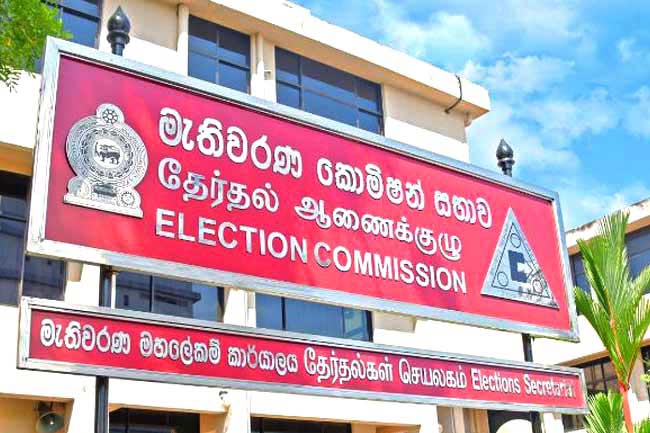
EC gets Rs. 10 bn from Budget 2023, purpose unclear

An allocation of around Rs. 10 billion has been made in Budget 2023 for the Election Commission (EC), although the commission is unsure whether this allocation was to be utilised for the Local Government (LG) Poll and/or any other poll to be held in the upcoming year (2023).

When The Morning asked Election Commission Chairman Attorney Nimal Punchihewa as to the purpose of these funds yesterday (23), he said: “We don’t know; we requested the money on an earlier occasion. This allocation was then reserved in the Budget. We are not clear as to which election this is allocated.”

On an earlier occasion, the Election Commission had requested the Ministry of Provincial Councils and Local Government for budgetary allocations to hold the LG elections.

Meanwhile, Punchihewa said that the EC has not received any advice from the Attorney General’s (AG) Department with regard to the EC’s power to declare the LG election in the wake of the enactment of the 21st Amendment to the Constitution, in response to a query by The Morning. And when questioned as to whether he is expecting a response within the course of this week, he said: “It depends on the AG.”

Earlier, the Election Commission was to seek legal advice from AG President’s Counsel Sanjay Rajaratnam on whether it has the power to declare the LG elections following the adoption of the 21st Amendment to the Constitution.

Speaking to The Morning, Punchihewa said on 7 November: “There are some legal problems regarding which we have to get advice on from the AG. Under the 21st Amendment to the Constitution, the tenure of all independent Commissions such as the EC will expire. Then, for an interim period, administrative matters could be carried out.

“However, the declaring of elections is a major matter. We do have the power to make decisions on major matters. Regardless, we have to get the legal view of the AG as to whether, under the 21st Amendment to the Constitution, we can declare elections,” he added.

Earlier, Punchihewa told The Morning that a declaration regarding the date of the LG Election will be made by early next year (2023) by the Election Commission. He noted: “Our expectation is to hold the LG Election before 20 March 2023.”

Posted in Uncategorized

Former President Gotabaya Rajapaksa summoned to court over pardoning murder convict

The Supreme Court Thursday issued a notice to former President Gotabaya Rajapaksa asking him to state his facts regarding the granting of presidential pardon to former MP Duminda Silva, who was sentenced to death for murder of a lawmaker in 2011.

Mr. Duminda Silva was sentenced to death for the murder of former MP Bharata Lakshman Premachandra.

The apex court issued notice to former President Gotabaya Rajapaksa to present his facts in response to a fundamental rights petition filed requesting the court to annul the decision to release him by granting a presidential pardon.

Accordingly, the Supreme Court has issued a notice to state the facts on the 16th of December.

Several people, including former MP Hirunika Premachandra, the daughter of Mr. Bharata Lakshman Premachandra, and his wife Sumana Premachandra, have filed these petitions asking for an order to revoke the presidential pardon granted to Mr. Duminda Silva.

Duminda Silva was sentenced to death on September 8th 2016 for shooting dead four people, including former parliamentarian Bharatha Lakshman Premachandra in October 2011.

Duminda Silva was released on 24 June 2021 under a presidential pardon granted by President Gotabaya Rajapaksa.

Posted in Uncategorized

OMP looks into LTTE abductions, LTTE surrenderers to Govt., and missing fisherfolk and refugees

Cases relating to abductions by the Liberation Tigers of Tamil Eelam (LTTE) during the peace process period between 2001-2006; LTTE surrenderers who were handed over to the security forces at the end of the war; fishermen that went missing in the deep seas during the war; and displaced Sri Lankans who left to India during the conflict, but went missing before reaching refugee camps, were examined during the Office on Missing Persons (OMP) sittings held in Mannar from Monday (21) to yesterday (23). This was revealed to The Morning by an OMP source yesterday.

“The relatives of missing persons relating to the above circumstances testified before the OMP. We invited parties pertaining to 120 cases to testify, and more than 100 cases were examined. The number of cases of LTTE surrenderers are very few. There were a few persons abducted by the LTTE during the period of peace negotiations,” the source added.

The source also noted that some of these cases should be examined to ascertain whether they fall within the mandate of the OMP.

“Those who left for India during the war period had just travelled in boats to escape the war. It was more like a safeguarding mechanism. They crossed international borders, so it is beyond our jurisdiction. Therefore, if you compare the definition of a missing person under the OMP Act, such situations do not comply. It is a very crucial decision that we have to take,” the source said.

The OMP is to commence inquiries in the Ampara District in the upcoming week on 28, 29, and 30 November.

The source also noted that around 1,700 cases have been concluded.

Meanwhile, during a media briefing held last week, Minister of Justice President’s Counsel (PC) Dr. Wijeyadasa Rajapakshe said that some 2,000 applications had been documented thus far.

“In the last three months or so, the OMP has processed close to 2,000 applications. Our target is to finish the work of the OMP by December 2023. In the meantime, the Office for Reparations will be providing compensation simultaneously,” he added.

Posted in Uncategorized

Sri Lanka FM Ali Sabry says New Delhi’s sensitivities will be kept in mind

Speaking exclusively with our diplomatic correspondent Sidhant Sibal from Colombo, FM Sabry said, “everyone who will be entitled will be known in advance, we will have a known procedure in place so that no one is surprised, so therefore it is important we also have the freedom of navigation in the Indian ocean.”

In the backdrop of the visit of Chinese spy ship, Sri Lankan foreign minister Ali Sabry has said that Indian “Indian sensitivities will be kept in mind” so that it doesn’t lead to any “unpleasantries” for both the countries. Remember Chinese spy ship or as Beijing has been terming it research vessel research vessel Yuan Wang 5 had visited the Sri Lankan port of hambantota raising concern for New Delhi. Speaking exclusively with our diplomatic correspondent Sidhant Sibal from Colombo, FM Sabry said, “everyone who will be entitled will be known in advance, we will have a known procedure in place so that no one is surprised, so therefore it is important we also have the freedom of navigation in the Indian ocean.”

The foreign minister lauded New Delhi’s role amid the economic crisis his country has been facing pointing to “significant improvement” in the situation. India provided assistance worth 3.8 billion dollars to Sri Lanka to tide over unprecedented economic crisis. FM said,” Indian support is very critical to us. India has played a great role in supporting the neighbor in the most difficult time of its history.”

He also highlighted how the ongoing Russian Ukraine conflict has “disproportionately impacted” his country and said that Colombo is in talks with Moscow to get discounted Russian energy. He warned, “moment Russian oil goes out of the market, there will be scarcity and that will probably shoot up the prices and will create economic upheaval in terms of recession or something of that sort.”. He also spoke about ties with China, implementation of 13th amendment and Tamil issue, IMF bailout…

WION: How has the current economic situation been? Has an improvement seen?

Ali Sabry: Sri Lanka had gone through tremendous difficulty during the course of the year, but if you compare with what you saw in March, May and July there is significant improvement on the ground. Tourist have started to come back, a little bit of stability in foreign currency because of that we have managed to get our fuel, cooking gas and other supplies to some sort of normality, but we are not out of the woods. Some turning point has taken place for goods.

WION: Government has said that there were radical extremists behind the demonstrations. Have you identified who they were and whether they were getting support from abroad

Ali Sabry: Actually, it you look at the March and May protests, we got lot of support from the public because we understand if we have long queues for 4-5 days, there was no cooking gas, the sky rocketing prices, shortage of food, shortage of fertilizers, had reason for people to come out and we were very-very apologetic about it, towards that and we have done so publicly. Since then, constitutional process has taken place, new president has come has in, elected president has given up and gone, a new cabinet has been put in place. Still there is protests ongoing, then they are not public supported, public-spirited campaign. I would not say extremist but people with hidden agenda, political agenda to destabilize the country for political motives. We have identified them, we all know that, nothing new about them. Opposition just wants to scuttle the progress of the country so that if Sri Lanka recovers , they know they have to wait for a long period of time to get elections. They want to see destabilization take place on the ground so every time tourist are resuming, these protests take place. Some of them have been done by some elements who have not actually believed in democracy. This time they are using public anger to advance the ends

WION: How has the talks been with the IMF and has India played a role in facilitating the talks. I believe this is the 17th bailout you are trying to secure.

Ali Sabry: I started the negotiations with them, and they have studied, and staff level agreement has been reached, prior action before the EFF , extended fund facility, we have agreed on. We have agreed and implemented some of those things. EEF facility is for 2.9 billion, and the moment IMF gets involved, confidence in the system, ADB world Bank all come on the table, and we probably will be able to return to money market, so that is why it is so important. India, had been actually provided us with lifeline during the most crucial time of our history, in terms of economy is concerned and those credit lines kept us going for long period of time. I remember, when I was in Washington, your Finance minister Sitharaman led your group and supported us in our discussion with IMF and they have continued to do so. So it is important and Indian support is very critical to us. India has played a great role in supporting the neighbor in the most difficult time of its history.

WION: Why didn’t China offer financial assistance, as India did, during the recent crisis?

Ali Sabry: Chinese also supported us just before the particular period of time, they also provided us some financial facilities and credit line, also they did provide us some soft arrangement to bolster our reserves at the central bank, apart from that some humanitarian assistance also. We hope China will step up in providing us debt restructuring assurances, along with India so that we can go to the, IMF and resolve the matter once and for all and get back to recovery path. So, it’s important for all creditors and all investors that Sri Lanka recovers and recovers fast. The longer the debt gets suspended, the longer it takes to recover. It is bad for all the creditor and investors; everybody understands that including China.

WION: Has China offered to restructure…

Ali Sabry: We are in still discussions for that, they have been cooperative and part of the common plat form where we share information, recently in Washington. They are also took part on the virtual platform. So China, India, Paris club, Japan all of them being cooperative with us, so we are in the final stage of trying to get the debt restructuring and assurances. We are hopeful all countries and all our friends will not let us down.

WION: Have you asked for more Indian support.

Ali Sabry: Not really, right now our economy has stabilized to some extend and we should be able to manage our self. Right now, we have reached out to India and rest of the world, its not for aid or any more loans but basically investments. We are working with Indians and Indian companies and govt to work together in various areas for mutual interests, so that investment comes into the country and it will be beneficial for both Indians and Sri Lankans.

WION: How do you see India, Sri Lanka ties evolving. Both have close relationship, biggest has been civilizational connect

Ali Sabry: Very Very important for us, the most important relationship as far as Sri Lanka is concerned. For sure we share a civilization, our social, cultural, financial, economic ties are very very high and integrated. So it’s important we understand India is growing, and biggest power in the region and hopefully will be the 3rd biggest economy by early 2030 or so. With that improvement, everybody in the region will also benefit. We need to understand how best we can cultivate this; we need to work towards it. There will be ups and downs, misunderstandings, but we are certain, given our long history of sharing a civilization, that Sri Lanka and Indian relationship will go strength to strength.

WION: Ambassador Milinda has said that a security threat to India is a security threat to Sri Lanka. Do you agree?

Ali Sabry: Basically, security together is very important for us, Indian security is also very important for us, no 2 words about it. We have understood that. we will not be willingly, or unwilling be part of for any threat to Indian security because any threat to India’s security is threat to the region, and that region includes Sri Lanka and not good for Sri Lanka. We understand that we will work towards achieving peace and harmony in the region, no escalation of any sort of tension but peaceful relationship, enhanced economic activities which will benefit everybody in the region.

WION: All good relations have a set of irritants, and recently we saw the visit of a Chinese spy ship or a research ship that it seems has put a kink in ties

Ali Sabry: I don’t think any kink or so but basically some concerns were expressed, and we were able to discuss those things and follow up. On our part we have made it very clear to everybody in the world that we don’t want to contribute to escalation of tension between anyone. We are a very peaceful country, we would continue to do so and going forward, there will be no surprises. Everyone who will be entitled will be known in advance, we will have a known procedure in place so that no one is surprised, so therefore it is important we also have the freedom of navigation in the Indian ocean. In the meantime, there should not be any security threat to any of our neighbor

WION: Will future such visits, visit of Chinese spy ships or as they say research ship be allowed taking care of Indian sensitivities

Ali Sabry: I don’t want to speculate, but Indian sensitivities will be kept in mind, we will continue to work with India and understand Indian sentiments so that we don’t create any unpleasantries for both India, Sri Lanka and to the region.

WION: How do you see ties with China…

Ali Sabry: Our relationship with Beijing is very strong for long period of time, they have been close friend. This year we have celebrated 70 years of economic ties with them with Rubber, Rice pact, we exported rubber to them and imported rice. So our is a strong relationship and basically it has been a commercial relationship, economic relationship where they have come and invested heavily in Sri Lanka during a difficult period of time for us and during the 26 years of the conflict, during the last few years, Chinese supported us with supply of arms to get rid of threat from one of the most ruthless terrorist organization, the LTTE in order to bring back peace to our country. In that context that we have had very good relationship with them, sri lanka always follow the dynamic, neutral foreign policy where we would want everyone to be a friend of Sri Lanka and enemy to none. That is our foreign policy, that is our relationship, so given this dynamism, we would continue the same thing but taking India’s sensitivities and security concerns because that is very important for us.

WION: Do you think the current economic crisis is due to China, its policy of debt crisis

Ali Sabry: No, I don’t agree with that, that is a western phrase. We don’t agree with that. Chinese never came and forcefully gave us money to us. Actually, we have gone and sort fund and they have respected that invested in our country. They are that biggest investor in our country, we don’t agree with that phrase. Having taken the money we have put in proper use or who so ever we can get return is issue for Sri Lankans, therefore we don’t associate with that kind of phrase, actually Chinese have been good friend for us and they have been biggest investor in the country post conflict in Sri Lanka

WION: How has the Russia-Ukraine conflict impacted your country, and do you plan to buy Russian energy, do you worry about sanctions

Ali Sabry: We have been disproportionately impacted by the Russian conflict so we pray and urge everybody to quickly, diplomatically and by dialogue resolve this. We have been impacted big time in terms of petroleum prices, the crude oil prices, the prices of coal and prices of grains and escalating prices of fertilizers. These are lifeline to our people, 30% of Sri Lankans involved in agriculture. We have been disproportionately impacted when prices go up in the market and with our depreciating rupee, the prices have gone 4-5 times of some of those things. It has been really -really difficult for Sri Lankans, and on top of that Russia, Ukraine have been our first 10 countries in terms of tourist coming to Sri Lanka and in export destination of our products like tea so that is huge problem of us, that has really impacted us and other countries and economies have slowed. We disproportionately impacted by this conflict and no 2 words about it. Yes, if there is a way to deal with Russian oil, why not, we want to. The kind of price escalation, it is unaffordable for us. As our President once put it, when the elephants fight, it’s the grass which gets trampled, small countries like us get disproportionately trampled by this issue which is taking place in the world. So therefore, at the discounted prices without violating international norms, laws we would want to work with Russians, because Russia we have good relations for a long period of time, Russian discounted prices also is not a problem for other countries because no one wants Russian oil out of the market. Moment Russian oil goes out of the market, there will be scarcity and that will probably shoot up the prices and will create economic upheaval in terms of recession or something of that sort. I don’t think anyone will like that.

WION: Have you spoken to Russians for it or engaged India on that given India gets discounted Russian oil

Ali Sabry: we have had several rounds of discussions, we are pursuing that option, keeping that option open either directly or through India

WION: Option on energy via India or with Russia…

Ali Sabry: with basically Moscow

WION: Are you looking at an election in the country…

Ali Sabry: Not really, in terms of our constitution you can’t have Presidential elections before 4 and half years of term is finished. So the term is only comes to an end in 2024 November, until such time you cannot have a new election so the president has to continue, even if the siting President resigns, you need to go through the Parliament and elect someone for the term which is exactly what happened in Sri Lanka in July this year. As far as Parliamentary election is concerned, 2 and half years you cannot dissolve the Parliament and it came to an end in March but yet the Parliamentarians need to vote for that, so therefore, simple majority must vote for that, there has to be a no confidence motion. So, it is for the members of the Parliament to do so, or otherwise no possibility because certain term being given, President for 5 years and Parliament for 5 year and that period should take place in terms of the constitution.

WION: Any plans to implement the 13th amendment and also India expressed concerns over situation of Tamil minorities at UNHRC

Ali Sabry: right now actually we all want provincial council elections, it cannot be held now because of the a particular bill that was brought in to parliament in 2018 by then govt for which the TNA and Tamil parties also voted in terms of that particular voting a new delimitation has to take place of the provinces and it has not taken place and there is some legal impediment on that. It is their own doing unfortunately, and they did it that time to prevent elections and as a result of that but naturally 13th amendment should be implemented and those powers which was with them should be given to them, power should be devolved to the people in the area, the people of the areas should deal with the activity whom they elected. So yes 13th amendment should be implemented and govt is keen on implementing that. yes, India had taken up at various forums including the UNHRC. (wionews)

7 emerging economies including SL face currency crisis danger-Nomura

Nomura, a Japanese financial holding company, has warned that seven countries – Egypt, Romania, Sri Lanka, Turkey, Czech Republic, Pakistan and Hungary – are now at a high risk of currency crises.

The Japanese bank said that 22 of the 32 countries covered by its in-house ‘Damocles’ warning system have seen their risk rise since its last update since May, with the largest increases in the Czech Republic and Brazil.

It meant the sum of the scores generated on all 32 by the model had increased sharply to 2,234 from 1,744 since May.

“This is the highest total score since July 1999 and not too far from the peak of 2,692 during the height of the Asian crisis,” Nomura economists said, calling it “an ominous warning sign of the growing broad-based risk in EM currencies”.

The model crunches 8 key indicators on a country’s FX reserves, exchange rate, financial health and interest rates to give an overall score.

Based on data from 61 different EM currency crises since 1996, Nomura estimates that a score above 100 indicates a 64% chance of a currency crisis in the following 12 months.

Egypt, which has already devalued its currency heavily twice this year and sought an International Monetary Fund (IMF) programme, now generates the worst score at 165.

Romania is next on 145 having been propping up its currency with interventions. Default-stricken Sri Lanka and currency crisis-regular Turkey both generate scores of 138, while the Czech Republic, Pakistan and Hungary notch 126, 120 and 100, respectively.

Nomura also ran the Damocles model on the G7 group of leading economies, with the results showing that all but Japan now have Damocles scores above the 100 threshold, led by the United States and Britain.

EM economies are still more vulnerable. Most have not fully recovered from the COVID-19 pandemic and now face high inflation, limited fiscal space, negative real interest rates, a weaker balance of payments and diminished FX reserve cover.

“It is somewhat surprising that there have not been more full-blown EM currency crises this year,” Nomura added.

“Then again, EM challenges are far from over… The late Professor Rudiger Dornbusch once said, A crisis takes a much longer time coming than you think, and then it happens much faster than you would have thought”.

Reuters