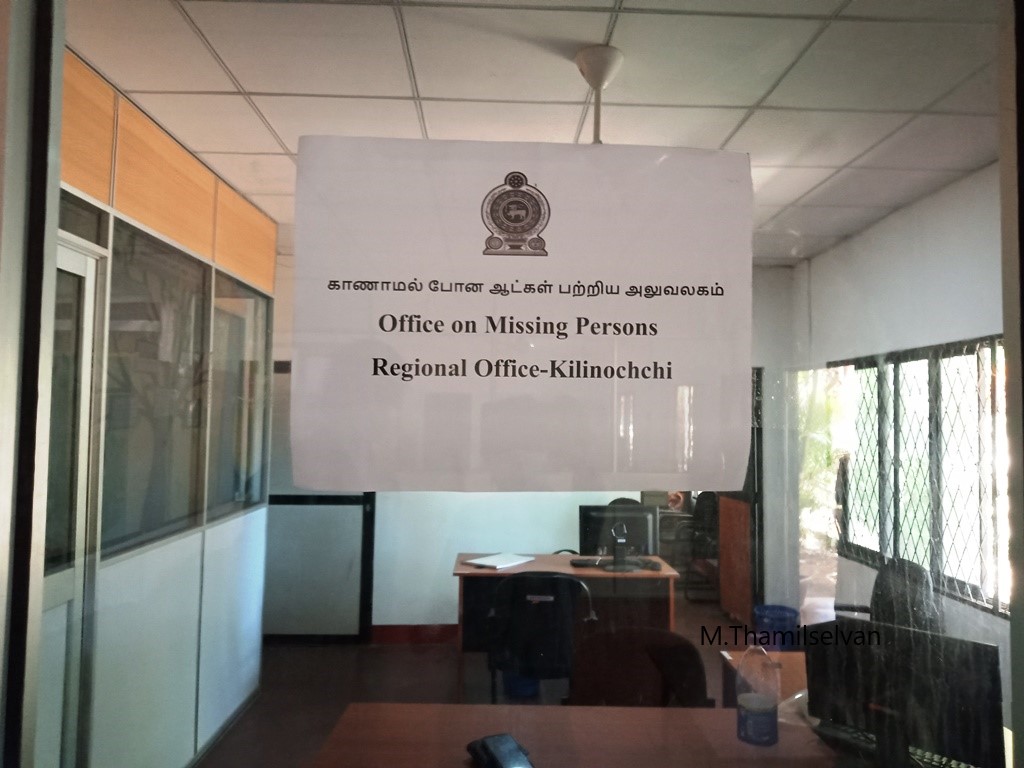
OMP looks into LTTE abductions, LTTE surrenderers to Govt., and missing fisherfolk and refugees

Cases relating to abductions by the Liberation Tigers of Tamil Eelam (LTTE) during the peace process period between 2001-2006; LTTE surrenderers who were handed over to the security forces at the end of the war; fishermen that went missing in the deep seas during the war; and displaced Sri Lankans who left to India during the conflict, but went missing before reaching refugee camps, were examined during the Office on Missing Persons (OMP) sittings held in Mannar from Monday (21) to yesterday (23). This was revealed to The Morning by an OMP source yesterday.

“The relatives of missing persons relating to the above circumstances testified before the OMP. We invited parties pertaining to 120 cases to testify, and more than 100 cases were examined. The number of cases of LTTE surrenderers are very few. There were a few persons abducted by the LTTE during the period of peace negotiations,” the source added.

The source also noted that some of these cases should be examined to ascertain whether they fall within the mandate of the OMP.

“Those who left for India during the war period had just travelled in boats to escape the war. It was more like a safeguarding mechanism. They crossed international borders, so it is beyond our jurisdiction. Therefore, if you compare the definition of a missing person under the OMP Act, such situations do not comply. It is a very crucial decision that we have to take,” the source said.

The OMP is to commence inquiries in the Ampara District in the upcoming week on 28, 29, and 30 November.

The source also noted that around 1,700 cases have been concluded.

Meanwhile, during a media briefing held last week, Minister of Justice President’s Counsel (PC) Dr. Wijeyadasa Rajapakshe said that some 2,000 applications had been documented thus far.

“In the last three months or so, the OMP has processed close to 2,000 applications. Our target is to finish the work of the OMP by December 2023. In the meantime, the Office for Reparations will be providing compensation simultaneously,” he added.

Posted in Uncategorized

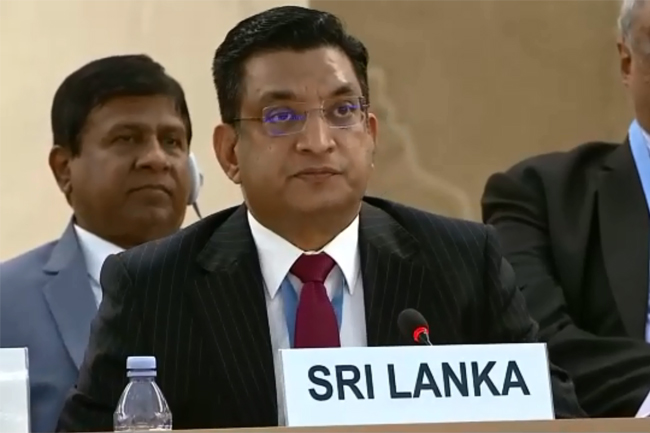
Sri Lanka FM Ali Sabry says New Delhi’s sensitivities will be kept in mind

Speaking exclusively with our diplomatic correspondent Sidhant Sibal from Colombo, FM Sabry said, “everyone who will be entitled will be known in advance, we will have a known procedure in place so that no one is surprised, so therefore it is important we also have the freedom of navigation in the Indian ocean.”

In the backdrop of the visit of Chinese spy ship, Sri Lankan foreign minister Ali Sabry has said that Indian “Indian sensitivities will be kept in mind” so that it doesn’t lead to any “unpleasantries” for both the countries. Remember Chinese spy ship or as Beijing has been terming it research vessel research vessel Yuan Wang 5 had visited the Sri Lankan port of hambantota raising concern for New Delhi. Speaking exclusively with our diplomatic correspondent Sidhant Sibal from Colombo, FM Sabry said, “everyone who will be entitled will be known in advance, we will have a known procedure in place so that no one is surprised, so therefore it is important we also have the freedom of navigation in the Indian ocean.”

The foreign minister lauded New Delhi’s role amid the economic crisis his country has been facing pointing to “significant improvement” in the situation. India provided assistance worth 3.8 billion dollars to Sri Lanka to tide over unprecedented economic crisis. FM said,” Indian support is very critical to us. India has played a great role in supporting the neighbor in the most difficult time of its history.”

He also highlighted how the ongoing Russian Ukraine conflict has “disproportionately impacted” his country and said that Colombo is in talks with Moscow to get discounted Russian energy. He warned, “moment Russian oil goes out of the market, there will be scarcity and that will probably shoot up the prices and will create economic upheaval in terms of recession or something of that sort.”. He also spoke about ties with China, implementation of 13th amendment and Tamil issue, IMF bailout…

WION: How has the current economic situation been? Has an improvement seen?

Ali Sabry: Sri Lanka had gone through tremendous difficulty during the course of the year, but if you compare with what you saw in March, May and July there is significant improvement on the ground. Tourist have started to come back, a little bit of stability in foreign currency because of that we have managed to get our fuel, cooking gas and other supplies to some sort of normality, but we are not out of the woods. Some turning point has taken place for goods.

WION: Government has said that there were radical extremists behind the demonstrations. Have you identified who they were and whether they were getting support from abroad

Ali Sabry: Actually, it you look at the March and May protests, we got lot of support from the public because we understand if we have long queues for 4-5 days, there was no cooking gas, the sky rocketing prices, shortage of food, shortage of fertilizers, had reason for people to come out and we were very-very apologetic about it, towards that and we have done so publicly. Since then, constitutional process has taken place, new president has come has in, elected president has given up and gone, a new cabinet has been put in place. Still there is protests ongoing, then they are not public supported, public-spirited campaign. I would not say extremist but people with hidden agenda, political agenda to destabilize the country for political motives. We have identified them, we all know that, nothing new about them. Opposition just wants to scuttle the progress of the country so that if Sri Lanka recovers , they know they have to wait for a long period of time to get elections. They want to see destabilization take place on the ground so every time tourist are resuming, these protests take place. Some of them have been done by some elements who have not actually believed in democracy. This time they are using public anger to advance the ends

WION: How has the talks been with the IMF and has India played a role in facilitating the talks. I believe this is the 17th bailout you are trying to secure.

Ali Sabry: I started the negotiations with them, and they have studied, and staff level agreement has been reached, prior action before the EFF , extended fund facility, we have agreed on. We have agreed and implemented some of those things. EEF facility is for 2.9 billion, and the moment IMF gets involved, confidence in the system, ADB world Bank all come on the table, and we probably will be able to return to money market, so that is why it is so important. India, had been actually provided us with lifeline during the most crucial time of our history, in terms of economy is concerned and those credit lines kept us going for long period of time. I remember, when I was in Washington, your Finance minister Sitharaman led your group and supported us in our discussion with IMF and they have continued to do so. So it is important and Indian support is very critical to us. India has played a great role in supporting the neighbor in the most difficult time of its history.

WION: Why didn’t China offer financial assistance, as India did, during the recent crisis?

Ali Sabry: Chinese also supported us just before the particular period of time, they also provided us some financial facilities and credit line, also they did provide us some soft arrangement to bolster our reserves at the central bank, apart from that some humanitarian assistance also. We hope China will step up in providing us debt restructuring assurances, along with India so that we can go to the, IMF and resolve the matter once and for all and get back to recovery path. So, it’s important for all creditors and all investors that Sri Lanka recovers and recovers fast. The longer the debt gets suspended, the longer it takes to recover. It is bad for all the creditor and investors; everybody understands that including China.

WION: Has China offered to restructure…

Ali Sabry: We are in still discussions for that, they have been cooperative and part of the common plat form where we share information, recently in Washington. They are also took part on the virtual platform. So China, India, Paris club, Japan all of them being cooperative with us, so we are in the final stage of trying to get the debt restructuring and assurances. We are hopeful all countries and all our friends will not let us down.

WION: Have you asked for more Indian support.

Ali Sabry: Not really, right now our economy has stabilized to some extend and we should be able to manage our self. Right now, we have reached out to India and rest of the world, its not for aid or any more loans but basically investments. We are working with Indians and Indian companies and govt to work together in various areas for mutual interests, so that investment comes into the country and it will be beneficial for both Indians and Sri Lankans.

WION: How do you see India, Sri Lanka ties evolving. Both have close relationship, biggest has been civilizational connect

Ali Sabry: Very Very important for us, the most important relationship as far as Sri Lanka is concerned. For sure we share a civilization, our social, cultural, financial, economic ties are very very high and integrated. So it’s important we understand India is growing, and biggest power in the region and hopefully will be the 3rd biggest economy by early 2030 or so. With that improvement, everybody in the region will also benefit. We need to understand how best we can cultivate this; we need to work towards it. There will be ups and downs, misunderstandings, but we are certain, given our long history of sharing a civilization, that Sri Lanka and Indian relationship will go strength to strength.

WION: Ambassador Milinda has said that a security threat to India is a security threat to Sri Lanka. Do you agree?

Ali Sabry: Basically, security together is very important for us, Indian security is also very important for us, no 2 words about it. We have understood that. we will not be willingly, or unwilling be part of for any threat to Indian security because any threat to India’s security is threat to the region, and that region includes Sri Lanka and not good for Sri Lanka. We understand that we will work towards achieving peace and harmony in the region, no escalation of any sort of tension but peaceful relationship, enhanced economic activities which will benefit everybody in the region.

WION: All good relations have a set of irritants, and recently we saw the visit of a Chinese spy ship or a research ship that it seems has put a kink in ties

Ali Sabry: I don’t think any kink or so but basically some concerns were expressed, and we were able to discuss those things and follow up. On our part we have made it very clear to everybody in the world that we don’t want to contribute to escalation of tension between anyone. We are a very peaceful country, we would continue to do so and going forward, there will be no surprises. Everyone who will be entitled will be known in advance, we will have a known procedure in place so that no one is surprised, so therefore it is important we also have the freedom of navigation in the Indian ocean. In the meantime, there should not be any security threat to any of our neighbor

WION: Will future such visits, visit of Chinese spy ships or as they say research ship be allowed taking care of Indian sensitivities

Ali Sabry: I don’t want to speculate, but Indian sensitivities will be kept in mind, we will continue to work with India and understand Indian sentiments so that we don’t create any unpleasantries for both India, Sri Lanka and to the region.

WION: How do you see ties with China…

Ali Sabry: Our relationship with Beijing is very strong for long period of time, they have been close friend. This year we have celebrated 70 years of economic ties with them with Rubber, Rice pact, we exported rubber to them and imported rice. So our is a strong relationship and basically it has been a commercial relationship, economic relationship where they have come and invested heavily in Sri Lanka during a difficult period of time for us and during the 26 years of the conflict, during the last few years, Chinese supported us with supply of arms to get rid of threat from one of the most ruthless terrorist organization, the LTTE in order to bring back peace to our country. In that context that we have had very good relationship with them, sri lanka always follow the dynamic, neutral foreign policy where we would want everyone to be a friend of Sri Lanka and enemy to none. That is our foreign policy, that is our relationship, so given this dynamism, we would continue the same thing but taking India’s sensitivities and security concerns because that is very important for us.

WION: Do you think the current economic crisis is due to China, its policy of debt crisis

Ali Sabry: No, I don’t agree with that, that is a western phrase. We don’t agree with that. Chinese never came and forcefully gave us money to us. Actually, we have gone and sort fund and they have respected that invested in our country. They are that biggest investor in our country, we don’t agree with that phrase. Having taken the money we have put in proper use or who so ever we can get return is issue for Sri Lankans, therefore we don’t associate with that kind of phrase, actually Chinese have been good friend for us and they have been biggest investor in the country post conflict in Sri Lanka

WION: How has the Russia-Ukraine conflict impacted your country, and do you plan to buy Russian energy, do you worry about sanctions

Ali Sabry: We have been disproportionately impacted by the Russian conflict so we pray and urge everybody to quickly, diplomatically and by dialogue resolve this. We have been impacted big time in terms of petroleum prices, the crude oil prices, the prices of coal and prices of grains and escalating prices of fertilizers. These are lifeline to our people, 30% of Sri Lankans involved in agriculture. We have been disproportionately impacted when prices go up in the market and with our depreciating rupee, the prices have gone 4-5 times of some of those things. It has been really -really difficult for Sri Lankans, and on top of that Russia, Ukraine have been our first 10 countries in terms of tourist coming to Sri Lanka and in export destination of our products like tea so that is huge problem of us, that has really impacted us and other countries and economies have slowed. We disproportionately impacted by this conflict and no 2 words about it. Yes, if there is a way to deal with Russian oil, why not, we want to. The kind of price escalation, it is unaffordable for us. As our President once put it, when the elephants fight, it’s the grass which gets trampled, small countries like us get disproportionately trampled by this issue which is taking place in the world. So therefore, at the discounted prices without violating international norms, laws we would want to work with Russians, because Russia we have good relations for a long period of time, Russian discounted prices also is not a problem for other countries because no one wants Russian oil out of the market. Moment Russian oil goes out of the market, there will be scarcity and that will probably shoot up the prices and will create economic upheaval in terms of recession or something of that sort. I don’t think anyone will like that.

WION: Have you spoken to Russians for it or engaged India on that given India gets discounted Russian oil

Ali Sabry: we have had several rounds of discussions, we are pursuing that option, keeping that option open either directly or through India

WION: Option on energy via India or with Russia…

Ali Sabry: with basically Moscow

WION: Are you looking at an election in the country…

Ali Sabry: Not really, in terms of our constitution you can’t have Presidential elections before 4 and half years of term is finished. So the term is only comes to an end in 2024 November, until such time you cannot have a new election so the president has to continue, even if the siting President resigns, you need to go through the Parliament and elect someone for the term which is exactly what happened in Sri Lanka in July this year. As far as Parliamentary election is concerned, 2 and half years you cannot dissolve the Parliament and it came to an end in March but yet the Parliamentarians need to vote for that, so therefore, simple majority must vote for that, there has to be a no confidence motion. So, it is for the members of the Parliament to do so, or otherwise no possibility because certain term being given, President for 5 years and Parliament for 5 year and that period should take place in terms of the constitution.

WION: Any plans to implement the 13th amendment and also India expressed concerns over situation of Tamil minorities at UNHRC

Ali Sabry: right now actually we all want provincial council elections, it cannot be held now because of the a particular bill that was brought in to parliament in 2018 by then govt for which the TNA and Tamil parties also voted in terms of that particular voting a new delimitation has to take place of the provinces and it has not taken place and there is some legal impediment on that. It is their own doing unfortunately, and they did it that time to prevent elections and as a result of that but naturally 13th amendment should be implemented and those powers which was with them should be given to them, power should be devolved to the people in the area, the people of the areas should deal with the activity whom they elected. So yes 13th amendment should be implemented and govt is keen on implementing that. yes, India had taken up at various forums including the UNHRC. (wionews)

Posted in Uncategorized

7 emerging economies including SL face currency crisis danger-Nomura

Nomura, a Japanese financial holding company, has warned that seven countries – Egypt, Romania, Sri Lanka, Turkey, Czech Republic, Pakistan and Hungary – are now at a high risk of currency crises.

The Japanese bank said that 22 of the 32 countries covered by its in-house ‘Damocles’ warning system have seen their risk rise since its last update since May, with the largest increases in the Czech Republic and Brazil.

It meant the sum of the scores generated on all 32 by the model had increased sharply to 2,234 from 1,744 since May.

“This is the highest total score since July 1999 and not too far from the peak of 2,692 during the height of the Asian crisis,” Nomura economists said, calling it “an ominous warning sign of the growing broad-based risk in EM currencies”.

The model crunches 8 key indicators on a country’s FX reserves, exchange rate, financial health and interest rates to give an overall score.

Based on data from 61 different EM currency crises since 1996, Nomura estimates that a score above 100 indicates a 64% chance of a currency crisis in the following 12 months.

Egypt, which has already devalued its currency heavily twice this year and sought an International Monetary Fund (IMF) programme, now generates the worst score at 165.

Romania is next on 145 having been propping up its currency with interventions. Default-stricken Sri Lanka and currency crisis-regular Turkey both generate scores of 138, while the Czech Republic, Pakistan and Hungary notch 126, 120 and 100, respectively.

Nomura also ran the Damocles model on the G7 group of leading economies, with the results showing that all but Japan now have Damocles scores above the 100 threshold, led by the United States and Britain.

EM economies are still more vulnerable. Most have not fully recovered from the COVID-19 pandemic and now face high inflation, limited fiscal space, negative real interest rates, a weaker balance of payments and diminished FX reserve cover.

“It is somewhat surprising that there have not been more full-blown EM currency crises this year,” Nomura added.

“Then again, EM challenges are far from over… The late Professor Rudiger Dornbusch once said, A crisis takes a much longer time coming than you think, and then it happens much faster than you would have thought”.

Reuters

PAFFREL to go to court if LG polls delayed

The People’s Action for Free & Fair Elections (PAFFREL) says that if the local government election is NOT announced within the scheduled dates, it will go to the Supreme Court and file legal action.

The Executive Director of Paffrel Organization Rohana Hettiarachchi said this while joining the Nagitimu Sri Lanka program which was aired on TV One channel today (23) morning.

He said the lawyers representing PAFFREL are already preparing documents to file legal action if the elections are not called for at the appropriate period.

Posted in Uncategorized

Did India’s RAW Chief meet President in secret in Colombo?

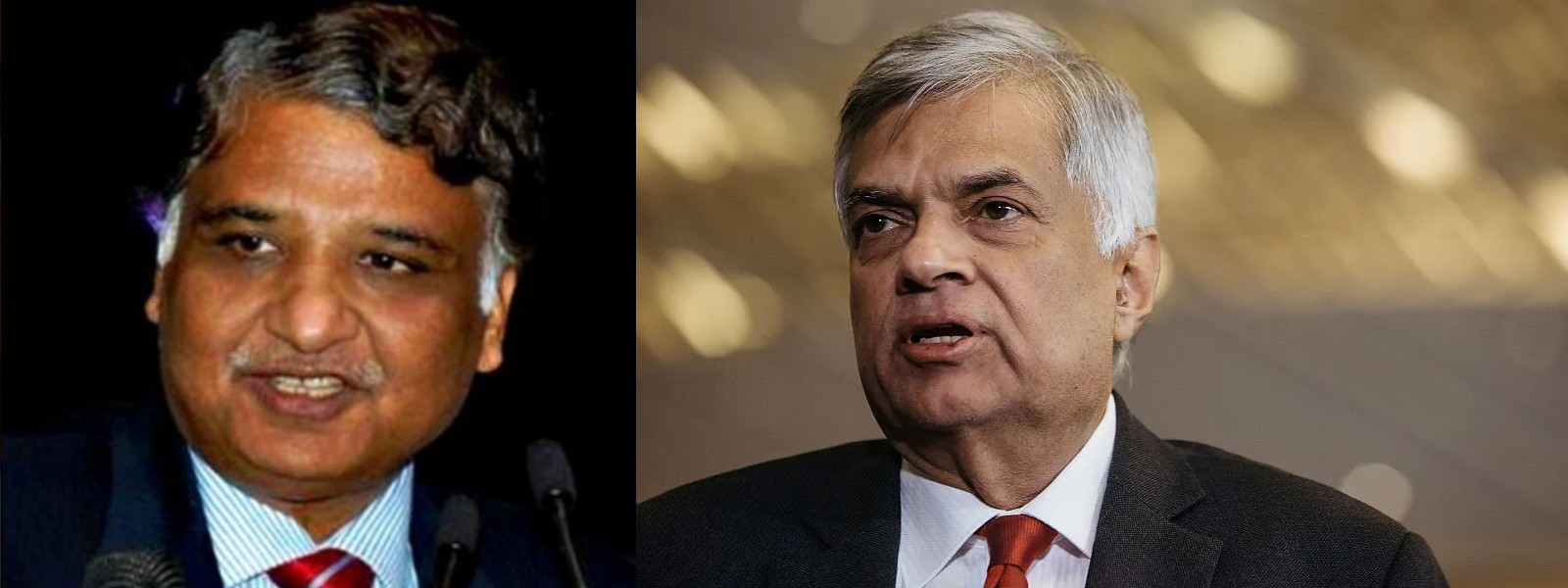
The Kalaikathir Newspaper from Jaffna had revealed that Samant Kumar Goel, the Chief of the Research and Analysis Wing of India, also known as RAW recently visited Colombo on a highly classified visit.

The Research and Analysis Wing is the foreign intelligence agency of India, and the Kalaikathir Newspaper from Jaffna has reported the visit citing highly credible sources.

The Kalaikathir Newspaper from Jaffna reported that Samant Kumar Goel met with Sri Lankan President Ranil Wickremesinghe in Colombo.

It also reported that the meeting with the President was also highly confidential.

The President’s Media Division is yet to make an announcement on the visit, and the meet.

Posted in Uncategorized

Sri Lanka president calls meeting to discuss ethnic issue after Dec 11

Sri Lanka President Ranil Wickremesinghe has reiterated his call for immediate bipartisan consensus on a permanent solution to the island nation’s decades-long ethnic problem, inviting opposition lawmakers for a round of talks after December 11.

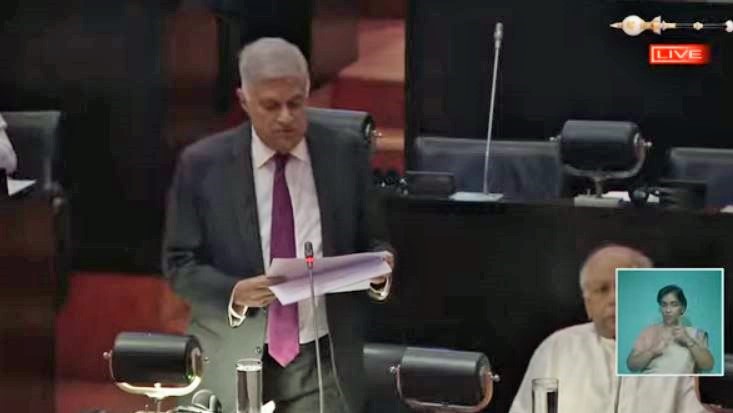
Speaking in parliament on Wednesday November 23, Wickremesinghe once again invited all parties representing the parliament to discuss a lasting solution to the grievances of the country’s Tamil minority, most of whom reside in the formerly war-ravaged northern and eastern provinces of the island.

“There is nothing new to talk about. [We just have to] decide what is relevant. I think we can do it by next year. My aim is to do it by the 75th anniversary of independence. If you can’t do that, you may not have that [sp] Sri Lanka by 2048,” said Wickremesinghe.

Wickremesinghe had previously invited all Tamil political parties to a discussion on issues faced by the Tamil community with a view to resolving them with no foreign intervention by February 04 next year when Sri Lanka celebrates 75 years of independence from the British.

On November 10, Wickremesinghe asked parties that represent the Tamil community in parliament help “resolve these issues amicably without outside interference”.

The privately owned The Sunday Times reported on November 06 that a ministerial team was to be appointed to draw up the “broad outlines of what such a project should encompass”. This would later form the basis of discussions with all stakeholders, the English weekly reported.

Speaking in parliament on Wednesday, Wickremeisnghe asked Tamil National Alliance (TNA) legislator M A Sumanthiran if he is willing to come on board. He posed the same question to chief opposition whip and main opposition Samagi Jana Balavegaya (SJB) MP Lakshman Kiriella and MP Mano Gansean whose Democratic People’s Front (DPF) is part of an SJB-led alliance.

SJB and opposition leader Sajith Premadasa was absent at the time, and a party member was heard saying “We’ll ask our leader and get back to you”.

Kiriella responded that Wickremesinghe knew very well that Kirella had long supported devolution of power. The real question, he said, was whether Wickremesinghe’s new backers in the ruling Sri Lanka Podujana Peramuna (SLPP) would ever support meaningful devolution.

“We know what the SLPP really feels in their heart of hearts. They are opposed to devolution,” said Kiriella, challenging SLPP leader and former President Mahinda Rajapaksa to state his position on record.

Kiriella said it was the Kandyan Sinhalese who had first proposed devolution in the 1930s. One of the Kandyan leaders at the time, he said, was an ancestor of the incumbent president.

Said Wickremesinghe: “Will you ask your leader and tell us this evening, then?”

MP Ganesan said: “The SJB alliance is agreeable to devolution of power. That is why we’re here. We wouldn’t be, otherwise.”

Responding to Wickremesinghe, MP Sumanthiran said: “If you call for a meeting of all parties as soon as we conclude the budget session, we can finish it before December 31.”

Wickremesinghe agreed and said a meeting will be called in the week following December 11.

Kiriella, however, noted that when ousted former President Gotabaya Rajapakasa had invited the SJB for talks on a proposed new constitution, he had sent a missive to the party that they shouldn’t join if they wished to protect the 13th amendment to the constitution.

President Wickremesinghe assured Kirella that he would in fact protect the 13th amendment, which came in the wake of the 1987 Indo-Lanka Accord and saw the creation of the provincial councils.

“You’re one person. Are the others here in agreement? Are the MPs? We know very well about the honourable president. He was our leader for 20 years,” said Kiriella.

Prime Minister Dinesh Gunawardena, too, has historically opposed devolution, the MP said.

In a lighter vein, he quipped: “The prime minister said this morning that he’s also an American now. Maybe it’s the influence of the president. We applaud that.”

SLPP MP Gevindu Kumaratunga who now sits in the opposition cautioned that they can only support a proposal that will honour Sri Lanka’s unitary character.

“If you’re asking for a consensus within a unitary Sri Lanka, we’ll agree. Outside of that, I don’t think a majority of people will agree. There is a ground reality here. Our soldiers laid down their lives to protect the unitary state,” said Kumaratunga.

President Wickremesinghe pressed on, asking the House at large to agree to a meeting to discuss proposals.

“We have to build confidence with the Tamil community. But we also have to build confidence with those people in the Sinhalese community who have reasonable concerns as to where it will lead,” he said.

The president also said that Muslim youth who were arrested in connection with the 2019 Easter bombings against whom there is no evidence will also be released soon as discussed at the latest security council meeting.

President says he will not allow another ‘Aragalaya’ to topple govt

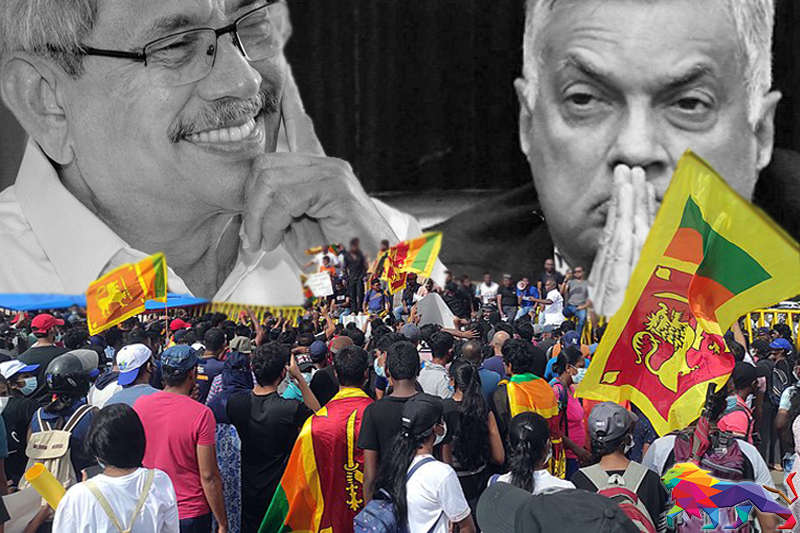
President Ranil Wickremesinghe says that he will not allow another ‘Aragalaya’ protest movement to be created in the country to attempt to overthrow the government.

Addressing the Parliament today, during the third reading debate on the 2023 Budget, the President said that he will deploy the military and impose emergency laws if the need arises to deal with such a situation.

“What happened on May 09 and July 04? Some of our temples were threatened and burned. The Maha Sangha of the Malwatu and Asgiri temples were threatened and warned not to speak. Our Sangha was afraid and did not speak. Then how can Article 09 of the Constitution be protected? We are bound by the Constitution to protect Buddhism. Who was behind these? Our young monks were used for this. They went and asked the Mahanayake Theros to step down and hand over leadership to them.”

“Hindu priests were also threatened. The same goes for Muslims. The Catholic Bishops also said that they are against violence. Then who were the religious leaders that were with these people? We do not want to lead this country to Dinh Diem rule.”

“I will not allow any Dinh Diem or those around him. Now they say they are going to start the struggle again,” he said.

Wickremesinghe said the SJB, JVP and TNA are holding their public meetings and gatherings without any hindrances and that as long as they obtain permission from the police any amount of protest can be held on the streets.

“Anyone can hold meetings, the JVP had meetings. The TNA is holding meetings in the North.
Anyone can hold protests or meetings legitimately. You can shout as much as you want and call me a dictator. I don’t mind. However, I must say one thing. Get your permit to protest before you take to the streets. Don’t obstruct vehicular movement and get onto a side of the road and protest. That’s all I am asking.”

“Yet, if anyone thinks that they can engage in another struggle without obtaining a license, stop it. I have instructed the police. If anyone tries to stage a protest to topple the government, I will not allow it. I will impose emergency law and deploy the military. There is no room for Dinh Diems in this country.”

“Who will go with Kumar Gunaratnam now? If he is accepted, then no one can speak against Basil Rajapaksa. People will not stand with them just because they shout every day. Let’s see which media created these forces. Let’s see which media asked people to set fire to certain places.”

“I intend to appoint a commission to investigate this incident,” the President said.

Posted in Uncategorized

Tamil nationalist parties and the federal idea

President Ranil Wickremesinghe while addressing Parliament on 10 November 2022 invited all Tamil MPs for a discussion on issues facing the Tamil people and about development plans for the North and East. Jaffna district MP and ITAK spokesperson, M.A. Sumanthiran responded positively by telling a morning newspaper that the TNA would cooperate. “We will fully cooperate. The resolution of the Tamil national question will be our main focus,” said Sumanthiran. Later Sumanthiran reiterated this viewpoint in the presence of President Ranil Wickremesinghe at a meeting held on 19 November on the occasion of the ceremonial opening of the Presidential Secretariat Northern Province Co-ordination Sub-Office in Vavuniya.

As is well-known the Tamil National Alliance is the premier political configuration representing the Sri Lankan Tamils of the Northern and Eastern Provinces. The TNA comprises the Ilankai Thamil Arasu Katchi (ITAK), the Tamil Eelam Liberation Organization (TELO) and the People’s Liberation Organization of Tamil Eelam (PLOTE). The TNA contesting under the ITAK symbol oh house won 10 seats – including one national list MP – in the 2020 Parliamentary elections. The 10 MPs are from the electoral districts of Jaffna (3), Wanni (3), Batticaloa (2), Trincomalee (1) and Amparai (1). The party-wise breakdown is ITAK – 6, TELO – 3 and PLOTE – 1.

In a bid to present a common Tamil position in potential discussions with President Wickremesinghe the TNA issued an invitation last week to likeminded Tamil nationalist parties to meet at TNA leader Rajavarothayam Sampanthan’s Colombo residence and formulate a common approach seeking a political solution ‘within a federal set up in the North-East’. The meeting did not take place as planned last week. Subsequently it has been rescheduled for Friday 25 November at Sampanthan’s residence in Colombo.

Apart from the three constituents of the TNA namely the ITAK, TELO and PLOTE, invitations have been sent to the Tamil National People’s Front (TNPF), the Thamil Makkal Theseeyak Koottani (TMTK), Eelam People’s Revolutionary Liberation Front (EPRLF) and Thamil Theseeyak Katchi (TTK). The TNPF has two MPs in Parliament while the TMTK has one MP.

Given the inter-party rivalry among Tamil parties in general and the intra-party friction within Tamil parties in particular, it is unclear at present as to whether all invited parties will attend the meeting or consensus would be reached. However regardless of inter and intra-party differences the bottom line is that all Sri Lankan Tamil nationalist parties are firmly supportive of a power sharing arrangement based upon federal principles or the federal idea.

It is against this backdrop therefore that this column – with the aid of previous writings – focuses on the concept of federalism or the federal idea within both a national and international context. It is well-known that the words Federalism or Federal became dirty words in the Sri Lankan political milieu in the past. Sinhala hard-line opinion viewed federalism as a euphemism for secessionism or a stepping stone to a Separate State. Thus Federalism became the “F-word” in Sri Lankan politics. It is indeed a tragedy that the concept of federalism or the federal idea was so crudely and cruelly dismissed without any consideration of its merits or plus points.

It was perhaps the merit in what is called the federal idea which prompted former US president Bill Clinton to observe, “Maybe the federal idea isn’t such a bad idea after all.” This was in 1999 when he was the most powerful man on earth. It was at the end of the conference on federalism at Mont Tremblant in Quebec that Clinton made this remark. Incidentally former Sri Lankan cabinet minister G.L. Peiris also addressed this path-breaking conclave organised by the Forum of Federations based in Ottawa.

What is the federal idea?

What then is this federal idea? It is in one sense a concept that embodies various related things like federalism, federal systems, federations and federalist, etc. This is a world where the word “federal” has become almost the “F-word” in politics. Different countries and different entities for different reasons frown on this “F-word”. Therefore “federal idea” has become an indirect reference to this F-word. If a “rose by any other name would smell as sweet” then the word “federalism” too can be sanitised and discussed as the “federal idea”.

Let me quote Canada’s representative at the UN Bob Rae on this. The former Ontario NDP premier, ex-MP and Interim leader of the Liberal party is also a past president of the forum of federations located in Ottawa. In his foreword to the “Handbook of Federal Countries” published by the forum, Rae has this to say – “There has been a profound resurgence in interest in the federal idea in the last decade. I choose the phrase “federal idea” because the “ism” in federalism has a way of limiting debate and understanding”.

“In Spain the central government doesn’t like to use the “federal” word as it seems to indicate erosion of sovereign authority. Ironically Catalonians in Spain also frown on this because in their perception “federalism is not enough to articulate the unique Catalonian identity and right of self-government. In South Africa the earlier “apartheid” regime set up some federal structures to contain and diffuse pan-African yearning for freedom. So federalism became a dirty word to the blacks. When the African national congress attained power with its vision of “one South Africa” the ANC did not want to describe the new Constitution as “federalist”.

Sri Lankans are well aware of what Rae meant. In Lanka’s deeply polarised society federalism is certainly the “F-word” and worse. There is marked reluctance and trepidation on the part of many to espouse federalism openly. This is sad but quite understandable in a situation where “federalism” is seen as a conspiracy to break up the nation.

While many Sri Lankans look upon federalism with suspicion, the rest of the world is in ferment over the federal idea.

There was a time when federalism was seen as the ideal remedy for many of the world’s political maladies. It was perceived as the universal device to achieve unity in diversity. Experience has shown that this is not necessarily true in all situations. At the same time federal arrangements have certainly helped wield cohesiveness in many cases.

40% of the world’s population

Twenty-five countries today have federal or quasi-federal structures. These range from the sole superpower USA to tiny St. Kitts and Nevis; from Canada in the North to Micronesia in the South; from India in the East to Switzerland in the West. The population of these countries together amounts to more than 40% of the world’s total humanity. In addition there are some countries that are not federal but have special administrative arrangements amounting to de-facto quasi-federalism.

Let us proceed alphabetically. Argentina, Australia, Austria, Belgium, Bosnia and Herzegovina, Brazil, Canada, Comoros, Ethiopia, Germany, India, Malaysia, Mexico, the federated states of Micronesia, Nigeria, Pakistan, Russia, St. Kitts and Nevis, South Africa, Spain, Switzerland, United Arab Emirates, United States of America, Venezuela are Federal countries. While most are explicitly federal a few like Spain are not, but in actuality are federal in all but name. Incidentally, President Ranil Wickremesinghe in his Sita Jayawardena memorial oration decades ago, spoke of Austria as a potential model for Sri Lanka power sharing.

Though federally none of these countries share exactly the same system. Each country has different administrative arrangements and internal structures. They also vary greatly in size. Russia has republics and many types of regions within; India has states and union territories; Switzerland has cantons while Germany and Austria have landers. Belgium has three regions and three cultural communities while Spain has autonomous regions; the USA has states, confederacies, local home rule territories, unincorporated territories and native American domestic dependent nations while Canada has provinces, territories and aboriginal organisations. Venezuela has states, territories, federal dependencies, federal districts and many islands.

Apart from federal and quasi-federal states there are also countries having de-centralised unions with federal features. The United Kingdom comprising England, Scotland, Wales, Northern Ireland and five self-governing islands is the best known example of this kind. Italy with 15 ordinary and five autonomous regions is another; Netherlands has 11 provinces and one associated state; Japan has 47 prefectures; Fiji Islands is a consolidation of two ethnic communities; Colombia has 23 departments, four inter-dependencies and three commissaries. Ukraine has 24 oblasts, two metropolitan areas and the autonomous republic of Crimea; The People’s Republic of China has 22 provinces, 5 autonomous regions, four municipalities, and the special administrative regions of Hong Kong and Macao.

Federacies and associative states

Another phenomenon is that of countries with federacies and associative states. Bhutan is an associative state of India. Cook Islands is a self-governing associative state of New Zealand. Netherlands Antilles, San Marino, Liechenstein, Monaco are associative states of Netherlands, Italy. Switzerland and France respectively. Puerto Rico and Northern Marianas are federacies of the USA. Madeira and Azores Islands are Portuguese federates. Likewise Greenland and Faroe Islands are Danish federates. Britain has the federates of Jersey, Guernsey and the Isle of Man. Aaland Islands are a Federacy of Finland.

It could be seen therefore that the federal idea is not restricted to categorical federal or quasi-federal states alone. The federal idea is a free spirit permeating the body politic of many states. There is no “mono-principle” here. Each country has fashioned its own unique arrangement to suit its needs. Apart from the administrative convenience and the imperative to provide citizens with the best form of government these countries have also taken into account diversity of peoples, regional variety and imbalances, historic and geographic necessity, etc. as criteria to evolve systems of governance. There has been no rigorous dogma, stifling aspirations of constituent peoples.

Comparing federal systems

The federal idea has assumed a new importance and related vigour in recent times. There are a number of reasons for this. Ronald Watts of the Institute of Intergovernmental Relations at the Queens University in Kingston, Canada is the author of “Comparing federal systems.” An excerpt from it explains this global trend, “Modern developments in transportation, social communications, technology, and industrial organisation have produced pressures at one and the same time for larger political organisations and for smaller ones. The pressure for larger political units has been generated by the goals shared by most Western and non-Western societies today; a desire for progress, a rising standard of living, social justice and influence in the world arena and by a growing awareness of worldwide inter-dependence in an era whose advanced technology makes both mass destruction and mass-construction possible.”

“The desire for smaller self-governing political units has risen from the desire to make governments more responsive to the individual citizen and to give expression to primary group attachments-linguistic and cultural ties, religious connections, historical traditions and social practices-which provide the distinctive basis for a community’s sense of identity and yearning for self-determination. Given these dual pressures, more and more peoples have come to see some form of federalism, combining a shared government for specified common purposes with autonomous action by constituent units of government for purposes related to maintaining their regional distinctiveness as allowing the closest institutional approximation to the multi-national reality of the contemporary world.”

Ronald Watts sums up the essence of the federal idea. On the one hand there is the tendency to form larger entities including supra-national bodies like the European Union. On the other, there is the need to accommodate different intra-national aspirations of an ethnic nature. So Belgium reverts to federalism to satisfy the Flemish and the Walloons while Brussels is the seat of the EU parliament. The Union Jack flag may have the crosses of St. George, St. Andrew, St. David and St. Patrick but merry England cannot hold the United Kingdom together without devolving power to Scotland, Wales and Northern Ireland.

The Sri Lankan ethnic conflict has its genesis in colonialism. Modern Ceylon as Sri Lanka was known then is a British creation. The island was unified administratively but the people were divided politically through representation on communal lines. What was “united” to exploit was “divided” to govern. In the absence of adequate and equitable forms of power-sharing the island is wracked with post-Independence conflict within pre-Independence boundaries.

Reactive Tamil nationalism

Sri Lankan Tamil nationalism has been primarily reactive in nature. The Tamils thought of themselves as being on par with the Sinhala people as co-founders of the modern nation of Ceylon. Universal franchise and territorial representation reduced them to a principal minority. The Tamils still thought of themselves as belonging to the island in its entirety. So they wanted balanced representation and then adopted responsive cooperation as political strategies.

When these failed came the federal demand. Tamil self-perception now confined itself as a regional minority. Even here the political leaders were prepared to compromise far short of federalism and opted for alternatives like regional councils, district councils, etc. Finally came the desperate cry for separation and resultant armed struggle. The Indo-Lanka accord of 1987 resulted in the 13th Constitutional Amendment which enabled the creation of Provincial Councils. Federalism if adopted at the appropriate time may have prevented the bloodshed and carnage that ensued after the ethnic conflict escalated.

The proponents of federalism argue that adopting it will strengthen unity and territorial integrity. Switzerland, India, Malaysia, Belgium, Germany, Spain, etc. are cited as examples. But it cannot be denied that federalism has failed to prevent secession too. The disintegration of the Soviet Union and Yugoslavia are well-known examples. The Malaysia-Singapore and Pakistan-Bangladesh splits of the past as well as modern break-ups of Czech-Slovakia, Serbia and Montenegro are also lessons. In Canada, separatism flourished in Quebec despite federalism. Britain devolved power to Scotland and Wales but secessionism seems to have gained ground there. Nigerian federalism did not prevent the Biafran civil war.

Nuances to take into account

There are however many nuances to take into account when analysing the countries in question. At one end of the spectrum are Belgium and Spain willingly opting for federalism as a solution to curb separatist tendencies. Yet Belgium and Spain continue to have issues. In Canada the equation is changing with the separatist Parti Quebecois announcing that no referendum to facilitate secessionist “sovereignty” will be held in the near future. The main Quebec parties are now for greater autonomy and powers within a united Canada.

Recent amendments in Germany have strengthened federalism. India through its cooperative federalism model became more and more federal in practice. But the emphasis on centralisation and the “mono model” by the BJP government is troubling. This tendency is visible in Australia and USA where increasing “centralised” authority is slowly eroding the concept of pure federalism.

Federalism therefore provides no “one size fits all” type of solution. Each country has to examine and adopt arrangements conducive and suitable for individual needs.

Dynamic and constantly evolving

Sri Lanka too needs to explore the federal idea intensively and fully before deciding whether to accept or reject it or adopt it with appropriate innovation. The federal idea is dynamic and constantly evolving. What we in Sri Lanka need to do is to explore the federal idea and have an informed debate about its pros and cons and also on deciding whether we adopt or reject it.

Let us also not forget the prophetic words of S.W.R.D. Bandaranaike in 1926 when he stated, “A thousand and one objections could be raised against the (federal) system, but when the objections are dissipated, I am convinced that some form of Federal Government will be the only solution.”

In the words of Bob Rae

In spite of the heat generated in Sri Lanka by this ‘F-word’ there is no denying that the Federal idea is catching on in a world of ferment. The Federal idea is impacting greatly on a world changing fast. In the words of Bob Rae, “The resurgence of the federal idea has at its core many different causes. The vitality of the values of democracy, the revolutions in the politics of identity and human rights, the twin collapse of apartheid and bureaucratic communism, the impact of the technological revolution, the economic changes we associate with the word globalisation, all these have made their contributions.”

“This renewal is not at all confined to countries that have a federalist tradition. Countries have long had to struggle with the simple truth that geography is rarely synonymous with automatic homogeneity. Ethnic, linguistic, racial and religious conflicts have become the dominant issues facing the world order today.”

“Wars after 1945 have been as much within countries as between them, with disastrous consequences for peace and security. It is no longer soldiers dying in millions but civilians. From Rwanda to Cambodia, from the Balkans to East Timor the battleground was within countries that are unable to resolve the conflicts of what Michael Ignatieff has called, ‘blood and belonging’.

“It is in this context that the federal idea is re-emerging. Indeed, issues of federal governance are at the centre of active political and legal discussions in every part of the globe, particularly in areas where conflict resolution is a critical necessity. National sovereignty is not dead and the age of the nation-state is not over. But the notion that these are exclusive or all defining is clearly outmoded. Governance practices within countries are inevitably subject to the scrutiny of world political and economic opinion, and most important, to the rule of law itself.”

“The collapse of the one party state, the demands of identity, the urge to local empowerment, the insistence on greater openness and transparency in government, and the recognition that in a smaller and much more interdependent world sovereignty is no longer an absolute, has brought the federal idea to the fore again.”

This then is what the federal idea is all about!

(The writer can be reached at dbsjeyaraj@yahoo.com.)

No snap polls until Sri Lanka’s economic crisis is resolved – President

Sri Lanka President Ranil Wickremesinghe promised not to dissolve the parliament and hold a snap poll until the island nation’s economic crisis is resolved and bring change the youth-protesters wants amid opposition criticism over the government dragging elections.

Wickremesinghe, who became the president in July in an unexpected way, can dissolve the parliament after February next year.

The country’s Election Commission has said it could hold the local government polls after February 20, but Wickremesinghe’s government has appointed a three-member committee to look into delimitation which is changing the boundaries of electorates.

Political analysts say a snap poll next year could lead to a hung parliament and reverse proposed reforms necessary to go with a $2.9 billion International Monetary Fund loan needed to move away from the current unprecedented economic crisis.

“I will not be dissolving the Parliament. The economy is in a massive problem and once that is resolved we can go for election,” Wickremesinghe told the parliament.

Sources close to President Ranil Wickremesinghe said that he is likely to hold presidential elections first before any other polls. The government has to go for local government polls by March next year, but the government has appointed a new commission to look into electorate boundaries, a move seen by opposition as a delaying tactics.

Sri Lanka had mass protests against economic mismanagement by then government led by former president Gotabaya Rajapaksa. Later, the youth led protests, ousted Rajapaksa and his government in July after the country defaulted sovereign debt following a currency collapse, heavy money printing, and wrong economic policies.

The youth-led protesters started the agitation against high cost of living, shortage of essentials, and food shortage under ex-President Rajapaksa.

President Wickremesinghe has invited youth interested in politics to join the government as a pledge to anti-government protestors who demanded more youth representation in the Parliament and government.

“I have asked for the names of the youth who are interested in entering politics. I would like the five names before the end of December and they must be appointed by January because we are here to make a change,” he said.

“Whenever I go for gatherings it’s the same old faces and there is nothing new, no new ones. Youth want a change and after we achieve that then we will go for an election,” said Wickremesinghe.

Sri Lanka’s opposition parties and many protestors who led the ousting of Rajapaksa are now demanding both the local government and parliamentary polls citing that the present government has no mandate to be in power as its failed economic policies have forced the people to oust them.

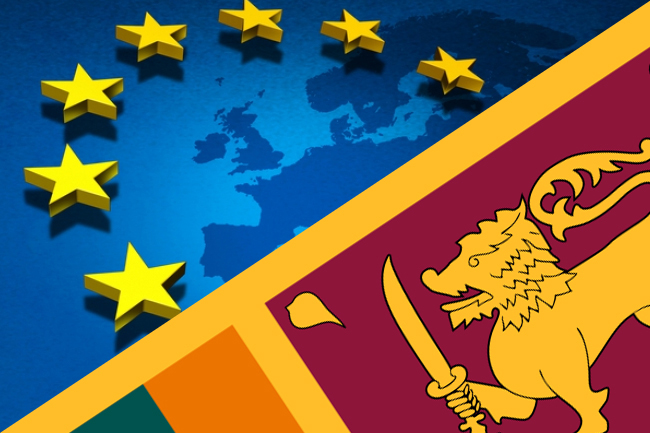
Sri Lanka briefs EU on moves to establish TRC

Sri Lanka briefed the European Parliament on discussions to establish a suitable Truth and Reconciliation Commission (TRC) model.

A multi-party delegation from the Parliament of Sri Lanka and the Delegation for relations with the countries of South Asia in the European Parliament (DSAS) conducted a productive virtual dialogue, the Foreign Ministry said today.

The respective delegations to the meeting were led by the Minister of Foreign Affairs of Sri Lanka M.U.M. Ali Sabry and Member of the European Parliament (MEP) and Chair of DSAS Nicola Procaccini. The virtual meeting was the first such dialogue to take place between the two Parliaments since the last in-person meeting in November 2017 in Colombo.

Highlighting the importance of the Sri Lanka-EU partnership, Foreign Minister Sabry welcomed the EU’s steadfast support to Sri Lanka in the process of socio-economic recovery, including in the provision of humanitarian assistance. Appreciating the support and solidarity extended by members of the Paris Club, the Foreign Minister apprised the MEPs of the current economic situation, negotiations with the International Monetary Fund (IMF), debt restructuring and discussions with creditors.

The Minister also briefed the MEPs on recent developments in Sri Lanka including the 21st Amendment to the Constitution; anti-corruption measures; discussions on a suitable Truth and Reconciliation Commission (TRC) model; the process of repeal and replacement of the Prevention of Terrorism Act (PTA) with appropriate counter-terrorism legislation in accordance with international norms and standards; the release of PTA detainees; and overall progress in reconciliation and human rights.

The EU Co-chair Nicola Procaccini welcomed progress in EU – Sri Lanka bilateral relations with reference to the multi-faceted thematic cooperation existing under the Joint Commission process, and support under the EU’s Multi-annual Indicative Programme (MIP). The EU assured of its continued support to Sri Lanka, and referred to the benefits accrued to Sri Lanka through the EU GSP Plus regime, as well as the country’s compliance process. The EU being Sri Lanka’s second largest export market, the Foreign Minister expressed the Government’s deep appreciation of the GSP Plus concessions which provide duty free access for Sri Lanka’s exports to the EU market.

The discussion also focused on the EU’s wider engagement with Sri Lanka in the Indian Ocean; cooperation related to climate action; and the disproportionate impact of the global pandemic and rising energy, fertilizer and food prices on developing country economies.

The MPs from Sri Lanka in their respective interventions welcomed the various aspects of Sri Lanka’s cooperation with the EU. They highlighted the importance of the EU GSP Plus facility for Sri Lanka, especially in the current socio-economic context. An MP representing the Women’s Caucus in Parliament pointed to the contribution of GSP Plus in the empowerment of women at grass-roots level, and the employment opportunities provided to women in the apparel and other sectors. The contribution of the EU countries to Sri Lanka’s foreign direct investment and tourism were also appreciated.

The EU Co-chair welcomed the varying interventions by the cross-party MPs from Sri Lanka, as well as the frank exchange of views. The two sides reiterated their shared commitment to further strengthen cooperation between the Sri Lanka and EU Parliaments.

Nineteen (19) MPs representing the Government and the Opposition parties of Sri Lanka, i.e., the Sri Lanka Podujana Peramuna (SLPP), the Samagi Jana Balawegaya (SJB), Illankai Tamil Arasu Kachchi (ITAK) and the Sri Lanka Muslim Congress (SLMC), including the State Minister of Foreign Affairs Tharaka Balasuriya, participated in the virtual meeting. Interventions by MEPs included that of MEP Maximilian Krah representing the Committee on International Trade (INTA) in the European Parliament. The Head of South Asia Division of the European External Action Service (EEAS) also spoke.

The Ambassadors of Sri Lanka to the EU and of the EU to Sri Lanka, Secretary General of the Sri Lanka Parliament, and senior officials of the Ministry of Foreign Affairs and the Department of Commerce of Sri Lanka were also associated with the meeting.