India could bail out SL as IMF rescue package appears to take time- economist Dr. Ganeshan Wignaraja

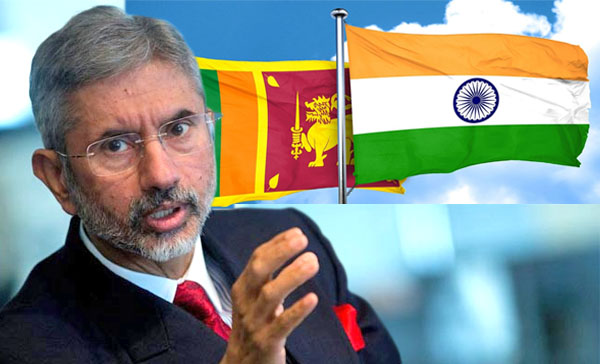
As China is in dilemma while the rest of the world has qualms over helping Sri Lanka, India could deepen its role in bailing out its debt-strangled neighbour by giving the leadership for the proposed donor consortium, as an International Monetary Fund (IMF) rescue package could take some time, according to a leading economist with strong links to Sri Lanka.

Dr. Ganeshan Wignaraja, a Senior Fellow at the National University of Singapore, speaking of the narrowing options for Sri Lanka said bailing out Sri Lanka is in India’s best interest, as it can deepen its trade, commercial and investment relationship, transcending from the current humanitarian and
aid relationship.

India was the first country to come to the rescue of Sri Lanka from the beginning of this year by providing roughly US $ 3.5 billion worth of assistance from a combination of instruments such as credit lines, term loans and deferred loans but the credit lines, under which Sri Lanka received oil, came to an end in June, bringing the country to a near standstill, as the fuel stocks ran out.

Dr. Wignaraja estimated that Sri Lanka needs at least between US $ 20 billion to US $ 25 billion worth of funds in the next three years to put its declining economy to some decent footing and to restart growth, as he fears that Sri Lanka could get caught up in entrenched stagflation, where the prices would continue to soar while the economy declines, making scores of people go jobless and throwing millions into poverty.

“Now my own sense is that, you know, stabilising Sri Lanka’s economy could be a major win for Prime Minister Modi’s neighbourhood-first policy and this is the largest bilateral programme India has given to any country I believe in recent times, in this kind of rescue mode,” Dr. Wignaraja told a recently held Central Bank webinar, referring to the assistance that India has already provided.

“And I feel India could go really big, much bigger and lead a proposed aid consortium for Sri Lanka, providing may be US $ 20 billion to US $ 25 billion over the next three years for Sri Lanka, incorporation with the IMF and other friendly countries,” he added.

Dr. Wignaraja, who is also a Senior Research Associate at the Overseas Development Institute, said Sri Lanka is in a really tight spot in getting assistance, as 60 percent of the world’s poorest countries are also in debt distress in some form, although they haven’t defaulted while the risk of a global recession amid decades high prices has further complicated and hamstrung the rest of the world to offer support to
Sri Lanka.

Meanwhile, he said there are also questions why the taxpayers of another country should bail out a failed economy like Sri Lanka, specially when some perceive Sri Lanka’s debt default was its own making, as a result of poor economic management and weak governance.

Despite being a close ally, China is facing a big dilemma in bailing out Sri Lanka because they fear it could set a wrong precedent, where other countries that borrowed from China and facing debt distress could line up seeking debt restructuring from the world’s second largest economy.

On the other hand, according to Dr. Wignaraja, China may also be unwilling to tarnish its image in the global stage by helping a failed economy.

“China worries that unilaterally restructuring Sri Lanka’s debt or giving it moratoria would set a new precedent in its lending practices and there could be a whole queue of countries lining up to get assistance from China because of what is seen to be a failed Belt and Road project and excessive borrowings for such projects,” he said.

“And there is a second problem that China, which is a G2 economy, wanting to challenge the United States, doesn’t want to be hamstrung by the reputation of helping out a so-called failed economy. That’s a very important reputational issue for China,” he added.

Further, China is dealing with its own economic problems, after the lingering virus condition put a strain on its growth and as a result, it is increasingly turning inward.

However, while agreeing that the IMF rescue package is the only option at the moment for Sri Lanka, although it could take time, Dr. Wignaraja said in order to make it work, Sri Lanka must show the world that it is seriously committed to fix its economy in a sustainable manner while implementing its IMF programme in a transparent and a credible manner.

As Sri Lanka has already gone to the IMF 16 times and has failed to follow through recommended policies, Dr. Wignaraja said this time Sri Lanka could come under the microscope.

He also said it is important to build a national consensus for the IMF programme.
“You know there are still people out there going around and saying forget the IMF and we grow Batala kola in Mattala or something like that. You know, that’s not going to cut the mustard in Sri Lanka’s current financial circumstances. And I think those sorts of people have to be called out,” he said.

He also called to publicise the implementation of the IMF programme and for tough anti-corruption measures to ensure that any foreign aid is distributed fairly and isn’t siphoned off. Further, he called for a non-aligned foreign policy by Sri Lanka.
Posted in Uncategorized

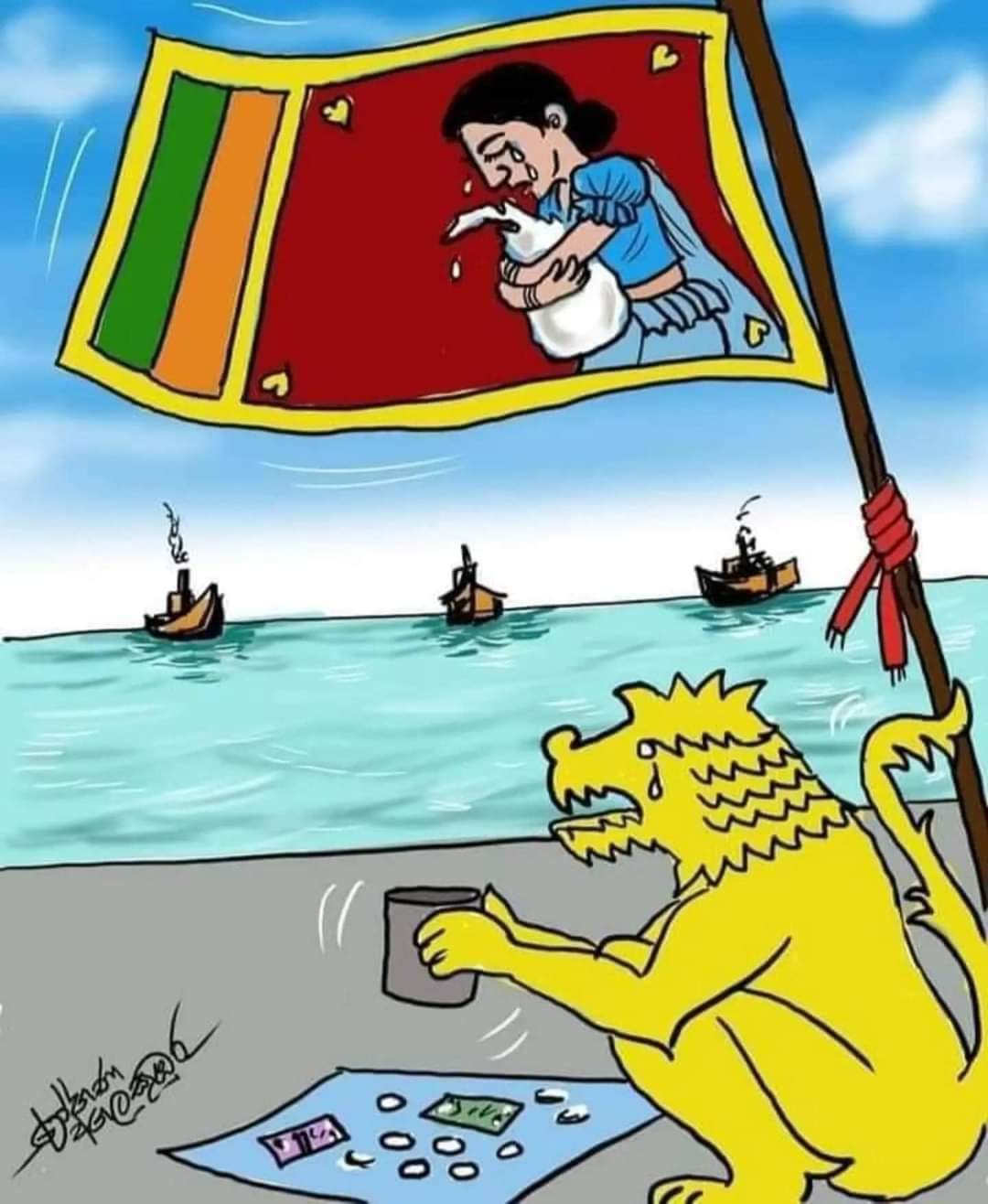
Sri Lanka: ‘I can’t afford milk for my babies’

The smell hits you first – freshly cooked rice, lentils and spinach, served in ladles from steaming pots. Dozens of families – including mothers with babies – are lined up with plates to get a serving of what will likely be their only meal for the day.

“We are here because we are hungry,” says Chandrika Manel, a mother of four.

As she kneads a ball of rice with her hands, mixing it with the lentils and spinach before feeding it to one of her children, she explains that even buying bread is a struggle.

“There are times I [give them] milk and rice, but we don’t cook any vegetables. They’re too expensive.”

Depleted foreign reserves and soaring inflation have devastated Sri Lanka’s economy in recent months. And President Gotabaya Rajapaksa has been accused of exacerbating a crisis triggered by the pandemic and shrinking tourism.

But now Sri Lanka is on the brink of a humanitarian crisis, the United Nations Children’s Fund (Unicef) has told the BBC.

The organisation found that 70% of the country’s families have cut down on food since the start of the year, and stocks of fuel and essential medicines are also fast running out.

My children are miserable’

This is Ms Manel’s first visit to a community kitchen as she found her options disappearing: “The cost of living is so high, we are taking loans to survive.”
The kitchen is a month old – Pastor Moses Akash started it in a church hall in Colombo after meeting a single mother who lived off a jackfruit for three days.

“We get people who haven’t had a second plate of rice for the last four months,” Pastor Moses says.

By his estimate, the number of people queuing up for food has grown from 50 to well over 250 a day. It’s not surprising given that food prices in Sri Lanka went up by 80% in June alone.

“I see a lot of children especially, most of them are malnourished,” he says.

Sahna, a pregnant 34-year-old who goes by her first name only, is also in the queue with her three young children. She is due in September and anxious about the future.

“My children are miserable. They’re suffering in every possible way. I can’t even afford a packet of biscuits or milk for my babies.”

Sahna’s husband, who is a labourer, earns just $10 (£8.20) a week to support the entire family.

“Our leaders are living better lives. If their children are living happily, why can’t my children?” she asks.

A looming humanitarian crisis

By the time Sahna’s child is born, things are expected to get worse.

The mayor of Colombo recently said that the capital has enough food only until September.

With shortages of fuel and cooking gas, and daily power cuts, families are unable to travel to buy fresh food or prepare hot meals.

BBC (Source)

Sajith-Maithri talk on forming new all-party Govt

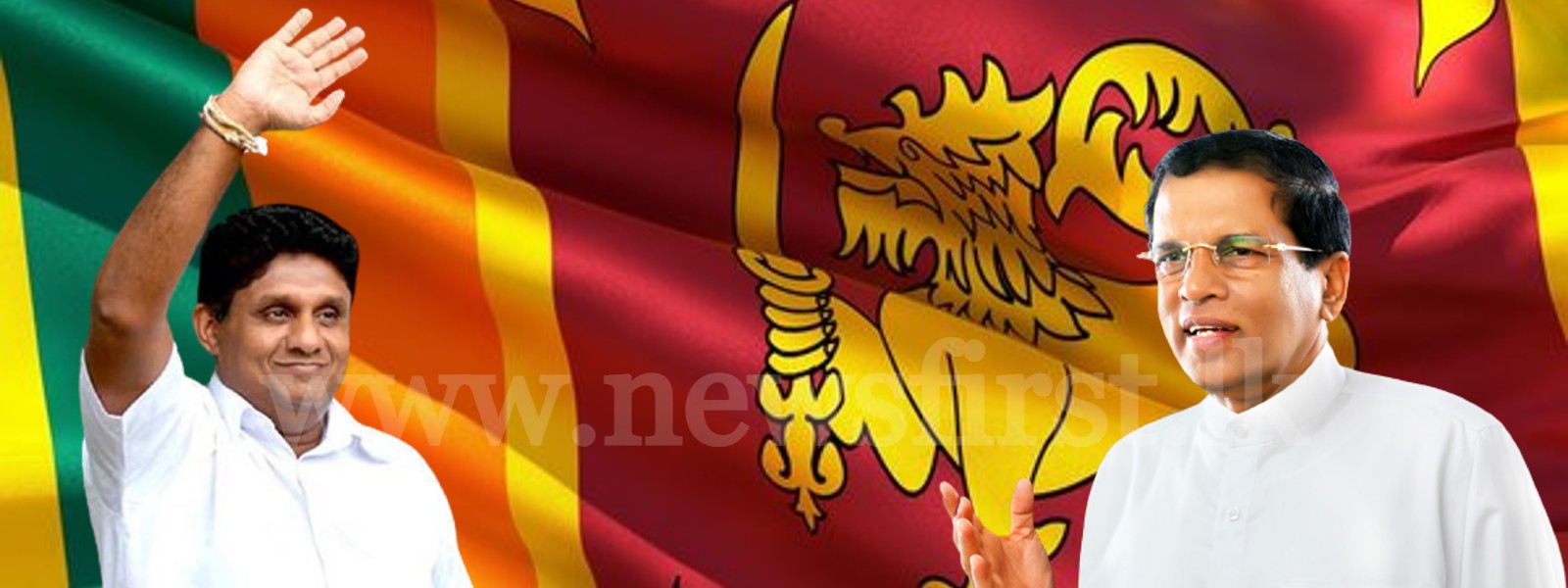
Opposition Leader Sajith Premadasa and the SLFP leader Maithripala Sirisena are currently holding talks on constitutional reforms to establish an all-party government.

The ‘Samagi Jana Balawegaya’ said the crucial meeting of the “National Reforms and Future” program to rebuild the country which has collapsed, took place at the Opposition Leader’s Office in Colombo today (04).

Former President and Sri Lanka Freedom Party (SLFP) leader Maithripala Sirisena, Opposition Leader and SJB leader Sajith Premadasa, SJB General Secretary Ranjith Madduma Bandara, SJB Chairman Sarath Fonseka, MPs Dr. Rajitha Senaratne, Mano Ganesan, Rauff Hakeem, P. Digambaram, C.V. Wigneswaran and several other political leaders participated in the discussion.

Civil activists Victor Ivan, Janaranjana, Gamini Viyangoda, Rohan Samarajeewa and several other representatives of political parties, civil society, professional and trade union organisations also joined the discussion.

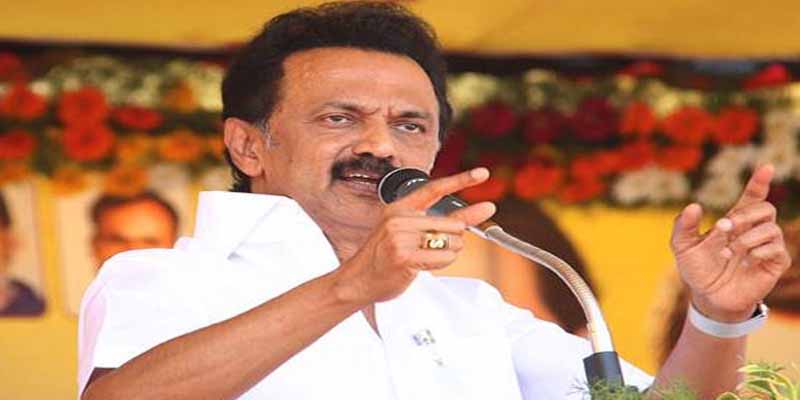
CM Stalin writes to EAM Jaishankar over release of 12 Indian fishermen held by Sri Lankan Navy -ANI

Tamil Nadu Chief Minister MK Stalin on Monday requested External Affairs Minister (EAM) S Jaishankar to take appropriate action for the immediate release of 12 Indian fishermen arrested by the Sri Lankan Navy.
In a letter to EAM, the Chief Minister said, “This arrest intimidates the fisherfolk of Tamil Nadu and is also likely to create a sense of insecurity and fear in the coastal areas of the State. I, therefore, request you to take up this matter through appropriate diplomatic channels to secure the immediate release of 12 fishermen and their fishing boat.”

Among the 12 arrested Indian fishermen, 7 are from Tamil Nadu and 5 are from Puducherry.

He further pointed out that the fishermen of Tamil Nadu have recently resumed fishing after the annual ban period of 61 days that ended on June 15, 2022.
On March 25 this year, the fifth meeting of the India-Sri Lanka Joint Working Group on Fisheries was held through virtual mode.

The Joint Working Group discussed all relevant issues in detail including the concerns relating to fishermen and fishing boats which have been on the agenda of bilateral discussions between India and Sri Lanka for many years.
The Indian side expressed its readiness to work together with Sri Lanka for joint research to enhance the productivity of the Palk Bay fisheries.

The meeting concluded on a positive note, with a commitment toward continued cooperation and dialogue to solve the fishermen-related issues and to hold the next meeting of the Joint Working Group as per schedule. (ANI)

India to again send fuel supplies to crisis-hit Sri Lanka

India has again extended assistance to Sri Lanka and will send two ships each of diesel and petrol to the neighbouring nation facing an acute shortage of fuel.

One ship is expected in Sri Lanka between July 13 and 15 and another between July 29 and 31.

The last one will reach the island nation between August 10 and 15, ET has learnt from Colombo-based sources.

The decision to supply fuel comes after recent discussions held between Sri Lankan high commissioner to India Milinda Moragoda and minister of petroleum and natural gas Hardeep Singh Puri.

Moragoda explained the urgent energy requirements of Sri Lanka to Puri.

Lanka has received more than 400,000 tonne of fuel from India over the past three months.

Moragoda and Puri also discussed ways in which India and Sri Lanka could further expand cooperation in the petroleum sector to overcome the current crisis, according to the high commission. They also talked about establishing long-term relationships in the petroleum, oil, gas and related supply sectors.

The current diesel stocks in Sri Lanka will only be used for essential services until the arrival of a new shipment.

About 33,000 metric tonne of gas will arrive in Sri Lanka in July, and 100,000 metric tonne of gas will be procured for the next four months, the Lankan media reported.

Sri Lanka has been facing the worst economic crisis since independence in 1948, leading to a severe shortage of essential items like food, medicine, cooking gas and fuel.

The nearly bankrupt country, with an acute foreign currency crisis, announced in April that it was suspending nearly $7 billion foreign debt repayment due for this year out of about $25 billion due through 2026. The economic crisis has particularly impacted food security, agriculture, livelihoods, and access to health services.

Food production in the last harvest season was 40-50% lower than previous year, and the current agricultural season is at risk, with seeds, fertilisers, fuel and credit shortages.

Posted in Uncategorized

LG Polls after 20th September?

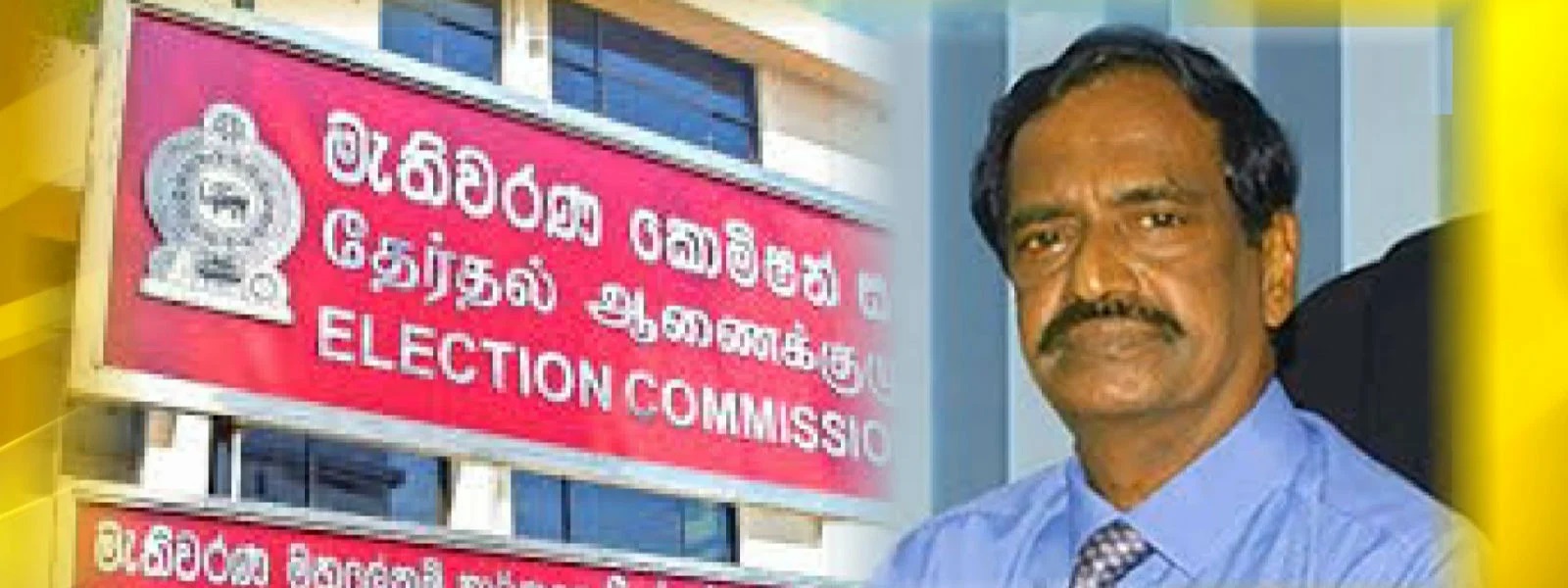
The Elections Commission said that it will be vested with the power to call for Local Government Elections after the 20th of September 2022.

The Chairman of the Election Commission Attorney-at-Law Nimal Punchihewa said the power will be vested with the Elections Commission as per the Local Authorities Elections Ordinance.

At present, the Minister-in-charge had taken measures to extend the tenure of all local government bodies by one year, until March 2023.

Posted in Uncategorized

Mass protest planned for July 09 as fuel crisis threatens to paralyse Sri Lanka

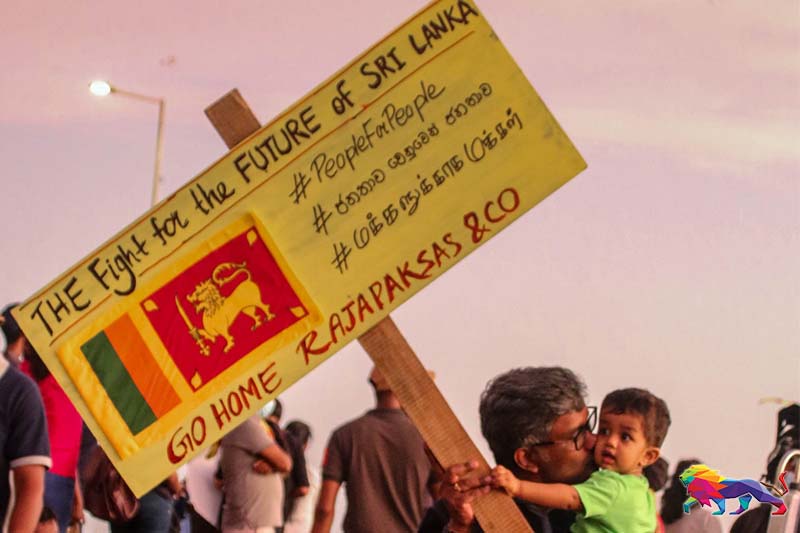
A massive people’s protest is planned for Saturday July 09 in Colombo, Sri Lanka, demanding the resignation of President Gotabaya Rajapaksa and his government as the country goes through its worst fuel crisis on record.

Social media chatter on the protest indicates that citizens from around the country have been advised to congregate in Colombo in what the organisers claim will be the “greatest uprising in the history of Sri Lanka”.

Anuruddha Bandara, a youth activist who was recently arrested in connection with a protest and was subsequently released, said in a tweet that organisers are “trying their best” to get opposition parties Samagi Jana Balavegaya (SJB), Janatha Vimukthi Peramuna (JVP) and others onboard.

They are “almost in”, he said.

Sri Lanka is in the throes of the worst economic crisis in its 74-year post-Independence history, with unprecedented forex shortages leading to crippling shortages of essentials including fuel. A wave of protests, referred to as the Aragalaya (or struggle), demanding President Rajapaksa’s resignation began in April, culminating in an Occupy Wall Street-style permanent agitation site named GotaGoGama (Gota Go Village) right outside the presidential secretariat near Galle Face, Colombo.

Things took a turn when supporters of former Prime Minister Mahinda Rajapaksa launched an unprovoked attack on peaceful protestors at GotaGoGama (GGG) and its sister site MynaGoGama (aimed at the then PM) on May 09, which triggered a storm of retaliatory mob violence against government ministers, MPs and their backers. One ruling party MP was killed.

The Galle Face protests have since reduced in intensity and crowd strength, particularly following incumbent Prime Minister Ranil Wickermesinghe’s replacement of Mahinda Rajapaksa. But skyrocketing commodity prices and a worsening fuel situation that’s resulted in miles-long queues for petrol have seen a quiet resurgence of public anger against the government.

Organisers expect the July 09 protest to rejuvenate the Aragayala.

However, with ongoing fuel shortages and public transport functioning at significantly reduced capacity, it is unclear how the organisers will be able to mobilise people from around the island.

Chaminda Dias, a protest organiser in Thimbirigasyaya, Colombo, said the July 09 will be an acid test.

“Our plan is to mobilise with the protestors at GGG. Since Wickremesinghe was appointed, there have been attempts made to dilute the protests, to silence it and whatnot. So July 09 will be a sort of acid test to see if people have the determination, if they have the strength to come out.

“The government will be watching of course, and we have to show that we are not frightened,” he said.

Posted in Uncategorized

Army launches probe after Lt. Col. assaulting civilian at fuel shed goes viral

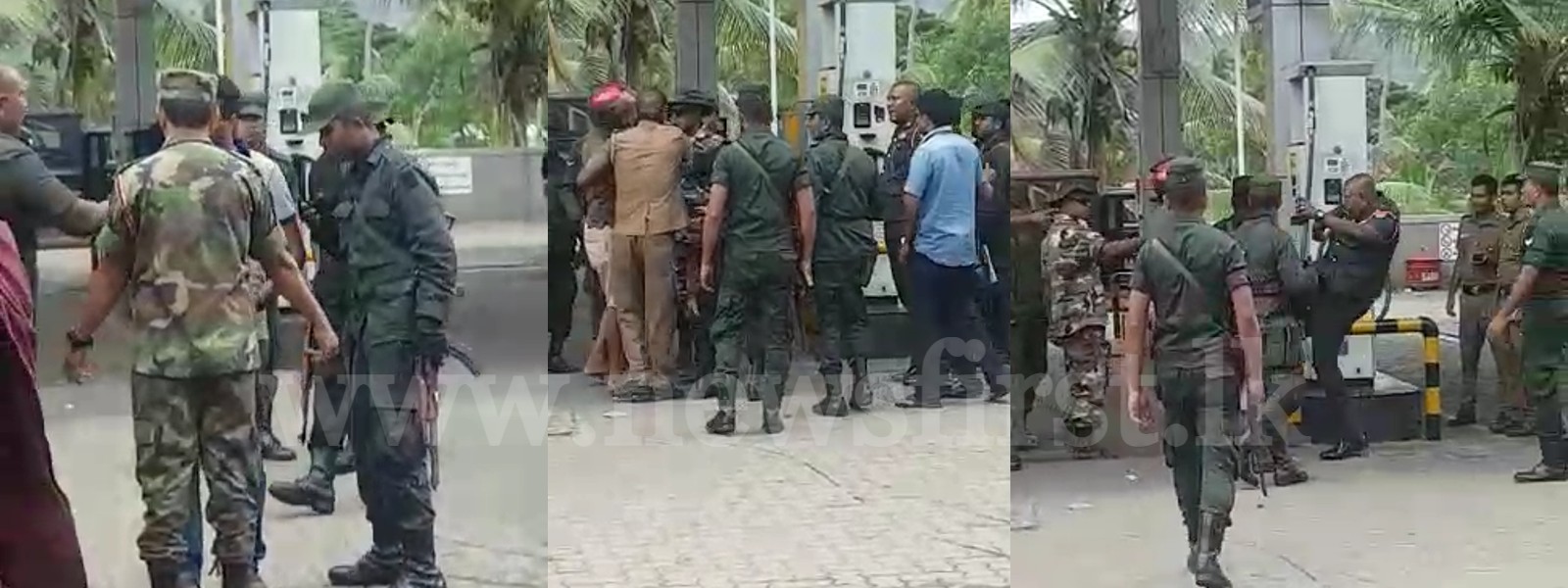
An internal investigation had been initiated by the Sri Lanka Army in connection with the incident at a petrol shed at Yaggahapitiya in Kurunegala where an Army officer attacked a civilian went viral on social media.

A video showing an Army officer kicking a man at a petrol shed was shared on social media and it was reported that the officer who attacked the civilian is a Lt. Colonel of the Sri Lanka Army.

Army Spokesman Brigadier Nilantha Premaratne said Army had begun an internal investigation into the incident.

However, he said according to the fuel shed owner and the officials, a group of men who were at the filling station had interrupted its operations. They were also reported to have verbally abused and interrupted the duties of the army and policemen who were on duty.

Officials suspect that the group might have wilfully created an unrest at the fuel station inviting a clash.

Meanwhile, the spokesman said two civilians had been arrested over the incident.

Parliament to convene three days this week

The Secretary General of Parliament Dhammika Dasanayake has said that the Parliament is scheduled to meet on the 4th, 5th and 6th of this week.

This was decided at the Committee on Parliamentary Business held last week under the chairmanship of Mahinda Yapa Abeywardana, Speaker of Parliament.

On the 4th, from 10.00 am to 3.30 pm, the entire time is allotted for 50 Questions for Oral Answers that could not be taken up in Parliament previously due to various reasons.

When the Parliament convenes on the 5th of July at 10.00 am, Regulations under the Foreign Exchange Act, no. 12 of 2017, Two Orders under the Sri Lanka Export Development Act No. 40 of 1979 published under the Gazette Extraordinary No. 2270/20 and 2280/32, Resolution under the Custom ordinance, Resolutions under Section 8 of the Appropriation Act No. 7 of 2020 are scheduled to be approved following debate.

Furthermore, Six Orders under Special Commodity Levy Act, No. 48 of 2007 and Two Regulations under the Imports and Exports Control Act, No. 01 of 1969 published under the Gazette Extraordinary Nos. 2282/21 and 2282/22 are also scheduled to be approved following debate on the same day.

Thereafter, time has been allotted from 4.30 pm to 4.50 pm for Questions at the Adjournment Time and from 4.50 pm to 5.30 pm it has been decided to debate the Motion at the Adjournment Time brought by the Government.

Furthermore, on July 6th from 10.00 am to 10.30 am, time has been allotted to take up Prime Minister’s Questions. It was then decided to debate the Adjournment Motion brought by the Opposition until 4.30 pm on the “prevailing situation in the country”, Secretary General of Parliament Mr. Dhammika Dasanayake said.

Furthermore, due to the existing challenges, attention has been drawn at holding committee meetings online on days when the Parliament is not in session, and thus, it was decided to take necessary further actions.

Posted in Uncategorized

SLFP MP slams President; says he did in two and a half years what Prabhakaran could not do in 30 years

Sri Lanka Freedom Party (SLFP) Parliamentarian Duminda Dissanayake on Friday said President Gotabaya Rajapaksa achieved something in two and a half years that LTTE Leader Velupillai Prabhakaran had tried and failed to do in 30 years – ruin the country’s economy.

“Velupillai wanted to bring this country’s economy to its knees. That is why he launched attacks in Colombo and committed so many other acts. But we understand now that President Gotabaya Rajapaksa did in two and a half years what Prabhakaran could not do in 30 years,” he told a media conference in Colombo. The MP launched a scathing attack on the President and called for all parties to unite to bring down the current government.

Mr Dissanayake seems to be suffering from selective amnesia, for he made no mention of the fact that he and his SLFP colleagues were at the forefront of campaigning for Gotabaya Rajapaksa during the 2019 Presidential election. There was also no mention of how the SLFP aligned itself with the Sri Lanka Podujana Peramuna (SLPP) during the 2020 Parliamentary elections, and how its MPs including Mr Dissanayake contested under the SLPP’s pohottuwa symbol and having won, voted for the 20th Amendment to give the President almost absolute power. Even now, some members of Mr Dissanayake’s party hold Cabinet portfolios in the current government.

Speaker speaks out: Advises media to black out blaggard MPs

Speaker Mahinda Yapa Abeywardena has appealed to the media not to give publicity to unruly behaviour and crass speeches made by MPs in Parliament.

He made the request during a one-day workshop held for Parliamentary correspondents.

The Speaker said young MPs could learn much from going through speeches made by famous MPs such as Dr. N. M. Perera and Dr. Colvin R. de Silva, adding that he had instructed officials at the Parliament library to collect such speeches and provide copies to MPs.

The Speaker made no secret of how he felt about the quality of speeches made by MPs in the House to date.

“How many even stick to the topic they are supposed to be speaking on,” he asked.

The more publicity the media gives to vituperative speeches and unruly behaviour, the more emboldened those MPs would be to keep doing it because they are assured of more publicity, the Speaker said. Even former Speaker Karu Jayasuriya lamented on the quality of speeches and standard of behaviour of MPs of the previous Parliament.

It seems the voters keep sending the wrong people to represent them in the national legislature, or they have Hobson’s Choice considering the candidates presented to them by the different political parties.